REVIEW · PRIVATE
3-Hours Vintage Electric Private Driving Tour of Rome
Book on Viator →Operated by Dolce Vita Tours · Bookable on Viator
Rome in a car draws smiles.
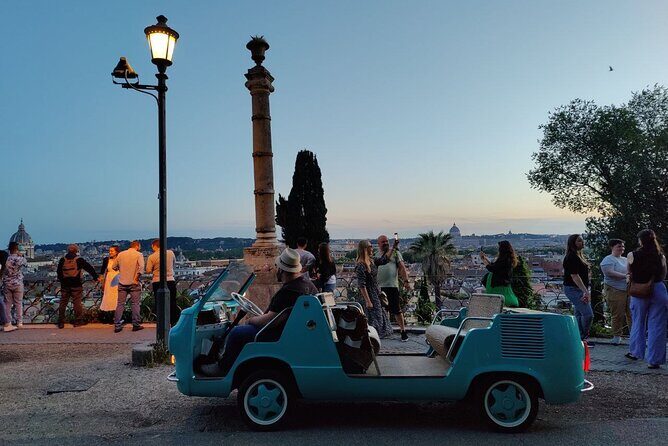
This private ride is built for speed and style: you cruise in an elegant vintage electric cabrio, then hop out for short, well-timed looks at Rome’s biggest names and the calmer, slightly offbeat spots in between. I especially like the private pacing (it’s just your group) and the way the English-speaking driver guide keeps the route logical, not random. One thing to consider: the stops are short, so you’ll get the feel of each place more than a long, slow visit.
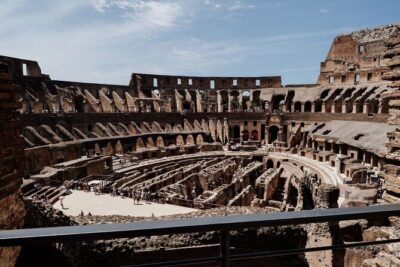
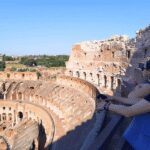
You’ll roll past major landmarks like the Pantheon, Trevi Fountain, and the Colosseum area, while also getting little “wait, what’s that?” moments such as the Aventine Keyhole and the Jewish Ghetto zone. I also like that this is a mobile-ticket tour with hotel pickup, so you’re not stuck hunting meeting points. The main drawback is that this is a driving tour first, walking tour second—if you want hours inside museums or long lines managed for you, you may need add-on time.
In This Review
- Key highlights at a glance
- Why this vintage electric cabrio tour feels like the smart way to do Rome fast
- Price and what $834.42 per group really buys you
- Pickup, timing, and how to get the most from the 3 hours
- Villa Borghese Gardens: where Rome starts to feel spacious
- Piazza del Popolo and the Pincio views: classic Rome with breathing room
- Mausoleo di Augusto and the quiet contrast of ancient Rome
- Colonna and Marcus Aurelius: a monument you can climb
- Piazza Venezia and the Vittoriano: big views, modern landmark weight
- Trajan’s Markets (Mercati di Traiano): ancient engineering that still works
- Circus Maximus and Teatro di Marcello: big ruins with a relaxed vibe
- Aventine Hill: Giardino degli Aranci and the Aventine Keyhole
- Mouth of Truth and a classic Roman-photo moment
- Piazza Navona and the Pantheon sequence: baroque beauty and instant awe
- Sant’Ignazio di Loyola’s false dome: a baroque trick worth the stop
- Trevi Fountain and Spanish Steps: Rome’s postcard hour
- Where the route shines (and where it won’t match everyone)
- Should you book? My practical take
- FAQ
- FAQ
- How long is the 3-Hours Vintage Electric Private Driving Tour of Rome?
- What is the group size for this private tour?
- What does the tour cost?
- Is pickup included?
- What language is the tour in?
- Do I receive a mobile ticket?
- Will we go inside the Pantheon?
- Are there admission fees for the stops?
- Where do we start?
- What is the cancellation policy if weather is bad?
- Is this tour wheelchair-friendly?
Key highlights at a glance
- Vintage electric cabrio cruising that feels like a movie scene without the hassle
- Hotel pickup at your central hotel main entrance (or a central meeting point)
- Icon loop plus quieter stops like the Aventine Keyhole and Jewish Ghetto area
- Short, smart photo windows at big sights such as Trevi and Piazza Navona
- Pantheon exterior only, so you avoid “planning chaos” around entry timing
- Private just-for-you group size (up to 3), which keeps the day stress-light
Why this vintage electric cabrio tour feels like the smart way to do Rome fast
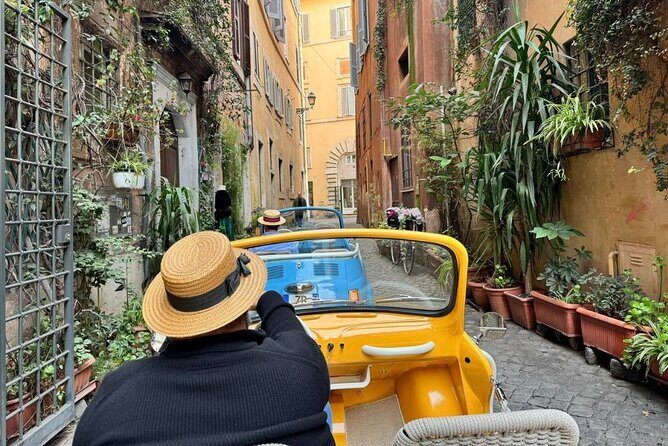
Rome can be overwhelming. Streets branch, landmarks pop up behind corners, and time can evaporate before you’ve even picked your priorities. This tour solves that with a simple recipe: drive the long stretches, walk the key moments.
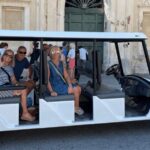
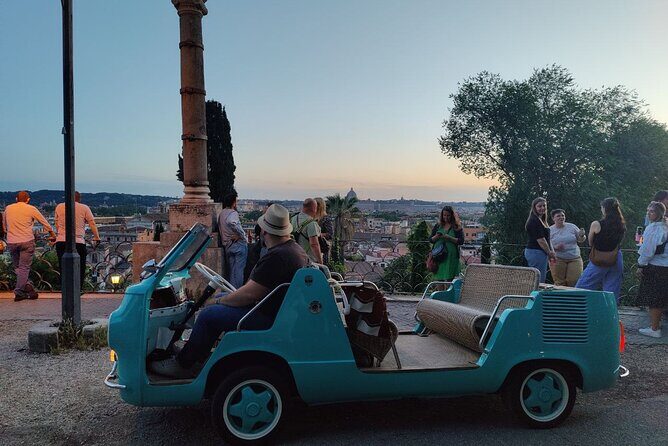
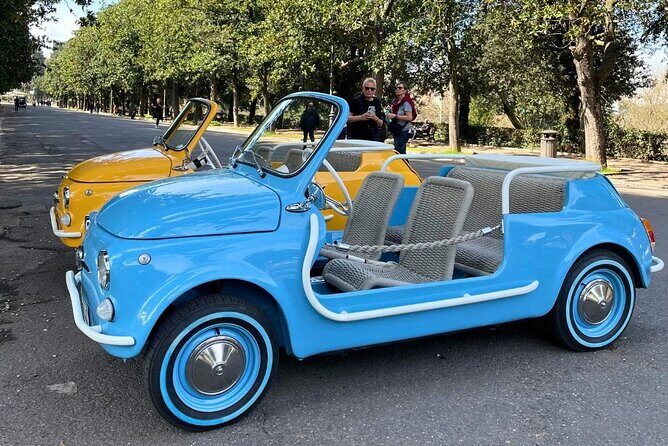
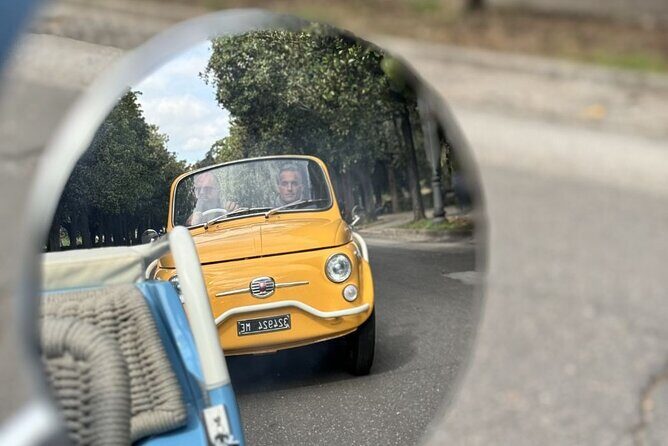
The vehicle choice matters too. A vintage electric cabrio doesn’t just move you around—it turns the day into a rolling viewing platform. Even if you’re not a “car person,” you’ll feel that shift when you pull up near famous places and people naturally look over.
The other practical win is the format. This is a private tour for up to 3, not a bus circuit. That means the driver can adjust to what you care about—still keeping the overall timing tight enough to cover the big sights in one go.
You can also read our reviews of more private tours in Rome


Price and what $834.42 per group really buys you
The price is $834.42 per group (up to 3) for about 3 hours 10 minutes. If you’re splitting with two others, it can work out to a reasonable per-person cost compared with multiple tickets, transfers, and lost time. If you’re coming solo, it’s more of a “pay for convenience and quality” decision.
What makes it feel like value is the mix of three things you’d otherwise piece together:
- Hotel pickup (or central meeting point), so you avoid transit friction
- An English-speaking driver guide, who helps you see what matters quickly
- A vintage electric cabrio, which is its own experience—not just a mode of transport
Booking on average about 55 days in advance also hints that this one sells out in prime slots. If your dates are fixed, I’d plan ahead rather than waiting until the last minute.
Pickup, timing, and how to get the most from the 3 hours
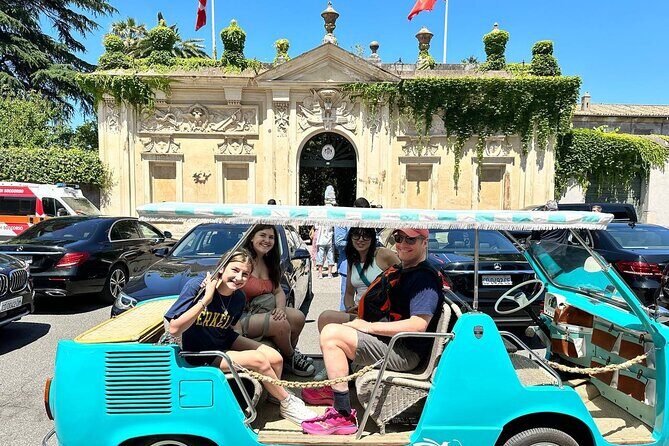
Your driver guide meets you at the main entrance of your central hotel in Rome. If you’re farther out, you’ll meet at a designated central meeting point (or another central location). That detail matters: the tour’s smoothness depends on starting close to where you can be picked up fast.
Because the tour is built around short stops, I recommend you treat it like a “first-day Rome compass.” You’ll see a lot of faces of the city—big monuments, classic squares, and a few quieter moments—then you can decide later where you want to return for a longer visit.
Dress and prep for the reality of quick changes. You may step out for a few minutes here and there, then get back in the cabrio for the next stretch. Good weather really matters for this style of tour.
Villa Borghese Gardens: where Rome starts to feel spacious
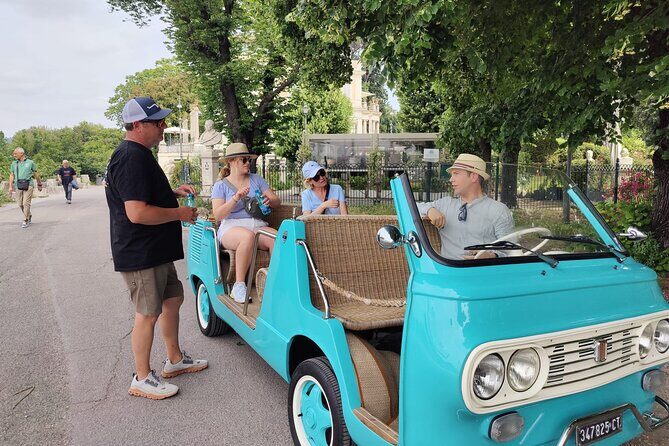
You begin at Villa Borghese Gardens, a huge green park area over 80 hectares with lakes, fountains, sculptures, and museums. Even without going into anything, it’s a strong start because it resets your brain from the dense city grid.
This stop is short—about 10 minutes—but it’s a useful “calibration” moment. You get a sense of scale and the park’s layout, plus a look at why locals and visitors use this space to breathe.
Drawback check: if your ideal Rome day is all museums, this may feel like a tease. But as an orientation stop, it’s excellent.
Piazza del Popolo and the Pincio views: classic Rome with breathing room
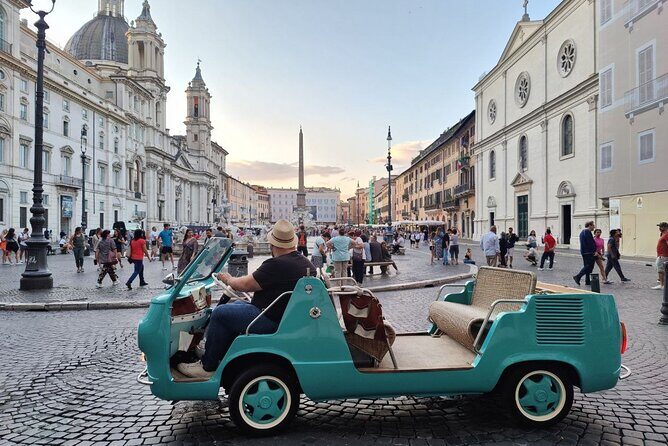
Next up is Piazza del Popolo, anchored by the Egyptian obelisk and framed by historic buildings. This square also opens up the wider street drama of central Rome without being inside the thickest bottlenecks.
You also get a reminder of why Pincio terrace views matter. From above, Rome becomes easier to “read” in your head. That helps later when you’re trying to understand sight lines between monuments.
This is another quick stop (around 15 minutes). You’ll likely use it for photos, people-watching, and a mental map more than a deep sit-down moment.


Mausoleo di Augusto and the quiet contrast of ancient Rome
Then it’s Mausoleum of Augustus, an ancient tomb built to commemorate Augustus. What remains still impresses, and the setting adds something important: it feels peaceful, tucked into greenery.
The tour gives it about 5 minutes, with enough time to notice scale and the tomb’s lasting presence. If you like archaeology that isn’t constantly surrounded by the loudest traffic, this is a nice breather.
Consideration: because it’s so quick, go in with one focus—look at the structure and setting—rather than trying to absorb every exhibit detail.
Colonna and Marcus Aurelius: a monument you can climb
In the heart of central Rome you stop at the Column of Marcus Aurelius in Piazza Colonna. This is one of those Roman monuments that works in two ways: from ground level you see the spiral relief carving, and if you choose to climb the interior staircase, you can get a better overhead sense of the city’s arrangement.
The time is about 5 minutes, so this isn’t a “wander around for an hour” stop. But it’s still memorable because it’s so tactile—stone relief you can actually look at closely.
Practical note: if stairs and heights aren’t your thing, you’ll still get plenty from the outside look.
Piazza Venezia and the Vittoriano: big views, modern landmark weight
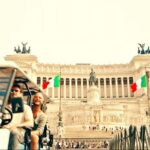
At Piazza Venezia, the centerpiece is the Vittoriano, the massive white marble monument dedicated to King Victor Emmanuel II. It’s undeniably imposing, and the tour includes time around it (about 15 minutes).
You can climb for panoramas, or stay with museum/exhibition areas if that’s your preference. Either way, this is a strong point in the route for understanding Rome’s layers: ancient structures, medieval streets, and later Italian national identity all on the same stage.
If you’re sensitive to large crowds or long lines, time your attention accordingly. This is a high-visibility area.
Trajan’s Markets (Mercati di Traiano): ancient engineering that still works
Next is Mercati di Traiano / Museo dei Fori Imperiali, the Trajan Market complex. Even in partial restoration, it shows how serious Roman construction was—trade and public life built into monumental architecture.
The tour’s stop is brief—around 5 minutes—but the payoff is in spotting the layout: courtyards, interconnected spaces, and the curved façade style that makes the site feel “designed,” not accidental.
If you end up wanting more, you’ve now seen enough to know this area isn’t just a pile of stones.
Circus Maximus and Teatro di Marcello: big ruins with a relaxed vibe
You’ll also visit Circus Maximus, the ancient chariot racing venue that once held up to about 250,000 spectators. Today it’s a public park, and the experience here is mostly about walking along the ancient track area and taking in the scale.
This stop is about 10 minutes, and it’s not an admission-included moment in the way some sites are. The point is the view and the footprint—ancient Rome measured in space.
Then you pass by the Teatro di Marcello, an open-air theatre from the late Roman Republic. It’s one of those ruins that makes you picture performances without needing to see stage machinery.
Aventine Hill: Giardino degli Aranci and the Aventine Keyhole
For a more cinematic Rome moment, the tour heads to Giardino degli Aranci (Orange Gardens) on Aventine Hill. The park is known for citrus trees, flower beds, and a calmer, greener feel than street-level Rome.
You’ll get about 15 minutes, and the big draw is the Aventine Keyhole. Through a small opening, you get a framed view of St. Peter’s Basilica in Vatican City. It’s quick, quirky, and it’s exactly the kind of detail Rome is good at: turning a simple pause into a memory.
Timing note: since it’s popular, go when the group is moving and don’t linger so long that you miss the next stop.
Mouth of Truth and a classic Roman-photo moment
Then comes Bocca della Verità at the portico of Santa Maria in Cosmedin. The stone disk is tied to a famous legend: if you put your hand in and lie, your hand gets bitten off. It’s obviously theatrical folklore, but that’s the point.
You’ll have about 5 minutes. Expect a photo line and fast turn-taking. The best move is to treat it like a quick checkmark and then keep walking—this tour stays moving for a reason.
Piazza Navona and the Pantheon sequence: baroque beauty and instant awe
After more driving, you reach Piazza Navona, known for its three fountains. The showstopper is the Fontana dei Quattro Fiumi, designed by Bernini. This is a great “spend your eyes” stop because architecture and art feel like they’re happening at street level.
You get about 10 minutes—enough for photos and maybe a quick pause on the edge of café life.
Then you arrive at the Pantheon for about 15 minutes, and here’s a key detail: you won’t go inside. Admission isn’t needed for this exterior time. Still, you get the main wow factor—especially the dome and the famous opening (the oculus) that floods the interior with light.
This is a smart way to do the Pantheon on a short schedule. You still get the biggest visual impact without the bottleneck of entry lines.
Sant’Ignazio di Loyola’s false dome: a baroque trick worth the stop
Next is Chiesa di Sant’Ignazio di Loyola, famous for the painted “False Dome” by Andrea Pozzo. From the right angle, it makes you think the church has a real dome soaring overhead.
The stop is about 10 minutes. Even if you’re not a baroque specialist, it’s worth it because the artwork plays tricks on your perception in a way you can feel instantly.
If you hate surprises in churches, just know this one is designed to trick your eyes.
Trevi Fountain and Spanish Steps: Rome’s postcard hour
You then hit Fontana di Trevi for about 10 minutes. It’s the world-famous baroque fountain, with Neptune at the center, and the well-known coin-toss tradition that’s meant to bring you back to Rome.
After that, you go to the Spanish Steps, about 10 minutes. The steps connect Piazza di Spagna to Trinità dei Monti, and they’re famous for the views and the lively “sit and watch” energy at the top and along the edges.
Since both Trevi and the Spanish Steps attract massive attention, manage expectations: you’ll be close to the icons, but you won’t be strolling in quiet solitude.
Where the route shines (and where it won’t match everyone)
The big strength of this tour is how it builds Rome in layers without making you plan everything. In a single half-day you see:
- big ancient monuments and key imperial sites
- baroque “stop-and-stare” squares
- a few calmer, more personal-photo moments like the Aventine Keyhole and the Mouth of Truth
It also feels fun. In the best moments, this cabrio ride gives you that playful, celebrity-like attention on the street. It’s not staged. It’s just how Rome responds when something unusual moves through the frame.
The main mismatch is for people who want deep time inside major attractions. Since the Pantheon is exterior-only here, and many stops are short, you’ll get impressions fast rather than a slow, detailed visit.
Should you book? My practical take
Book this tour if you want a clean, efficient way to see classic Rome plus a few clever detours, all with private pacing and an English driver guiding your time.
Don’t book it if your travel style is “three hours means three hours inside one major site.” This tour is designed to connect the dots across town, not to let you lose yourself for hours at a time.
Also, if you’re traveling with up to three people and you value convenience, splitting the group price can make it feel like a smart buy. The vintage electric cabrio part is a real experience, not just transportation.
If your dates matter, lock it in early. And if weather looks iffy, plan for the reality that this style of tour depends on it.
FAQ
FAQ
How long is the 3-Hours Vintage Electric Private Driving Tour of Rome?
It lasts about 3 hours 10 minutes.
What is the group size for this private tour?
It’s a private tour for your group, up to 3 people.
What does the tour cost?
The price is $834.42 per group.
Is pickup included?
Pickup is offered. Your driver guide meets you at the main entrance of your central hotel in Rome. If your hotel is outside the central area, you’ll meet at a designated meeting point or another central location.
What language is the tour in?
The driver guide provides the experience in English.
Do I receive a mobile ticket?
Yes, a mobile ticket is included.
Will we go inside the Pantheon?
No. The tour does not include entering the Pantheon, and there is no need for an admission ticket for that stop.
Are there admission fees for the stops?
Many of the listed stops are marked as free admission. Circus Maximus is noted as not included for admission, while other stops are listed as free.
Where do we start?
The start point is based on pickup at your central hotel’s main entrance, or a central meeting point if your hotel is outside that area.
What is the cancellation policy if weather is bad?
Cancellation is free up to 24 hours before the start time for a full refund. The experience requires good weather; if it’s canceled due to poor weather, you’ll be offered a different date or a full refund.
Is this tour wheelchair-friendly?
The provided info says most people can participate, but it does not specify wheelchair accessibility details.