REVIEW · ROME
Tour of Rome Aboard a Vintage Fiat 500
Book on Viator →Operated by Rome500Tour · Bookable on Viator
Your Rome, but with wheels.
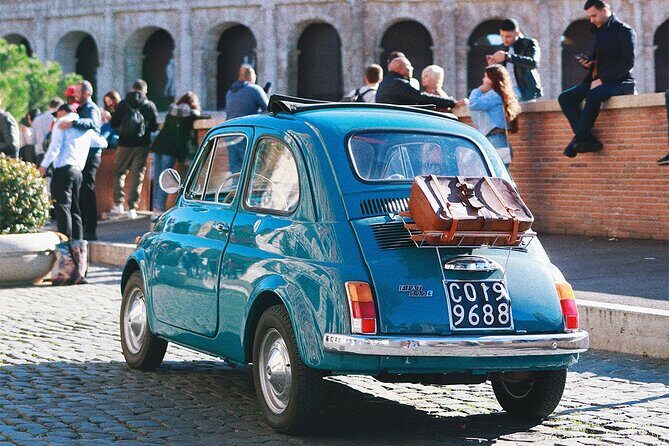
This private tour in a vintage Fiat 500 turns the long list of famous sights into an easy, good-looking route. I like the built-in rhythm: quick stops for photos, short walking stretches, and enough time to actually see what you came for. You also start the day with aperitif drinks (Prosecco or Aperol Spritz), which makes it feel more like a hosted drive than a rushed sightseeing chore.
Two things I really like: the photo-friendly pacing and the clear focus on iconic monuments you might otherwise only catch from a distance. The Colosseum stop is especially practical, because it’s outside only, so you’re not stuck lining up when you just want the view and the angle. The main drawback to plan for is weather and timing: it’s a short 2–3 hour window, and the tour depends on good conditions since the route runs outdoors.
In This Review
- Quick Highlights at a Glance
- Vintage Fiat 500 Through Rome’s Best Photo Angles
- Pickup, Mobile Ticket, and the Shape of the Tour
- Stop 1: Piazza Venezia and the Ancient Core
- Stop 2: Trajan’s Column and Roman Military Glory
- The View-Pause at Teatro di Marcello
- Piazza della Bocca della Verità: Hercules, the Old Marble, and a Legend
- Stop 4: Circo Massimo and the Palatine/Arch of Constantine Area
- Colosseum Outside-Only: Panoramas, Photos, and a Prosecco Moment
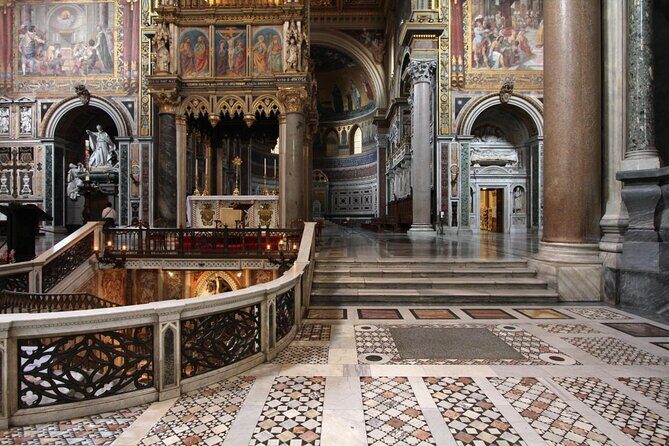
- Santa Maria Maggiore and the Early Christian Thread
- Arcibasilica di San Giovanni in Laterano: Mater et Caput
- Giardino degli Aranci on the Aventine Hill: The Ending View
- Included Extras That Make the Tour Feel Worth the Price
- Weather, Timing, and Who This Tour Fits Best
- Should You Book the Vintage Fiat 500 Rome Tour?
- FAQ
- How long is the Tour of Rome aboard a vintage Fiat 500?
- Is hotel pickup available?
- Is the Colosseum visit inside or outside?
- What’s included in the price besides the ride?
- Can I use a mobile ticket?
- What happens if the weather is bad?
Quick Highlights at a Glance
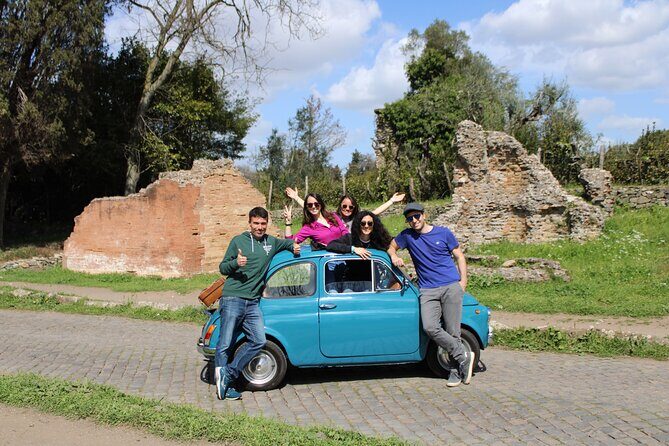
- Vintage Fiat 500 ride that keeps you comfortable between major sights
- Aperitif included with Prosecco or Aperol Spritz, plus coffee/tea and snacks
- Outside-only Colosseum viewpoint with a panoramic break and photo time
- Legends and landmarks in the same route, from Bocca della Verità to the Circus Maximus
- Private group experience, so your stops and timing can work for your party
- End-of-tour payoff from the Aventine, with a viewpoint at Giardino degli Aranci
Vintage Fiat 500 Through Rome’s Best Photo Angles
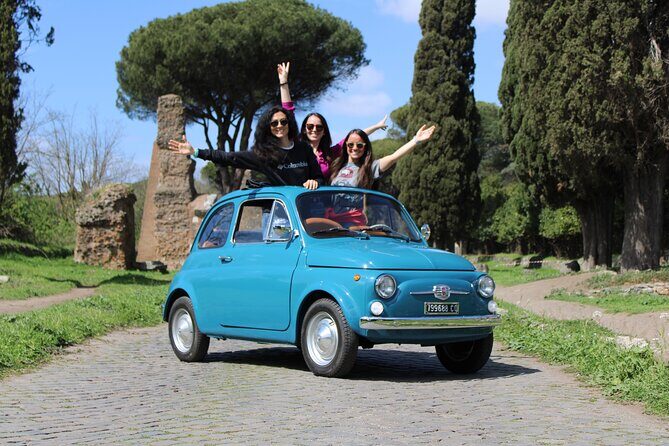
Rome can be overwhelming fast. Streets are narrow, crowds form at the wrong moments, and you end up spending more time navigating than noticing. This is built for the opposite problem. A vintage Fiat 500 lets you move like a local spectator: pause, look, snap a photo, and keep going without feeling exhausted.
What makes this format work is the stop style. You’re not trying to cover everything on foot. Instead, you get a sequence of landmark “hits,” including big-picture views (Piazza Venezia, the Palatine area, the Colosseum) and smaller but meaningful stops (Trajan’s Column, the Bocca della Verità area). It’s a smart mix when you want Rome’s major monuments without turning your day into a marathon.
Also, the mood matters. An aperitif is included right in the middle of sightseeing, and that sets expectations. You’re meant to enjoy the ride and the scenery, not sprint from one ticket booth to the next.
You can also read our reviews of more tours and experiences in Rome.

Pickup, Mobile Ticket, and the Shape of the Tour
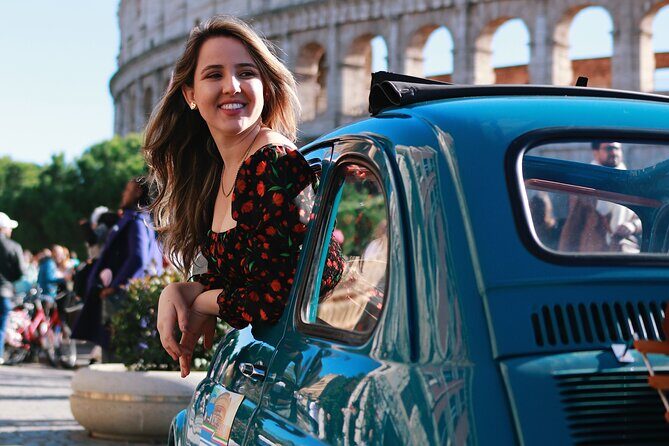
This is a private tour/activity, and that changes the experience in subtle but helpful ways. Your group goes together, and the tour is paced around your party rather than shoehorning you into a big public flow.
Pickup is offered either from your hotel or from a pre-arranged convenient location. You’ll use a mobile ticket, which is handy in Rome where you might not want to keep track of paper.
In practical terms, the tour lasts about 2 to 3 hours. That’s long enough to cover a solid loop of highlights, but short enough that you’ll want comfortable shoes for the bits you do walk. The itinerary is built around quick stops, then moving on by car.
Stop 1: Piazza Venezia and the Ancient Core
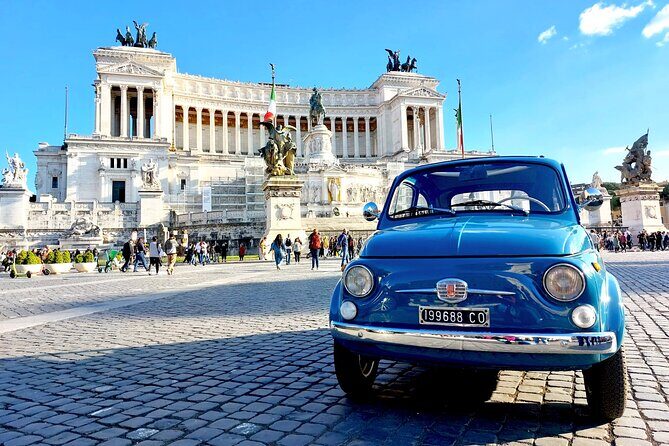
The tour begins at Piazza Venezia, a big square that immediately gives you a strong anchor point. From here, you’re set up to understand how central this area is to Rome’s story.
You’ll see the Altare della Patria (the tomb of the Unknown Soldier) and the surrounding views that connect to the Roman Forum area. Even if you know Rome from photos, this is the moment where the city starts to look navigable. Piazza Venezia is one of those places where you quickly feel oriented because the monuments give you landmarks you can recognize later.
Time here is listed as about 10 minutes, and that’s important. This stop isn’t trying to be a deep museum visit. It’s a “get your bearings fast” start, then you move on before the crowd energy gets in your way.
Stop 2: Trajan’s Column and Roman Military Glory
Next up is Colonna Traiana—Trajan’s Column—another 10-minute stop. This monument is famous because it’s more than a statue on a pedestal. It celebrates a specific military campaign: Trajan’s conquest of Dacia (in today’s Romania).
What I like about this stop is how it adds a different tone to the usual Rome sightseeing. Many places feel like empire-as-ruins. Trajan’s Column brings you back to empire-as-message: marble carved to tell stories and claim legitimacy.
It’s also straightforward to enjoy. You don’t need long explanations to appreciate that the monument is dense with scenes, and the car route keeps you from losing time hopping between far-flung points.
The View-Pause at Teatro di Marcello
There’s a pass by Teatro di Marcello, a theatre that’s still partially preserved. It was erected under Emperor Augustus in the area known as Campo Marzio, between the Tiber River and the Campidoglio.
This is the kind of stop that works especially well from a car window or quick curbside viewpoint. You see the scale and the survival of the structure, then you move on. If you enjoy noticing Roman architecture in everyday city life, this is a fun moment—because it doesn’t feel like a staged ruin. It feels like Rome lived on top of itself.
Piazza della Bocca della Verità: Hercules, the Old Marble, and a Legend
The tour then touches the area around Piazza della Bocca della Verità, where several layers of Rome collide—architecture, misattribution, and a legend that became a tourist ritual.
First, you’ll be near the Temple of Ercole (spelled out in the route details with multiple common names, including Ercole Vincitore / Ercole Invitto / Ercole Oleario). It’s described as being around 120 BC and noted as the oldest preserved marble building in Rome.
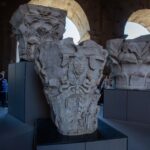
Then comes the famous stop: Bocca della Verità. This is an ancient mask in Pavonazzetto marble, set into the wall of the pronaos of Santa Maria in Cosmedin since 1632. The face has pierced eyes, nose, and mouth, and over time it has been interpreted as different mythic identities—ranging from Jupiter Ammon to an oracle or a faun.
Even if you don’t care about the original identity debate, this stop is useful because it’s memorable. You’ll remember exactly where it is, and it’s one of those spots that anchors your Rome photos with something unmistakably Roman.
Stop 4: Circo Massimo and the Palatine/Arch of Constantine Area
Circo Massimo is next, with about 10 minutes here. It’s the ancient Roman circus located between the Palatine and Aventine hills. The route info connects it to some of Rome’s earliest legends, including games associated with Romulus and the story of the Sabine women.
Here’s why I think this stop is worth it: even if you’ve read about Roman chariot racing, seeing the long open space in real life helps your imagination. You can better picture the scale of events that once filled the valley.
After Circo Massimo, you continue toward the Palatine Hill area to see the Arch of Constantine, described as the largest triumphal arch of Ancient Rome, located near the Colosseum.
The arc story matters too. The route notes that the senate dedicated it to Constantine as a tribute to a liberator and peace-bringer, and it also hints at how politics shaped public monuments.
From a car, this works well. You get the “big monument moment” without spending hours on foot.
Colosseum Outside-Only: Panoramas, Photos, and a Prosecco Moment
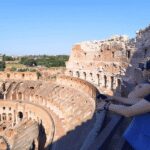
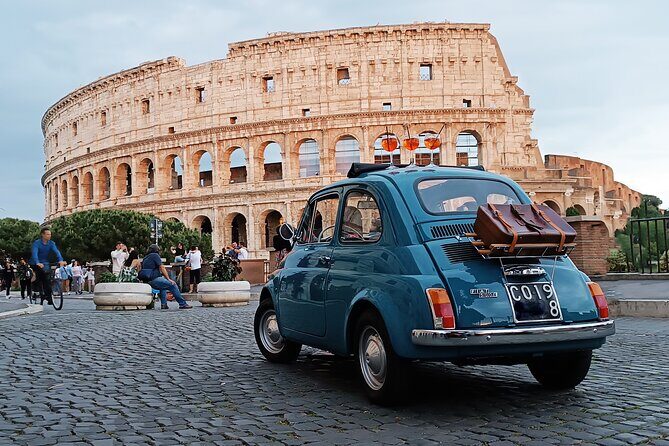
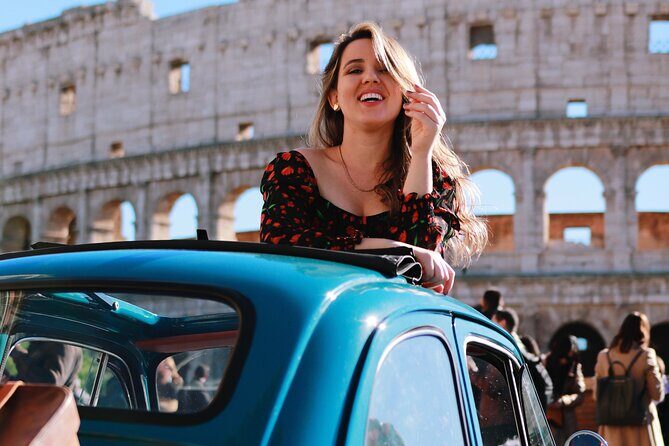
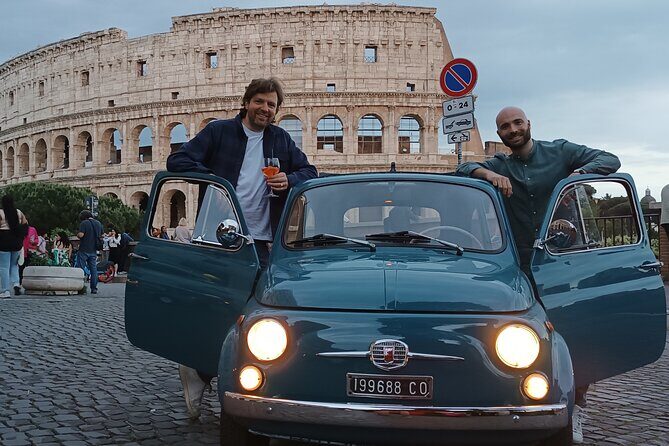
The Colosseum stop is one of the best practical choices on this route. You’ll pass by the Colosseum and then take a longer break for a panoramic view of the Flavian Amphitheater. The schedule calls for about 30 minutes at this point, and it specifically mentions photos and sipping a glass of bubbles overlooking the Colosseum.
Two things make this a smart use of time:
1) You get a classic photo angle and sense of scale without committing to an interior visit.
2) The break is built in, so you’re not just looking at stone. You’re also taking a breather.
Important detail: the visit here is outside only. That means this tour is ideal if your goal is the famous exterior views and the overall loop, not a full, ticketed Colosseum interior experience.
Santa Maria Maggiore and the Early Christian Thread
After the Colosseum viewpoint, the tour continues toward the Papal Basilica of Santa Maria Maggiore. The route notes it as one of the four papal basilicas in Rome and highlights that it has preserved early Christian structures.
You won’t be turning this into a long church visit in a 2–3 hour tour, but you do get the sense that your day isn’t only about ancient Rome. Rome keeps layering—empires change, faith changes, and buildings carry both the visible and the hidden stories forward.
Arcibasilica di San Giovanni in Laterano: Mater et Caput
Next is Arcibasilica di San Giovanni in Laterano—San Giovanni in Laterano—with about 10 minutes. The route calls it the Mater et caput of all the churches of Rome and the world.
Even with limited time, this stop helps you connect the dots. A lot of Rome tours focus only on archaeology or only on sightseeing landmarks. Here, you get at least one major spiritual landmark that anchors the city’s religious center.
If you like religious architecture and symbolism—plus you want to see more of Rome than just ruins—this stop adds a useful angle.
Giardino degli Aranci on the Aventine Hill: The Ending View
The tour ends at Giardino degli Aranci (Parco Savello) on the Aventine Hill, with about 15 minutes. This is a viewpoint park, and the route notes it offers an excellent view of the city.
This final stretch matters more than it sounds. When your last stop is a wide view, it helps your brain consolidate what you’ve seen. You can look out over Rome and connect the monuments you just visited to the larger picture of where everything sits.
It’s also a gentle finish. The itinerary states that the remaining time is spent commuting between attractions and having free time, so you’re not rushed at the very end.
Included Extras That Make the Tour Feel Worth the Price
At $180.62 per person for 2–3 hours, you’re paying for comfort, access, and the hosted package—not just transportation.
Here’s what’s included that makes it feel like a real deal:
- Aperitif with Prosecco or Aperol Spritz
- Coffee and/or tea
- Snacks
This is a big part of the value. In central Rome, you can pay for drinks and snacks quickly, especially if you’re taking breaks between sights. Having it folded into the tour means you can stay in the flow without hunting for a café while your time window runs out.
On top of that, the tour is private, and that usually costs extra in Rome. The private setting is also a practical benefit for photo timing and for keeping the day pleasant instead of chaotic.
Weather, Timing, and Who This Tour Fits Best
This experience requires good weather. Since a lot of the route happens outdoors (and the tour depends on driving between points), plan for the possibility of changes if conditions are poor.
Who should book it?
- You want Rome highlights without long walking days.
- You like photo stops with clear, famous monuments.
- You’re traveling with a group that prefers comfort and a hosted pace.
- You’re on a short timeline and want a concentrated loop.
Who might think twice?
- If you want only ticketed interior visits, this route is more about views and exterior moments (with Colosseum outside only).
- If you’re the type who hates waiting through short photo stops, you might prefer a longer walking tour with fewer car changes.
Should You Book the Vintage Fiat 500 Rome Tour?
If your goal is a well-paced sampler of Rome’s top landmarks—with a fun vehicle, a relaxed rhythm, and drinks included—this tour is a strong choice. It’s especially appealing because it covers major areas efficiently and ends with a viewpoint on the Aventine, so the day closes with a sense of satisfaction.
If you’re craving deep museum time or lots of interior tickets, you may need to pair this with other guided visits. But as a first Rome day, or a highlight loop between heavier sightseeing, it’s an easy yes for many visitors.
FAQ
How long is the Tour of Rome aboard a vintage Fiat 500?
It runs about 2 to 3 hours, depending on time spent commuting between attractions and your free time at the stops.
Is hotel pickup available?
Yes. Pickup is offered either directly at your hotel or at a pre-arranged location convenient for your needs.
Is the Colosseum visit inside or outside?
The Colosseum portion is outside only, focused on a panoramic view and photo time.
What’s included in the price besides the ride?
You get an aperitif with Prosecco or Aperol Spritz, plus coffee and/or tea and snacks.
Can I use a mobile ticket?
Yes, the tour offers a mobile ticket.
What happens if the weather is bad?
The experience requires good weather. If it’s canceled due to poor weather, you’ll be offered a different date or a full refund.