REVIEW · PHOTOGRAPHY SESSIONS
Torpignattara Photo Tour: melting pot, street art and politics
Book on Viator →Bookable on Viator
A wall. A message. A photo lesson.
This Torpignattara photo tour is interesting because it turns a real Rome neighborhood—Torpignattara—into an open-air classroom. You’ll follow murals, writings, and cultural street corners that show how different communities share space in one of the city’s livelier areas. Two things I like a lot are the street-art mapping approach (so you don’t waste time chasing the obvious spots) and the practical way the guide helps with real photo results, even if you’re shooting on your smartphone.
One consideration: the route is flat but a bit long, so comfy shoes matter. And because the experience requires good weather, you’ll want a backup plan if rain moves in.
In This Review
- Key highlights you should care about
- Torpignattara: Rome’s Street Art Meets Everyday Life
- Starting at Piazza Roberto Malatesta: Finding the Shot Before You Walk
- Murals and Writings: The Tour’s Real Photo Power
- Shooting Political Messages Without Turning It Into Drama
- The Multiethnic Neighborhood Feel: More Than Background Noise
- Hidden Spots and Inside-Building Art: Why You Need a Local Route
- Flat but Long: Practical Tips for a 3-Hour Shoot
- English Guidance and Private Group Benefits
- Price and Value: What $197.77 Really Buys You
- Who Should Book This Torpignattara Photo Tour
- After the Tour: Where Food Fits Into the Day
- Should You Book Torpignattara Photo Tour?
- FAQ
- Where does the Torpignattara Photo Tour start and end?
- What time does the tour begin?
- How long is the tour?
- How much does the tour cost?
- Is the tour private?
- What language is the tour offered in?
- Is the walking route difficult?
- Is there a weather requirement?
- What’s the cancellation policy?
Key highlights you should care about
- Street-art mapping so you find more murals than you would on your own
- Murals + writings that connect art to everyday neighborhood life
- Daniele’s photo coaching, including composition tips for smartphone shooting
- Real local texture: a multiethnic area with lots of youth, culture, and food nearby
- Private tour format, only your group goes with the guide
- Metro-friendly finish near Arco di Travertino (line A)
Torpignattara: Rome’s Street Art Meets Everyday Life
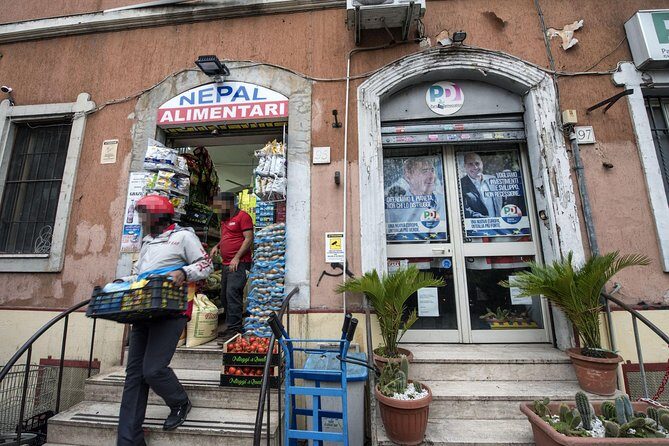
If your Rome plan is mostly fountains, churches, and ticket lines, this tour adds something different. Torpignattara feels like a working neighborhood first, and a photo location second. That matters because your photos come out more truthful: you’re photographing messages on walls inside real streets, not “staged” views meant for visitors.
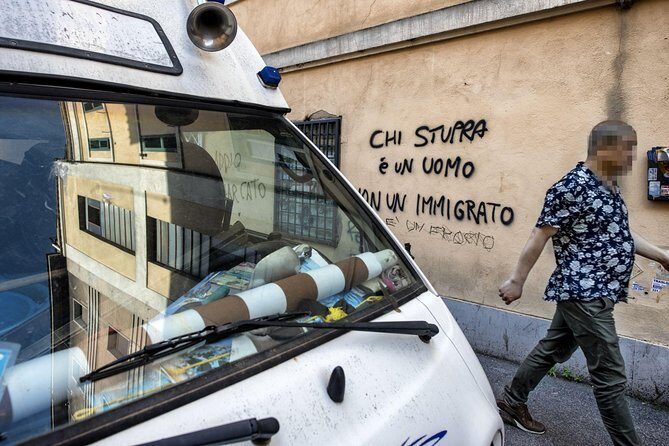
The tour’s theme is melting pot, street art, and politics. Even without a lecture tone, you’ll notice writings and mural themes that can carry local viewpoints. Some of the art is loud, some is more subtle, and the best part is how the neighborhood’s human presence sits right alongside the images. You’re not only looking at art—you’re seeing how it lives.
Another reason I’d put this high on a photography trip list: the area is full of visual edges—doors, stairwell entrances, building corridors, and street angles—so your camera has plenty to work with. If you’ve ever felt stuck taking the same type of shot in every city, this tour gives you a different kind of prompt.
You can also read our reviews of more tours and experiences in Rome
Starting at Piazza Roberto Malatesta: Finding the Shot Before You Walk
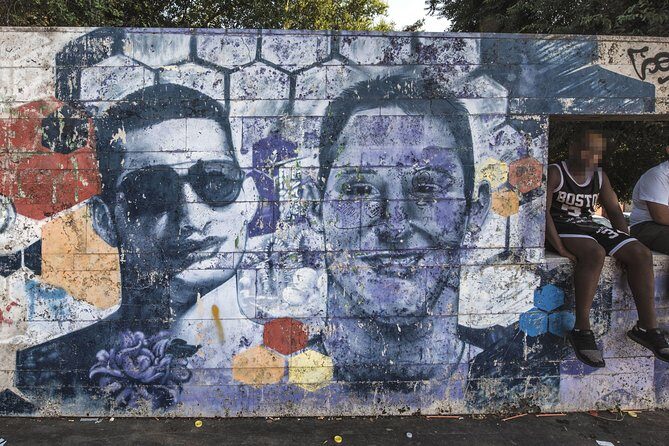
You meet at P.za Roberto Malatesta 53 around 10:00 am. The meeting spot is in a part of Rome where it’s easy to join the street flow fast, and it’s near public transportation, which helps if you’re juggling the rest of your day.
The walk starts with you getting your bearings. That’s not fluff. When you’re doing street photography, your first five minutes set your whole pace: are you scanning for shapes, watching for light, or just following the group? The guide’s style (from what people describe) is patient and practical, and that’s useful if you’re not a “serious camera person.”
You’ll also get a sense of what the tour is really doing: it’s building a path through murals and writings, with photo ideas woven in so you know what to look for next, not just where to stand.
Murals and Writings: The Tour’s Real Photo Power
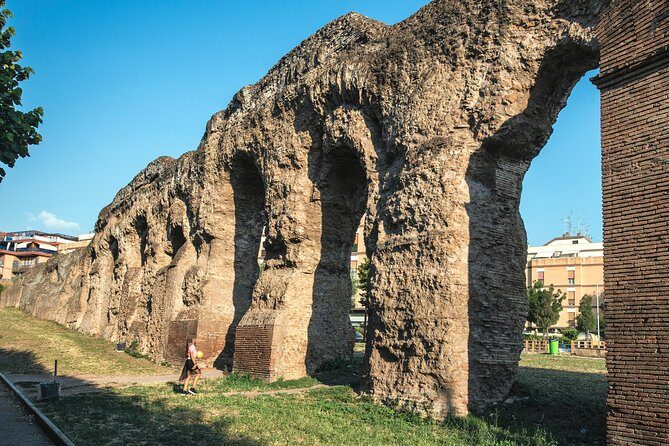
This is the heart of the experience: murals and writings across Torpignattara, framed as an evolving photo assignment. The tour doesn’t just point at art and say, good picture. It pushes you to see how the art connects to the wall texture, the surrounding buildings, and the street direction.
Here’s what you can expect to benefit from:
- You get ideas for composition—how to frame and angle your shot so the mural isn’t the only thing in the frame.
- You learn how to approach details without getting lost. Street art is easy to over-photograph; the trick is choosing angles that tell a story.
- If you’re using a smartphone, you still get help. One review mentioned composition guidance specifically for smartphone shooting, which is exactly what you need in real-world street work.
A big plus is the “mapping” mindset. Instead of wandering and hoping, the guide takes you toward spots you might miss. One person even said that going in blind would have meant skipping some works—especially those tucked away in less obvious places, including areas inside residential buildings. That’s a huge value for anyone who wants more than a generic street-art stroll.
Shooting Political Messages Without Turning It Into Drama
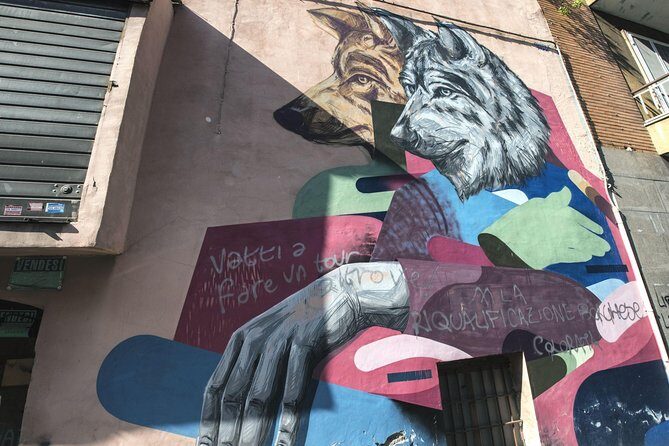
Street art that touches politics can be sensitive. The good news is that this tour stays grounded in observation. You’re not being asked to “take sides.” Instead, you’re learning how to photograph messages on walls as part of the neighborhood’s visible voice.
Practically, that means you’ll likely pay attention to:
- placement on the street (who would see it, and from where)
- layering (how posters, paint, and older marks interact)
- the tone of writings (not just images, but text, symbols, and style)
You’ll also pick up how the neighborhood’s multiethnic life shapes what you see. In Torpignattara, you’re moving through streets where different communities coexist, and the art is part of that scene. The tour description calls it one of the liveliest parts of Rome, and the reviews echo that feeling—this is art living next to real daily movement.
If you’re worried the tour will feel like a debate, don’t. The focus is on how to notice and document the messages in a respectful, photo-first way.
The Multiethnic Neighborhood Feel: More Than Background Noise
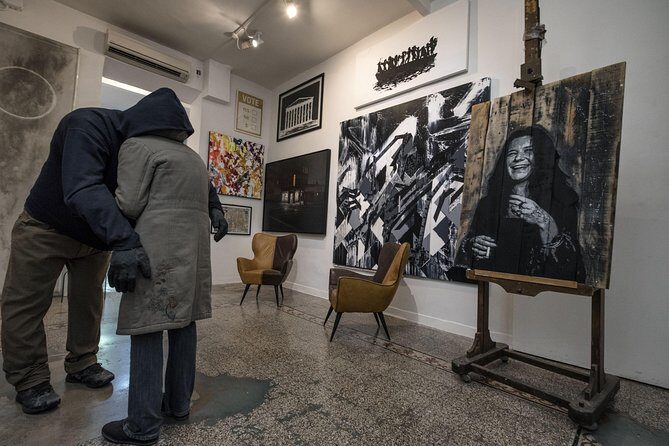
Photos get better when the street has characters in it. Torpignattara brings that. The reviews repeatedly describe it as multiethnic and young, with a mix of cultures and a strong sense of “people out living life,” not just people passing through.
That shows up in what you’ll photograph:
- murals painted to be seen by everyone walking by
- neighborhoods with different rhythms on different streets
- everyday textures—entrances, signage, courtyards—anything that makes an image feel lived-in
One reviewer even mentioned the tour helped them breathe in the area’s multietnic atmosphere in a way that’s hard to get from a checklist of sights. That’s the real advantage of doing street art photography here: you’re documenting the neighborhood as a system—art plus people plus movement.
You can also read our reviews of more photography tours in Rome
Hidden Spots and Inside-Building Art: Why You Need a Local Route
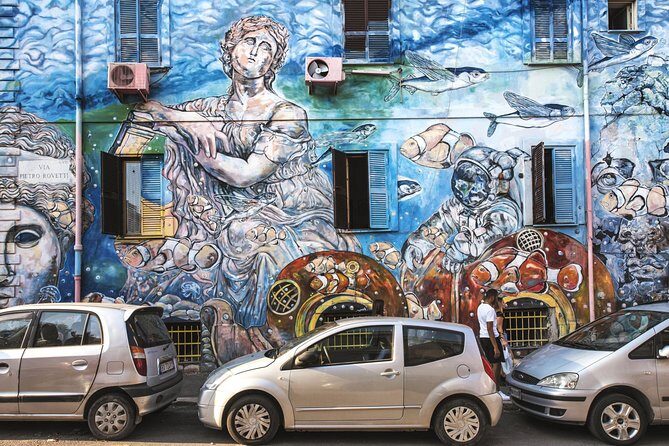
Street art often hides. Not always because it’s secret—sometimes because it’s tucked behind stairwells, courtyards, or apartment entrances that you’d never look at unless someone guided you.
People specifically mentioned that the guide took them to more hidden works they wouldn’t have imagined exist. One review noted that some murals are even inside condomini (residential buildings). That’s exactly the kind of detail that makes a guided photo walk worth the cost.
Also, it’s not just about “finding more.” It’s about learning how to see. After a few stops, you start scanning buildings differently. You start noticing angles, partial walls, overlooked corners, and how text sits within the geometry of the street.
If you’re the type who likes photography missions—short tasks with a point—this kind of route gives you that. If you’re more relaxed, it still keeps the walk purposeful, so the time doesn’t feel like aimless wandering.
Flat but Long: Practical Tips for a 3-Hour Shoot
The tour is about 3 hours, and the route is flat, which is great news if you hate steep hills. Still, it’s described as a bit long, so don’t plan to treat it like a quick coffee stop.
Here’s how I’d set yourself up for success:
- Wear shoes you trust for walking through city streets at a steady pace.
- Bring water, especially if you’re shooting and stopping for photos often.
- Give yourself permission to move slowly when something catches your eye. Street art rewards patience.
The tour also needs good weather. If rain shows up, expect a reschedule or a full refund option depending on how the operator handles it (the key idea is that weather matters here). So plan the rest of your day with some flexibility.
English Guidance and Private Group Benefits
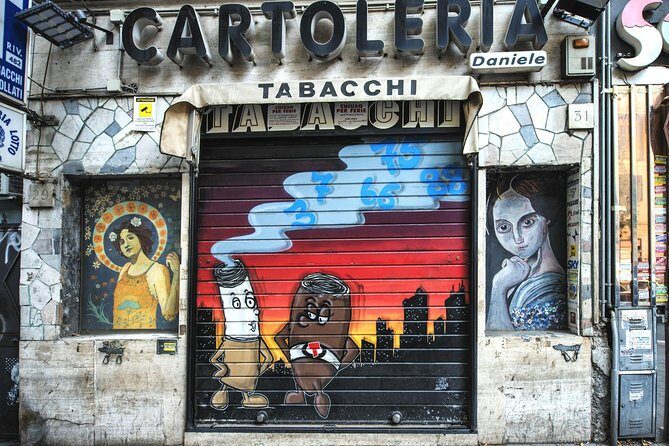
The tour is offered in English, which is helpful if you’re traveling solo or with a mixed-language group. A private format also changes the experience. Instead of a large group rushing through, you’re with only your group, and the guide can adapt at the right pace.
This matters for photography coaching. One review said the guide adapted the tour to specific requests, and they also described constructive critiques as part of the process. That’s exactly what you want if you’re trying to improve—not just collect images, but actually learn something you can use later.
The guide name mentioned in reviews is Daniele. People highlighted patience and competence, which you feel when you’re asking questions like: How should I frame this? Should I move left? What do I do with busy backgrounds?
If you love street art but don’t always know how to shoot it well, this is the kind of format that can turn frustration into progress.
Price and Value: What $197.77 Really Buys You
At $197.77 per person for roughly three hours, it’s not “cheap in the way museums can be cheap.” But it’s also not overpriced for what you’re getting.
Here’s what you’re paying for, in real terms:
- Local guidance to locate murals and writings you might miss on your own
- Photo coaching, including composition advice (even for smartphone shooters)
- A structured route, so you spend less time wandering and more time capturing usable shots
- A private-group experience with the guide able to adjust to your needs
- A start and finish designed for easy transit, beginning at Piazza Roberto Malatesta and ending near Arco di Travertino (metro line A)
If you love photography and want more than “I walked around and found some cool murals,” the value makes sense. If you’re simply looking for general street-art scenery and you don’t care about technique, you might find cheaper self-guided options. But the mapping and coaching are where the tour justifies the price.
Who Should Book This Torpignattara Photo Tour
This tour is a strong fit if:
- You want street art that feels connected to real neighborhood life, not a theme-park set
- You want help with photo composition, especially if you’re using a smartphone
- You like multiethnic city areas and want to see cultural life through walls, streets, and daily movement
- You want a guided experience that can include people who are not professional photographers
It’s also a good choice if you like the idea of learning how to shoot murals efficiently. One review specifically called out that the tour is great even for someone who doesn’t identify as a photographer, because the mapping helps you avoid wasting time and missing works.
If you hate walking or you only want short stops, then the “flat but a bit long” detail is worth respecting.
After the Tour: Where Food Fits Into the Day
This tour doesn’t come with a sit-down food program, but the neighborhood is built for eating. One review directly recommended checking out local trattorias with typical Roman dishes, including quinto quarto and frattaglie. If that sounds like your kind of Rome, you’ll be in the right zone to continue the day beyond photos.
Even if offal dishes aren’t your thing, you’ll likely find plenty of normal, satisfying options nearby. The point is simple: Torpignattara is a place you can keep enjoying after the last shot.
Should You Book Torpignattara Photo Tour?
Book it if you want street art + practical photography help in a real Roman neighborhood. The mapping approach, Daniele’s coaching, and the way the walk connects murals and writings to everyday multiethnic life are the big reasons this works.
Skip it if you’re expecting a short, low-walking experience or you need fully accessible, minimal-walk conditions. Also be honest about weather—this one performs best when you can be outside comfortably.
If your Rome trip has room for one day that looks and feels different, Torpignattara is a smart choice.
FAQ
Where does the Torpignattara Photo Tour start and end?
It starts at P.za Roberto Malatesta 53, Rome and ends near Arco di Travertino metro entrance (line A).
What time does the tour begin?
The start time listed is 10:00 am.
How long is the tour?
The duration is about 3 hours.
How much does the tour cost?
The price is $197.77 per person.
Is the tour private?
Yes. It’s described as a private tour/activity, so only your group participates.
What language is the tour offered in?
The tour is offered in English.
Is the walking route difficult?
The route is flat, but it’s described as a bit long.
Is there a weather requirement?
Yes. The experience requires good weather. If it’s canceled due to poor weather, you’ll be offered a different date or a full refund.
What’s the cancellation policy?
You can cancel for a full refund up to 24 hours before the experience’s start time. If you cancel less than 24 hours before, the amount paid won’t be refunded.