REVIEW · ROME
The Ultimate Golf Cart Tour Adventure
Book on Viator →Operated by Rome Tours · Bookable on Viator
Rome is beautiful, but it can be exhausting. This golf cart tour gives you a guided route through the center so you can see big-ticket sights without paying the price in blisters. I really like that you get a professional licensed guide explaining what you’re looking at, not just pointing. I also like the short stop times paired with a calm pace—enough time to take photos and get your bearings. One drawback to plan for: it’s not the move if you want lots of indoor monument time, and rain can make the experience less comfortable.
The whole experience runs about 2 to 3 hours, and it’s set up for small groups (up to 6). That small size matters in Rome, where traffic, sidewalks, and tight parking can slow everything down. Another consideration: it’s not suitable for babies/children, so if that’s your group, you’ll want a different option.
You’ll cruise past major landmarks with guided context and photo-friendly stops, ending at Piazza Navona. If you’re the kind of person who prefers “see more, think more” over “walk until your knees surrender,” this fits your travel style well.
In This Review
- Key things to know before you go
- A Rome circuit you can actually enjoy without sore feet
- Route rhythm: what 2 to 3 hours feels like in a small group
- First swing past the Arch of Constantine and the power shift
- Piazza Venezia: where the city’s big roads meet Roman power
- Circus Maximus and a 150,000-seat view
- Bocca della Verità: the marble mask and the legend
- Piazza di Spagna and the Spanish Steps area, no stair marathon
- Trevi Fountain coin toss, with room for photos
- Piazza Navona breaks the walking spell
- Pantheon time: seeing Hadrian’s dome without line stress
- Value check for a $370.18 Rome golf cart day
- Who should book this and who should skip it
- Should you book this Rome golf cart tour?
- FAQ
- What’s the duration of the Rome golf cart tour?
- Where does the tour start and end?
- Is monument entry included?
- What’s included in the price?
- How big is the group?
- Is it suitable for families with children?
Key things to know before you go
- Small group (max 6) and a private-tour feel that keeps the ride flexible
- Licensed guide-led storytelling at every stop, not random sightseeing
- Outside-the-monuments route that’s built for time-saving sightseeing
- Multiple departure times, so you can match your energy level and daylight
- Weather matters—one hint from real-world experience is to not get caught in rain
A Rome circuit you can actually enjoy without sore feet
Here’s the big idea: Rome can be a lot. The streets are older than cars, the sidewalks can be uneven, and the “must-sees” are often spread out. A golf cart tour solves the distance problem, and the best versions of this format solve the confusion problem too—because you’re not wandering around guessing what matters.
This tour is designed around comfort and short sightseeing windows. You’re not meant to spend the entire day waiting in lines or walking miles between stops. Instead, you move efficiently and then stop long enough to absorb what’s right in front of you: statues, arches, fountains, domes, and the street-level life around them.
I also like the practical route ending at Piazza Navona. You finish in a square where you can keep wandering, grab a drink or meal, or just watch Rome happen.
You can also read our reviews of more tours and experiences in Rome.



Route rhythm: what 2 to 3 hours feels like in a small group
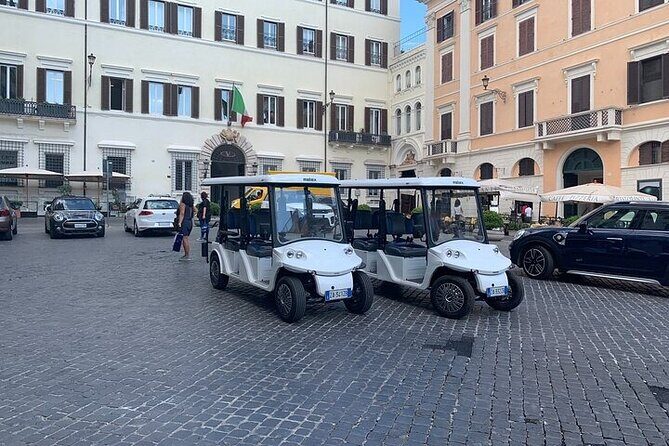
Expect a smooth flow rather than a sprint. The standard duration is about 2 to 3 hours, with timed stops ranging from roughly 15 to 20 minutes. That pacing is intentional: it gives you time to step off, look, take photos, and then hop back on without turning the day into one long queue.
The tour uses a mobile ticket, which is simple once you’re in the city. It’s also set up near public transportation, so you’re not stuck in a remote area if you’re coordinating with other plans.
And yes, the group size helps. With up to 6 people, your guide can adjust explanations and timing when someone needs a quick photo break or a moment to catch their breath.
First swing past the Arch of Constantine and the power shift
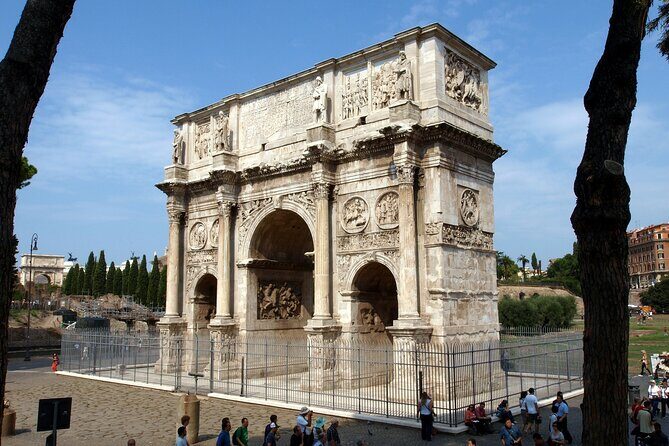
Your first major landmark stop is the Arch of Constantine, one of Rome’s most impressive triumphal arches. It’s the largest and best-preserved of the three triumphal arches, and it commemorates Emperor Constantine’s victory connected to the Battle of Milvian Bridge in 312 AD.
What I find useful here is the way the arch tells multiple stories at once. The reliefs and inscriptions honor Constantine, but they also blend materials and styles connected to earlier emperors. If you like monuments that show how power and ideology change over time, this is a strong opening.
Practical note: you’re there briefly (about 15 minutes). So this isn’t the stop for a deep museum-style reading. Think of it as a “look closely, get the big ideas, take the picture” moment—then you move on with the guide’s context helping you connect the dots.
Piazza Venezia: where the city’s big roads meet Roman power
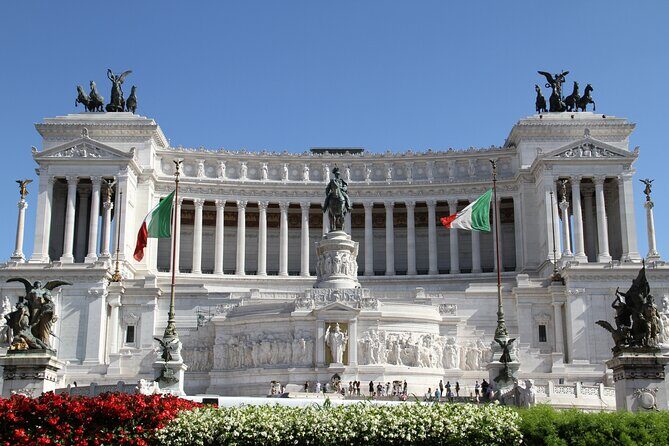
Next up is Piazza Venezia, a key central hub where major streets converge, including Via del Corso and Via dei Fori Imperiali. The square is dominated by Altare della Patria, the monumental tribute to Victor Emmanuel II.
This stop works because it’s a transition point. You start here to orient yourself in the modern city while still staying connected to the ancient one. Even if you’ve never visited Rome before, Piazza Venezia gives you a mental map: it’s the kind of place where other Roman sightseeing plans naturally connect.
Time on site is short—about 15 minutes. Use it for photos and orientation, especially if you want to continue your day on foot afterward. It’s a good moment to ask your guide a question about what you’ll see next so the rest of the ride makes sense.
Circus Maximus and a 150,000-seat view
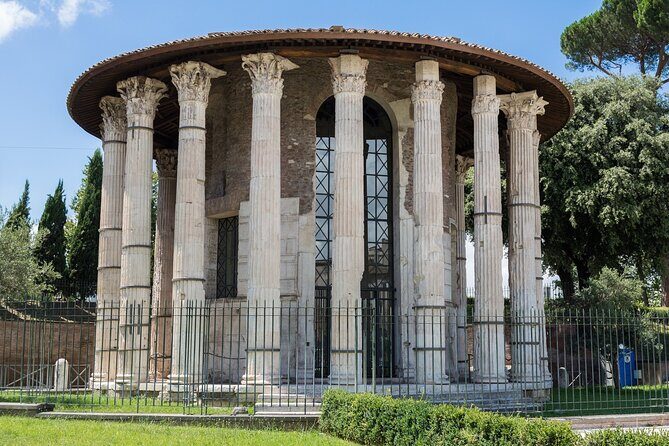
At Circo Massimo, you’re seeing a famous scale of entertainment in ancient Rome. It was the largest chariot stadium, about 600 meters long, and it could hold as many as 150,000 spectators.
Even if you’re not a chariot-race person, this stop is great because it changes how you picture Rome. It’s easy to think of ancient Rome as temples and ruins. Circus Maximus reminds you that Rome was also crowds, spectacle, and mass energy.
The tour stop is about 15 minutes, and admission isn’t included. You’re mainly getting the outside experience—enough to understand what it was and why it mattered—without turning your afternoon into a longer ticket-and-wait plan.



Bocca della Verità: the marble mask and the legend
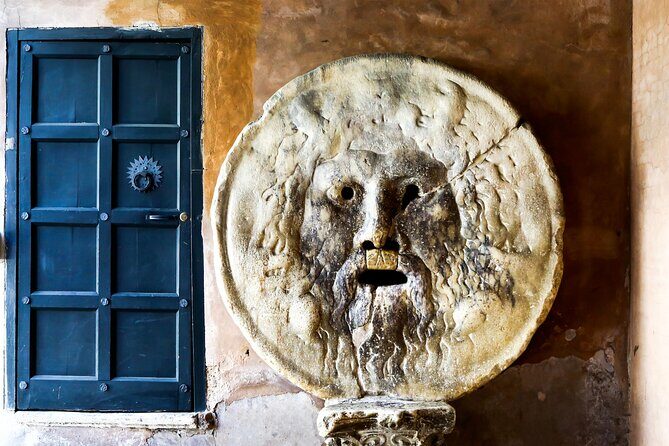
Then it’s Bocca della Verità (Mouth of Truth), a marble mask against the portico of Santa Maria in Cosmedin. The sculpture dates back to the 1st century AD, and it’s famous for the legend: put your hand into the mouth, and if you’re untruthful, you’ll lose it.
Is it a literal truth-test? No. But it’s still a fun Roman tradition and a recognizable story that turns a normal photo spot into an actual moment. The site sits near the ancient Forum Boarium area, which helps it feel less like a random tourist stop and more like part of the city’s old fabric.
You’ll have about 15 minutes. Plan this stop as a quick look, a laugh, and a photo with context—then keep moving. It’s also listed as not having included admission, so assume you’re viewing the famous exterior area rather than an inside entry experience.
Piazza di Spagna and the Spanish Steps area, no stair marathon
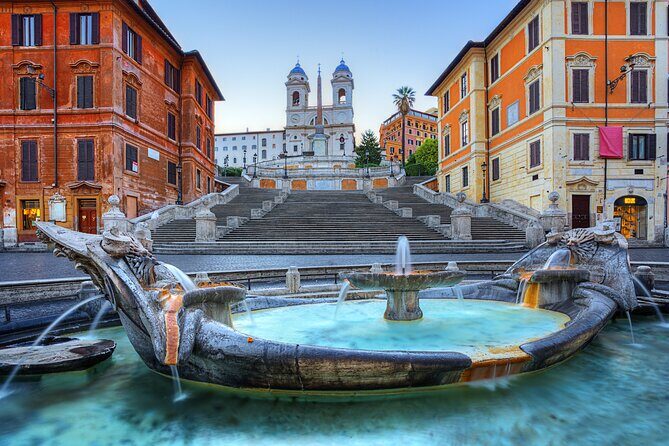
When you reach Piazza di Spagna, you’re in one of Rome’s most recognizable neighborhoods, and it’s closely connected to the Spanish Steps. The square sits near upscale streets like Via dei Condotti, and it’s surrounded by historic villas from the 17th and 18th centuries.
This stop is practical because it gives you the Spanish Steps area without forcing you to do a full walking or stair workout. If your travel style is more “take in the views” than “survive the stairs,” this is a smart fit.
You’ll spend about 20 minutes, and admission is free for this stop. That extra time helps since it’s a classic place to pause, take a few shots from different angles, and then head to the next stop without feeling rushed.
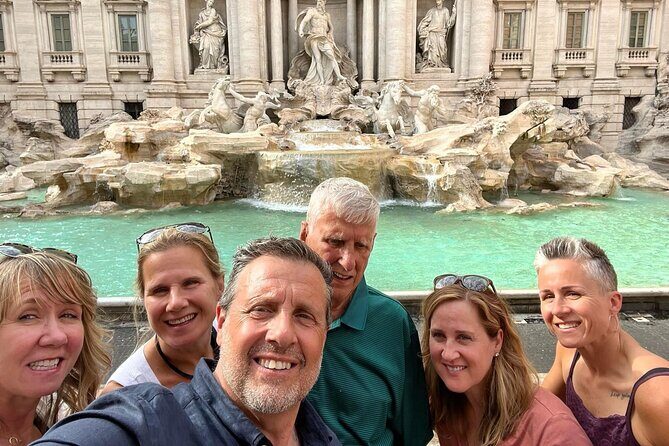
Trevi Fountain coin toss, with room for photos
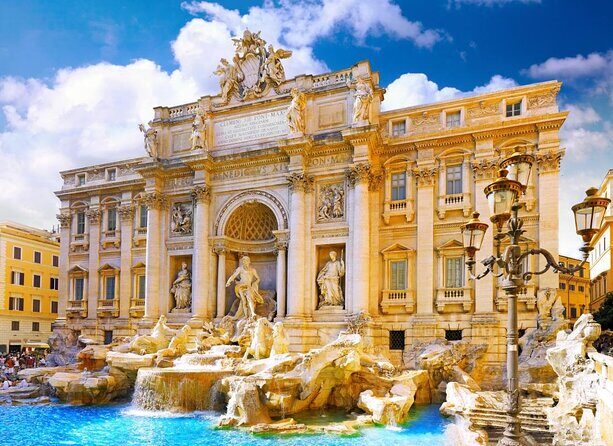
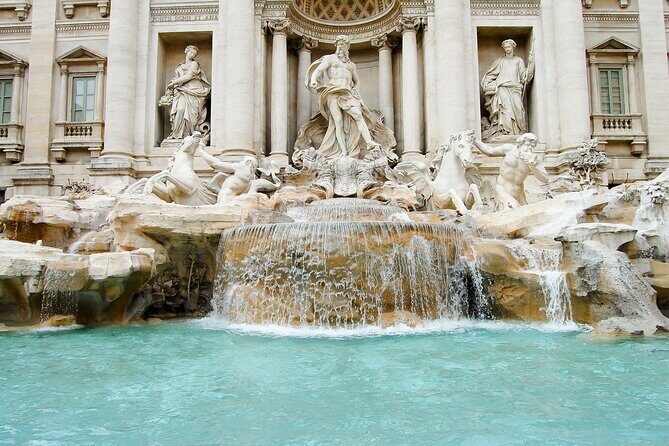
Fontana di Trevi is one of the world’s most famous fountains, and the Baroque details are genuinely worth slowing down for. It was completed in 1762 and features Neptune leading a chariot pulled by sea horses—an image that ties into the fountain’s theme of taming waters.
There’s also the tradition: toss a coin over your shoulder for a return to Rome. If you want to do it, having a coin ready is a small thing that can make the moment feel complete.
You’ll have about 20 minutes here. Admission isn’t included, which fits the pattern of the tour being outside monuments. Still, that’s plenty of time to get photos and enjoy the structure from the outside—especially if your timing lines up well with the day’s light. The fountain is described as particularly beautiful when illuminated at night, so if your departure happens later, you might get that glow.
One caution: this is a prime photo magnet. So don’t plan on a perfect shot from one exact angle. Instead, use the time like a pro—shoot, step aside, shoot again, and let the guide move you when it’s time.
Piazza Navona breaks the walking spell
Piazza Navona is where Rome’s art and street life mix together. The centerpiece is Fontana dei Quattro Fiumi, with sculptures representing major rivers of the world and an obelisk rising above.
This stop also gives you a built-in reset. Instead of constantly moving, you can actually sit, stand, look, and soak up the vibe—especially around the surrounding cafes and the lively street energy.
You’ll have about 20 minutes, and admission is free. It’s also the second-to-last stretch emotionally, since the tour ends here. If you want to keep exploring after the cart tour, Piazza Navona is a comfortable landing zone.
Pantheon time: seeing Hadrian’s dome without line stress
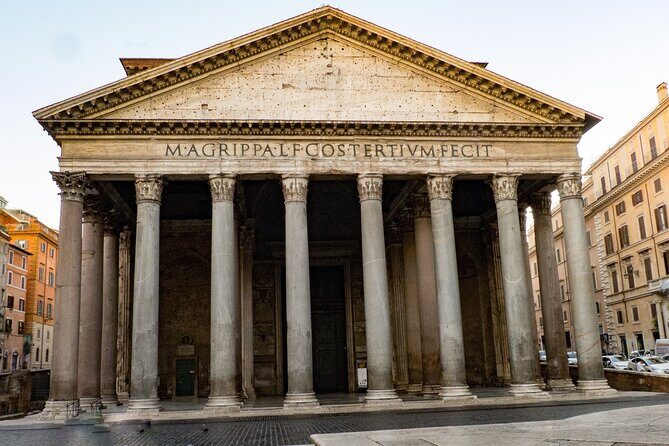
The final major stop is the Pantheon, one of the best-preserved ancient Roman monuments. It was completed around 126–128 AD during Emperor Hadrian’s reign, and the famous feature is the domed ceiling with the oculus at the top.
This is the kind of site where the architecture does the talking. The oculus brings light into the interior, creating that memorable sense of space. Since the tour is set around visiting outside monuments, you should treat this as a quick “big picture” experience rather than an inside entry.
Admission is listed as not included, which supports that approach. Still, even from the outside, the Pantheon is hard to forget, and the timing fits perfectly as a final hit of Roman engineering before your day continues on foot.
Value check for a $370.18 Rome golf cart day
Let’s talk money without pretending we all love spreadsheets. The price is $370.18 per person, and the tour is commonly booked about 26 days in advance on average. For Rome, that’s not a bargain price—but it can be strong value depending on what you’re optimizing.
Here’s what you’re paying for:
- A professional licensed guide translating the city into stories you can use
- The golf cart itself, which reduces walking time and stress
- All fees and taxes handled
- Time-efficient routing designed for a 2 to 3 hour window
- Stops that are mostly outside monuments, so you’re not building your day around entry lines
If your priority is seeing the main landmarks without losing half a day to logistics, this can feel worth it. Especially if you’re arriving early, you want to hit multiple iconic sights in one go, or you’d rather spend your energy on dinner plans after you finish.
One more value point: the tour is described as private, with flexibility and personal attention. In practical terms, that often means less rigid “herd pace” and more room for your guide to respond to your group.
Who should book this and who should skip it
This tour is a great match if you:
- Want to see a lot fast without walking long distances
- Prefer guided explanations over wandering and guessing
- Like the idea of short stops with photo time
- Appreciate a small-group feel (max 6)
I’d be cautious or choose something else if you:
- Need indoor monument access and long entry times
- Are traveling with babies/children (it’s not suitable for that age group)
- Are only interested in a single deep-dive site rather than a multi-stop circuit
Also, plan around weather. One real-world rule of golf cart touring: don’t get caught in rain. If there’s any chance of storms, pack a compact poncho or umbrella so the ride stays comfortable.
Should you book this Rome golf cart tour?
If you want a smart way to cover Rome’s headline landmarks in a short window, I think this is the kind of tour that makes your day feel smoother. The guide-led stops matter—your experience isn’t just transportation, it’s interpretation. And the finish at Piazza Navona gives you an easy place to transition into the rest of your day.
Book it if your travel style is “less walking, more understanding.” Skip it if you want lots of indoor time or you’re traveling with babies/children.
FAQ
What’s the duration of the Rome golf cart tour?
The tour duration is listed as about 2 to 3 hours.
Where does the tour start and end?
It starts at Via del Cardello, 31, 00184 Roma RM, Italy and ends at Piazza Navona, 00186 Roma RM, Italy.
Is monument entry included?
The tour includes visits outside the monuments. Admission for several stops is listed as not included, and food/drinks and tips are also not included.
What’s included in the price?
Included are a professional licensed guide, the golf-cart, and all fees and taxes.
How big is the group?
The tour has a maximum of 6 travelers.
Is it suitable for families with children?
It is not suitable for babies/children.