REVIEW · PRIVATE
The Genius of Caravaggio: Rome Private Tour
Book on GetYourGuide →Operated by Crazy4rome srls · Bookable on GetYourGuide
Caravaggio’s Rome turns street corners into drama. This private walk follows the artist’s trail through the churches that originally commissioned his work, with an expert guide helping you read the paintings like a story. You’ll also see the kind of details that make these works still feel urgent more than 400 years later.
What I like most is the focus on the right places. You get to stand in Santa Maria del Popolo for Saint Paul’s Conversion and the Crucifixion of Saint Peter, then you move on to Caravaggio works tied to their original settings. And the guide experience is a big plus: guides such as Chiara and Maria are described as engaging and friendly, with clear explanations that keep the art from feeling like homework.
One consideration: it’s only 3 hours, so you’ll cover key masterpieces rather than spending long, slow hours with every side detail. If you want deep museum-style time in one church, you may wish you had a longer add-on day.
In This Review
- Key takeaways before you go
- Caravaggio’s Rome: why this walk feels different
- Meeting point and how the 3 hours actually move
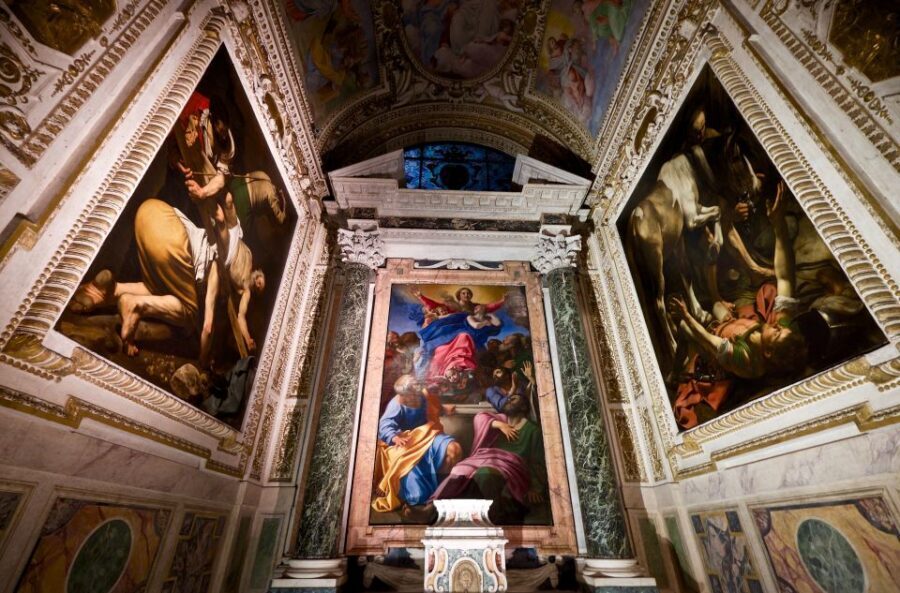
- Santa Maria del Popolo: Saint Paul and Saint Peter in the original room
- The Rione IV Campo Marzio stroll: finding Caravaggio on the map
- Sant’Agostino (St. Augustine): The Madonna of Pilgrims and clear visual storytelling
- San Luigi dei Francesi: Saint Matthew’s stories and Caravaggio’s early altarpieces
- What you’ll learn about Caravaggio’s technique (and how to look)
- Private-group value: when $456.21 is a smart trade
- Languages, guide style, and practical comfort
- Who should book this Caravaggio tour?
- Should you book The Genius of Caravaggio: Rome Private Tour?
- FAQ
- How long is The Genius of Caravaggio: Rome Private Tour?
- What is the price for this tour?
- Where does the tour start and end?
- Which churches and sites are included?
- What Caravaggio works can I expect to see?
- Do I need to buy tickets?
- What languages are available for the guide?
Key takeaways before you go
- Original commission locations: you see Caravaggio where the churches asked for the art in the first place
- Three major church stops: Santa Maria del Popolo, Sant’Agostino (St. Augustine), and San Luigi dei Francesi
- Famous paintings in context: Saint Paul’s Conversion, the Crucifixion of Saint Peter, and The Madonna of Pilgrims
- Saint Matthew, and early altarpieces: San Luigi dei Francesi includes three paintings tied to Saint Matthew’s stories and described as Caravaggio’s first altarpieces
- A private guide for a smooth pace: you’re not squeezed into a crowd, and you can ask follow-up questions
Caravaggio’s Rome: why this walk feels different
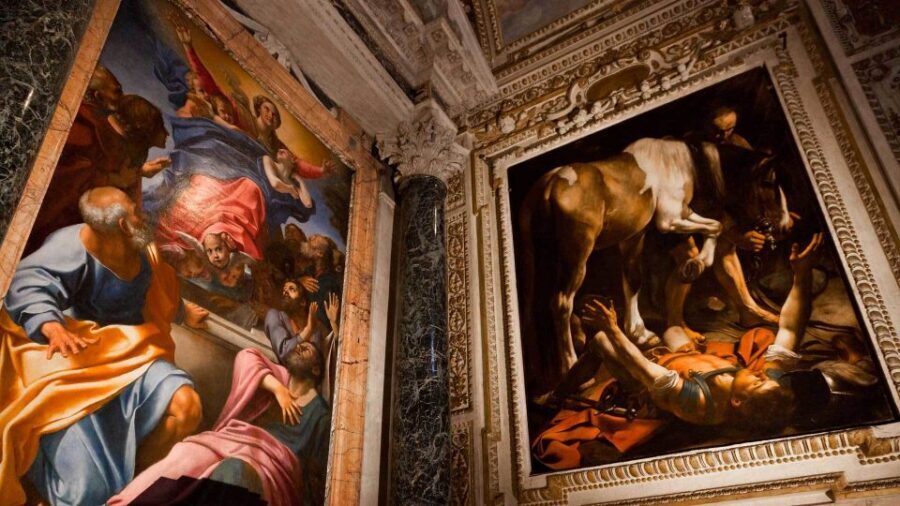
Caravaggio is one of those artists who doesn’t just get admired from a distance. The paintings demand attention because they’re built to hit you fast: strong emotion, tight composition, and lighting that makes the scene feel immediate. What makes this tour work is that you’re not treating his work like isolated “great art.” You’re seeing it where it was commissioned, displayed, and meant to be experienced.
You’ll stroll through the district where Michelangelo Merisi da Caravaggio lived and worked after moving to Rome in the late 1580s (he was born in Milan in 1571). That timing matters. Rome in that period was competitive, religious, and intensely political—and Caravaggio’s style fits that environment. When you learn why specific churches wanted specific images, the paintings stop being random masterpieces and start feeling like purposeful communication.
This is also a smart “first Caravaggio” tour. You get multiple churches in a short span, but each stop connects back to the same core question: why did Caravaggio’s work land where it did, and how did his technical choices serve the message?
You can also read our reviews of more private tours in Rome
Meeting point and how the 3 hours actually move
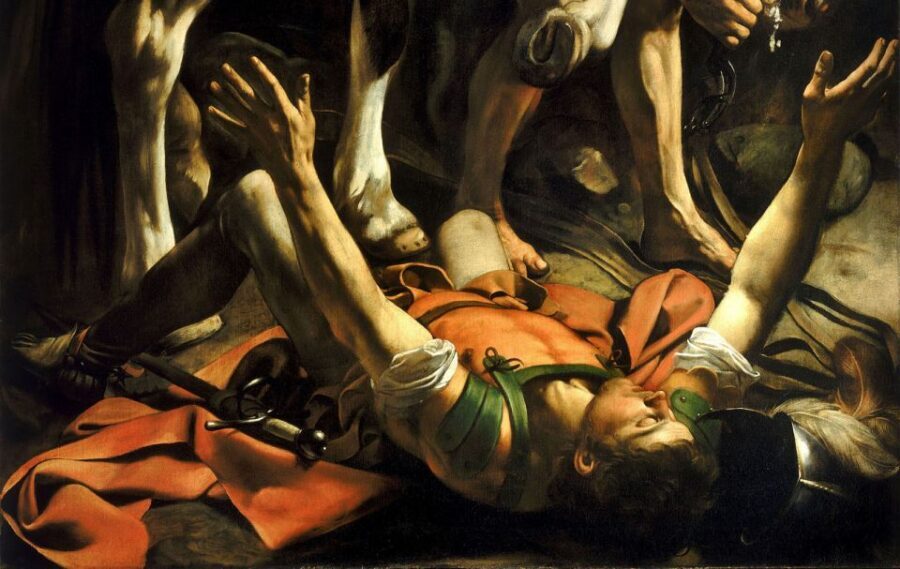
You start at the exit of the Book Store Altroquando, Via del Governo Vecchio 82. The session is listed at 3 hours, with starting times that vary—so check availability for what’s offered on your dates.
Expect a walking-and-seeing rhythm. The schedule includes guided time inside churches (45 minutes at Santa Maria del Popolo, 45 minutes at San Luigi dei Francesi, 45 minutes at Sant’Agostino, plus a shorter guided window at the Rione IV Campo Marzio street area). Between those, you’re simply moving through Rome with a guide who can point out why the route matters, not just where to stand for photos.
At the end, the tour finishes back at the meeting point area, with the final stop tied to the Piazza di Spagna area. Translation: you’re not stuck at some far-away drop-off. It’s easier to keep exploring on foot afterward.
Santa Maria del Popolo: Saint Paul and Saint Peter in the original room
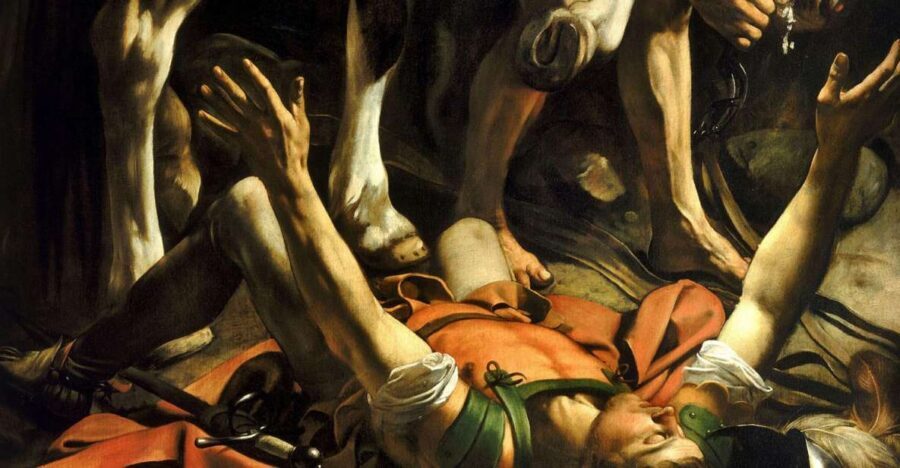
Santa Maria del Popolo is the anchor stop, and it’s a great place to start because the works are instantly recognizable once you’ve been oriented. You’ll get a guided visit of about 45 minutes, which is long enough to look carefully without turning it into an endurance test.
Here’s what you’ll focus on:
- Saint Paul’s Conversion
- Crucifixion of Saint Peter
What I like about starting here is the way it sets your expectations. Caravaggio’s scenes aren’t polite. They’re built for attention—faces, gestures, and the feeling that something has just happened. With a good guide, you learn what to look for first, then you can appreciate what you notice after that. It’s a two-step approach that keeps you from getting overwhelmed by art details.
Potential drawback: Santa Maria del Popolo can be visually busy, because churches are active spaces, not quiet gallery rooms. If you’re the type who likes absolute silence for long staring, you might feel a little time pressure. Still, the guided structure helps you extract maximum meaning without wasting time.
The Rione IV Campo Marzio stroll: finding Caravaggio on the map
After the first church, you spend about 30 minutes in Rione IV Campo Marzio with guided commentary. This is the “connect the dots” segment of the tour.
Why it matters: your brain tends to treat art like it lives in museums, behind glass, at arm’s length. But Caravaggio’s Rome wasn’t behind glass. It was streets, neighborhoods, and church commissions. Learning that he was in Rome by the end of the 1580s—and then seeing the neighborhood context around where he worked—turns the artwork into something more grounded.
During this section, your guide should help you connect stories and anecdotes to the sites you just saw. If you’re the kind of traveler who likes understanding how people lived, this is a satisfying pause between heavier church viewing.
Practical tip: use this segment to settle into the tour pace. It’s a good time to ask a question that’s been bugging you—like what patrons wanted, or what themes Caravaggio was known for in this period—then carry that understanding into the next church.
Sant’Agostino (St. Augustine): The Madonna of Pilgrims and clear visual storytelling
Next comes the Basilica of St. Augustine (Sant’Agostino) for a guided visit of about 45 minutes. This stop centers on The Madonna of Pilgrims.
This painting is a nice contrast after Santa Maria del Popolo because it gives you a different emotional temperature. Instead of the sense of public crisis and dramatic turning points, you’ll be reading a more devotional kind of message—how the image supports faith, identity, and the idea of pilgrimage.
What’s valuable here is the chance to study form, not just subject. Caravaggio’s reputation is often reduced to a few famous traits, but the real skill is in how he builds a scene so your attention lands exactly where it’s meant to. With a guide, you’ll be able to separate style choices from mere “look at the drama” reactions.
One thing to consider: a 45-minute church visit can feel focused but still short if you love art enough to want to trace every compositional line. Still, this stop’s strength is that it’s chosen for impact, and you’ll have guidance on what to prioritize.






San Luigi dei Francesi: Saint Matthew’s stories and Caravaggio’s early altarpieces
Your final major church visit is the Church of St. Louis of the French (San Luigi dei Francesi), also about 45 minutes. This is one of the few French churches in Rome, and the “outsider” connection can make the whole stop feel slightly different—like the city is explaining its international reach through art.
Here’s the key set of paintings you’ll see:
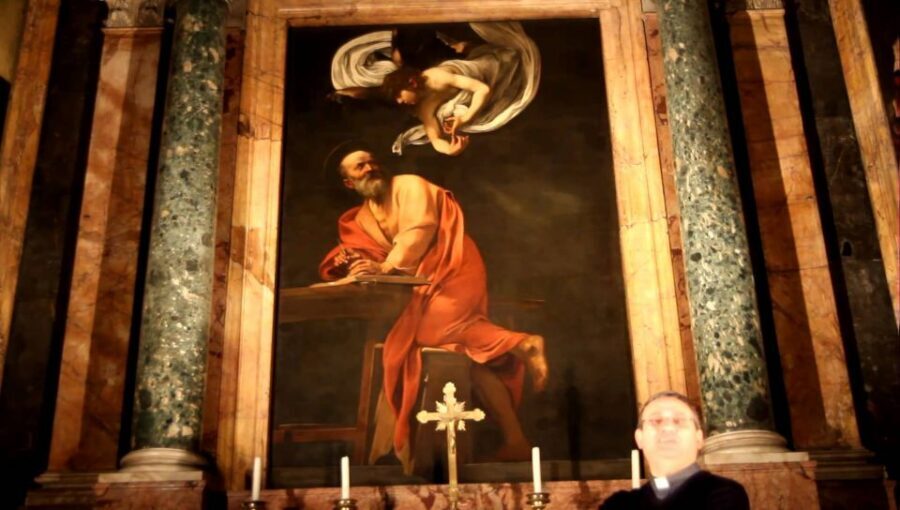
- Three paintings representing the stories of Saint Matthew
- These are described as the first altarpieces ever painted by Caravaggio
That detail is a big deal. When you’re early in an artist’s Roman career, you’re watching style take shape in real time. You can treat this as the origin moment of a major chapter—an opportunity to notice what feels distinct already, and what feels like the seed of later developments.
After Santa Maria del Popolo and Sant’Agostino, these Saint Matthew scenes give your “Caravaggio narrative” more momentum. Instead of only reading isolated moments, you start seeing how his approach fits within church storytelling: scripture told through painting that’s both emotionally direct and technically deliberate.
What you’ll learn about Caravaggio’s technique (and how to look)
Caravaggio’s fame is built on more than mood. This tour is set up to help you recognize the mechanics behind the drama. You’ll hear stories and anecdotes tied to where he worked and what the churches asked for, but the real payoff is learning how to interpret the paintings through technique.
You’ll likely spend time thinking about things like:
- How facial expressions and gestures guide your eye
- How lighting and contrast shape what feels “important”
- How composition turns scripture into something legible in seconds
This matters because most people see Caravaggio as intense without knowing why. With a guided focus, you learn a short checklist of what to notice, and that makes the next painting easier to understand too—even after the tour ends.
A nice bonus from high-quality guides: if your guide is in a good mood (and many are), they’ll often add practical Rome life details. In some cases, that includes a very real suggestion for a gelato stop after you’ve finished art mode.
Private-group value: when $456.21 is a smart trade
The price is listed at $456.21 per group up to 4, for a 3-hour private tour. On paper, that can sound steep if you’re comparing it to solo wandering. But for a private art guide, it’s often fair—especially because you’re visiting multiple churches tied directly to Caravaggio commissions.
Here’s the math that helps:
- Up to 4 people spread the cost
- You’re buying not only interpretation, but time and navigation through specific sites
If you’re a couple or a small friend group, you get the best of both worlds: private attention and access to a structured route that’s hard to replicate on your own without doing a lot of homework.
Also, you’re not just getting a guide voice-over. You’re getting an expert guide service with guided time inside each church stop, which is what makes the experience feel “complete” rather than just like you visited three churches.
Languages, guide style, and practical comfort
You can choose a guide in a long list of languages: Spanish, English, French, German, Italian, Arabic, Portuguese, Russian. If you’re traveling with someone who reads best in a specific language, this is a strong advantage.
The tour is also wheelchair accessible, and it’s set up as a private group, so the experience can be paced around your needs (within the 3-hour structure).
If you need a taxi hotel drop-off afterward, it’s available on request at your own expense. That’s useful if you plan to keep going after the tour and want fewer logistics.
Who should book this Caravaggio tour?
This works especially well if:
- You’re curious about Caravaggio but want help looking at the right things
- You like art tied to place and context, not just famous names
- You’re traveling with a partner, family, or two friends and want a private format
You might want to skip it (or add more time elsewhere) if:
- You’re trying to see every Caravaggio painting in Rome with maximum coverage
- You prefer long, quiet self-guided museum time over a guided hit list
Should you book The Genius of Caravaggio: Rome Private Tour?
I’d book it if you want a focused, place-based Caravaggio experience in a short window. The core strength is the route through Santa Maria del Popolo, Sant’Agostino, and San Luigi dei Francesi, with guided attention on key works like Saint Paul’s Conversion, the Crucifixion of Saint Peter, The Madonna of Pilgrims, and the Saint Matthew paintings described as Caravaggio’s first altarpieces.
Because it’s private and designed to keep the pace manageable, it’s also a good “starter” tour for people who feel overwhelmed by Rome’s sheer number of churches. You’ll leave with a clearer idea of how Caravaggio’s choices connected to the churches that commissioned him—and you’ll be better prepared to recognize his visual language the next time you see his work.
FAQ
How long is The Genius of Caravaggio: Rome Private Tour?
It lasts 3 hours.
What is the price for this tour?
It costs $456.21 per group, up to 4 people.
Where does the tour start and end?
It starts at the exit of the Book Store Altroquando, Via del Governo Vecchio, 82. It finishes back at the meeting point, with the route tied to the Piazza di Spagna area.
Which churches and sites are included?
The tour includes Santa Maria del Popolo, San Luigi dei Francesi (Church of St. Louis of the French), Rione IV Campo Marzio, and the Basilica of St. Augustine (Sant’Agostino).
What Caravaggio works can I expect to see?
In Santa Maria del Popolo you’ll see Saint Paul’s Conversion and the Crucifixion of Saint Peter. In Sant’Agostino you’ll see The Madonna of Pilgrims. In San Luigi dei Francesi you’ll see three paintings connected to Saint Matthew’s stories.
Do I need to buy tickets?
Tickets are listed as non required.
What languages are available for the guide?
The guide can be Spanish, English, French, German, Italian, Arabic, Portuguese, Russian. The tour is wheelchair accessible. Hotel drop-off by taxi is available on request (at your own expense).