REVIEW · ROME
Open Air Escape Game – TRASTEVERE REVOLUTION
Book on Viator →Operated by FOXTRAIL ITALIA · Bookable on Viator
Rome turns into a game board.
Foxtrail’s Trastevere Revolution is an urban adventure that mixes a treasure hunt with an outdoor escape-style challenge, moving you through alleyways, courtyards, and up toward a big payoff view. I like that it’s built for team problem-solving (not just walking), and I also like the way each technology clue station is designed to keep the story moving. One thing to keep in mind: this is weather dependent, so plan for rain or plan to be flexible if it’s canceled due to poor conditions.
You’re not stuck waiting around. The format is “full autonomy” in a group, meaning you solve, move, and figure things out yourselves—while still having a clear structure that guides you station to station. My one practical caution is simple: if you get stuck, don’t improvise; use the help route described in the adventure material.
In This Review
- Key highlights you’ll feel fast
- Trastevere Revolution: an open-air escape game you play at street level
- Starting at Via Emilio Morosini with a mobile ticket
- How the Foxtrail format works: stations, clues, and team autonomy
- Walking Trastevere alleys and finding courtyard clues
- The climb toward the best Rome view (and why it’s part of the puzzle)
- Using the tech stations without getting frustrated
- Price and value: $24.38 for 2 hours of active sightseeing
- When to book: Trastevere is popular and this takes planning
- Who this Foxtrail game is best for
- Tips so you finish strong (and don’t lose the team)
- Quick reality check: weather, time, and comfort
- Should you book Trastevere Revolution with Foxtrail?
- FAQ
- What is the duration of the Trastevere Revolution open-air escape game?
- Where does the experience start and end?
- How much does it cost?
- Do I need a printed ticket?
- Is it a private group experience?
- Is confirmation provided after booking?
- Is good weather required?
- Is it near public transportation and are service animals allowed?
Key highlights you’ll feel fast
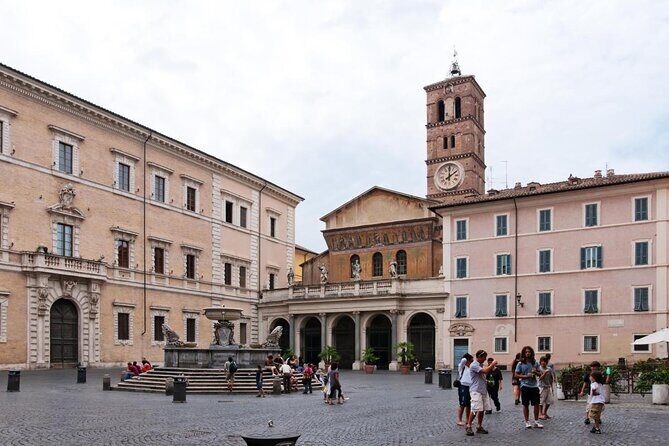
- Tech-based clue stations placed around Trastevere to guide you from one puzzle to the next
- Courtyards and alleyways that make the walk feel like part of the game, not a detour
- A climb toward a Rome viewpoint, so effort turns into a reward moment
- Private group play, so your team controls the pace
- Mobile ticket entry, for a smoother start
- Good for puzzle fans who want something different from standard sightseeing
Trastevere Revolution: an open-air escape game you play at street level

This isn’t an escape room in a building. It’s an escape game concept that lives outdoors, where the city becomes your board. You’ll start in Trastevere and work your way through tight streets and quiet side spaces, getting clues at multiple stations along the route. The fun part is that each station isn’t just a sign—it’s a permanent installation with tech and creative elements that help you read the next step.
What makes that satisfying is the blend of discovery and logic. You’re sightseeing, sure, but you’re also doing something with what you see. Instead of snapping photos and moving on, you’re interpreting textures, directions, and clues. And because it’s meant for groups, it naturally turns into a friendly competition: who spots it first, who reads the clue best, who keeps the team moving when the brain fog hits.
There’s also a brag-worthy detail built into the concept: Foxtrail positions this as a format they were among the first to bring into Italy, after it took off in cities like London, Berlin, Helsinki, and Zurich. So you’re not just doing a generic walking puzzle—you’re doing a structured urban adventure that’s designed like a system.
You can also read our reviews of more tours and experiences in Rome.



Starting at Via Emilio Morosini with a mobile ticket
You’ll meet at Via Emilio Morosini, 9114, 00153 Roma RM, Italy, and the experience ends back at the same meeting point. The whole adventure takes about 2 hours, give or take, which is a sweet spot: long enough to feel like a real activity, short enough that it won’t derail your day.
Entry is handled with a mobile ticket, and that matters more than it sounds. In a city like Rome, where you can waste time finding the right person or the right desk, a mobile ticket generally keeps you moving. You can focus on the game instead of logistics.
The “near public transportation” note is also worth paying attention to. If you’re combining this with a Trastevere meal or a late-afternoon stroll, you’ll have an easier time getting there and back without building your day around a taxi.
How the Foxtrail format works: stations, clues, and team autonomy
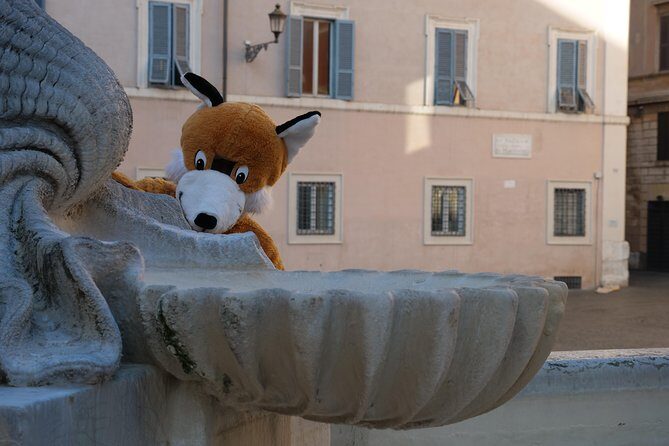
Foxtrail describes the experience as something you do “in a group but in full autonomy.” Translation: your team is together, but you’re not herded through every moment. You’re expected to solve the chain of clues yourself. That’s why team spirit shows up in the experience description in a very literal way.
Here’s what that means while you play:
- You walk through alleyways and discover courtyards as you go.
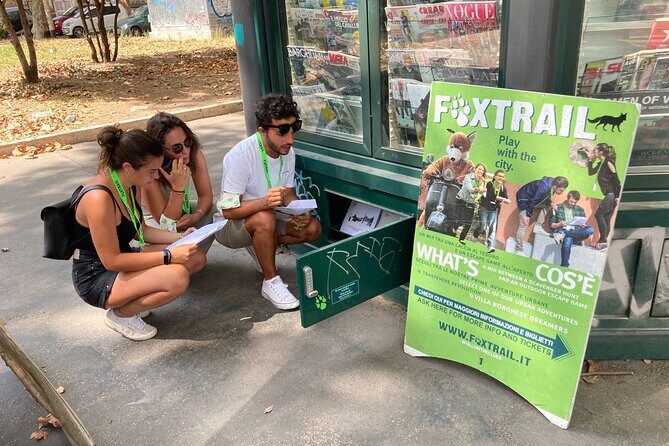
- At each station, you interact with a permanent installation that provides clues for the next station.
- You use your skills—team logic, observation, and communication—to keep progressing.
The big value here is that the city itself becomes an instruction manual. Instead of following a standard itinerary, you’re using the environment. And the stations are set up to prevent the game from feeling random; they’re technology-enabled and designed to guide you through the route.
Also, this is a private tour/activity. Only your group participates. For many people, that’s the difference between “fun puzzle challenge” and “miserable scramble.” It’s easier to coordinate decisions when you’re not sharing puzzle space with strangers who are moving at different speeds.
Walking Trastevere alleys and finding courtyard clues
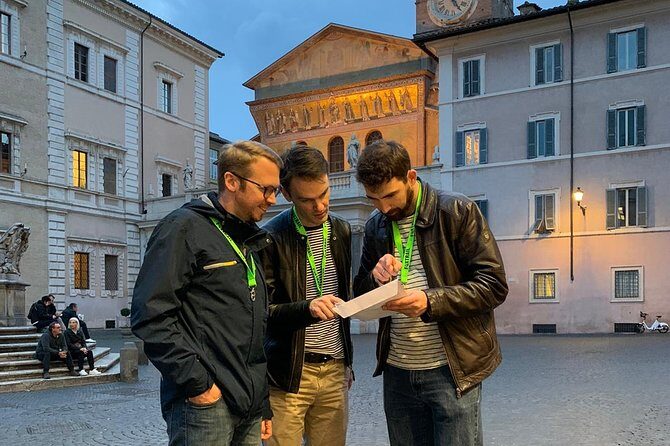
The early part of the adventure is all about getting your bearings and learning how the game wants you to move. You’ll be walking through Trastevere’s alleys, and the description specifically calls out hidden courtyards you reach along the way. Even if you already know the neighborhood, this turns those side spaces into objectives.
This is a great strategy for Rome sightseeing because it pushes you past the obvious streets. You get a more local-feeling version of Trastevere: the narrow passages where you slow down, look twice, and notice details you’d otherwise ignore. Courtyards are where that really pays off. They create little pauses in the walk, and those pauses are where clue stations can feel especially natural.
Practical tip: keep your team close early. In a game like this, you don’t want half your group sprinting ahead while the other half is stuck at a station reading clues. Use an easy team rhythm—one person reads, one person checks the station, and everyone else keeps eyes out for what’s next.
The climb toward the best Rome view (and why it’s part of the puzzle)
After the alley-and-courtyard section, the route heads up toward one of the most beautiful views of Rome. That’s a classic adventure-game trick done right: you’re building effort into the experience so the payoff feels earned.
In practical terms, this means the game isn’t only about solving. It also acts like a themed walking loop with a clear emotional arc. Early on, you’re exploring and piecing things together. Later, you’re rewarded with a viewpoint moment that gives your eyes a break and your brain a reset.
One reason I like this design for visitors is it works even if your team has different strengths. Puzzle experts can focus on clue interpretation, while the rest of the group can enjoy the walking rhythm and scenery. When you reach the viewpoint, everyone benefits from the same shared outcome.
Just be ready for a bit of uphill walking. Rome isn’t flat, and adventure games often take advantage of that. If you’re planning this for the hottest part of the day, shift your expectations accordingly.



Using the tech stations without getting frustrated
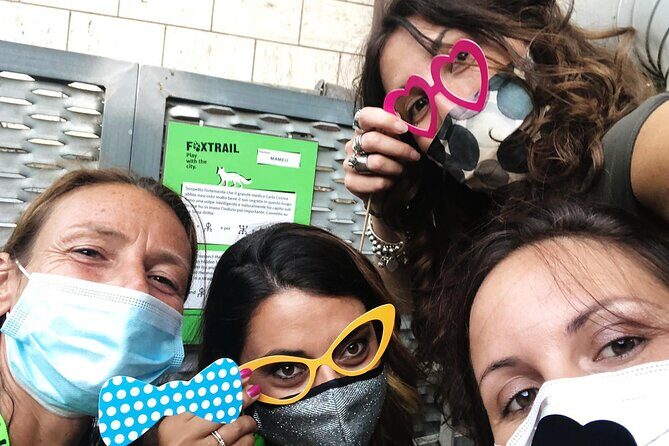
Each station has permanent installations with technology and creativity built in. That’s exciting, but it can also mean you should treat stations like small tasks, not like a single-sprint moment.
My practical approach:
- Spend a minute scanning everything at the station before you start trying answers.
- Assign roles so no one is guessing randomly.
- If something isn’t working, check the adventure help instructions instead of burning time.
There’s also a real-world lesson hinted in the way Foxtrail responds to issues: when something goes wrong, the right move is to use the help line indicated in the manual. Support is managed by multiple people, so it’s best not to rely on guesswork like sending messages in the moment. Use the exact help method provided for the game.
And yes, there can be tech hiccups. In at least one case referenced by the operator, the final mechanical step didn’t function as expected, and the team said a help line exists for situations like that. So if the final piece is supposed to activate and it doesn’t, don’t panic. Follow the help route you’re given.
Price and value: $24.38 for 2 hours of active sightseeing
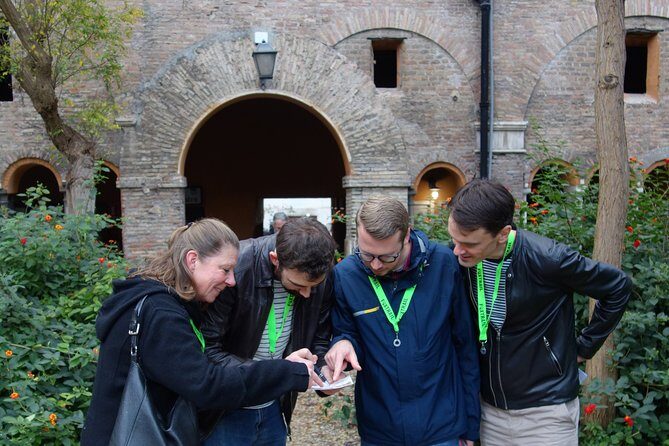
At $24.38 per person for about 2 hours, this sits in a “surprisingly good value” category for Rome. You’re paying for more than access—you’re paying for a guided structure that turns your walking time into an activity.
Here’s the value logic I’d use:
- Standard guided tours often cost much more and still leave you passive for big chunks.
- Museum tickets can be great, but they don’t always fit families and mixed puzzle interests.
- This gives you a middle option: you’re outside, you’re moving, and you’re doing something mentally.
Also, it’s designed for groups. If you’re traveling with friends or family, the private format can make it feel like your team got a custom plan without paying custom-tour prices.
If you want to maximize ROI, do it on a day when you would otherwise have fewer fixed plans. This kind of game shines when you’re not rushing to make another reservation right after—because you’ll naturally want to savor the streets and the viewpoint when you finish.
When to book: Trastevere is popular and this takes planning
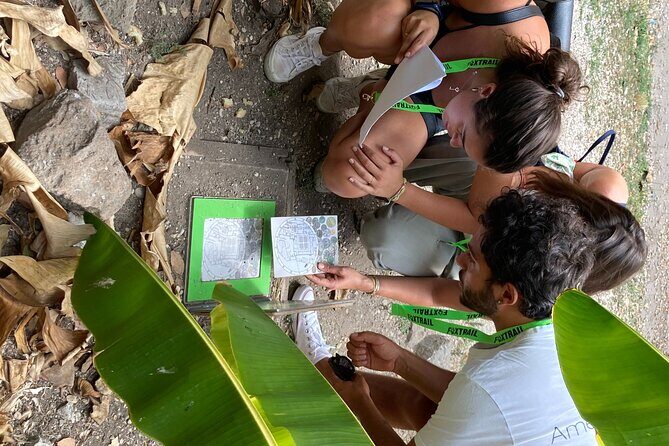
You’ll be buying into a time-slot style activity, and the listing notes an average booking window of 29 days in advance. That doesn’t guarantee sold-out status, but it does suggest this isn’t something you should count on booking at the last second if you have a narrow travel schedule.
I recommend booking in advance if:
- you’re going with a group and want a specific play time, or
- your best Trastevere hours are limited, or
- you’re balancing this with dinner plans in the neighborhood.
And plan around weather. The experience requires good weather, and if it’s canceled due to poor conditions you’ll be offered another date or a full refund.
Who this Foxtrail game is best for
This works best for people who enjoy a mix of walking, puzzles, and teamwork. The description says most travelers can participate, and service animals are allowed, which helps for a wider range of groups.
Here are the types I’d steer toward it:
- Families who want a structured way to explore beyond museums
- Friends who like escape-room logic but want something in the open air
- Couples who enjoy doing a shared challenge instead of only taking photos
- Anyone who’s already done the big ticket sights and wants Trastevere from a different angle
If your idea of fun is sitting and being talked to, this might not be your style. The structure is there, but the experience is built around your team doing the work.
Tips so you finish strong (and don’t lose the team)
The biggest risk with any puzzle walk is not the puzzles—it’s losing coordination. Rome streets are full of distractions, and a game needs clean teamwork.
Do this and you’ll have a smoother time:
- Keep a single “team communicator” who confirms the next station when the clue is solved.
- Don’t let one person stay stuck while everyone else wanders. Station-by-station, regroup.
- Wear shoes you’d use for a long neighborhood walk, not just a quick stroll. The route includes a climb toward a viewpoint.
- If you hit trouble, use the help approach described in the manual rather than random methods.
One more point: if this is a celebration, keep expectations realistic about tech surprises. In one case mentioned by the operator, the final device didn’t work and the team encouraged using the help line. So if you’re planning the game for a birthday or special occasion, build in the mindset that an interactive ending should be treated as part of the fun, not a guarantee.
Quick reality check: weather, time, and comfort
Because it’s an outdoor game, weather is the main variable you can’t solve with puzzle logic. If rain or bad conditions hit, the experience may be canceled and rescheduled, or refunded. So I’d pick a day with a workable forecast.
The second variable is timing. With about 2 hours on the clock, you don’t want to schedule a hard reservation right after unless you’re comfortable with some margin.
Comfort-wise, it’s a walking activity. Even though it’s short, you’ll move through alleys and courtyards and climb toward a viewpoint. If stairs or uneven ground are a concern, consider that typical city terrain will be part of the challenge.
Should you book Trastevere Revolution with Foxtrail?
I’d book it if you want a Rome activity that feels like sightseeing with a mission. For $24.38 per person and about two hours, you get a structured route, tech clue stations, and a viewpoint payoff—without paying for a formal guided tour.
Skip it if you hate walking, want zero puzzle pressure, or need an activity that can’t change with weather. Also, if your group is prone to frustration when tech doesn’t cooperate, go in with the plan to use the help line described in the manual.
If you’re looking for something different in Trastevere—something that turns streets into a story and your group into the team that solves it—this is a very solid choice.
FAQ
What is the duration of the Trastevere Revolution open-air escape game?
It takes about 2 hours (approx.).
Where does the experience start and end?
It starts at Via Emilio Morosini, 9114, 00153 Roma RM, Italy, and it ends back at the same meeting point.
How much does it cost?
The price is $24.38 per person.
Do I need a printed ticket?
No. You’ll use a mobile ticket.
Is it a private group experience?
Yes. Only your group participates.
Is confirmation provided after booking?
You’ll receive confirmation at the time of booking.
Is good weather required?
Yes. The experience requires good weather, and if it’s canceled due to poor weather, you’ll be offered a different date or a full refund.
Is it near public transportation and are service animals allowed?
It is near public transportation, and service animals are allowed.