REVIEW · ROME
The ancient aqueducts of Rome
Book on Viator →Operated by Underground Rome · Bookable on Viator
Water runs under Rome.
This tour takes you to the Parco degli Acquedotti area, where you can see seven Roman aqueducts close up in a small space, plus the story of how Rome kept repairing and reusing the same water infrastructure across centuries. I especially like the way the guides connect engineering to real life—emperors, popes, builders, and everyday water needs. One thing to plan for: it depends on good weather, and it’s a walking tour.
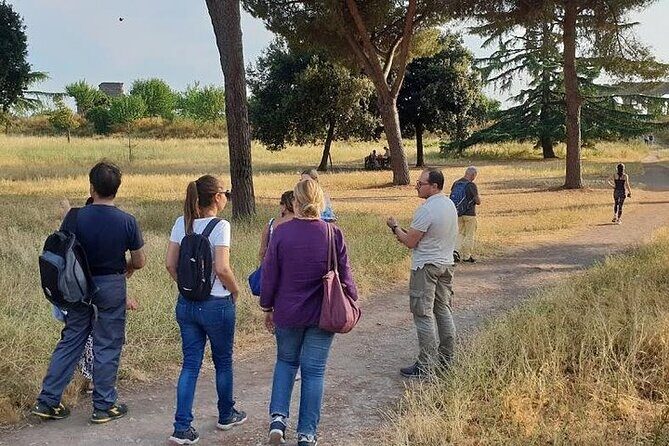
You’ll start near the metro at Giulio Agricola, meet your small group (max 10), and head into a park that feels calm and local, with people jogging and biking rather than tour crowds. Expect an English guide, a mobile ticket, and a relaxed pace with lots of chances to ask questions. You’ll also end back around the Lucio Sestio metro area, with a final stop by a water fountain.
What makes this experience click is the mix of scale and precision. You’re looking at structures that were built to move water across Rome, including stretches with arches roughly 30 meters high, and other parts that still show water activity today. If you like seeing how ancient systems really worked, you’ll get a lot out of this walk.
In This Review
- Key highlights you’ll care about
- Parco degli Acquedotti: Rome’s aqueducts outside the usual loop
- Getting oriented: Giulio Agricola meeting point to Lucio Sestio finish
- The first stretch: how the park teaches you to “read” aqueducts
- The 144 BC aqueduct: the reused spine of Rome’s water system
- Sixtus V and the Felice aqueduct: reused arches and visible water activity
- The Water Giant: the aqueduct with the healthiest water and tallest arches
- Anio vetus under Claudius: Rome’s highest aqueduct in absolute terms
- How the guides make engineering human (Joseph, Alex, Riccardo, Giuseppe, Liviana, Mauricio)
- Price and value: why $96.38 can make sense for this type of tour
- When to go and what to wear for an easy, comfortable walk
- Should you book the ancient aqueducts walk?
- FAQ
- How long is the ancient aqueducts of Rome tour?
- Where do I meet, and where does the tour end?
- Is the tour offered in English?
- How many people are in the group?
- What ticket do I need?
- What happens if the weather is bad?
Key highlights you’ll care about
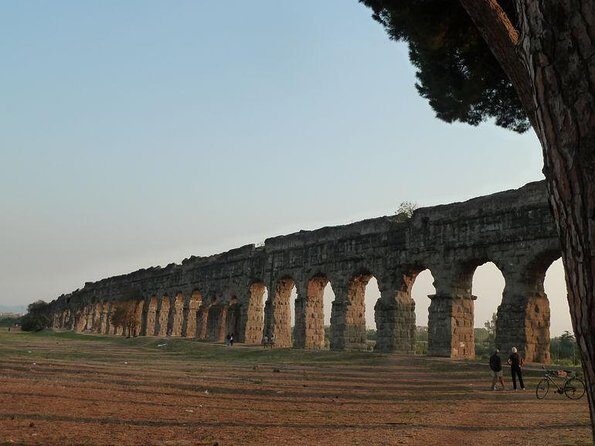
- Seven aqueducts in one park: in a few hectares, you can compare systems side by side
- A living infrastructure story: reused arches, reused canals, and parts that still work
- High engineering drama, explained simply: bridges of stone built for flow and pressure
- Small-group attention (max 10): guides answer questions without rushing you
- Quiet, local atmosphere: you spend time in a park used by Romans, not tour buses
Parco degli Acquedotti: Rome’s aqueducts outside the usual loop
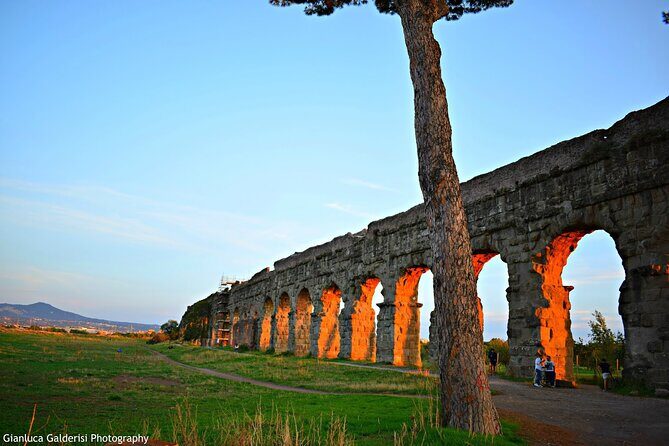
Rome’s big sights pull your eyes upward—colossal stone and crowded streets. This tour does the opposite. You look at aqueducts as a practical machine: water in, water out, gravity doing its job, and engineers solving problems with stone arches.
The setting helps a lot. You’re in the Parco degli Acquedotti–Appia Antica archaeological park, an area designed around Roman water systems. One of the best parts is that it’s not a “one aqueduct, one photo, move on” setup. Here, you can see multiple aqueducts together, packed into a small area. The result feels unusually complete for Rome: you’re comparing styles, heights, and purposes without spending hours commuting between far-flung ruins.
And you get a local pause. This is a big park where people cycle, jog, and hang out. That matters more than it sounds. When you’re watching an aqueduct disappear into greenery, it’s easier to imagine what it felt like when the city depended on this water every day.
You can also read our reviews of more tours and experiences in Rome.



Getting oriented: Giulio Agricola meeting point to Lucio Sestio finish
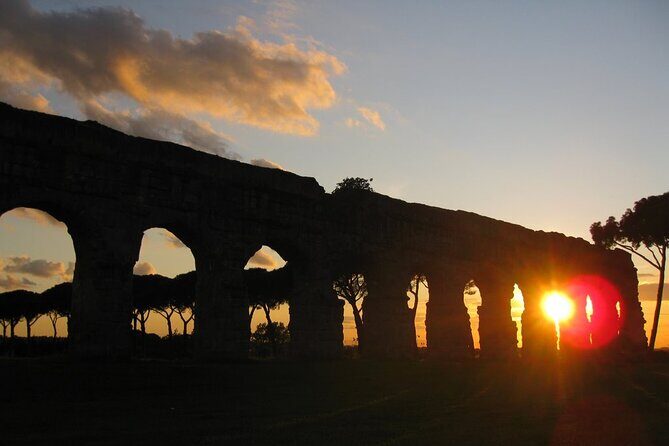
Logistics are refreshingly simple. You meet at Giulio Agricola (near Metro) and your tour ends at Lucio Sestio (also near Metro). That through-line helps you avoid the “how do I get back?” headache after a walk.
A small detail I like: there’s a brief snack situation at the meeting point. It’s not a long meal, just enough to take the edge off before you head into the park. With a tour around 2 hours, that kind of small prep makes the whole outing smoother.
Also, plan around comfort. This isn’t a museum shuffle. Wear comfortable shoes—good walking shoes, not sandals. Reviews consistently point out that you’ll be happier with something grippy.
Finally, keep your group expectations realistic. It’s capped at 10 travelers, which is part of why the guide can slow down and answer questions. If you travel with kids or you prefer not to be swallowed by crowds, this group size is a big win.
The first stretch: how the park teaches you to “read” aqueducts
As you move through the park, you’ll start seeing aqueducts like a map. It becomes less about random ruins and more about routes and engineering logic—where the water traveled, where the arches carry it, and what parts were later adapted.
The park is set up so you pass seven aqueducts across a relatively compact area. That gives you something Rome usually doesn’t: the chance to compare multiple systems in a single walking window. And because you’re in the open air, light plays tricks on scale. Some arches look almost delicate until you realize how tall they were meant to be.
There’s also a “Rome beyond the postcards” feel here. You’re not just touring stone. You’re in a peripheral space of the city, and it can feel almost exclusively local—exactly the kind of contrast that makes a day in Rome more memorable.
A final note on pacing: this is “mostly flat” walking, but it’s still walking. You’ll want to show up with energy.
The 144 BC aqueduct: the reused spine of Rome’s water system
One of the early stories you’ll meet on this walk is an aqueduct built in 144 BC. On its own, that’s a wow moment—Roman stonework surviving for centuries.
But the real point is how Rome treated infrastructure: not as a one-and-done monument, but as a living system. This aqueduct was partially used until recently, because it was reused through later work—specifically, it was connected to and reused by the Felice aqueduct.
When you’re standing near the remains, the guide’s job is to help you see that reuse wasn’t sloppy. It was smart. If you already have arches, channels, and a working route, why demolish and rebuild from zero? Rome repeatedly adapted existing structures to meet changing needs.
For you, that means the “ancient aqueduct” story doesn’t stay trapped in the distant past. You’ll understand how the past keeps feeding the present—sometimes with the same basic channels, just improved or repurposed.
Sixtus V and the Felice aqueduct: reused arches and visible water activity
Next comes a leap forward into the 1500s. You’ll see an aqueduct associated with Sixtus V—often linked with Pope Felice—built around 1500 AD. This wasn’t a blank-slate project. A key detail is that it was made by reusing arches from the Marcio.
That’s a theme you’ll keep hearing: reuse, repair, adaptation. Stone arches weren’t just historic decoration. They were functional infrastructure parts, and later authorities treated them like assets.
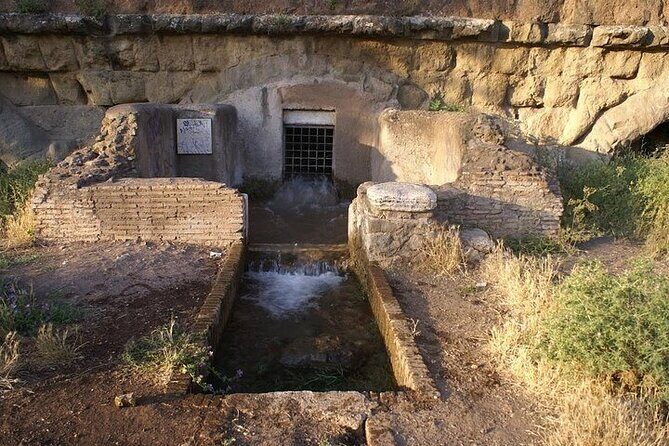
Even better, you’re not only looking at something that is long gone. The underground part still works, and you can see water leaking from the canal. That visual detail changes everything. It turns archaeology into a “right now” feeling. You’re standing near a channel that still behaves like a water route, even if the surrounding system has changed over time.
It’s one of those experiences that makes the engineering feel real, not abstract. If you like when a tour shows you the practical evidence—not just old stones—you’ll appreciate this stop.



The Water Giant: the aqueduct with the healthiest water and tallest arches
Another major highlight is an aqueduct described as having the healthiest water and the height needed to supply water to the entire city of Rome. That’s the kind of claim that becomes understandable only when you see the scale.
In certain stretches, the arches rise to around 30 meters. The tour even frames this structure as a true Water Giant, and standing near the arches, you can see why. That height wasn’t just for drama. Taller channels help water move where it needs to go across uneven ground, keeping flow consistent.
What you’ll take away from this stop isn’t only the measurement. It’s the idea that Rome’s water planning was citywide. This wasn’t a local trickle. It was distribution on a scale that required serious vertical engineering.
And because you’re in an open park environment, you get visual context: lines of arches, gaps where routes once continued, and the way the aqueduct integrates with the surrounding terrain. Even without crowds, the structure feels expansive.
Anio vetus under Claudius: Rome’s highest aqueduct in absolute terms
You’ll also see the Anio vetus aqueduct, built under Emperor Claudius, along with the Claudian aqueduct. The standout here is height—this aqueduct is described as the highest in absolute terms among the aqueducts that supplied Rome.
If you’ve ever wondered why Romans obsessed over routes and elevations, this is where the answers become physical. The remains show you the logic: to move water, you need gradients and elevation. When the aqueduct is the tallest, you’re looking at Rome’s most ambitious water-lifting solution among its supply network.
This stop pairs well with the earlier stories about reuse and adaptation. Together, you get a fuller picture: Rome didn’t just build aqueducts. It refined them, connected them, and kept expanding the ability to deliver water across the city.
How the guides make engineering human (Joseph, Alex, Riccardo, Giuseppe, Liviana, Mauricio)
The guides are a huge part of why this works. You’ll hear from people like Joseph and Alex, Ricardo/Riccardo, Giuseppe, Liviana, and Mauricio—and the common thread is how they translate stone into stories.
A few guide techniques you can expect:
- Practical explanations with charts and photos, not just long lectures
- Lots of Q&A, with guides staying patient as you ask follow-ups
- Extra “spotting” moments, like pointing out tree types in the area
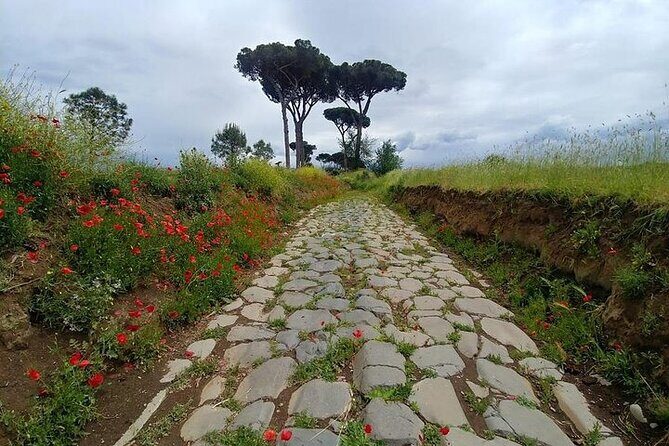
- Side discoveries such as an old Roman road segment the guide may connect to what’s called the Latin road (described as the second oldest in Rome by the guide)
Some tours even include a chance to interact more directly with the site. One review notes being able to touch parts of the aqueduct. If that’s offered on your day, it can help you understand the materials and construction rather than just viewing them.
If you want a tour where history feels alive and practical, this is the right kind of guide. They don’t just tell you what happened. They explain why the structure was built the way it was.
Price and value: why $96.38 can make sense for this type of tour
At $96.38 per person, this isn’t the cheapest thing on a Rome calendar. But the value can be real if you care about guidance and context.
Here’s where the value comes from:
- Duration of about 2 hours: enough time to see the main aqueduct highlights without dragging
- Small group size (max 10): you don’t feel lost in a big crowd
- English-speaking guide: explanations stay clear and interactive
- Mobile ticket: less paper, less stress
- Park admission is free for the ticketed part of the experience (so you’re not stacking extra entry costs)
For the price, you’re paying for expert interpretation of a very specific subject: Roman water systems across centuries. If you’re the kind of traveler who likes infrastructure, roads, bridges, and “how it worked” thinking, this will feel worth it.
Also, booking demand is high. The tour is often reserved about 57 days in advance on average, so if you’re traveling during peak season, you’ll want to lock in your spot earlier rather than later.
When to go and what to wear for an easy, comfortable walk
This experience requires good weather. If conditions aren’t right, you’ll be offered another date or a refund. So check the forecast close to departure.
What to wear is straightforward:
- Wear comfortable shoes and plan on walking. Reviews repeatedly stress avoiding sandals.
- Bring water. You’re in an outdoor park.
- Dress for the sun and shade balance—parks can have both, but you’ll still feel the day.
Even if the walk is mostly flat, your feet will notice two hours outdoors. Come ready, and the tour will feel easy.
If you travel with service animals, the tour allows them. And since it says most travelers can participate, it’s not built like an intense hike.
Should you book the ancient aqueducts walk?
I’d book it if you want Rome that feels less crowded and more human-scale. You’re getting a guided look at how water was delivered citywide, and you’re seeing reuse in action—something you don’t usually get from “single monument” sightseeing.
It’s also a smart choice if:
- you like engineering stories and practical construction details
- you want something different from the usual Colosseum–Pantheon loop
- you prefer a small group and time in a park used by locals
- you want English interpretation in a focused setting
Skip it if you want a short “grab a photo and leave” stop, or if you’re traveling during a period when weather uncertainty is high and you dislike walking.
If you book, do it with good shoes and an open mind. This tour makes Roman water infrastructure feel surprisingly current—especially when you see how parts of the system still behave like water routes.
FAQ
How long is the ancient aqueducts of Rome tour?
It’s about 2 hours (approximately).
Where do I meet, and where does the tour end?
You start at Giulio Agricola (near the metro stop) and the tour ends at Lucio Sestio (near the metro stop).
Is the tour offered in English?
Yes, it’s offered in English.
How many people are in the group?
The tour has a maximum of 10 travelers.
What ticket do I need?
You’ll use a mobile ticket.
What happens if the weather is bad?
The tour requires good weather. If it’s canceled due to poor weather, you’ll be offered a different date or a full refund.