REVIEW · ROME
Trastevere and the Jewish Ghetto: The Heart of Rome
Book on Viator →Operated by Rome Italy Explora · Bookable on Viator
Rome hides big stories in small streets. This private tour links two of Rome’s oldest neighborhoods, the Trastevere side and the Jewish Ghetto, with a walk that also crosses the Tiber via Isola Tiberina to see older layers of the city. You’ll get a guide who ties the architecture to the people who lived there, from papal-era decisions to everyday religious and cultural life.
I love how this route balances big-name landmarks with the kind of details that make them make sense. You’ll spend time at the Jewish Museum of Rome in the Great Synagogue complex, and you’ll also see Santa Maria in Trastevere with its glittering Byzantine mosaics. I also love the human touch of a guide like Giuseppe, whose explanations in simple language help you connect history to what you’re actually standing in front of.
One consideration: at $735.22 per person with luxury pickup and a private chauffeur, it’s a “value it for what you get” kind of purchase, not a cheap wander.
In This Review
- Key highlights I’d anchor on
- Why Trastevere and the Jewish Ghetto fit together so well
- The Roman bridges and monuments: Isola Tiberina, Portico d’Ottavia, and the Turtle Fountain
- Antico Quartiere Ebraico: the Ghetto area and why the papacy mattered
- Jewish Museum of Rome and the Great Synagogue complex: context you can actually use
- Trastevere’s Piazza Trilussa and Santa Maria in Trastevere mosaics
- Santa Cecilia and Trastevere churches: art, faith, and what you notice next
- How the private format affects your day (and the price you pay)
- What I’d pack and plan around for this kind of walk
- Who should book this tour and who might not
- Should you book Trastevere and the Jewish Ghetto?
- FAQ
- How long is the tour?
- Is pickup included?
- Are admission tickets included?
- Is this a private tour?
- Do I get a mobile ticket?
- Is there free cancellation?
Key highlights I’d anchor on
- Two historic districts, one continuous story: Trastevere and the Jewish Ghetto in a tight, well-planned loop
- Jewish Museum time included: stop in the Great Synagogue complex with an admission ticket built in
- Roman waypoints between neighborhoods: Isola Tiberina, Portico d’Ottavia, and Bernini’s Turtle Fountain
- Santa Maria in Trastevere mosaics: a visual payoff that’s easier to appreciate with context
- Private guide + customizable pace: you set the rhythm instead of getting swept along
Why Trastevere and the Jewish Ghetto fit together so well
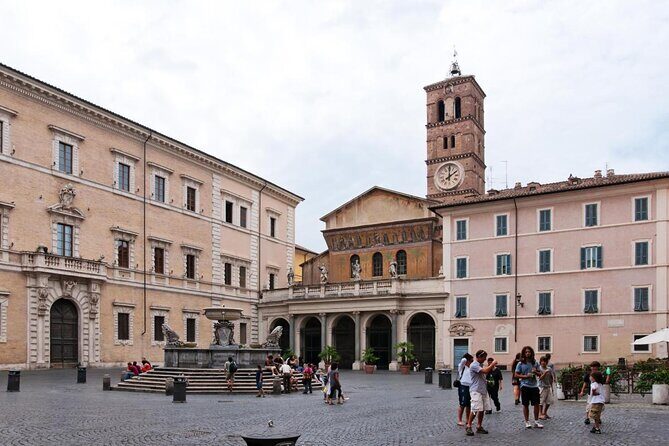
Trastevere sits across the river, but it doesn’t feel like an “afterthought” neighborhood. It feels like the other side of the same Rome story, especially when you cross back and forth between stone, street life, and spiritual buildings. Doing it with a guide matters because the buildings alone can look like scenery until someone connects the dots.
The Jewish Ghetto section adds the weight. Rome’s Jewish community is described as one of the oldest in the world, and its history is tangled with the Roman Catholic Church and the papacy—both protection and persecution over different periods. When you walk through that area with explanations, you start noticing how physical space reflects policy, power, and survival.
And that’s why the tour works as a whole: you’re not just ticking sights. You’re watching Rome’s layers stack in real time—ancient structures, Renaissance-era artistic moments, and living communities.
You can also read our reviews of more tours and experiences in Rome.



The Roman bridges and monuments: Isola Tiberina, Portico d’Ottavia, and the Turtle Fountain
The route includes a crossing to the Isola Tiberina, the island in the Tiber River. That’s not just a nice photo stop; it’s a shortcut to understanding how Rome organized space around waterways and movement. You’ll also have the chance to see ruins and old references that help the rest of the walking feel less random.
Two other waypoints land during the in-between moments: the Portico d’Ottavia and Bernini’s Turtle Fountain. Portico d’Ottavia reminds you this part of Rome wasn’t built only for later centuries; it’s anchored in the old city plan. And the Turtle Fountain is the kind of Baroque flourish that makes the streets feel designed, not accidental.
What I like most is how these monuments break the walking into chapters. You’re not spending the whole time in one mood, and you’re not losing energy either. It gives your brain something new to latch onto every so often.
Antico Quartiere Ebraico: the Ghetto area and why the papacy mattered
The core of the morning (or whichever side you start on) is the Antico Quartiere Ebraico area, tied directly to the historic Roman Ghetto. You’ll hear how the ghetto’s center of gravity sat near the Tiber River because ancestors were confined there by Pope Paul IV. That detail alone changes how you read the streets—suddenly the setting isn’t abstract.
This part of the tour also frames the complicated relationship between the Jewish community and the Catholic Church. The information presented focuses on the way the papacy could play roles that were protective at times and persecuting at others. You don’t need a lecture background to follow it, because you’re walking and seeing the architectural “stage” for that story.
The stop includes admission to the Jewish Museum of Rome, housed in the complex of the Great Synagogue. That’s important for two reasons. First, it turns the area from “streets I’ve heard of” into a place with artifacts and context. Second, it prevents the tour from becoming only viewpoint and symbolism—you get to connect ideas to what’s preserved.
Jewish Museum of Rome and the Great Synagogue complex: context you can actually use
When you’re in Rome, it’s easy to treat synagogues and churches as just beautiful buildings. This tour nudges you to treat the Great Synagogue complex as a center of community life, not just architecture. The Jewish Museum of Rome is described as a little gem in the complex, and that lines up with why it’s included in the tour time.
You’ll spend about two hours on this section, and that time matters. It gives you room to absorb the story without sprinting. You’re also better prepared to understand what you’ll see in the ghetto area afterward because you’ll have a clearer baseline.
If you care about accuracy and respectful framing, pay attention here. Several guides in the provided experience notes are praised for covering both past and present situations, which helps you avoid a “museum-only” view of Jewish life. You get a sense of how history continues to echo in what you can still experience today.
Trastevere’s Piazza Trilussa and Santa Maria in Trastevere mosaics
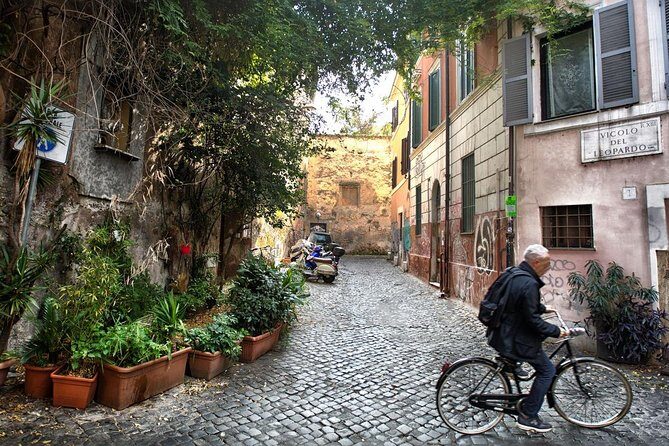
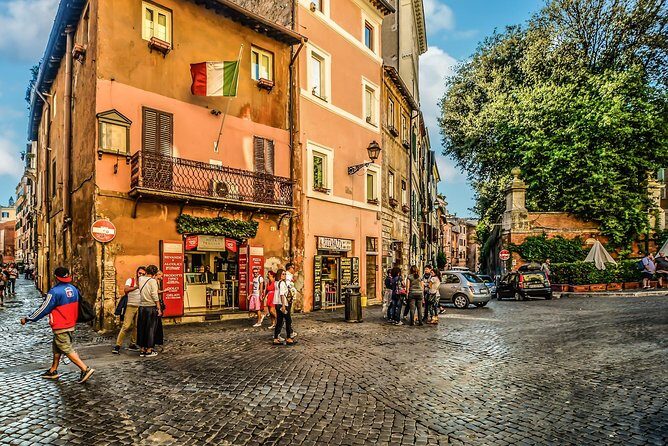
Then the tour shifts across the river to Trastevere, whose name literally points to being on the other side of the Tevere. This is where the walking turns more “neighborhood Rome,” with lanes and squares that feel lived-in rather than staged for postcards.
A key anchor is Piazza Trilussa. It’s one of those places you can pass quickly on a bigger itinerary, but on this tour you pause long enough to understand why it’s part of the Trastevere rhythm. From there, the route heads toward Santa Maria in Trastevere, a standout stop for the glittering Byzantine mosaics.
Those mosaics hit differently when you know what you’re looking at. The tour’s approach is practical: instead of treating the mosaics as decoration, it puts them into the bigger story of the city’s artistic layers. That’s also where a good guide earns their keep—turning a visual into a connection.
In short: the ghetto part gives you meaning, and Trastevere gives you atmosphere. Together they make the overall walking feel balanced.



Santa Cecilia and Trastevere churches: art, faith, and what you notice next
Some versions of the experience include stops around Trastevere churches, and Santa Cecilia shows up in the experience notes as a highlight. One account specifically calls out the Basilica di Santa Cecilia and details about the body of the saint and the original statue of Maderno. Even if your route doesn’t match every church stop exactly, the emphasis is consistent: you’re meant to see what locals value.
This is also where guides named in the notes—often Giuseppe—are praised for not stopping at the same old stories. The explanations are described as covering history and also the present-day picture. That matters in Rome, where you can otherwise walk past a church and only take away the basics.
If you like religious art but sometimes feel it’s too dense, this tour style is useful. You’re not asked to memorize dates. You’re taught what to notice and why.
How the private format affects your day (and the price you pay)
This is a private walking tour, so your group doesn’t get blended into a random crowd. The experience includes a dedicated professional guide, and the route and pace can be customized. In practice, that means you can slow down if a street detail catches your attention, or speed up if you’re trying to cover ground before dinner.
Pickup and drop-off are included with luxury transportation and a private chauffeur. That can be a huge value lever in Rome. You skip the time sink of negotiating trains or taxis, and your day starts already organized instead of stressful.
Now, about the price: $735.22 per person is not “impulse purchase” territory. But if you add up what you’re actually buying—private guide time, included museum admission, a multi-neighborhood route, and chauffeur pickup—it starts to look more like a planned experience than a casual tour. You’ll get the most value if you want more than a highlight reel and you like learning from someone who can answer the questions that pop up while you walk.
One more practical note: it’s listed as a 3 to 4 hour tour. That’s long enough for real context, but short enough that you won’t feel like you’re tethered all day. If you’re also trying to see more Rome later, this time window usually fits.
What I’d pack and plan around for this kind of walk
This is a walking tour, and Rome streets are not designed for smooth, flat progress. I’d plan on comfortable shoes and a bit of flexibility. If you’re sensitive to heat or long sun exposure, choose a time of day that makes walking pleasant.
Also, think about how much you want to photograph. The route includes multiple visually strong stops—mosaics, fountains, museum buildings, and those narrow lanes—so your camera roll can grow fast. A private guide helps here because you can pause without feeling like you’re slowing down a big group.
Finally, keep your expectations realistic. You won’t cover every church in Trastevere or every layer in the ghetto in one go. Instead, you’ll get fewer stops explained well, with the walk designed to connect them into one story.
Who should book this tour and who might not
This tour is a great fit if you want your Rome to feel like more than a photo scavenger hunt. You’ll enjoy it most if you care about how places got their meaning—why the ghetto is where it is, why Trastevere looks the way it does, and how Roman layers show up in art and architecture.
It also suits people who like a strong guide voice. The experience notes repeatedly highlight Giuseppe’s ability to explain with a simple, detailed approach and to connect historical and present-day aspects. If you enjoy that kind of guided storytelling, you’ll likely get a lot out of the private format.
If you’re traveling with very limited walking tolerance, or you just want to stroll independently without structured museum time, this might feel like more commitment than you want. In that case, you could still visit the neighborhoods on your own, but you’d lose the connective tissue that makes the route special.
Should you book Trastevere and the Jewish Ghetto?
I’d book it if you want the “why” behind what you’ll see, not just the “where.” The combination of Jewish Museum time, ghetto-area context, and Trastevere’s iconic sights gives you two different kinds of Rome feeling, both handled with care. With included admission tickets, private chauffeur pickup, and a guide like Giuseppe highlighted in the experience notes, the tour is built for people who value guidance and pacing.
Book it if you’re the type who likes stepping into a place and understanding what shaped it. The ghetto and Trastevere pairing isn’t a random mashup—it’s a smart way to see how Rome’s power, art, and daily life share the same ground.
Skip it if you’re trying to travel on the cheapest possible approach. At this per-person price, it’s only a win when you truly want a guided, private experience with museum access and a planned loop.
FAQ
How long is the tour?
It runs about 3 to 4 hours.
Is pickup included?
Yes. The tour includes pick-up and drop-off with luxury transportation and a private chauffeur.
Are admission tickets included?
Yes. Admission tickets are included.
Is this a private tour?
Yes. It’s a private tour/activity, so only your group participates.
Do I get a mobile ticket?
Yes. Mobile ticket is included.
Is there free cancellation?
Yes, free cancellation is available. You can cancel up to 24 hours in advance for a full refund.