REVIEW · CATACOMBS TOURS
Subterranean Rome: Catacombs and Appian Way Discovery Tour
Book on Viator →Operated by Eternal City Private and Guided Tours · Bookable on Viator
Rome changes mood underground.
This tour pairs a short walk on the Appian Way with an underground stop that focuses on early Christian art and burial spaces. You’ll also see a small roadside church tied to the Peter legend, plus the remains of an imperial complex on the same ancient route—so the day feels like a timeline, not a checklist.
I like two things most: the private hotel pickup/transport so you’re not wrestling buses while carrying bottled water and hopes, and the guided catacombs visit that gives you names, dates, and what you’re actually looking at. One drawback to consider is timing—there can be schedule hiccups, so I’d confirm your pickup window and keep a little buffer in your day.
In This Review
- Key highlights (what’s most worth your time)
- Appian Way first: why a 15-minute road stop still matters
- Catacombs of San Callisto (or San Sebastiano): what you’re really seeing underground
- The art focus: what makes these catacombs special
- Timing and the guide setup
- A realistic expectation for the layout
- Chiesa del Domine Quo Vadis: the Peter legend and the footprints slab
- The story you’ll hear
- The footprint tradition
- Villa di Massenzio on the Appian Way: circus scale and imperial family drama
- Who built it and why you should care
- The circus: a real crowd machine
- The mausoleum: Valerius Romulus’ circular tomb
- The “opulent lifestyle” angle
- Guides and transport: how this tour stays smooth (most of the time)
- What you’ll likely experience on the road
- The one wrinkle: timing mix-ups can happen
- Value check: does $215.26 make sense for what you get?
- Who should book this tour, and who might want to skip it
- Book this if…
- Consider skipping or adjusting if…
- Should you book Subterranean Rome: Catacombs and Appian Way Discovery?
- FAQ
- Which catacombs will I visit?
- How long is the tour?
- Is hotel pickup included?
- What language is the tour in?
- Are entrance tickets included?
- Can I cancel for a full refund?
Key highlights (what’s most worth your time)
- Appian Way route: A real Roman road connection between Rome and Brindisi, not just a photo stop
- San Callisto or San Sebastiano: You’ll be in the right catacombs for early Christian frescoes and burial art
- Two-part guidance: A catacombs guide plus a separate lead for the road sections can make the pacing smoother
- Domine Quo Vadis stop: The legend of Peter and the footprint tradition are tied to this exact site
- Villa di Massenzio access: You get the circus and mausoleum context while standing in the right landscape
- Driver Q&A is part of the value: On this tour, questions during the transfers are actually answered
Appian Way first: why a 15-minute road stop still matters
The tour starts on the Via Appia Antica, one of the early and strategically important Roman roads. This matters because it anchors everything else you’ll see. Catacombs and imperial tombs aren’t floating in space—they’re part of how Rome organized movement, status, and burial. When you stand near the road, you can feel why the city built here in the first place.
You’ll likely only spend about 15 minutes at this first stop, so keep your expectations realistic. Think of it as orientation: time to notice the ancient road feel, understand what kind of place it was for travelers and goods, then move on while you’re still fresh.
If you like structure in your sightseeing day, this opening works well. It sets the theme—Rome as a living network—and then the tour goes below ground to match that theme with how early Christians used underground spaces.
Practical note: the road areas and transfers can involve walking on uneven surfaces. Wear shoes you trust, and keep your phone battery topped up if you plan photos during daylight gaps.
You can also read our reviews of more tours and experiences in Rome.


Catacombs of San Callisto (or San Sebastiano): what you’re really seeing underground
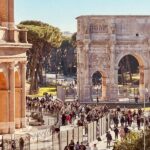
Your main underground stop is the catacombs of Saint Callixtus, with the option of San Sebastiano depending on the exact ticket arrangement. Either way, the goal stays the same: early Christian burial sites where art and memorials help you understand belief and community life.
The art focus: what makes these catacombs special
These catacombs are famous in Christian art history because they contain a large share of the earliest examples—frescoes and sculpture—dating to before roughly 400 AD. You’ll also hear about gold glass medallions, though the tour information is clear that many of the original objects like bodies have been removed over time. That’s not a downgrade; it’s part of how the sites are preserved.
What you should listen for from your guide is interpretation:
- Why these spaces were reused and organized
- How the artwork functions as memory and identity
- What to notice in frescoes and sculpture when lighting and viewing angles are limited
Timing and the guide setup
This catacombs portion is about 1 hour. That’s a sensible length: long enough to get meaning, not so long you start rushing just to keep your place in the group.
One helpful detail from how the tour runs is that catacombs guidance can be separate from the transport lead. In practice, that often means you get a catacombs specialist for the underground portion, and then someone else handles the route explanations during the drive and walk segments. The end result is less silence and more context as you move between sites.
A realistic expectation for the layout
You might not be seeing every chamber ever used. The tour format suggests you’ll be brought to the sections currently open to the public—often including areas on more than one level depending on the day. So don’t treat this as a full, unlimited exploration. Treat it as a focused visit that’s designed to make the most important art and burial chambers readable.

Chiesa del Domine Quo Vadis: the Peter legend and the footprints slab

After the underground stop, the tour goes back up to the Appian Way area for the Chiesa del Domine Quo Vadis, also called the Church of St. Mary in Palmis. This is a small stop—about 15 minutes—but it punches above its weight because it ties a famous early Christian tradition to a physical location.
The story you’ll hear
The church name connects to the Latin phrase Domine, quo vadis?—Lord, where are you going? The tradition says Saint Peter asked this as he fled Rome to escape persecution, and Jesus’ response is what inspired Peter to return and accept martyrdom. Even if you treat legends as traditions rather than strict historical documents, the value here is how the story shaped Christian memory and pilgrimage culture.
The footprint tradition
Inside, you may be shown a marble slab with imprints believed to represent the footprints of Christ. Whether you accept the tradition or just find it meaningful culturally, it’s a strong moment because it’s not abstract. You’re shown the object that pilgrims pointed to for centuries.
Small churches like this are often where tours win or lose. If your guide is good (and this tour tends to attract guides who explain clearly), you’ll understand why this site was remembered for so long—and why it sits on the same ancient road as the catacombs and imperial remains.
Villa di Massenzio on the Appian Way: circus scale and imperial family drama

The last main stop is the Villa di Massenzio, also known as the Villa of Maxentius. This is one of those Rome sites that feels quiet on the surface but is loaded with power underneath.
Who built it and why you should care
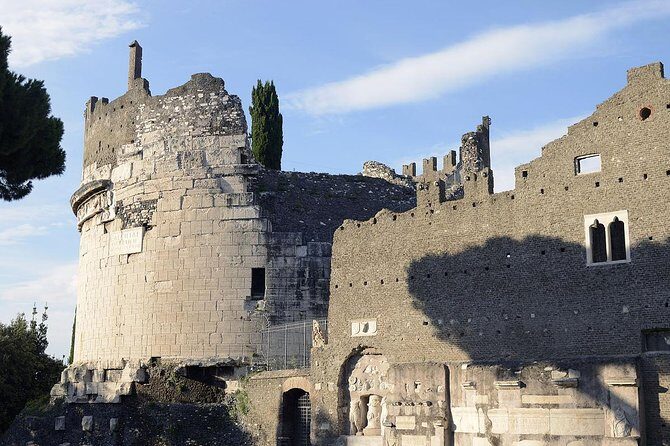
It dates to the early 4th century AD and belonged to an imperial complex commissioned by Emperor Maxentius, a rival of Constantine the Great. That political background matters because it explains the ambition of the architecture. Burial sites and elite entertainment spaces were never separate from power. They were how you displayed it.
The circus: a real crowd machine
The best-preserved Roman circus after the Circus Maximus is part of the complex. It was used for chariot races and could hold up to 10,000 spectators. Even if you only walk around the exterior ruins, knowing that scale helps you picture the sound, movement, and propaganda effect of events.
The mausoleum: Valerius Romulus’ circular tomb
You’ll also hear about the mausoleum named after Maxentius’ son, Valerius Romulus. It’s described as a grand tomb with a circular structure, reflecting the style of imperial burial sites. Even though only fragments remain, the context makes those fragments feel intentional—not random rocks.
The “opulent lifestyle” angle
The tour information suggests the complex likely included residence spaces for Roman elite life. So while you can’t expect a museum-style interior tour here, the site still works as a visual bridge: catacombs for communal belief, then nearby elite spaces for imperial display.
Guides and transport: how this tour stays smooth (most of the time)
This is one of the biggest practical wins: the tour offers private transportation with round-trip transport from your hotel to the Appian Way and catacombs. That means you don’t lose time hunting meeting points or figuring out transit while temperatures and crowds change.
Pickup is also offered. You’ll need to provide your pickup address in Rome (hotel or place of stay). For planning, I recommend you treat the pickup time like an appointment: be ready early, not right on the dot.
What you’ll likely experience on the road
Your road segments come with explanation, not dead time. One driver mentioned by name—Constantin—was described as professional and patient about answering questions and giving history about structures you pass. That’s the kind of detail that makes a “short tour” feel bigger.
Also, the tour structure can involve two guides: one for the catacombs and another lead for the driving and Appian Way segments. That separation can help the pacing. You get focused expertise where it counts and less repetition elsewhere.
The one wrinkle: timing mix-ups can happen
The only clear complaint in the feedback is timing confusion. That doesn’t mean the tour is unreliable every time, but it does mean you should confirm your schedule in advance and give yourself buffer time at the start of the day. Rome is great, but it runs on human calendars and human roads.
Value check: does $215.26 make sense for what you get?
At $215.26 per person, the price isn’t cheap, but this tour is not just a simple walk-through. You’re paying for a package: private hotel transport plus entry tickets plus guided catacombs time.
Here’s what you’re effectively buying:
- Round-trip private transport (hotel-to-sites and back)
- Entry tickets to San Sebastiano or San Callisto catacombs
- A guided group tour inside the catacombs
- Stops along the Appian Way with historical landmarks (including Domine Quo Vadis and the Maxentius complex)
Compared to grabbing a catacombs ticket and then trying to solve Appian Way logistics on your own, the value is strongest if you want someone else to handle routing and timing. If you’re comfortable organizing transit and don’t mind spending extra mental energy, it might be cheaper on your own. But if you’re the type who likes your day to feel controlled, this price is easier to justify.
One more practical note: the tour includes group discounts and offers mobile tickets, which usually means less hassle on arrival.
Who should book this tour, and who might want to skip it
Book this if…
You want a Rome day that mixes three different “Rome moods”: ancient infrastructure (Appian Way), Christian underground life (catacombs), and imperial-era power displays (Villa di Massenzio). The pacing also suits people who want meaning without an all-day marathon.
It also fits families or first-timers who benefit from pickup and a clear itinerary. The tour notes say most travelers can participate.
Consider skipping or adjusting if…
If you only want one long deep museum-style visit, this won’t be that kind of day. The catacombs are about an hour, and the Appian Way and church stops are shorter. This is a smart overview with guided context, not a multi-hour excavation of every room.
And if your schedule is strict to the minute, plan around the possibility of timing confusion at pickup.
Should you book Subterranean Rome: Catacombs and Appian Way Discovery?
I think it’s a strong choice if you want to see the Appian Way corridor in one managed loop, then trade street-level Rome for the art and burial logic of early Christianity. The combination of guided catacombs plus roadside historical stops is exactly the kind of pairing that turns scattered monuments into a story.
If you’re the kind of traveler who likes to ask questions during driving segments, this tour is especially satisfying—names like Giorgio and Constantin come up for a reason: friendly explanations and patience.
My call: book it when you have a half-day you can protect a little with buffer time, and when you’re excited to understand what you’re looking at underground—not just take the photo.
FAQ
Which catacombs will I visit?
Your entry is to either San Sebastiano or San Callisto Catacombs. The itinerary details the Catacombs of Saint Callixtus, but the included ticket option can vary.
How long is the tour?
The duration is approximately 2 hours 30 minutes.
Is hotel pickup included?
Yes. Pickup is offered, and you provide your pickup address in Rome (hotel or place of stay).
What language is the tour in?
The tour is offered in English.
Are entrance tickets included?
Yes. Entry tickets to San Sebastiano or San Callisto Catacombs are included.
Can I cancel for a full refund?
You can cancel up to 24 hours in advance for a full refund.