REVIEW · 2-HOUR EXPERIENCES
St. Angel’s Castle: 2-Hour Private Tour
Book on GetYourGuide →Operated by Rome Guides · Bookable on GetYourGuide
Secrets hide in plain stone.
This private Castel Sant’Angelo experience turns the building into a clear, story-driven timeline, from Hadrian’s 3rd-century mausoleum to papal residence and prison life. I especially love the focus on the Passetto—that hidden escape link with real drama behind it—and the way the guide makes the castle’s different eras feel connected, not like random facts. I also like that you get Rome panoramic views from the terrace without guessing where to stand. One consideration: this isn’t a sit-and-watch tour; it involves moving through rooms and levels, so it’s not a great fit if you have limited mobility.
What makes it work well is the private format. When you’re with an English-speaking guide, you can ask follow-ups as stories get more specific. People have raved about guides like Vincenzo—kind, cultured, and compelling—which matches the vibe here: you’re not just hearing dates, you’re getting reasons. The tour also finishes in the perfect spot for a Rome walking loop, with Piazza Navona as the symbolic end point of Baroque Rome.
If you want to stretch the day, you’ll have the option to stay in the castle on your own after the guided portion, so the guided time feels like the best possible “starter map,” not the whole story.
In This Review
- Key highlights worth your attention
- Why Castel Sant’Angelo feels like three buildings in one
- Meeting at the castle entrance and keeping the pace tight
- Hadrian’s mausoleum to medieval fortress: the timeline that makes sense
- Hall of Paolina and Hall of Persus: where the legends get physical
- The painting gallery and the art names you can actually remember
- Prison levels, secret routes, and the story of the Passetto
- Pope Paul III’s apartment: the papal side of the same stone
- Terrace views and finishing in Piazza Navona
- “Fun, insane” energy: what the best guides do with this tour
- Price and value: does $135.94 per person make sense?
- Who this tour suits best
- Booking tips to get the most out of your 2 hours
- Should you book this St. Angel’s Castle 2-hour private tour?
- FAQ
- How long is the St. Angel’s Castle private tour?
- Where do I meet my guide, and when should I arrive?
- What language is the tour offered in?
- What’s included in the price?
- Is hotel pickup or private transportation included?
- Is the tour suitable for people with mobility impairments?
Key highlights worth your attention

- Passetto escape route explained as a story, not a poster fact
- Terrace views over Rome’s historic center, with easy photo positioning
- Hall of Paolina and Hall of Persus with Alexander and the Perseus myth
- Pope Paul III apartment visit, adding a personal papal-room angle
- Art and collections including ancient arms, marbles, ceramics, and sculptures
- Finish in Piazza Navona, a natural next stop for Baroque strolls
Why Castel Sant’Angelo feels like three buildings in one
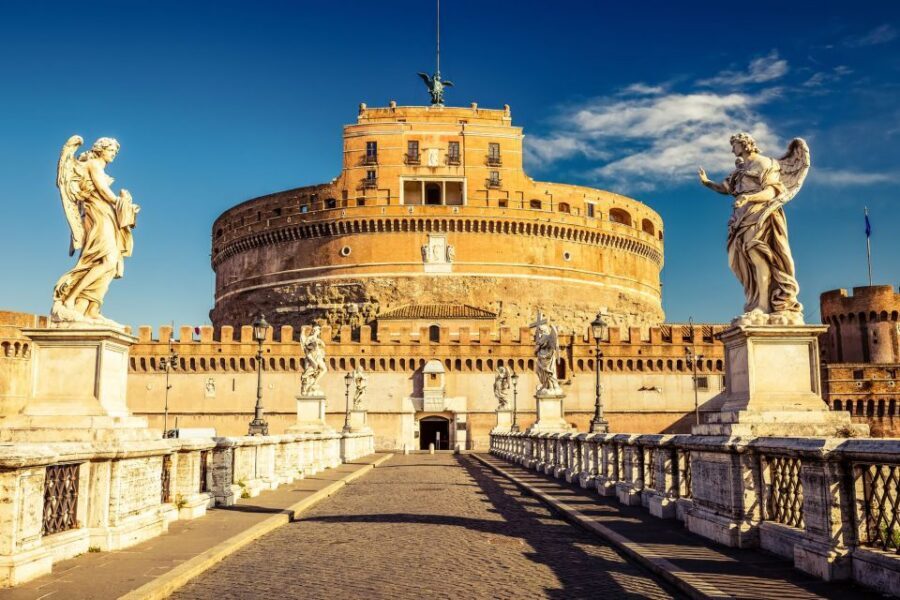
Castel Sant’Angelo (St. Angel’s Castle) is one of those Roman sights that can feel confusing if you wander alone. You see stone, corridors, and viewpoints—but you might not know why each space exists or how power used this fortress over centuries.
That’s where a private guided approach shines. You start with the earliest identity of the site, then follow the logic of how it changed. The tour traces the move from a mausoleum for Emperor Hadrian (starting in the 3rd century A.D.), to a fortress in the Middle Ages, to a prison and working areas for the Vatican Treasury and Archive. Then, during the Renaissance, it shifts again—into a residence for the Popes. One guide-led timeline helps your brain lock onto the place.
You can also read our reviews of more private tours in Rome



Meeting at the castle entrance and keeping the pace tight
The tour starts right at the castle entrance. Plan to arrive 15 minutes early so you can meet your guide smoothly; the guide waits in front holding a sign with the tour name. This little window matters more than it sounds, because Castel Sant’Angelo can have lines and competing priorities nearby, and you want your two hours to be guided, not spent catching up.
You’ll be with a private group and an English-speaking guide (Italian also available). The walking pace is built for a two-hour window, meaning you cover major rooms and story beats without getting lost in museum-style wandering.
A practical note: luggage or large bags aren’t allowed, so travel light. And if you’re traveling with kids, bring a passport or ID card for them. Comfortable shoes are non-negotiable here.
Hadrian’s mausoleum to medieval fortress: the timeline that makes sense
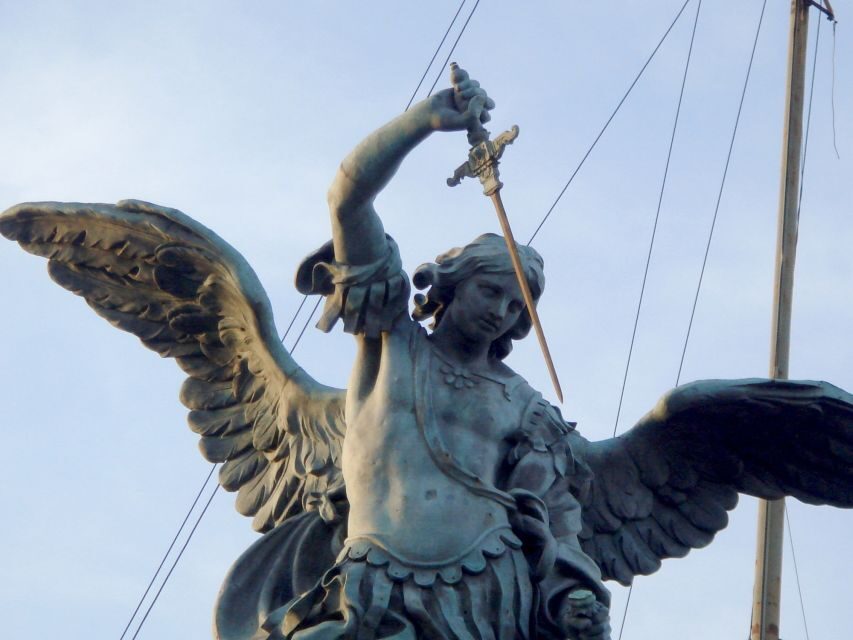
Your guide sets the stage with the earliest layer: the castle’s start as a mausoleum for Emperor Hadrian. This matters because it explains why the structure has such a heavy, monument-like presence. When you understand the original purpose, the later fortifications stop feeling random.
From there, the story turns sharper. The castle later becomes a fortress in the Middle Ages. That change is more than a label—it changes how people moved, how the space was defended, and how authority worked inside the walls. Then you move to the next transformation: the building becomes a prison and also includes offices connected to the Vatican Treasury and Archive.
By the time Renaissance Rome arrives, the castle becomes part home, part power center. This is when your tour stops being only about architecture and starts feeling human. You’re watching the same stone serve totally different political needs, from imperial legitimacy to papal administration.
If you’re the type who likes your tours to have a “story spine,” this one delivers. It’s paced so you can follow the evolution of a place in a way that actually sticks.
Hall of Paolina and Hall of Persus: where the legends get physical
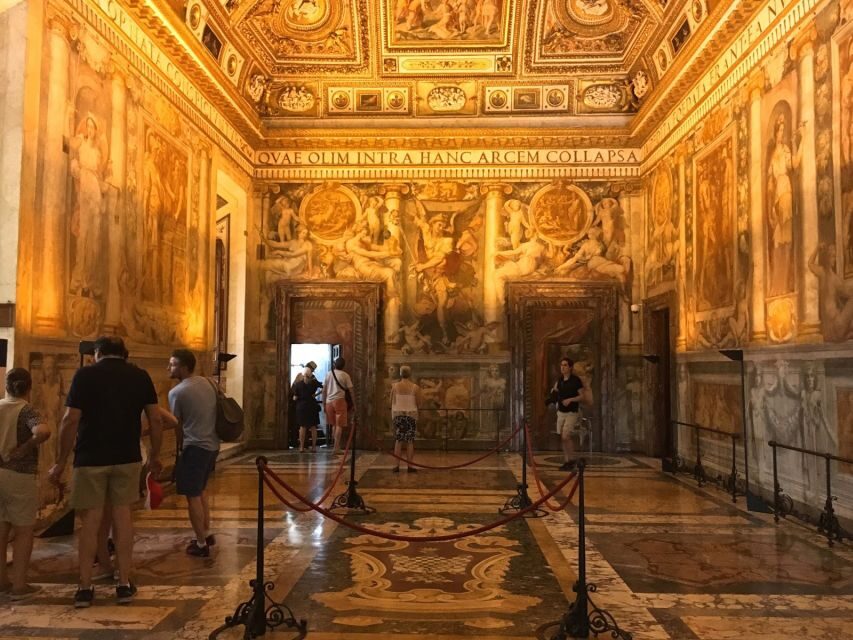
Inside, the tour uses themed spaces to bring mythology and power into the same room. Two named highlights you’ll hear about are the Hall of Paolina and the Hall of Persus.
In the Hall of Paolina, you’ll encounter the story connection to Alexander the Great. The point isn’t just that a figure appears on display—it’s how Renaissance-era storytelling worked, using famous names and legends to shape how people thought about leadership and destiny.
Then there’s the Hall of Persus, where the myth of the Greek hero Perseus comes in. Seeing that myth in a real palace-and-fortress setting helps the legend feel less like a school lesson and more like an intentional message. This is the sort of room where a guide earns their pay, because the meaning depends on context.
You’ll also move through spaces featuring collections such as ancient arms, marbles, ceramics, and sculptures. Even if you’re not a “museum person,” these categories matter because they show you what the castle held—and how Romans displayed power. Weapons in a palace space tell a different story than weapons on a battlefield.
The painting gallery and the art names you can actually remember
One of the tour’s smart choices is mixing art across mediums, so you don’t get stuck in only one kind of viewing. In the painting gallery, you’ll see works tied to artists including Carlo Crivelli, Luca Signorelli, and Dosso Dossi.
What I like about this part is that it gives you anchors. You walk away with names you can repeat later (and search for if you want), instead of leaving with only general impressions. Your guide’s job here is to connect the art to the castle’s identity—why a fortress and a papal residence would also function as a place of display.
There’s also a practical benefit: art rooms often have clearer sightlines and “pause points,” which helps you absorb stories without rushing. It’s a good breather between more dramatic sections of the tour.
You can also read our reviews of more tours and experiences in Rome






Prison levels, secret routes, and the story of the Passetto
The tour’s most talked-about theme is the castle’s connection to escape and survival. You’ll learn the history of the famous Passetto—the hidden path used by the Popes to escape the castle when the Vatican was under attack.
This is exactly the kind of detail that changes how you see the building. Once you understand an escape route existed, corridors and passages start looking purposeful. Instead of thinking of walls as decoration, you start treating them like part of a system designed for crisis.
The guide frames this not as a spooky rumor, but as something embedded in how papal power worked in a city that was always under threat. That’s why even people who don’t read much history often get a lot out of this stop: the story has motion, tension, and consequence.
Pope Paul III’s apartment: the papal side of the same stone
Another major highlight is a visit to the apartment of Pope Paul III. This stop matters because it connects the castle’s political machinery to real daily life inside papal space.
Up to this point, you’ve been hearing about mausoleum origins, fortress logic, prison function, and wartime escape. The Paul III apartment gives you a different emotional angle: the same walls that could confine could also host the routines of leadership during the Renaissance.
In practical terms, this is where the tour feels most like a “day in the life” of a space—at least in the sense that rooms change based on who occupied them and why. It’s also a strong fit if you’re curious about the papal world and the way art, authority, and architecture overlap.
Terrace views and finishing in Piazza Navona
Before you wrap up, you’ll take in panoramic views of Rome from the castle’s terrace. This is more than a photo stop. Your guide helps you orient the historic center, so the skyline becomes readable instead of just pretty.
At the end of the guided portion, you end your stroll in Piazza Navona, a symbol of the Baroque style of Rome. That finish is genuinely smart. It gives your tour a natural landing place in a neighborhood that feels like Rome’s “stage,” with energy that’s easy to enjoy after the more contained castle experience.
And if you want more time, you’ll have the option to stay in the castle on your own after the tour to continue exploring at your own pace.
“Fun, insane” energy: what the best guides do with this tour
A two-hour private tour can go one of two ways: it’s either a smooth, engaging story, or it turns into a speed-run of facts. This one wins when the guide leans into clarity and personality.
In the feedback for this experience, guides stand out for making the castle feel alive. Vincenzo, for example, gets called out as kind, cultured, and compelling—exactly the combination that helps people care. There’s also praise for guides who are clearly passionate and willing to give extra attention to specific themes, including the Borgia pope angle.
If you’re choosing a private tour because you want more than a checklist, that’s where the value shows. A good guide turns the castle into a narrative you can follow, and then you leave with a few images that won’t fade: the Passetto, the papal apartment, the themed halls, and that terrace view.
Price and value: does $135.94 per person make sense?
At $135.94 per person for a 2-hour private tour, the price is not “budget sightseeing.” It’s paying for three things you can’t replicate with a quick self-guided walk: an expert guide, private pacing, and included entry tickets.
It also helps that the tour doesn’t feel short on substance. Two hours is enough time to connect eras and see the key named highlights—Hadrian’s origins, prison and archive layers, papal spaces, the Passetto story, and an art-and-collection mix—without dragging you through every room.
What you should factor in:
- It’s private, so the cost usually works best when you’re traveling as a small group or family who can share the expense.
- Hotel pickup and private transportation are not included, so you’re responsible for getting to the meeting point.
- You’ll get entry tickets included in the price, which cuts down on decision fatigue once you’re already in Rome.
If you’re the type who wants your money to buy understanding (not just access), this price can feel fair. If you’re strictly cost-focused, you might prefer self-guided options—but you’d be giving up the story spine that makes this castle easier to love.
Who this tour suits best
This tour fits best if you:
- want a guided story of Castel Sant’Angelo’s major transformations
- like history that explains why events happened, not just when they happened
- enjoy mythology and art references that connect to power and place
- want a private format for asking questions and keeping the pace comfortable
It’s also a good choice if you’re traveling with a family and want everyone to feel involved. The feedback emphasizes that people genuinely enjoyed it as a family outing, not just an adult history project.
If you have mobility impairments or use a wheelchair, this isn’t recommended based on the tour’s suitability notes. Also plan for a fair amount of walking inside, so bring shoes you trust.
Booking tips to get the most out of your 2 hours
A few small things will make your tour smoother:
- Wear comfortable shoes; the castle involves walking through rooms and levels.
- Keep bags minimal since luggage or large bags aren’t allowed.
- If you’re traveling with children, bring a passport or ID card.
- Arrive on time. The guide waits at the entrance holding the tour sign, but you still want those first minutes to start right.
- Have your camera ready for the terrace. It’s one of the best payoff moments.
Also, if you’re the kind of traveler who likes a plan but still wants freedom, remember the tour ends back at the meeting point and then you’ll be able to choose whether to continue exploring independently inside the castle.
Should you book this St. Angel’s Castle 2-hour private tour?
If you want a clear, guided way to understand how Castel Sant’Angelo evolved—from imperial mausoleum to fortress, prison, papal residence, and symbol of escape—then yes, book it. The experience is built around story beats you can remember: the Passetto, the named themed halls, the Pope Paul III apartment, and the terrace views that place you back in Rome’s real setting.
I’d especially recommend it if you like private tours for the simple reason that you’ll get better answers when the story gets interesting. And the quality of guiding seems to matter here, with strong mentions of guides like Vincenzo and guides praised for passionate, engaging explanations.
If you’re traveling solo on a tight schedule and you’re comfortable piecing things together yourself, you might find the price less appealing. But if you’d rather pay for understanding instead of guessing, this is one of the more satisfying “pay once, get the story” choices in Rome.
FAQ
How long is the St. Angel’s Castle private tour?
The tour lasts 2 hours.
Where do I meet my guide, and when should I arrive?
Meet your guide at the entrance of the castle. Arrive 15 minutes before the activity starts. The guide will wait in front of the entrance holding a sign with the tour name.
What language is the tour offered in?
The live guide is available in English and Italian.
What’s included in the price?
The price includes entry tickets, a guide, and the tour is a private group experience.
Is hotel pickup or private transportation included?
No. Hotel pickup and private transportation are not included.
Is the tour suitable for people with mobility impairments?
This tour is not recommended for people with limited mobility and it is not suitable for wheelchair users.