REVIEW · COLOSSEUM TOURS
Rome: Colosseum Arena Guided Tour, Forum & Palatine Option
Book on GetYourGuide →Operated by Italy Wonders · Bookable on GetYourGuide
Gladiators aren’t far from your feet. This guided trip strings together the Colosseum, the Arena floor, and the Roman Forum plus Palatine Hill, so you see Ancient Rome as a living, connected place rather than three separate stops. You’ll walk with a live guide and use headphones to keep the story clear even when crowds get loud.
I especially love the chance to stand on the Colosseum Arena floor, where the route of the action is easier to picture. I also like how the guide connects the Forum and Via Sacra sites with everyday Roman life—temples, public spaces, and the “who did what” behind the ruins.
One thing to think about: this tour involves a lot of walking on uneven stone and long sightlines, and it isn’t suitable for wheelchair users. Good shoes and water matter.
In This Review
- Key highlights worth your attention
- Entering The Colosseum Arena Floor Without Losing the Plot
- The Arena floor option: what it adds
- Meeting at Santi Cosma e Damiano: Start Here, Stress Less
- Roman Forum on Foot: Via Sacra and the Power of Place
- What you’ll learn (and why it matters)
- A realistic expectation
- Palatine Hill Views: Seeing Where Emperors Lived
- Why the viewpoints are more than a photo stop
- Your Colosseum Tour Flow: A Chronology That Helps
- Skip-the-Line Reality and What It Changes
- How Long You’ll Spend and When Summer Changes Things
- Price and Value: What $86.45 Actually Buys You
- What to Bring (and What to Leave Behind)
- Languages: You’ll Hear the Story Clearly
- Who This Tour Fits Best
- Should You Book This Colosseum, Forum, and Palatine Tour?
- FAQ
- FAQ
- Where is the meeting point?
- Do I need to bring my ID?
- What does the tour include?
- Is there skip-the-line entry?
- How long is the tour?
- What languages are available?
- What should I wear or bring?
- What items are not allowed?
- Is the tour suitable for wheelchair users?
- What happens if I arrive late?
Key highlights worth your attention
- Arena floor option puts you inside the Colosseum’s most dramatic zone (if you choose that add-on).
- Skip-the-line entry uses a separate entrance to cut down wasted time outside.
- Roman Forum + Via Sacra walk takes you past key ruins like the Temple of Caesar and the Temple of Saturn.
- Palatine Hill viewpoints help you understand where emperors lived and why the city layout made sense.
- Headphones included so you can hear your guide without leaning in all day.
- Guides with standout storytelling like Diego, Francesco, Georgia, and Rena are repeatedly praised for clear explanations and good energy.
Entering The Colosseum Arena Floor Without Losing the Plot
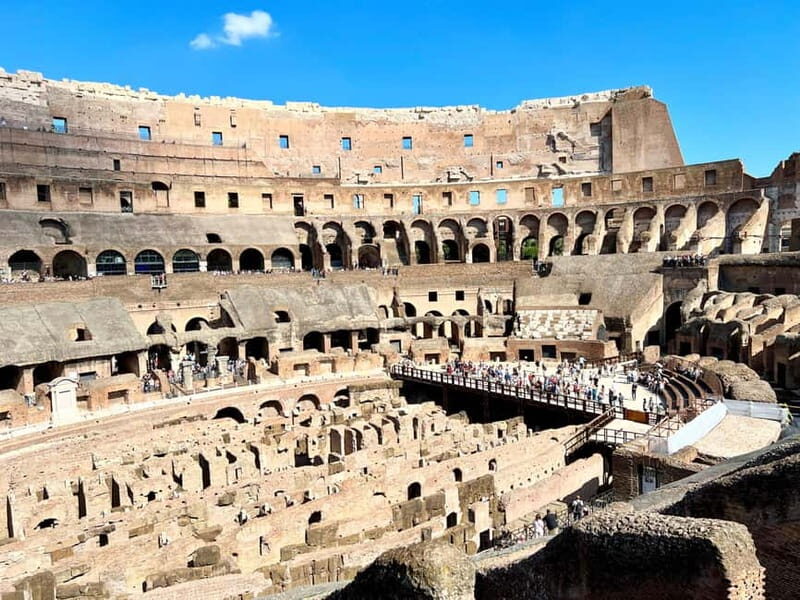
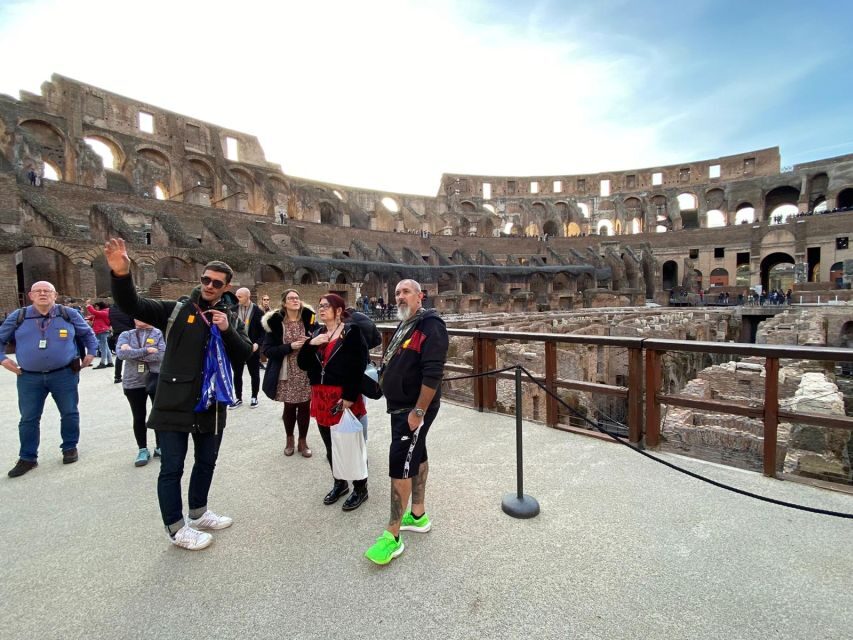
The Colosseum is the kind of place where it’s easy to get distracted: you look up, you take photos, you move on. This tour helps you keep focus. The big payoff is that you’re not just looking at the building from the outside—you’re guided around the Colosseum with context, then (if you selected the Arena option) you step onto the Arena floor area where gladiators once prepared for showtime.
What I like about the way the tour is structured is that it builds your understanding in layers. You don’t start with random facts. You get explanations as you move, so the architecture clicks. And when you’re standing where events happened, it’s easier to picture movement: where people gathered, where performers stood, and how the space was organized for spectacle.
You can also read our reviews of more guided tours in Rome



The Arena floor option: what it adds
If you choose the Arena floor entry, your time inside the Colosseum feels less like a sightseeing loop and more like a guided walk through the Colosseum’s purpose. Many people find that this is the difference between seeing the Colosseum and understanding it. It’s also a natural place for your guide to connect the site to Roman life and showmanship, since this is where the story becomes physical.
Meeting at Santi Cosma e Damiano: Start Here, Stress Less
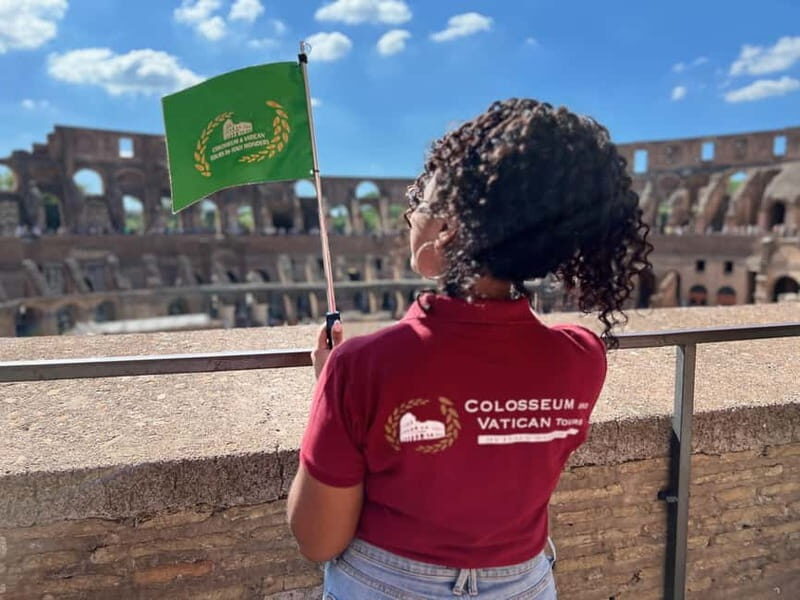
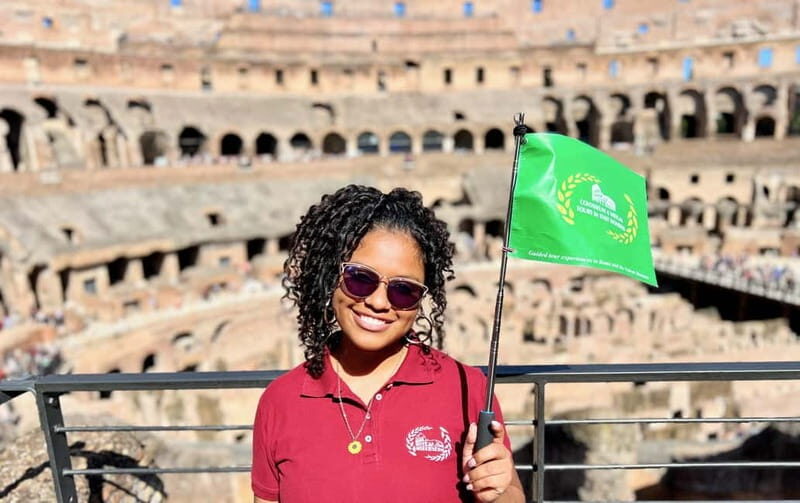
Your tour begins at the square in front of the Basilica of Santi Cosma e Damiano. The staff will be outside wearing uniforms with the provider’s logos, so you’re not left wandering with a phone in your hand.
This start point is useful because it keeps things simple. You’re already in the general zone where you’ll be moving through the historic core, and the group re-forms back at the meeting area at the end. That means you don’t need to figure out a separate handoff point when you’re tired.
Two practical notes:
- Arrive on time. Late arrivals mean you lose the tour and there’s no refund for no-shows or late arrivals.
- Your meeting time may shift based on ticket availability, so keep an eye on email/SMS/WhatsApp for updates. Having WhatsApp is a smart move in Rome.
Roman Forum on Foot: Via Sacra and the Power of Place
After the Colosseum portion starts (depending on your exact timing), the walk through the Roman Forum is where the tour gains depth. This area isn’t just ruins; it’s the Romans’ central stage for religion, politics, and daily public life. Your guide walks you through the space and helps you place major sites into a story you can follow.
A key route you’ll hear about is Via Sacra, the Sacred Road, the processional route that fed into Rome’s ceremonial heart. The tour specifically points out temple sites along the way, including the Temple of Caesar and the Temple of Saturn.
What you’ll learn (and why it matters)
The Forum can look like scattered stones unless you know what to look for. With a guide, it becomes a map of Roman priorities:
- Public events and marketplace life: the Forum wasn’t quiet. It was busy, commercial, and political.
- Religion tied to government: temples weren’t just worship spaces; they were part of how the state presented itself.
- Architecture as messaging: arches, basilicas, and statues weren’t random decoration. They communicated authority and identity.
This is also where a good guide earns their pay. People describe guides like Rena and George as especially strong at clear explanations and answering questions, including from kids. That kind of interaction can turn a “walk-and-photos” stop into a place you actually remember.



A realistic expectation
This part of the city can feel crowded, and the Forum’s layout takes time to navigate. You’ll likely spend enough time to absorb key sights, but you’re still moving as a group—so if you want long solo wandering, plan for it after the tour rather than during.
Palatine Hill Views: Seeing Where Emperors Lived
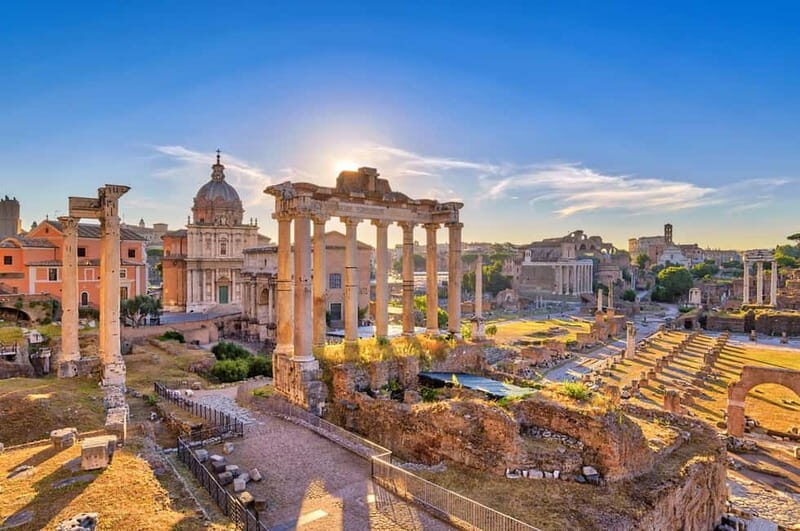
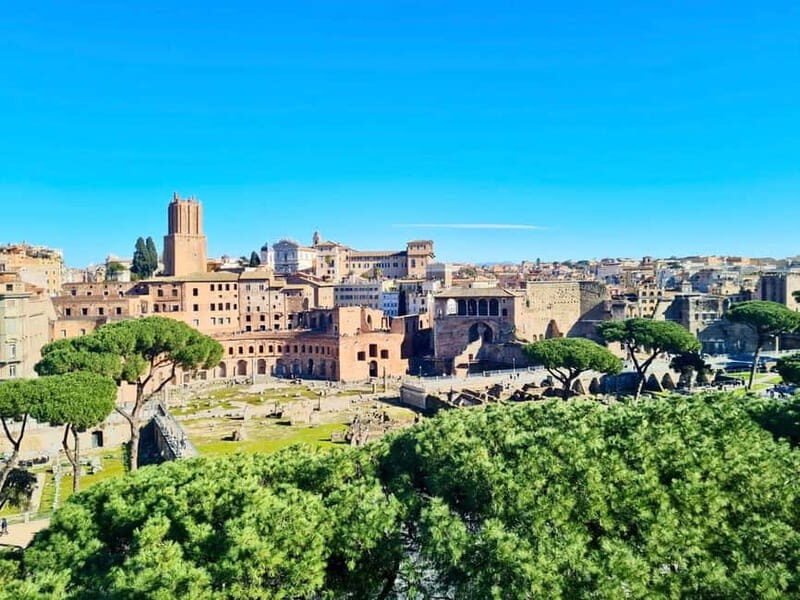
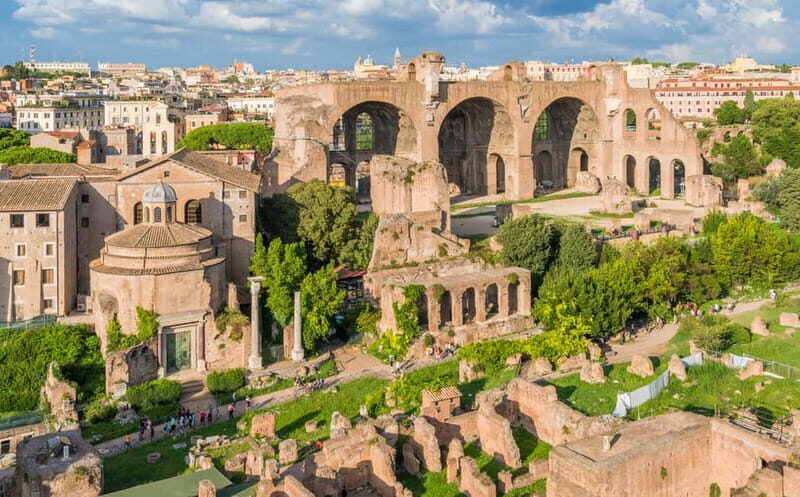
Next comes Palatine Hill, where the tour focuses on imperial Rome. Palatine Hill is famous because it’s tied to where emperors lived and because the elevation gives you dramatic views back toward the Forum and the Colosseum.
Your guide helps connect the physical remains to the legends and history people associate with Rome’s early days. You’ll also see remains of imperial palaces, which helps you understand how power was displayed in architecture. Even when only fragments remain, the location and sightlines explain a lot.
Why the viewpoints are more than a photo stop
Palatine Hill gives you a sense of scale. From here, the Forum and Colosseum don’t feel like two unrelated monuments. You start to see how the city’s most important spaces relate to one another—where crowds would move, where leaders could observe, and why certain neighborhoods gained importance.
It’s a smart pairing with the Forum because you’re essentially doing a “how it worked” exercise: the Forum shows public life; Palatine shows the elite perspective.
Your Colosseum Tour Flow: A Chronology That Helps
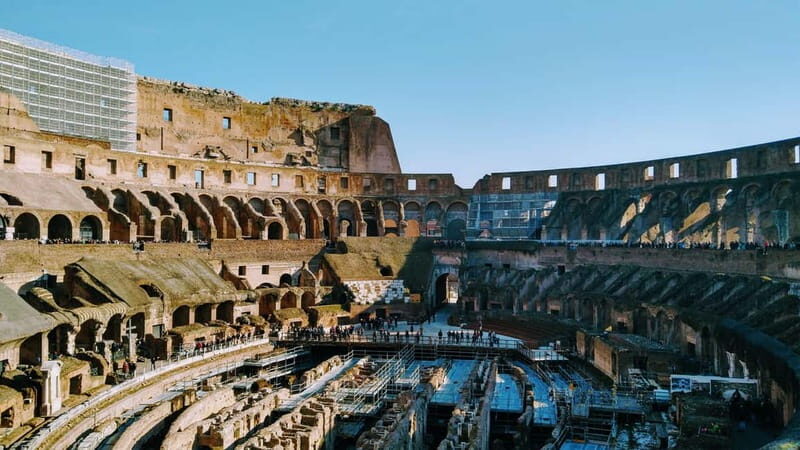
This tour’s order can vary by time slot, but the overall idea stays consistent: you move between the Colosseum experience and the Forum/Palatine storyline with guided explanations throughout. One nice detail from the info you have here is that some tour formats run in a way that makes chronological sense—starting from the Forum/Palatine zone and then heading to the Colosseum, or starting with the Colosseum and then moving outward to the rest.
Either way, the goal is the same: you get context as you go, and that context prevents the “I saw it, now what?” feeling. Guides like Francesca, Luciano, and Silvana are described as funny or structured, which usually means you’ll get both clarity and a bit of personality rather than a lecture-only vibe.
Skip-the-Line Reality and What It Changes
The tour includes skip-the-line entry via a separate entrance. That’s not a small perk. In Rome, time lost outside can kill your energy for the rest of the day, especially around peak hours.
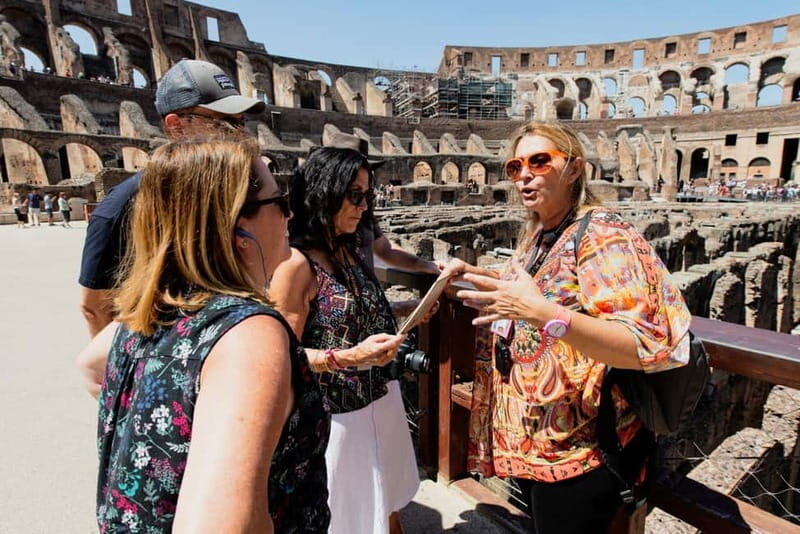
Still, manage expectations: skip-the-line doesn’t mean instant entry. It means you spend less time standing in the busiest line. Once inside, you’ll follow the guide’s route, and the “crowd pressure” often shifts rather than disappears. Your headphones help a lot here, since stopping to listen while people pass close by can be hard.
How Long You’ll Spend and When Summer Changes Things
The duration is listed as 1 to 2.5 hours, depending on the starting time. In summer (June to August), the tour lasts 2 hours.
So, you’ll want to treat this as a focused hit rather than a half-day project. It’s long enough to take in the key highlights and hear the main story beats, but short enough that you’ll still have energy afterward to explore on your own.
If you’re visiting in the hottest months, the shorter summer duration makes sense. Just plan water and breaks. The tour requires comfortable shoes, and you should bring water.
Price and Value: What $86.45 Actually Buys You
At $86.45 per person, you’re paying for four things that matter in Rome:
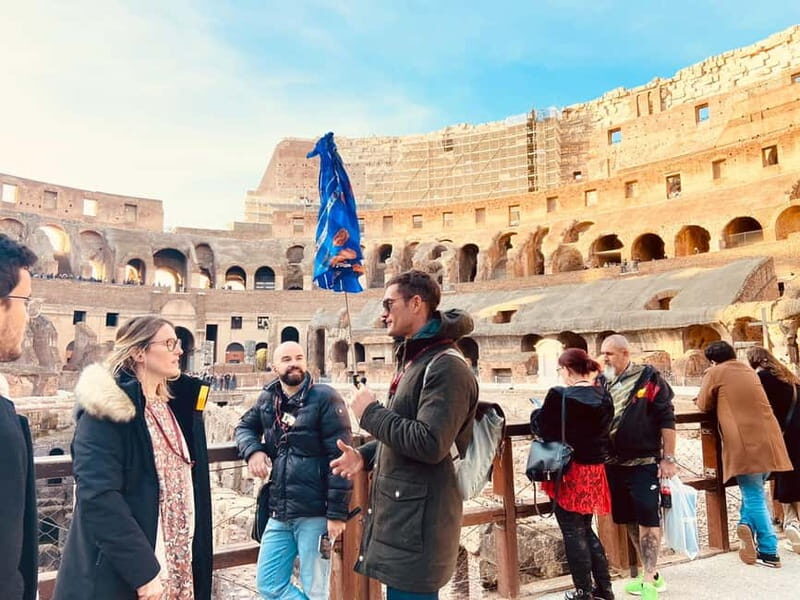
- Expert live guide: you’re not just reading plaques, you’re getting a story tied to what you see.
- Included entries to the Colosseum, plus Roman Forum and Palatine Hill when selected.
- Headphones so you can actually hear the guide instead of guessing.
- Skip-the-line entry, which protects your schedule.
If you add the Arena floor option, you’re paying for access to the Colosseum area that most people remember the most. That usually changes how the Colosseum feels—not just “big amphitheater,” but “event space.”
Also keep in mind the Colosseum requires nominative tickets and ID checks. Paying for a guided tour doesn’t help if entry gets denied over mismatched names. Bring your passport or ID card and make sure the names you provided match exactly.
What to Bring (and What to Leave Behind)
Bring:
- Passport or ID card
- Comfortable shoes
- Water
- Deposit (there’s a mention of a refundable deposit of €10)
Not allowed:
- Smoking
- Luggage or large bags
- Alcohol and drugs
- Sprays or aerosols
- Weapons or sharp objects
- Glass objects
- Electric wheelchairs
- Unaccompanied minors
- Pets
Even if you’re a light packer, it’s worth planning around the no-large-bags rule. In Rome, you might find it easier to travel with a small day bag you can manage during tight queues.
Languages: You’ll Hear the Story Clearly
The live guide operates in Italian, Portuguese, English, Spanish, and French. Plus, headphones are included, so language differences are less of a headache. If your schedule is tight, that headphone setup is one of the most practical inclusions here.
Who This Tour Fits Best
This is a strong choice if:
- You want the Colosseum and Forum/Palatine combo without wasting time figuring out routes.
- You enjoy explanations that connect monuments to daily life and how Rome functioned.
- You want a structured walk that helps you understand what you’re looking at.
It may feel less ideal if:
- You want long, slow wandering with zero group pace.
- You’re sensitive to crowds and standing in controlled entry spaces.
- You use a wheelchair (the tour is not suitable for wheelchair users).
Should You Book This Colosseum, Forum, and Palatine Tour?
If you’re choosing between DIY and a guided option, this one is worth considering because it solves the two big problems at the Colosseum and Forum: time lost outside and confusion inside without context. The guide-led route, headphones, and skip-the-line entry make it practical, and the option to include the Arena floor is often the part that gives people the most lasting memory.
Book it if you want a focused, story-driven route through Ancient Rome’s most important spaces, with enough time for photos and then freedom afterward.
FAQ
FAQ
Where is the meeting point?
The meeting point is in the square in front of the Basilica of Santi Cosma and Damiano. Staff will be outside in uniform with the activity provider’s logos.
Do I need to bring my ID?
Yes. Colosseum entry uses nominative tickets and ID checks. Bring your passport or ID card, and make sure the name details match your voucher.
What does the tour include?
It includes entrance to the Colosseum, entrance to the Roman Forum and Palatine Hill if selected, and a tour guide. Headphones are included to hear the guide better. Arena entry is included only if you select that option.
Is there skip-the-line entry?
Yes. You’ll skip the line through a separate entrance.
How long is the tour?
Duration is 1 to 2.5 hours depending on the starting time. In summer (June to August), the tour lasts 2 hours.
What languages are available?
The live guide operates in Italian, Portuguese, English, Spanish, and French.
What should I wear or bring?
Wear comfortable shoes and bring water. You’ll also need your passport or ID card and a deposit.
What items are not allowed?
Smoking is not allowed. You also can’t bring luggage or large bags, alcohol or drugs, sprays or aerosols, weapons or sharp objects, or glass objects. Pets are also not allowed.
Is the tour suitable for wheelchair users?
No. The tour is not suitable for wheelchair users.
What happens if I arrive late?
If you arrive late, you will lose the tour and no refunds are provided for no-shows or late arrivals.