REVIEW · MUSEUMS
Skip-the-line guided tour of the National Etruscan Museum of Villa Giulia in Rome
Book on Viator →Operated by Raphael Tours & Events · Bookable on Viator
Villa Giulia feels like time travel. This skip-the-line guided tour zeroes in on the National Etruscan Museum’s best objects, all inside Pope Julius III’s 1500s villa—so you’re not just looking at artifacts, you’re learning how the Etruscans lived and worked before Rome took over. I especially like the focus on standout works like the Pyrgi Tablets and the Spouses’ Sarcophagus, and I like that your guide uses an iPad and multimedia tools to make the stories feel clearer and more connected. One drawback to consider: at around 2 hours 30 minutes, it’s a concentrated visit, so if you want to linger on every single room on your own, you may feel a bit paced.
If you get a guide like Bruno or Tommaso, you’re in good hands. In the reviews, Bruno is described as excellent at weaving myth and Etruscan and Roman facts together, while Tommaso is praised for a thoughtful itinerary and even making sure the time covers what matters most. The other practical upside is that this is a private format, so the guide can adjust to your questions without waiting for a bigger group to catch up.
In This Review
- Key highlights you should know before you go
- Villa Giulia: Why this Etruscan museum feels different
- Skip-the-line entrance: the real value of starting with priority access
- Your guide’s iPad tools: how the tour makes Etruscan art easier
- Stop 1: Museo Nazionale Etrusco di Villa Giulia in about 2.5 hours
- The artifacts that anchor the story (and why they’re worth your attention)
- Pyrgi Tablets: goldsmith-level precision in text
- Spouses’ Sarcophagus: craftsmanship with human emotion
- Veius Temple ruins and Apollo: linking place, myth, and art
- Villa Giulia’s setting: why frescoes and gardens aren’t just decoration
- Timing and meeting point: how to avoid last-minute stress
- Price and value: is $282.85 per person fair for what you get?
- Who should book this tour (and who might pass)
- Quick FAQ
- FAQ
- How long is the skip-the-line guided tour?
- Is the museum admission ticket included?
- What language is the tour offered in?
- Where do we meet the guide?
- Will I need to stand in a line?
- Is this tour private or shared?
- Do kids get free admission, and what do they need?
- Is cancellation free?
- Should you book it?
Key highlights you should know before you go
- Priority access means you spend more time inside the museum and less time outside sorting through queues
- Tablet-style storytelling helps you connect artifacts to the wider Etruscan world
- Masterpieces on a tight path, including the Pyrgi Tablets, Spouses’ Sarcophagus, and Apollo at the Veius Temple ruins
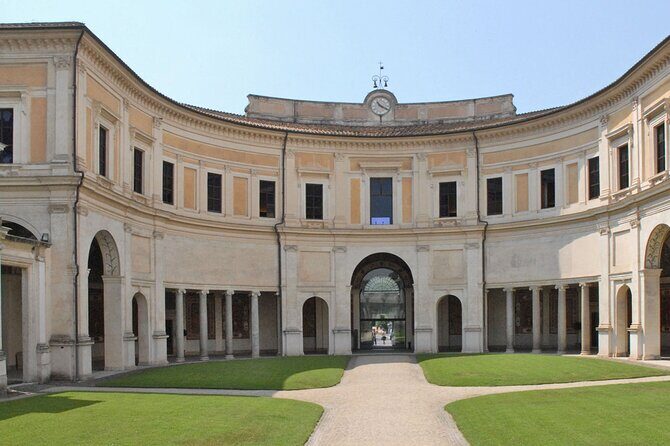
- Villa Giulia’s setting is part of the show, since the museum sits in a lavish 16th-century residence with frescoes, statues, and gardens
- Private group experience, with only your group joining the guide
Villa Giulia: Why this Etruscan museum feels different

The National Etruscan Museum in Villa Giulia isn’t just another stop on a Rome museum list. The building itself matters. Villa Giulia was built as a lavish 16th-century residence by Pope Julius III, and that changes the mood right away. You move through rooms set up for display, but the space also carries an atmosphere—frescoes, sculpture, and garden views help make the art feel tied to a real place, not just glass cases.
What makes this tour especially appealing is how it turns a big collection into a story with a beginning and middle. You’re led into the Etruscans as a civilization that flourished before Rome expanded across central Italy. That framing is smart because the museum is large, and without guidance it’s easy to leave feeling like you saw a lot of objects rather than understanding what they meant.
You can also read our reviews of more guided tours in Rome



Skip-the-line entrance: the real value of starting with priority access
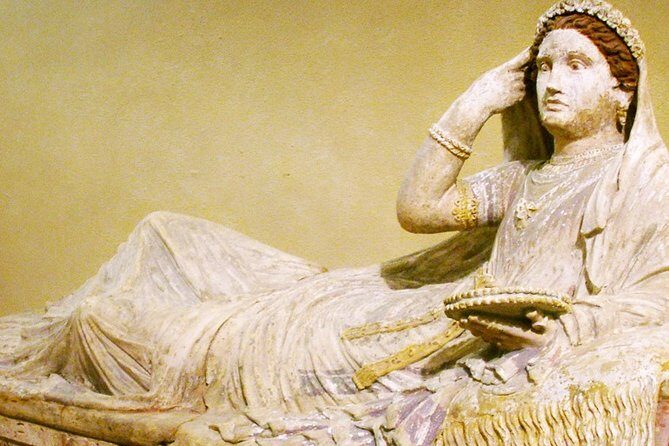
Rome museum lines can be brutal, and timing matters—especially with a tour that lasts about 2.5 hours. The headline benefit here is that you get guaranteed to skip the long lines with priority access. Even if you’re an experienced museum-goer, I think you’ll appreciate the saved time because it lets your guide spend that energy interpreting the objects rather than reacting to delays.
There’s a second advantage, too: when you arrive without line stress, you start the visit in a calmer headspace. That’s not a small thing. Museums like this work best when you’re ready to connect details—materials, craftsmanship, symbolism—to a broader historical picture.
Your guide’s iPad tools: how the tour makes Etruscan art easier
This experience is built around a professional guide who uses a tablet (iPad) and other multimedia/visual tools. That doesn’t sound like a big deal until you remember how many museum labels are written for general visitors who already have context. With tablet-style visuals, your guide can help you see patterns: how inscriptions relate to culture, how sculpture style ties to beliefs, and how architecture connects to myth and daily life.
In the reviews, Bruno stands out for answering lots of questions, including myth references and Roman and Etruscan lore, and for doing it with great manners and personality. Tommaso is also praised for passion and knowledge, plus for creating a special itinerary and keeping the flow smooth. The common theme: the guides don’t just talk facts. They help you follow the story without getting lost.
Stop 1: Museo Nazionale Etrusco di Villa Giulia in about 2.5 hours
This tour is focused on one main stop: Museo Nazionale Etrusco di Villa Giulia. It’s not a “run past everything” experience. It’s a curated route through the most memorable sections and objects, aimed at showing you the museum’s real power in a limited timeframe.
Here’s what I think you can expect from a structure like this:
- Your guide gets you oriented quickly in the museum setting
- You hit key works early enough that the meaning sticks
- You get enough context to understand why certain objects matter, not just what they are
- You finish with a sense of the broader Etruscan world (traditions, customs, and art), not only isolated facts
A practical consideration: because the time is set around 2 hours for the guided museum portion (with total duration listed at about 2 hours 30 minutes), you’ll want to arrive with your questions ready. If you wait until the last ten minutes, you might not get to ask everything.
The artifacts that anchor the story (and why they’re worth your attention)
The tour highlights several standout pieces, and they’re not random “famous items.” They represent different ways Etruscan culture expressed power, belief, and craftsmanship.
You can also read our reviews of more museum experiences in Rome





Pyrgi Tablets: goldsmith-level precision in text
One of the big named highlights is the Pyrgi Tablets. These are described as impressive for goldsmith precision. The point for you isn’t only that they’re made well. It’s that this kind of inscription work signals the importance of recording—knowledge, religion, authority—using materials and techniques that take real expertise.
Tablet-style explanation is helpful here. If you’ve ever stared at inscriptions and felt stuck, you’ll probably appreciate a guide who can help you interpret what you’re seeing and why it matters.
Spouses’ Sarcophagus: craftsmanship with human emotion
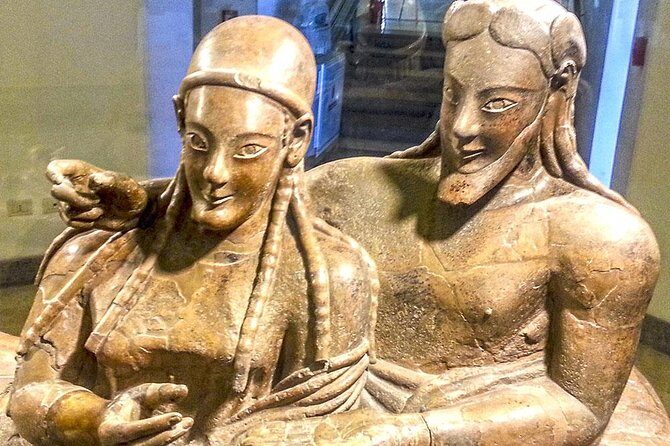
Another named highlight is the Spouses’ Sarcophagus. The tour description calls out fine craftsmanship, and the object is a strong choice for understanding Etruscan culture because funerary art often communicates beliefs about identity, relationships, and status.
This is where multimedia tools can make a difference. Your guide can help you read the scene—why the figures look the way they do, what the design choices suggest, and how that fits into Etruscan funerary traditions.
Veius Temple ruins and Apollo: linking place, myth, and art
You also visit the ruins of the Veius Temple, with the statue of Apollo called out as an impressive component. This matters because temples and sculpture connect directly to how a society viewed power, gods, and the world around it. The Etruscans weren’t working in a vacuum; their religious and artistic language influenced what later became Roman culture.
What you gain from the guided route is interpretation: you’re not just seeing a statue. You’re seeing it in a framework that connects it to Etruscan belief and the wider Mediterranean myth world.
Villa Giulia’s setting: why frescoes and gardens aren’t just decoration
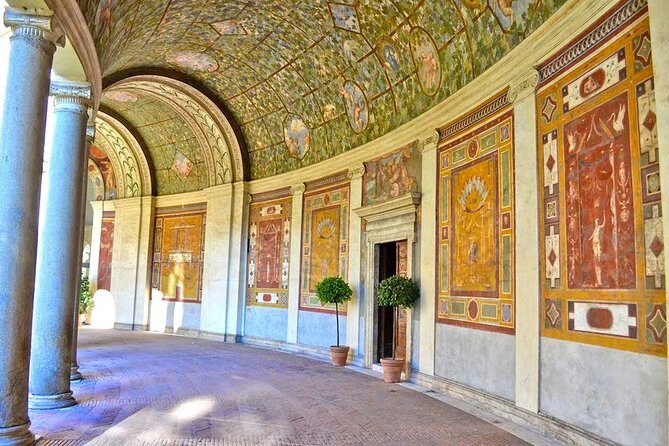
Villa Giulia is described as having spectacular frescoes, statues, and gardens, and that setting is part of why the museum experience feels special. Even when you’re focused on the artifacts, the surroundings help your brain “place” what you’re learning.
There’s also a practical bonus mentioned in the reviews: after the tour, you can stay and enjoy the beautiful gardens of Villa Giulia. That’s smart, especially if you like slowing down after the guided portion. You get the best of both worlds—structure for the history, then space to breathe and look around.
Timing and meeting point: how to avoid last-minute stress
The tour starts at 2:00 pm and meets at Piazzale di Villa Giulia 9, 00196 Roma RM, Italy. It ends back at the meeting point, so you don’t need to worry about reorienting at the end.
Because the experience includes skip-the-line priority, arriving on time is still important: the guide is counting on a smooth start, and your scheduled time in the museum is the real value. Plan a little buffer so you can get yourself settled rather than walking in already stressed.
The location is also noted as near public transportation, which helps if you’re coordinating with other parts of your day.
Price and value: is $282.85 per person fair for what you get?
Let’s talk about the cost without pretending it’s “cheap.” At $282.85 per person, this isn’t a bargain-basement museum tour. But it’s also not priced like a full-day private driver-and-car tour. What you’re paying for is a combination of things that usually cost time or money separately:
- Guaranteed skip-the-line priority access (time saved in Rome often equals real money)
- A professional guide focused on the key Etruscan highlights
- A private tour format—your group only, not a packed shared experience
- Admission ticket included, so you’re not doing extra ticket math later
- Guided interpretation with multimedia/iPad tools, which can be more useful than just reading labels
If you’re traveling as a pair or small group and want an organized way to “get it” fast at a major museum, the value tends to make more sense. If you’re the type who loves reading every label slowly and moving room to room freely, you might find the paid structure limits you a bit. But if you want the museum’s best pieces explained in a coherent way, the price is easier to justify.
Who should book this tour (and who might pass)
This tour fits best if you want:
- A focused, guided look at one of Italy’s most important Etruscan collections
- Context that turns objects into culture—customs, traditions, and art
- A private experience where questions don’t get swallowed by a crowd
- A guide who can explain myth and history connections, the way Bruno is praised for doing
You might pass if:
- You already have a strong Etruscan background and prefer self-guided museum pacing
- You dislike structured routes and want to wander indefinitely
- Your schedule doesn’t support a mid-afternoon start (it begins at 2:00 pm)
Quick FAQ
FAQ
How long is the skip-the-line guided tour?
It runs about 2 hours 30 minutes (the museum portion is listed at 2 hours with total duration slightly longer).
Is the museum admission ticket included?
Yes. Admission Ticket Included is part of the experience.
What language is the tour offered in?
The tour is offered in English.
Where do we meet the guide?
You meet at Piazzale di Villa Giulia 9, 00196 Roma RM, Italy.
Will I need to stand in a line?
No. The experience includes guaranteed skip-the-line with priority access.
Is this tour private or shared?
It’s private. Only your group participates.
Do kids get free admission, and what do they need?
Children must be accompanied by an adult. For kids below 18, you need an ID card or passport to get free admission.
Is cancellation free?
Yes. There is free cancellation, and you can cancel up to 24 hours before the experience start time for a full refund.
Should you book it?
If your goal is to understand the Etruscans through the museum’s most meaningful objects—without losing time to lines—this is a smart booking. The priority access alone helps with Rome logistics, but the bigger win is the guided interpretation using tablet-style tools plus a route that hits major highlights like the Pyrgi Tablets, Spouses’ Sarcophagus, and the Veius Temple/Apollo connection.
Book it if you like museums with structure and you want your questions answered in a clear, conversational way—especially for Etruscan art, myth references, and the cultural bridge into Roman history. Pass if you want maximum freedom to linger room-by-room, or if you’d rather read labels on your own and spend your time elsewhere.