REVIEW · 1-DAY TOURS
Semi-Private Day Trip to Pompeii and Naples from Rome
Book on Viator →Operated by ROMAETRAVEL · Bookable on Viator
Pompeii is history you can walk through. This semi-private day trip strings together a scenic Amalfi Coast drive, the stark reality of Pompeii’s streets, and a fast look at key Naples landmarks. I especially like the small group limit of 14 people, which keeps Pompeii from turning into a stampede, and I like that Pompeii has an official ruins guide and the Pompeii ticket included. One thing to weigh: it’s a long day, and Naples is mostly short exterior stops, so you won’t spend hours inside every major site.
You’ll start early (7:30am) with pickup in Rome for hotels inside the Aurelian walls, and you’ll end back at the meeting point at Piazza della Repubblica. The drive is built for comfort and timing, but you’re still on the road for roughly 12 hours total, so pack for a marathon day and plan to move on quickly when the itinerary says next.
In This Review
- Key points to know before you go
- A 7:30 a.m. start that shapes your whole day
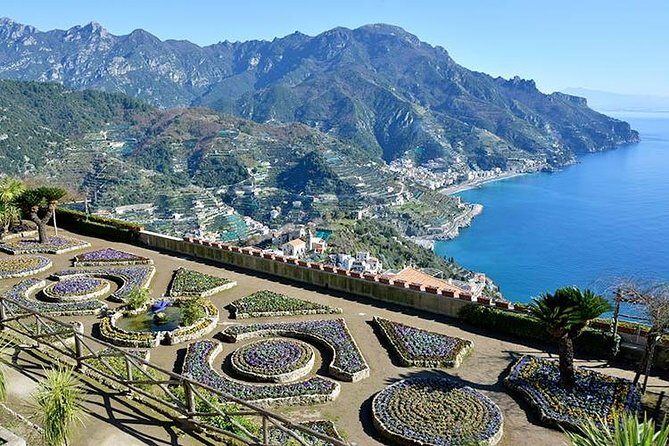
- The Amalfi Coast drive: big views with a purpose
- Entering Pompeii: what you gain from an official ruins guide
- Where Pompeii’s story fits: Vesuvius and why it’s so haunting
- Naples in short bursts: Spaccanapoli to Piazza del Plebiscito
- The street stops that feel most real
- Duomo, churches, and the “quick look” problem
- Royal Palace, castles, and paying attention to what’s included
- Group size, guides, and the small-team vibe
- Comfort and logistics: where this day can feel long
- Price and value: is $401.24 worth it?
- Who this tour suits best (and who should look elsewhere)
- Should you book this Pompeii and Naples day trip?
- FAQ
- How long is the Semi-Private Day Trip to Pompeii and Naples from Rome?
- What time does the tour start, and where does it meet?
- Is hotel pickup included?
- Is Pompeii admission included?
- Is lunch included in the price?
- Are Naples attractions included for entry fees?
- What if plans change—can I cancel for a refund?
Key points to know before you go
- Max 14 people: fewer voices, easier pace, more time to actually ask questions.
- Official guided Pompeii + ruins ticket included: you’re not guessing your way through the streets.
- Hotel pickup in the Aurelian walls: less hassle than meeting everyone on foot in Rome.
- Amalfi Coast scenery en route: the day gives you big views before the ruins.
- Many Naples stops are short and mostly outside: expect quick looks at places like Spaccanapoli and Piazza del Plebiscito.
- Some Naples sights are not included: Royal Palace and several castles cost extra if you want to go in.
A 7:30 a.m. start that shapes your whole day

This trip runs about 12 hours, starting at 7:30am. That early start matters because you’re trying to beat the worst of the day’s crowds at Pompeii and still have time to see Naples afterward. If you’re the type who hates rushing, bring patience. If you’re the type who likes a full day with clear structure, you’ll probably love it.
Your pickup is designed for convenience if you’re staying within the Aurelian walls. If not, you may need to meet at Piazza della Repubblica (P.za della Repubblica, 48). I’d rather you know that upfront than be surprised on the morning—because a half hour of confusion can wreck the whole schedule.
You’ll also use a mobile ticket. That’s practical, especially on a day with early departures and multiple stops.
You can also read our reviews of more private tours in Rome



The Amalfi Coast drive: big views with a purpose

The overview promises a drive along the UNESCO-listed Amalfi Coast. Even without a formal “stop and shop” itinerary listed for the coast, the value here is timing and scenery: you’re leaving Rome early, and the coast drive acts like a visual palate cleanser before Pompeii’s dark story.
Here’s how to make the most of it:
- Bring something for the drive—water, a light layer, and a power bank if you like photo bursts.
- Watch for the dramatic coastline moments, not just road scenery. You’re on a schedule, so the best views usually happen in short windows.
- If you get car sick, say so and sit where you feel best; long drives can be rough even in a nice vehicle.
Entering Pompeii: what you gain from an official ruins guide
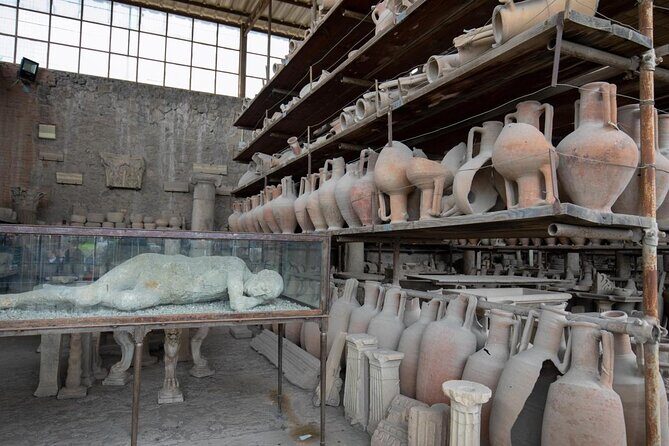
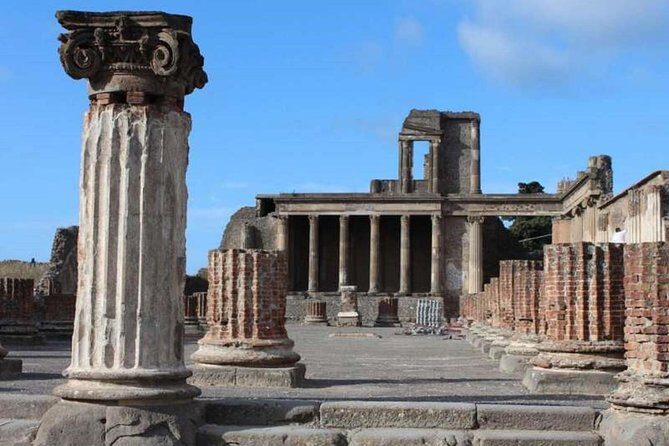
Pompeii is the main event, and the structure here is built around that. You get about 3 hours at the Pompeii Archaeological Park, and the Pompeii ruins ticket is included. More important, Pompeii is where you have an official guide.
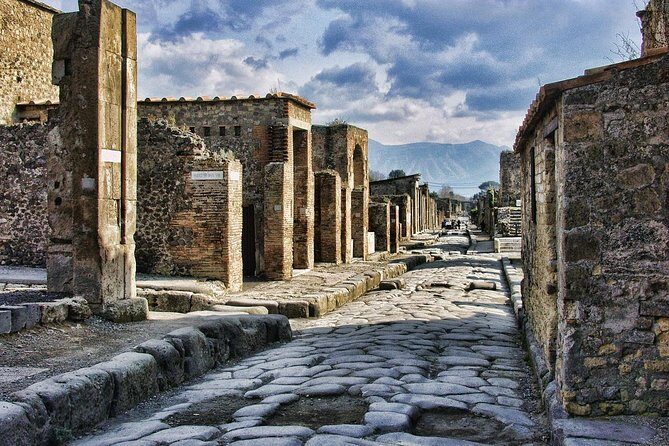
That guide changes the whole experience. Pompeii can look like a pile of old stone until someone helps you connect the street grid, the public spaces, and the everyday buildings to Roman life. With a guide, you’re less likely to miss the details that make the site feel personal: where people gathered, how shops and homes were laid out, and how a city operated before the eruption.
You’ll walk a broad route that typically includes the Roman Forum area and the amphitheater zone. The amphitheater is especially striking because it’s one of the oldest surviving Roman amphitheaters still standing. Your guide’s job is to help you understand what you’re looking at—so you’re not just taking photos, but learning how the place worked.
Two practical tips for Pompeii:
- Wear comfortable shoes with grip. The ground can be uneven, and you’ll be standing and walking for hours.
- Bring water and pace yourself. Three hours in Pompeii is a lot of ground, especially on a day that started at 7:30am.
Where Pompeii’s story fits: Vesuvius and why it’s so haunting

This trip naturally connects Naples to Pompeii by starting your Naples day with context. Naples is the modern anchor near Vesuvius, the still-active volcano that destroyed Pompeii in AD 79. That background gives Pompeii extra emotional weight once you’re inside the ruins.
When you see Pompeii with that knowledge, little things change. Instead of only thinking of the city as ancient, you start thinking of it as a living place—streets, routines, and community spaces that were suddenly disrupted. That’s the reason Pompeii still hits hard for so many people, even if you’ve read about it before.
Naples in short bursts: Spaccanapoli to Piazza del Plebiscito
After Pompeii, you head into Naples and it’s quick. The itinerary includes multiple stops, each about 10 minutes, so you’ll mostly be looking from the street and getting quick orientation.
You’ll pass or pause around:
- Centro Storico, including the Duomo di San Gennaro area
- Spaccanapoli, the straight, narrow main street locals call the Naples splitter
- Piazza del Plebiscito, a major central square near the gulf
Spaccanapoli is one of the most helpful streets for getting your bearings in the historic center. It’s called that because it feels like it splits the older city when viewed from above. Walking a portion—or even standing at the right spot for a photo—helps you understand how dense and layered Naples is.
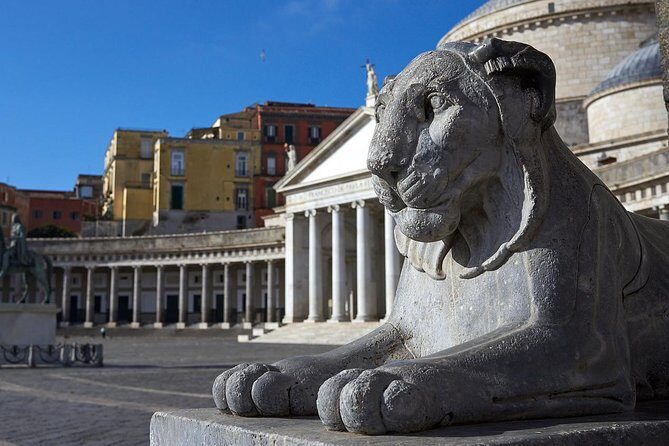
Piazza del Plebiscito is also worth a pause. It’s named for the plebiscite taken on October 2, 1860, and the square is bounded by major buildings like the Royal Palace on one side and the church of San Francesco di Paola with colonnades on the other. Even if you don’t go inside, the architecture gives you a sense of Naples’ political and cultural importance beyond the coast and volcano story.
You can also read our reviews of more tours and experiences in Rome





The street stops that feel most real

Some of the most “you are really in Naples” moments come from the shopping and side-street areas, not just the biggest monuments.
You’ll have time around:
- Via Toledo, a long shopping thoroughfare that runs from Piazza Dante toward Piazza Trieste e Trento, near Piazza del Plebiscito
- Via San Gregorio Armeno, famous for nativity scene shops, especially around Christmas season
Even though these stops are short, this is the kind of Naples that people remember after they’ve left. Via Toledo gives you the everyday pulse of the city. Via San Gregorio Armeno gives you something handmade, local, and very specific to the region’s traditions. If your visit happens outside Christmas, you’ll still likely find craftsmanship and the workshop-style vibe, but peak displays are more of a seasonal thing.
Duomo, churches, and the “quick look” problem
The itinerary includes religious and historic sites, but with short time windows, you’ll need to choose your priorities.
You’ll stop at:
- Duomo di Napoli (Duomo di San Gennaro), where admission is listed as free
- Chiesa del Gesu Nuovo (Gesù Nuovo), with admission listed as free as a stop
- Castel Sant’Elmo and Castel dell’Ovo as additional points, though their admissions are not included
One caution: if you care about going inside multiple buildings, the time is tight. Several major sights are marked as not included for admission, so you may only be able to see exteriors unless you pay on the spot. That’s not a deal-breaker, but it changes what “seeing it” means. Plan on walking, reading details where you can, and deciding later what’s worth extra time.
Also, if you’re hoping to hunt down a specific church interior, keep an open mind. The trip is designed for multiple Naples highlights, so it isn’t a slow religious pilgrimage day.
Royal Palace, castles, and paying attention to what’s included
In Naples, not everything is inside-the-ticket included. The tour time includes stops at major places, but admission for several is not included.
Here’s what that means in practice:
- Palazzo Reale (Royal Palace) is a stop, but admission is listed as not included.
- Castel Sant’Elmo is a medieval hilltop fortress museum/exhibition site, but admission isn’t included.
- Castel dell’Ovo (seaside castle linked in legend to Virgil) is also not included for admission.
- Castel Nuovo – Maschio Angioino, a huge medieval fortress near Piazza Municipio, is not included for admission.
If you want to go inside, you’ll need to pay separately and accept you might not have time for everything. If your goal is mostly the exterior vibe and quick photos with landmarks, you’ll do just fine with the scheduled stop durations.
The trade-off is that Pompeii gets the real guided attention. Naples is more of a guided “hit list” feel: you get the names, context, and a quick sense of place, then you can decide what you want to revisit on your own.
Group size, guides, and the small-team vibe
A maximum of 14 people is a big part of why this trip works. Smaller groups usually mean you can hear the guide more clearly and you spend less time waiting for a line of people who are running late.
The guide situation can vary by departure. Some groups have had guides like Piero who used a translation app to help with language gaps, and guides like Victoria who were praised for showing lots of Naples sights. There’s also been mention of flexibility, including adjusting parts of the plan based on needs. That’s worth caring about—because a rigid plan on a long day can feel exhausting.
If you’re traveling with an older family member, the structure is helpful: the pickup and schedule are clear, and you’re not navigating transport after a long Pompeii morning.
Comfort and logistics: where this day can feel long
Even with a great schedule, the physical reality is real. This is a 12-hour day with road time and multiple walking bursts. The tour recommends comfortable shoes, and I agree with that completely.
One comfort issue that can pop up: vehicle size and legroom. If you’re tall or you hate cramped seating, it’s worth considering your comfort needs before you book. One past experience described a small SUV with limited back-seat legroom for a long trip. You can’t control the car for every departure, but thinking about where you’ll sit can help.
On the Naples side, you’ll be on your feet in short segments at several points. Pace yourself. Take a few deep breaths between stops and use the short windows to get your bearings.
Lunch is not included. In other words, bring money and a flexible attitude. If you’re hungry, try to plan your lunch timing so you’re not rushing through the last Naples stops.
Price and value: is $401.24 worth it?
At $401.24 per person for a 12-hour, Rome-to-Pompeii-and-Naples day trip, the price isn’t “cheap.” But it also isn’t only paying for a bus. You’re paying for several things that cost real money:
- Hotel pickup and drop-off in Rome (inside the Aurelian walls)
- Transport across a long day
- An official guide at Pompeii
- The Pompeii ticket included
The big value question is what you personally want most. If you want Pompeii done with context, the guide + included ticket is the core value. If you’re hoping for a long, slow Naples tour with time inside every site, this format may feel pricey because Naples time is short and several major attractions have admission not included.
That said, the small group size helps justify the cost compared to big-coach options. It’s also booked fairly ahead of time on average (about 74 days), which often means you’ll find departures that match your schedule without waiting too long.
Who this tour suits best (and who should look elsewhere)
This is a good fit if:
- You want Pompeii without doing the logistics yourself
- You like a structured day with clear time windows
- You prefer small-group touring (max 14) over big bus chaos
- You’re fine with Naples being a “highlights on foot” style day rather than a deep-dive
It may be less ideal if:
- You need long time inside palaces, castles, and churches
- You’re very sensitive to cramped vehicle seating for long road hours
- You want lunch and sightseeing to feel unhurried
If you’re the kind of traveler who enjoys returning to places later on your own, this tour can be a smart primer. You’ll leave Pompeii knowing what you saw, and you’ll come away from Naples with enough orientation to pick your next stops.
Should you book this Pompeii and Naples day trip?
I’d book it if Pompeii is your top priority and you want a guide-led experience with the ticket included, plus a scenic coastal drive and a focused Naples overview. The small group size is the secret ingredient: it makes the day feel controlled instead of chaotic.
I’d think twice if you want lots of indoor time in Naples sites like the Royal Palace or the hilltop fortress, because admission isn’t included and the Naples stops are short. If you do book, plan your expectations: Pompeii is where the tour earns its keep, while Naples is more about quick context, landmark photos, and street-level atmosphere.
If that sounds like your kind of day, this is a solid way to hit three major stops—Pompeii, Naples, and the Amalfi Coast drive—without wrestling with trains and tickets on your own.
FAQ
How long is the Semi-Private Day Trip to Pompeii and Naples from Rome?
It’s about 12 hours.
What time does the tour start, and where does it meet?
The start time is 7:30am. The meeting point is P.za della Repubblica, 48, 00184 Roma RM, Italy.
Is hotel pickup included?
Pickup and drop-off are offered for hotels inside the Aurelian walls. If you are not staying inside them, you may need to meet at the designated starting point.
Is Pompeii admission included?
Yes. The Pompeii ruins ticket is included, and there’s an official guide at Pompeii.
Is lunch included in the price?
No, lunch is not included.
Are Naples attractions included for entry fees?
Some are free as stops (like Piazza del Plebiscito, Duomo di Napoli, and certain churches), but admission is not included for places like Palazzo Reale, Castel Sant’Elmo, Castel dell’Ovo, and Castel Nuovo.
What if plans change—can I cancel for a refund?
Yes. Free cancellation is available if you cancel up to 24 hours in advance of the experience start time for a full refund.