REVIEW · AUDIO TOURS
Self-Guided Audio Tour – The gods of the Palatine
Book on Viator →Operated by SOUNDWALKRS · Bookable on Viator
Myths get a lot more walkable here. This self-guided Palatine Hill audio tour turns the hill of emperors and founders into a story you can follow at your own speed, with chapters designed for offline use. You’ll connect the legendary roots of Rome to the places where Roman power was displayed in stone.
I like two things a lot. First, the pacing is manageable at about 40 minutes, so it fits even on a busy day of ruins. Second, the route covers heavyweight sites linked to Roman rulers, including the Domus Flavia complex and the former home of Augustus.
One catch to plan for: it’s an audio experience, not entry. The admission ticket isn’t included, and venue rules can be strict, including photo ID requirements—so sort that before you try to enter.
In This Review
- Key highlights I’d aim for
- Palatine Hill in 40 minutes: why this self-guided format works
- Starting at Domus Tiberiana: how to keep your route from stalling
- Circus Maximus to the Titus victories: the walk that explains power
- Domus Flavia (Palace of Domitian): where Roman rule feels domestic
- The founding legend: Romulus, Remus, and why the hill matters
- Augustus’ former home and the palace courtyard feeling
- Price and tickets: what you’re paying for (and what you still must handle)
- Who should book this audio tour?
- Should you book The gods of the Palatine audio tour?
- FAQ
- How much does The gods of the Palatine cost?
- How long is the audio tour?
- Is admission included?
- Does it work offline?
- Do I need a smartphone or headsets?
- Where does the tour start and end?
- Is it a private experience?
- FAQ
- Are service animals allowed?
Key highlights I’d aim for

- Offline chapters with maps and tips so you can keep going without relying on cell service
- A tight 40-minute circuit focused on the Palatine’s big names
- Domus Flavia (Domitian’s palace area) and other imperial public spaces
- Myth-and-empire storytelling, including gods like Apollo in the narration
- A start point near Domus Tiberiana / Orti Farnesiani sul with clear directions to keep you moving
Palatine Hill in 40 minutes: why this self-guided format works

The Palatine Hill can swallow a whole day if you let it. This audio tour is built to keep you moving and focused, with an estimated duration of about 40 minutes. That time window matters because the hill is full of overlaps—palace remains, view corridors, and the feeling that every corner should come with a backstory.
For $10 per person, the value comes from structure. You’re not just wandering; you have chapters that guide you through key zones of the hill, so you spend less time guessing what you’re looking at. And since the tour includes offline chapters plus maps and exploration tips, you can spend your mental energy on the ruins instead of your phone signal.
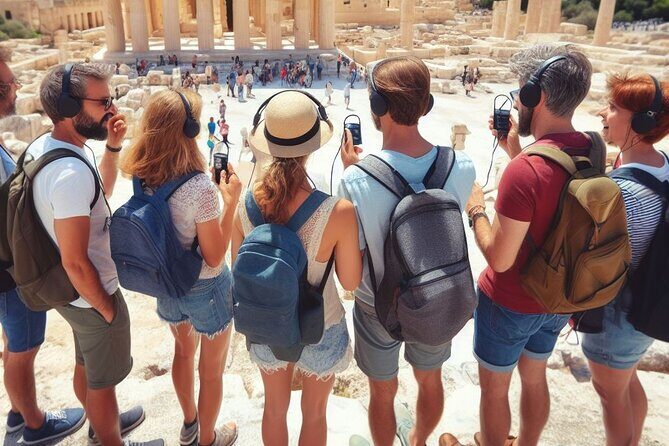
This is also a good fit for people who like to pause. You can stop for photos, catch a view, then resume the audio whenever you want. The tour is designed as a mobile ticket experience with a self-guided flow, so you’re not waiting on anyone else’s pace.
You can also read our reviews of more guided tours in Rome



Starting at Domus Tiberiana: how to keep your route from stalling

This tour begins at a specific meeting area near Domus Tiberiana / Orti Farnesiani sul, along Via della Salara Vecchia 5/6. The end point is listed at Palatine Hill, Parco archeologico del Colosseo, Via di S. Gregorio 30, and you’re guided to locate yourself in front of Domus Augustana.
That sounds straightforward on paper, but the Palatine is a maze of entrances, slopes, and ticket-area logistics. The practical move is to arrive with your route idea already set in your phone before you get close. Save the start coordinates in your map app and don’t assume the audio meeting spot will be at the most obvious ticket office.
Also plan on using your own device and listening setup. The tour does not include a smartphone or headsets. In practice, that means you’ll want to have your phone charged and ready, plus headphones that work for your ears and your budget.
Circus Maximus to the Titus victories: the walk that explains power
The story kicks off with Circus Maximus, described as a racing venue created under Lucio Tarquinio Prisco, the fifth king of Rome. Even if you know Circus Maximus from TV epics or general history, hearing it in the context of the Palatine helps you connect Rome’s earliest monarchy-era roots to later imperial splendor.
What I like about this opening is that it gives you a mental soundtrack for the hill. Before the big palace names, you get a sense of public spectacle—movement, crowds, and the idea that Rome’s leaders controlled attention. It’s a nice warm-up because the Palatine can otherwise feel like stone without motion.
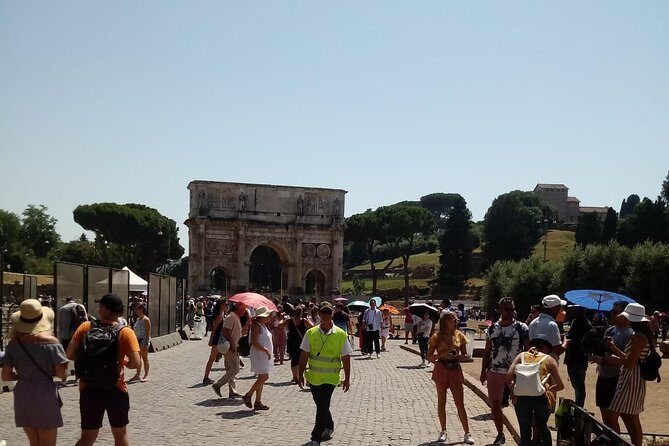
Next comes a triumphal arch area with inscriptions and sculptural elements honoring Emperor Titus and his military victories. You don’t have to be a numismatics expert to get the point. Triumphal arches were propaganda in stone: they told Romans who won, why it mattered, and who deserved credit.
A small consideration here: arch-and-inscription stops can be easier to miss if you’re rushing. Give yourself a moment to look for the reliefs and text elements mentioned by the audio and orient yourself before you walk on.
Domus Flavia (Palace of Domitian): where Roman rule feels domestic

One of the major highlights is the Palace of Domitian, normally known as the Domus Flavia, part of the larger residential complex on the Palatine. Domitian’s presence matters because he represents a specific style of imperial authority—less distant, more showy, and deeply tied to palace space.
This stop is also where you start noticing how Roman power was staged. You’re moving through public areas and palace-linked architecture, not just free-standing monuments. Even when the structure is fragmentary, the scale and layout cues help you understand that this wasn’t private living only; it was governance made physical.
The tour notes that admission is not included for the stops. So if you’re hoping to access every area fully, remember you’ll need to handle the venue ticket rules yourself. Sometimes people assume an audio tour means entry permissions. Here, it doesn’t.
Still, even from the accessible parts, the Domus Flavia stop can give you a sense of status and planning. It’s the kind of place where the right angle of view makes the remains read like a building again.
The founding legend: Romulus, Remus, and why the hill matters
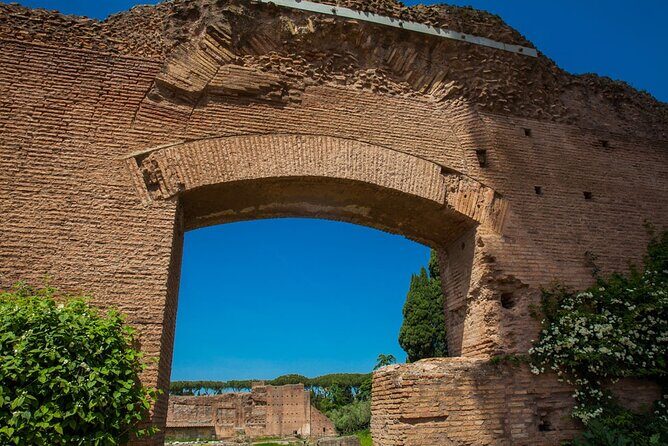
The Palatine is famous for the legend of Rome’s beginning—Romulus and Remus. This audio tour leans into that myth layer, including the idea that the Palatine was the place where Rome’s founding story started and where Romulus fixed residence. Hearing that while you’re standing in the landscape people associate with the beginning of the city gives the walking route a different feeling.
In practical terms, you’re not just hearing a timeline. You’re walking inside the same hill that later emperors used to claim legitimacy. If Rome’s origin story is tied to this spot, then rulers could borrow that aura simply by being there.
If you’re drawn to the mythic voice of the tour, you’ll probably enjoy the sections where the narration brings gods into the storytelling. One of the most memorable parts for many listeners is how the audio ties deities—like Apollo—to the sense of place. It doesn’t replace history, but it gives you a second lens while you walk.
A drawback to be aware of: because this is a self-guided experience, you’ll rely on the audio to keep the legend organized. If you like learning through a live guide’s Q&A, you may find the story works best when you give it your full attention for the 40 minutes.
You can also read our reviews of more tours and experiences in Rome




Augustus’ former home and the palace courtyard feeling
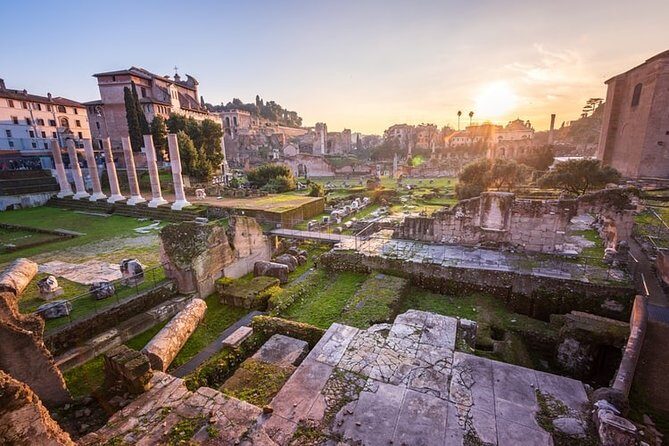
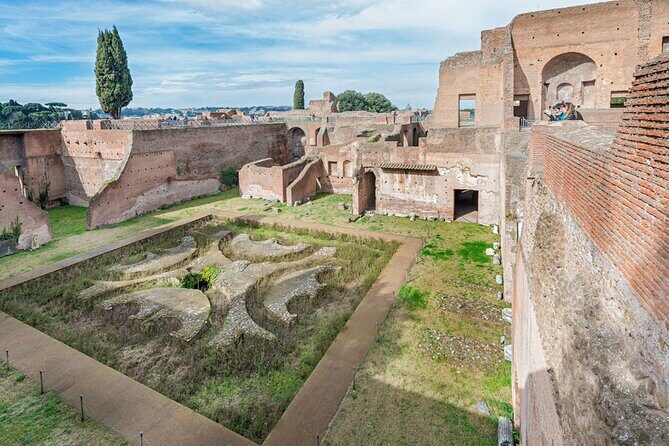
The tour includes the former home of Augustus and public areas and a central courtyard of an ancient palace. These sections are especially satisfying if you like the way Roman architecture hints at social roles—where people gathered, where authority was displayed, and where private power met public visibility.
Augustus is a crucial figure for understanding the shift from Republic-era messaging to imperial control. When you connect the audio’s storyline about Augustus to the surrounding remains, you start to grasp why the emperors treated the Palatine like a stage. This wasn’t just where rulers lived; it was where they could turn the city’s mythology and everyday life into a single message.
The courtyard angle is also a big deal. Courtyards helped structure movement and social hierarchy. Even when you only see fragments, the idea of open central space helps you picture daily life and official routines.
If you want a photo moment, this is usually the part of the route where a short pause pays off. Take a few seconds to look up from where you stand. The Palatine rewards that because the hill’s slopes create constantly changing sight lines.
Price and tickets: what you’re paying for (and what you still must handle)
At $10 per person, you’re paying for the audio chapters, offline access, and the maps and tips to help you navigate the Palatine experience. You’re not paying for archaeological admission.
That means you should treat the audio tour as a storytelling layer you can use during your visit, but not as the entry ticket itself. The experience listing specifically notes that admission tickets are not included, and that trips tied to venue rules can involve requirements like photo ID. Before you head in, check what you need for entry to any ticketed zones you plan to access.
Also remember the practical basics. The tour does not include snacks, a smartphone, or headsets. Plan to bring your own water and bring the headphones you’ll actually use. A charged phone is not optional here—you’ll want offline chapters ready before you start walking.
Who should book this audio tour?
I’d book it if you want a low-cost, structured way to see the Palatine’s major names without joining a busier group schedule. It’s also a great option if you like replaying stories—offline chapters mean you can revisit the content on your own time and walk the route again if you’re in the mood for a second pass.
It’s not the best choice if you’re the type who needs constant human guidance. Since it’s self-guided, you’ll handle locating the starting area, and you’ll rely on the audio to keep you oriented through mythic and imperial themes. If you’ve ever gotten lost in a big archaeological complex, give yourself extra time at the start.
Should you book The gods of the Palatine audio tour?
Yes, with a smart checklist.
Book it if:
- you want a 40-minute Palatine storyline that helps you connect myths to emperors
- you prefer offline audio with maps and tips, so your day stays flexible
- you’re okay handling entry rules yourself
Skip or reconsider if:
- you hate self-guided navigation and want a live guide
- you’re not ready to deal with admission requirements for ticketed areas
- you’re arriving without a charged phone and working headphones
If you do the prep—check entry rules and load your offline content—this tour is a strong way to turn scattered ruins into a coherent walk.
FAQ
How much does The gods of the Palatine cost?
It costs $10.00 per person.
How long is the audio tour?
It runs for about 40 minutes.
Is admission included?
No. Admission tickets are not included.
Does it work offline?
Yes. The tour includes offline use for all chapters, plus maps and tips to explore Rome.
Do I need a smartphone or headsets?
Yes. The tour does not include a smartphone or headsets, so you’ll use your own.
Where does the tour start and end?
It starts at Domus Tiberiana / Orti Farnesiani sul, Via della Salara Vecchia 5/6. It ends at Palatine Hill, Parco archeologico del Colosseo, Via di S. Gregorio 30, with guidance to locate yourself in front of Domus Augustana.
Is it a private experience?
Yes. It is private, and only your group will participate.
FAQ
Are service animals allowed?
Yes, service animals are allowed.