REVIEW · MOTORBIKE & SCOOTER RENTALS
Rome Vespa Small Group Tour with Photoshoot
Book on Viator →Operated by YaYaGraphy · Bookable on Viator
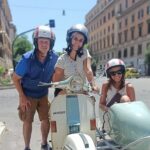
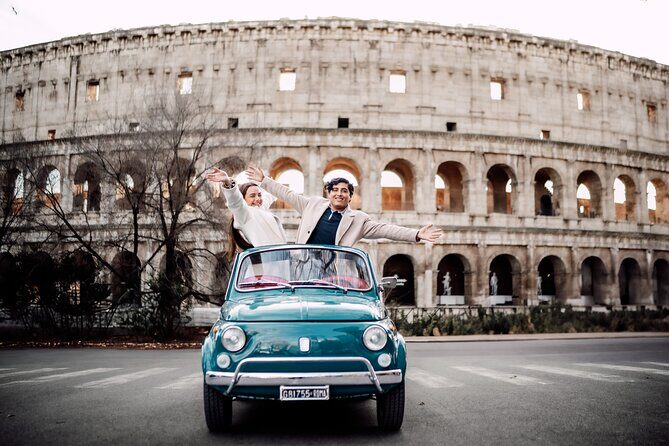
Rome looks different when you move through it, not just over it. This is a small-group Vespa (or vintage Fiat 500) ride paired with a photoshoot, built around classic sights and quieter viewpoints.
I like how the tour mixes big-ticket landmarks with calmer breaks, so you get variety in 90 minutes. I also like that you leave with edited photos plus the original files, which makes the whole experience feel worth documenting.
One thing to consider: you’re a passenger, not the driver, and the ride depends on good weather, so plan a little flexibility if conditions are rough.
In This Review
- Key moments you’ll remember
- Why a Rome Vespa photoshoot tour feels smarter than a selfie sprint
- Starting at Oppio Caffè: your ride begins with a local-feeling pickup point
- Colosseum area stop: the big picture first, then the details
- Circus Maximus: why this stop works even if you hate long speeches
- Roseto Comunale: a pause with views, not just flowers
- Giardino degli Aranci (Parco Savello): the orange trees viewpoint you’ll actually use
- Tempio di Ercole Vincitore: the circular temple detour most people miss
- Fontana dell’Acqua Paola and Janiculum Terrace: Rome from up high
- Trastevere and dessert: the relaxed ending that makes the ride feel complete
- What you truly get for $96.33 in 90 minutes
- Who should book this Rome Vespa photo tour (and who might not)
- Should you book this Rome Vespa small-group photoshoot tour?
- FAQ
- FAQ
- How long is the Rome Vespa Small Group Tour with Photoshoot?
- What vehicle will I ride on?
- Is the tour in English?
- How many people are in the group?
- What photo package do I get?
- Is gelato or tiramisu included?
- Where does the tour start?
- Are admissions/tickets included?
- What if the weather is bad?
Key moments you’ll remember
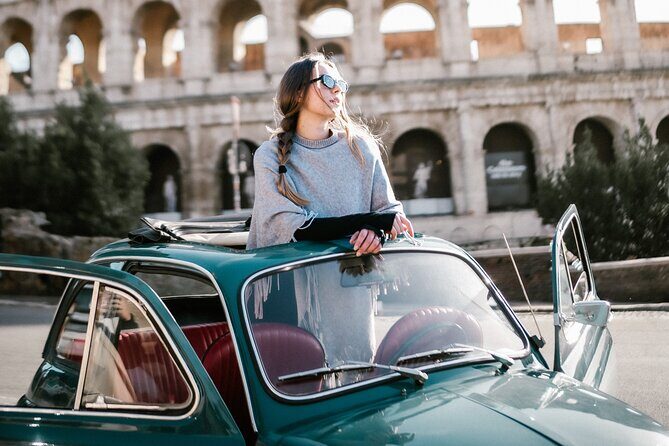
- Edited photos + original photos included, so your pictures look like Rome, not like a missed focus moment
- Small group (max 12) means you can actually hear your guide and get help keeping your bearings
- Aventine Hill viewpoints like Giardino degli Aranci and the Janiculum Terrace for St. Peter views
- Stops that pair famous ruins with a less-common detour to places like the circular Temple of Hercules
- Dessert is built in: gelato or tiramisu plus snacks during the ride
- You’re moving between sights on Vespa or vintage Fiat 500, which makes short time feel longer
Why a Rome Vespa photoshoot tour feels smarter than a selfie sprint
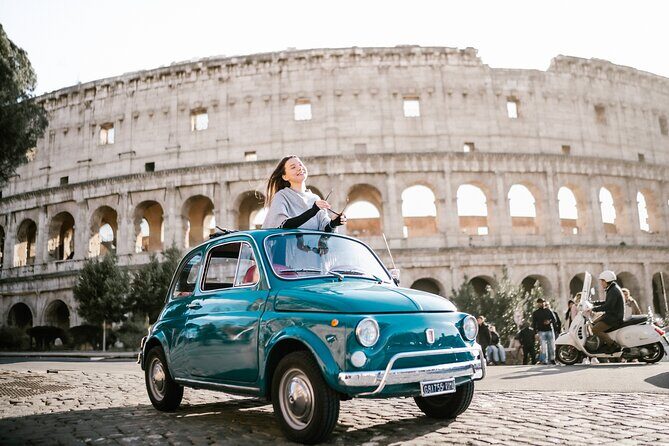
Rome can be slow. Not because it’s crowded—though it can be—but because seeing everything the right way takes time. This tour gives you momentum. You’re not walking from stop to stop with sore legs and a phone on selfie mode. You’re riding, pausing often, and letting your guide set up the context so the sights click faster.
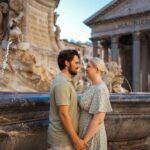
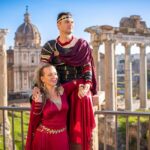
The photoshoot angle is the hidden value. A lot of city tours give you a few random snaps. Here, you get both edited photos and all original photos, which is ideal if you like having options: a polished set for social media and originals for printing or editing later.
You also get a genuine small-group rhythm. With a limit of 12 people, you’re less likely to feel like you’re stuck behind someone else’s camera. If your guide is the kind of host people mention by name—like Tural—the experience leans into clear explanations and smooth pacing.
The main tradeoff is weather. Since it’s an outdoor ride, you’ll want the forecast on your side. And because you ride as a passenger, you’re trading control for comfort—great for most people, but not your thing if you want to handle the scooter yourself.
You can also read our reviews of more photography tours in Rome
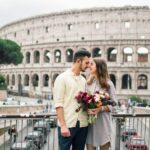
Starting at Oppio Caffè: your ride begins with a local-feeling pickup point
The tour starts at Oppio Caffè, Via delle Terme di Tito 72 (00184 Roma). It’s a practical meeting place and it’s near public transportation, which matters in Rome where buses and trains can save your feet.
From the start, expect a quick orientation so you know what to do and where to stand. That’s important on scooters and small rides, because the whole flow depends on everyone arriving on time and staying aware.
The payoff of this meet-up is that you’re positioned to hit the ancient core quickly. You’re not spending half your “one hour 30 minutes” just getting into the action.
Colosseum area stop: the big picture first, then the details
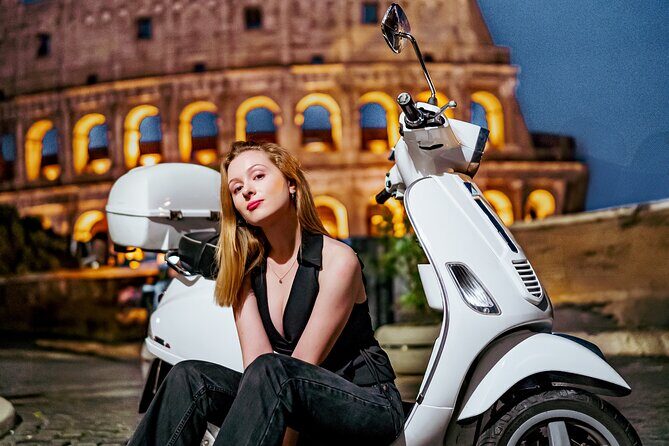
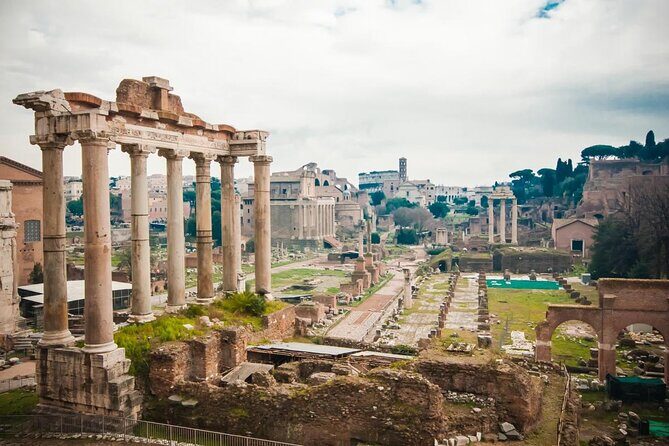
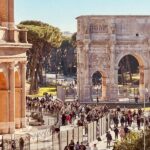
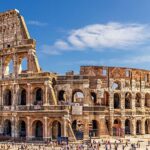
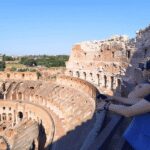
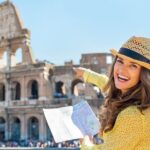
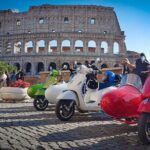
One of the first major historical stops is the area of the Colosseum, also tied to the Flavian Amphitheatre. Even if you’ve seen it in photos already, I like the way a good guide frames what you’re actually looking at: a massive stage for public spectacles, built in the 1st century CE under the Flavian dynasty.
You’ll hear the practical kind of history—when it was used, what shows were held, and why it’s still so impressive even now. There’s also a neat naming story: it became known as the Colosseum partly because of a colossal nearby statue, which helps the building feel less like a label and more like a piece of lived-in Rome.
A quick heads-up: this is time-limited. The stop is described as about 15 minutes, so think of it as “get oriented and collect the right angles,” not “tour every level.” If you’re the type who likes to linger, you’ll probably want a longer Colosseum visit on another day.
Circus Maximus: why this stop works even if you hate long speeches
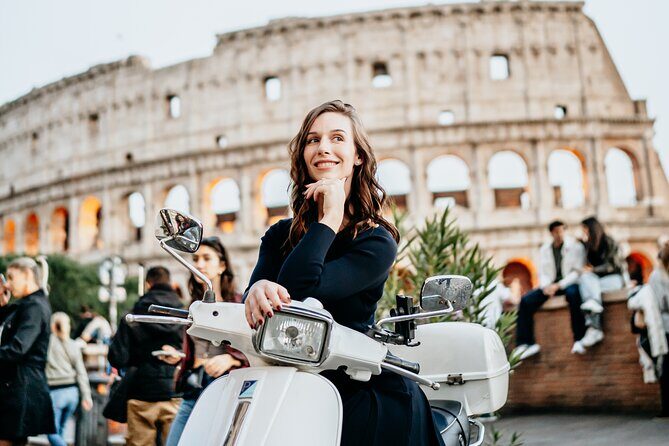
From the Colosseum area, the tour moves toward Circus Maximus, the big public entertainment venue from antiquity. The scale is part of the story: roughly 600 metres long by 140 metres wide. That’s hard to grasp from one angle, but it’s the kind of size that makes ancient Rome feel real.
This stop also connects the site to origin-city myths, including the legend around the Rape of the Sabine Women. Then there’s the evolution: under the Tarquin kings, the valley area was used for chariot racing, and later Julius Caesar brought in a more formal, walled circus.
If you like mythology paired with architecture, this stop delivers without making it a lecture. If you prefer straightforward facts, the guide can usually keep it grounded and visual.
Roseto Comunale: a pause with views, not just flowers
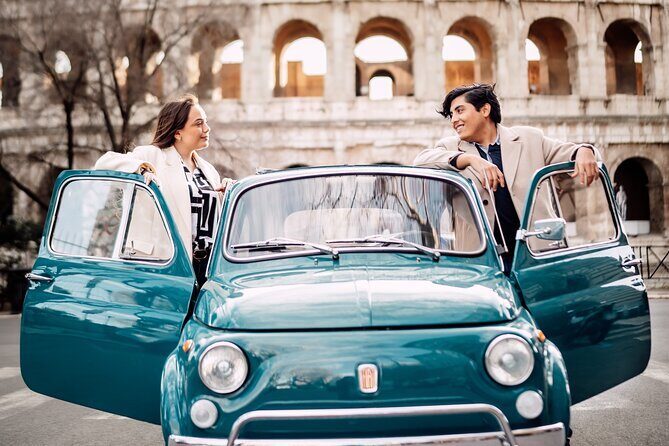
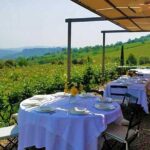
Next is the Roseto Comunale (Municipal Rose Garden) near the Aventine Hill. This is a smart detour because it breaks up the “hard stone” part of Rome sightseeing with green space and a calmer pace.
The garden was created in 1931, and it’s known for having lots of rose varieties and color during blooming season. Even more useful for photographers: it offers views of ancient ruins, so you’re not choosing between nature and history—you get both in one frame.
The Aventine area is also a good reminder that Rome isn’t only the famous monuments. It’s hills, gardens, and neighborhoods where the city feels lived-in.
If you’re visiting in May, this area is a particularly good timing bet because roses are often in bloom and the garden sometimes hosts events like the Premio Roma (Rome Rose Award) for new rose varieties. That’s not guaranteed on any date, but the seasonal idea is worth planning around.
You can also read our reviews of more tours and experiences in Rome

Giardino degli Aranci (Parco Savello): the orange trees viewpoint you’ll actually use
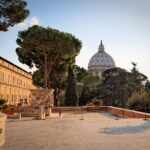
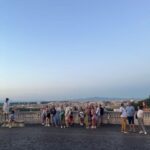
Then you hit Giardino degli Aranci, also called Parco Savello, on the Aventine Hill. This one is popular for a reason: orange trees (aranci) and the kind of view that makes you stop mid-sentence.
The top value here is not only the greenery—it’s the panoramic payoff. The garden is known for views including St. Peter’s Basilica in Vatican City. It’s also described as quieter and peaceful, which means it works even if Rome’s streets feel intense that day.
The history angle adds extra flavor. The garden used to be part of the Dominican monastery of Santa Sabina, and the orange trees were planted in the 1930s. So it isn’t just a pretty park. It’s a park with layers.
The stop is around 15 minutes, so aim to treat it like a short reset: smell the air, grab your view, and let the ride continue while the energy is still good.
Tempio di Ercole Vincitore: the circular temple detour most people miss
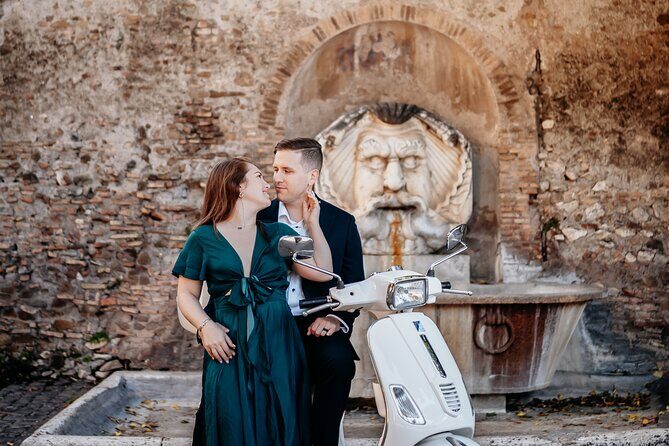
Here’s where the tour earns its keep: it includes the Tempio di Ercole Vincitore in the Forum Boarium area. Many Rome itineraries chase the obvious names. This one brings you to a temple that feels a little more under-the-radar.
This temple dates to the late 2nd century BCE and is dedicated to Hercules, worshipped widely in Rome as a hero and god of strength. The real standout feature is architectural: it’s one of the rare circular Roman temples in a world where so many temples are rectangular.
It’s also known for being well-preserved, with 20 Corinthian columns. That’s the kind of detail that makes a short stop satisfying, because you can see what makes it special without needing a long explanation.
The only drawback is your time: again, think quick orientation rather than deep study. But for a 90-minute ride tour, this is exactly the right balance.
Fontana dell’Acqua Paola and Janiculum Terrace: Rome from up high
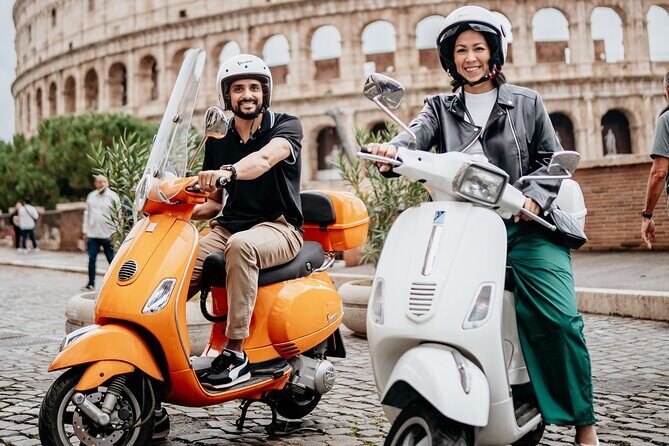
Next comes a double win: the Fontana dell’Acqua Paola (Il Fontanone) on the Janiculum Hill, followed by the Terrazza del Gianicolo.
Fontana dell’Acqua Paola is a monumental Baroque fountain commissioned by Pope Paul V in the early 17th century, celebrating completion of the Acqua Paola aqueduct. Architect Giovanni Fontana designed it, and it was completed in 1612. If you like to know what you’re looking at, this stop has built-in context: water, power, and Pope-led city infrastructure—yes, that’s a real theme in Rome.
Then there’s the setting. It sits atop the Janiculum Hill, so the fountain stop naturally turns into a viewpoint moment. It’s also connected to modern culture through its appearance in La Grande Bellezza, which helps the place feel relevant even if you’re not a film person.
A short hop later, the Terrazza del Gianicolo gives you the bigger city panorama. You can look out over major landmarks, including St. Peter’s Basilica, the Tiber River, and the Roman skyline. This is one of those “stay longer if you can” moments.
The terrace is part of the larger Parco del Gianicolo, and the hill itself has history tied to Italian unification, including monuments such as the statue of Garibaldi. Even if you don’t memorize the timeline, you’ll feel that you’re in one of Rome’s natural lookout points.
The stop lengths for these viewpoint locations are listed as about 15 minutes each, so plan to get your photos quickly and enjoy the rest without rushing.
Trastevere and dessert: the relaxed ending that makes the ride feel complete
The tour wraps with Trastevere, one of Rome’s most character-heavy areas. The exact pacing in Trastevere can vary, but the key point is that you get a smoother finish than you would with only monuments.
Dessert is also included as gelato or tiramisu, along with snacks. This is a value win because it removes a decision mid-ride. Rome has so many options that without a plan, you end up eating late or spending extra just to keep your energy up.
Trastevere is a good match for that kind of ending. It’s a neighborhood where you can slow down, take in the feel, and keep the experience from turning into pure “sightseeing mode.”
What you truly get for $96.33 in 90 minutes
At $96.33 per person for about 1 hour 30 minutes, you’re not just paying for transport. You’re paying for time, structure, and photo output.
Here’s the math that matters:
- Transport is included via Vespa scooter or vintage Fiat 500 (you ride as a passenger). This is huge in a city where traffic and walking time add up.
- Snacks and dessert are included (tiramisu or gelato). That can offset part of the cost if you’d buy something anyway.
- Photos are included: edited photos plus all original photos. That’s rare at this kind of price point.
- Small-group size (max 12) gives you better access to your guide and more chance to get the photos you want.
- Admission notes are included for certain stops (for example Giardino degli Aranci, Fontana dell’Acqua Paola, Terrazza del Gianicolo are marked as ticket included; and the Colosseum stop is marked as ticket free).
Also, the tour is offered in English, and you’ll get a mobile ticket. Not exciting, but it reduces friction.
The biggest “value” benefit is psychological: with a short timeframe, you don’t have to build a plan from scratch. Your ride creates a route logic for you, plus photo moments that line up with viewpoints rather than random street corners.
Who should book this Rome Vespa photo tour (and who might not)
This is a great pick if you:
- want an efficient Rome sampler that still includes views and photo stops
- like the idea of a photoshoot without having to hire a separate photographer
- prefer small group pacing instead of a crowd shuffle
- enjoy both big sights and quieter breaks like rose gardens and orange-tree parks
You might skip or save it for another trip if you:
- want a long, slow museum-style visit with lots of time inside buildings
- need to drive yourself (you are a passenger)
- can’t handle outdoor schedule changes if the weather is bad
Should you book this Rome Vespa small-group photoshoot tour?
If you want a Rome experience that feels like a ride through highlights—plus photos you’ll actually keep—this tour is easy to recommend. The combination of Vespa/Fiat transport, planned stops on viewpoints like the Janiculum, and dessert included makes it feel like more than a scenic ride.
I’d book it when you have only a day or two to work with and you want your sightseeing to include photo-ready moments without turning your entire schedule into logistics.
Do it if you’re also the type who appreciates quick expert context at each stop, rather than standing in one place for an hour waiting for inspiration to arrive.
FAQ
FAQ
How long is the Rome Vespa Small Group Tour with Photoshoot?
It’s listed as approximately 1 hour 30 minutes.
What vehicle will I ride on?
You’ll ride as a passenger on a Vespa scooter or a vintage Fiat 500 (private transportation is included).
Is the tour in English?
Yes, the tour is offered in English.
How many people are in the group?
The tour has a maximum of 12 travelers.
What photo package do I get?
You get edited photos and all original photos.
Is gelato or tiramisu included?
Yes. Snacks Gelato/Tiramisu are included, and you’ll also have tiramisu or gelato.
Where does the tour start?
The meeting point is Oppio Caffè, Via delle Terme di Tito, 72, 00184 Roma RM, Italy.
Are admissions/tickets included?
Some stops are marked with admission ticket included or admission ticket free (for example Giardino degli Aranci, Fontana dell’Acqua Paola, and Terrazza del Gianicolo are included; the Colosseum stop is marked as free).
What if the weather is bad?
This experience requires good weather. If it’s canceled due to poor weather, you’ll be offered a different date or a full refund.