REVIEW · FULL-DAY
Rome Undergrounds Full Day Guided Tour
Book on Viator →Operated by Rome-Limousines · Bookable on Viator
Rome has a second city underground. This full-day guided experience strings together lesser-visited subterranean sites so you can actually move around and ask questions, not just shuffle with the crowds. I like the private driver-guide setup, which keeps the day flexible and lets you get clear explanations as you go.
One thing to plan for: this tour is priced at a premium, and the big-ticket add-ons are still on you. Entry fees and lunch are not included, so your final cost depends on how you handle tickets and food during the day.
In This Review
- Key Highlights You’ll Appreciate
- Why Rome’s Subterranean Sites Work Better Than Another Above-Ground Day
- Private, Air-Conditioned Transport That Keeps the Day Calm
- Stop 1: Basilica of San Clemente’s Three-Level Roman to Christian Story
- Stop 2: Catacombs of San Sebastiano and Reading an Underground City
- Stop 3: Case Romane del Celio, Houses Turned Into Churches
- Stop 4: Santa Cecilia in Trastevere and the Transtiberim Context
- Price and Value: What You’re Paying For
- Timing, Pace, and How to Plan Your Day
- Who This Underground Tour Is Best For
- Should You Book This Rome Undergrounds Full Day Tour?
- FAQ
- How long is the Rome Undergrounds full-day guided tour?
- What time does the tour start?
- Is pickup from central Rome offered?
- What sites are included on the tour?
- Are entry fees included in the price?
- Is lunch included?
- What’s included with the tour?
- Is the tour private?
- How does ticketing work?
- What is the cancellation policy?
Key Highlights You’ll Appreciate
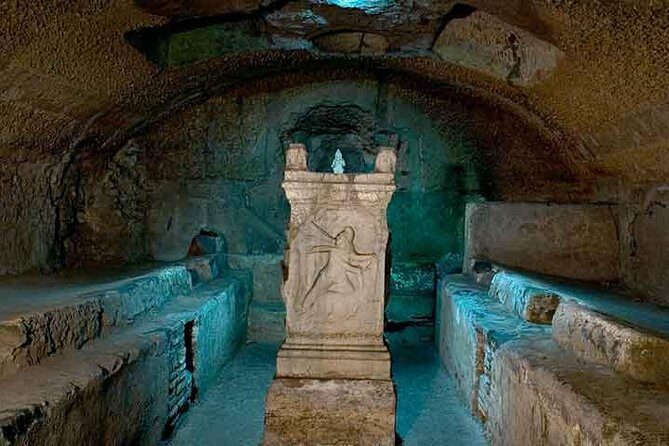
- San Clemente’s layered building: mint-to-church story built into the same walls
- Catacombs of San Sebastiano: a maze of galleries on multiple levels
- Case Romane del Celio: private homes turned into church space
- Trastevere’s Santa Cecilia context: crafts, water, and the Transtiberim district in Roman times
- Comfort-first transport: air-conditioned private car with WiFi and bottled water
Why Rome’s Subterranean Sites Work Better Than Another Above-Ground Day
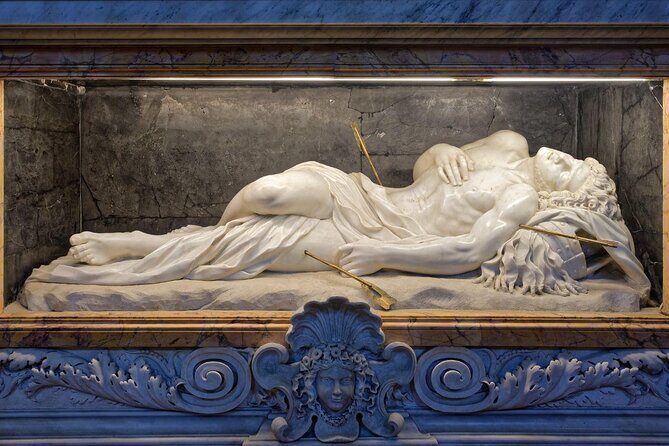
If you’re the type who enjoys how cities change over time, this kind of underground itinerary hits hard. Rome above ground can be all marble and monuments. Underground, you see how daily life, religion, and even construction practices literally got stacked on top of each other.
The best part is that you get context while you’re looking. A private driver-guide can point out what you’re seeing and why it matters, instead of leaving you to guess. You’ll also spend real time at each stop, not just a quick photo stop and a sprint to the next bus.
You can also read our reviews of more guided tours in Rome


Private, Air-Conditioned Transport That Keeps the Day Calm
This tour runs on a central-Rome pickup concept and uses a private vehicle with air-conditioning, WiFi on board, and bottled water. That matters in Rome, where the weather and walking heat can turn a good plan into an exhausting one.
You’re also not fighting for space. The experience is designed for a group that stays together, and there’s a driver who handles the logistics and parking fees. Translation: you can focus on the places, not the map app.
And if you care about language and explanation quality, pay attention to the guide style here. The guides associated with this tour are often praised for excellent English and clear, scholarly explanations, the kind that make architecture and early Christian sites easier to understand.
Stop 1: Basilica of San Clemente’s Three-Level Roman to Christian Story
Plan to start with one of the most mind-bending buildings in Rome: San Clemente. The setting is famous for its layered construction, often described as a three-level site where one era sits on top of another.
Here’s what makes it special. At the lowest level, there was an original Roman ground level used for activities like a mint. Then a 4th-century church was built on top of what came before. Later, when the upper church became unsafe in the 12th century, it was filled with rubble, and that rubble became the foundation for the next structure.
That layering turns the visit into more than sightseeing. You’re not just looking at one building; you’re reading a timeline. If you like architecture that explains history through materials and choices, this stop gives you that in a very direct way.
Two practical notes. First, admission is not included, so you’ll want to have your entry ticket plan ready. Second, the guide’s job at this kind of site is crucial—ask questions about what you’re standing over, because the differences can be easier to spot when someone points them out.
Stop 2: Catacombs of San Sebastiano and Reading an Underground City
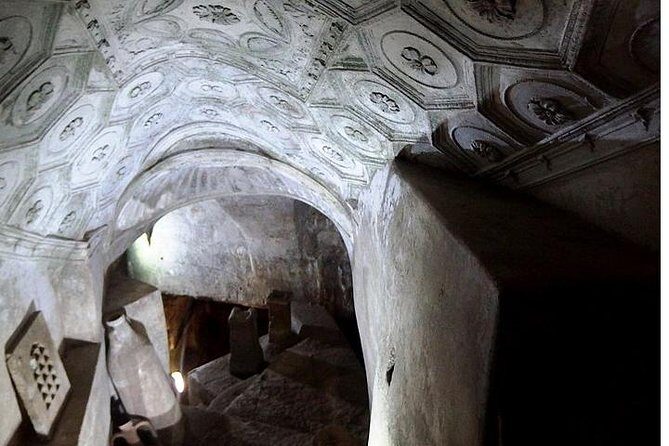
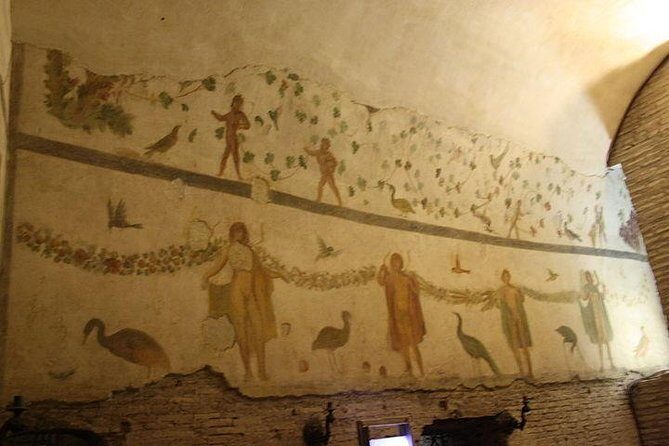
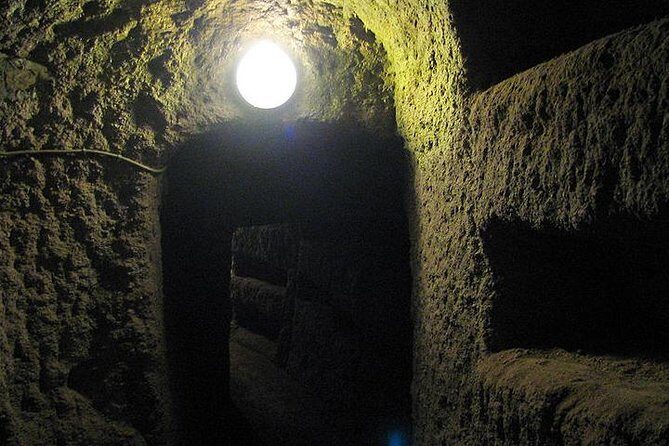
Next up is the Catacombs of San Sebastiano. This is not one chapel you visit and move on from. It’s an underground network—crisscrossing galleries that stretch for miles and spread over two or three stories.
What you’ll feel down there is scale and repetition. Early Christians used underground space for burial, and the catacombs grew into a complicated system. Seeing it with a guide helps you understand that you’re walking through an organized pattern, not random tunnels.
Your time at this stop is about 1 hour 30 minutes, which is a good window to take in the layout without rushing. You’ll also want to dress for underground conditions. Rome underground can feel cooler and a bit more enclosed, so comfortable shoes matter more than fashion.
Again, entry is own expense, so budget for tickets in advance. If you’re the sort who dislikes uncertainty, confirm what you’ll need before you arrive so you aren’t scrambling during a long day.
Stop 3: Case Romane del Celio, Houses Turned Into Churches

This stop is where the story gets personal. Case Romane del Celio shows a transformation: the transition from private homes of richer Christian residents into church space.
It’s astonishing for one main reason: you get to see how space gets repurposed when a community’s needs change. Instead of imagining the past, you’re standing in a structure that hints at the shift from private life to public worship. It’s also a reminder that religion in Rome didn’t always mean building from scratch. Sometimes it meant adapting what already existed.
This stop runs about 1 hour, so you’ll likely move at a steady pace and then settle into the details. If you enjoy architectural storytelling—how rooms, circulation, and uses evolve—this is one of the most satisfying stops on the day.
Admission is not included here, so add tickets to your planning. Also, because the site is about transformation, pay attention to how the guide explains what changed over time.
You can also read our reviews of more tours and experiences in Rome



Stop 4: Santa Cecilia in Trastevere and the Transtiberim Context
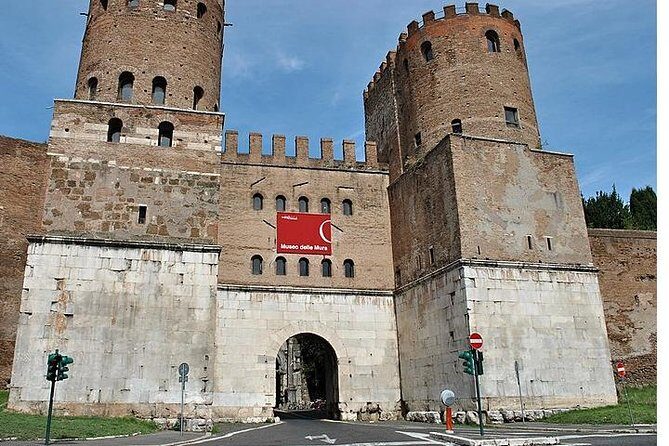
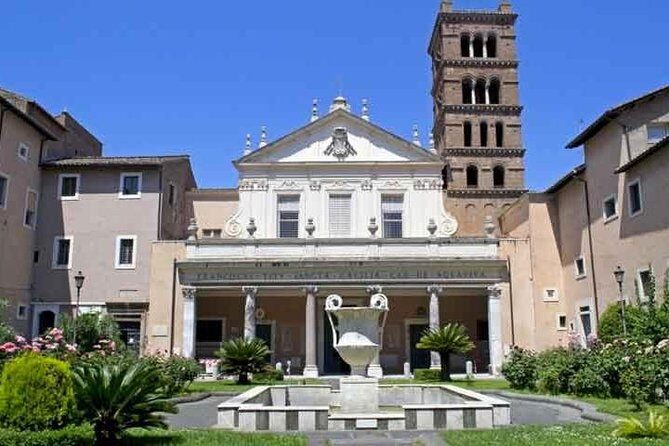
Finish with Santa Cecilia in Trastevere, and don’t treat it like a stand-alone church stop. The setting is tied to a Roman district called Transtiberim—the 14th region of Rome.
In Roman times, Transtiberim included areas like the Janiculum hill and the Vatican, which was kept outside the wall boundary. Water mattered here. A loop in the river and good water access supported crafts like leather curing. The district was also described as having mills, baths, fields, and temples, plus plenty of public housing.
Then there’s the tradition connected to Cecilia. The idea is that Cecilia lived in a home whose foundation the basilica was built upon. Even if you treat tradition as tradition, the point is clear: the church sits on top of layers of everyday life in a working district.
This stop runs about 1 hour and usually works well as a closing act because it brings together geography and story. You leave with a better sense of where people lived, worked, and worshipped—especially in an area many first-time visitors only glance at from the surface.
Admission is again own expense, so remember that each stop adds a separate ticket cost.
Price and Value: What You’re Paying For
At $378.16 per person, this is not a budget tour. But it’s built around a few things that cost money in Rome: a private driver-guide, a full day of air-conditioned transport, and time spent at four specific sites.
Included benefits help the price feel more rational:
- Bottled water
- Private transportation with parking fees handled
- WiFi on board
- A professional Rome tour guide
What’s not included is the part that can surprise people. Entry tickets for the sites are not included, and lunch is not included. In other words, your total day cost depends on how you handle admissions and meals.
So here’s how I’d judge value. If you want a guided explanation for multiple subterranean and architectural sites, and you prefer not to arrange transport yourself, this price can make sense. If you’re comfortable DIY’ing transit and you don’t care much about guided context, you might find cheaper options. But for architecture-and-history pacing, private transport plus a guide is exactly the thing you’re paying for.
One more angle: group discounts are mentioned. If you can travel with others and the discount applies, the per-person value usually improves.
Timing, Pace, and How to Plan Your Day
This tour starts at 9:00 am and runs about 7 to 8 hours. The core visit times listed for the four main stops total around five hours (1h30 + 1h30 + 1h + 1h), with the rest of the day covering transfers, ticket entry, and buffer time.
That means you should expect a real day, not a casual stroll. Bring patience for lines and the realities of site entry, especially since admissions are on you. Wear shoes you can walk in for a long stretch, and dress in layers because underground spaces can feel different from street-level air.
Also plan for food. Since lunch isn’t included, decide in advance whether you’ll stop for a meal after one of the visits or pick a simpler snack strategy. That choice affects how relaxed your afternoon feels.
Who This Underground Tour Is Best For
This tour fits best if you want Rome to feel less like a checklist and more like a story told through buildings. It’s ideal for you if you:
- enjoy architecture that shows change over centuries
- like early Christian sites and burial culture as part of the city’s evolution
- want guide explanations in clear English
- prefer air-conditioned private transport over public transit and constant route-planning
It’s a tougher match if you’re looking for only famous, headline monuments. The sites are important, but they’re quieter than the Colosseum crowd. If you need peak “wow from afar” sights every hour, you might feel the pace is slower.
Should You Book This Rome Undergrounds Full Day Tour?
I’d book it if you want a guided, structured day focused on what most visitors miss: the stacked history you can’t get from the street alone. The combination of private transport, a guide who can explain what you’re seeing, and time at San Clemente, San Sebastiano, Case Romane del Celio, and Santa Cecilia makes it a strong choice for value-minded travelers who want meaning, not just photos.
Skip it if you’re strongly budget-driven or you’re not interested in subterranean spaces. Also, go in knowing that tickets and lunch are on your own budget, so check your total cost before you commit.
FAQ
How long is the Rome Undergrounds full-day guided tour?
It runs about 7 to 8 hours.
What time does the tour start?
The tour start time is 9:00 am.
Is pickup from central Rome offered?
Yes, pickup is offered.
What sites are included on the tour?
You’ll visit Basilica of San Clemente, Catacombs of San Sebastiano, Case Romane del Celio, and Santa Cecilia in Trastevere.
Are entry fees included in the price?
No. Admission tickets are not included, and entry is listed as your own expense.
Is lunch included?
No. Lunch is not included.
What’s included with the tour?
Included items are bottled water, private transportation, an air-conditioned vehicle, WiFi on board, parking fees, and a professional Rome tour guide.
Is the tour private?
Yes. It is a private tour, and only your group participates.
How does ticketing work?
A mobile ticket is used.
What is the cancellation policy?
Free cancellation is available. You can cancel up to 24 hours in advance for a full refund.