REVIEW · ROME
Rome Treasure Hunt With Leonardo da Vinci
Book on Viator →Operated by Mostra di Leonardo · Bookable on Viator
That game-walk through Rome is surprisingly fun.
This Rome treasure hunt is built around Leonardo da Vinci’s ideas: you solve clue challenges as you pass major sights, then finish with an exhibition scavenger hunt. You’ll use a tablet to get info on what you’re seeing, collect points via mini-quizzes and playful photo tasks, and then use those clues to hunt for the final treasure inside the Leonardo da Vinci Exhibition.
I like two things right away. First, the mix of outdoor landmarks and museum-style problem-solving keeps the pace moving for both adults and kids. Second, the Leonardo Exhibition part includes hands-on style interaction with 65+ inventions, plus holograms and even fragments tied to a 43 B.C. tomb theme—so the story doesn’t stop when you walk off the street.
One thing to consider: the hunt depends on the tablet experience, and translation quality can be uneven. In at least one case, French translation wasn’t consistent, and that can make letter-based clue steps harder to complete. Also, bottled water isn’t included, so plan to carry your own.
In This Review
- Key points at a glance
- A Rome treasure hunt built for walking, not waiting
- Where you start (and how you get oriented fast)
- From Piazza della Cancelleria to the Spanish Steps: clues in the open air
- Trevi Fountain and the Pantheon: seeing Rome like a puzzle
- Piazza Navona and Campo de’Fiori: where the fun tasks help
- Forum Romanum and the Colosseum: ancient sites with a game overlay
- The Leonardo da Vinci Exhibition finale: 65+ inventions and a final treasure hunt
- How the points and clue system work (so you don’t get stuck)
- Price and timing: what $52.36 buys you
- Who this tour suits best (and who might want something else)
- Should you book the Rome treasure hunt with Leonardo da Vinci?
- FAQ
- How long is the Rome Treasure Hunt with Leonardo da Vinci?
- How much does it cost?
- Where do I meet, and where does the tour end?
- Is there a mobile ticket?
- What’s included in the price?
- Do they provide water or food?
- What do I do during the city walk?
- What happens at the Leonardo da Vinci Exhibition?
- Are there famous sites included during the walk?
- Is this a private tour?
- Is free cancellation available?
Key points at a glance

- Tablet-led clue hunt where you decide where to spend time while still following the route
- Ancient Rome sights on foot, including the Spanish Steps, Trevi Fountain, Pantheon, Piazza Navona, Campo de’Fiori, Forum Romanum, and the Colosseum
- Interactive Leonardo da Vinci Exhibition finish with 65+ inventions and a hologram element
- Point-based challenges using short quizzes and funny photo tasks
- Underground Roman river theme tied into the adventure’s ruins portion
- Private group format means it’s just your group, not a big crowd swirl
A Rome treasure hunt built for walking, not waiting
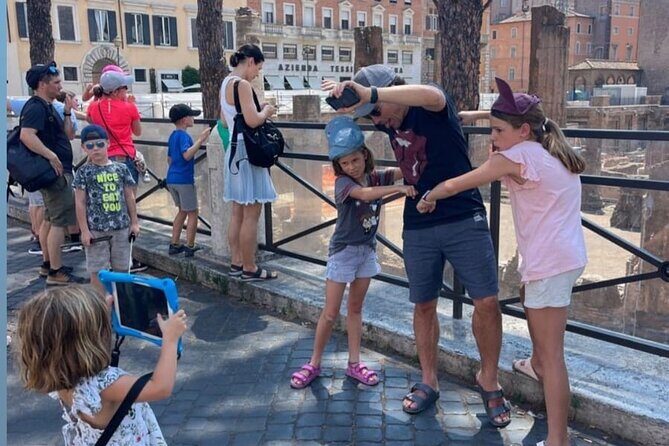
This isn’t the usual Rome pattern of standing in one spot while someone talks at you. Here, you walk, you read, you answer, and you keep moving—without needing to be a trivia expert. The whole structure makes sense if you like Rome at street level: you see the landmarks, then you work out what they mean through clue prompts.
The biggest value for me is how the game format changes your attention. Instead of trying to soak up everything at once, you’re prompted to look for specific details and then connect them to the next step. That’s great for families, but it’s also genuinely refreshing if you’re the kind of adult who doesn’t want a long, lecture-heavy tour.
You do lose some of the classic “guide storytelling” feel, because the tablet becomes your main information source during the city walk. If you want a person explaining every sight in depth, you might miss that. Still, for a 3.5-hour experience that covers a lot of recognizable Rome, the trade-off is usually worth it.
You can also read our reviews of more tours and experiences in Rome.



Where you start (and how you get oriented fast)
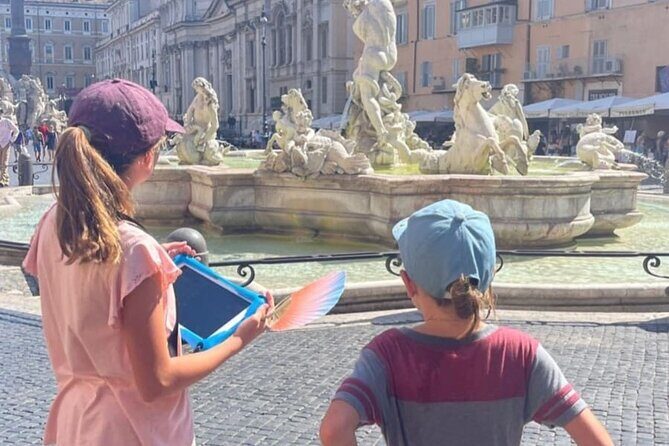
You meet at Piazza della Cancelleria, 1, 00186 Roma. That’s a practical starting point because you’re already in the central area where major sights are reachable on foot. The activity uses a mobile ticket, so have your confirmation ready on your phone when you arrive.
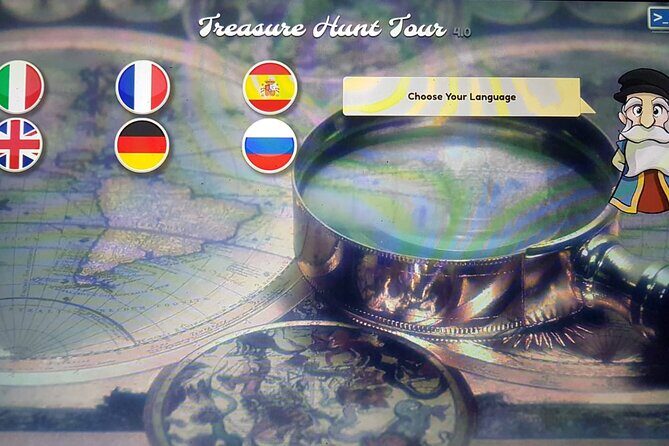
Before you set off, you’ll use a tablet for the city portion. Your group gets one tablet per group, and staff provide remote assistance during the part around the city. That matters more than you might think: clue hunts can get stuck when you can’t find a prompt or you’re waiting on the “next step.” Remote help keeps the adventure from turning into a slow frustration session.
Also note the tour ends back at the meeting point. That makes it easier to plan after—dinner, gelato stops, or just wandering without having to figure out a separate transport plan.
From Piazza della Cancelleria to the Spanish Steps: clues in the open air
The walk is designed around major icons, and the tablet guides what you see. You’ll pass big-name sights like the Spanish Steps and Trevi Fountain, but you’re not just sightseeing. You’re collecting points as you go—through quiz questions and playful photo tasks—and those points unlock clues later.
For the Spanish Steps area, the clue hunt approach works because the space is visually busy. Instead of getting overwhelmed by the scale and street activity, the tablet gives you a reason to look closer. You don’t need to hunt for your own “what should I look at” plan. The game does that job.
Practical tip: if your group has different interests—one person loves photos, another loves questions—this format can balance the energy. The photo tasks make it easy to participate even if you’re not a fast quiz solver.
Trevi Fountain and the Pantheon: seeing Rome like a puzzle
After the Spanish Steps, you’ll continue through central Rome sights, including the Trevi Fountain and the Pantheon. These are places where people often rush for one photo and move on. In this experience, you’re more likely to slow down because the tablet’s clues encourage you to keep your eyes on the details tied to the questions.
Trevi and the Pantheon are both high-demand, high-traffic areas. The upside of a treasure hunt format is that you’re not only waiting in crowded space to feel impressed. You’re working through prompts, which turns the wait-and-watch feeling into something active.
At the same time, this is a walking-based experience, and you should expect plenty of time on your feet over several stops. If your plan is a relaxed “stand and stare” Rome day, this will feel more hands-on and brisk.
Piazza Navona and Campo de’Fiori: where the fun tasks help
Next up, you’ll see Piazza Navona and Campo de’Fiori as part of the route. These squares are ideal for a point-based hunt because they’re naturally social. There’s always something to watch, and photo prompts can land in a way that feels lighter than traditional sightseeing.
This is where the experience tends to work best for kids. A quiz-style challenge may be okay, but playful tasks give them permission to participate without needing a deep knowledge base. Adults often enjoy that too, because it breaks the “homework” vibe that can happen on some educational tours.
One thing I’d keep in mind: you have one tablet per group. If your group is large, you may end up taking turns reading and solving. That’s not bad, but it’s worth planning your group dynamics so everyone feels included.

Forum Romanum and the Colosseum: ancient sites with a game overlay
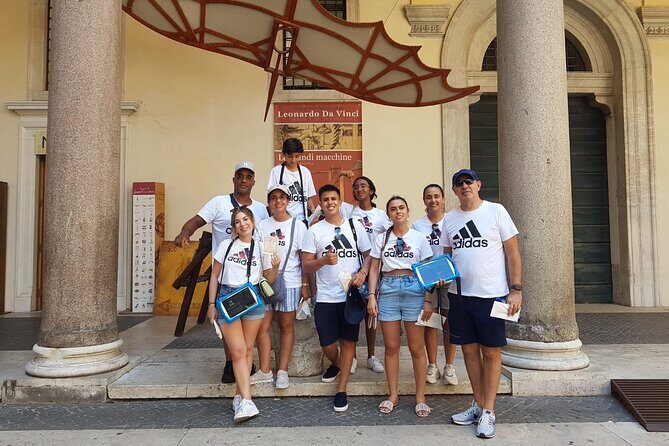
The adventure continues toward Forum Romanum and the Colosseum. This is a big moment in the route because these are the kinds of places where people expect a long history lecture. Instead, you’re layering a game on top of the ruins and monumental architecture.
What makes that useful is focus. The tablet and point system steer your attention so you’re not just taking in scale—you’re looking for something that matters to the hunt. Even if you’ve seen Rome photos for years, the clue structure can make the environment feel more personal and less like a postcard.
There’s also mention of exploring ancient ruins and a hidden underground Roman river as part of the experience. That adds variety: it’s not just monuments above ground. For readers who like the idea of Rome’s hidden layers, this is one of the more intriguing selling points.
The Leonardo da Vinci Exhibition finale: 65+ inventions and a final treasure hunt
After the walking portion, you finish at the Leonardo da Vinci Exhibition. This is where the tour payoff shifts from “collect points around Rome” to “use what you learned to solve the in-exhibition treasure.”
Here’s what you can expect inside:
- Try 65+ inventions inspired by Leonardo da Vinci
- Experience an invention/hologram element
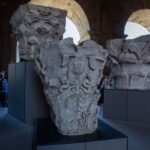
- Encounter rare discoveries tied to the story, including fragments associated with a 43 B.C. tomb theme
- Continue the hunt inside the exhibition using the clues you unlocked on the street
This museum section is valuable because it gives the experience a satisfying arc. The city walk sets you up, then the exhibition lets you apply those clues in a controlled space where you can slow down and explore.
If you’re traveling with kids, this part typically feels like the “main event.” There’s a clear educational hook, but it’s delivered through interactive presentation rather than pure instruction.
How the points and clue system work (so you don’t get stuck)
The experience uses a simple rhythm:
- You walk through central Rome while you see major landmarks
- The tablet prompts you with quiz questions and asks for funny photo tasks
- You collect points, and those points unlock clues
- Once you reach the exhibition, you use those clues to locate the treasure
The key practical takeaway: you don’t need to guess your way through it. The tablet is doing the heavy lifting by giving information about what you’re seeing. Your job is to respond—answers, photos, and any clue steps the tablet gives you.
If you run into trouble, remote assistance is available during the city portion. That helps you keep momentum instead of wasting time pacing around looking for an answer key.
Language note (important): the hunt relies on readable tablet instructions. One review flagged that the French translation didn’t cover everything consistently, and that affected clue steps that depended on letters. If French is essential for you, make sure you’re comfortable with the chosen language on the tablet.
Price and timing: what $52.36 buys you
At $52.36 per person for an approximate 3 hours 30 minutes, the best way to judge value is not by how many landmarks you see—it’s by how much activity is built into that time. You get:
- A tablet-guided scavenger hunt approach
- Entrance to the Leonardo da Vinci Exhibition
- Remote assistance during the city portion
That combination matters. Many “self-guided” city tours are cheap because they don’t include museum entry. Here, the museum entrance is part of the ticket, and the exhibition is a big chunk of the experience.
It’s also booked about 13 days in advance on average, which tells me it’s the kind of activity people plan in advance rather than last-minute. If you want a specific day, don’t leave it to the last few hours.
Also, bring your own water. Bottled water isn’t included, and you’ll likely be moving between sights in warmer months.
Who this tour suits best (and who might want something else)
This fits best if you like:
- Walking Rome while still getting structured prompts
- Family-friendly education without feeling like school
- A “game layer” over famous sights
- A museum finale with interactive elements
It’s also a good fit for people who want to choose where they look. The tablet provides information, and it’s up to you to decide where to go during the walk.
It might not be ideal if:
- You want a traditional guide giving detailed commentary at each sight
- You strongly depend on flawless tablet translations in a specific language
- Your group needs lots of seating breaks (the experience is still a walk-and-solve format)
On the logistics side, it’s private, meaning only your group participates. That can make clue-solving smoother because you’re not competing with strangers for tablet time.
As for access, the tour notes that most travelers can participate and service animals are allowed, and it’s near public transportation.
Should you book the Rome treasure hunt with Leonardo da Vinci?
I’d book it if you want Rome that feels like an activity, not a checklist. The strongest reasons are the pairing of a central Rome walking hunt with a Leonardo Exhibition finale that includes 65+ inventions and a hologram, plus a treasure hunt inside. That mix gives you both the street-level experience and a payoff moment you can’t get from a standard landmark tour.
I’d skip or rethink it if your top priority is a narrative, fully spoken history tour. This is tablet-led, clue-led, and point-led. It’s also smart to pack for comfort: bring water, charge your phone for the mobile ticket, and be ready for the tablet to do most of the talking.
If you match the vibe—curious, active, and okay with a game-your-way pace—this is a fun and solid way to see Rome’s top sights while tying them into Leonardo’s world.
FAQ
How long is the Rome Treasure Hunt with Leonardo da Vinci?
It lasts about 3 hours 30 minutes.
How much does it cost?
The price is $52.36 per person.
Where do I meet, and where does the tour end?
You start at Piazza della Cancelleria, 1, 00186 Roma, Italy, and the activity ends back at the meeting point.
Is there a mobile ticket?
Yes, the experience uses a mobile ticket.
What’s included in the price?
You get the entrance fee for the Leonardo da Vinci Exhibition, use of one tablet per group, and remote assistance by staff during the city portion.
Do they provide water or food?
No. Bottled water and food/drinks are not included.
What do I do during the city walk?
You follow a tablet-guided route around central Rome sights and collect points by answering quiz questions and taking funny photo tasks. Those points unlock clues.
What happens at the Leonardo da Vinci Exhibition?
You solve a treasure hunt inside the exhibition using the clues you unlocked during the walk. The exhibition includes 65+ inventions and holograms.
Are there famous sites included during the walk?
Yes. You can see the Spanish Steps, Trevi Fountain, Pantheon, Piazza Navona, Campo de’Fiori, Forum Romanum, and the Colosseum.
Is this a private tour?
Yes. Only your group participates.
Is free cancellation available?
Yes, you can cancel up to 24 hours in advance for a full refund.