REVIEW · ROME
Rome: Small Group Golf Cart Highlights Tour
Book on GetYourGuide →Operated by LivTours - We craft tours, you live them · Bookable on GetYourGuide
Rome feels best when you get oriented fast. That’s what this small-group golf cart tour does: it gives you a smart, high-coverage highlights route without burning your legs on hills and long walks.
I especially like the small group size and the way you still cover a lot of ground. You get classic stops like the Colosseum area, the Pantheon, Trevi Fountain, and the Spanish Steps, plus viewpoints and neighborhoods you’d otherwise miss on your own.
One thing to consider: the meeting point can be easy to miss at first glance. If you hate finding exact street-level meeting spots, plan to arrive a few minutes early and look for the LivTours cart sign.
In This Review
- Quick hits before you go
- Why a golf cart highlights tour makes sense in Rome
- Meeting at Piazza della Repubblica: the part to nail
- Via Cavour to Aventine Hill: city views with less strain
- The Colosseum stop: ancient Rome, without the marathon
- Mouth of Truth to Piazza Navona: the stops you remember
- Pantheon, Trevi Fountain, Spanish Steps: big icons, paced right
- Piazza Venezia and Janiculum Hill: the Rome skyline sweep
- St. Peter’s Basilica area and Castel Sant’Angelo: moving into the river views
- Price and value: is $157.47 for 3 hours worth it?
- Who this tour is best for (and who should skip it)
- How to get more out of every stop
- Should you book this Rome golf cart highlights tour?
- FAQ
- How long is the Rome golf cart highlights tour?
- Where do you meet, and where do you end?
- How big is the group?
- Is the tour guided in English?
- Which major sights are included?
- Are there restrictions on pets or luggage?
- Is this tour suitable for pregnant women?
- What’s the cancellation option?
Quick hits before you go
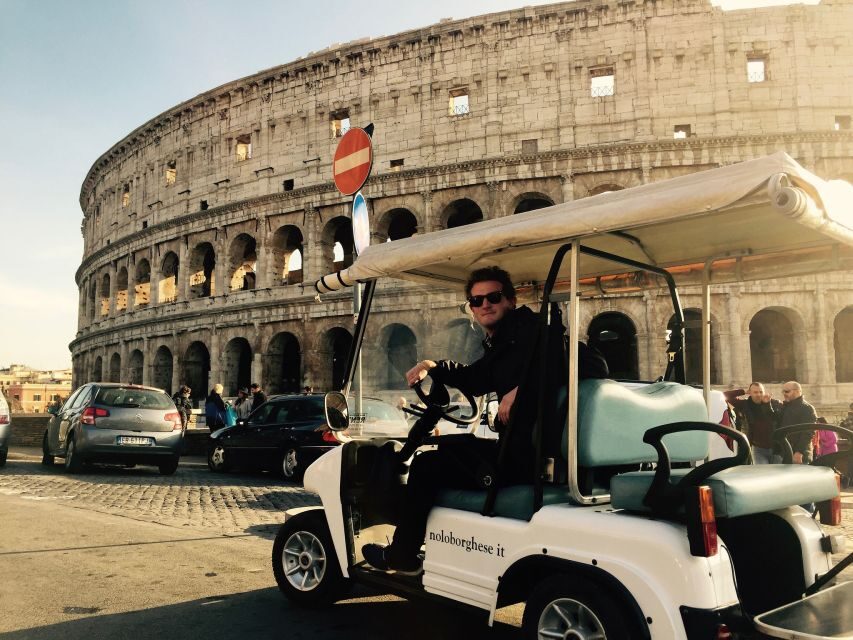
- Small group cap (max 6 people): you get a semi-private feel instead of a crowded bus tour.
- A golf cart saves your legs: you can see more without hill-grinding.
- Expert English guide: you’ll get stories that stretch from ancient Rome into the 20th century.
- Major icons plus key neighborhoods: it’s not just postcard stops.
- Designed for a short stay: ideal if you only have a few days and want the lay of the land.
Why a golf cart highlights tour makes sense in Rome
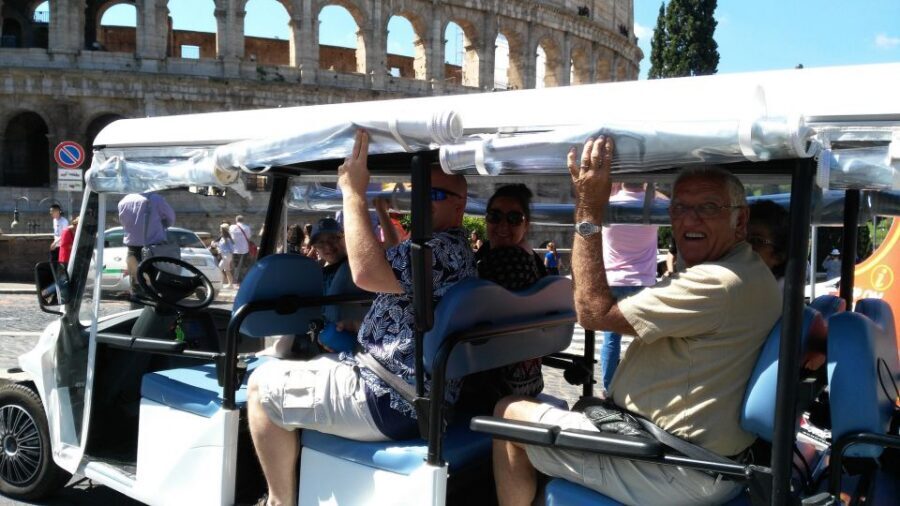
Rome is packed. That’s the problem and the magic at the same time. With streets that twist, hills that jump up on you, and attractions clustered in different areas, you can waste a whole day just moving around.
This tour solves that. In about three hours, you get a guided sweep that hits the big names and also threads through Rome’s neighborhoods so you leave with a sense of where things are. The golf cart isn’t about avoiding Rome. It’s about spending your energy on the parts you’ll want to photograph, linger at, or revisit later.
Two values are clear. First, you’re not just seeing monuments, you’re being told how they fit together across time. Second, the small-group format helps the guide pace things so you’re not stuck staring at a screen while others rush ahead.
You can also read our reviews of more tours and experiences in Rome.



Meeting at Piazza della Repubblica: the part to nail
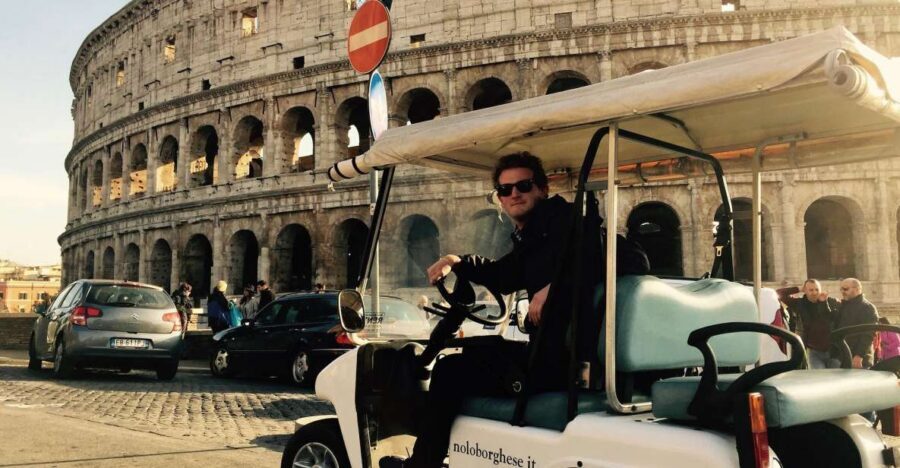
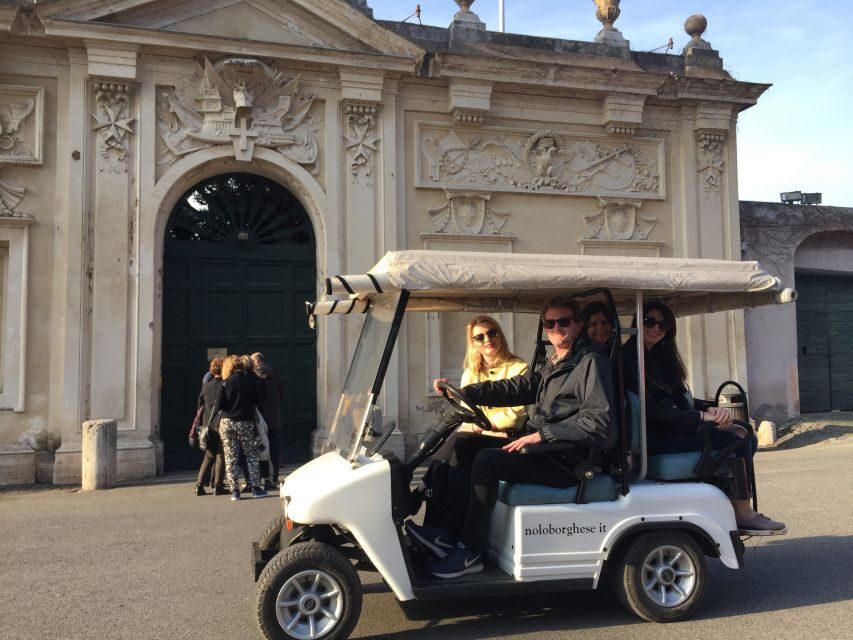
You start and end at Piazza della Repubblica, meeting in front of Palazzo Naiadi. Your guide arrives in a golf cart holding a LivTours sign.
Here’s the practical advice: arrive early, stand still, and scan for the cart sign rather than trying to flag down a random driver. One of the most common issues with tours like this isn’t the route—it’s that first five minutes. If you do arrive a bit early, you’ll also avoid the stress of trying to keep the rest of your group waiting.
Also note what’s not allowed: no pets and no luggage or large bags. If you’re traveling light, this is easy. If you’re carrying more than a daypack, plan a storage workaround before you meet.
Via Cavour to Aventine Hill: city views with less strain
After the Piazza della Repubblica start, the route rolls toward Via Cavour for guided orientation. This is where you start learning how Rome’s layout “moves”—which neighborhoods connect, where major sights sit relative to each other, and why certain viewpoints matter.
Then you head to Aventine Hill. This is one of those areas where you’d normally pay for the view with extra walking. On this tour, you get the perspective without hiking up hills like you’re training for a small mountain race.
Aventine also helps the tour feel more than just a greatest-hits playlist. You’re seeing Roman geography as much as Roman monuments. That’s how you build a mental map you can use later when you’re picking where to eat or which sight to revisit.
The Colosseum stop: ancient Rome, without the marathon
The tour includes the Colosseum area (outside), plus the Arch of Constantine and nearby highlights such as Palatine Hill / San Gregorio and Circus Maximus.
Even though the Colosseum is outside-focused on this tour, it still works because you’re guided. A good guide can point out what to look for: the massing, the way the arc lines up with surrounding streets, and how these sites relate to each other. In Rome, that kind of “what you’re seeing and why it matters” is what turns pictures into understanding.
You’ll also get the area context around the Arch of Constantine. That matters because this isn’t just a standalone photo spot. It’s part of an ancient route network, and the guide’s stories help you connect it with the rest of the route you’ve been covering.
And because you’re in a cart, you don’t lose momentum. You’re not taking a long detour on foot just to get from one stop to another. You keep the flow, which is exactly what you want on a short visit.
Mouth of Truth to Piazza Navona: the stops you remember
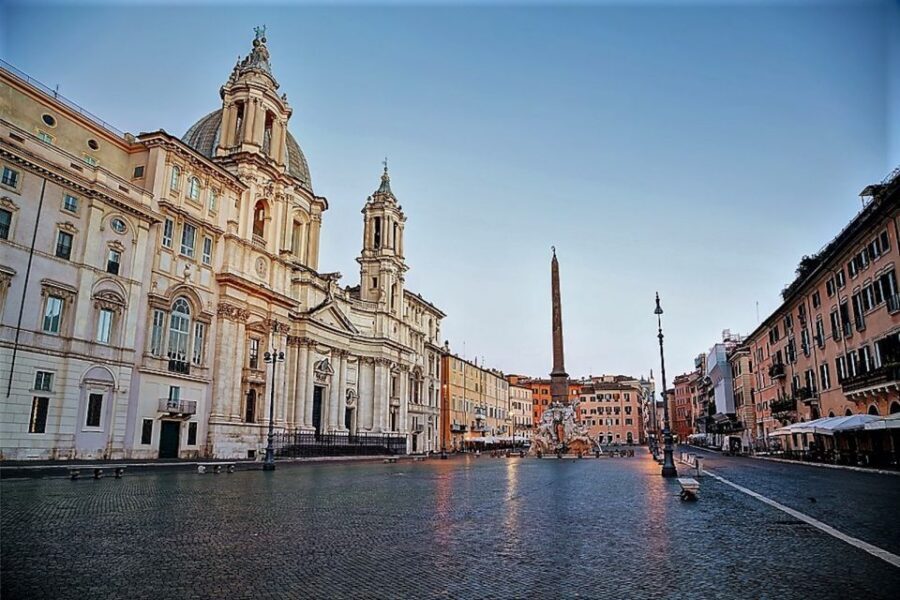
Next up is the Mouth of Truth and then Piazza Navona.
The Mouth of Truth is one of those Rome icons people come for on instinct. The value here is that you’re guided through what it represents and where it sits in the wider picture of the city. It’s the kind of stop where a few sentences from a local can make it feel less like a movie prop and more like a real piece of the city’s layered past.
Then Piazza Navona comes in, and this is where the tour balances “big history” with “life in the city.” You’re in a famous square, yes, but it’s also a place that shows you how Rome works day to day—space, movement, and street energy. You’ll appreciate this more if you’ve got your bearings from earlier stops, which is why the route order matters.



Pantheon, Trevi Fountain, Spanish Steps: big icons, paced right
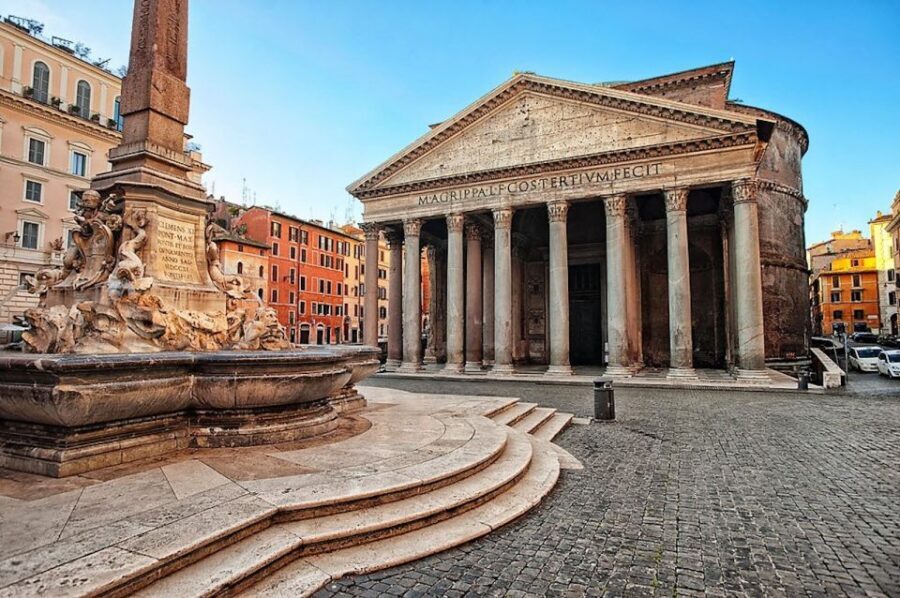
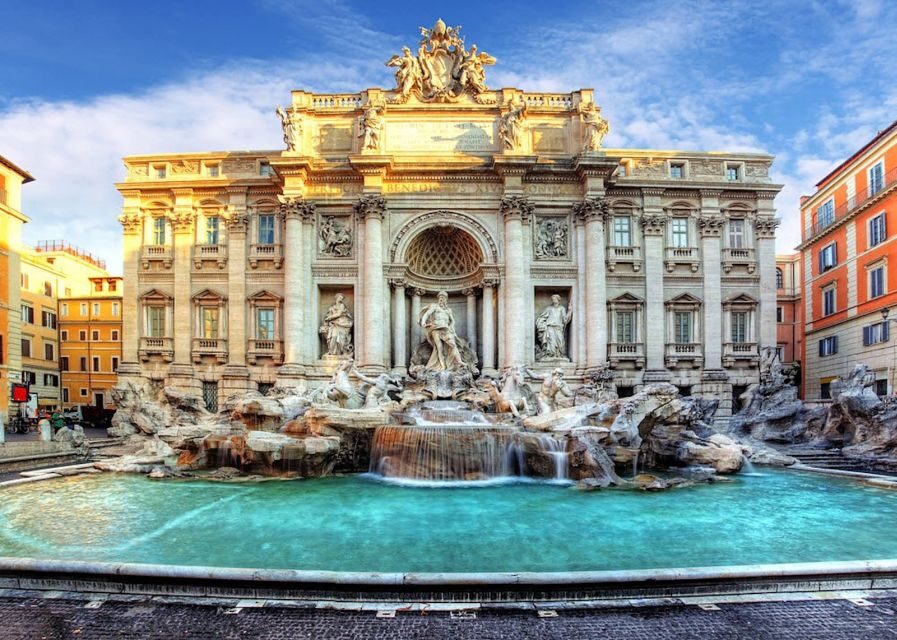
The tour includes the Pantheon, Trevi Fountain, and the Spanish Steps, plus nearby stops like Piazza SS Apostoli, Piazza Sant’Andrea della Valle, and Corso Vittorio Emanuele II / Piazza del Popolo depending on the flow of your specific run.
Here’s the practical reason this matters: you’re seeing these heavy-hitters without trying to plan them as a DIY scavenger hunt. Rome’s famous sights can feel overwhelming because everything is competing for your attention. A guided highlights route gives you order, and order makes photos better too.
At the Pantheon, your guide helps you focus on what you should notice. You’ll also appreciate that this stop is one of the few where the “wow” comes from architecture and proportions, not just the crowd scene.
Trevi Fountain is next. This is the stop where you’ll most likely feel the full weight of Rome’s popularity. The cart pacing helps because you’re arriving as part of a planned circuit rather than arriving only after you’ve already been walking for hours.
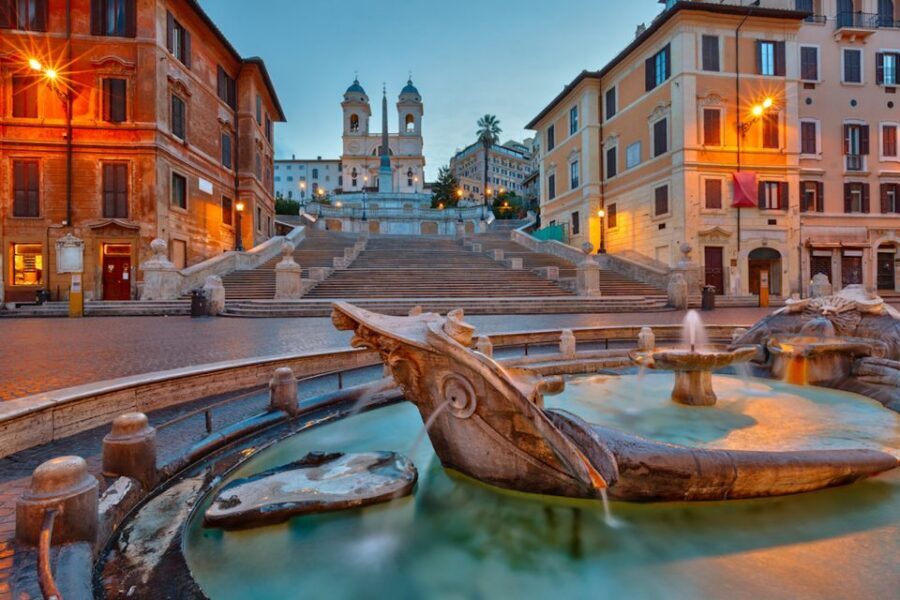
Then you hit the Spanish Steps. You get a perspective from above, which is especially helpful because the steps can be hard to fully take in at street level. You’re basically getting the viewpoint shortcut: less climbing, more understanding of the layout and why it’s become such a cultural magnet.
Piazza Venezia and Janiculum Hill: the Rome skyline sweep
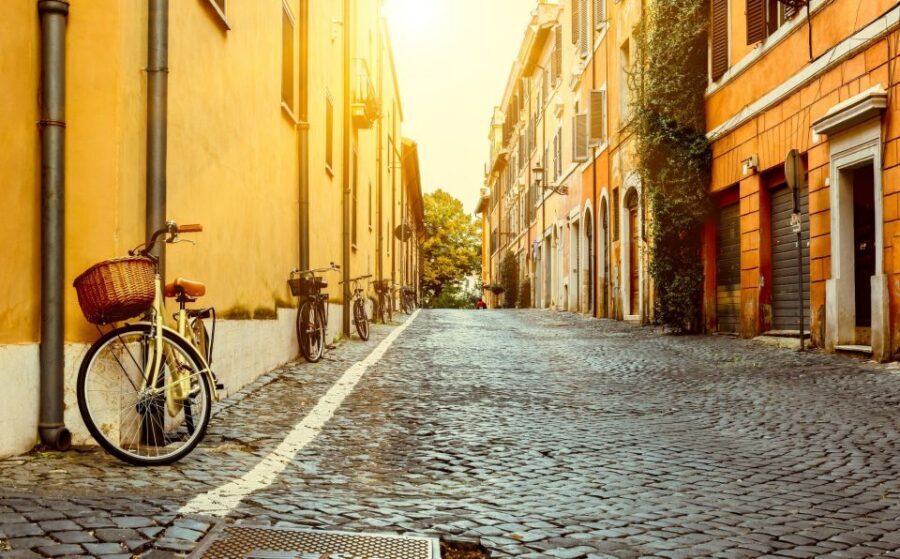
After the central icons, the tour shifts into classic city panorama territory, including Piazza Venezia / Victor Emmanuel Monument, Capitoline Hill / Coelio, and Janiculum Hill / Piazza Garibaldi.
Piazza Venezia is a strong anchor point because it’s so central in the way Romans talk about and move through the city. It helps you connect what you saw earlier (ancient Rome) with what you’ll see next (views and official monuments).
Then Janiculum Hill rounds out the skyline. This is where the golf cart really earns its keep. Hills are part of Rome’s charm, but they’re also why people end up exhausted. By finishing with an elevated viewpoint, you’re likely to feel like you got the “big picture” without paying for it with sore legs for the rest of your trip.
St. Peter’s Basilica area and Castel Sant’Angelo: moving into the river views
The tour includes St. Peter’s Basilica and Castel Sant’Angelo, including a view from the bridge.
This is a smart inclusion if your itinerary is tight. Many first-time visitors focus only on the ancient side of Rome. This route intentionally crosses toward the Vatican side, so you get a broader sense of the city’s two major storylines: empire-era Rome and the later world-shaping influence around the Tiber.
Castel Sant’Angelo from the bridge is also a good way to “read” the river corridor. Even without going deep into museums here, you get an instant sense of how the area sits in relation to the waterway.
If you’re the type who likes to understand how Rome connects across neighborhoods, this portion is a big win.
Price and value: is $157.47 for 3 hours worth it?
At $157.47 per person for about three hours, the value depends on how you’re currently planning your day.
If you’re trying to DIY these stops in one afternoon, you’ll quickly run into two costs: time and energy. Rome is not laid out like a flat museum district. You’re juggling walking distances, taxi/wait time, and the stress of finding exact meeting points after you’ve already been out all morning.
This tour’s strongest value is that it bundles:
- major sights you’d want anyway
- guided context while you’re there
- a cart that reduces walking fatigue
- a small-group setting so the guide can actually interact
So ask yourself one simple question: do you want a guided highlights sweep that gets you oriented, or do you want the freedom to wander and choose as you go? If you want orientation fast, the pricing becomes easier to justify. If you’re already comfortable with lots of walking and you prefer to set your own pace, you might choose a different plan.
Who this tour is best for (and who should skip it)
This is a great fit if:
- you have a short stay and want to see the biggest sights in one guided pass
- you want help building a map of the city so you can plan your next day better
- you prefer comfort over climbing, especially given Rome’s hills
It may not be the right fit if:
- you’re pregnant, since the tour is specifically not suitable for pregnant women
- you travel with pets or larger bags, since those aren’t allowed
- you want a deep, inside-the-weeds museum day (this is a highlights route with many stops)
Also keep in mind the tour is guided in English, and it’s designed around adult-friendly movement and sightseeing.
How to get more out of every stop
A small pro tip: think of the tour as your Rome sketchbook. While you’re moving between locations, watch for patterns—what areas feel related, where the sight lines open up, and what streets or squares keep showing up.
When you land at an icon like the Trevi Fountain or the Spanish Steps, use the tour time to learn what you’ll want to return to. After the tour, you can pick one or two places to revisit for longer photo time, a slower meal, or a second pass with less schedule pressure.
If you’re a first-timer, this route also helps you decide which neighborhood vibe you like best—ancient monuments, river views, official monument squares, or lively squares like Piazza Navona.
Should you book this Rome golf cart highlights tour?
Book it if you want a guided, efficient orientation of Rome’s top sights without turning the trip into a leg workout. The mix of major monuments plus city-neighborhood context is the heart of the experience, and the small-group format keeps it from feeling like a rushed stampede.
Skip or consider another option if meeting points stress you out, because you’ll want to get to Palazzo Naiadi in Piazza della Repubblica early and ready. Also skip if you’re pregnant, or if you need to travel with pets or larger luggage.
If you’re okay with those trade-offs, this tour is a smart way to use a limited amount of time—and it sets you up for a better second day in Rome.
FAQ
How long is the Rome golf cart highlights tour?
It’s about 3 hours.
Where do you meet, and where do you end?
You meet in front of Palazzo Naiadi in Piazza della Repubblica, and the tour ends back at the same meeting point.
How big is the group?
It’s a small-group experience with a maximum of 6 people.
Is the tour guided in English?
Yes, the live guide speaks English.
Which major sights are included?
The tour includes stops such as the Colosseum (outside), Arch of Constantine, Mouth of Truth, Piazza Navona, the Pantheon, Trevi Fountain, Spanish Steps, Piazza Venezia, St. Peter’s Basilica, Castel Sant’Angelo (view from the bridge), and Janiculum Hill.
Are there restrictions on pets or luggage?
Yes. Pets are not allowed, and luggage or large bags are not allowed.
Is this tour suitable for pregnant women?
No, it’s not suitable for pregnant women.
What’s the cancellation option?
Free cancellation is available up to 24 hours in advance for a full refund.