REVIEW · CITY TOURS
Rome Post cruise Tour from Civitavecchia Port to Rome city
Book on Viator →Operated by AcrossRome · Bookable on Viator
Turning cruise stress into city time.
This Rome post-cruise tour is built for a simple goal: less time stuck in transit, more time seeing the big sights. With port pickup and a private driving setup, you get a guided run through classic Rome landmarks right after you step off the ship. I like the mix of iconic stops plus real pacing, not a frantic sprint through everything.
Two things I especially like: the guide-led flow that helps you get your bearings fast, and the practical included touches like bottled water and an air-conditioned vehicle. One possible drawback: it is a tight schedule, so you only get short windows at each highlight, and two major sites have entrance tickets not included.
In This Review
- Key highlights you’ll feel right away
- From Civitavecchia to Rome fast: what you’re really buying
- The port pickup that reduces the day’s main risk
- How the timing works: five hours, five big stops
- Trevi Fountain: the wish stop with real photo time
- Circus Maximus: a quick hit at the size of ancient Rome
- The Pantheon: your best chance at an architectural knockout
- Piazza di Spagna: a famous square with a clear story
- Piazza Navona: the fountains that anchor the final hour
- The value math: why $532.56 can make sense
- Who this tour fits best
- Should you book this Civitavecchia-to-Rome post-cruise tour?
- FAQ
- FAQ
- How long is the Rome post-cruise tour from Civitavecchia?
- Is port pickup included?
- Is it a private tour?
- Will I be taken to my hotel in Rome?
- What sights are included in the route?
- Are entrance tickets included for all stops?
- Is lunch included?
- What’s included in the price?
- What language is the tour offered in?
- Can I cancel and get a full refund?
Key highlights you’ll feel right away
- Port pickup with a named-sign meet right as you disembark, so you’re not hunting for a ride
- Hotel drop-off in Rome, which means your tour also functions like a transfer
- A short list of top sights packed into about 5 hours, with clear time blocks
- Private format for just your group, so the pace stays calmer and easier with luggage
- Bottled water and air-conditioning to make the in-between time more comfortable
- Guides who handle the day smoothly, including pros like Maurizio and Alberto in past tours
From Civitavecchia to Rome fast: what you’re really buying
A post-cruise day can go sideways fast. One late train, one confusing pickup spot, and your Rome plans melt away. This tour is designed to avoid that spiral by meeting you at the port and getting you into the city quickly. You’re not waiting around for a group shuttle or trying to translate your way through a maze of terminals.
What you’re paying for here is time—and stress reduction. The route is concentrated: Trevi Fountain, Circus Maximus, the Pantheon, Piazza di Spagna, and Piazza Navona, all in about five hours. That’s a very efficient way to see Rome’s “greatest hits” without turning the day into a 10-hour walking test.
You also get the nice benefit of a private, driving-first approach. That matters when you’ve just come off a ship, you’ve got bags, and you want the day to start smoothly. Even if you’re an early riser at heart, cruise days often make “slow” the safer plan. This tour keeps things workable.
You can also read our reviews of more boat tours in Rome


The port pickup that reduces the day’s main risk
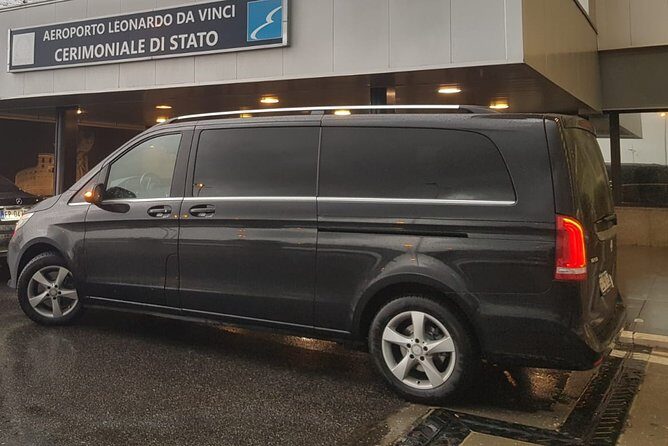
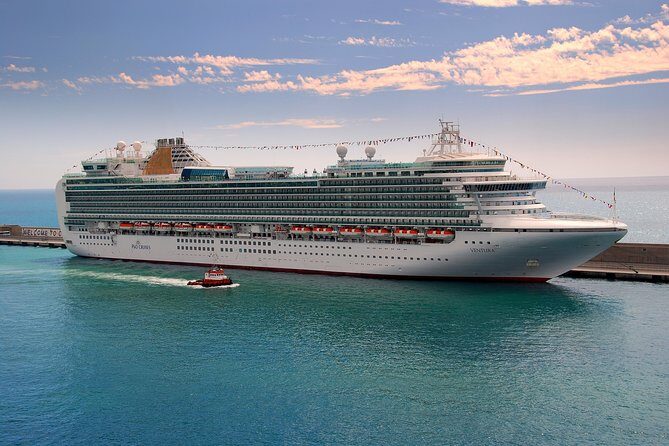
This is the part that makes the whole experience feel smart. On arrival day, a driver meets you at the port with a named sign just as you disembark in front of your ship. The listing notes they have clearance, which typically means you avoid the long detours that can happen when drivers can’t reach the exact pickup lane.
From your perspective, that translates to fewer unknowns. You’ll know where to go, and you won’t spend Rome-fuel energy trying to track down your ride while everyone else is rushing to find theirs.
Once you’re in the vehicle, the tone shifts to “tour mode.” The goal becomes straightforward: get a guided orientation and hit major sights while you still have energy.
How the timing works: five hours, five big stops
The itinerary is not vague. You get approximate time windows at each place:
- Trevi Fountain: 30 minutes
- Circus Maximus: 10 minutes
- Pantheon: 20 minutes
- Piazza di Spagna: 15 minutes
- Piazza Navona: 15 minutes
That structure is helpful because it sets expectations. This isn’t a “linger all day” tour, and it’s not meant to be. It’s meant to help you check off major landmarks, get context from the guide, and return to your hotel without eating up your whole afternoon.
Also, because it’s private, the guide can often keep the day flowing without the awkward gaps that happen on larger group tours. In the best versions of this experience, guides like Maurizio have shown up on time, handled luggage smoothly, and helped families stay comfortable—especially when kids are involved. Other guides, like Alberto, have been praised for clear explanations and sharp navigation decisions. You can’t count on a specific name every time, but it’s a good sign that the operator places value on guide quality.
Trevi Fountain: the wish stop with real photo time
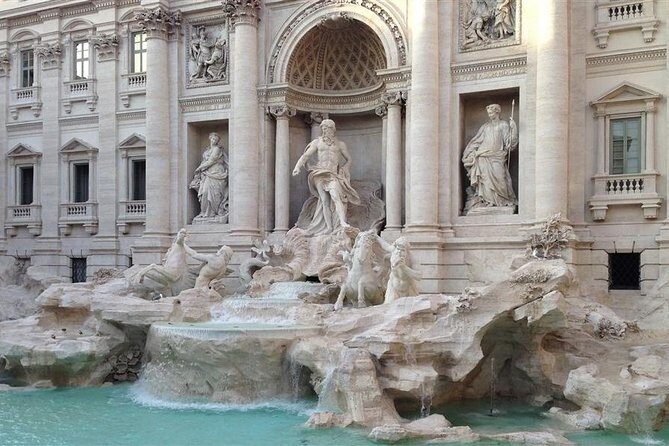
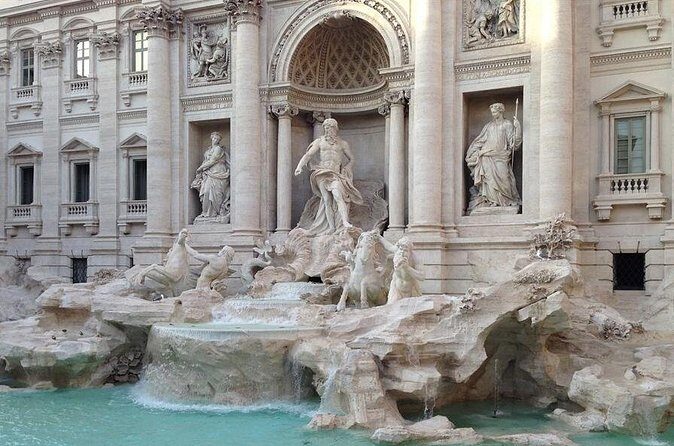
Trevi Fountain is the one you’ve seen in movies, on postcards, and in your phone gallery at least once. Here, you get about 30 minutes, which is plenty for a slow look, a couple of photos, and time to take in what makes it such a magnet.
The tour frames it in a very Roman way: millions visit every year to make a wish. That matters, because Trevi isn’t just architecture—it’s a ritual space. The fountain’s fame means it’s often busy, so the smart move is to treat this as a “best-of” visit: look closely, snap what you want, then move on. You’re not trying to win a contest with the crowd. You’re collecting the moment and the story.
Practical tip: wear shoes that handle Rome’s uneven ground, and plan to stand and walk a little more than you expect even for a short stop.
Circus Maximus: a quick hit at the size of ancient Rome
Next up is Circus Maximus, located between the Aventine and Palatine Hill. The big idea here is scale: it was the largest stadium in ancient Rome, built for chariot races.
Even with a 10-minute stop, you can get value if your guide puts it into perspective. This isn’t a place most people fully understand before they visit. The guide can connect it to why chariot-race culture mattered and how the city’s public life worked.
The short time window also means you shouldn’t expect a museum-style visit. Think of it more like a context stop—one where you walk away understanding what this place used to be, even if it looks different today than you imagined.
Entrance note: the tour lists admission for Circus Maximus as not included. So if you want to go inside (if access is available during your visit), you’ll need to plan for that ticket cost separately.
You can also read our reviews of more city tours in Rome


The Pantheon: your best chance at an architectural knockout
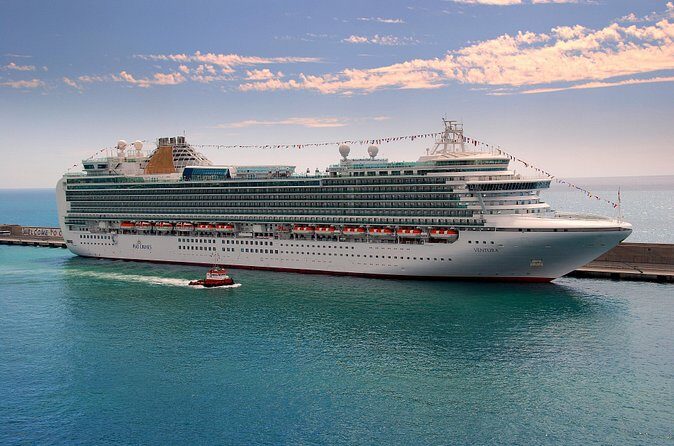
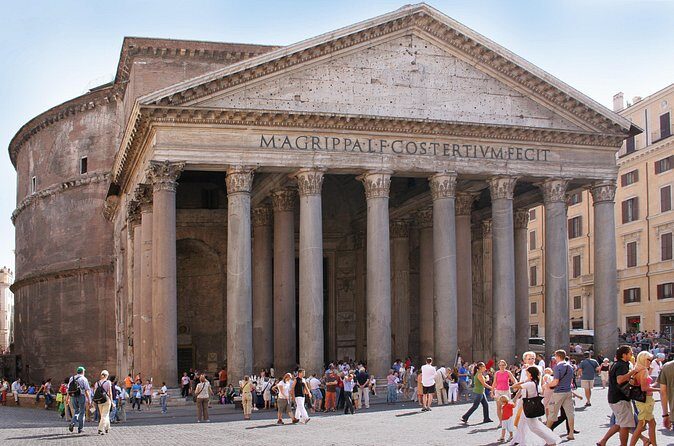
If I had to pick the stop that gives you the most “wow per minute,” it’s the Pantheon. The tour description calls it the Roman Pantheon and says it’s the best preserved building from ancient Rome. That is not marketing fluff. It’s one of those places where the structure does half the explaining for you.
You get about 20 minutes. That may sound short, but the Pantheon is compact in the sense that once you’re there, your attention locks on quickly. This is the stop where good guiding pays off: a guide can point out what to notice, so you don’t end up staring at the floor or rushing through the space with no framework.
Admission note: the Pantheon is also listed as not included. If you’re someone who likes to walk in without surprises, budget for entrance fees at stops marked not included.
Practical tip: go in with a simple goal. For example: focus on the dome, the light, and the overall geometry. With limited time, that’s the fastest way to feel like you actually experienced something.
Piazza di Spagna: a famous square with a clear story
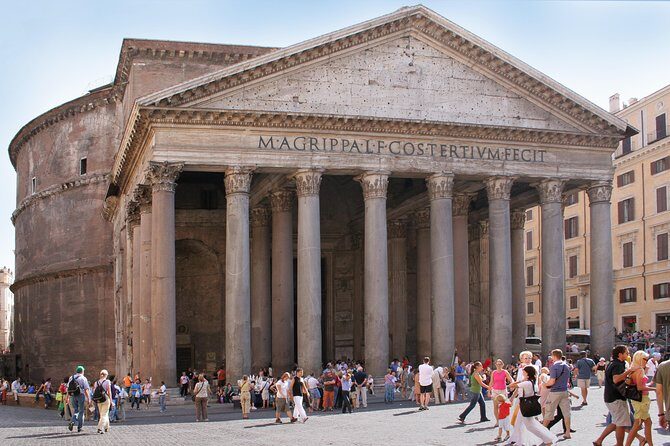
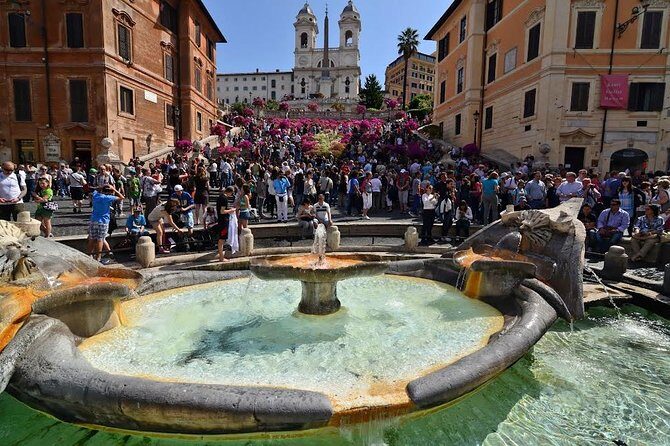
You then roll to Piazza di Spagna, where the tour connects the name to the Palazzo di Spagna, the Spanish Embassy seat near the Vatican since the seventeenth century. That detail turns the square from just a scenic pause into a recognizable piece of Rome’s diplomatic map.
This stop runs about 15 minutes, and it’s a perfect “reset” before the final big square. You’ve already done fountains and ancient infrastructure. Now you get a classic urban square where Rome’s layers—foreign influence, formal buildings, and public life—show up in the layout.
The tour marks it as free admission. That’s helpful because you don’t have another ticket decision hanging over you in the middle of the day.
Practical tip: if you want photos, this is the place to take them without rushing. Even a quick stroll here helps you feel you’re not just moving between famous walls—you’re actually living in the city’s rhythm.
Piazza Navona: the fountains that anchor the final hour
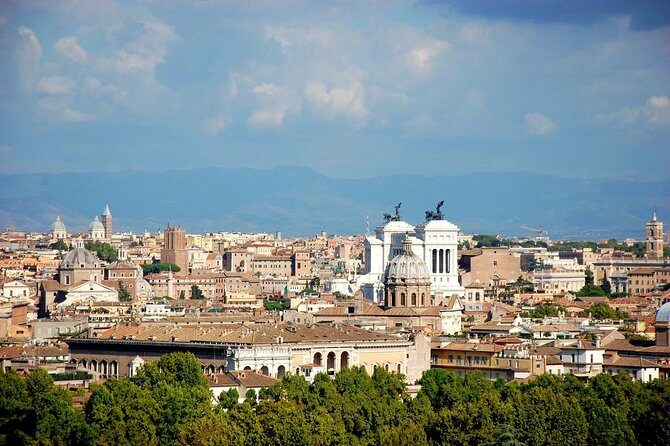
Your last highlight is Piazza Navona, famous for its three fountains. The tour points out that the square sits on the site of the Stadium of Domitian (also called Circus Agonalis) founded in 86 AD, with capacity estimated at about 20,000 spectators.
So you’re standing where crowds once came for athletics—and now crowds come for fountains. That’s the Rome pattern in one spot: old purpose replaced, but the energy stays.
The fountains are described as designed during the papacy of Gregory XIII, which is a nice detail because it reminds you that Rome’s “main character” role didn’t stop after ancient times. It simply changed costume.
You get about 15 minutes, and the tour lists free admission for this stop. This makes Piazza Navona a great closer because you can enjoy the scene without needing to plan around ticket logistics.
Practical tip: bring patience. Even with a guided schedule, you’ll share space with other people, and it’s worth it. Take a moment to watch the square rather than racing to capture it.
The value math: why $532.56 can make sense
At $532.56 per person, this is not a bargain-basement tour. But post-cruise tours often have higher prices because they solve real problems: last-mile pickup at a port, a private vehicle, and a guide-led route that saves you from your own navigation mistakes.
Here’s what you’re getting that tends to justify the cost:
- Port pickup plus hotel drop-off: it covers the “get there, then get to your hotel” problem
- Air-conditioned vehicle: not optional in warm weather and often a sanity saver
- Private transportation: you’re not sharing your timing with strangers
- Bottled water: small thing, but it keeps the day comfortable
- Clear stop times: you know roughly what you’re buying
There’s also mention of group discounts, which can bring the price down if you’re traveling with others who will share a private vehicle.
The main reason it’s good value is simple: you’re buying time and coordination, not just sightseeing. If you were to do this on your own, you’d still spend time figuring out transport, meeting points, and entry decisions—then you’d fight the clock.
Who this tour fits best
This is a strong match if you:
- Want a fast orientation to Rome after a cruise day
- Prefer a calmer, private approach rather than a crowded bus
- Have kids or multiple family members and want someone to keep the day organized
- Want to see the headline sites without trying to plan every single detail yourself
- Appreciate short, guided stop-and-go context more than long museum hours
It might be less ideal if you:
- Want lots of free time to wander slowly with no schedule pressure
- Hate paying separate admission fees for sites marked as not included
- Are hoping to turn five hours into a deep-dive on any one landmark
Should you book this Civitavecchia-to-Rome post-cruise tour?
If your priority is a smooth, guided Rome day that starts right at the port and ends at your hotel, I’d say yes—especially if you’re trying to protect your vacation energy after a cruise. The stop list is the practical kind: Trevi, Pantheon, Piazza Navona, and a couple of ancient context stops that help you understand Rome beyond the postcards.
The biggest reason to book is also the biggest caution: the schedule is short at each location. If you’re the type who wants to sit for a long time at one place and really sink in, you might feel rushed. If you want an efficient hit list with context and comfortable transport, this delivers.
FAQ
FAQ
How long is the Rome post-cruise tour from Civitavecchia?
It runs for about 5 hours.
Is port pickup included?
Yes. A driver meets you on arrival day at the port with a named sign as you disembark just in front of your ship.
Is it a private tour?
Yes. It’s private, so only your group participates.
Will I be taken to my hotel in Rome?
Yes. The tour includes drop-off at your Rome hotel.
What sights are included in the route?
The tour stops at Fontana di Trevi, Circus Maximo, the Pantheon, Piazza di Spagna, and Piazza Navona.
Are entrance tickets included for all stops?
No. Trevi Fountain, Piazza di Spagna, and Piazza Navona are listed as free. Circus Maximus and the Pantheon are listed as not included.
Is lunch included?
No, lunch is not included.
What’s included in the price?
Included items are an air-conditioned vehicle, bottled water, and private transportation.
What language is the tour offered in?
The tour is offered in English.
Can I cancel and get a full refund?
Yes. You can cancel up to 24 hours in advance for a full refund. If you cancel less than 24 hours before the start time, the amount paid is not refunded.