REVIEW · FOOD
Rome: Jewish Quarter and Campo de’ Fiori Street Food Tour
Book on GetYourGuide →Operated by Orange Umbrella Srl · Bookable on GetYourGuide
Food and history walk together here.
This is a 2.5-hour Rome street food tour that links the Campo de’ Fiori market scene with a thoughtful walk through the Jewish Ghetto area. I like it because you get five planned tastings (not just wandering and guessing), and because the food stops match the sights around places like Portico d’Ottavia and Teatro Marcello. One thing to consider: it’s not suitable for vegans and it won’t work for gluten intolerance.
You’ll start in the center of activity at Campo de’ Fiori, then follow your guide on foot through Rome’s layers of everyday life—market foods, classic Roman snacks, and Jewish-Roman specialties along the way. Expect practical guidance, clear explanations, and enough sampling that you actually understand what you’re eating.
In This Review
- Key things I’d plan around
- Rome’s Jewish Quarter and Campo de’ Fiori food walk: what you’re really buying
- Where the tour starts: Campo de’ Fiori under Giordano Bruno
- Campo de’ Fiori market tasting: street food, then wine
- A quick sightseeing breather before you hit the big sights
- Theatre of Pompey stop: classic bites on a historic doorstep
- Via dei Chiavari: beer and another quick taste
- Portico d’Ottavia and the Great Synagogue (outside)
- The Jewish Ghetto street-food section: where the tastings have meaning
- Teatro Marcello and Largo di Torre Argentina dessert
- What you’ll taste (and what to expect from the food)
- Price and value: is $46 fair for a 2.5-hour food tour?
- Best fit: who this tour suits (and who should skip it)
- A smart way to get the most out of it
- Should you book the Rome Jewish Quarter and Campo de’ Fiori Street Food Tour?
- FAQ
- FAQ
- Where do I meet the guide?
- How long is the tour?
- What does the price include?
- What food will I eat?
- Is the tour okay for vegetarians?
- Is it suitable for vegans or gluten intolerance?
- What language is the tour in?
- Is the Campo de’ Fiori market always open during the tour?
- Can I cancel and get a refund?
Key things I’d plan around
- Campo de’ Fiori meeting point: under the Giordano Bruno statue in the middle of the square
- Five tasting stops built into the route: plus beer and wine samples
- Jewish Quarter focus: including stops near Portico d’Ottavia, the Great Synagogue (from outside), and Teatro Marcello
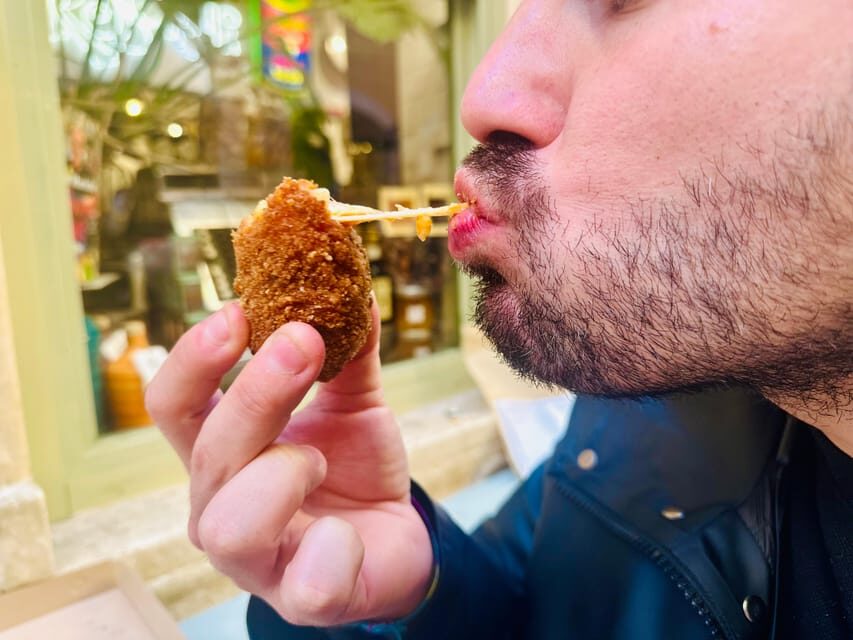
- Roman street-food classics: like supplì and pizza al taglio by the slice
- Ingredients you can taste: truffle samples, olive oil, and balsamic vinegar
- Market timing matters: the market is closed in the afternoons
Rome’s Jewish Quarter and Campo de’ Fiori food walk: what you’re really buying
At $46 per person for about 2.5 hours, you’re paying for three things: time, guidance, and food that’s already portioned for tasting instead of buying full meals one-by-one. If you’ve ever stood in a Roman market staring at counters wondering what to order, this tour saves you that guesswork.
The route is also smart. Campo de’ Fiori gives you a loud, sensory start—smells, vendors, and the rhythm of everyday shopping. Then the tour shifts tone and context as you reach the Jewish Quarter area near the Tiber River, around Rione Sant’Angelo. That contrast is part of the value: you’re not just eating, you’re learning why specific foods show up in Roman life and how the neighborhood’s history ties into what you’ll taste.
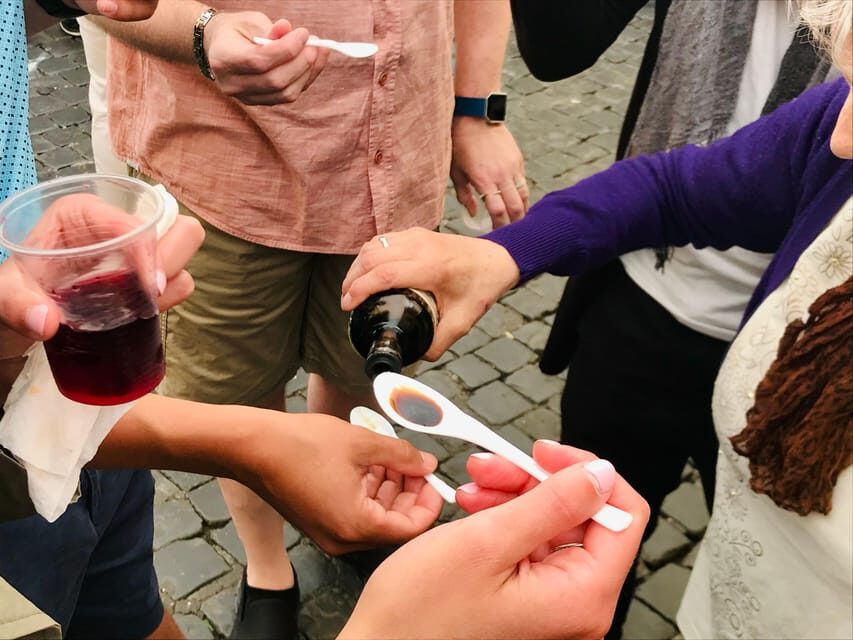
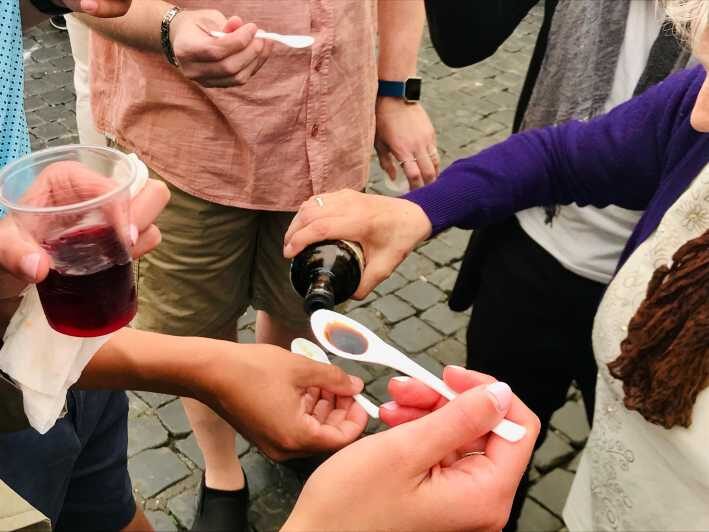
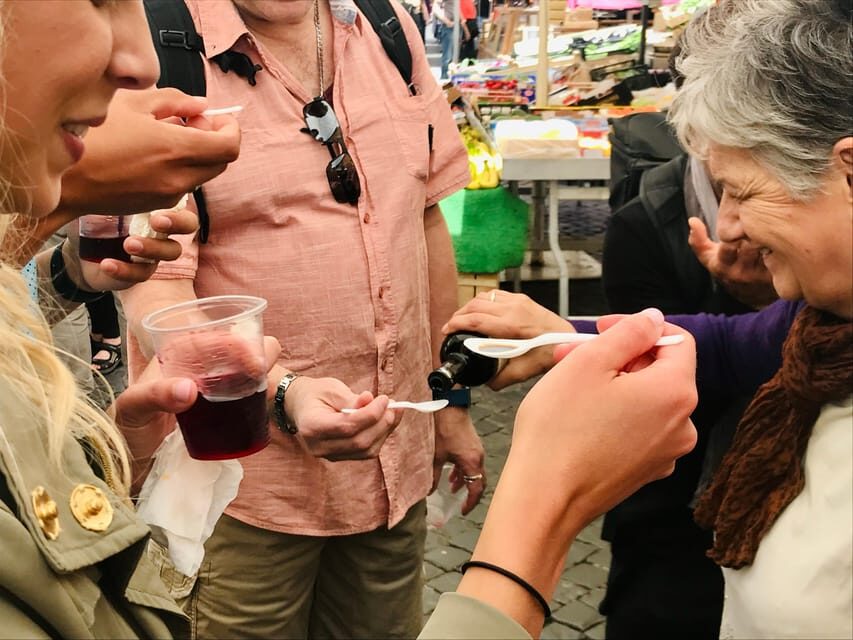
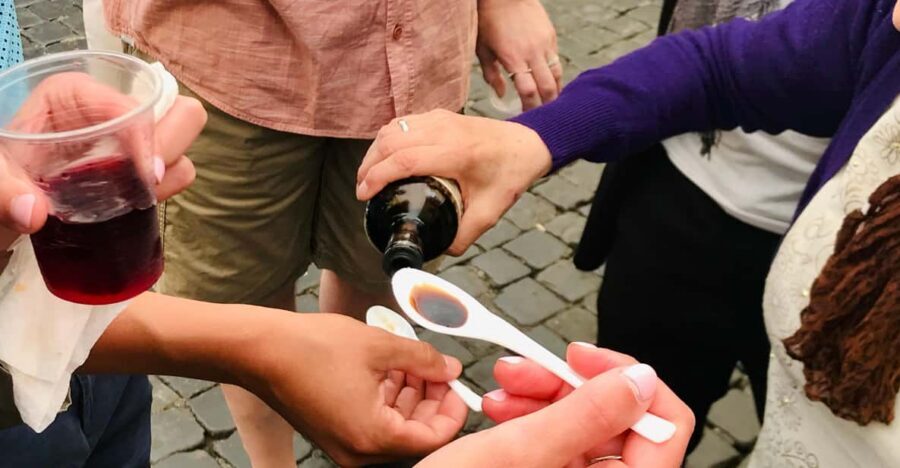
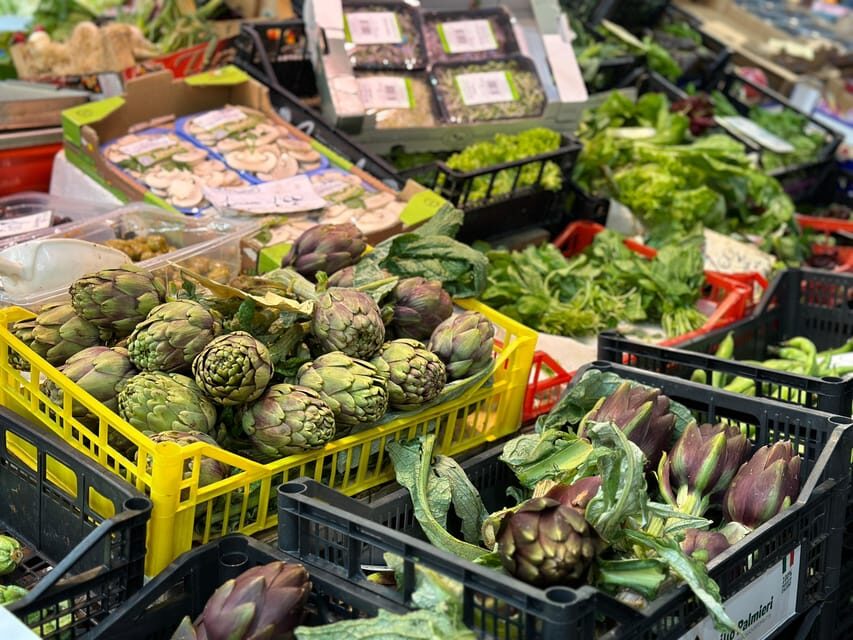
Food-wise, you’re not limited to one style. You might see truffle samples, plus olive oil and balsamic vinegar tastings that make Roman cuisine click beyond pasta stereotypes. You’ll also hit classic street foods like supplì (rice balls filled with cheese and ragù) and pizza al taglio (Roman-style pizza sold by the slice). Those are the kinds of bites you want to eat anyway when you’re in Rome—you’re just getting the added layer of “why this, why here.”
You can also read our reviews of more food & drink experiences in Rome

Where the tour starts: Campo de’ Fiori under Giordano Bruno
You meet at Campo de’ Fiori square, specifically under the statue of Giordano Bruno in the middle of the square. That matters more than you’d think. Campo de’ Fiori is a magnet for tours and wandering groups, so starting in the correct spot helps you avoid the whole I-think-this-is-it scramble.
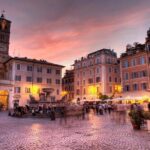
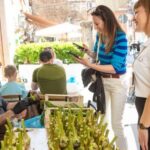
From there, the tour jumps straight into market energy. One of the first tasting blocks is tied to Campo de’ Fiori itself, with street food and a guided market visit. You’ll also get a second session back in the Campo de’ Fiori area for wine and more food sampling. If you’re the type who likes to understand what you’re seeing, this start gives you context fast.
Campo de’ Fiori market tasting: street food, then wine
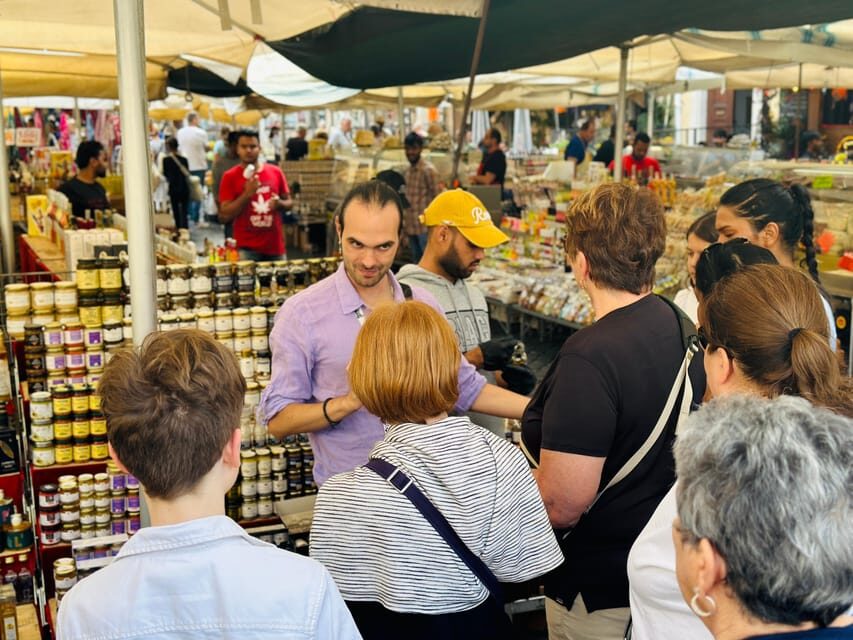
This is the phase where you get your bearings and your stomach calibrated.
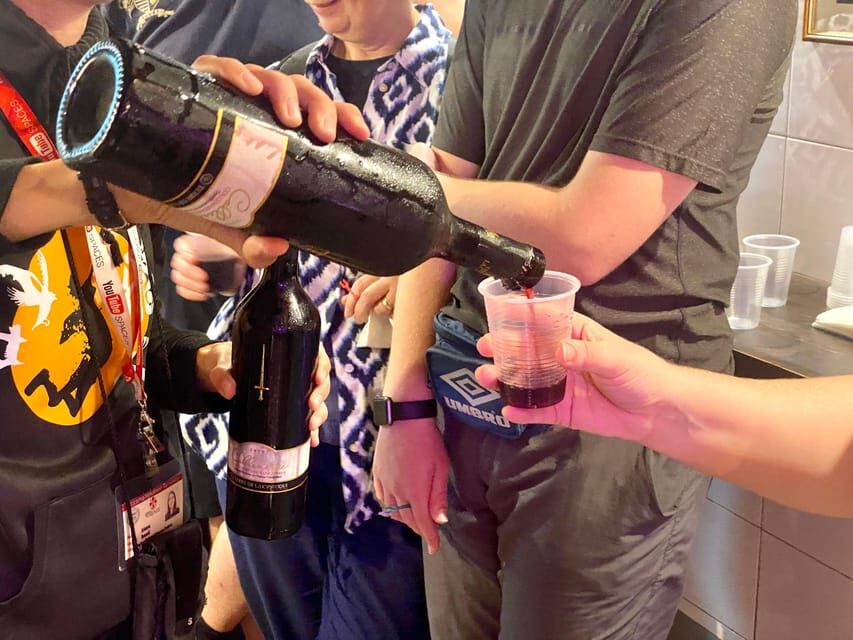
You’ll spend around 30 minutes at Campo de’ Fiori with street food sampling and a guided visit focused on regional flavors. It’s not presented like a food lecture. It’s more practical: you taste, you learn what the ingredient is doing, and you move on before you get too full. After a short walk (just a couple minutes on foot), you return to the square area for another tasting block that includes wine.
Practical tip: because the market is closed in the afternoons, the experience may feel a bit different depending on when you go. If your tour time lands later in the day, you might spend more time on tastings and less time on the market atmosphere itself. Either way, the guide’s job is to keep the route and sampling balanced.
A quick sightseeing breather before you hit the big sights
Between tasting moments, you’ll pause for short sightseeing and walking segments. There’s a “hidden gem” style stop in the middle of the route—about 15 minutes—where the focus shifts from eating to seeing. Think of it as the tour’s reset button: you catch a view, you connect the streets to the stories, then you’re back to food.
This structure is useful. If you only eat for two hours, you’ll miss the city’s geography. If you only sightsee, you’ll miss the whole point of Rome-as-a-food-city. This tour tries to balance both without slowing you down too much.
Theatre of Pompey stop: classic bites on a historic doorstep
Next up is a stop near the Theatre of Pompey (the tour also includes a food tasting element here). The pairing is what makes the experience feel like more than a snack crawl: you’re tasting street food while standing close to an anchor point of ancient Rome.
You’ll get another planned tasting here for about 15 minutes. The vibe is you-and-your-guide time: you learn what to notice in the food, and you also learn what was happening in this part of town long before there were markets and wine glasses.
And yes, this is one of those moments where it helps to have a guide who can translate the setting into something you can feel. The point isn’t ancient trivia for its own sake—it’s making the street-level experience make sense.
You can also read our reviews of more tours and experiences in Rome


Via dei Chiavari: beer and another quick taste
Then comes a short, efficient stop on Via dei Chiavari. You’ll have a brief tasting moment with beer, plus more street-food flavor sampling and sightseeing. It’s only about 5 minutes, so don’t expect a long explanation here.
But that short stop works. It keeps your pace up and your appetite steady. It also prevents the common tour problem of doing one long sit-down moment where the food and the lesson both drag.
Portico d’Ottavia and the Great Synagogue (outside)
As you move toward the Jewish Quarter area, the tour slows in meaning even if it doesn’t slow in walking.
You’ll visit Portico d’Ottavia and spend time walking the surrounding area, about 15 minutes. Your guide shares the neighborhood context—what this area is, why it matters, and how the stories connect back to the foods you’re eating. You’ll also pass by the Great Synagogue of Rome from outside (around 10 minutes) as part of the cultural and historical overview.
This isn’t a museum-style tour. It’s more like: here’s what you’re looking at, here’s how the neighborhood has shaped life around it, and here’s why food traditions traveled alongside people and community life.
If you care about seeing Rome with more than surface-level sightseeing, this part is the heart of the tour.
The Jewish Ghetto street-food section: where the tastings have meaning
This is the segment that turns the tour from just fun into memorable.
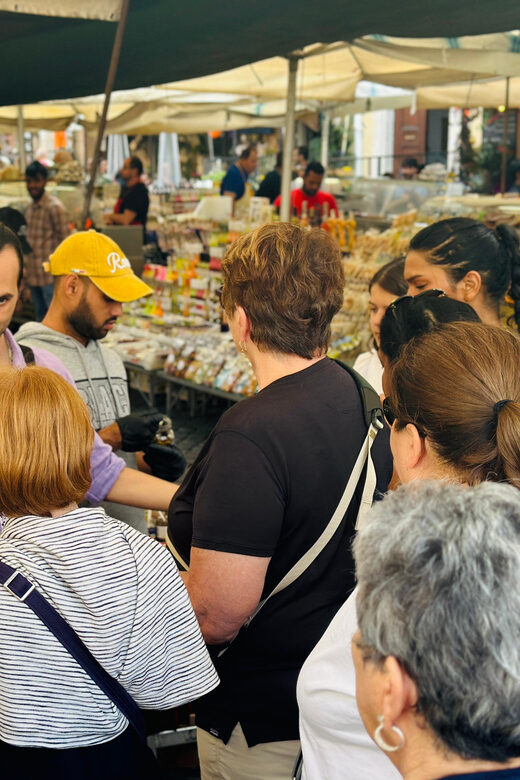
The tour reaches the Jewish Ghetto area of Rome (near Rione Sant’Angelo and close to the Tiber). You’ll spend about 20 minutes here with street food and tastings tied to Roman-Jewish specialties. Your guide walks you through the highlight stops in the area—stories and context first, then food.
This part of the experience is especially valuable because it’s not random snacking. You’re tasting with an explanation in your ear: what makes a dish Roman, what makes it Jewish-Roman, and how the neighborhood’s history shows up in daily flavors.
You may also notice how the guide’s style can matter. In past groups, guides like Martina and Ramona have been praised for clear, distinct English and friendly, energetic storytelling. That matters because you’ll get more out of the food when the cultural context lands clearly.
Teatro Marcello and Largo di Torre Argentina dessert
After the Jewish Quarter food portion, you continue with short sightseeing.
There’s a stop near Teatro Marcello for around 5 minutes, then you move to Largo di Torre Argentina where dessert is included for about 15 minutes. The dessert timing is smart. By the end of the walk, you’re ready for something sweet and you’re not likely to regret it the way you sometimes do after a late lunch.
Dessert here also gives your tasting total a satisfying finish. You’ve had savory classics like supplì and pizza al taglio, plus ingredients like truffle and olive oil/balsamic. Now you close out with something gentle and familiar.
What you’ll taste (and what to expect from the food)
The tour includes 5 different street food tastings, plus a sample of beer and a sample of wine. The ingredients and items you should expect to see include:
- Fresh truffles, sampled as part of the flavor lineup
- Olive oil and balsamic vinegar tasting
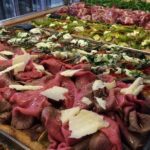
- Supplì (rice balls filled with cheese and ragù)
- Pizza al taglio (Roman pizza by the slice)
What makes that list work is balance. It covers the Roman street-food baseline, plus higher-end flavor cues like truffle and condiment tasting. You’re not just eating to fill space—you’re eating to learn the style of Roman flavor.
One practical note: the tour includes tastings, not unlimited buying. If you later purchase items at the market or from vendors, you’re doing it at your own discretion. There’s at least one caution that some market purchases can feel overpriced compared with what you get. My advice: taste first during the tour, then decide calmly if you want to buy anything.
Price and value: is $46 fair for a 2.5-hour food tour?
For $46, you’re getting:
- a licensed local guide
- about 2.5 hours of walking and stops
- five tastings
- beer sample and wine sample
In practice, that can be good value if you’d otherwise spend your time wandering and buying snacks one at a time. You’re paying to remove friction: what to order, where to go, and how to understand what you’re eating.
If you’re a big eater who always wants full portions, you might still need to eat again after. But if you like sampling, learning, and keeping it light, this price is reasonable for the structure and the number of stops.
Best fit: who this tour suits (and who should skip it)
This works best for you if you:
- want a walking plan that combines food with neighborhood context
- like markets and street food but don’t want to guess what’s good
- enjoy Roman history when it’s tied to everyday life
- eat regular Roman flavors and can handle gluten
It’s not suitable for:
- vegans
- people with gluten intolerance
Vegetarian guests can be accommodated if you advise in advance. If you wait until the last minute, that option might not be available.
A smart way to get the most out of it
Bring your appetite, but don’t arrive starving. Since the tour includes multiple tastings across roughly two and a half hours, you’ll get the best experience when you can taste without rushing.
Also, keep your expectations focused on tastings and stories, not big meals. The guide’s goal is to introduce you to Roman street food and the Jewish Quarter’s food culture with enough variety to broaden your palate.
Finally, if you’re tempted to buy items during or right after market stops, pause and compare with what you’ve already tasted. Taste gives you the baseline. Buying without that baseline can lead to second-guessing.
Should you book the Rome Jewish Quarter and Campo de’ Fiori Street Food Tour?
Book it if you want an efficient, food-centered way to see two sides of Rome: market life at Campo de’ Fiori and the cultural context of the Jewish Ghetto area. The tastings are planned, the route is walkable, and the guide’s stories connect the food to place.
Skip it if you’re vegan or need gluten-free only, because the tour isn’t built for those needs. Also, if you’re going very late in the day, remember the market can be closed in the afternoons, so expect less market viewing even though the tour still runs.
Overall, this is a strong choice when you want street food plus meaning, with enough structure that you don’t waste time figuring it out alone.
FAQ
FAQ
Where do I meet the guide?
Please meet your guide at Campo de’ Fiori square under the statue of Giordano Bruno located in the middle of the square.
How long is the tour?
The tour lasts about 2.5 hours.
What does the price include?
It includes a 2.5-hour walking tour with a local licensed guide, 5 different street food tastings, a beer sample, and a wine sample.
What food will I eat?
You can expect tastings that include supplì, pizza al taglio, plus samples like fresh truffles, olive oil, and balsamic vinegar.
Is the tour okay for vegetarians?
Yes, vegetarians can be accommodated if you advise in advance. Last-minute requests can’t be accommodated.
Is it suitable for vegans or gluten intolerance?
No. It is not suitable for vegans and not suitable for people with gluten intolerance.
What language is the tour in?
The tour guide provides the experience in English.
Is the Campo de’ Fiori market always open during the tour?
No. The market is closed in the afternoons, so timing can affect how much market activity you’ll see.
Can I cancel and get a refund?
Yes. Free cancellation is available if you cancel up to 24 hours in advance for a full refund.