REVIEW · AUDIO TOURS
Rome: Guided Catacombs Tour & Capuchin Crypt (Audio Guide)
Book on GetYourGuide →Operated by TOURISTATION · Bookable on GetYourGuide
Rome gets seriously weird underground. This tour strings together Roman catacombs with the Capuchin Crypt’s Bone Chapel, then lets you see the surface highlights by open-bus Hop-On Hop-Off. I especially like the guided underground time (so you don’t miss the meaning), and I like that the transfers keep you moving without extra planning. The main drawback: the catacombs are tight and not for claustrophobia or wheelchairs.
Start point is Touristation Aracoeli at Piazza d’Ara Coeli 16, and you’ll want to follow the basic dress rule—shoulders and knees covered—so you’re not turned away.
In This Review
- Key things I’d prioritize
- Meeting at Piazza d’Ara Coeli: start above ground, not underground
- Domitilla or Callisto Catacombs: the 2nd-century underground world
- A smart way to enjoy the guide
- The open-bus transfer and Hop-On Hop-Off rhythm
- Capuchin Crypt (Santa Maria della Concezione): the Bone Chapel with audio at your pace
- What you actually see inside
- The big picture: why this combo works in one day
- Price and logistics: is $93 good value?
- Who this tour suits best (and who should skip it)
- Should you book this Rome catacombs + Capuchin Crypt tour?
- FAQ
- Which catacombs are included—Domitilla or Callisto?
- Is there a guided tour underground?
- How do I get to the Capuchin Crypt from the catacombs?
- Is the Capuchin Crypt tour guided?
- How long does the whole experience take?
- What’s the dress code?
- Is it suitable for claustrophobia or wheelchairs?
Key things I’d prioritize
- Guided catacombs (45 minutes): learn the underground network’s Christian burial-and-worship story firsthand.
- Reserved entrances: skip the line and get timed access for Domitilla or Callisto (depends on the day).
- Panoramic open-bus transfer: you’re not stuck doing a maze of stops after the underground visit.
- Capuchin Crypt audio guide: you control the pace inside the museum/crypt.
- 3-hour Hop-On Hop-Off Rome route: you can hop around iconic viewpoints instead of rushing.
- Day-of flexibility matters: in some situations, sites/transfers can change, so confirm with staff if anything seems off.
Meeting at Piazza d’Ara Coeli: start above ground, not underground
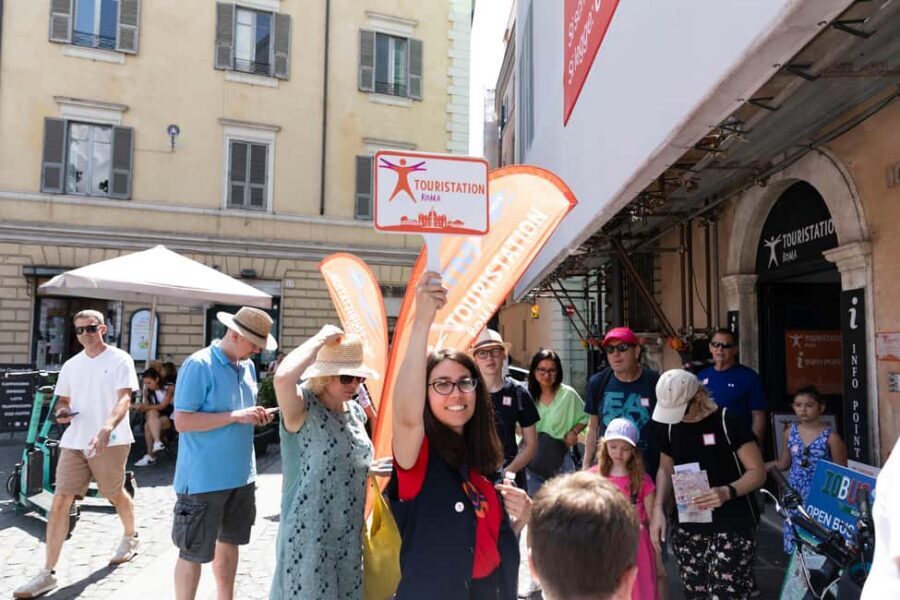
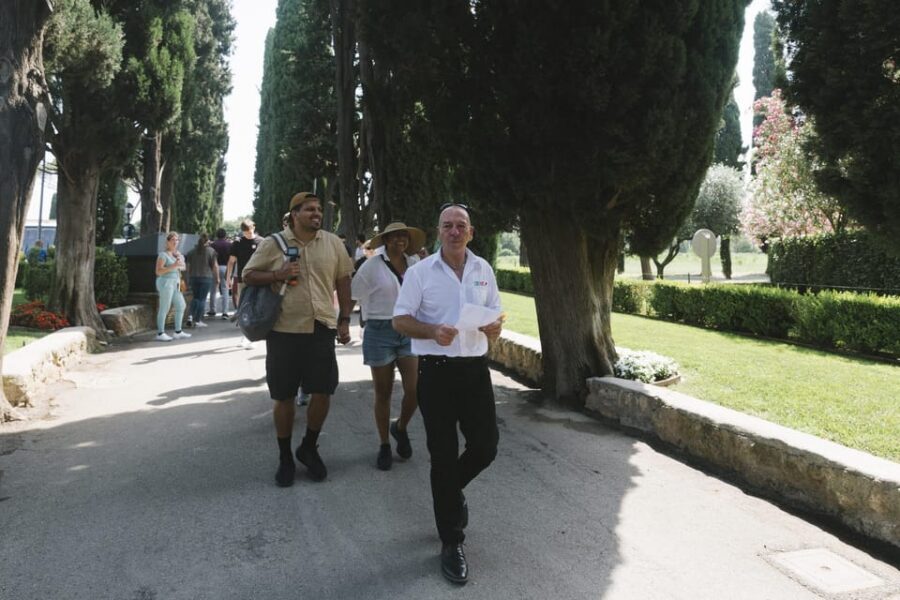
Your day begins at Touristation Aracoeli at Piazza d’Ara Coeli 16. When you get there, look for the fountain and orange flags in front of the office—this is one of those places where walking one street the wrong way can feel like you’re at the right address but not the right doorway.
Why I like this start: it’s efficient. You’re not hunting ticket counters all over Rome, and you’re getting guided structure right away. Also, you get timed entry set up for the underground sites, which matters because catacombs are not the kind of place you want to “wing it.”
Two practical notes that help your day go smoother: wear clothing that already meets the shoulders-and-knees rule, and plan for a day with no included food stop. If you need a snack, you’ll want to grab one before you go underground or between parts of the route.
You can also read our reviews of more guided tours in Rome



Domitilla or Callisto Catacombs: the 2nd-century underground world
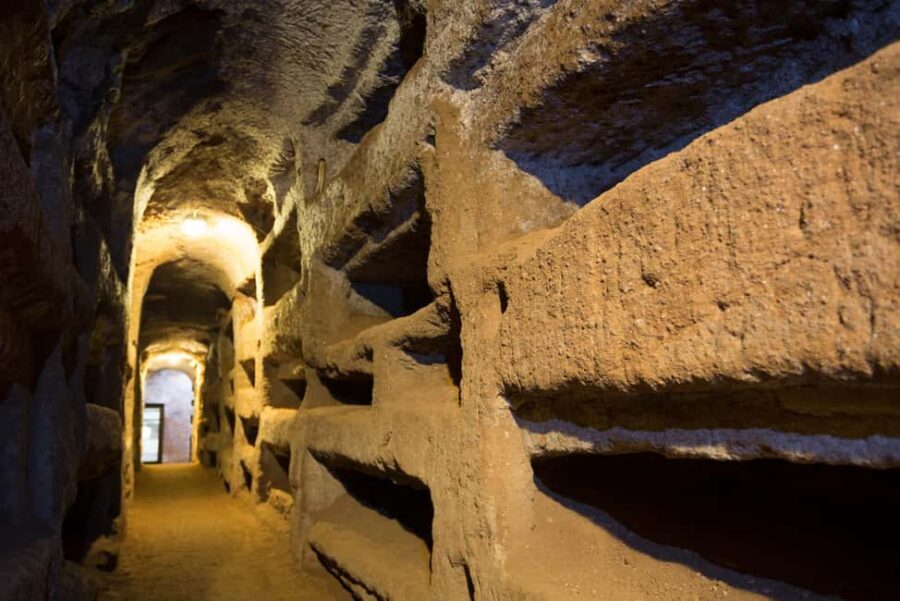
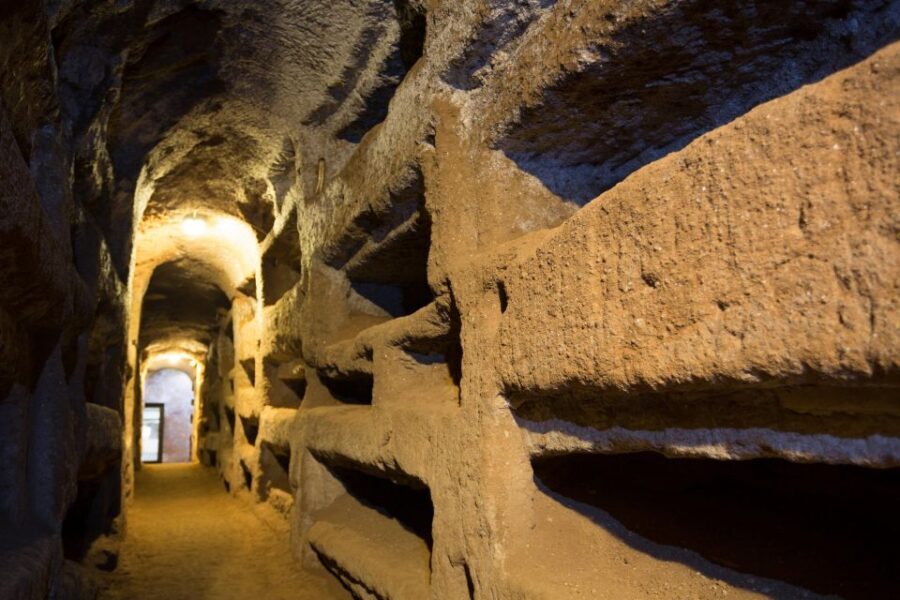
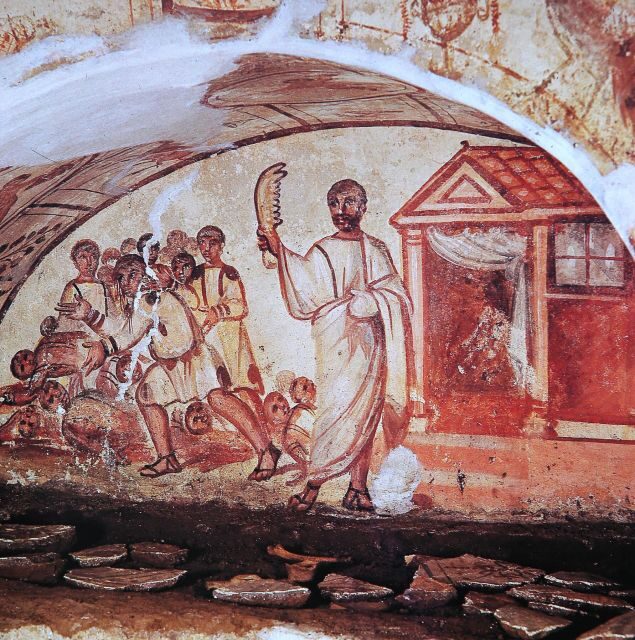
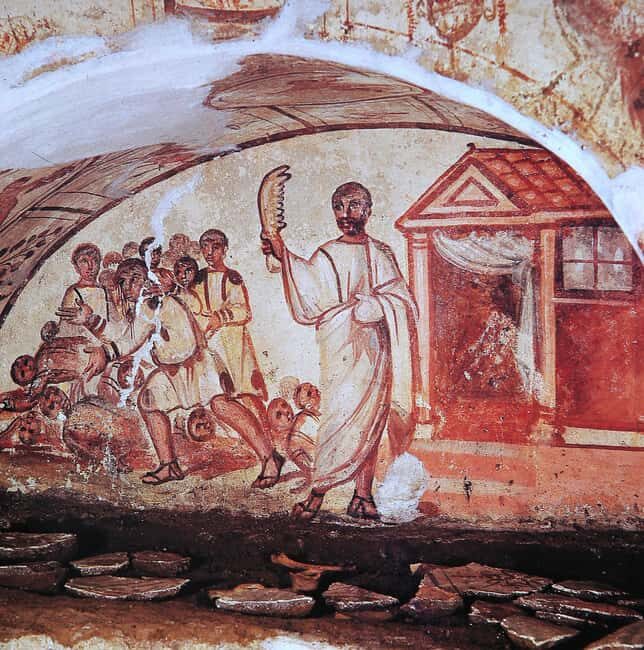
The core experience is a guided tour of either the Domitilla or Callisto Catacombs, depending on the day. The important detail is that you don’t just get entry—you get a guide for about 45 minutes in the underground spaces.
What makes these catacombs special is the way they explain the space as more than “old tunnels.” You’ll be taught how the extensive networks date back to the 2nd century AD and served as both burial ground and a place of worship for early Christians in Rome. Once someone frames the underground rooms this way, you start noticing patterns and purpose rather than only scale.
Also, the tour language support is strong: you can get guided tours in Italian, English, French, Spanish, and German. That’s not universal for all catacomb tours, so it helps if you’re traveling with mixed language skills or just want the guide to stay clear and accurate.
The main consideration is comfort and accessibility. Catacombs are narrow and enclosed. If you’re at all sensitive to tight spaces, treat this as a serious “only if you’re comfortable” situation. This tour isn’t set up for visitors using wheelchairs or with severe motor disabilities.
A smart way to enjoy the guide
Underground tours move differently than walking tours above ground. If you can, keep your photo-taking quick and follow the guide’s pace. The real value here is the way the guide connects what you’re seeing to why people used these spaces.
The open-bus transfer and Hop-On Hop-Off rhythm
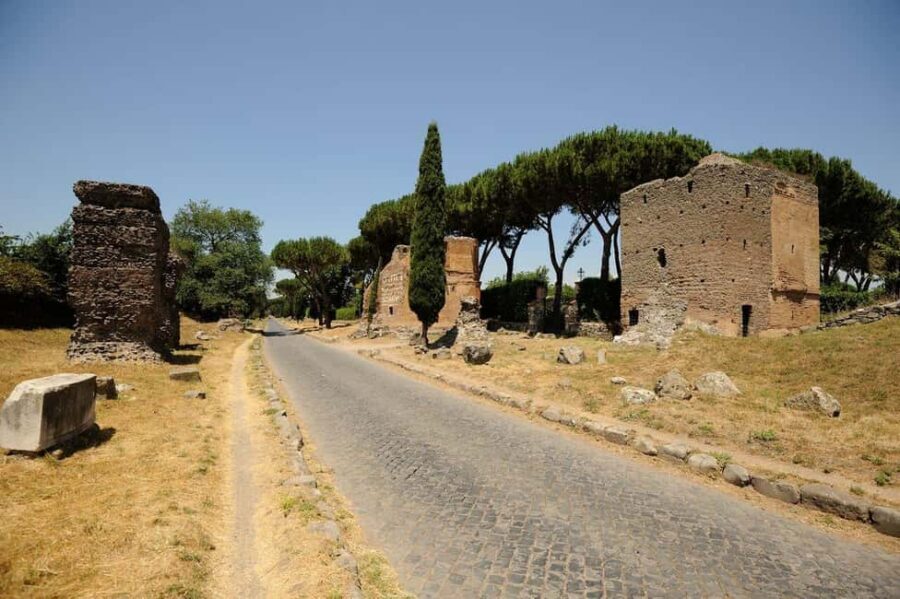
After the catacombs, you’ll get dropped near the Big Bus Hop-On Hop-Off stop. From there, you take the bus onward to reach the Capuchin Crypt. The “why” here is simple: after time underground, you don’t want another complicated leg where you’re standing around guessing directions.
This route is also where the experience shifts tone—from quiet, dim, and explanatory underground, to Rome in daylight and motion. Even if you’ve been to Rome before, using an open-bus route is a fast way to reset your senses and build a day flow that doesn’t feel like a checklist.
Then you get the wider 3-hour Hop-On Hop-Off panoramic option, so you can hop near sights at your own pace. I like this setup because it lets you match the bus to your energy. If you’re tired, you can stay put and ride. If you’re feeling good, you can jump off for viewpoints and quick walks.
Capuchin Crypt (Santa Maria della Concezione): the Bone Chapel with audio at your pace
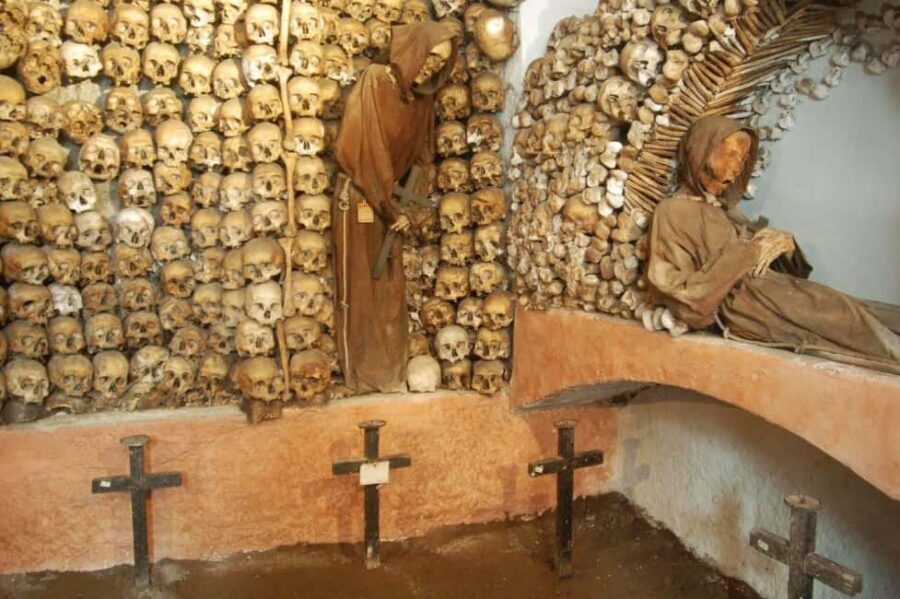
Next up is the Capuchin Crypt, inside a museum attached to the Baroque church of Santa Maria della Concezione. It’s in a convenient central area—close to Piazza Barberini—with the crypt itself reached via the museum entry.
You’ll visit self-guided with an audio guide, typically around 30 minutes. This is a big deal for the experience because the Crypt isn’t a “run through it” kind of place. The audio keeps you oriented as you move through corridors and chapels, and it helps you understand what you’re looking at without a guide talking over the moment.
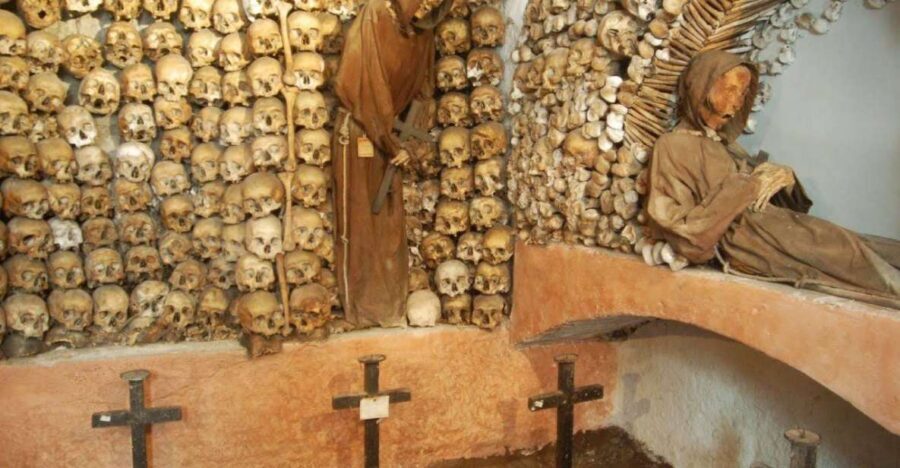
Now, the headliner is macabre in the most specific way: the museum collects exhibits about Capuchin friars and their simple lifestyle, including closeness to the poor and a spirit of fraternity. Then the Crypt takes that theme and expresses it through an all-Baroque look using the mortal remains of nearly 4,000 friars, dating from between the 16th and 19th centuries.
You can also read our reviews of more tours and experiences in Rome



What you actually see inside
Expect long corridors with multiple chapels, and decorations made from bone materials arranged into shapes like rosettes, pilasters, stars, hourglasses, clocks, butterflies, chandeliers, and crosses. You’ll also see niches and architectural structures that house skeletons dressed in the friars’ habit.
A detail I found useful is that each chapel is associated with the bones used in its decoration, and there’s a tradition attached to the holy earth displayed in the setting. The audio guide is the best way to catch those notes without slowing other people down.
One more timing tip: this visit has flexibility. The Capuchin Crypt ticket allows entry starting from 14:45 to 17:00. So if your catacombs time runs a touch late, you’re not automatically forced into a panic. You can still plan your final stop without feeling trapped.
The big picture: why this combo works in one day
This experience works because it plays two different Rome games, one after the other.
Underground, you learn how people lived their faith in hidden spaces, and you see how burial and worship became part of the city’s fabric. Above ground and on the bus, you get Rome’s shape again—hills, boulevards, and the skyline rhythm—without having to stack multiple separate tours and ticket lines.
The best value comes from how many moving pieces are bundled into one flow: catacombs reserved access, a guided component, transfers, then an audio visit to the Crypt, plus the Hop-On Hop-Off panoramic option. If you tried to stitch this together yourself, you’d spend time coordinating tickets, routes, and timing across different neighborhoods.
Price and logistics: is $93 good value?
At $93 per person for about 5 hours, the price makes sense if you care about both parts—catacombs with a guide and the Capuchin Crypt audio visit—plus the transfers and panoramic bus time.
Here’s how I’d judge the value for you:
- If you want a guided underground explanation (not just entry tickets), you’re getting something you’d otherwise pay for or miss.
- If you don’t want to figure out how to get from the catacombs area to the Capuchin Crypt efficiently, the transfer structure saves you time and confusion.
- If you’ll actually use the 3-hour Hop-On Hop-Off time, the bus component stops feeling like filler and starts feeling like an easier way to see more Rome.
One fair caution: there can be day-of changes. For example, Domitilla and Callisto are time-dependent (Domitilla access excludes Tuesday; Callisto is tied to Tuesday), and if anything shifts, you may need extra patience. I recommend you verify the plan directly at the office if you see any mismatch with your expected route.
Who this tour suits best (and who should skip it)
This is a strong pick if you want Roman catacombs to be more than spooky atmosphere. The guided format is what turns it into a meaningful education: early Christian burial and worship, explained clearly while you walk the underground lanes.
It’s also a good fit if you like your sightseeing broken into clean segments: guided underground, museum crypt at your pace, then daylight sightseeing with a bus option.
I’d skip or rethink if:
- You’re claustrophobic or uncomfortable in tight spaces. The catacombs portion is narrow and enclosed.
- You need wheelchair access. The catacombs tour isn’t accessible for wheelchairs or severe motor disabilities based on the tour rules you’ll be given.
- You’re traveling with restrictions around bags, pets, or prohibited items. Large luggage isn’t allowed, and pets are not permitted. Alcohol and drugs are also disallowed.
If you’re someone who enjoys “odd, specific Rome”—and you’re okay with a bit of dark humor mixed into Baroque art—this pairing hits the sweet spot.
Should you book this Rome catacombs + Capuchin Crypt tour?
I think you should book if you want one organized day that includes both of Rome’s most unforgettable “you can’t believe this is real” sites, without spending your vacation time coordinating transport between them.
I’d hesitate if you know you’re sensitive to enclosed spaces, or if you need step-by-step accessibility beyond what the catacombs portion supports. In that case, you might look for an alternative that keeps you on easier, more open routes.
If you fit the first group, this tour is a practical way to see two very different sides of Rome in a single, smooth flow—guided underground first, then audio-guided Bone Chapel, then panoramic Rome on a bus when you’re ready to breathe again.
FAQ
Which catacombs are included—Domitilla or Callisto?
The tour includes a guided visit to either the Domitilla or Callisto Catacombs. Access depends on the day: Domitilla is reserved except on Tuesday, and Callisto is the option on Tuesday.
Is there a guided tour underground?
Yes. You get a guided catacombs tour (about 45 minutes). The guided tour languages listed are Italian, English, French, Spanish, and German.
How do I get to the Capuchin Crypt from the catacombs?
After the catacombs, you’re dropped near the Big Bus Hop-On Hop-Off stop. From there, you take the Hop-On Hop-Off bus to reach the Capuchin Crypt.
Is the Capuchin Crypt tour guided?
No. The Capuchin Crypt visit is self-guided with an audio guide at your pace.
How long does the whole experience take?
The total duration is about 5 hours.
What’s the dress code?
You need to cover shoulders and knees.
Is it suitable for claustrophobia or wheelchairs?
It’s not recommended for travelers who may get claustrophobic. The catacombs tour also isn’t accessible for visitors on wheelchairs or with severe motor disabilities.