REVIEW · ROME
Rome: Fountains and Squares small-group guided Walking Tour
Book on GetYourGuide →Operated by City Walks · Bookable on GetYourGuide
Rome rewards slow steps and good guidance. This 2-hour walk strings together the city’s most famous squares and fountains in a way that feels practical, not rushed. You start at Piazza Barberini, then move through Trevi Fountain, the Pantheon, Piazza Navona, and finish at the Spanish Steps with stops designed for photos and real context. I especially like the focus on iconic landmarks and the way a small group guide helps you read what you’re looking at instead of just snapping pictures.
Two things I like a lot: first, Trevi Fountain is more than the coin moment. You get the story, including how the legend connects to a return to Rome and how the fountain raises about €1.4 million annually for local families in need. Second, Piazza Navona adds depth fast, with the Four Rivers fountain and the Obelisk of Domitian tied to the space’s earlier Stadium-of-Domitian purpose. A possible drawback: Pantheon entry isn’t included, so you’ll want to be ready for that extra step if you’re hoping for inside time.
In This Review
- Key Highlights at a Glance
- How This 2-Hour Walk Gets You the Best of Rome’s Center
- Meeting at Piazza Barberini (and Why the Red Scarf Tip Matters)
- Trevi Fountain: Coin Wishes, Crowd Strategy, and the Story Behind the Stone
- Trevi Fountain quick watch list
- The Pantheon Stop: Seeing Ancient Rome Still Standing Tall
- Piazza Navona and the Four Rivers Fountain: Art, Empire, and an Oval Crowd
- Piazza Navona tips that help
- Spanish Steps and the Fontana della Barcaccia: Views Below, Whimsy Above
- Price and Value: Is $78.57 Worth It for 2 Hours?
- Who This Tour Fits Best (and Who Might Want Something Else)
- Should You Book the Rome Fountains and Squares Walking Tour?
- FAQ
- Where does the tour start?
- How long is the walking tour?
- Is the Pantheon ticket included?
- What language is the guide?
- Is the tour wheelchair accessible?
- What are the main places you visit?
- Who is the tour not suitable for?
Key Highlights at a Glance
- Trevi Fountain with a wish ritual: toss a coin or swipe your card, plus a route that helps with serious crowds
- Pantheon stop timed for seeing more: you’ll get the big-picture story and architectural cues, even without tickets
- Piazza Navona’s Four Rivers + Domitian’s Obelisk: art, empire, and a dramatic centerpiece in one oval space
- Spanish Steps area in full context: the connection between Piazza di Spagna below and the views above
- Small-group pacing: enough time at each stop to notice details without feeling like a cattle line
How This 2-Hour Walk Gets You the Best of Rome’s Center
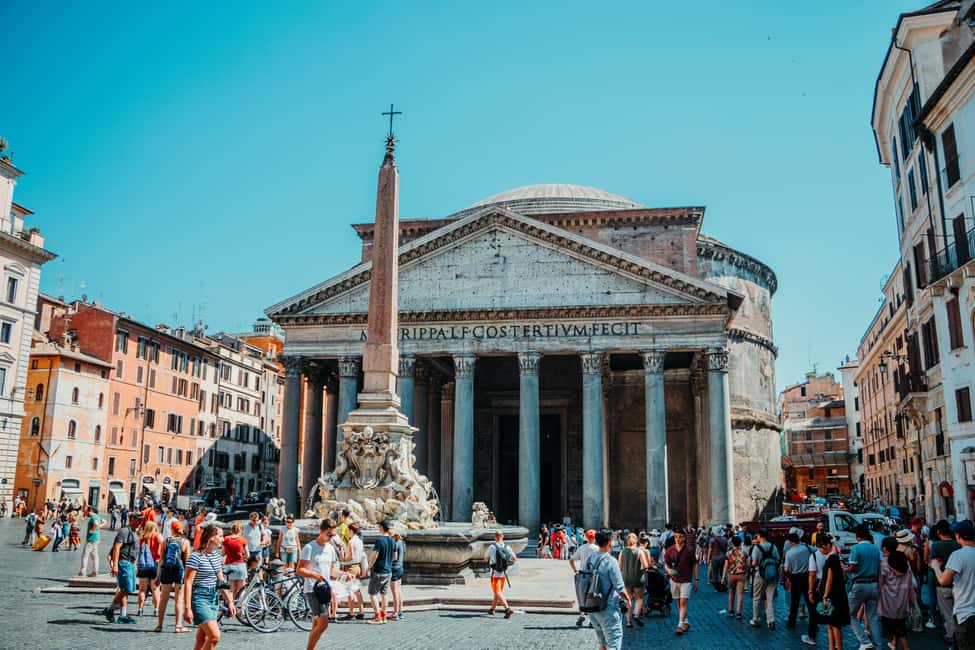
This is a short tour, which is exactly why it works. You get a focused hit of the places that define central Rome, without spending the whole day in transit or eating up your energy on long transfers. The schedule is built around steady walking and meaningful stops, with about 40 minutes at each major location segment.
It also helps that it’s led by an English-speaking live guide, and it’s set up as a small group and even a private group option. That matters in Rome, where the difference between enjoying a sight and feeling trapped in it often comes down to crowd navigation and pacing.
You should know the route is a classic center-city loop: you begin at Piazza Barberini, then work your way toward Trevi Fountain, the Pantheon, Piazza Navona, and finally end up at the Spanish Steps area (Piazza di Spagna). The finishing point is near where you started the day, since the activity ends back at the meeting area, but you still get that full “Rome highlights in sequence” feeling.
You can also read our reviews of more tours and experiences in Rome.



Meeting at Piazza Barberini (and Why the Red Scarf Tip Matters)
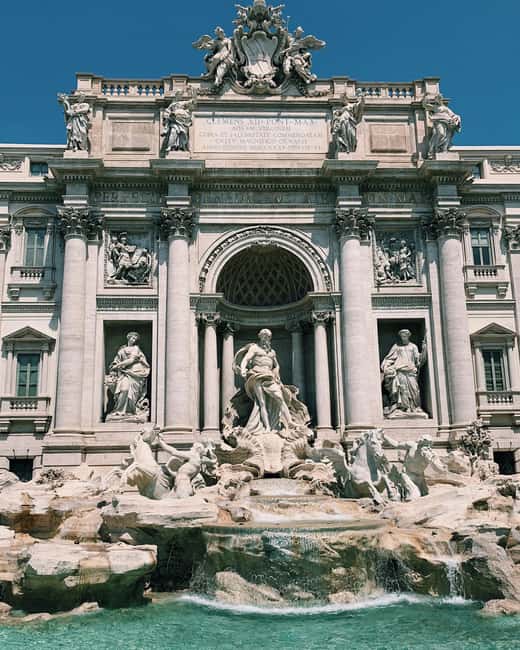
Your meeting point is just outside the Metro Barberini, at Piazza Barberini. The guide will be easy to spot with a red scarf. That’s a small detail, but it’s a big stress-saver in a city where meeting points can otherwise turn into a scavenger hunt.
Because the tour is only 2 hours, arriving a few minutes early is the smart move. You want time to settle, get oriented, and not feel rushed right at the start. Once you’re moving, the guide’s job is basically twofold: keep the group moving at a comfortable pace and point out what to watch for so the famous stuff doesn’t become just “another postcard.”
This is also where you’ll feel the advantage of small group size. You’re not pushed forward as a block. Instead, you get a more human flow between stops, which makes photos easier and reduces that constant stop-start feeling.
Trevi Fountain: Coin Wishes, Crowd Strategy, and the Story Behind the Stone
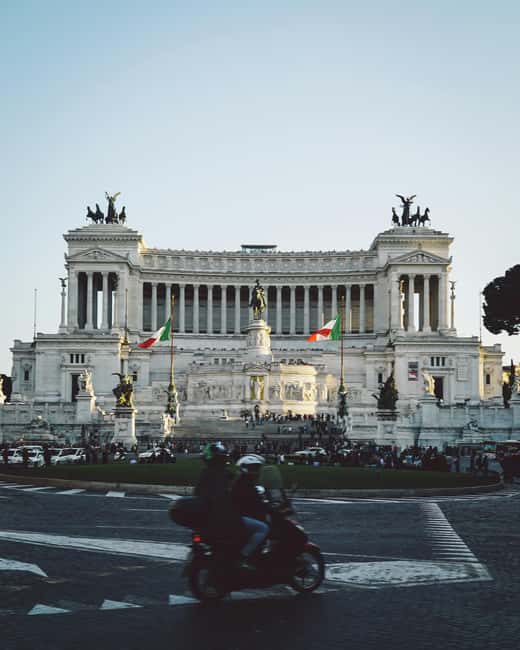
Trevi Fountain is the one sight nearly everyone wants to see, and it can be a headache if you show up alone. The tour’s value here is not only that you’ll learn the fountain’s background, but also that you’ll be guided into position at the right moments.
You’ll spend about 40 minutes at Trevi Fountain. The guide starts with the basics: the Fontana di Trevi is baroque and dramatic, set in Piazza di Trevi, and it’s tied to Bernini’s vision history. Then you get the “why it matters” layer: the famous legend about tossing a coin for a return to Rome, with the playful progression of one coin, two coins, and three coins linked to different outcomes.
What I like is the practical twist on the ritual. The tour notes that if you feel modern, you can swipe your card instead of tossing. It’s a reminder that even centuries-old traditions have found ways to survive in today’s travel culture. Either way, you’re participating in the same moment everyone wants, but with clearer guidance on what to do and when.
Here’s the part that can make-or-break your photos: the crowds. Trevi is famously packed, and the guide’s role is to maneuver you through the heaviest areas so you can get closer to the water’s edge for pictures and the coin moment. If you care about capturing the fountain properly, this is worth paying attention to. The difference between standing far back and framing the fountain tightly is often just having someone show you a better route.
One more useful detail: the fountain’s charity angle. Trevi raises around €1.4 million annually for local families in need. That adds meaning to the ritual beyond superstition and movie magic.
Trevi Fountain quick watch list
- Look at the fountain’s theatrical, sculpted drama rather than treating it like a simple backdrop
- Plan your coin (or card) moment so you aren’t fumbling while people stream past
- If you want a clean shot near the water line, follow the guide’s placement
The Pantheon Stop: Seeing Ancient Rome Still Standing Tall
The Pantheon is scheduled as a 40-minute stop, and even though Pantheon tickets aren’t included, you still gain a lot from having a guide here. The big win is that you’ll know what you’re looking at before the building starts to blur into “yes, it’s old.”
The tour framing explains that the Pantheon dates to around 27 BCE, commissioned by Marcus Agrippa. You’ll also get why the building feels so remarkably intact: it’s an ancient structure that still holds up visually, not just historically. The guide also unpacks the name. The term “Pantheon” comes from Greek meaning devoted to all gods, which helps you understand why the building’s purpose was broader than one deity.
What can be tricky for visitors is that the Pantheon is iconic enough that you can miss the architectural cues. With a guide, you can focus on specifics like the building’s strong form and the way it dominates the surrounding street view. Even without tickets included, this stop still gives you a chance to orient yourself, take in key angles, and understand why the Pantheon became a model for later architecture.
A practical note: because tickets aren’t included, you may need to arrange entry separately if you want to go inside. That doesn’t make the tour less valuable, but it does affect your personal plan for time and budget.



Piazza Navona and the Four Rivers Fountain: Art, Empire, and an Oval Crowd
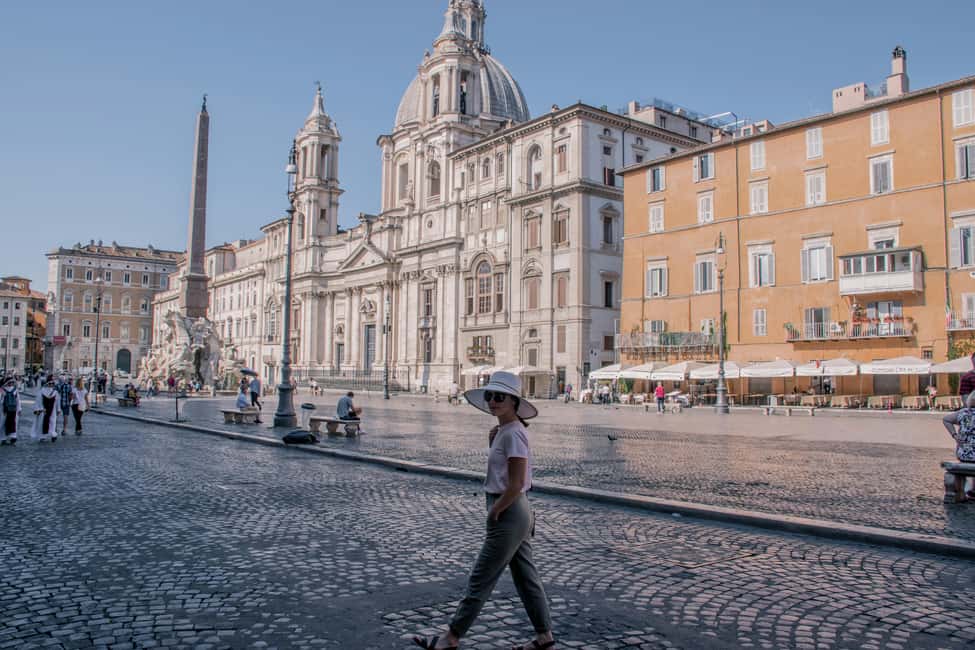
Piazza Navona is one of those Rome spaces where everything looks like a set piece until you realize it’s layered with history. You’ll spend about 40 minutes here, guided, and you’ll be looking at more than the obvious photo spots.
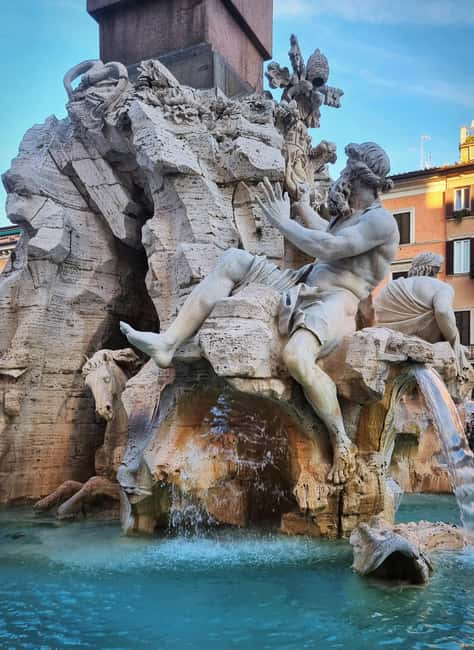
The tour connects the square to its earlier life as the Stadium of Domitian, which helps explain why the space is oval and why the layout feels designed for events. That’s not just trivia. It changes how you stand in the square. Instead of treating it as a decorative plaza, you start picturing crowds and games happening in the same footprint.
At the center of the moment is Bernini’s Fountain of the Four Rivers, topped by the Obelisk of Domitian. The guide helps you connect the pieces: the obelisk is not just decoration, and the fountain’s symbolism links art to the power of empire. The result is that you understand why the composition feels deliberate rather than random.
One drawback to consider: Navona can be busy, especially around peak hours. The tour’s advantage is that you’re not just milling around. You have a plan for what to look at first, so you don’t waste time deciding where to focus while the crowd shifts around you.
Piazza Navona tips that help
- Treat the fountain and obelisk as one scene, not separate stops
- Notice the oval geometry and think Stadium of Domitian, not just a square
- If you want better photos, use the guide timing so you’re not fighting shoulder-to-shoulder chaos
Spanish Steps and the Fontana della Barcaccia: Views Below, Whimsy Above
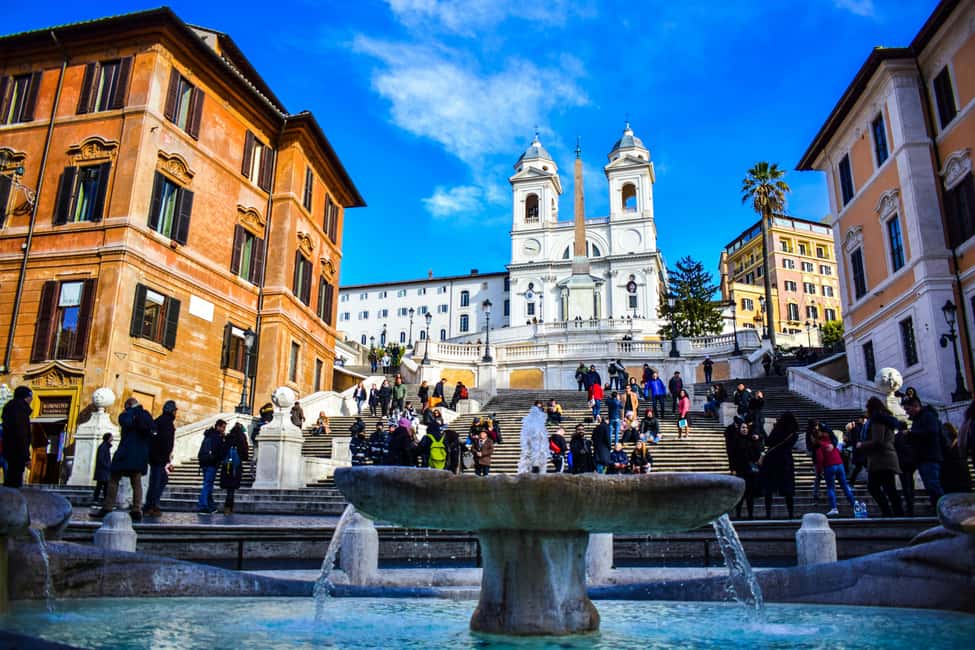
Your last stop is the Spanish Steps area. The tour schedules a guided segment here, about 40 minutes, and the day finishes at Piazza di Spagna. That setup matters because the Spanish Steps are really two different experiences: what you see at street level below and what you can appreciate as the climb changes your perspective.
The tour explains what connects the spaces: the staircase links Spanish Square below with views above. That context makes the steps feel intentional instead of simply scenic. You’re moving through a designed perspective corridor.
You’ll also see the Fontana della Barcaccia, the Fountain of the Ugly Boat. Here the guide adds a playful angle through attribution to Pietro Bernini, which makes sense because this fountain doesn’t aim for perfect beauty. It aims for personality. You’ll likely remember it more than you expect, because it breaks the usual “serious Rome” mood for a moment.
If you’re planning to linger after the tour, this is the section of the walk where I’d let yourself slow down. The combination of steps, surrounding streets, and nearby viewpoints makes it easier to keep exploring without needing a rigid schedule.
Price and Value: Is $78.57 Worth It for 2 Hours?
At $78.57 per person for about 2 hours, you’re paying for a guided route through multiple top-tier sights, not just for walking between them. The value comes from three things you can actually feel:
- Time efficiency: four major sightseeing clusters in a short window
- Guide interpretation: stories behind Trevi, the Pantheon’s meaning, Navona’s stadium roots, and the Four Rivers symbolism
- Crowd management: especially at Trevi, where getting to a useful spot can be the difference between decent photos and frustrating ones
Pantheon tickets are not included, so treat that as the one variable that could add cost depending on your plans. But even if you only want to see key exterior views, the tour still gives you context that makes the architecture feel less random.
If you’re someone who likes Rome but doesn’t want to spend your day constantly deciding what to do next, this price can feel fair. If you already have a deep self-guided plan and you’re comfortable navigating crowds without assistance, you might spend less on a do-it-yourself route. Still, you’d be giving up the “why this matters” layer and the on-the-ground positioning help.
Who This Tour Fits Best (and Who Might Want Something Else)
This tour is a good match if you want a guided highlights path through central Rome, especially your first time in the city or your first time handling these specific sights. It’s also ideal if you like stories tied to what you’re seeing, not just dates and names.
You’ll probably enjoy it if:
- You want a small group feel rather than a huge group shuffle
- You care about understanding Trevi’s coin legend and Navona’s Four Rivers symbolism
- You’re photo-focused but don’t want to waste time battling crowds without a plan
You might think twice if:
- You’re hoping for long, slow stays at each site and plenty of free roaming time
- You strongly need Pantheon entry as part of the tour, since tickets aren’t included
It also has clear suitability limits: it’s not for babies under 1 year, and it’s not suitable for people over 95 years. On the plus side, it is wheelchair accessible, which is a big practical factor for many visitors.
Should You Book the Rome Fountains and Squares Walking Tour?
I’d book it if you want a smart, guided highlights route that covers Trevi Fountain, the Pantheon, Piazza Navona, and the Spanish Steps in a short, manageable window. The strongest reasons are the guide-led storytelling and the clear advantage in crowd situations, especially at Trevi where the tour helps you get to the water’s edge for the coin moment and better photos.
Skip it only if you prefer long independent wandering, or if Pantheon entry is a must-do and you want everything included in one price. Otherwise, this is a solid way to see the classics with context and with less friction than trying to DIY the same sequence on your own.
FAQ
Where does the tour start?
The tour starts at Piazza Barberini, just outside the Metro Barberini. The guide will have a red scarf.
How long is the walking tour?
The tour lasts about 2 hours.
Is the Pantheon ticket included?
No. Pantheon tickets are not included.
What language is the guide?
The live guide provides the tour in English.
Is the tour wheelchair accessible?
Yes, the tour is wheelchair accessible.
What are the main places you visit?
You visit Trevi Fountain, the Pantheon, Piazza Navona (including the Four Rivers Fountain and Obelisk of Domitian), and the Spanish Steps area, finishing near Piazza di Spagna.
Who is the tour not suitable for?
It is not suitable for babies under 1 year and not suitable for people over 95 years.