Rome’s quiet corners have teeth. This Rome secrets walking tour trades postcard stops for street-level storytelling, following you from modern Rome back into ancient layers as you move tile by tile through centuries of alleyways and monuments.
Two things I’d call out right away: the professional Irish storyteller style (funny, theatrical, and story-first), and the way the guide stitches together places you can point to on the map with specific legends—from witches and heretics to alleged love affairs of popes.
One consideration: it’s a 2.5-hour, mostly on-foot experience with frequent short walks between stops, so it’s not the best pick if you’re dealing with back problems or limited mobility.
In This Review
- Key highlights you’ll actually feel on the street
- From Campo de’ Fiori to Trastevere: the route that changes your view of Rome
- The “hidden Rome” feeling: witches, heretics, and pope stories with real street context
- Underground dwellings and an assassination attempt: when the past gets personal
- Theatre stops: Pompey, Marcellus, and what they tell you about Roman power
- Jewels in the streets near the Jewish Ghetto and Portico d’Ottavia
- Tiber Island and the river-edge mindset: where Rome likes to turn corners
- Santa Cecilia in Trastevere: the finish that turns the tour into an evening plan
- Price and time: is this value for $34?
- Who should book—and who should choose something else
- Practical tips so you enjoy the walk instead of fighting the streets
- Should you book this Rome secrets walking tour?
- FAQ
- How long is the walking tour?
- Where does the tour start?
- Where does the tour end?
- What language is the tour in?
- What is included in the price?
- What should I bring?
- Is it suitable for wheelchair users?
- Is it suitable for people with back problems?
- What kind of stories will you hear?
- Is free cancellation available?
Key highlights you’ll actually feel on the street
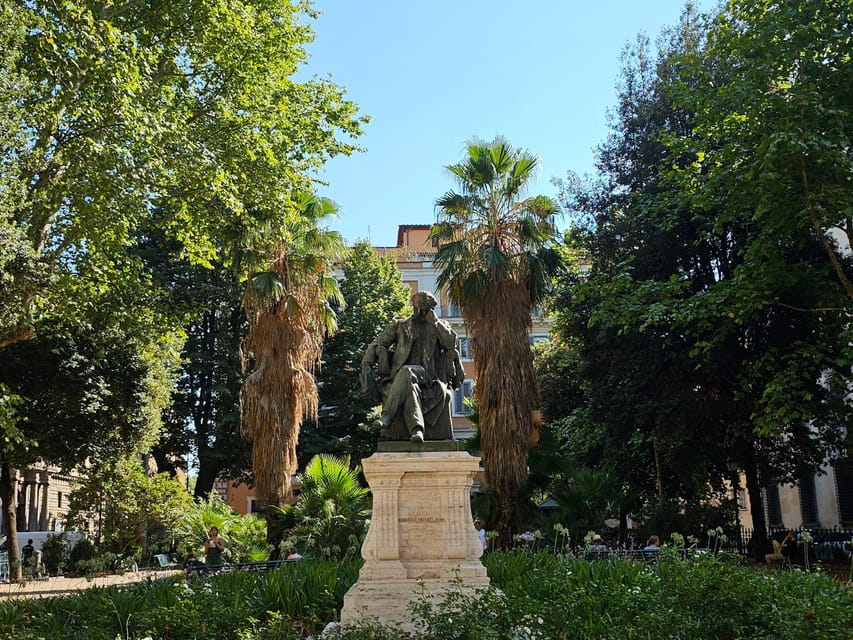
- Campo de’ Fiori start, with an easy meeting point right under the statue
- Storytelling that spans eras, modern streets to Ancient Rome, then back again
- Dark-and-scandal stories (witches/heretics, secret pope love affairs) told in a human way
- 2000-year-old alley vibes plus views around major Roman theatres and the river corridor
- Jewish Ghetto and Portico d’Ottavia stops that add context beyond typical Rome photos
- Finish in Trastevere near Basilica di Santa Cecilia, great for an evening wander or sunset
From Campo de’ Fiori to Trastevere: the route that changes your view of Rome

Your walk begins in Campo de’ Fiori, and the meeting setup is refreshingly simple: find your guide in the middle of the piazza, right under the statue. That matters more than you’d think. Rome is busy, and when you start the walk without a clear “meet here” point, you waste time. Here, you get your bearings fast.
From Campo de’ Fiori, the tour works like a slow “time machine” with your feet doing the moving. You start in the lively present, then the guide keeps nudging the story backward—why this street looks like this, what kind of place it was, and which political or religious forces shaped what people did here. You end the experience in Trastevere at Basilica di Santa Cecilia, which gives you a strong second act: history today, then dinner-and-walking energy in the same neighborhood.
Because the tour is 2.5 hours, the pacing is tight in a good way. You get multiple short stop-and-go segments, rather than one long museum push. It’s ideal if you like city-walking but don’t want to spend half your day sitting.
You can also read our reviews of more tours and experiences in Rome.



The “hidden Rome” feeling: witches, heretics, and pope stories with real street context
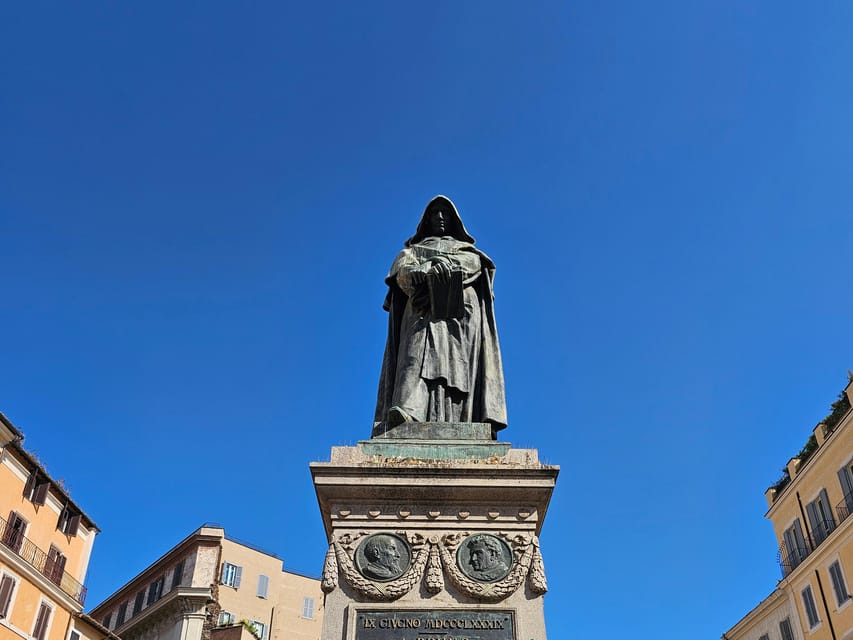
This tour’s pitch is simple: step beyond the big-name sites and see Rome’s secrets at neighborhood scale. The focus is on stories that are macabre, scandalous, and sometimes weirdly human.
You’ll hear about an execution site for witches and heretics—the kind of story that can feel abstract when it’s only mentioned in passing. Here, it’s tied to where you’re standing, so the details land. The guide’s tone helps too: it’s not just grim. It’s also entertaining and often funny in the way a great storyteller can control tension.
Then come the hidden love affairs of popes. This is where the tour starts sounding like court intrigue and gossip, not textbook religion. Even if you don’t care about the personal dramas, the bigger takeaway is how power and reputation worked in Rome—how the Church’s public face and private life could collide, and how those narratives kept spreading across generations.
The guide is also constantly connecting you back to physical cues. Notice how the city’s street plan behaves—where the lanes tighten, where the corners open up, and where you get sightlines toward important civic spaces. That’s how you understand the “secret Rome” idea: not as magic, but as geography plus stories.
A smart bonus is how this tour brings you from modern Rome to Ancient Rome and back again. You’ll go from today’s sidewalk life to the sense of how crowded these same zones once were, when people moved under different rules and different dangers.
Underground dwellings and an assassination attempt: when the past gets personal
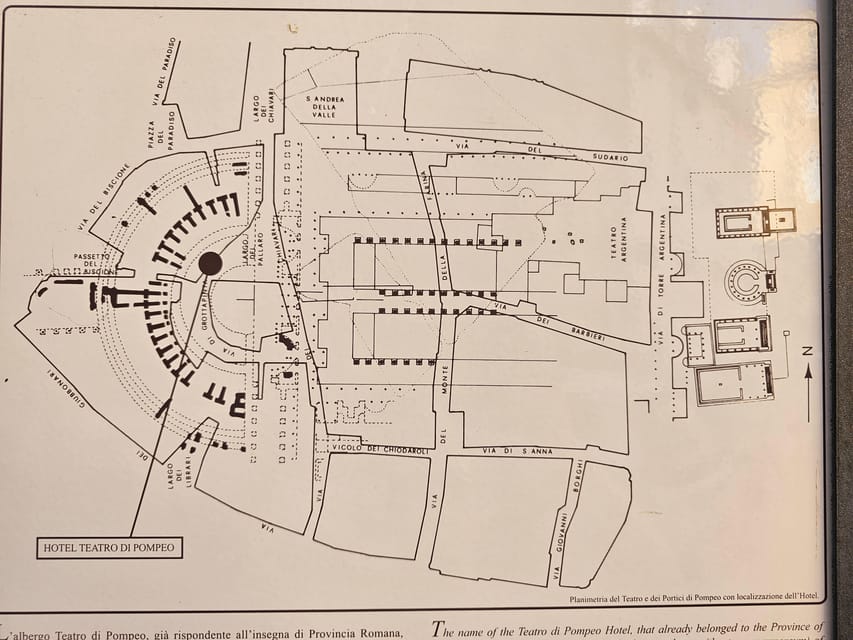
Some of Rome’s most unsettling moments weren’t carved in marble—they happened in shadowy places, in cramped rooms, and around political flashpoints.
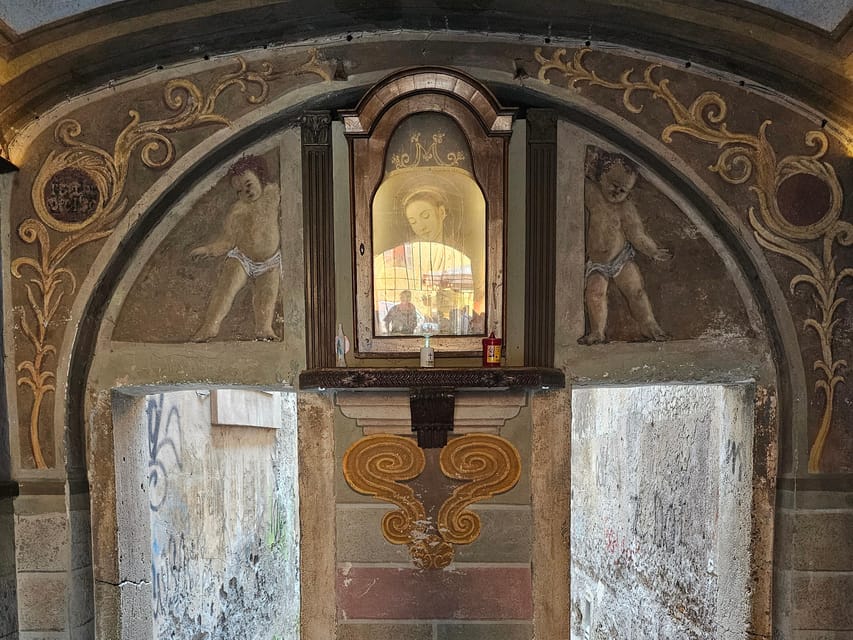
This tour includes stories about ancient underground dwellings and a site of an assassination attempt. Even without you seeing a dramatic “movie scene,” the guide’s job is to help you picture the conditions: where people might have hidden, what movement might have looked like, and why certain spots became targets or cover.
The value here is not just the shock factor. It’s that the guide treats these legends as part of Rome’s layered reality. You start to recognize how easily the modern city can hide old spaces—sometimes because buildings expanded over time, sometimes because alleyways persist while their original purpose changes.
If you like history as lived experience—fear, plotting, survival—this is the section of the walk that will stick with you.
Theatre stops: Pompey, Marcellus, and what they tell you about Roman power
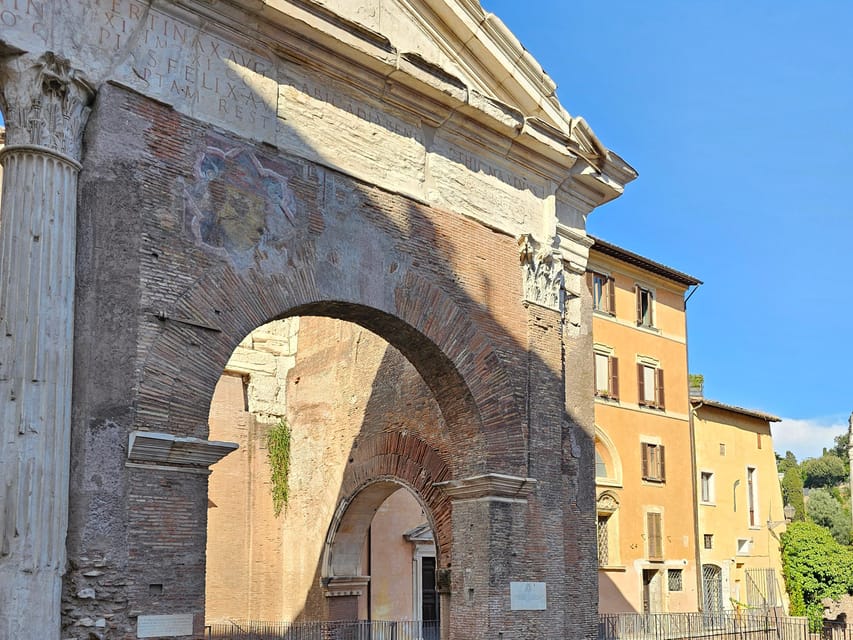
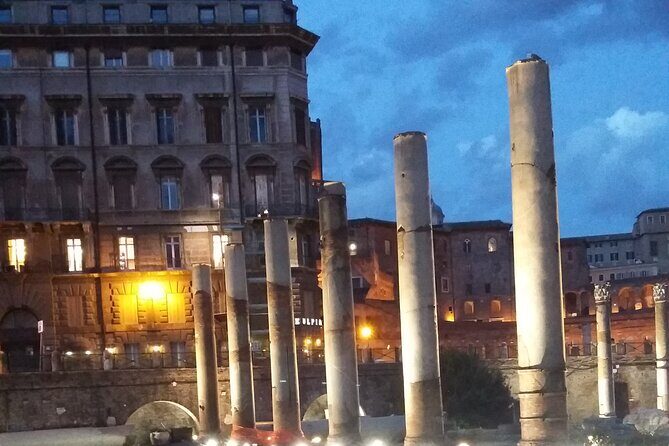
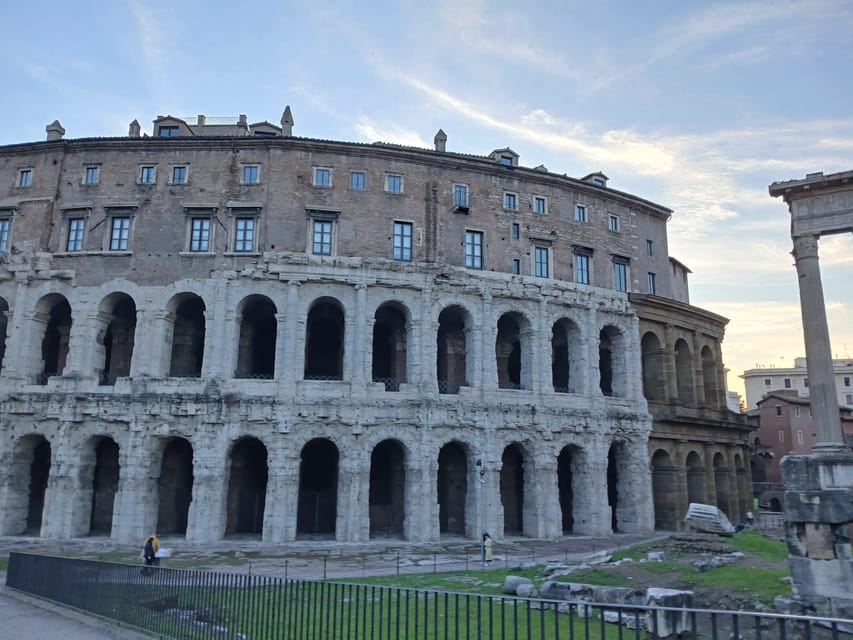
Mid-walk, the tour shifts into civic Rome. You’ll pass by the Theatre of Pompey and later the Theatre of Marcellus. Even in short stop windows, these aren’t just “pretty ruins.” They’re political machines.
Here’s why the theatres matter: in Roman life, public entertainment wasn’t separate from public messaging. Theatres helped leaders build legitimacy, influence crowd behavior, and mark who held power. When you hear the stories while looking at these sites, you get a better sense of how Romans used public space.
The guide’s storytelling style makes the theatres feel like they’re still “working,” even if the crowds are gone. You don’t need a lecture to understand the point—you just need context, and the tour supplies it in a way that keeps you moving.
A practical tip: because these stops are quick, your job is to be ready with your phone camera before you stop. The best photo angles are often the first one or two seconds you notice them.
Jewels in the streets near the Jewish Ghetto and Portico d’Ottavia
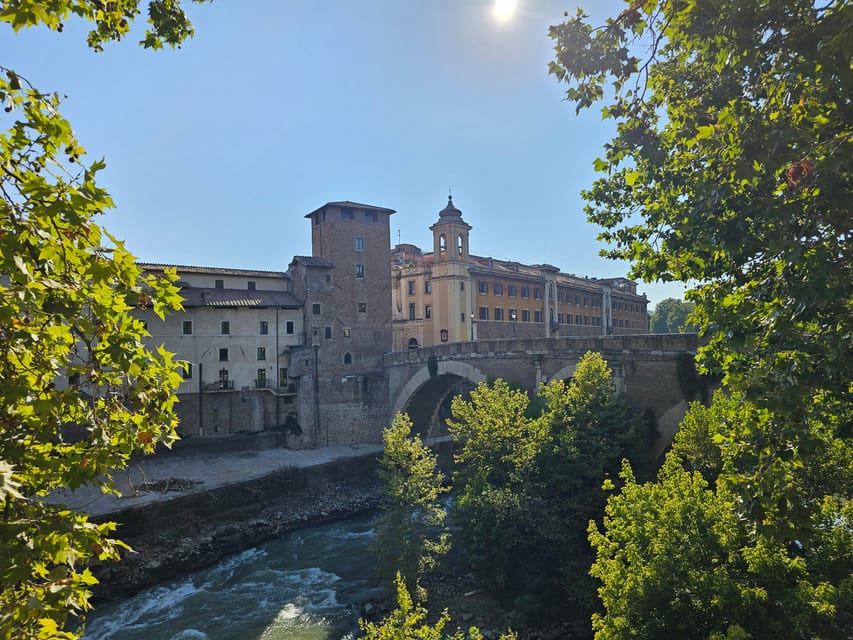
After the theatres, the walk moves into quieter, more historically dense territory. You’ll visit the Jewish Ghetto, Rome, then continue toward the Portico d’Ottavia.
This is where the tour earns its “beyond the postcard” reputation. The point isn’t to recite dates; it’s to show you how layers of community and law shaped daily life. The Jewish Ghetto stop adds context that you can’t get from the big monument circuit alone, and the guide’s stories help explain why specific locations mattered.
Then Portico d’Ottavia works like a bridge back to the civic and architectural side of Rome. A portico isn’t only a shelter—it’s social space. It hints at how people gathered, waited, traded news, and built connections.
If you care about Rome as a city of neighborhoods—not just ruins—this portion is a strong payoff.



Tiber Island and the river-edge mindset: where Rome likes to turn corners
You’ll also spend time around Tiber Island. The river zone is one of those places where the whole city seems to pivot. Bridges, crossing points, and island locations tend to become strategic zones, and Rome is no exception.
Even with a short island-focused stop, the guide uses it to tie themes together: movement, control, and how people navigated danger and opportunity. It’s also a nice visual break. You’re not stuck staring at one monument. Instead, you’re reading the city as a connected system.
This is also a good spot to refill your mental energy. After a series of story-heavy stops, a river view helps you re-center.
Santa Cecilia in Trastevere: the finish that turns the tour into an evening plan
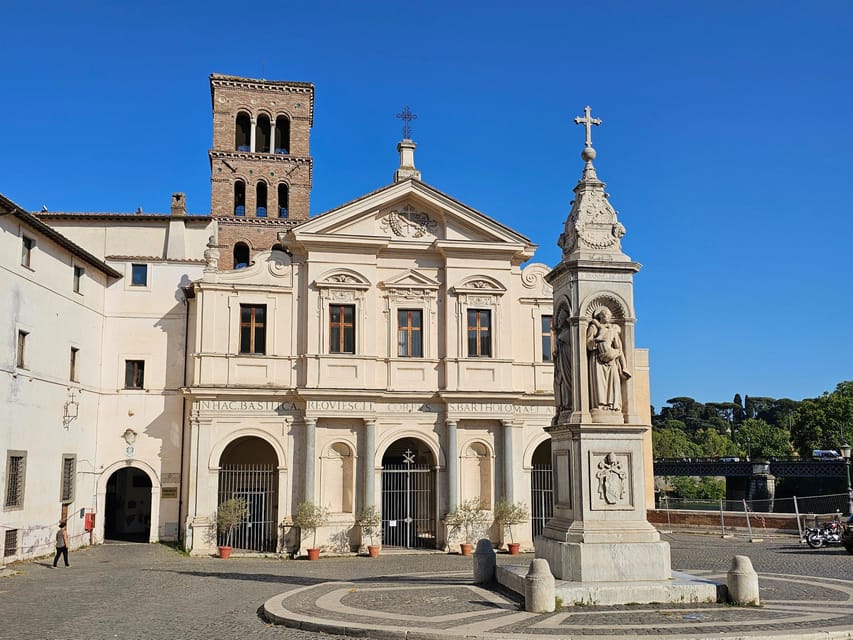
The tour ends at Basilica di Santa Cecilia in Trastevere, with time set aside for a visit and guided tour. That finish is practical. You land somewhere that already feels like Rome’s evening life zone.
Trastevere is where you can keep the momentum without needing a bus or another ticket. After the walk, you can:
- grab a long aperitivo and let the stories settle
- wander side streets for dinner
- look for sunset viewpoints (the area is set up for that easy “walk and eat” rhythm)
One more reason this ending works: the tour’s storyline has been about hidden lives and hidden spaces. Ending in a church you actually step into turns the tone from street gossip to something more reflective.
Price and time: is this value for $34?
At $34 per person for about 2.5 hours, this is priced like an experience that wants to be doable for most visitor schedules. You’re not buying a full-day commitment, and you’re also not paying “museum-level” prices for a walking-only plan.
What you’re getting for that money:
- a walking tour with a professional guide
- entrance fees to the visited attractions
- live English narration with a professional Irish storyteller
That entrance-fee inclusion matters because it prevents the common Rome pain: you think you’re doing a guided experience and suddenly you’re scrambling for tickets. Here, the tour is designed as a set of stops, not a loose walk where you’re on your own to improvise access.
Group travel cost gets better when the guide handles both timing and storytelling. The reviews keep circling back to the guide energy—amusing delivery plus solid facts—so you’re paying not just for location, but for communication.
Who should consider this:
- you want Rome story-forward, not just photo-forward
- you like dark legends and political intrigue
- you prefer walking and local streets over big-queue monuments
- you want a tour that also gives you practical navigating confidence
Who should book—and who should choose something else
This tour fits best if you:
- like short, frequent stops rather than long museum marathons
- enjoy spooky-scandal stories but still want them anchored to real places
- travel with teens or older kids who can handle walking and narrative (one family feedback specifically called out a 14-year-old enjoying it)
Be cautious if you:
- have back problems or mobility limitations (this one is not suitable for wheelchair users, and the tour is not listed as appropriate for people with mobility impairments)
- expect a slow, fully seated experience—this is a walk with frequent on-foot movement
Also, plan your day like you’re doing real city walking. Wear comfortable shoes and bring water. Rome heat and cobbles don’t care about your itinerary.
Practical tips so you enjoy the walk instead of fighting the streets
Here’s the kind of help you’ll want from a guide in central Rome: explaining how to navigate traffic and cross streets confidently. The tour’s guide style is built around that sort of on-the-ground coaching, and it’s genuinely useful if you’re not used to Roman street patterns.
A few things that make your day smoother:
- start with good shoes; the walk is long enough that blisters ruin the story
- keep water accessible; you’ll want it across a 2.5-hour route
- listen for the guide’s timing cues so you don’t drift at quick stops
- bring a charged phone, but don’t get stuck photographing everything—part of the value is hearing the story in the right moment
If you enjoy learning while moving, this tour will feel like Rome is talking back.
Should you book this Rome secrets walking tour?
If you’re already planning the Colosseum and Vatican list and you want something that feels more local, this is a strong add-on. The price is reasonable, the time is manageable, and the guide format is built around storytelling plus location—witches and heretics, pope scandals, Jewish Ghetto context, theatres, and an ending in Trastevere that naturally feeds into your evening plans.
I’d book it if you want Rome beyond monuments and you enjoy history told like a living drama. I’d skip it if mobility is an issue for you or you want a mostly indoor, low-walking format.
If that sounds like you, reserve a slot and wear shoes you trust. Rome’s secrets are waiting just off the main lines.
FAQ
How long is the walking tour?
It runs for about 2.5 hours.
Where does the tour start?
You meet your guide in the middle of Campo de’ Fiori, right under the statue.
Where does the tour end?
It ends at Basilica di Santa Cecilia in Trastevere. The activity description also notes that it ends back at the meeting point, so you may want to confirm the exact end location with the operator when you book.
What language is the tour in?
The tour is in English.
What is included in the price?
The price includes the walking tour, a professional guide, and entrance fees to visited attractions.
What should I bring?
Bring comfortable shoes and water.
Is it suitable for wheelchair users?
No. It is listed as not suitable for wheelchair users and people with mobility impairments.
Is it suitable for people with back problems?
No. It is listed as not suitable for people with back problems.
What kind of stories will you hear?
Expect stories connected to Rome’s controversies and legends, including an execution site for witches and heretics, hidden love affairs of popes, and stories tied to underground dwellings and an assassination attempt.
Is free cancellation available?
Yes, the tour offers free cancellation up to 24 hours in advance for a full refund.