REVIEW · ROME
Rome: Cooking Class of fresh Pasta and Tiramisu Cake
Book on GetYourGuide →Operated by Pink Umbrella Tours · Bookable on GetYourGuide
Fresh pasta in Rome beats souvenirs.
This cooking class is built around doing, not watching: you’ll learn how to knead, roll, and cut fresh hand-made pasta and then create your own creamy tiramisu. It’s also the kind of experience where the chef uses the food as the lesson, sharing plenty about Italian food culture while you work.
I especially like that you finish with a meal you made yourself, plus a glass of wine. One key consideration: this class is not suitable for vegans, and it’s also not for gluten or lactose intolerance.
Good news if you’re worried about keeping up: instructors such as Kris/Kristian, Luca, and Elisabeth are known for being patient and fun, which matters when you’re learning dough and dessert technique for real. The whole experience runs 2.5 hours and is based at Osteria San Giorgio, an authentic Roman setting that keeps the vibe local.
In This Review
- Key highlights to look for
- Rome’s Fresh Pasta and Tiramisu Class: What You’re Actually Learning
- Getting Started at Osteria San Giorgio (And Why the Setting Helps)
- Fresh Pasta Skills: Knead, Roll, Cut Like a Roman
- Tiramisu Cake Workshop: Whip, Mix, and Get the Cream Right
- The Meal + Wine: Why the Finish Matters
- Italian Food Culture: What the Chef Teaches While You Cook
- Who This Class Is Best For (And Who Might Want to Skip It)
- Price and Value: Is $58 a Good Deal for 2.5 Hours?
- Practical Tips So You Get the Most Out of the Class
- Should You Book This Rome Pasta and Tiramisu Class?
- FAQ
- Where does the class meet?
- How long is the cooking class?
- What is the price per person?
- What will I cook during the class?
- Is the class taught in English?
- Is food and wine included?
- Is the class wheelchair accessible?
- Is it suitable for vegans or people with dietary restrictions?
- Can I cancel for a refund, and can I pay later?
Key highlights to look for
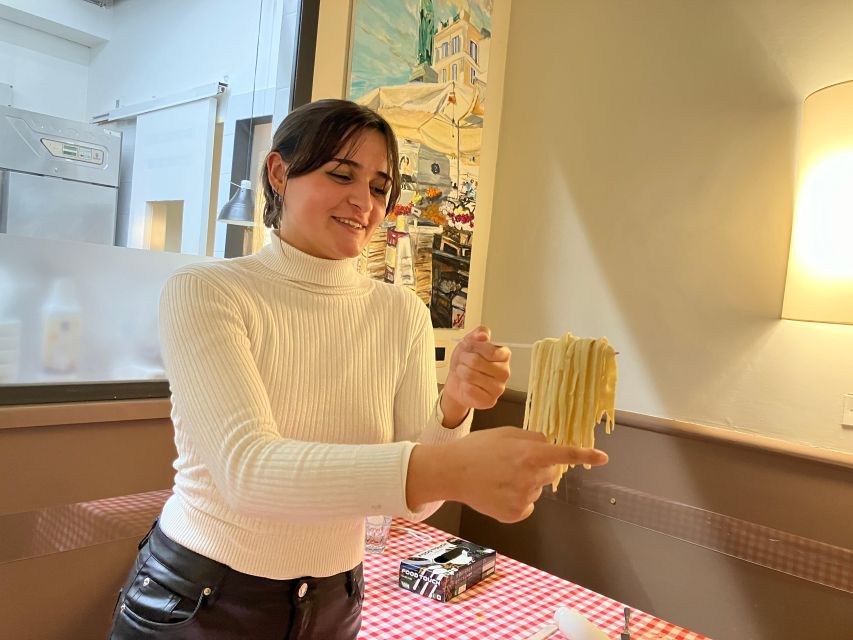
- Hands-on pasta technique: knead, roll, and cut fresh hand-made pasta step by step
- Creamy tiramisù focus: whip, mix, and build a tiramisù you can replicate later
- Chef-led Italian food culture: learn what Italians care about, not just what to cook
- Eat what you make: you’ll enjoy your pasta and tiramisù at the end with wine
- English instruction: classes run in English, so you can follow along comfortably
Rome’s Fresh Pasta and Tiramisu Class: What You’re Actually Learning
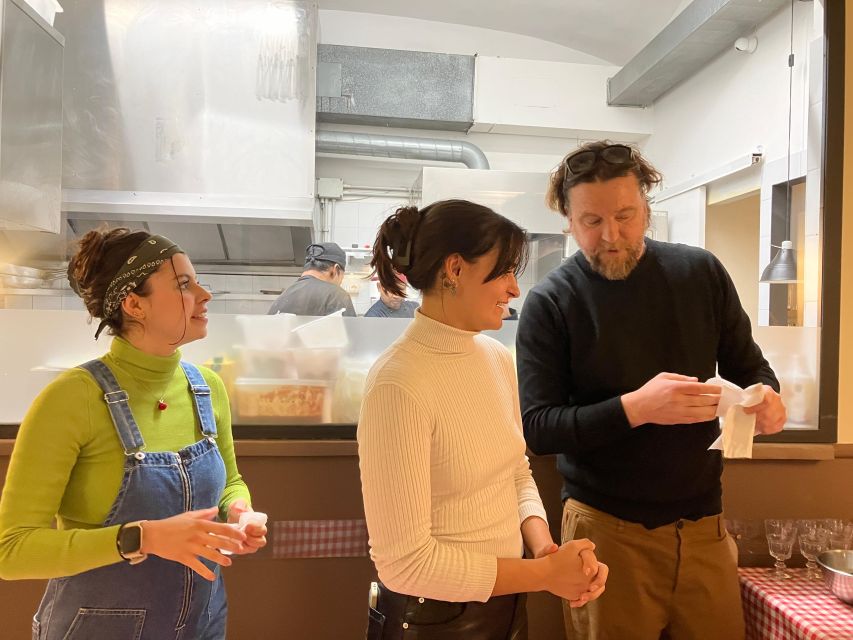
This isn’t a food show where you stand to the side with a fork. It’s a hands-on Rome cooking class where you take dough from plain ingredients to something you can shape, cut, and serve. You’ll also make a complete dessert: tiramisù, the famous Italian cake that people usually only think they can order or buy.
The big value here is skills. If you leave knowing how dough should feel and how tiramisù batter/cream should come together, you’re not just buying a one-time experience. You’re taking home a repeatable recipe habit. That matters for value because you’re paying for technique plus ingredients plus tools plus a meal.
The setting also helps. You’ll cook in an authentic Roman osteria atmosphere (Osteria San Giorgio), which keeps things grounded in how Italians actually think about food: practical, social, and focused on doing it right.
You can also read our reviews of more tours and experiences in Rome.



Getting Started at Osteria San Giorgio (And Why the Setting Helps)
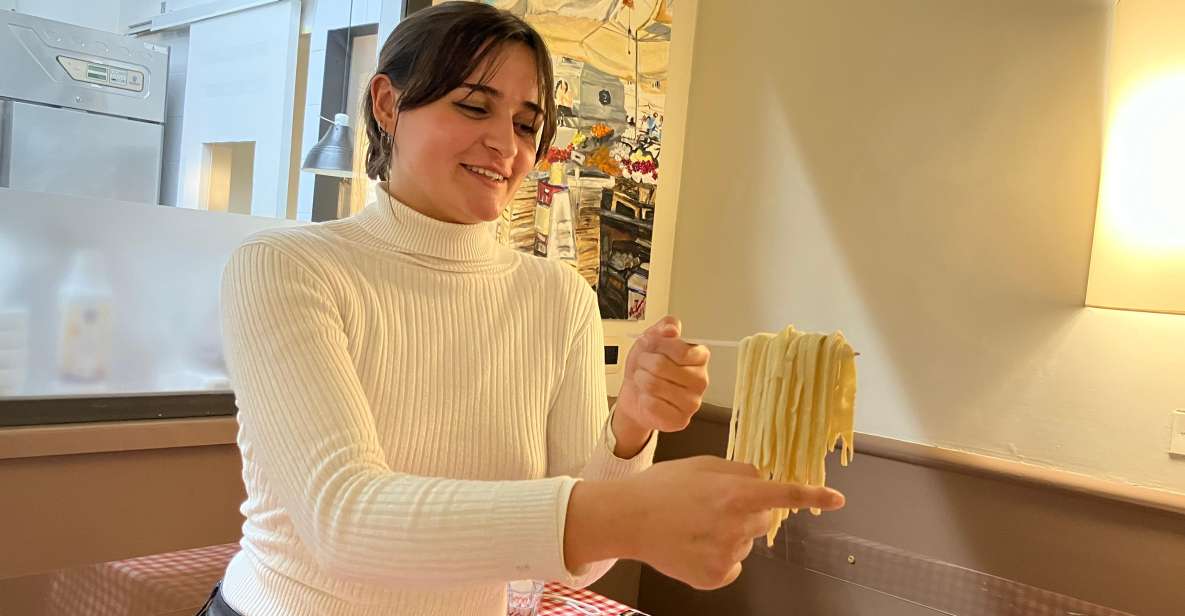
Your meeting point is Osteria San Giorgio. Arriving in an osteria matters more than you might think. This isn’t a classroom feel. It’s a real dining space, which keeps your pace natural. You’re learning food craft in an environment built for eating and conversation.
Because your class lasts 2.5 hours, you want the start to feel smooth: you’ll meet your chef/instructor, get oriented, and move into prep mode. The sooner you’re working with dough (not just listening), the faster you build confidence. When a class is tight on time, that hands-on start is a big deal.
If you’re coming from sightseeing, plan to arrive a little early. Osteria doors and back-room kitchens can be easy to miss when you’re rushing. Give yourself a five- to ten-minute buffer so you can settle, not sprint.
Fresh Pasta Skills: Knead, Roll, Cut Like a Roman
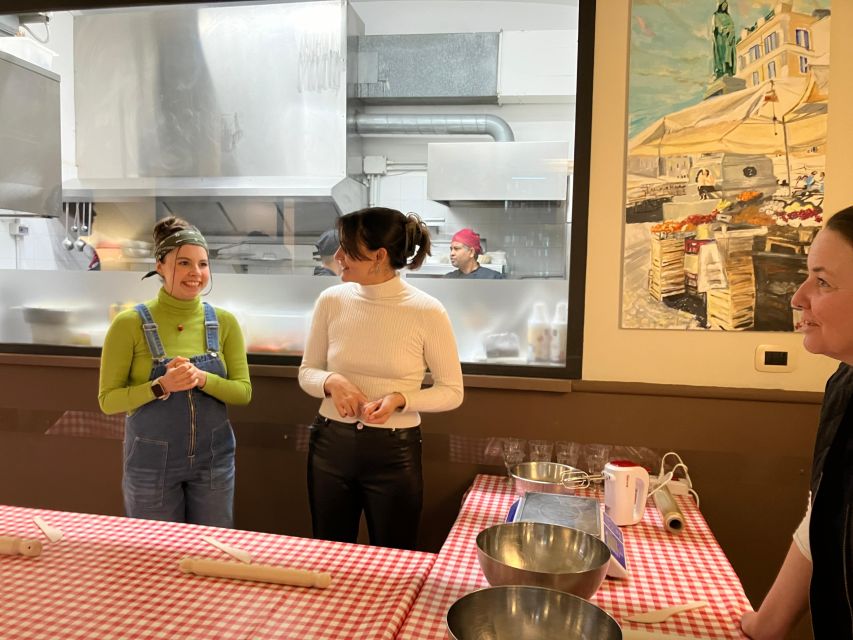
The core of this class is fresh hand-made pasta. You’ll actively make the steps rather than follow a single demonstration.
Here’s why that pasta part is so satisfying: kneading isn’t just “mixing.” It’s how you develop the texture you need for pasta to roll and cut cleanly. When you learn what the dough should feel like, you stop guessing later when you cook at home.
You’ll practice:
- Kneading (the foundation for workable dough)
- Rolling (turning dough into even sheets)
- Cutting (shaping it so it cooks and eats well)
What makes this worthwhile is the repetition. Even in a short class, you’ll touch each stage, so your brain connects cause and effect. If the dough resists rolling, you’ll understand why. If the cut edges look off, you’ll know what to adjust next time.
One more practical note: since you’ll be working with dough, wear something comfortable you can move in. Think sleeves you can manage around flour. You don’t want your clothes to be the obstacle between you and the work.
Tiramisu Cake Workshop: Whip, Mix, and Get the Cream Right
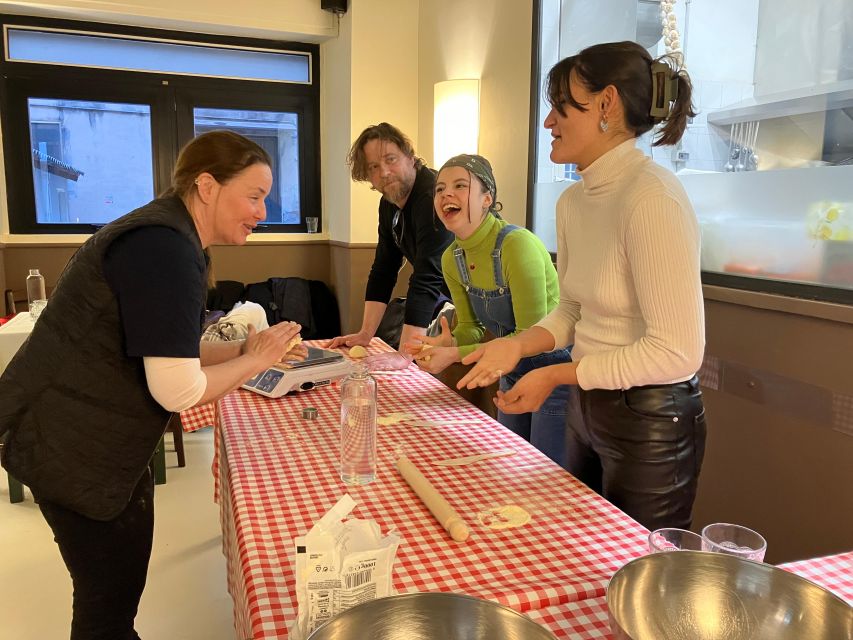
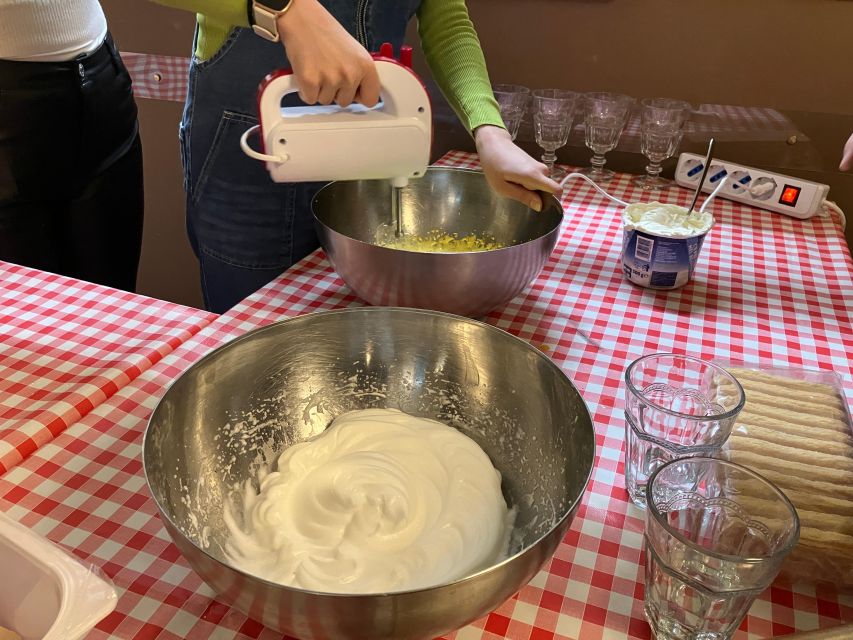
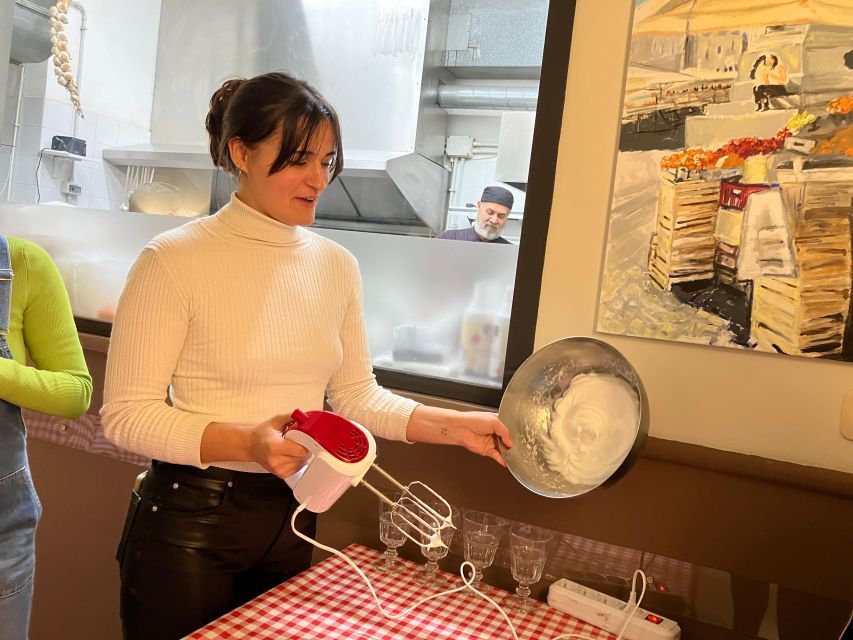
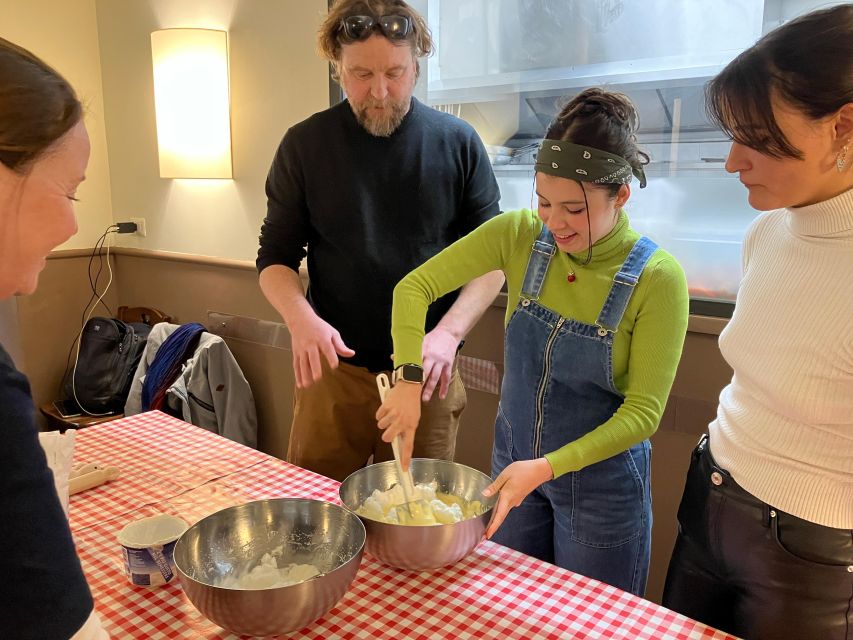
Tiramisu can look intimidating when it’s sitting in a shop window. In this class, you’re not stuck watching someone else work. You’ll whip and mix to build the creamy tiramisù.
This is the second major reason people rate the experience highly. Learning dessert technique in a live, guided way is valuable because tiramisù isn’t only about ingredients. It’s about the texture you create while mixing. If the cream is too runny or too stiff, the final result changes.
Your instructor will help you understand how to get that creamy consistency by doing the mixing steps yourself. That’s the real “take home” part: you’ll get the feel, not just a written recipe.
Also, tiramisù here isn’t treated as a side quest. It’s a full focus. You end up enjoying your own finished dessert at the end of the class, which makes the whole thing feel complete instead of rushed.
The Meal + Wine: Why the Finish Matters
Most cooking classes teach you skills, but not all of them let you enjoy the result in a relaxed way. Here, you’ll eat what you made: your fresh pasta and tiramisù.
And yes, a glass of wine is included. This doesn’t have to mean a “party.” It’s simply part of the Italian-osteria rhythm: you work with your hands, then you slow down to eat, talk, and enjoy.
From a practical perspective, this finish is also how you check your work. You’ll see whether your pasta and dessert came together the way you were aiming for. That feedback loop is one reason you’ll remember the steps later.
If you’re someone who likes to cook for others, this is a great boost. You’re leaving with a complete Roman meal concept, not two separate snacks.



Italian Food Culture: What the Chef Teaches While You Cook
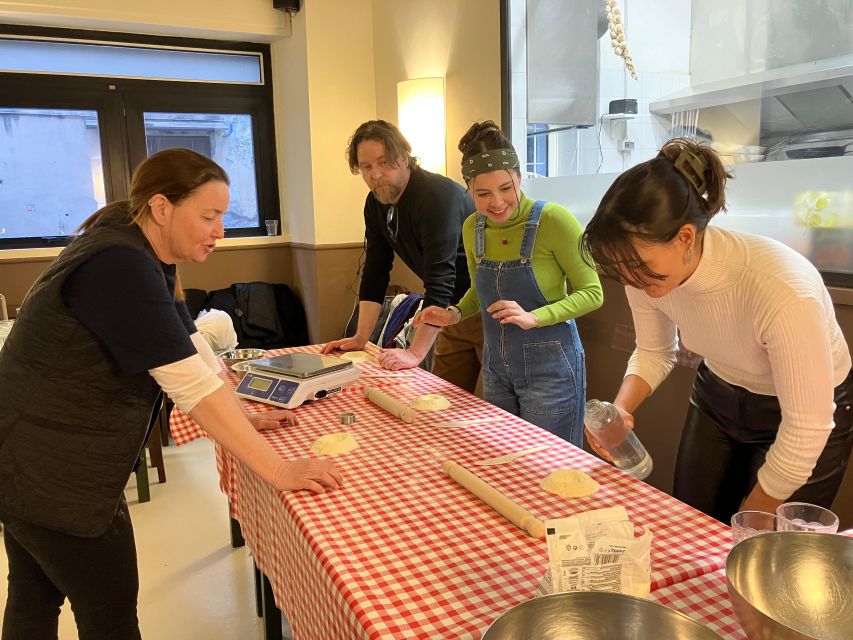
This class includes more than technique. Your chef shares tons of information about Italian food culture during the session. You’re not just learning recipes. You’re learning how food fits into everyday Italian life: what people prioritize, how ingredients are treated, and why meals are more than fuel.
The best part is that culture lessons happen while you’re working, not after. When the chef connects a comment about ingredients or habits to what you’re doing right now, it sticks.
This also makes the class more than a “culinary task.” It becomes a conversation. And in an osteria, conversation comes naturally.
Who This Class Is Best For (And Who Might Want to Skip It)
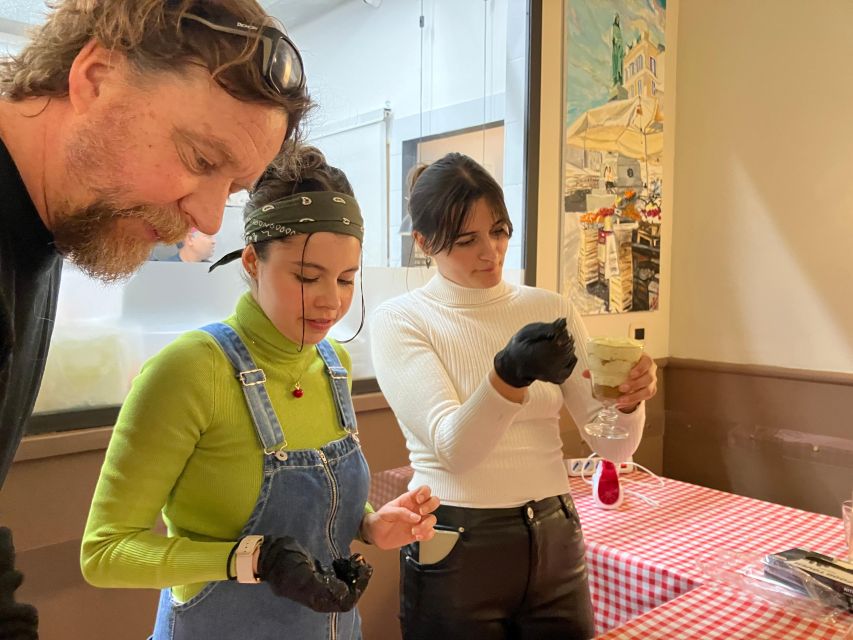
This works especially well if you want hands-on cooking and you like the idea of leaving with repeatable skills. It’s also great for people who enjoy desserts and want to understand what makes tiramisù come out right.
It’s also known to be friendly for families. Kids ages like 6 and 10 have been able to do everything in the class, which suggests the steps can be guided without making the experience feel too technical.
That said, it has clear limits:
- Not suitable for vegans
- Not suitable for gluten intolerance
- Not suitable for lactose intolerance
So if you’re managing strict dietary needs, you’ll likely want a different option. In many Italian cooking classes, the base ingredients for pasta and tiramisù assume wheat and dairy, and this one isn’t built around substitutions.
Wheelchair accessible is listed, which is a strong plus if mobility is a concern.
Price and Value: Is $58 a Good Deal for 2.5 Hours?
$58 per person for a 2.5-hour class in Rome sounds reasonable when you look at what’s included. You’re getting:
- a professional expert/instructor
- all ingredients
- all utensils
- food and wine
- English instruction
A lot of “cheap” classes hide costs later (or they don’t include the meal). Here, the meal and wine are part of the experience, so the cost isn’t only paying for time. You’re paying for ingredients, tools, coaching, and the end result you eat.
Also, this is a high-skill format. Fresh pasta and tiramisù take technique. If you’ve ever tried to make either at home, you know the frustration factor is real when you don’t have someone correcting your dough or mixing consistency. That’s what you’re buying.
If your goal is to learn and bring the skills home, this price can feel fair. If your goal is only to taste, you might prefer a food tour instead. But if you want to cook, it’s a strong deal for what’s included.
Practical Tips So You Get the Most Out of the Class
A few simple things will make your 2.5 hours smoother:
- Bring a comfortable mindset. Dough needs practice, even when a chef guides you.
- Wear sleeves you can manage with flour and kitchen mess.
- Plan to eat your meal there. The value is in the full cycle: learn, make, taste.
If you’re traveling with kids, this class looks like it can work well because it’s structured around active steps. Just keep expectations realistic: cooking takes time, and the point is learning through doing.
Should You Book This Rome Pasta and Tiramisu Class?
Yes, you should book it if you want a hands-on Rome experience that ends with you eating your own fresh pasta and tiramisu, taught in English at Osteria San Giorgio. The strongest reason to go is the skill focus: kneading, rolling, cutting, and building a creamy tiramisù—skills you can replicate at home.
Skip it if you’re vegan, gluten intolerant, or lactose intolerant, since it’s not suitable for those dietary needs. And if you hate cooking tasks and prefer pure tasting, this may feel too active for your style.
If your dream souvenir is something you can actually cook later, this class fits that perfectly.
FAQ
Where does the class meet?
The meeting point is Osteria San Giorgio.
How long is the cooking class?
The class lasts 2.5 hours.
What is the price per person?
The price is $58 per person.
What will I cook during the class?
You’ll learn to make fresh hand-made pasta and tiramisu cake.
Is the class taught in English?
Yes. The instructor is listed as English.
Is food and wine included?
Yes. Food and wine are included, along with ingredients and utensils.
Is the class wheelchair accessible?
Yes. Wheelchair accessibility is listed.
Is it suitable for vegans or people with dietary restrictions?
No. It’s listed as not suitable for vegans, and it’s also not suitable for gluten intolerance or lactose intolerance.
Can I cancel for a refund, and can I pay later?
Yes. You can cancel up to 24 hours in advance for a full refund, and it offers a reserve now & pay later option.