REVIEW · CATACOMBS TOURS
Rome: Catacombs of Domitilla Entry Ticket & Guided Tour
Book on GetYourGuide →Operated by OPERA ROMANA PELLEGRINAGGI · Bookable on GetYourGuide
Going underground changes your sense of time. The Catacombs of Domitilla take you into one of Rome’s largest underground cemeteries, descending about 16 km beneath the city for a close look at how faith and art survived in cold stone. It’s a fast-moving tour that still leaves you feeling like you understood something important, not just walked past walls.
I love the way the site blends pagan and Christian elements, especially in the frescoes and changing burial spaces. I also like the small group setup (limited to 10), because it makes it easier to ask questions and hear the restoration story without getting lost in a loud crowd.
One big consideration: photos aren’t allowed inside, so you’ll want to rely on what the guide shows you and what you remember.
Key things that make this tour worth your time
- Pagan-to-Christian transformation: you’ll see how older burial spaces were reused and expanded
- Frescoes with two worlds: pagan and Christian imagery share the same underground setting
- Martyrs’ site with papal work: the crypt connected to Nereus and Achilleus ties to basilica expansions
- A tight, guided route: 30 minutes, small group size, focused explanation of what matters
- Restoration taught in plain terms: you learn why preservation is so careful underground
In This Review
- Catacombs of Domitilla: What 30 Minutes Actually Delivers
- The Flavians Hypogeum and the Story Behind the Flavia Domitilla Connection
- Pagan Hypogeum, Christian Expansion: How Old Burial Space Gets Rewritten
- Frescoes With Two Sets of Symbols: What You’ll See on the Walls
- The Martyrs Nereus and Achilleus: A Crypt Turned Basilica
- Why the Live Guide Matters: Andrea, Martin, and the Small-Group Q&A
- Practical Stuff That Changes Your Comfort: Clothes, No Photos, and Access Limits
- Price and Value: Is $16 a Fair Trade for Catacombs?
- Who Should Book This Tour (and Who Might Skip It)
- Should You Book the Catacombs of Domitilla?
- FAQ
- How long is the Catacombs of Domitilla guided tour?
- What languages are offered?
- How much does the tour cost?
- Is there an entrance fee included?
- Where do I meet for the tour?
- How early should I arrive?
- Can I take photos inside the catacombs?
- Is the tour suitable for wheelchair users or people with mobility impairments?
Catacombs of Domitilla: What 30 Minutes Actually Delivers
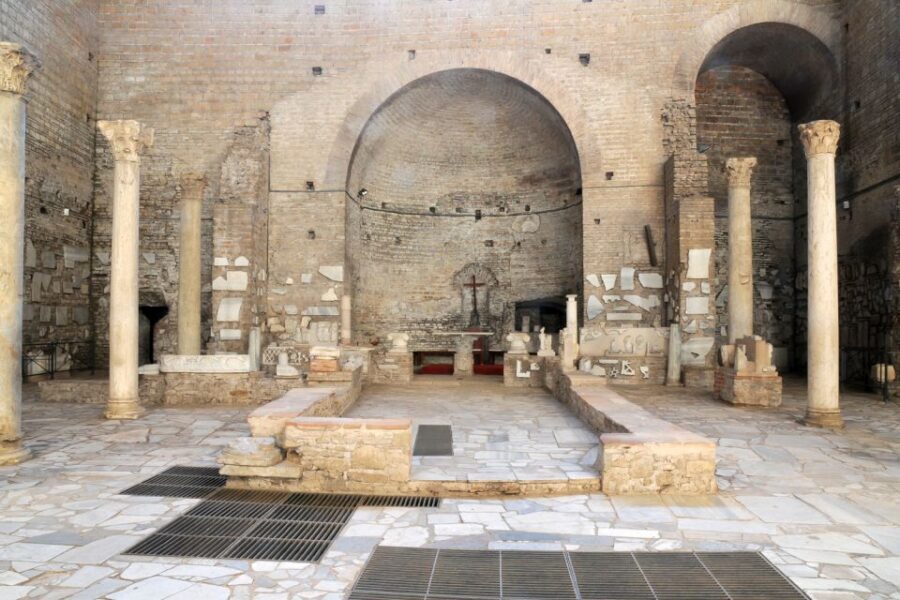
You’re stepping into a real burial complex, not a staged dungeon. The Catacombs of Domitilla sit on via delle Sette Chiese, and this tour is designed to be short: 30 minutes with a live guide. That means you won’t see every corner of the underground, but you do get the key areas and the context that helps it make sense.
The scale is part of the point. Even in a brief visit, you’re surrounded by chambers that connect into a larger network, built masterfully for burial over time. And because you’re going below street level, the atmosphere is naturally cooler and quieter than Rome above—exactly what you want for places where people were meant to rest in peace.
This is also where the language choice matters. The tour runs with a live guide in Italian or English, and the group stays small (up to 10). When you can ask follow-up questions, the stones start to feel less like random corridors and more like a story.
The Flavians Hypogeum and the Story Behind the Flavia Domitilla Connection
The tour begins with the site’s core claim to fame: it’s tied to Flavia Domitilla, whose family connections reach the Roman elite. The underground cemetery traces back to burial grounds set up on land associated with Domitilla and donated to her freedmen. Her background is part of why this catacomb stands out in Rome’s underground world: she’s connected to Flavio Clemente, consul in 95 AD, and linked to the imperial family.
The emotional backstory is equally important. As a Christian, Flavia Domitilla was exiled by Domitian to Ponza, where she died. That doesn’t mean every visitor spends time on her biography, but a good guide helps you understand why this burial place mattered—especially when you’re standing in the rooms people once used.
From there, you’ll move through the catacomb’s two main levels. One big focus is the so-called Hypogeum of the Flavians, where scholars have long tried to identify tombs connected to the Flavia Domitilla family. What’s fascinating is the timeline: there was an earlier pagan use (roughly between the end of the 2nd century and the beginning of the 3rd century), and later it became Christian, with major expansion in the mid-3rd century.
So when you’re underground, you’re not just seeing a cemetery. You’re seeing how Romans repurposed space as beliefs and communities changed.
You can also read our reviews of more tours and experiences in Rome



Pagan Hypogeum, Christian Expansion: How Old Burial Space Gets Rewritten
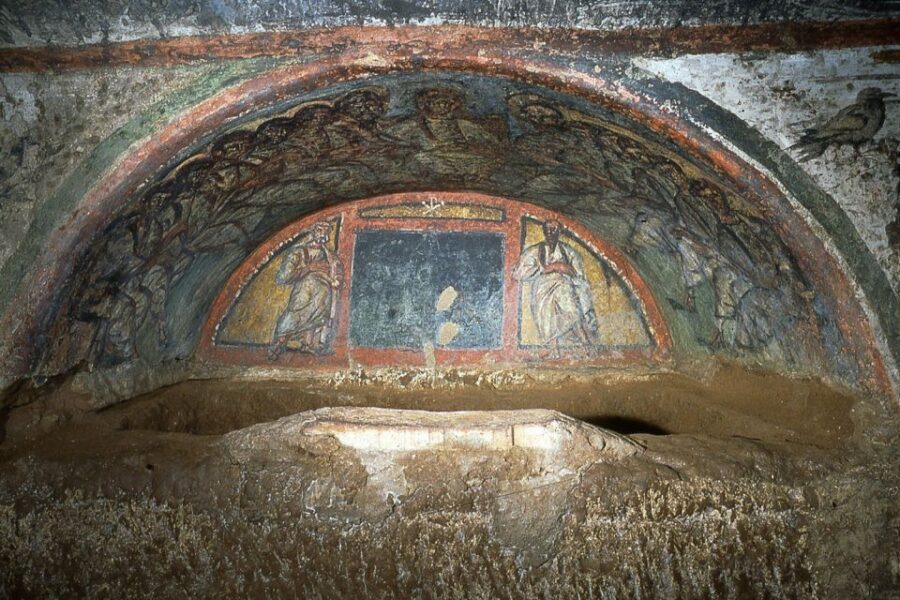
Here’s one of the most interesting concepts you’ll learn: these rooms didn’t stay frozen in time. The catacomb includes areas that began as pagan burial spaces, then shifted toward Christian use. Over time, that meant enlarging and adapting the underground chambers so the space matched the community that was using it.
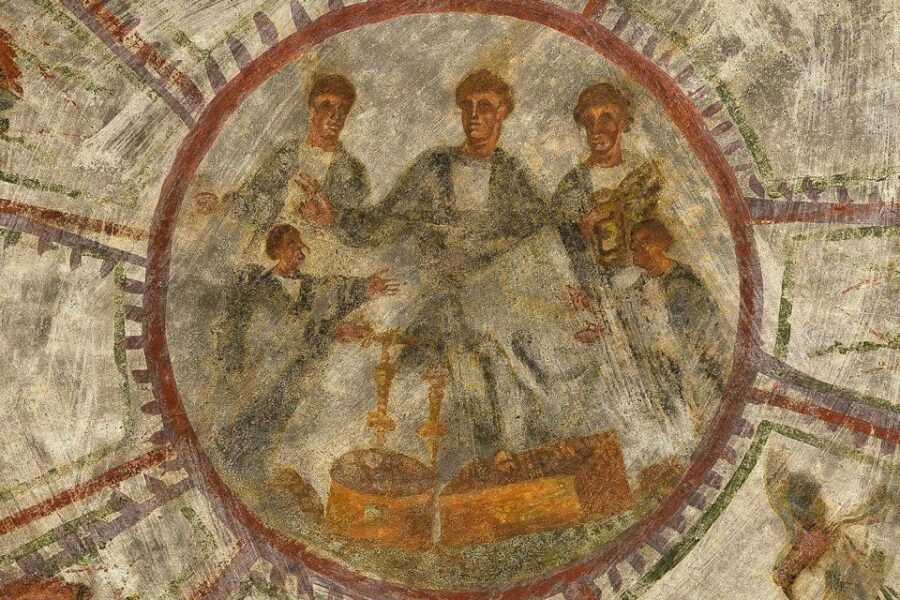
This is also where the visual contrast matters. The catacombs preserve signs of belief on the walls—sometimes in ways you’d miss if you only cared about names and dates. The guide’s job is to connect what you’re seeing (including the artwork) to why it changed when Christian communities grew.
You’ll also hear about the Hypogeum of the Flavians and how it was linked to the Flavians’ family burials. Even if you don’t walk away with every technical detail, the takeaway is solid: the catacomb is a record of shifting identity. It’s not just one religion making one style of artwork for one era; it’s a living complex that kept evolving.
If you like understanding the “how” behind archaeological sites, this part is the payoff. It’s where you stop thinking of catacombs as spooky lines on a map and start seeing them as organized burial architecture that got reused for generations.
Frescoes With Two Sets of Symbols: What You’ll See on the Walls
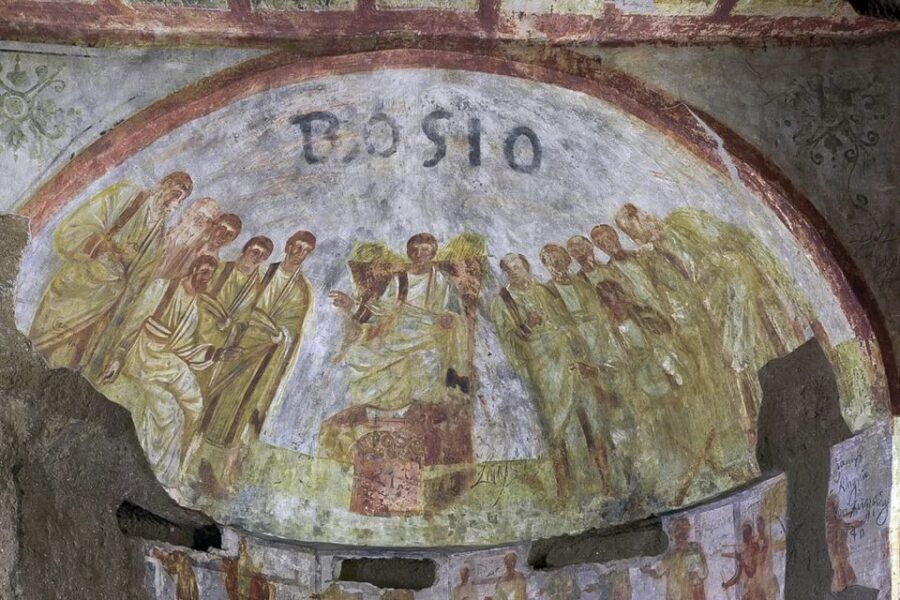
A major highlight here is the unique mixture of pagan and Christian frescoes. That phrase matters because it gives you a different angle from the typical Rome-under-ground script. Instead of the catacombs being purely Christian, you’re watching a blend of symbols and visual language that reflects the period.
Don’t expect a modern museum experience where everything is brightly lit and easy to read at a distance. This is underground, and the tour is built for interpretation. Your guide points out what you should notice—then explains what it may have meant in its original context.
You’ll also learn how sacred burial space was treated. These aren’t just decorative rooms. They were treated as holy ground, tied to the burial of Christian martyrs later on. That belief makes the artwork feel less like “Roman wall art” and more like a message left for the living and for the future.
One more practical note: because photography isn’t allowed inside, you’ll want to take notes or just pay close attention in the moment. If you’re the type who always wants proof, this restriction will change the way you experience the visit.
The Martyrs Nereus and Achilleus: A Crypt Turned Basilica
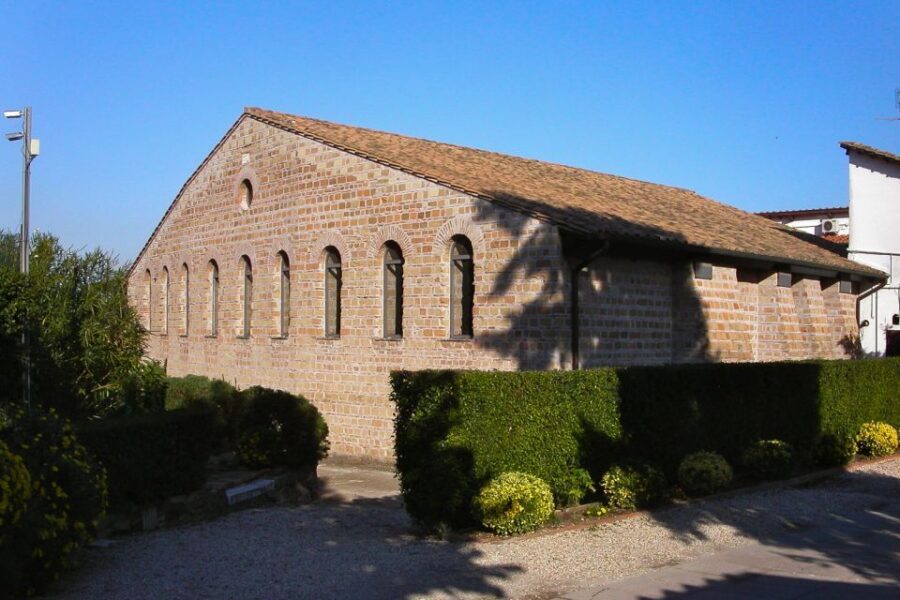
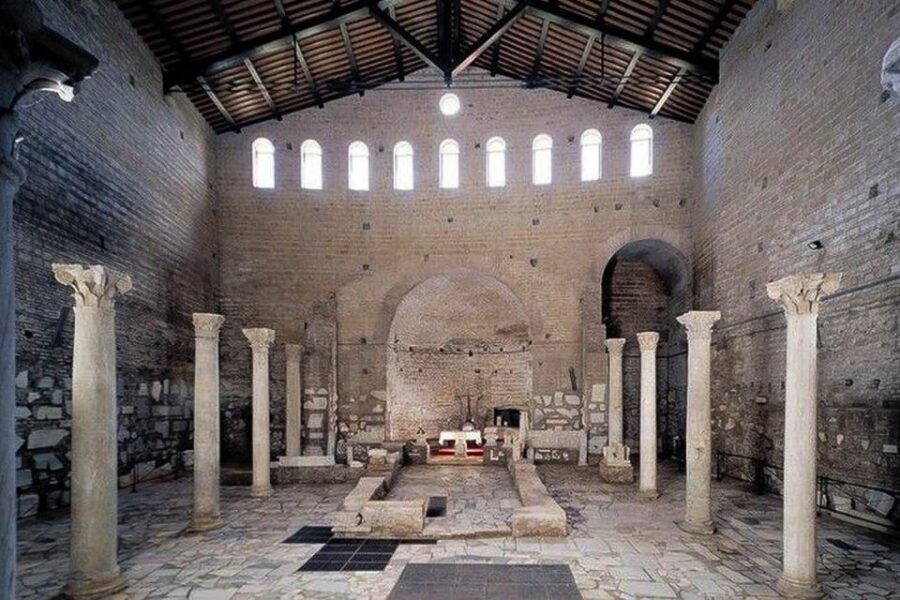
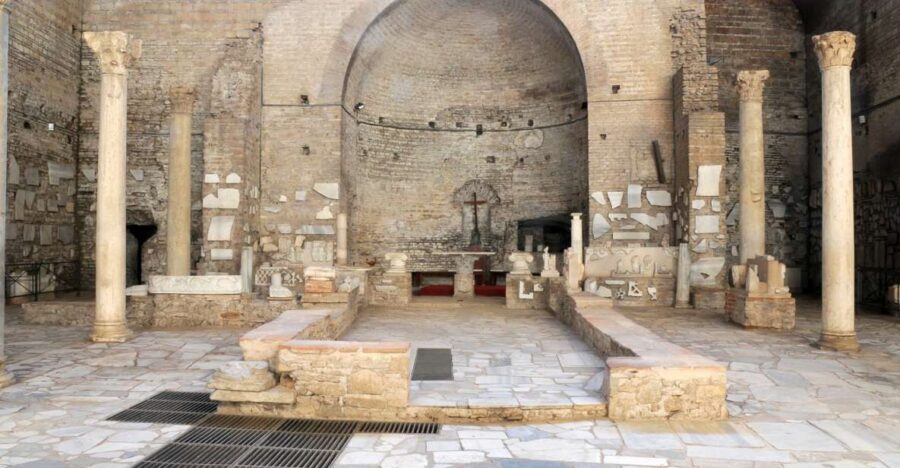
On the second level, you’ll reach the area connected to the martyrs Nereus and Achilleus. The information here is specific: toward the end of the third century, their bodies were placed in a crypt on the second floor. That crypt didn’t stay small.
It was transformed into a small basilica by Pope Damasus (366–384). Later, Pope Siricius (390–395) enlarged it until reaching its current size. Even without obsessing over timelines, this is a big deal: it shows how the meaning of the site grew over time, moving from a burial crypt into a place with broader religious importance.
This is also where the catacombs feel most “intentional.” The underground structure becomes a focal point rather than just a network of passages. The guide’s explanation is what helps you connect the architecture to the people and beliefs linked to it.
If you’re drawn to early Christian history and want proof that Rome’s underground wasn’t just utilitarian, this section is your reason to be here.
Why the Live Guide Matters: Andrea, Martin, and the Small-Group Q&A
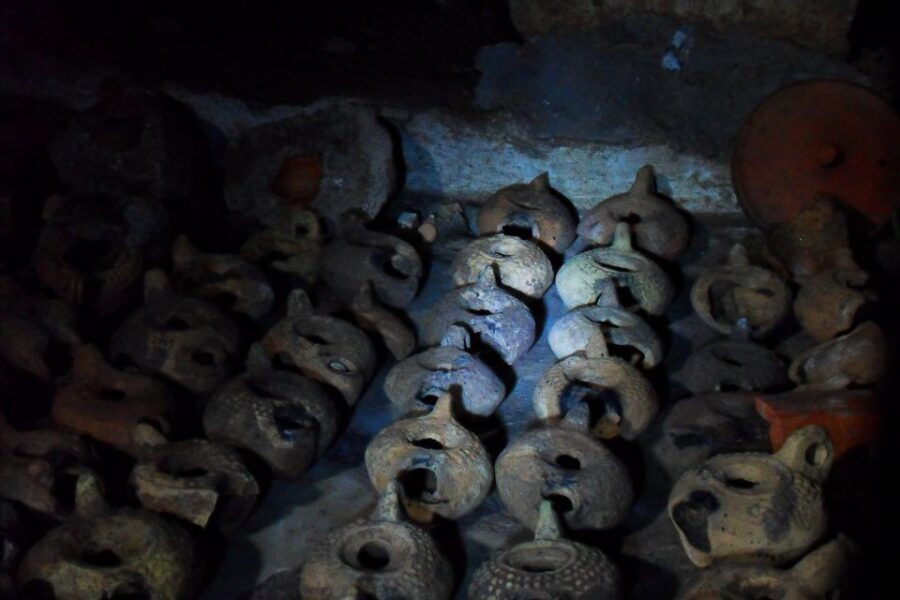
For a place like this, the guide isn’t optional. The tour lasts 30 minutes, and the details are dense: dates, family ties, changes in use, and the purpose behind restoration. Without guidance, you might notice the frescoes but miss why they matter.
The best part is how the experience can feel personal because the group is capped at 10 participants. That keeps the energy calm enough for questions. In past tours, guides like Andrea have been praised for being friendly, professional, and very passionate about history and art. Other guides, including Martin on German-language tours, have been noted for explaining things calmly and answering questions.
You’ll also learn about the delicate restoration process, which is a huge part of why some details might not be visible to everyone in the same way. Underground surfaces are fragile, and preservation decisions shape what you see today. When a guide can explain that process clearly, the catacomb starts to feel more respectful rather than simply “old.”
If you care about art interpretation or early Christian context, this is where the tour delivers extra value.
You can also read our reviews of more guided tours in Rome




Practical Stuff That Changes Your Comfort: Clothes, No Photos, and Access Limits
Before you go, plan for the realities of an underground visit. Wear comfortable clothes. Even if the tour is short, you’ll be moving through stone spaces where comfort matters.
Also plan around the rules: photography is not allowed inside. That means your experience is going to be more memory-based. If you rely on photos for later review, I’d suggest you bring a notepad or be ready to rely on your guide’s pointing-out.
Finally, this tour isn’t suitable for everyone. It’s not appropriate for wheelchair users or people with mobility impairments. If mobility is a concern, ask yourself honestly how you handle stairs and uneven, underground pathways before booking.
Good to know: the meeting point is simple but strict. Go directly to the Catacomb ticket office and show your reservation at least 10 minutes before the scheduled tour. For a short visit, running late can cut into what you came for.
Price and Value: Is $16 a Fair Trade for Catacombs?
At $16 per person, this isn’t a “big splurge” tour. What makes the price feel fair is what’s included: you get a live guide and entrance fees. In other words, you’re not paying separately for basic access plus interpretation—you’re getting both bundled.
The time also helps. At 30 minutes, you can fit it into a day without sacrificing the rest of Rome. That matters if your schedule is tight and you don’t want one attraction to consume half the day.
The trade-off is obvious: you don’t get the whole underground. You’ll see a route that focuses on the most meaningful parts—Flavian-related areas, the martyrs’ connection, and the basilica expansion story. If you expect a long, slow walk through every chamber, you’ll be disappointed. But if you want a guided understanding in a compact format, the value is strong.
Who Should Book This Tour (and Who Might Skip It)
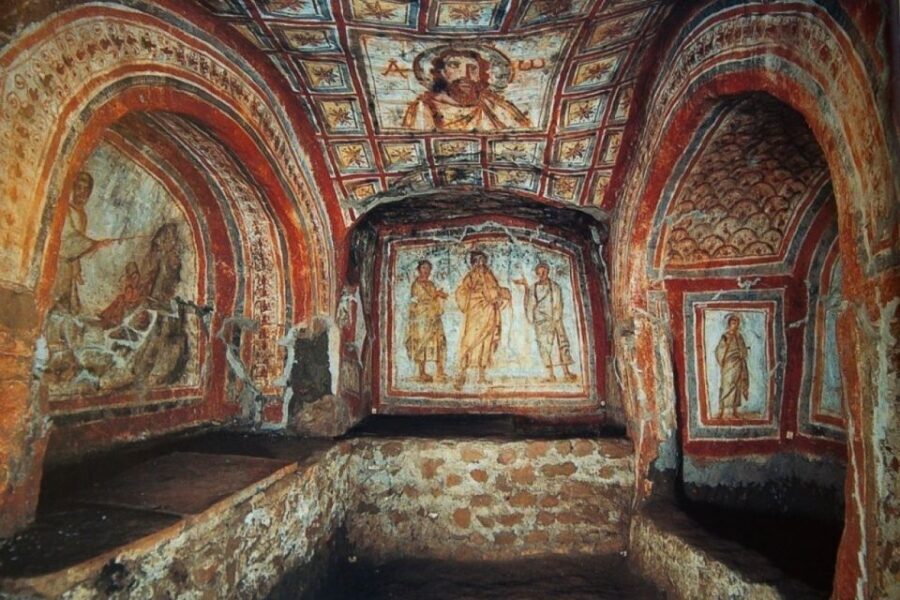
This tour is a great match if you want early Christian context, or if you like art history and symbolism. The pagan-Christian fresco mix is a real selling point because it gives you something different from the usual single-style narrative.
It also suits travelers who prefer small groups. With up to 10 participants and a guide who can handle questions, you’re more likely to leave with clarity instead of only surface impressions.
Consider skipping if you need photography for your memories, since no photos is a core rule. Also skip if mobility is an issue, since it’s not suitable for wheelchair users and people with mobility impairments.
If you’re the type who enjoys architecture and how people used space for burial over centuries, you’ll probably feel rewarded by the way the tour connects dates, people, and wall art into one understandable route.
Should You Book the Catacombs of Domitilla?
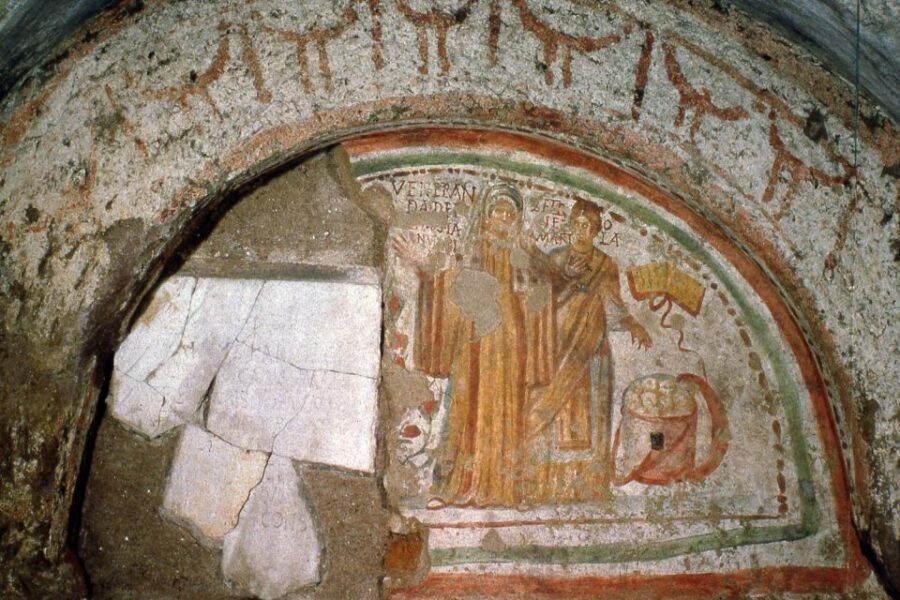
Yes, you should book this tour if you want a guided, time-efficient underground experience that focuses on what matters: the shift from pagan to Christian use, the fresco themes, and the martyrs’ basilica tied to Pope Damasus and Pope Siricius. The small-group size, included entrance fee, and attention to restoration make it feel like more than a quick ticket.
Skip it if photography is non-negotiable for you, or if mobility limitations mean the underground route won’t work safely. Otherwise, this is one of those Rome experiences where the short duration still leaves you with a clear sense of place—and a story your brain can keep.
FAQ
How long is the Catacombs of Domitilla guided tour?
The tour lasts 30 minutes.
What languages are offered?
The live guide is available in Italian and English.
How much does the tour cost?
The price is $16 per person.
Is there an entrance fee included?
Yes. The tour includes the entrance fees along with the tour guide.
Where do I meet for the tour?
Go directly to the Catacomb ticket office and show your reservation.
How early should I arrive?
Show your reservation at least 10 minutes before the scheduled tour time.
Can I take photos inside the catacombs?
No. Photography is not allowed inside.
Is the tour suitable for wheelchair users or people with mobility impairments?
No. It is not suitable for people with mobility impairments or wheelchair users.