REVIEW · CASTEL SANTANGELO TOURS
Rome: Castel Sant’Angelo Tour With Skip-the-line Access
Book on GetYourGuide →Operated by Doooing · Bookable on GetYourGuide
Castel Sant’Angelo is one of Rome’s most dramatic surprises. I love that this tour gets you skip-the-line access so you lose less time to queues, and I also love the way it turns the visit into a clear story from Hadrian’s mausoleum to Papal fortress. One important consideration: it’s not recommended for limited mobility (and it’s not suitable for wheelchair users).
This is a small-group experience focused on what you’re seeing, not just where to stand for photos. You’ll meet your guide near the castle area, then head inside with the official ticket handled for you, plus headsets if needed so you can actually hear every explanation in Spanish, Italian, or English.
In This Review
- Key takeaways before you go
- Why Castel Sant’Angelo feels like Rome’s timeline in stone
- Getting to the castle: where the tour starts and how you’ll move
- Step-by-step inside Castel Sant’Angelo: Hadrian to the Papacy
- The Mausoleum of Hadrian (the part everyone remembers)
- The Archangel Michael legend (how the name took hold)
- Papal corridors and apartments (the part that feels like hidden pathways)
- Frescoes, sculptures, and angels: what you should look for
- The terrace and defensive wall views: the payoff moment
- How skip-the-line access changes your visit
- Guide quality: the difference between a visit and a story
- Price and value: is it worth about $78.57 per group?
- What to know before you go (so there are no surprises)
- Who this tour suits best
- Should you book this Castel Sant’Angelo tour?
- FAQ
- How long is the Castel Sant’Angelo tour?
- Where do we meet for the tour?
- What’s included with the tour?
- What languages are available?
- What do I need to bring?
- Is it suitable for wheelchair users or limited mobility?
Key takeaways before you go
- Fast entry with skip-the-line so your time inside feels bigger than the time outside
- Hadrian’s tomb and Papal corridors connected into one easy-to-follow narrative
- Archangel Michael legend (plague of 590) gives the castle its nickname and mood
- Bernini and other sculpted angels are easier to spot with guidance
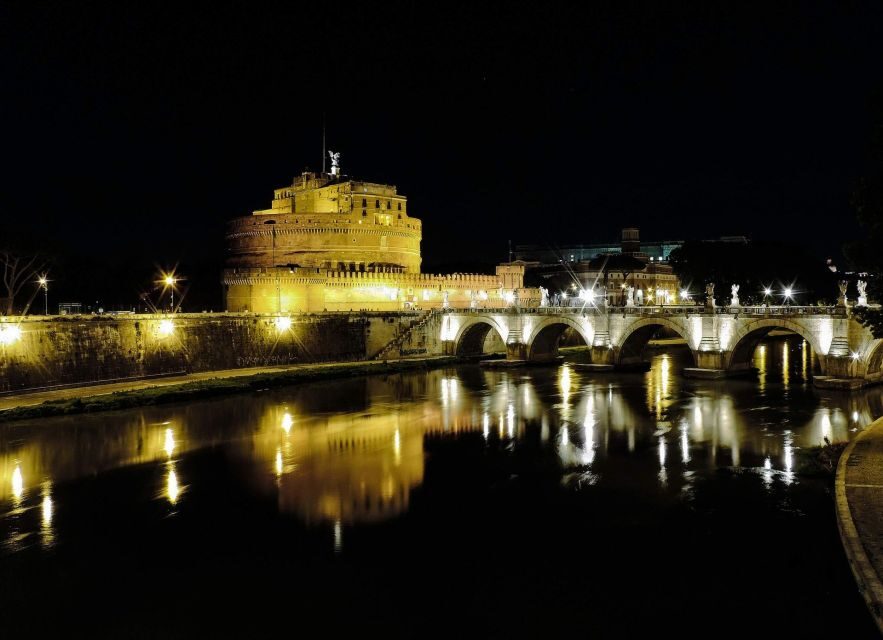
- Terrace viewpoints include a strong sense of the defensive wall and river setting
Why Castel Sant’Angelo feels like Rome’s timeline in stone
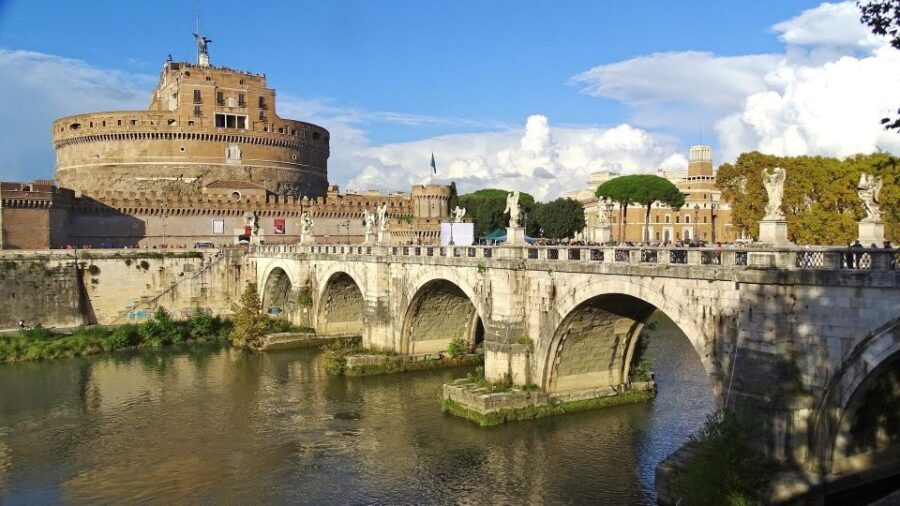
Castel Sant’Angelo sits on the Tiber like it’s holding a grudge against time. One minute you’re in modern Rome; the next you’re inside a monument that has served emperors, popes, and defenders. The best part of a guided visit is that you don’t have to guess what each room is for. You walk in with your guide pointing out what matters: the tomb roots, the later Papal use, and the stories people still tell about saints and miracles.
I especially like how the guide frames the castle as a sequence of “chapters.” Your visit starts with Hadrian’s mausoleum, then shifts toward the Papal corridors and apartments, and finally lands on the terrace views. That structure is what makes the experience feel satisfying, even if you don’t know much about Roman history before you arrive.
You can also read our reviews of more tours and experiences in Rome


Getting to the castle: where the tour starts and how you’ll move
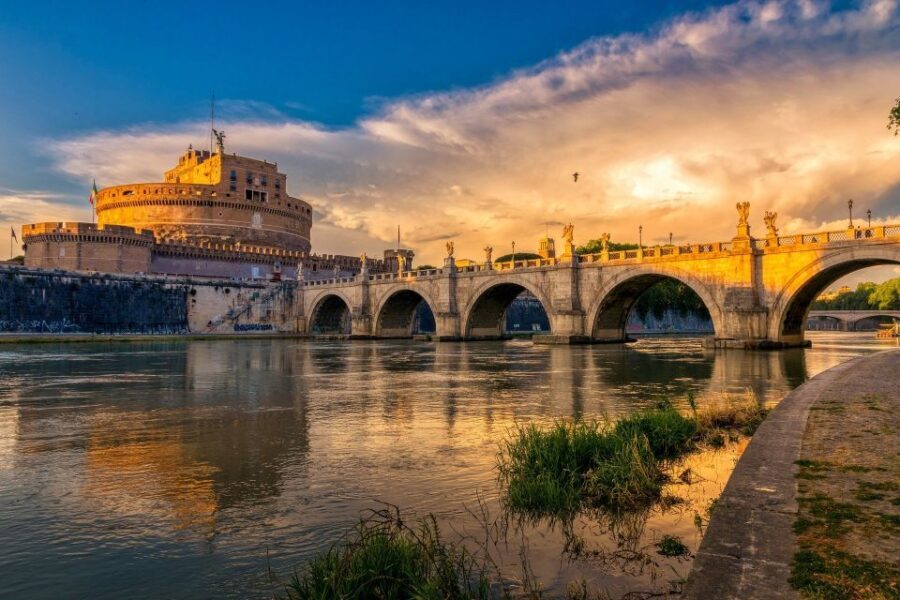
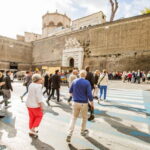
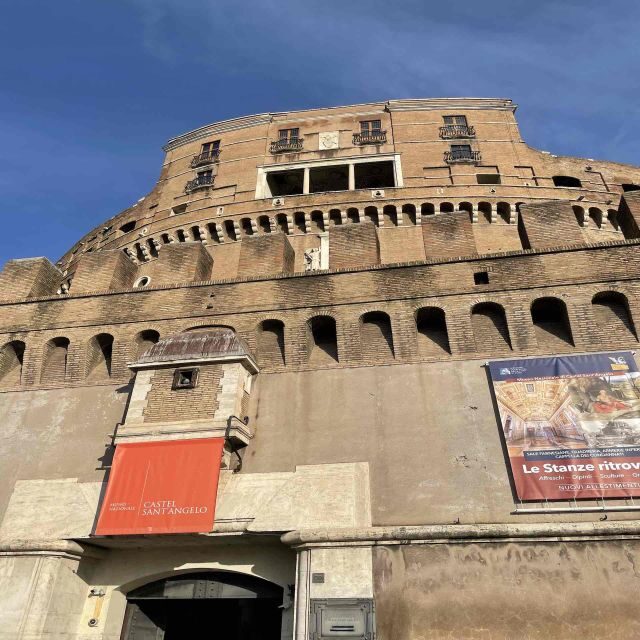
The experience starts around St. Angelo Bridge and then connects you to the castle entrance area. Your guide will be easy to spot: they carry a blue flag with the Doooing Experience logo at the main entrance. That small detail matters on a busy day, because Castel Sant’Angelo can feel like a lot of lines, turns, and people asking where to go.
Once you’re with the group, you’re set up for one smooth flow into the building. The tour ends back at the meeting point, so you’re not left wandering around looking for your way out.
Practical tip: wear comfortable shoes. Even on a “short” tour, you’re still moving through historical spaces, and the ground around the site can be uneven.
Step-by-step inside Castel Sant’Angelo: Hadrian to the Papacy
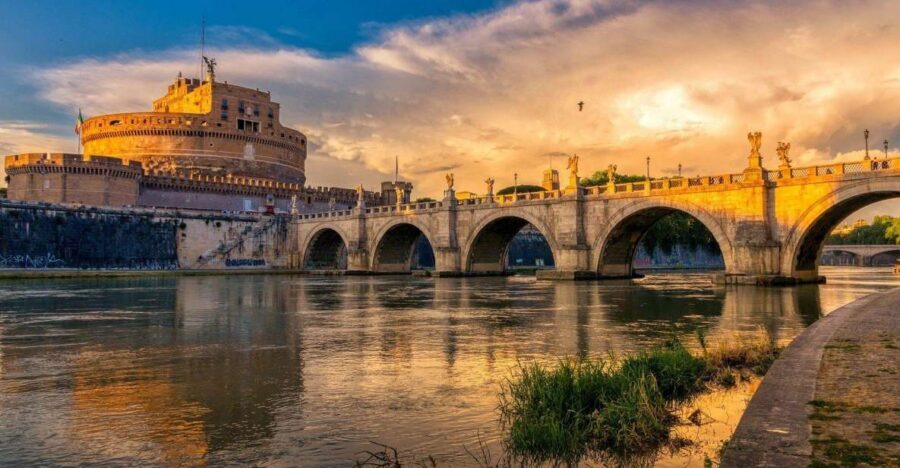
The Mausoleum of Hadrian (the part everyone remembers)
The whole castle begins as the tomb of the Roman emperor Hadrian—often called Hadrian’s Mole. When you’re inside with an expert guide, it stops being a label on a wall. You understand why the structure feels so monumental, why it’s built with power in mind, and how it later became something else.
This is where the tour earns its keep: you’re not just looking at “ancient Rome.” You’re learning what this building was meant to do—store memory, project authority, and endure.
The Archangel Michael legend (how the name took hold)
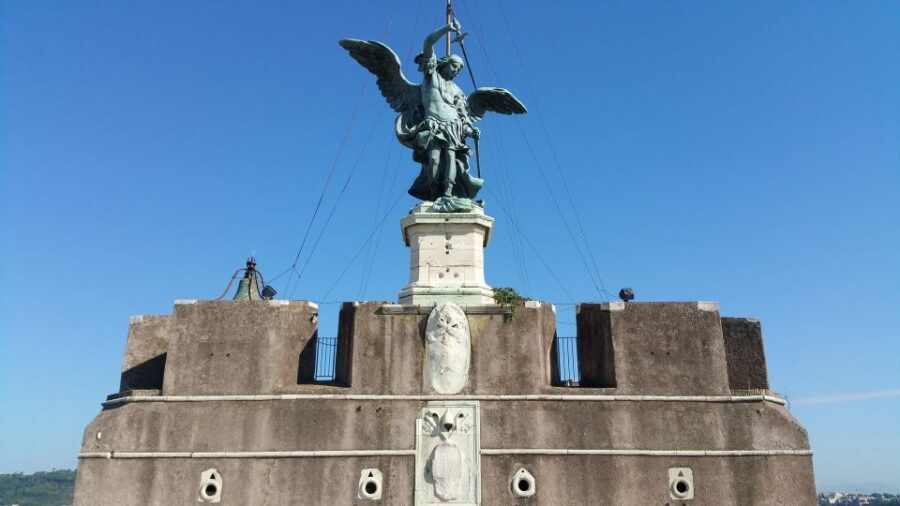
Castel Sant’Angelo’s famous nickname comes from a story tied to the year 590. You’ll hear about Archangel Michael appearing atop the mausoleum, sheathing his sword, and signaling the end of the plague. Even if you treat legends as legends, this story explains the castle’s aura. It also helps you understand why religious art and symbolism later mattered so much here.
If you like history that has a human tone—even when it’s supernatural—this legend gives the visit a pulse. It turns stone into something people responded to in real time.






Papal corridors and apartments (the part that feels like hidden pathways)
After the tomb foundation, the castle becomes a Papal stronghold and communications space. Your guide brings you through the Papal corridors of Castel Sant’Angelo and points out features tied to Papal life. This is the section where you start to appreciate how the castle functioned.
Corridors matter here. They weren’t built for beauty first; they were built for movement, control, and safety. With a guide, you notice how the layout supports that purpose, not just that it looks old.
Frescoes, sculptures, and angels: what you should look for
Castel Sant’Angelo has art, but it’s the kind of art that’s easy to miss if you wander on your own. With this tour, you get help spotting the pieces that visitors usually walk past.
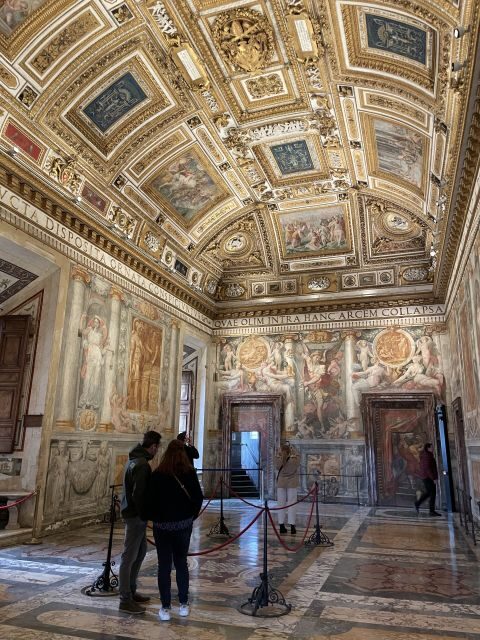
You’ll see mention of frescoes, Papal spaces, and corridors filled with details that feel more meaningful once someone explains the story behind them. And you’ll also get a clear lead on angel sculptures connected to major artists, including Bernini, Raggi, and Morelli.
What I like about this approach is that it changes your photo stops. Instead of shooting randomly, you’re shooting with purpose: you know which figures matter and why. That’s a big deal at a site like this, where the visuals can be impressive but also easy to misread without context.
The terrace and defensive wall views: the payoff moment
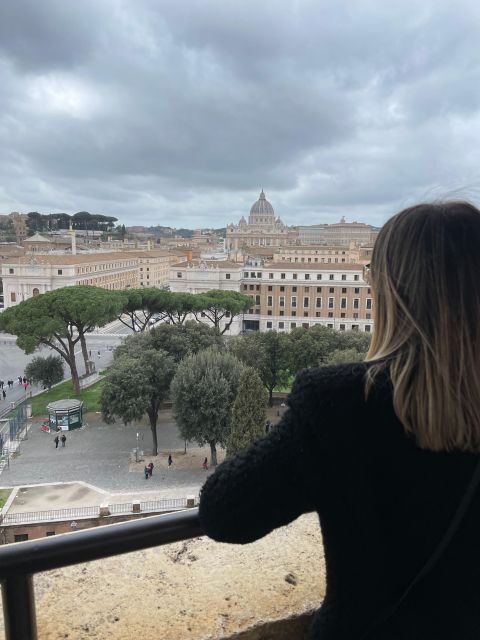
Eventually, you reach the part that feels like a reward: the terrace. From there, you can admire the stunning view and also take in the defensive perspective—especially the view of the castle’s defensive wall.
This is where your brain connects the whole building to its setting. You look at the Tiber and surrounding area and suddenly the “why” of the fortress design feels obvious. You can see how the building relates to movement in the city and how high points like this were used to watch for threats.
If you’re short on time in Rome, this terrace stop is one of the highest value moments. It’s quick, it’s memorable, and it makes the castle feel like it belongs to the city, not just inside a ticket.
How skip-the-line access changes your visit
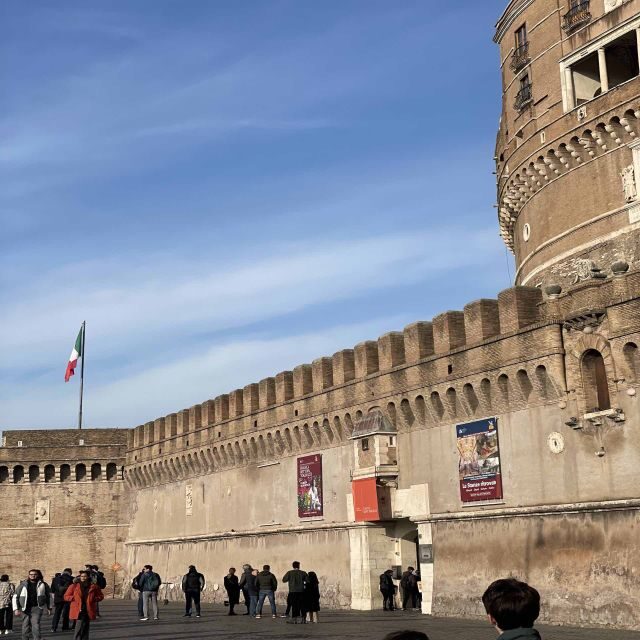
Castel Sant’Angelo can be popular, and lines are one of the most annoying ways to spend a Rome morning or afternoon. The biggest practical win here is skip-the-line entrance. You spend your time where it counts: inside the castle with your guide.
Skip-the-line doesn’t magically make every second fun, but it does reduce the two biggest tour-killers: waiting in the wrong place and missing the flow of rooms because you lost time before you even started.
Also, if headsets are required, you’ll use them. That’s a small comfort that makes explanations easier, especially in echo-y spaces.
Guide quality: the difference between a visit and a story
A tour like this lives or dies by the guide. The good news is that the experience has a strong track record of guides who can hold a group’s attention.
You may encounter guides such as Irene, Marcello, Silvia Conforti, Alexandra, Alessandra, Maria, or Andrada, and the theme is consistent: they’re engaging, they guide you to the best spots for seeing and photographing, and they answer questions in a way that doesn’t make you feel rushed.
I also like that this isn’t just one long lecture. The format is built around walking through the castle, stopping where it matters, and using the artwork, corridors, and viewpoints as the “text” you’re reading.
Price and value: is it worth about $78.57 per group?
The tour is listed at $78.57 per group (up to 1 person), with the official site ticket priced at 16€. On paper, that might look like a big gap—until you factor in what you’re buying.
You’re paying for:
- Skip-the-line access, which saves time and reduces stress
- A live guide who connects the tomb, Papal corridors, art, and legends into one visit you can actually follow
- Headsets if needed, which helps you catch details without straining
- A planned pace of stops so you don’t spend the visit guessing what to look at first
If you’re the kind of traveler who learns faster when someone points things out in person, it’s solid value. If you’re mainly a wander-at-your-own-pace person, you might feel the guide time as extra cost. But even then, Castel Sant’Angelo is the kind of site where context makes a noticeable difference.
What to know before you go (so there are no surprises)
A few practical rules help the visit stay smooth:
- Bring a passport or ID card. Full names and dates of birth are required at booking.
- Bring comfortable shoes.
- No pets, and no luggage or large bags.
- Due to the Jubilee, some monuments may be under restoration, and access routes can change. Check your messages before you go.
- Don’t be late. If you arrive after departure time, you can’t join, and tickets won’t be refunded.
If you like planning with a little flexibility, the tour offers reserve now & pay later and free cancellation up to 24 hours in advance for a full refund. That’s helpful when you’re juggling Rome weather and timing.
Who this tour suits best
This tour is a great match if you want:
- A guided walkthrough that explains what you’re seeing in Hadrian’s tomb, Papal corridors, and themed legends
- A calmer experience than trying to figure it out alone
- Clear viewpoint guidance at the terrace, including the defensive-wall perspective
- A guide-led emphasis on art details like angel sculptures by major artists
It’s less ideal if you have limited mobility or need wheelchair access, since it’s not recommended for wheelchair users.
Also, it’s a strong fit for first-timers to Castel Sant’Angelo. If you already know Roman and Papal connections, you’ll still benefit from the way the tour organizes the story, but you might move faster on your own after.
Should you book this Castel Sant’Angelo tour?
Yes, I’d book it if you care about the difference between seeing a site and understanding it. The combination of skip-the-line entry, a focused guide route through Hadrian’s tomb to Papal corridors, and the payoff terrace views makes it a very efficient use of time.
I’d skip it only if you:
- Need wheelchair-friendly access
- Prefer totally independent pacing and don’t want to pay for guide time
- Are arriving with lots of luggage or expecting to bring items that aren’t allowed
If you’re on a Rome schedule where every hour counts, this is the kind of tour that helps you feel like you actually got something from the ticket.
FAQ
How long is the Castel Sant’Angelo tour?
The duration is listed as 2 hours. The guided visit inside the castle is described as 2.5 hours, so it can run a bit longer depending on how the visit proceeds.
Where do we meet for the tour?
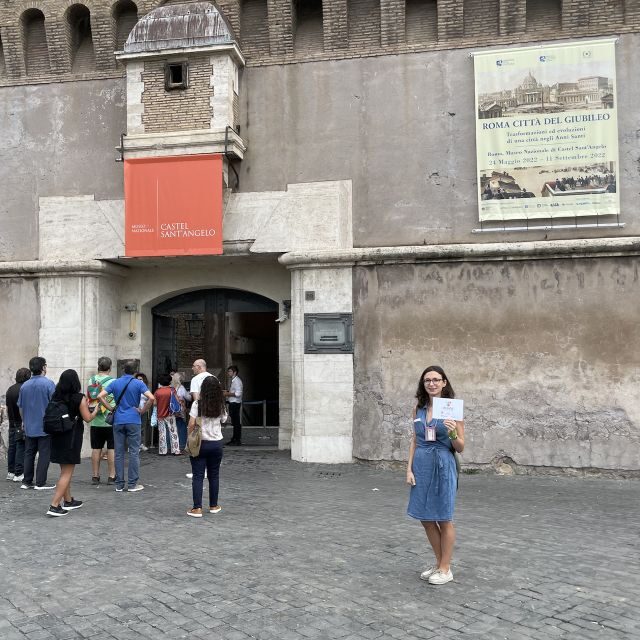
You meet at the main entrance of Castel Sant’Angelo, where your guide carries a blue flag with the Doooing Experience logo. The tour also references St. Angelo Bridge as the start area.
What’s included with the tour?
It includes skip-the-line entrance ticket, a live guide, and headsets if required.
What languages are available?
The live guide is offered in Spanish, Italian, and English.
What do I need to bring?
Bring a passport or ID card and wear comfortable shoes.
Is it suitable for wheelchair users or limited mobility?
No. The tour is not recommended for people with limited mobility and is not suitable for wheelchair users.
You Might Also Enjoy

More Skip the Line in Rome
- Skip-the-Line Group Tour of the Vatican, Sistine Chapel & St. Peter’s Basilica
★ 4.5 · 12,779 reviews