REVIEW · ROME
Rome: Basilica of St Mary Major Catholic Pilgrim Tour
Book on GetYourGuide →Operated by Crucis Tours · Bookable on GetYourGuide
St Mary Major has a way of making Rome feel personal. This 1-hour Catholic pilgrimage tour spotlights the things most visitors miss: the Holy Door, the relics tied to Christ’s life, and the visual Bible lesson inside the basilica.
What I like most is how the guide explains the mosaics laden with symbolism in a way that actually connects to Old and New Testament themes. I also like the practical flow: you start at the fountain outside, get through security smoothly, then end on the steps right in front. One drawback to consider is that the church has dress rules—no shorts or short skirts—so bring something that covers your knees.
In This Review
- Key highlights to look for
- Why St Mary Major beats the typical Rome church stop
- Meeting at the fountain: get your bearings fast
- Entering with the Holy Door in mind
- The five names of the basilica: history you can actually follow
- Relics: the crib wood and the glass sarcophagus of Pope St Pius V
- Salus Populi Romani: seeing an icon with context
- The mosaics behind the altar: Bible scenes you can decode
- St Mary Major’s “why now” factor during Jubilee years
- Timing, pacing, and what happens at the end
- Price and value: what $65 buys you
- Who this tour is best for (and who might want to think twice)
- First-class guide moments: Wen and Tom as examples
- Should you book the Rome: Basilica of St Mary Major tour?
- FAQ
- What is the meeting point for the tour?
- How long is the St Mary Major tour?
- Is express security included?
- What will we see inside the basilica?
- Is there a Holy Door involved in the tour?
- What group size should I expect?
- Are radio headsets provided?
- What clothing is not allowed?
Key highlights to look for
- A Holy Door stop at one of Rome’s Major Papal Basilicas during Jubilee years
- Relics you can see close up, including wood from the crib of the baby Jesus
- The Salus Populi Romani icon, traditionally linked to St Luke the Evangelist
- Christ’s Passion pilgrimage link, if you continue on to Via Crucis
- Mosaics with catechesis, where images carry the teaching, not just decoration
- Small group pacing (up to 10) with radio headsets when needed
Why St Mary Major beats the typical Rome church stop
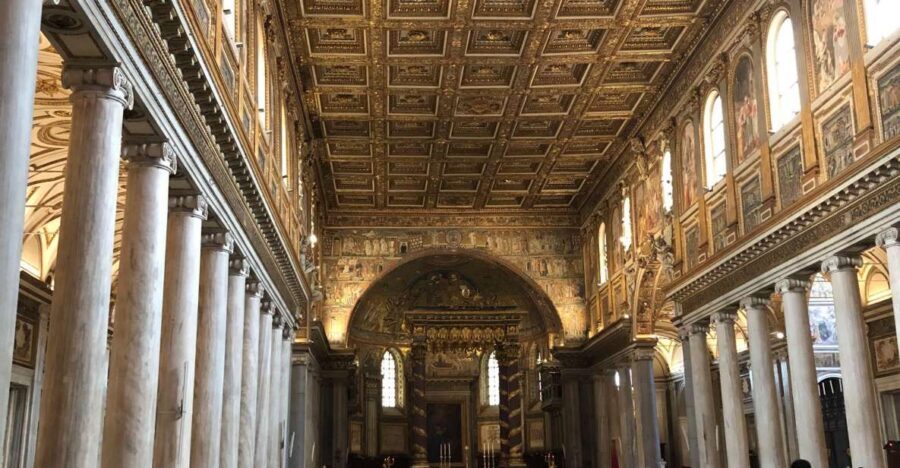
Santa Maria Maggiore (St Mary Major) is one of Rome’s four Major Papal Basilicas, and that status matters. It’s not just a historic building; it’s a living pilgrimage site with a strong Catholic devotional layer.
The tour’s focus is practical: it helps you read what you’re seeing. Instead of treating mosaics like background art, the guide turns them into a guide for understanding biblical themes—especially when you’re standing exactly where the symbolism is meant to land.
You can also read our reviews of more tours and experiences in Rome.
Meeting at the fountain: get your bearings fast
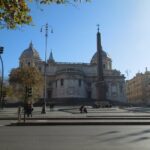
You meet at a fountain right in front of the basilica’s main entrance. The important detail is orientation: the front of the church faces Piazza Santa Maria Maggiore, not Via Cavour.
That might sound small, but in Rome small changes save time and frustration. If you arrive confused, you’ll burn your precious hour searching. This tour asks you to stay in touch in real time via WhatsApp in case anything goes sideways—useful if you’re trying to match your arrival with a group start.
Entering with the Holy Door in mind
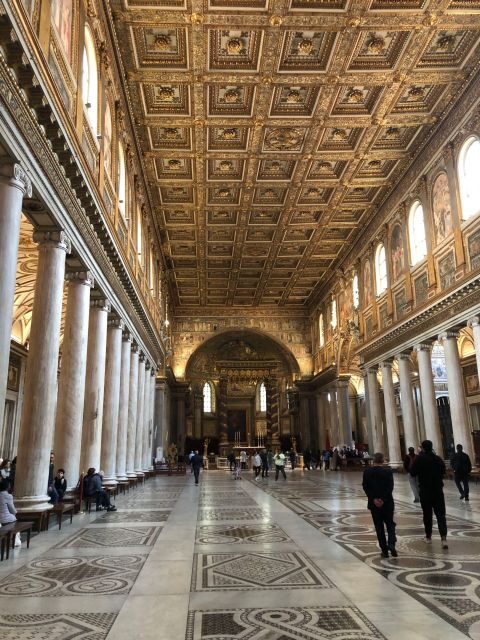
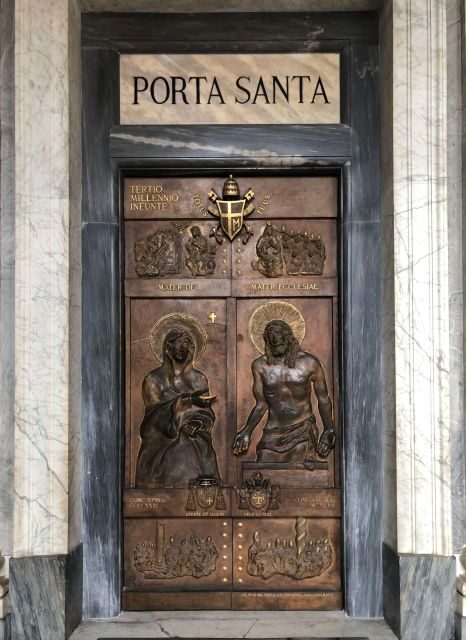
Before you step fully inside, you’ll take a close look at the Holy Door—one of four that open during Holy Jubilee Years. The point here isn’t just that the door exists. It’s that the tour frames it as part of how pilgrims receive a Plenary Indulgence during Jubilee time.
Even if you’re not there in a Jubilee year, this is still a strong way to start. The guide teaches you how Catholics interpret the ritual and architecture together, so the building stops being only a museum stop.
The five names of the basilica: history you can actually follow
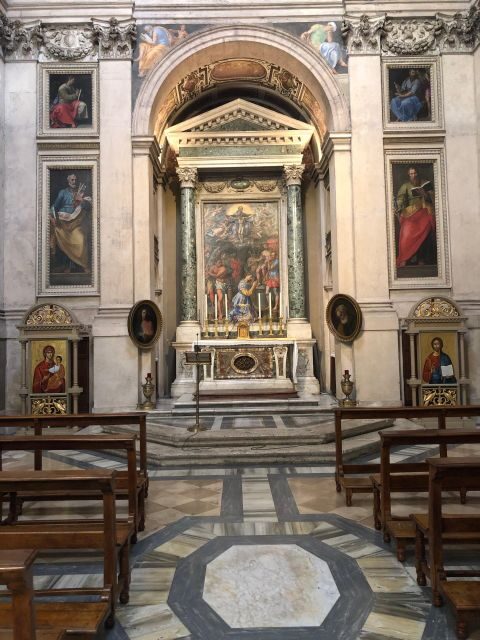
Once you’re together inside, the tour explains that St Mary Major has had five different names, shaped by its eventful history. Names in churches aren’t trivia. They often reflect changes in who the church served, what it protected, and how devotion evolved over time.
This is also where the tour tends to feel more like a conversation than a lecture. If your guide is Tom, for example, the tour is described as a dialogue with questions and back-and-forth explanations. That matters in a basilica because you’re looking at details that deserve a pause.
Relics: the crib wood and the glass sarcophagus of Pope St Pius V
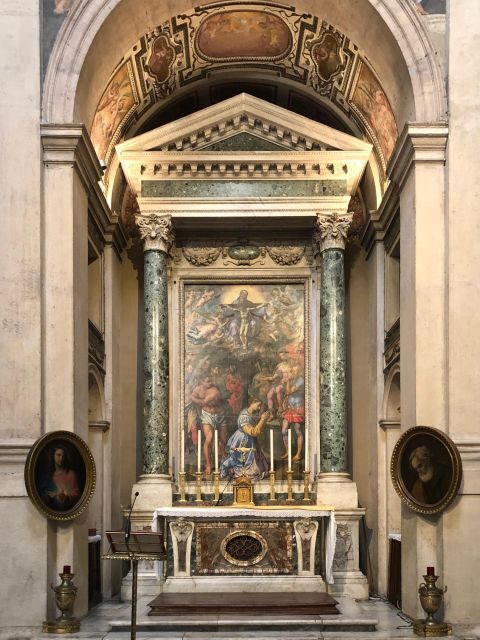
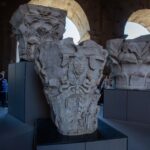
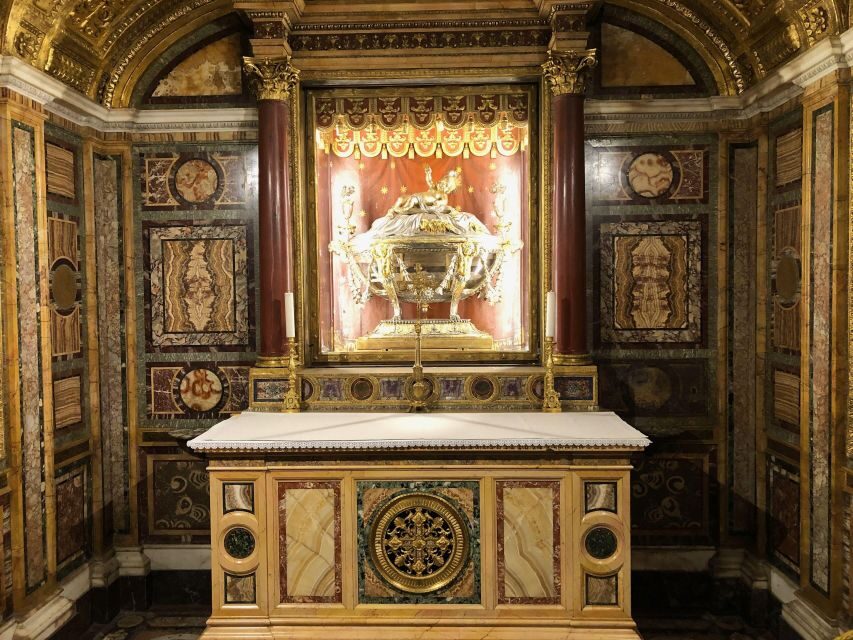
The tour takes you to relics that many mainstream visits ignore. You can see wood from the crib of the baby Jesus—one of several relics from Christ’s life believed to have been brought to Rome for pilgrims to venerate.
There’s also a display connected to Pope St Pius V, including a glass sarcophagus. Even if you don’t share the beliefs, it helps to know why relics function in Catholic devotion: they’re physical anchors for memory, prayer, and pilgrimage.
Practical tip for your eyes: relics are easiest to appreciate when you slow down and look where the guide points. If you’re snapping photos instead of watching, you’ll miss the tour’s main “aha” moment.
Salus Populi Romani: seeing an icon with context
One of the tour’s most distinctive stops is the icon Salus Populi Romani, traditionally held to be painted by St Luke the Evangelist. The guide doesn’t treat it like an art object behind glass; it’s presented as a devotional image with a specific meaning for pilgrims.
Why this matters for you: icons are meant to be read. The tour helps you understand what Catholics are responding to—how the image carries a message of protection, prayer, and identity. If you’re coming from another faith background, you may still find it meaningful as a window into how Roman Catholic devotion works on the ground.
The mosaics behind the altar: Bible scenes you can decode
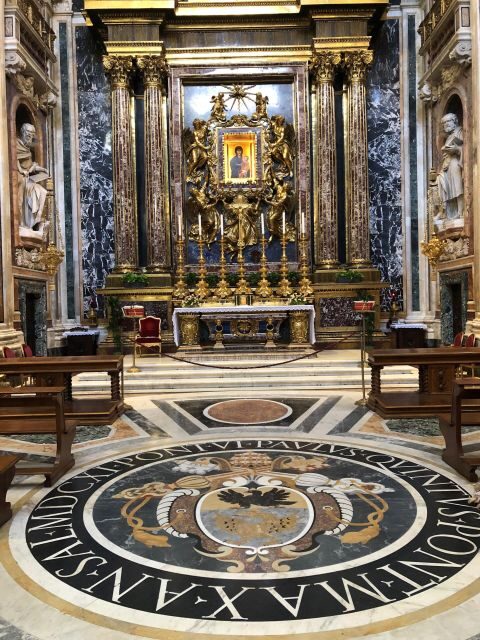
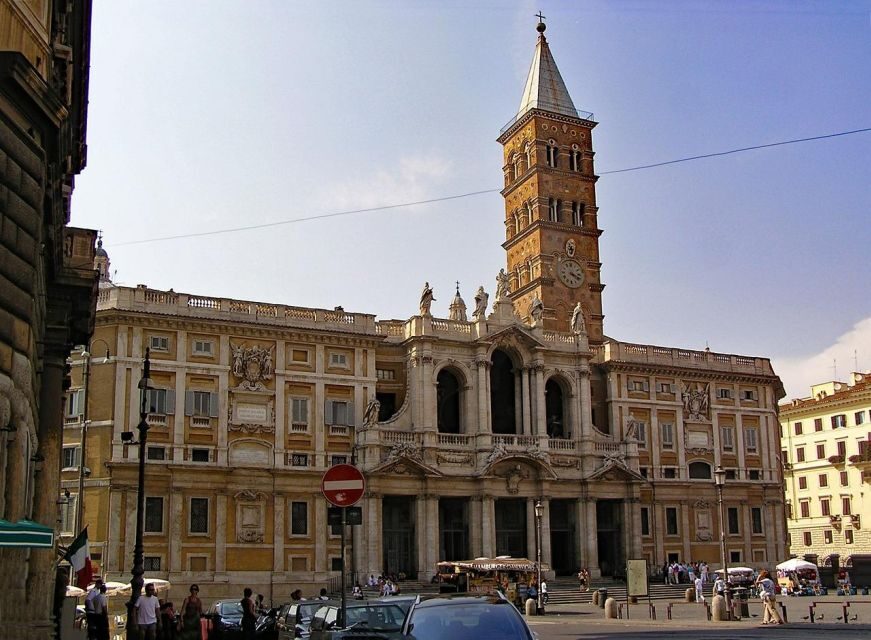
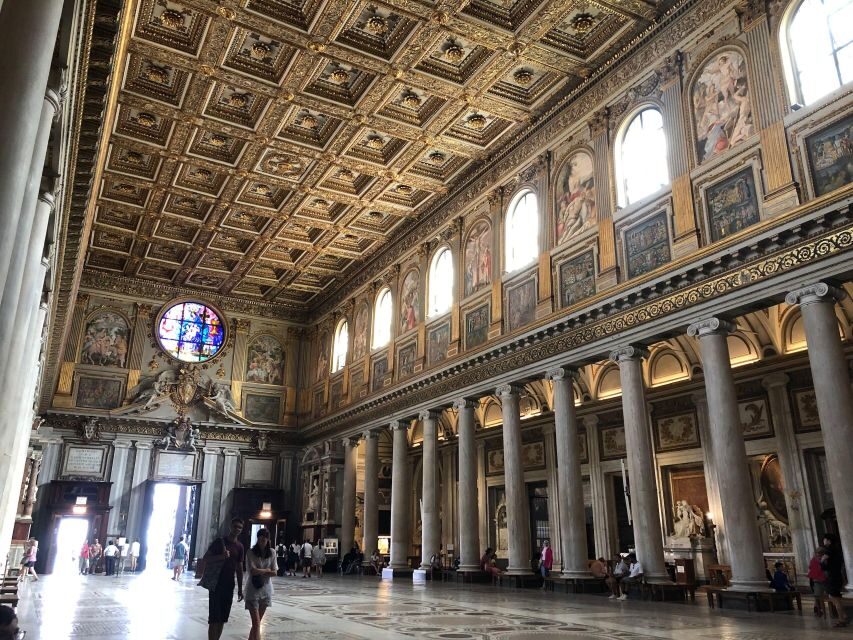
The mosaics are a huge reason to choose this tour over an audio guide. The guide focuses on the symbolic layer—mosaics that brim with biblical symbolism and catechesis that spans both the Old and New Testaments.
This is where I think the tour offers real value. Anyone can stand in front of glittery gold artwork. But not everyone knows how to connect those scenes to the teaching they’re meant to communicate. When the guide frames the images, you start noticing patterns—figures, scenes, and themes that you’d otherwise miss in a quick walk-through.
If you tend to enjoy religious art as storytelling (not just decoration), this is the part you’ll remember later.
St Mary Major’s “why now” factor during Jubilee years
All four Rome Major basilicas have Holy Doors in Jubilee years, and this tour is clearly built around that pilgrim mindset. You’re learning the “shape” of the experience: door, relics, icons, and then the visual teaching in mosaics.
That Jubilee framing can change how you view the architecture too. Instead of thinking, I’m here because it’s famous, you think, I’m here because pilgrims come here with a purpose. That shift makes the hour feel longer in a good way.
Timing, pacing, and what happens at the end
Plan for 60 to 90 minutes overall. The basic basilica tour ends on the steps in front of the main entrance, so you’re positioned right where you can continue exploring Piazza Santa Maria Maggiore or walk toward nearby sites.
If you’re extending the day with the bigger Via Crucis Pilgrim Tour, your guide will continue on to additional places tied to the Relics of Christ’s Passion and the Major Basilica of St John Lateran, among other stops. That’s a smart option if your goal is a full pilgrimage arc rather than only a single basilica visit.
In a small group limited to 10 participants, the pacing usually stays steady, and that matters with something this detail-heavy. Also, for groups of 7 or more, radio headsets are included—useful when the church is busy.
Price and value: what $65 buys you
At $65 per person for about an hour, you’re paying for three things: specialized devotion knowledge, structured time inside one major basilica, and a guide who knows what to point out.
If you’re the type who reads captions and scans altarpieces, an unguided visit can feel fine. But if you want the symbolism explained—Holy Door context, relic significance, the icon’s meaning, and how the mosaics teach—this tour is a better deal than it first looks.
Also, you get an express security check (so you’re not wasting time in lines) and taxes and fees are included. Small group limits help too; you get a guide who can actually manage questions and attention.
Who this tour is best for (and who might want to think twice)
This fits best if you:
- Care about Catholic pilgrimage details like relics, icons, and Jubilee practice
- Enjoy religious art when someone gives you a key for reading it
- Want an English or Chinese guide and prefer a small group setting
It may be less satisfying if you just want a quick architecture walk. The tour is devotional and interpretive, not a general “top sights in Rome” circuit.
One more reality check: because shorts and short skirts aren’t allowed, it’s easiest if you dress conservatively from the start. Rome heat happens, but your knees still need a plan.
First-class guide moments: Wen and Tom as examples
The guides seem to vary, but the best experiences described have a shared pattern: clear, professional guidance and room for questions.
Wen is singled out for being excellent, knowledgeable, and professional, with guests appreciating how smoothly the tour moved with the group. Tom is described as extremely informative and easy to understand, with explanations detailed enough to spark thoughtful questions—and even a dialogue-style approach where you’re not just listening.
If your goal is to feel guided through meaning (not just facts), choose this tour with confidence.
Should you book the Rome: Basilica of St Mary Major tour?
Book it if you want a guided Catholic pilgrimage experience with real interpretive payoff: the Holy Door, visible relics like the crib wood, the Salus Populi Romani icon tradition linked to St Luke, and the mosaics explained as catechesis—not just decoration.
Skip it if you’re mainly chasing quick photo ops or you’re uncomfortable with devotional focus and dress rules. In that case, a lighter, general basilica visit could suit you better.
For many people, this tour is the sweet spot: short enough to fit into a day, specific enough to matter, and paced so you don’t miss the details that make St Mary Major feel like more than another big church.
FAQ
What is the meeting point for the tour?
You meet at the fountain in front of the main entrance to Basilica Papale di Santa Maria Maggiore (Santa Maria Maggiore).
How long is the St Mary Major tour?
The tour lasts about 1 hour, with tours described as running between 60 and 90 minutes.
Is express security included?
Yes. The tour includes an express security check.
What will we see inside the basilica?
You’ll see the mosaics, the wood relic of the crib of the baby Jesus, and the icon Salus Populi Romani by St Luke the Evangelist, plus the glass sarcophagus of Pope St Pius V.
Is there a Holy Door involved in the tour?
Before entering, you’ll look closely at the Holy Door, one of four that open during Holy Jubilee Years.
What group size should I expect?
It’s a small group limited to 10 participants.
Are radio headsets provided?
Radio headsets are included for groups of 7 or more.
What clothing is not allowed?
Shorts and short skirts are not allowed.
If you tell me your travel dates (and whether it’s a Jubilee-year visit), I can help you decide how much time to leave for St Mary Major so the hour feels unhurried.