REVIEW · VATICAN CITY
Private Vatican Museums, Sistine Chapel Highlights Tour
Book on Viator →Operated by Highlights of Rome TOURS · Bookable on Viator
Staring at the Vatican can make your head spin. This private tour lays out the must-see stops in a smart order, with time built in for the big wow moments and enough commentary to help you actually understand what you’re looking at.
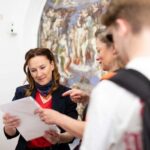
I especially love the focused run through the Pio-Clementine Museums (including the Laocoön group and the Belvedere torso) and the shift into the Raphael Rooms and Borgia Apartments, where the art turns political and personal. There’s also a very human touch here: in past groups, the guide Renata was praised for giving both the big picture and the close-up details, even calling attention to small setup moments that make the Sistine Chapel land harder.
One possible drawback: the Sistine Chapel stop is short (about 15 minutes), so if you want to linger for a long time, you’ll feel a bit time-pressed.
In This Review
- Key highlights worth clocking
- How the 7:30 start helps you see more (and feel less rushed)
- Vatican Museums: Pio-Clementine statues first for instant payoff
- Gallery of Tapestries and Maps: what to look for besides decoration
- Raphael Rooms and Borgia Apartments: where the Vatican turns story-heavy
- Sistine Chapel: short, focused, and built for the big images
- St. Peter’s Basilica via a guided exit: what you get and what you don’t
- The guide makes the value real (Renata’s example is telling)
- Price and value: what $230.13 really buys
- Logistics you should know before you go
- Who this tour suits best (and who might want a different approach)
- Should you book this Private Vatican Museums and Sistine Chapel tour?
- FAQ
- Do I get tickets included for the Vatican Museums and Sistine Chapel?
- How long is the tour?
- What time does the tour start?
- Where do I meet the guide?
- Where does the tour end?
- Is St. Peter’s Basilica included, and do I need to pay admission?
- Is the tour fully private?
- Is an English-speaking guide provided?
- Are tips included in the price?
- Can this tour be changed or refunded if I cancel?
Key highlights worth clocking
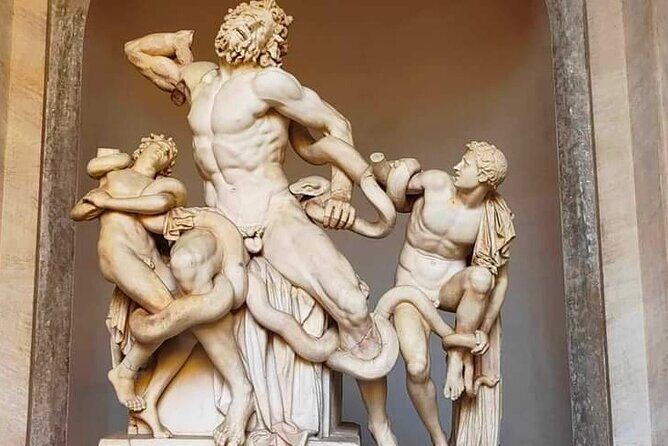
- Pio-Clementine Museums, without the slowdown: You hit famous statues like Laocoön and the Belvedere torso in a guided flow.
- 16th-century visual “maps” of power: The Gallery of Maps is on the route, along with tapestry work that shows how wealth displayed itself.
- Raphael Rooms + Borgia Apartments: You get a coherent jump from Renaissance rooms to darker, more dramatic themes.
- Sistine Chapel timing that works: You get a brief but intentional window to take in Michelangelo’s ceiling and the Last Judgment.
- A guided path toward St. Peter’s Basilica: The tour leads you out via a guided exit, with a quick chance to get inside and look around.
How the 7:30 start helps you see more (and feel less rushed)
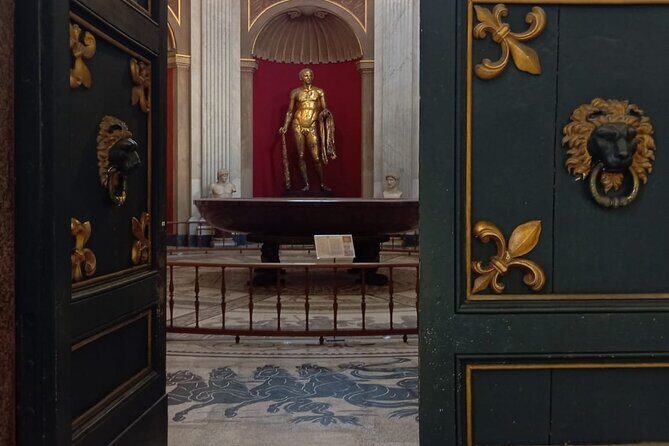
Your day begins early, at 7:30 am, with a private format that matters in the Vatican. The Vatican Museums are large and crowded, and self-guided wandering tends to turn into stop-and-start line math. In this tour, you don’t have to solve that. You follow a plan that groups the main attractions into one smooth morning.
The private angle also gives you something practical: you can talk with your guide about the path before entering. That’s important because not everyone wants the same emphasis. Some people care most about sculpture. Others want painting and frescoes. This tour gives you a structure, but it also leaves room for a small amount of personal tuning.
You’ll meet at Viale Vaticano, Roma RM, Italy for ticket redemption. The ending point is near Piazza San Pietro, with the guide leaving you inside St. Peter’s Basilica so you can keep exploring on your own. The tour runs about 2 hours 30 minutes total, so it’s long enough to feel complete but short enough to still enjoy the rest of Rome after.
You can also read our reviews of more private tours in Vatican City

Vatican Museums: Pio-Clementine statues first for instant payoff
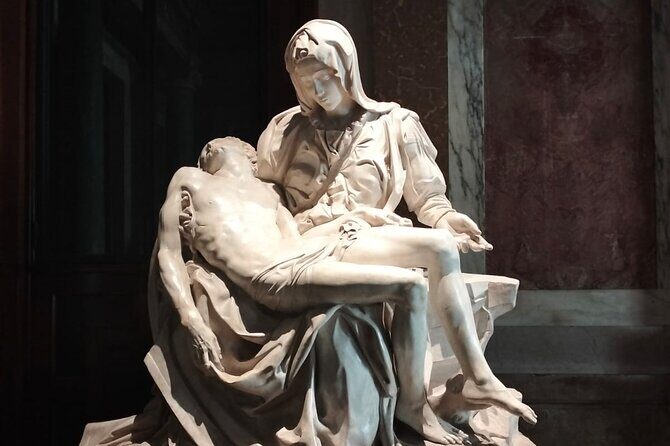
The Vatican Museums start in the Pio-Clementine Museums, and that’s a smart move. Sculpture can be intimidating if you don’t have context, and it’s easy to miss what makes a statue famous. With a guide, you can look at the famous works and quickly understand why people still talk about them.
Two standouts are built into this part of the route:
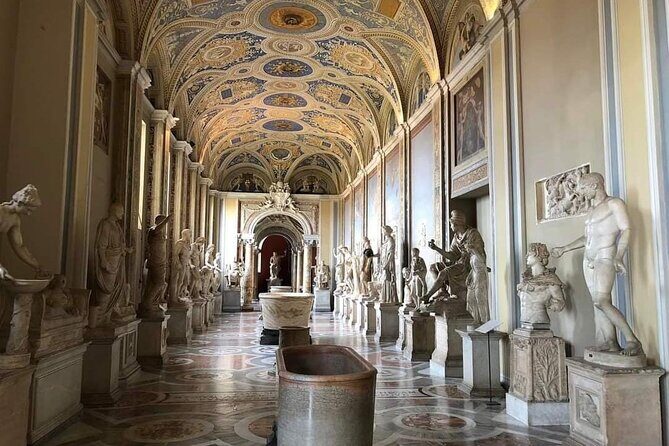
- Laocoön group: A dramatic scene that rewards close looking—faces, gesture, tension. It’s famous for a reason, and a good guide helps you see beyond the obvious drama.
- Belvedere torso: Even though it’s only a torso, it’s a key piece for understanding classical form and idealized anatomy.
You also move beyond sculpture into rooms that change the pace. You’ll see the Gallery of Tapestries and the Gallery of Maps, including the 16th-century Maps. These aren’t just decorative rooms. They show how the Vatican displayed knowledge, influence, and wealth in ways that weren’t only about art for art’s sake.
A minor consideration: Vatican Museums are big, and the tour is still moving. If you’re the type who wants to study one statue like it’s a museum dissertation, you’ll want to treat this stop as “highlights with real guidance,” not as a slow museum binge.
Gallery of Tapestries and Maps: what to look for besides decoration
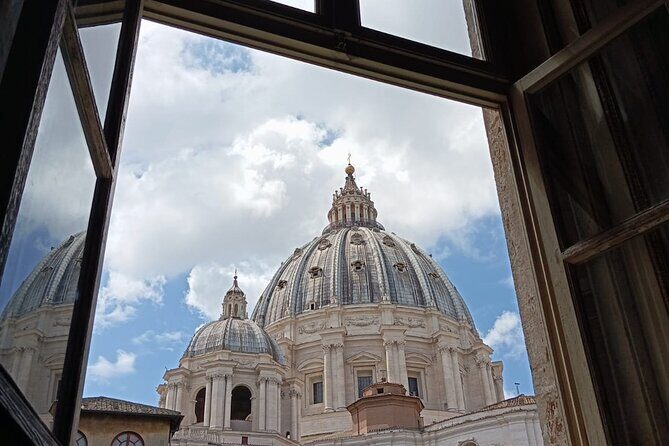
The Gallery of Tapestries gives you a different kind of visual education. Instead of marble, you’re looking at how power and status were turned into wearable and wall-hung storytelling. The point isn’t only that the tapestries are impressive—it’s that they reflect what people valued enough to commission and display.
Then you hit the Gallery of Maps, with the maps painted in the 16th century. This is one of those stops where it helps to have someone point out how to read it. A map isn’t only geography here; it’s a statement. It’s the kind of work that says, we know the world, we can represent it, and we can control the narrative.
If you tend to get lost in museum rooms, you’ll likely like this part because your guide can give you a simple framework: look at style first, then at what the work is trying to communicate, then at how it connects to the next rooms. That pacing is exactly why people praise guides who can keep the overall story moving without drowning you in facts.
Raphael Rooms and Borgia Apartments: where the Vatican turns story-heavy
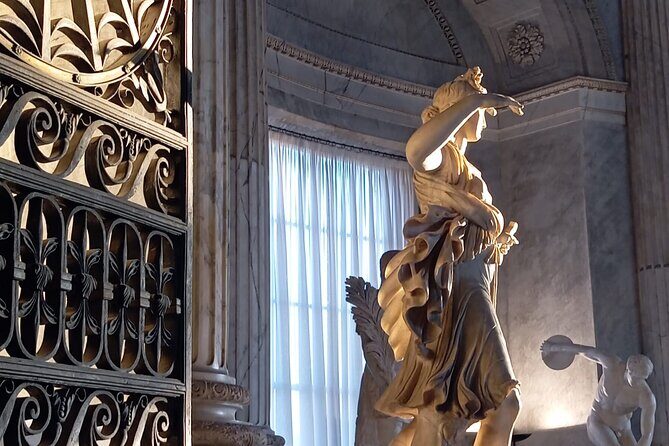
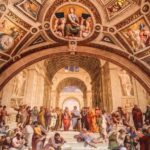
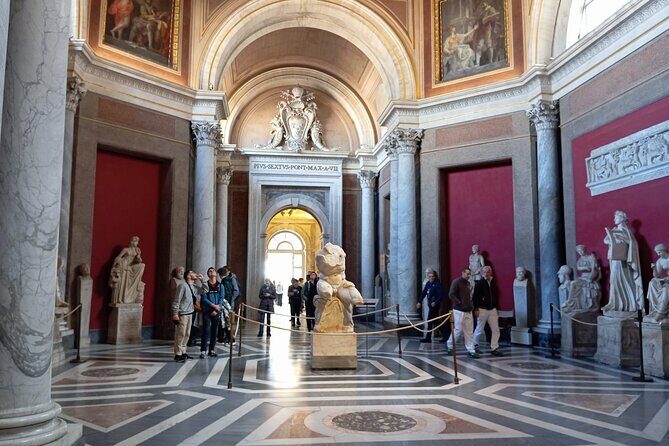
After the art overview, the tour transitions into the former Papal apartments: the Raphael Rooms and the Borgia Apartments. This is where the Vatican Museums shift from “great works” into “message-making.”
The Raphael Rooms (often grouped as the rooms associated with Raphael’s fresco programs) help you see how religious and political ideas were packaged as art people would walk through every day. You’re not just seeing beauty—you’re seeing persuasion.
Then comes the jump to the Borgia Apartments, which change the tone. Even without obsessing over names and dates, you can feel that difference in the storytelling approach. These rooms make it easier to understand why museum visitors sometimes remember the Vatican not as one big building of art, but as a sequence of changing moods and agendas.
This section is also a reason the private setup works well. You can ask for extra clarification while you’re there, instead of trying to Google your way through painted propaganda while everyone waits behind you.
Sistine Chapel: short, focused, and built for the big images
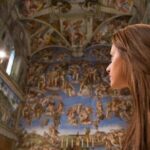
You end the museum portion in the Sistine Chapel, and the time is set at about 15 minutes. That’s not a lot of time compared to how long you could stare at the ceiling on your own. But it’s enough to do something useful if you go in prepared and look with intention.
The Chapel is named after Pope Sixtus IV, and this stop is your chance to take in Michelangelo Buonarotti’s ceiling and the Last Judgment. A good guide helps you avoid the common problem: you look up, you see the art, and then you leave without really connecting what you saw.
In past experiences, guides like Renata were praised for using small setup moments to make the Sistine Chapel hit harder—calling attention to a seemingly minor detail that helps you understand the bigger structure. That style is exactly what you want here, because the chapel doesn’t have time for a slow start. Your best move is to treat those 15 minutes like a guided viewing sprint: look up first, let the guide anchor what you’re seeing, then do a second look with that framework in mind.
One more practical note: the Sistine Chapel is famous for atmosphere, rules, and crowd pressure. This tour won’t make it feel like your own private chapel, but the private guidance helps you use your limited time well.
You can also read our reviews of more museum experiences in Vatican City

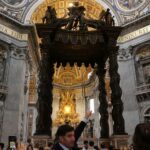

St. Peter’s Basilica via a guided exit: what you get and what you don’t
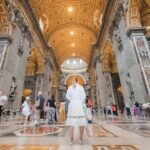
After the Sistine Chapel, the tour includes St. Peter’s Basilica for around 20 minutes, with admission free. The key detail is how you enter: you go out via a guided tour exit that isn’t open to the general public, heading toward the Basilica, and it depends on whether the door is open.
Once you’re inside, your licensed guide leaves you so you can explore at your own pace. This is a nice balance: you get orientation from the guide, then you have room to linger on your favorite spots without worrying about catching up.
Do I wish it were longer? For some people, yes. Twenty minutes is a quick look in a building that can take hours if you want to absorb everything. But as part of a 2.5-hour overall tour, it’s a sensible add-on that gives you that big visual goal without turning your morning into a marathon.
The guide makes the value real (Renata’s example is telling)
On the best days, this tour feels less like a checklist and more like a story you can follow. That’s what the guide does: pacing, context, and the ability to explain complicated art without making you feel tested.
In the past, Renata has been singled out for being friendly and full of practical knowledge, while still keeping the information “the right amount.” The same guide style also came up with something very human: people felt she helped them move through the Vatican efficiently, and in one memorable case, she was able to help a group join a mass with Pope Francis in St. Peter’s Basilica. That doesn’t mean every day will match that exact moment, but it highlights the kind of day-management skill that makes a private tour feel worth paying for.
If you’re the sort of traveler who loves art but hates getting lost in art-history fog, you’ll likely appreciate this guide-led approach. The tour gives you the highlights, but the guide is what turns them into understanding.
Price and value: what $230.13 really buys
At $230.13 per person, the cost isn’t cheap—especially when you compare it to basic entry tickets. But value here isn’t only the ticket price. It’s the combination of:
- Private guiding in a place where self-guided time can disappear fast
- English-speaking guide
- Admission tickets included for the museum and Sistine Chapel
- A time-efficient route that hits major works in a short window
- Guided exit routing toward St. Peter’s Basilica
If you’re traveling as a couple, this can also become more reasonable than it looks, since the private format is the main service you’re paying for. And if you’re traveling solo, you’re paying for the convenience of not fighting lines and crowd flow.
The one cost-related “gotcha” to plan for: tips for your guide are not included. Tips aren’t required in the same way everywhere, but if you’ve appreciated the service, it’s worth budgeting a reasonable amount.
Logistics you should know before you go
This tour is private, meaning only your group participates. That matters because it keeps the route from turning into a generic, stop-by-stop herding situation.
The start point is Viale Vaticano, Roma RM, Italy, and the tour begins at 7:30 am. The end is essentially in the Vatican’s heart—inside St. Peter’s Basilica—so you can continue sightseeing immediately afterward.
It’s also good to know that service animals are allowed. The tour is said to be manageable for most people who can handle walking through museums and standing for short viewing moments, and it’s near public transportation, which helps if you want to connect to other stops afterward.
If you’re sensitive to crowds, aim to be mentally flexible. This is still a top attraction in a small city state with heavy demand, so your success will come from using guidance to stay oriented and efficient.
Who this tour suits best (and who might want a different approach)
This tour is a strong match if you want:
- The main Vatican highlights in one morning
- Guided context for major masterpieces (sculpture, frescoes, and themed rooms)
- A plan that respects your time, without turning it into a full-day Vatican marathon
- A private setup where you can discuss your path before entering
It may not be ideal if:
- You want long, quiet time in the Sistine Chapel and to study every fresco section slowly
- You prefer completely independent exploring with no guidance, no time structure, and no curated route
For families, couples, and first-time visitors, this tour often works because it gives you a real sense of what matters fast—then you can decide what deserves more attention later.
Should you book this Private Vatican Museums and Sistine Chapel tour?
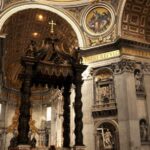
I’d say book it if you want your Vatican morning to feel guided, efficient, and understandable. The route hits the big names—Pio-Clementine statues, Raphael Rooms, Borgia Apartments, then Michelangelo in the Sistine Chapel—and the private format helps you spend your time looking instead of figuring out where to go next.
I’d think twice if your top priority is slow, lingering study. In that case, you might want a longer Vatican plan that gives you more than a quick 15-minute Sistine Chapel window. But for most people, this strikes a practical balance between depth and momentum.
FAQ
Do I get tickets included for the Vatican Museums and Sistine Chapel?
Yes. Admission tickets for the Vatican Museums and the Sistine Chapel are included.
How long is the tour?
The tour lasts about 2 hours 30 minutes.
What time does the tour start?
The start time is 7:30 am.
Where do I meet the guide?
The meeting point is Viale Vaticano, Roma RM, Italy (ticket redemption point).
Where does the tour end?
It ends near Piazza San Pietro in Vatican City, and the guide leaves you inside St. Peter’s Basilica so you can explore on your own.
Is St. Peter’s Basilica included, and do I need to pay admission?
Yes, it includes a visit of about 20 minutes. Admission is free.
Is the tour fully private?
Yes. It’s a private tour/activity, and only your group participates.
Is an English-speaking guide provided?
Yes. The tour includes an English speaking guide.
Are tips included in the price?
No. Tour guide tips are not included.
Can this tour be changed or refunded if I cancel?
No. It’s non-refundable and cannot be changed for any reason.