REVIEW · PRIVATE
Raphael and Caravaggio in the Roman Churches Private Tour
Book on Viator →Operated by Rome Italy Explora · Bookable on Viator
Caravaggio and Raphael hit harder in person. This private church route puts you in the right rooms for chiaroscuro drama and High Renaissance polish, with a pro guide on hand and tickets handled for you. I like that the stops are short and focused, so you get real looking time, not museum fatigue. I also like the mix of art and place: legends, contracts, and chapel commissions all shape what you see. One drawback to consider: you’ll be in church interiors with dress rules and often dimmer lighting, so bring the right layers and wear covered knees and shoulders.
The big value here is pacing plus access. You get luxury pickup and drop-off with a private chauffeur, and you’re not stuck coordinating trains or buses between scattered church stops. Still, it is a private tour that’s priced per person, so it’s best when you can share the cost with the people you’re traveling with.
In This Review
- Key Highlights You’ll Feel on This Tour
- Raphael and Caravaggio in Roman Churches: Why This Format Works
- Santa Maria del Popolo: A Legend-Driven Start and a Very Unusual Interior
- Sant’Agostino and Caravaggio’s Madonna di Loreto: How a Contract Shapes the Image
- Santa Maria della Pace: Baroque Stagecraft Meets Renaissance Painting
- San Luigi dei Francesi and the Contarelli Chapel: Caravaggio’s Triptych in the Right Darkness
- Price and Included Value: What $656.87 Buys You (And What It Doesn’t)
- Best Fit: Who This Private Route Works For
- Should You Book This Tour?
- FAQ
- How long is the Raphael and Caravaggio in the Roman Churches private tour?
- Is pickup and drop-off included?
- Are entrance tickets included for the churches?
- What dress code do I need for the churches?
- Is this tour private?
- Can I get a full refund if I cancel?
Key Highlights You’ll Feel on This Tour
- Luxury pickup and private chauffeur so your day starts easy
- Included church entry at each major stop, so you avoid ticket lines
- Raphael and Caravaggio side-by-side in Rome’s churches instead of bouncing between museums
- Contarelli Chapel focus at San Luigi dei Francesi, the must-see Caravaggio moment
- A guide who compares styles clearly, including how Caravaggio’s drama differs from Raphael’s clarity
Raphael and Caravaggio in Roman Churches: Why This Format Works
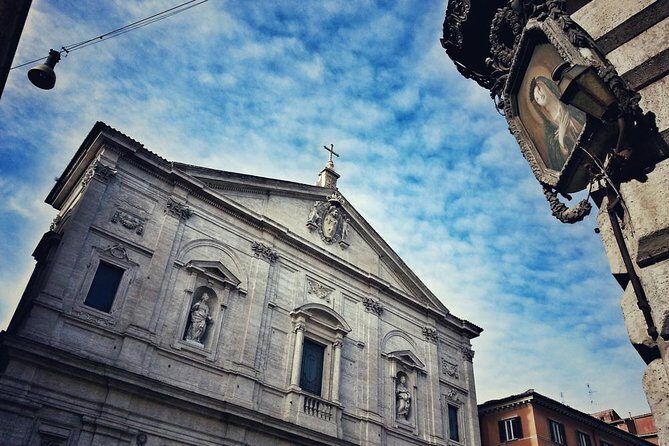
Rome is perfect for art history, but most visitors do it the messy way: too many stops, too little time in each room. This tour is designed like a good conversation. You move in small chunks, you look, then you understand what you’re looking at.
What I like most is the pairing. Raphael and Caravaggio are often talked about as opposites—ideal beauty versus raw realism, smooth Renaissance balance versus Caravaggio’s emotional spotlight. In churches, the contrast isn’t academic. It’s physical. You feel it in the way light hits pigment, in how faces and bodies are posed, and in how religious scenes are staged like lived moments.
Also, you’re not doing this alone with a map. The tour includes a private English-speaking tour escort and a private professional guide by your side. That matters because chapel commissions and placement in a church can change how the art reads. Knowing why a piece was commissioned, or what contract language specified, turns a pretty painting into a specific story.
Timing is part of the value too. The route runs about 3 hours, with roughly 20 minutes at each of the first three churches and about 30 minutes at the final Caravaggio chapel. That’s enough time to see details without rushing like you’re late for the next bus.
You can also read our reviews of more private tours in Rome
Santa Maria del Popolo: A Legend-Driven Start and a Very Unusual Interior
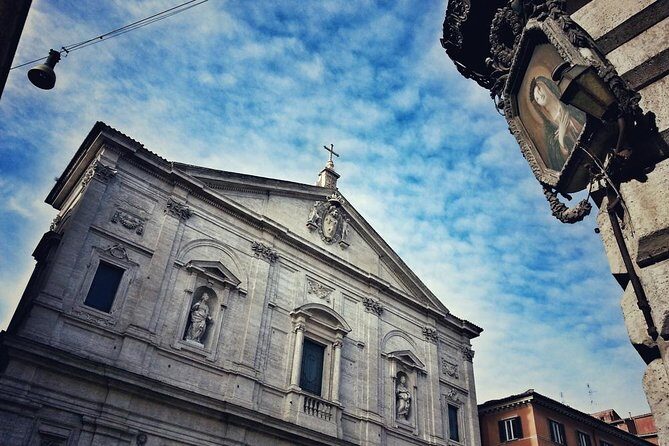
Your first stop is Chiesa di Santa Maria del Popolo, and it starts with a story. There’s a legend tied to the site being haunted by the ghost of Nero, and even a bewitched walnut tree full of crows. The church’s origin myth says Pope Paschal II ordered the tree cut down in 1099 and commissioned a Romanesque chapel instead.
That background matters, because Santa Maria del Popolo is not one of those churches that feels like it was built once and done forever. In the early 1500s, the space became an art project for major names. In 1513, influential artists were requested to decorate walls and ceilings—mentioned among them are Raphael and Caravaggio, along with Pinturicchio and Bernini.
The practical win: you get an immediate sense that Rome’s churches are layered. Medieval sites become Renaissance stages, and later artists move in. You’re not just reading plaques—you’re watching how patronage and artistic ambition build over time.
How to enjoy this stop:
- Go in with the idea that the church is itself part of the art.
- Look for how the decoration feels different from what you’ve seen in other Roman churches.
Possible drawback: because you’re starting the day here, you’ll want to arrive ready to move your eyes quickly. Decorative churches can be visually busy, so it helps to listen closely to your guide’s pointers early on.
Sant’Agostino and Caravaggio’s Madonna di Loreto: How a Contract Shapes the Image
Next is Basilica S. Agostino (Sant’Agostino in Campo Marzio). This is a big deal for Caravaggio fans because the church holds Caravaggio’s Madonna di Loreto, often tied to the family chapel of the Cavalletti legacy.
Here’s the story that makes the painting more interesting: a legacy left by Ermete Cavalletti supported the family chapel, and the contract dated 1603 specified the subject. The deceased Marquis was devoted to Our Lady of Loreto, so the image had to fit that devotion.
Now for the visual twist. In many depictions, Mary is shown enthroned, with the Holy House theme. But here she’s portrayed as a common woman standing in front of a doorway, holding a well-lit Infant Jesus who blesses. That difference is exactly the kind of thing your guide should explain, because it changes the emotional tone. It’s not about distance and grandeur; it’s about immediacy and a direct, almost human presence.
What you’ll likely love in this stop:
- The contrast between the usual icon pattern and this contract-driven variation.
- How lighting and composition guide your focus from Mary to the blessing moment.
Possible consideration: this is a smaller, more concentrated stop. If you came for one single famous Caravaggio masterpiece above all else, you’ll still want to listen to the explanation here, because it sets up why Caravaggio’s choices can feel so personal.
Santa Maria della Pace: Baroque Stagecraft Meets Renaissance Painting
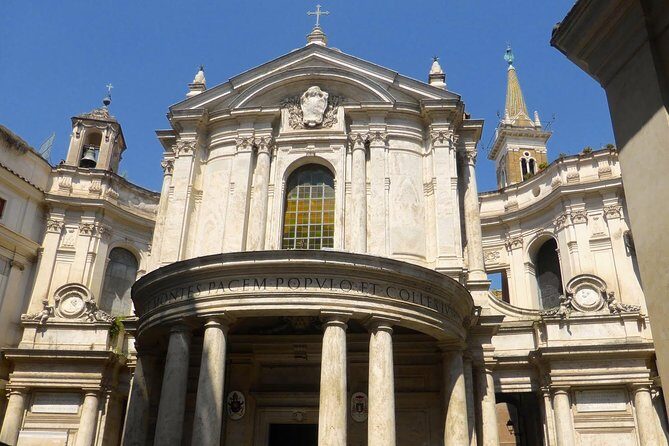
Then you step into Chiesa di Santa Maria della Pace, and the church’s background reads like architecture on fast-forward.
The groundwork is tied to a medieval chapel called Sant’Andrea de Acquaricariis. In the late 1400s, Pope Sisto IV commissioned work by Baccio Pontelli. Later, the church you see today was rebuilt by Pietro da Cortona, including a facade with a semicircular pronaos. The description in the tour material treats this as Cortona’s architectural masterpiece and one of the great achievements of Roman Baroque architecture.
The idea of a baroque theater matters because this area of Rome is meant to be experienced with your body moving through space. The tour framing notes that once the square became like a baroque theater, the church became an ideal stage. That’s not just poetic. Baroque design often uses curvature, light, and framing to tell your eyes where to look.
Inside, you’ll find more than one big name:
- Raphael (in the church’s masterpieces)
- Maderno
- And the cloister of Bramante
This stop is where you get a sense of Rome’s artistic pipeline: High Renaissance art exists side-by-side with later baroque redesigns, and your guide can help you notice how style changes without the church losing its role as a single sacred space.
How to enjoy it:
- Treat it like a contrast lesson. Notice what changes between eras in the way the church frames attention.
- If the day feels rushed elsewhere, this is a place where you can slow down and just look at how the architecture directs you.
Possible drawback: it can feel like the church is doing a lot at once—facade effects, interior artworks, cloister space. If you’re the type who gets overwhelmed in ornate spaces, ask your guide where to focus first.
San Luigi dei Francesi and the Contarelli Chapel: Caravaggio’s Triptych in the Right Darkness
The final stop is Church of St. Louis of the French (San Luigi dei Francesi), and it’s the headline moment: the Contarelli Chapel and Caravaggio’s three linked scenes of St. Matthew.
This chapel is named for Cardinal Mathieu Cointrel, later Italianized to Contarelli, who commissioned Michelangelo Merisi (Caravaggio) to paint three altarpieces focused on San Matteo:
- The Martyrdom of St. Matthew
- The Vocation of St. Matthew
- St. Matthew and the Angel
What makes this more than a checklist is the detail about the order and style. The tour material notes that the Martyrdom canvas was the first made for the chapel. Compared to the others, it’s described as overcrowded, with a tangle of bodies that refers to Mannerism—while the nudes are clear Michelangelesque elements. That kind of specific stylistic observation helps you see that Caravaggio wasn’t repeating one formula. He was solving a commission.
Lighting is part of why this chapel hits. One guest specifically pointed out how the interior is very dark, with black walls that make the paintings shine. Even if you’re not a lighting expert, you’ll feel it: the environment pushes your eyes toward the figures and the drama of their gestures.
What I think you should do here:
- Spend your first minute mapping the triptych as one story, not three unrelated paintings.
- Then go back to individual moments. Your guide can point out how each scene uses composition to tell you where to look.
Possible consideration: this is the busiest emotional stop of the tour. If you’re tired or sensitive to dark interiors, take a breath between scenes and move deliberately. The art rewards patience.






Price and Included Value: What $656.87 Buys You (And What It Doesn’t)
At $656.87 per person for about 3 hours, this is not a bargain-bin add-on. It’s a “buy time and reduce stress” kind of price. Here’s what you’re getting that actually changes your day.
Included that matters:
- Pickup and drop-off with luxury transportation and a private chauffeur
- A private English-speaking tour escort
- A private professional guide
- Church entrances included at Santa Maria del Popolo and San Luigi dei Francesi
- Entrances also included for Sant’Agostino and Santa Maria della Pace
- A mobile ticket
- Notes about group discounts (if you’re booking a group scenario)
What’s not included:
- Food and beverages
- Gratuities
So is it worth it? If your alternative is taking taxis between churches, losing time on ticket lines, and trying to explain the art to yourself without a guide, then the cost starts to look more reasonable. You’re paying for smooth logistics and guided interpretation in four high-impact stops.
If you’re traveling with people who share your art interest, this tour can feel even better. You’ll sit together, compare notes, and focus on the contrasts between Raphael and Caravaggio as you move from church to church.
One more practical angle: dress code is required—knees and shoulders covered for church entry. That’s common in Rome, but it affects packing. You’ll want at least one layer that covers you comfortably.
Best Fit: Who This Private Route Works For
This tour makes sense if you want serious art moments without turning your day into a long walking grind.
You’ll likely enjoy it if:
- You love Caravaggio’s realism and dramatic lighting
- You’re curious about how Raphael’s style works in a church setting
- You prefer fewer stops with strong guidance over hopping around
- You like having a pro help you connect stories, contracts, and commissions to the final paintings
It may be less ideal if:
- You want a large dose of outdoor sightseeing
- You’re not comfortable with church interiors that can feel dim or enclosed
- You want a long buffet of artworks across many venues (this tour is focused, by design)
Should You Book This Tour?
Book it if you want a smart, art-first way to see Raphael and Caravaggio in Rome’s churches, with included entry and a guide who can explain the differences clearly. The route’s strength is that it stays focused where the art is meant to be seen: inside spaces with strong atmosphere, from Santa Maria del Popolo’s layered decoration to the Contarelli Chapel’s intense darkness.
Skip it or reconsider if you want a broader Rome highlights package in one day. This is about interpretation in a few rooms, not about collecting every major landmark.
If you do book, go prepared for church dress rules and plan to stay mentally present—this tour rewards attention. And when you reach the Contarelli Chapel, expect the kind of moment where the paintings feel like they’re lit from inside your head, not just from a lamp.
FAQ
How long is the Raphael and Caravaggio in the Roman Churches private tour?
It runs for about 3 hours (approx.).
Is pickup and drop-off included?
Yes. The tour includes pickup and drop-off with luxury transportation and a private chauffeur.
Are entrance tickets included for the churches?
Yes. Entrance is included for Santa Maria del Popolo and San Luigi dei Francesi, and also included for Sant’Agostino and Santa Maria della Pace.
What dress code do I need for the churches?
You need knees and shoulders covered to enter the churches.
Is this tour private?
Yes. It’s a private tour/activity, and only your group will participate.
Can I get a full refund if I cancel?
You can cancel up to 24 hours in advance for a full refund. If you cancel less than 24 hours before the start time, the amount paid is not refunded.