REVIEW · COLOSSEUM TOURS
Private Tour of Colosseum & Ancient Rome Wonders
Book on Viator →Operated by Vatican Private Tour Guide · Bookable on Viator
Three sites, one clear story.
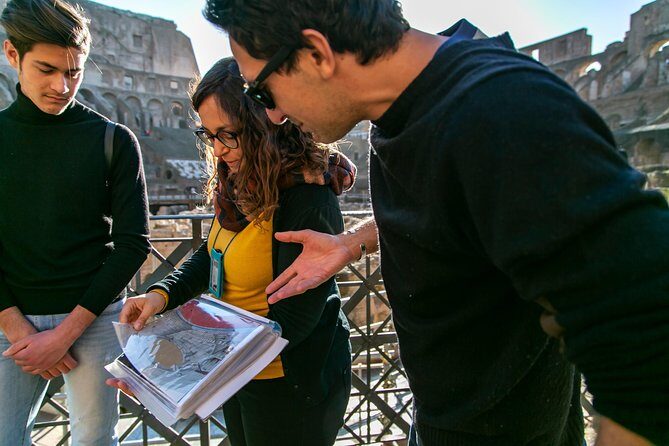
This private tour strings together the Colosseum, the Roman Forum, and Palatine Hill so the ruins make sense in one sitting. You get an art historian guide, plus visual aids and graphic reconstructions to help you connect the dots fast.
I especially like the reserved Colosseum entry and the art historian style of explaining what you’re actually looking at. Guides such as Faby, Raffa, Nina, Lia Caso, and Lucina are highlighted for keeping the pace steady and the details understandable, even when crowds press in.
One heads-up: 3 hours goes quickly, and you’ll cover a lot of ground on uneven, ancient stone. If you’re not a fan of walking, plan for comfortable shoes and a calm mindset.
In This Review
- Key highlights you’ll feel right away
- Why this private Colosseum, Forum, and Palatine plan works
- Entering the Colosseum: reserved entry and what to look for
- A smart drawback to consider
- Roman Forum with a guide: turning ruins into Roman daily life
- What could slow you down here
- Palatine Hill: myth, power, and Michelangelo’s square
- A note on expectations
- The art historian guide factor: pacing, clarity, and real questions
- Price and value: what you’re really paying for
- Practical tips so your Colosseum day stays pleasant
- Who should book this private tour
- Should you book this Private Tour of Colosseum & Ancient Rome Wonders?
- FAQ
- How long is the private tour?
- Is this tour private?
- Where is the meeting point?
- Where does the tour end?
- Is the Colosseum admission ticket included?
- Are tickets for the Roman Forum and Palatine Hill included?
- What language is the tour offered in?
- What do I need to enter the sites?
- Is food or transportation included?
- FAQ
- Can I cancel and get a refund?
Key highlights you’ll feel right away
- Reserved Colosseum entrance helps you spend more time inside the arena.
- Art historian guidance turns scattered ruins into a readable story.
- Colosseum + Forum + Palatine in 3 hours, so you don’t have to guess what to pair.
- Forum power stops like the Temple of Vesta and the Altar of Divine Julius Caesar.
- Palatine Hill plus Michelangelo’s square and the Statue of Marcus Aurelius.
- A private group experience in English, with headsets mentioned as useful for hearing clearly.
Why this private Colosseum, Forum, and Palatine plan works
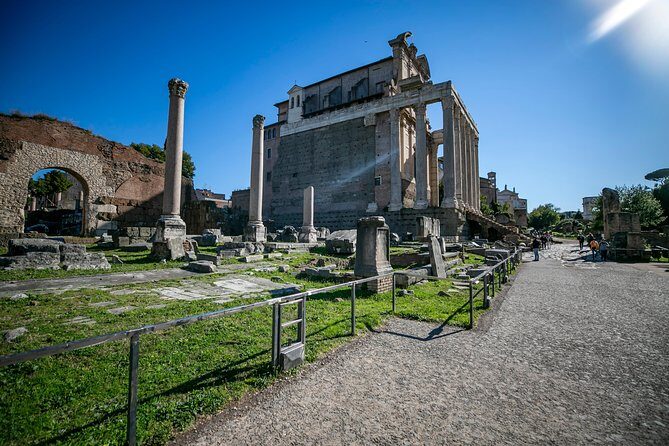
Most Rome sightseeing plans treat these three places like separate errands. Here, they’re handled as one connected arc: spectacle (the Colosseum), politics and religion (the Forum), then the “who belonged on top of the hill” angle (Palatine Hill). That structure matters because the sites stop feeling like random stacks of stone and start reading like a system.
You also get the advantage of a private group. That usually means you can ask direct questions, linger when something catches your eye, and avoid the constant feeling of being rushed toward the exit.
And because it’s led by a professional art historian guide, the emphasis isn’t just dates and names. You’ll get context for why each area mattered and how the architecture worked in real Roman life.
You can also read our reviews of more private tours in Rome


Entering the Colosseum: reserved entry and what to look for
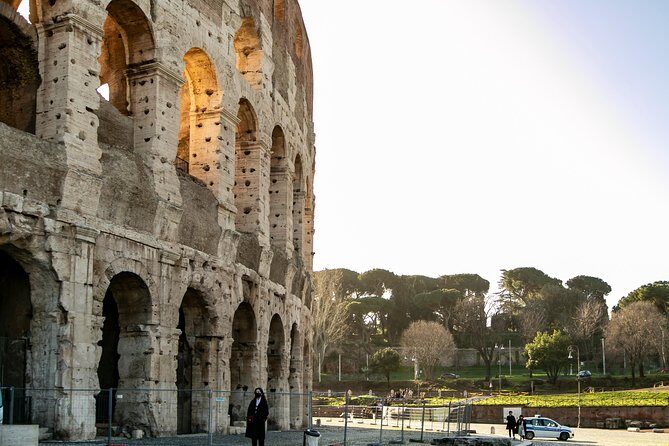
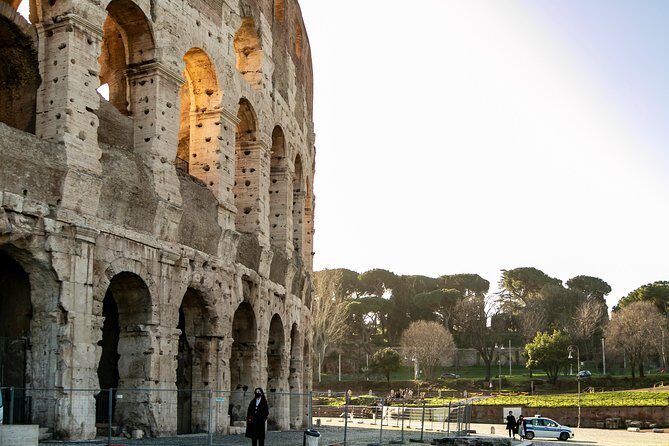
The tour starts at Piazza del Colosseo, 23, and it kicks off at the Colosseum with about 1 hour on site and admission included. This is the spot where Roman engineering shows off—an enormous amphitheatre with around 80 entrances and capacity for more than 50,000 spectators.
Reserved entry is the big practical win. It’s not magic, but it helps you get moving instead of waiting around. One review summed up the feeling perfectly: skip-the-line was real, and that extra time made a difference.
Inside, your guide will point out what most people miss when they arrive with only a phone map. Expect focus on the arena setting and the bigger picture of public spectacle. One guide also shared niche details about gladiators and the Colosseum’s underground system—the kind of extra context that makes the structure feel less abstract, even if you aren’t going underground yourself.
A smart drawback to consider
The Colosseum is huge, and one hour can’t cover every corner. If you love architecture-by-the-micron accuracy, you may want more time on the building itself. Still, for most people, this length is a good “first hit” that leaves you wanting to return.
Roman Forum with a guide: turning ruins into Roman daily life
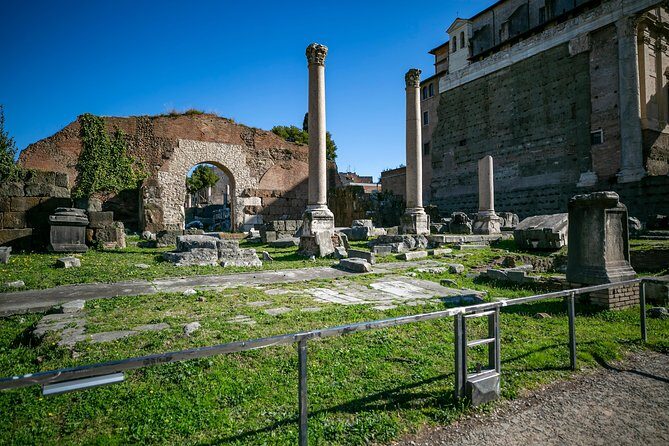
After the Colosseum, you move to the Roman Forum for about 1 hour, with admission included as part of the tour plan. This is where the city’s center vibe lived: government, religion, law, and elite messaging—all in one tight footprint.
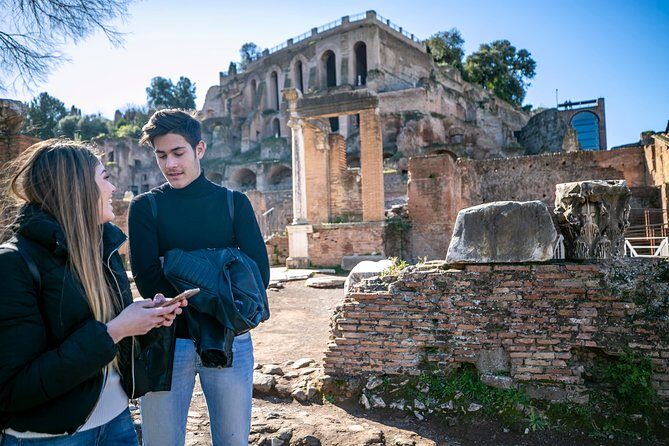
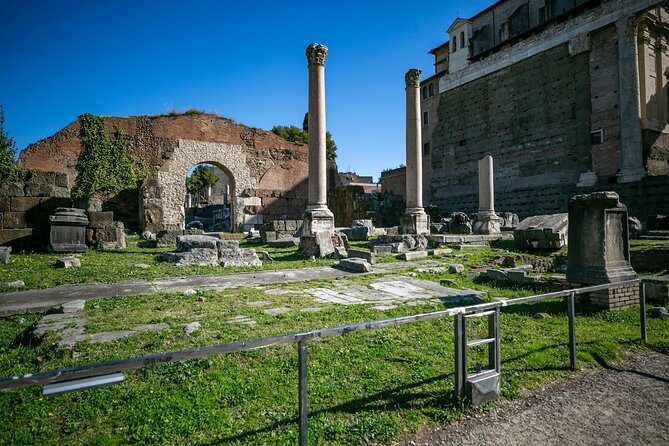
The guide will help you recognize key fragments and big roles across the area, including the Senate House, Temple of Vesta, Temple of Saturn, the Altar of the Divine Julius Caesar, Temple of Gemini, Basilica Emilia, and Arch of Septimius Severus. Seeing those names on a sign is one thing. Hearing what they were used for is a different experience.
This stop is also where the tour’s “art historian” angle pays off. A lot of the Forum is broken, rebuilt, and layered over time. With visual aids and reconstructions, you can understand what those pieces originally looked like and why their placement mattered.
What could slow you down here
The Forum can feel dense and echo-y, because crowds bunch up in certain zones. If you tend to get overwhelmed by noise, using the headsets (mentioned as helpful on this tour) can make a real difference in keeping your attention on what the guide is showing you.






Palatine Hill: myth, power, and Michelangelo’s square
The final stop is Palatine Hill for about 1 hour, also with admission included. Palatine is where Roman legends and elite status overlap. Temples to major gods once stood here, and your guide will connect that sacred layer to the political and social power that grew around it.
You’ll also see the square designed by Michelangelo and the Statue of Marcus Aurelius. Those two details are worth paying attention to because they anchor the hill in later layers of Italian art and remembrance, not just ancient stone.
One of the best practical outcomes of this stop is perspective. From Palatine, you get a better sense of how the city’s topography shaped who had the “best seats” and where influence would cluster.
A note on expectations
Palatine Hill is not one single “wow view” you can stand in forever. It’s more of a slow-reading place. If you like to scan, compare, and listen, it fits well. If you want a quick photo-and-leave mission, you might feel the time limit.
The art historian guide factor: pacing, clarity, and real questions
The tour’s structure is built around guided explanation, not just admission. You’re working with a local art historian guide, and visual reconstructions are part of the experience, helping you picture what stood there before time did its thing.
Several guides are specifically praised for clear English and a steady pace. Even better, the audio setup matters: headsets were mentioned as a key help for hearing easily, even when you’re not standing shoulder-to-shoulder with the guide.
What I’d take from that if you’re choosing this tour: look for a guide who can manage a group without flattening everything into a fast lecture. The names that come up with consistently strong feedback—like Faby, Raffa, Nina, and Lia Caso—suggest the tour is designed to keep you oriented and engaged.
Also, one theme in the guidance: your interest matters. One guide was described as quickly spotting what you cared about and then steering the story to fit. That’s not just “nice.” It makes the ruins feel personal instead of generic.
Price and value: what you’re really paying for
This tour costs $359.68 per person and runs about 3 hours. Private tours in Rome can vary wildly, so the key question is what’s included versus what you’ll have to pay later.
Here’s what you get that reduces add-ons:
- A local guide and a professional art historian guide
- Colosseum admission ticket included
- Colosseum reservation fee (listed as valued at €2 per person)
- Mobile ticket
- English language option
The included items list explicitly calls out the Colosseum ticket and reservation fee, and the itinerary also shows admission included at each stop. Either way, you’re not arriving to handle major entry costs on the spot.
So is the price worth it? For me, the math is less about being “cheap” and more about avoiding the two big time drains in Rome: confusion and wasted waiting. When the tour is paced well, keeps your hearing clear with headsets, and gives you context as you walk, you get more from the same three sites than you would on a DIY day.
Practical tips so your Colosseum day stays pleasant
A few basics matter here:
- Wear comfortable shoes. You’ll be on foot for a multi-stop circuit, and ancient surfaces don’t forgive sore feet.
- Bring your valid ID that matches the name used when booking. Entry requires a name match for successful access.
- Expect food and drinks not included, so plan a snack or a drink before you start. If you’re sensitive to energy crashes, Rome ruins can sprint your schedule whether you mean to or not.
- Private transportation isn’t included, so treat this as a walking day with a guide leading the way. The tour ends back at the meeting point.
One more small planning tip: you’ll get the most out of the time if you go in with at least a rough mental map of what each place represents—showmanship at the Colosseum, civic life at the Forum, and elite myth/power at Palatine. Your guide will do the heavy lifting, but that little prep helps you follow the story.
Who should book this private tour
This works best if you want:
- A guided, structured visit to three major sites in one go
- An art historian approach that focuses on meaning, not just names
- A private group feel so the pacing matches your questions and interests
- A less stressful experience than DIY wandering through crowds
It may be less ideal if you:
- Want to spend very long hours at only one site
- Prefer audio-first, map-only tours with minimal talking
- Dislike walking across multiple stops in one afternoon
Should you book this Private Tour of Colosseum & Ancient Rome Wonders?
If your goal is to leave Rome understanding what you saw—without losing hours to confusion—this is a strong choice. The biggest selling point is the combination of reserved Colosseum entry, art historian guidance, and a tight route that links the Colosseum to the Forum and Palatine Hill in a way that actually holds together.
I’d book it if you care about context and you want a guide who can keep you oriented. I’d rethink it if you’re aiming for a slow, sprawling, photography-only day.
Either way, get ready for one of Rome’s most famous areas to feel much more readable once someone explains what each stone was for.
FAQ
How long is the private tour?
The tour is about 3 hours (approx.).
Is this tour private?
Yes. It’s a private tour/activity, and only your group participates.
Where is the meeting point?
You meet at Piazza del Colosseo, 23, 00184 Roma RM, Italy.
Where does the tour end?
The tour ends back at the meeting point.
Is the Colosseum admission ticket included?
Yes. Colosseum admission is included, along with a Colosseum reservation fee.
Are tickets for the Roman Forum and Palatine Hill included?
The itinerary shows an admission ticket included at the Roman Forum and Palatine Hill stops. The included list specifically details the Colosseum ticket and reservation fee.
What language is the tour offered in?
The tour is offered in English.
What do I need to enter the sites?
Each traveler must present a valid ID card or document that matches the name provided at booking.
Is food or transportation included?
No. Food and drinks and private transportation are not included.
FAQ
Can I cancel and get a refund?
No. The experience is non-refundable and cannot be changed for any reason.