REVIEW · PRIVATE
Private Tour: Jubilee year Holy Sites of Rome
Book on Viator →Operated by Rome Private Excursions · Bookable on Viator
Rome has a way of pulling you into the story.
This private Jubilee Year route strings together major Christian sites you might not piece together on your own. You start with Santa Maria Maggiore, then move through churches tied to relics, saints, and key moments in Catholic tradition—ending with the big-ticket pilgrimage stops around Lateran and St. Paul Outside the Walls. The best part is the tone: a private vehicle, pickup from central Rome, and a guide who can explain what you’re looking at so it lands, instead of turning into a quick photo stop.
Two things I really like: the private format (just your party in the vehicle) and the way the day is built around specific objects and legends—like the Blessed Mary and Child image attributed to St. Luke, or the Holy Cross relics at Santa Croce in Gerusalemme. One possible drawback: you’ll want to take the dress code seriously (covered knees and shoulders), or entry can get refused even if you’re right on time.
In This Review
- Key things worth knowing before you go
- A Jubilee Year Rome plan that feels like a guided pilgrimage
- Hotel pickup, private vehicle, and a 7-hour reality check
- Santa Maria Maggiore: Mary’s basilica, a pope’s tomb, and relic stories
- Santa Praxedis and Santa Croce in Gerusalemme: relics you can actually picture
- Basilica of Saint Praxedis
- Basilica of the Holy Cross in Jerusalem (Santa Croce in Gerusalemme)
- Scala Santa (Holy Steps): the Passionist monastery stop that changes the mood
- Domine Quo Vadis: a small corner outside the usual Rome route
- Lunch break: let the guide handle the nearby search
- St. John Lateran: Rome’s cathedral and the former papal house
- St. Paul Outside the Walls: Constantine-era scale for a long pilgrimage story
- Price and what $488.71 buys in real terms
- What to watch for: dress code and expectations
- Who should book this private Jubilee Holy Sites tour
- Should you book it?
- FAQ
- FAQ
- How long is the Private Tour: Jubilee Year Holy Sites of Rome?
- What’s included in the tour price?
- Is the tour mostly free to enter, or do I pay tickets?
- What about lunch?
- What dress code do I need for the churches?
- Can I get a refund if I cancel?
Key things worth knowing before you go
- Private vehicle with hotel pickup from central Rome, so you lose less time to transport and meet-up hassle.
- A guide who connects the dots between relics, saints, and what each basilica represents.
- Relics with concrete details, including items linked to the Holy Cross and to the Passion tradition.
- A flexible lunch stop, with your guide able to steer you toward something nearby.
- St. John Lateran has a ticket you pay separately, while several other stops are free to enter.
- Jubilee Year focus means you’ll get practical instructions on what to look for.
A Jubilee Year Rome plan that feels like a guided pilgrimage
If you come to Rome with even a little interest in Christianity’s roots, this kind of tour changes your pace. Instead of bouncing between landmarks, you get a route that treats each site like a chapter. You’ll move through major basilicas and smaller sacred spaces where the details matter—inscriptions, relic descriptions, and traditions tied to named people.
The private setup helps a lot. In a city like Rome, the “where do we stand?” and “how do I get in?” questions can eat the fun. Pickup from your hotel in central Rome keeps the morning calm. After that, your guide handles the order of stops and the on-the-ground logic, including where parking is most convenient when you’re traveling by car.
One more practical perk: with a private vehicle, you can handle the day like a real schedule. You’re not stuck timing everything around a bus tour. That makes it easier to pause, ask questions, and actually read what’s in front of you.
You can also read our reviews of more private tours in Rome

Hotel pickup, private vehicle, and a 7-hour reality check
The day starts at 8:00 am with pickup directly from your hotel or apartment in central Rome. If you’re coming from the airport, you’ll meet your driver after collecting bags—walk outside baggage claim and look for your driver holding a sign with your name.
The total time is about 7 hours, which is long enough to feel like you did something meaningful, but not so long that you’re cooked by the afternoon. Still, churches can mean more than walking—expect slow moments for entry, lines at specific sites, and time to look carefully.
This is also a true private tour in the sense that it’s operated only for your group. You’re not folding into a larger crowd halfway through, which is great for families, couples, and anyone who wants a quieter experience.
Santa Maria Maggiore: Mary’s basilica, a pope’s tomb, and relic stories
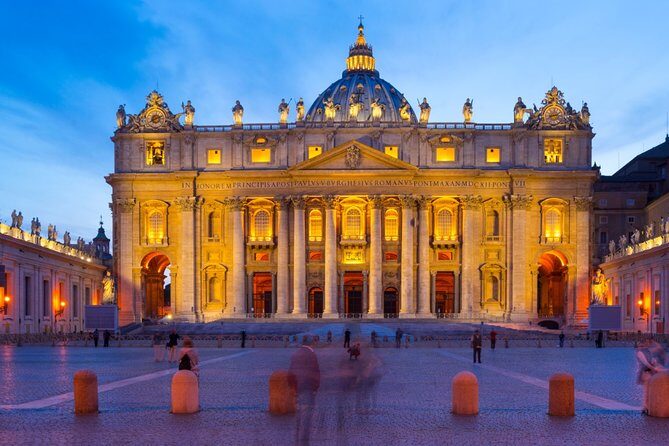
Your first stop is the Patriarchal Basilica of St. Mary Major (Santa Maria Maggiore). This is the first church in Rome dedicated to the Virgin Mary, and the site gives you immediate context for how early Roman Christianity honored Mary.
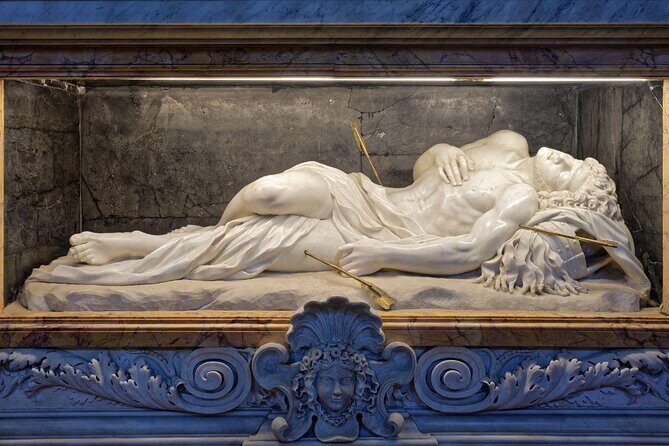
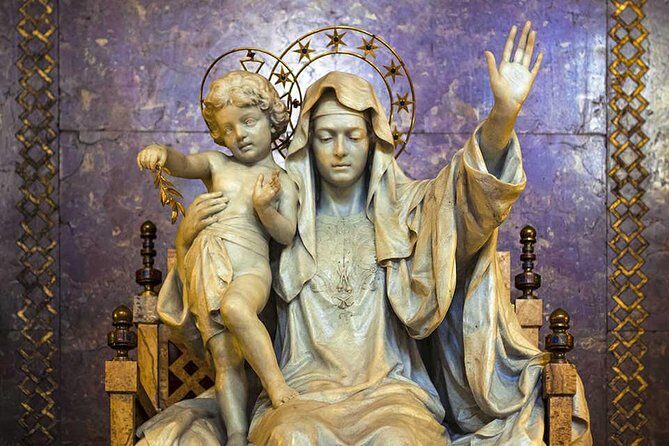
What makes this stop more than a “pretty church” is the mix of physical anchors and named tradition. You’ll see the final resting place of Pope Paul V, an image of the Blessed Mary and Child attributed to the Evangelist St. Luke, and planks of wood believed to be part of Jesus’ crib. Even if you don’t share every belief, these objects are part of the cultural map of Rome. Your guide helps explain why they matter and how the stories became part of Catholic devotion.
Entry here is listed as free, and the time you spend is around 30 minutes. That’s a good length for your first stop—enough to get oriented, not so long that you’re exhausted before the next location.
Practical note: go in with your “slow eyes” on. The point isn’t just to stand in the biggest room. It’s to look for the named details your guide points out so the basilica clicks.
Santa Praxedis and Santa Croce in Gerusalemme: relics you can actually picture
After Mary Major, you’ll continue to sacred spaces connected to early Roman church life and the long history of relic collecting.
Basilica of Saint Praxedis
Next is Basilica of Saint Praxedis, described as an ancient titular church near St. Mary Major. Titular churches can sound abstract until a guide explains the role they played in Rome’s religious organization. This is one of those stops where your guide’s framing is the difference between “I saw a church” and “I get why this exists here.”






Basilica of the Holy Cross in Jerusalem (Santa Croce in Gerusalemme)
Then you reach the Basilica of the Holy Cross in Jerusalem (Santa Croce in Gerusalemme), and this is where the day turns very object-based.
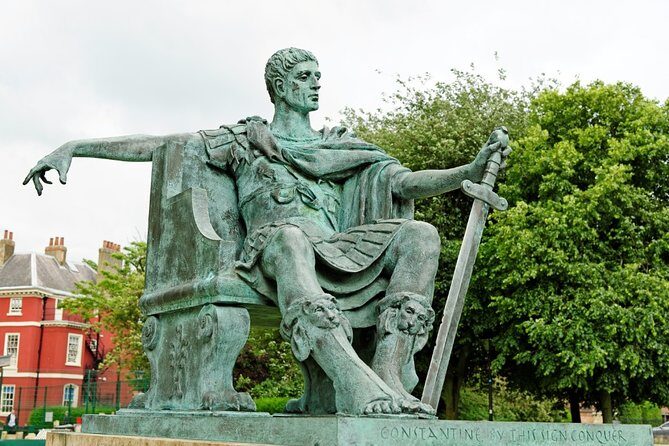
The big story here: St. Helen, mother of Emperor Constantine the Great, brought soil from Jerusalem so a church could be built on it. You’ll learn how that tradition connects Rome to the Holy Land in a way that feels tangible, not just symbolic.
Inside, you’ll have the chance to see a small piece of the Holy Cross, a Nail, a description plaque, and thorns from the Crown, along with what’s traditionally identified as Doubting Thomas’ finger. These are named relics tied to major themes in Christian narrative—suffering, proof of faith, and the physical link to Jerusalem.
This stop is also scheduled around 30 minutes and is listed as free to enter. The trade-off is that because the focus is so specific, you’ll get more out of it if you’re ready to listen and take in details, not just walk through quickly.
Scala Santa (Holy Steps): the Passionist monastery stop that changes the mood

One of the most emotionally loaded stops is the Holy Steps (Scala Santa), a Passionist monastery site that contains the marble steps to the palace of Pontius Pilate.
Even if you’ve seen photos, the scale and intention can feel different in person. The guide’s role matters here, because you’re not just touring stone. You’re walking through a devotional tradition built around the Passion narrative. The structure of the visit helps you focus on why people come here and how the site fits into Jubilee Year devotion.
Time for this portion isn’t pinned down in your schedule info, but you should budget for slower pacing. This is the kind of stop where you’ll probably stop often to let the explanation land.
Domine Quo Vadis: a small corner outside the usual Rome route
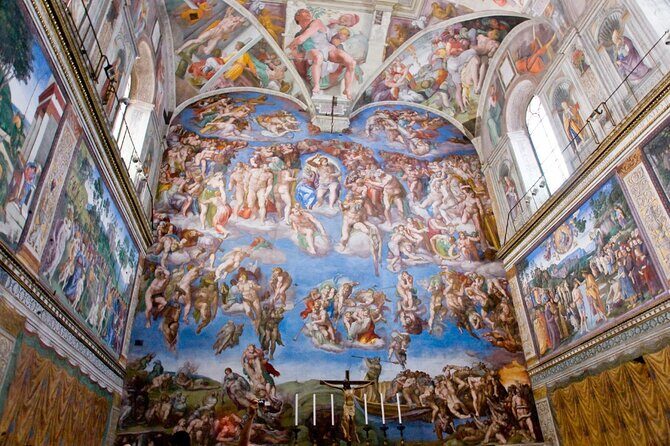
Later in the day, there’s also Chiesa del Domine Quo Vadis, outside the walls of Rome. This is one of those places that can feel almost tucked away—described as a fascinating little corner of the city.
Why it matters for your day: it’s a tonal shift. After larger basilicas and relic-focused sites, this kind of stop gives you a breather while still staying in the Christian story. It can also help you reset your feet without breaking the flow.
It’s listed with about 15 minutes and free entry, which makes it a smart addition for a seven-hour itinerary.
Lunch break: let the guide handle the nearby search
Lunch is not included, but you’ll get a real break. Your guide can suggest a nearby restaurant, or you can choose your own (at your expense).
In Rome, this is more valuable than it sounds. The “closest place” is often not the best place, and religious sites can cluster in ways that make it easy to get stuck with tourist menus. Letting your guide steer you can reduce decision fatigue and help you get something that fits the day’s schedule.
Aim for a meal that won’t slow you down too long. You’ll still have major basilicas ahead of you after lunch.
St. John Lateran: Rome’s cathedral and the former papal house
After lunch, you’ll visit Arcibasilica di San Giovanni in Laterano, the cathedral of Rome and described as the former house of the Pope, with a reputation as a triumph of Christianity.
This stop has a different energy than the earlier basilicas. It’s the kind of place where your guide can tie together Rome’s role as a religious center and why Lateran matters in Catholic history.
The entry info here is clear: the ticket is not included. Time is around 30 minutes, so you’ll want to make sure you’re sorted at the ticket step quickly so you don’t lose the pacing you paid for.
If you’re the type who likes to understand what you’re standing in—why it’s called the cathedral, what “papal seat” means in practice—this is likely to be one of your favorites.
St. Paul Outside the Walls: Constantine-era scale for a long pilgrimage story
Your final major pilgrimage stop is Basilica of St. Paul Outside the Walls (San Paolo Fuori le Mura), dedicated to St. Paul the Apostle.
The site is described as built by Constantine about 1700 years ago, which gives it a sense of historical weight beyond architecture alone. This is the kind of basilica where the size and devotion work together. Your guide helps explain why people consider it one of Rome’s key Christian destinations.
This stop is also listed as 30 minutes and free to enter. After your last stop, you’ll return to your Rome hotel for drop-off.
Price and what $488.71 buys in real terms
At $488.71 per person for a roughly 7-hour private tour, the value depends on how you travel.
This price is easiest to justify if:
- You’re traveling as a couple or small group and want privacy with a real guide.
- You care about meaning—relics, named traditions, and the “why” behind each site.
- You’d otherwise waste time figuring out entry logistics and public transit in between scattered churches.
You’re getting hotel pickup and drop-off, a private vehicle, and a private English-speaking driver. That set of included pieces matters in Rome because walking distances aren’t always your friend when you’re moving between specific church clusters.
What’s not included is also part of the equation: lunch and the St. John Lateran ticket (and of course any personal expenses). So the true day cost becomes tour price plus lunch plus that one ticket.
If you’re the type who’s happy reading a guidebook and wandering slowly, you might decide this is too structured. But if you want your day to run like a smart itinerary—without the guesswork—this feels like a strong spend.
What to watch for: dress code and expectations
This tour is built around places of worship, so dress code is not optional. You’ll need knee and shoulder coverage for both men and women. That means no shorts or sleeveless tops. If you don’t meet the rules, you risk being refused entry.
The tour info also says most travelers can participate, and service animals are allowed. That’s reassuring if you need that kind of accommodation.
The only other “watch it” item is timing. You’re starting at 8:00 am and moving steadily through multiple sites. If you’re prone to getting stuck in lines, or you like to linger without structure, plan to treat each stop as a focused visit rather than a slow museum-style day.
Who should book this private Jubilee Holy Sites tour
This is a great match if you:
- Want a Christian-focused Rome day that connects relics and stories.
- Prefer private pacing over group tours.
- Like to understand religious art and objects, not just snap pictures.
It may be less ideal if you:
- Don’t want to follow strict church dress rules.
- Want a Rome day packed with classic ruins instead of religious sites.
- Prefer independent exploring with no dedicated guide narration.
Should you book it?
I’d book this if you want a Rome day that feels intentional. The combination of private pickup, a vehicle, and a guide who can point out specific relic traditions—like the Holy Cross relics and the Holy Steps—makes it more than a checklist. And because several major stops are free to enter, you’re not paying extra for every location you visit.
Book it especially well if you’re visiting during Jubilee Year and want your guide to help you interpret what you’re seeing and what to look for as you move through the sites.
If you’re on the fence, ask yourself one question: do you want the sites to feel like history you can read, or like devotion you can understand while you’re standing there? This tour leans hard toward the second option.
FAQ
FAQ
How long is the Private Tour: Jubilee Year Holy Sites of Rome?
It’s listed as about 7 hours.
What’s included in the tour price?
Hotel pickup and drop-off, a private vehicle, and a private English-speaking driver are included.
Is the tour mostly free to enter, or do I pay tickets?
Several stops are listed as free (including St. Mary Major, Santa Croce in Gerusalemme, and St. Paul Outside the Walls). St. John Lateran’s ticket is not included.
What about lunch?
Lunch and drinks are not included. Your guide can suggest a nearby restaurant, or you can choose one yourself.
What dress code do I need for the churches?
You must cover your knees and shoulders. That means no shorts or sleeveless tops for both men and women, or you may be refused entry.
Can I get a refund if I cancel?
No. The experience is listed as non-refundable and cannot be changed for any reason.