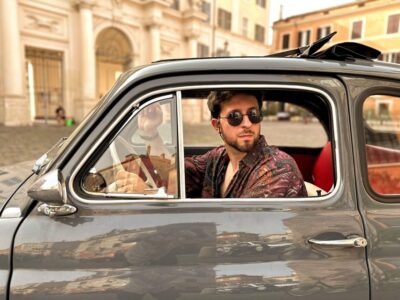
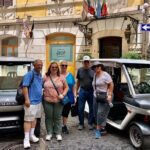
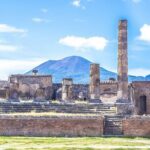
This private Rome tour turns sightseeing into a photo-friendly street experience by swapping buses and taxis for a classic 1960s Fiat 500. You hop out for short, focused stops at the Pantheon, Fontana di Trevi, and Trinità dei Monti, so you’re not stuck marching across Rome in a long line. I especially like the timing: each stop is about 15 minutes, which keeps the day feeling efficient and gives you just enough time to capture the landmarks without losing the plot.
One possible drawback: the car doesn’t list air-conditioning, so plan for warm days and bring water, plus the experience depends on good weather.
In This Review
- What kind of group this is best for
- Key highlights to look for
- Riding Rome in a 1960s red Fiat 500
- How the private ride actually feels (pickup, timing, and pacing)
- Pantheon stop: photos with Rome’s most instantly recognizable dome
- Trevi Fountain: making the most of a famous scene in a tight stop
- Trinità dei Monti and Spanish Steps: view time, not just a stroll
- The local guide element: what you should expect from someone like Ruben
- Photography and video: why the route is built for your camera
- Comfort, heat, and onboard realities you should plan for
- Value check: what you’re paying for at $90.12 per person
- Who should book this Fiat 500 tour (and who might skip it)
- Should you book? My practical take
- FAQ
- How long is the Private Rome Tour in Classic Red Fiat 500?
- What landmarks do you visit?
- Are tickets required for these stops?
- Is pickup available?
- Is this a private tour?
- What language is the tour offered in?
- Is WiFi available in the car?
- Is the car air-conditioned?
- Is it suitable for most travelers?
- What happens if the weather is bad?
- Is there free cancellation?
What kind of group this is best for
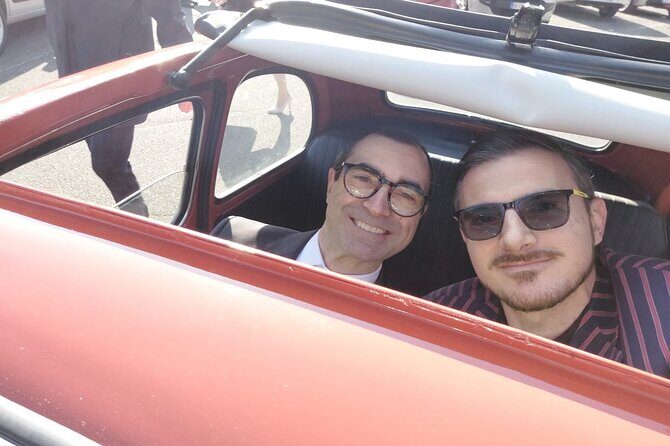
This is a private activity, so it’s just your group with a local guide in English, and travel time is included in the total duration (about 1 to 2 hours). You’ll get pickup options near public transportation, but you’ll need to agree on the meeting point, so factor in a little coordination.
Key highlights to look for
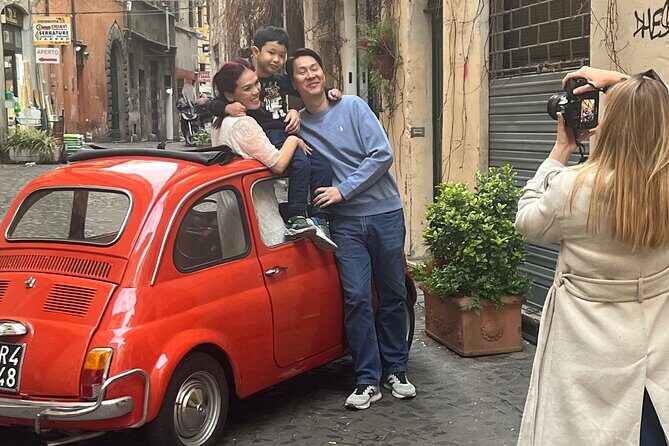
- Classic-car sightseeing: a 1960s Fiat 500 experience instead of a standard van ride
- Iconic photo stops: Pantheon, Trevi Fountain, and Trinità dei Monti in a tight route
- Short, realistic timing: about 15 minutes per landmark stop
- Guide-led routes: a local guide who knows where the best views and photo angles tend to be
- Good for video and keepsakes: the ride is built for camera moments, including souvenir-photo help
You can also read our reviews of more private tours in Rome

Riding Rome in a 1960s red Fiat 500
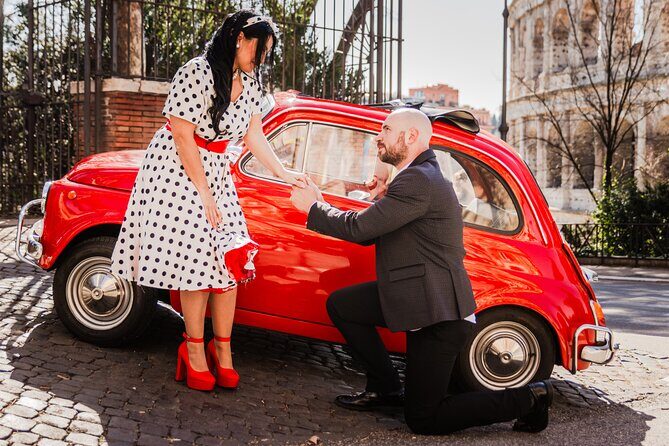
Rome is packed with sights, but getting from one “must-see” to the next can feel like a test of patience. This tour solves that by meeting you with a classic Fiat 500 and using it as your moving base. The car isn’t just transportation. It’s part of the experience. Expect people to notice the car as you roll by, and the whole street scene becomes more playful the moment you’re in that red bubble of Italian design.
What I like here is the clarity of the concept: you’re not trying to cover Rome’s entire planet in one go. You’re doing three major landmarks, each with enough time to step out, frame a few great shots, and move on. That’s a smart way to see Rome without burning half your day in transit.
And since the tour is private, you’re not forced to keep up with strangers or negotiate where to stand for photos. If your group likes pictures, you’ll probably enjoy how the itinerary is built around quick stops for exactly that.
How the private ride actually feels (pickup, timing, and pacing)
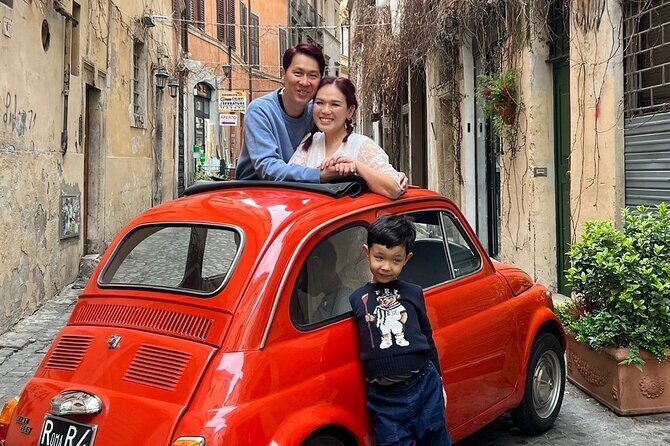
The total experience runs about 1 to 2 hours, and travel time is included. That matters because Rome travel isn’t just distance—it’s traffic, pedestrian zones, and “wait, can we actually get close?” moments. This tour is set up to keep things moving so you’re not spending your whole outing stuck figuring out logistics.
Pickup is offered, and the meeting point is something you agree on. It also notes the start/end is in Rome and that the activity ends back at the meeting point. If you’re staying near public transportation, this usually makes life easier. You’ll still want to plan for a short walk or a short transfer at the beginning, depending on where your pickup is set.
The big pacing idea: 15-minute landmark blocks. That’s enough time to:
- get a couple of photos in classic “postcard” framing
- walk around the main viewpoint area once
- reset and meet your guide before the next stop
It’s not enough time to do a deep, museum-style visit. But it is great for people who want Rome’s icons without a long day.
Pantheon stop: photos with Rome’s most instantly recognizable dome
Your first hop-out is at the Pantheon, with about 15 minutes allocated for photos. The Pantheon works as a first stop because it’s so instantly readable from the outside—you don’t need a lot of context to feel what it is. The dome and façade create that “how is this even still here” reaction.
For your 15-minute window, aim for two different photo angles:
- a straight-on shot where the building fills the frame
- a slightly off-center angle that shows more of the surrounding street texture
This is also a spot where the light can make a big difference. Even within a short window, shifting a few steps can change the contrast in your photos.
One practical consideration: 15 minutes goes fast. If your group includes someone who likes to linger, set expectations early. Decide ahead of time whether you want quick postcard shots or more time for creative angles.
Trevi Fountain: making the most of a famous scene in a tight stop
Next is Fontana di Trevi, again with about 15 minutes for photos. Trevi is the kind of place where Rome’s postcard image becomes real in front of you—especially when you’re standing close enough to see the details of the fountain. It’s also a location where crowd density can change the feel of your visit quickly.
Since your time is short, the key is to treat Trevi like a photo mission. Get your best view quickly, then move to a second spot for a different framing. If you try to do only one angle, you risk missing the shot you actually want.
Also think about timing relative to your tour. Starting with the Pantheon and then hitting Trevi keeps the route feeling efficient. The upside: you’re not dealing with a giant “today I must see everything” plan. The downside: you’ll want to be decisive. If your group debates where to stand for too long, 15 minutes shrinks even more.






Trinità dei Monti and Spanish Steps: view time, not just a stroll
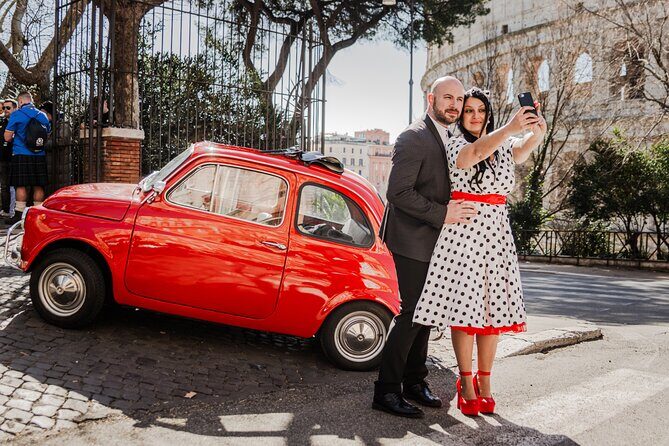
The final landmark stop is Trinità dei Monti, with photos and about 15 minutes around the area near the top of the Spanish Steps viewpoint. This is a different kind of payoff than Pantheon and Trevi. Instead of staring at one dominant structure, you’re rewarded with a view line and the feeling of being up above the street.
This is ideal if you like skyline shots and “Rome spreading out” photos. The Spanish Steps area also gives you a chance to capture Rome’s layered look—steps, church silhouette, and the city rooftops behind it.
Practical tip: stairs can be the limiter here. You’ll still have time to get photos, but keep an eye on how quickly you can move as a group. If someone in your party moves slowly, consider spacing out so everyone gets a chance at the key viewpoint.
The local guide element: what you should expect from someone like Ruben
The tour includes a local guide, offered in English, and the route is designed so you’re not just walking around landmarks like a map printout. One name that shows up in positive feedback is Ruben, described as professional and friendly, with strong local knowledge. The same feedback also highlights that he doesn’t only stick to the biggest tourist hits—he’s said to point you toward more typical Rome-style places and even recommend restaurants.
Even if your guide isn’t Ruben, the broader point is the same: you’re paying for guidance. That means they can help you:
- find better angles for photos
- understand what to focus on in a short window
- keep the route flowing so your time stays efficient
This is where a private car tour often beats self-guided wandering. Rome is easy to get wrong. A guide helps you get it right faster.
Photography and video: why the route is built for your camera
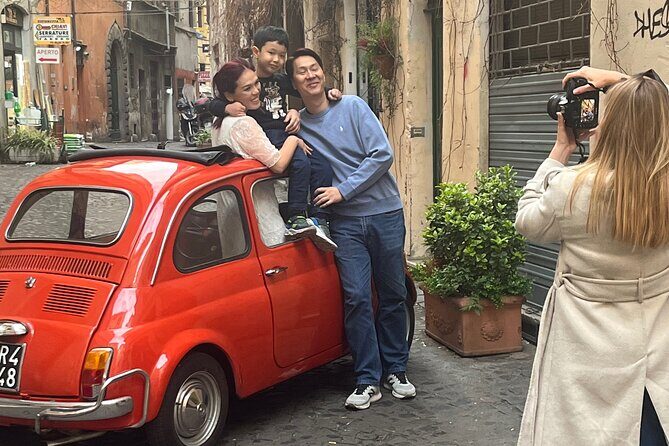
This experience is clearly geared toward photography lovers. The classic car is a built-in prop, and the stops are major “backdrop” locations where your framing does half the work. If you like portraits with architecture in the background, this route is strong.
Here’s how to get better results without needing extra time:
- Assign one person as the photo lead for each stop
- Take wide shots first, then step closer for detail shots
- When the car is involved, try a shot where the Fiat 500 is part of the frame, not just parked behind you
Also, the feedback notes that the guide helps with video and souvenir photo moments. That’s important because the difference between a decent photo and a great one is often positioning and timing—both are easier when someone who knows the area is helping.
If you care about getting a “cinematic” feeling, try to shoot a few seconds of video at each stop before you move. The landmarks will still be there, but your group’s momentum won’t.
Comfort, heat, and onboard realities you should plan for
The tour notes that air-conditioning is not included, and WiFi on board isn’t listed. That’s not a deal-breaker, but it does change how you should prepare.
Bring what you’d bring for a short city outing in Rome:
- water (especially in warmer months)
- sunscreen or a hat
- sunglasses if you want to protect your eyes while shooting photos
Since it requires good weather, it’s wise to avoid assuming your schedule is guaranteed. If the forecast looks rough, be ready for a reschedule.
You’ll also want to dress for walking. The time at each stop is short, but you’ll still be stepping out, moving between angles, and likely climbing a bit near the Spanish Steps area.
Value check: what you’re paying for at $90.12 per person
At $90.12 per person for about 1 to 2 hours, this tour isn’t priced like a casual bus ride. You’re paying for a private classic-car experience plus a guide, with transportation included.
So the value depends on your group setup and your priorities:
- If you’re traveling with one or two people who really want photos, it can feel worth it because the “car as a prop” is part of the price.
- If you’re the type who hates waiting for transit and walking long distances between sights, the private pacing saves energy.
- If you’re looking for a long museum day, this won’t replace that. The emphasis is photo stops, not extended admissions.
The fact that each highlighted stop has free admission ticket noted in the schedule is another practical win. You’re not paying extra entry fees for these three moments, so the main cost stays focused on the tour experience itself.
Who should book this Fiat 500 tour (and who might skip it)
This tour fits best if you:
- love photography and want landmarks as a ready-made backdrop
- want a private, short itinerary that doesn’t swallow your whole day
- like the idea of seeing Rome with local guidance in English
It may not be the best choice if you want:
- long time at one site to explore slowly
- lots of interior access or museum-style coverage
- a fully climate-controlled car ride in hot conditions
If your group values efficiency, style, and getting the big three icons within a short time block, you’re in the right place.
Should you book? My practical take
I’d book this if your goal is three major Rome landmarks plus great photos in a compact time window, with the added fun of arriving in a classic red Fiat 500. The private setup and guide help you spend time photographing instead of figuring out logistics.
Skip it if you need a long, detailed sightseeing day or you’re sensitive to heat and would rather have a clearly air-conditioned ride. Also, check that “good weather required” assumption—if your dates are unstable, you may want a backup plan.
FAQ
How long is the Private Rome Tour in Classic Red Fiat 500?
It lasts about 1 to 2 hours, including travel time. Each main stop is scheduled for roughly 15 minutes.
What landmarks do you visit?
You stop for photos at the Pantheon, Fontana di Trevi, and Trinità dei Monti (near the top of the Spanish Steps viewpoint).
Are tickets required for these stops?
The tour info lists admission ticket as free for the Pantheon and for the scheduled landmark stops.
Is pickup available?
Yes, pickup is offered. The meeting point is something you agree on, and it notes the start is near public transportation.
Is this a private tour?
Yes. It’s private, meaning only your group participates.
What language is the tour offered in?
It’s offered in English, with a local guide.
Is WiFi available in the car?
No, WiFi on board is not included.
Is the car air-conditioned?
Air-conditioning is not included, so plan for weather conditions accordingly.
Is it suitable for most travelers?
The info says most travelers can participate.
What happens if the weather is bad?
The experience requires good weather. If it’s canceled due to poor weather, you’ll be offered a different date or a full refund.
Is there free cancellation?
Yes, you can cancel for a full refund up to 24 hours in advance of the experience start time.