REVIEW · PRIVATE
Private Golf Cart Tour: Rome’s Timeless Charm Revealed
Book on Viator →Operated by Travcus · Bookable on Viator
Rome moves fast in a golf cart.
This private electric golf cart experience is a smart way to see Rome’s biggest hits in a short window, while your driver-guide keeps the stories flowing as you go. I like that the route is designed for learning on the move, and you can ask questions freely instead of feeling rushed through monuments. One note: since the tour still works around real street layouts, you’ll have some moments where you stand or walk a bit even though you’re seated most of the time.
What I especially like is the mix of stops you get, from the Pantheon’s dome to the outdoor showpieces of Piazza Navona and Trevi. Your guide’s style can make a big difference too, and names like Sam, Waleed, and Claudia have come up as English-speaking, story-first driver-guides who keep the tone light and the facts straight. The one possible drawback is logistics: there’s no hotel pick-up or drop-off, and the tour ends in a different area (Piazza di Spagna), so you’ll want a plan for how you’ll get to the start and what you’ll do next.
In This Review
- Quick Key Points to Know Before You Roll
- The Simple Idea That Makes Rome Feel Easier
- Price and Logistics: When $325.11 Feels Worth It
- What the 2–3 Hours Actually Feels Like
- Pantheon Dome Views and the Church It Became
- Piazza Navona: Fountains, Old Stone, and a Live-Feeling Square
- Trevi Fountain: The Coin Ritual and the Real Reason It Draws Crowds
- Spanish Steps and Piazza di Spagna: Shopping Meets Famous Steps
- Via del Corso and the Popolo Finish: A View-Based Finale
- The Driver-Guide Factor: Why Names Like Sam, Waleed, and Claudia Matter
- When This Tour Is a Perfect Fit
- Who Might Want to Skip It
- Should You Book This Private Golf Cart Tour?
- FAQ
- How long is the private golf cart tour?
- Is this tour private?
- What language is the tour offered in?
- What does the price include, and what doesn’t?
- Where do we meet, and where does the tour end?
- Is there any walking involved?
- What is the cancellation policy?
Quick Key Points to Know Before You Roll
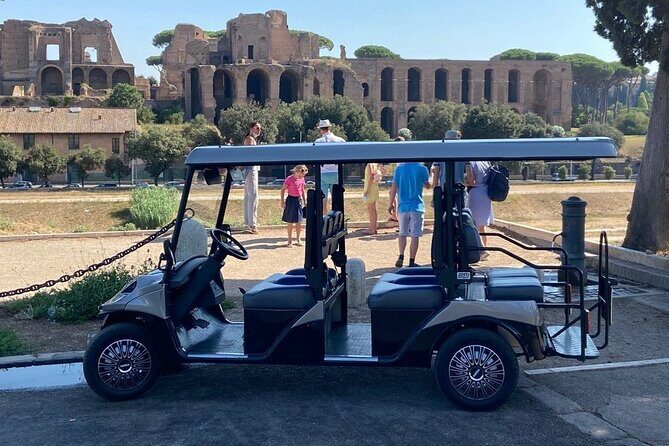
- Private, English-first driving tour: only your group, with time for questions.
- Electric golf cart pacing: you cover more ground without the constant back-and-forth on foot.
- Pantheon and classic squares: major landmarks built into one route.
- Fountain stops with iconic photos: Trevi and Piazza Navona are front and center.
- Some walking remains: comfortable for many, but not a zero-step plan.
- Driver stories can steer the whole experience: guides like Sam, Waleed, and Claudia are praised for narration and humor.
The Simple Idea That Makes Rome Feel Easier
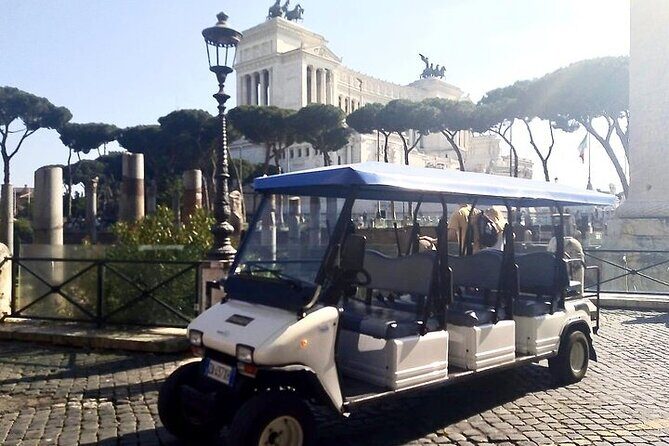
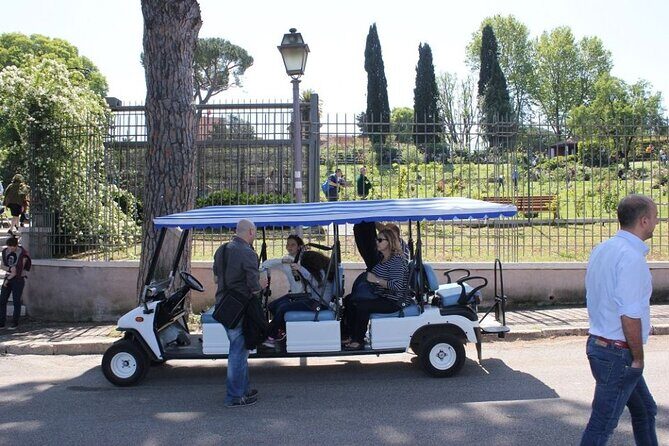
Rome is gorgeous, but it can also be physically demanding. This tour solves that problem by using an electric golf cart as your main mode of transportation. You still get the real monuments, the real streets, and the real atmosphere, but you’re not spending the whole day weaving through crowds on foot.
The other big win is that this is a private tour. That means the driver-guide can slow down when you have questions, take a moment for a photo, or adjust the pace based on what your group can handle. The vibe is less check-list tourism and more guided roaming, with the benefit of seated comfort most of the time.
You’re also not stuck in a rigid script. The tour is designed for you to ask questions as you go, which is especially helpful in Rome, where small details can completely change how you understand a building or a square.
You can also read our reviews of more private tours in Rome

Price and Logistics: When $325.11 Feels Worth It
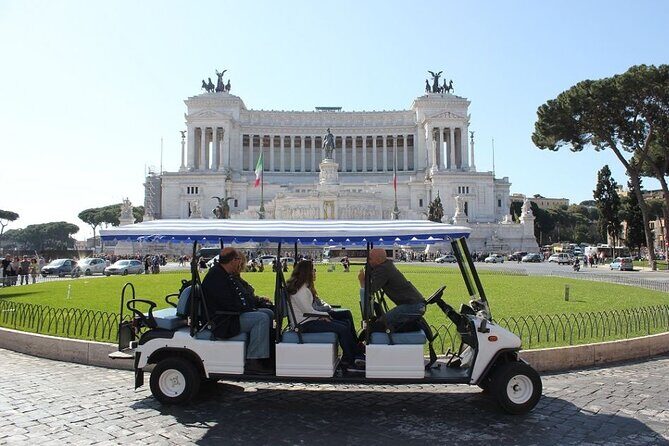
At $325.11 per person, this isn’t a budget activity. The value comes from what you buy with that price: time saved, comfort gained, and a guide who helps you interpret what you’re seeing.
For me, the sweet spot is people who have limited time in Rome. With a tour lasting about 2 to 3 hours, you can get a high-impact route through major sights without losing half your day just getting from point A to point B. It also tends to make sense for small groups who would otherwise spend money on multiple entrances, taxis, and individual guides.
Logistics are the part to take seriously. There’s no hotel pick-up or drop-off, so you need to get yourself to the meeting point at Largo Gaetana Agnesi. And you’ll end at Piazza di Spagna. That finish location is convenient for continuing on foot through the area, but it does mean you should plan your next step before you go.
Also, bring patience for street life. Even in a cart, Rome’s center has narrow lanes and heavy traffic patterns. The driver’s job is to thread the needle and keep the tour moving.
What the 2–3 Hours Actually Feels Like
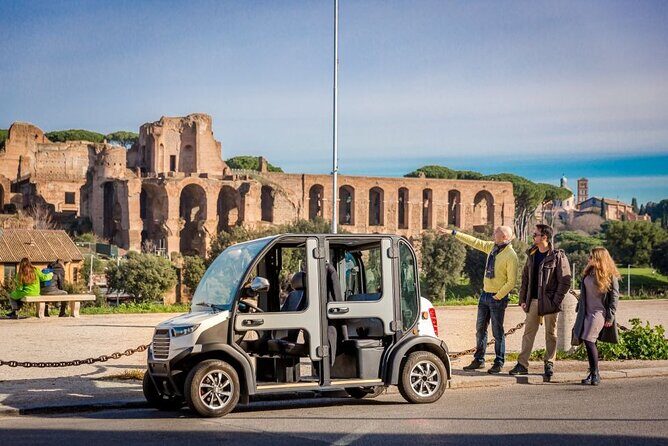
Even though the tour is short, it doesn’t feel like a speedrun. The stops are spaced so you can see the key monuments and still get explanation from your driver-guide. You’re not just dropped at the front doors of famous sites; you get context while you ride and quick orientation when you arrive.
In practice, the cart does most of the work for you. You’re seated for the movement between highlights, and then you shift to brief walking or standing moments at select locations. One important practical note: if someone in your party has limited mobility, the experience may work well. In one account, a family member with a leg injury was able to walk minimally and enjoy the tour from their seat. That’s a strong sign to me that the driver knows how to handle real-life needs, but it’s still wise to mention mobility limits before you start.
The pace is ideal for first-timers who want a guided overview, and it’s also good for people who’ve already visited a few sites and want a calmer way to connect the dots.
Pantheon Dome Views and the Church It Became
The tour starts (or at least hits early on) the Pantheon, one of Rome’s most complete ancient buildings. This place has layers. It began as a temple to all the gods around 27 BC, then later became a Christian church in the 7th century AD. That change matters because it’s why the Pantheon feels both ancient and lived-in today.
What makes the Pantheon stop special is the dome, which stayed the largest in the world for more than 1,300 years. The dome is concrete, supported by arches and columns. When you’re there, you get that wow-factor quickly, but the guide’s narration usually helps you notice the details beyond the headline size—like how the interior is laid out and why it still inspires awe.
Another plus: the inside features impressive marble work, artwork, and tombs of important historical figures. Even if you don’t go deep on art history, the guide can point out what to look for so you don’t end up staring at the ceiling with no context.
Possible drawback: the Pantheon area can be busy. Even with a cart, you may spend a few minutes managing crowds and moving at peak times, so build in flexibility.
Piazza Navona: Fountains, Old Stone, and a Live-Feeling Square
Next up is Piazza Navona, a square that started as a stadium for athletic competitions in the 1st century AD. By the 15th century, it became the public square it is today. That long evolution is part of why the area feels so much like a stage.
The big visual focus is Baroque architecture and the fountains, with the centerpiece being the Fontana dei Quattro Fiumi designed by Gian Lorenzo Bernini. This fountain is one of the reasons people stop right in the middle and look up and around instead of just walking through.
I like Piazza Navona because it’s not only pretty; it’s functional. Cafes, street performers, and historic buildings create a sense that people actually spend time here, not just pass by for photos.
Consideration: since this is an open square, it can get crowded. If your goal is photos without stress, you’ll appreciate having a guide who knows how to time the stop and where to stand for better sightlines.






Trevi Fountain: The Coin Ritual and the Real Reason It Draws Crowds
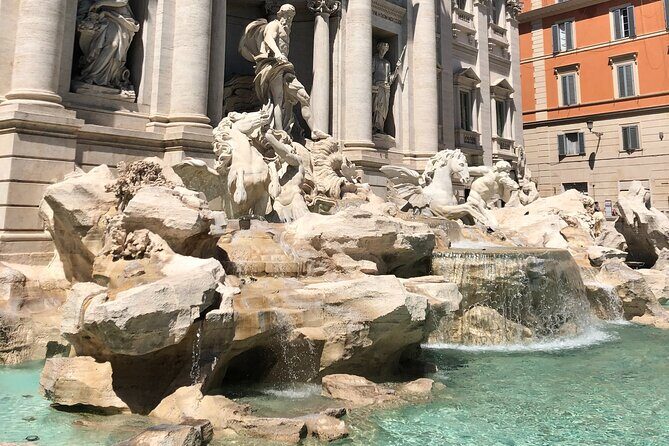
Then comes Fontana di Trevi, the most famous fountain in Rome and one of the most recognizable images in any travel album. It was designed by Nicola Salvi and completed in 1762, and it’s packed with mythological detail, including Neptune and sea creatures.
There’s also the ritual: legend says you throw a coin into the fountain over your shoulder with your right hand to ensure a return trip to Rome. That practice is why Trevi can feel like a constant photo set—people arrive with coins, wishes, and big energy.
What I find useful about having a guide here is less about superstition and more about seeing the design. The narration helps you understand what you’re looking at: the Baroque style, the dramatic figures, and why this fountain became such a symbol of Rome.
Possible drawback: Trevi can be crowded almost no matter when you go. Even if you get a good view, you’ll likely share it. If you hate waiting for a clear shot, this part can test your patience a bit.
Spanish Steps and Piazza di Spagna: Shopping Meets Famous Steps
After Trevi, the tour shifts toward Piazza di Spagna, at the foot of the Spanish Steps. Piazza di Spagna is known for Baroque style and designer boutiques, and the square’s fountain—Fontana della Barcaccia—is also by Bernini.
The Spanish Steps themselves run up to the Trinità dei Monti church. They were built in the 18th century and include 135 steps. The naming comes from the nearby Spanish Embassy to the Holy See, which is exactly the kind of small historical thread a driver-guide can pull to make the steps feel less random and more purposeful.
This stop works well if you want an easy transition from major monuments to Rome’s street-life vibe. Even if you don’t shop, the area is great for people-watching and for grabbing a snack after.
A practical note: steps mean height and uneven walking. You won’t necessarily be marching up the full staircase, but you’ll want comfortable shoes and a plan for anyone who prefers to avoid stairs.
Via del Corso and the Popolo Finish: A View-Based Finale
Via del Corso is a key shopping and cultural street running between Piazza Venezia and Piazza del Popolo. It’s historically important too; it was originally built as a processional route in the 15th century. That helps explain why you see grand architecture along the way and why it feels like a main artery rather than a side street.
On a golf cart, you get a smooth overview of the street’s scale. You also get quick orientation for where you might wander later on foot. The driver can point out landmarks along the route, like the Church of San Carlo al Corso and the Palazzo Montecitorio, so you don’t leave without understanding what you passed.
Then you end at Piazza del Popolo in the north part of central Rome. This square is known for an Egyptian obelisk, fountains, and surrounding historic architecture, including the twin churches of Santa Maria dei Miracoli and Santa Maria in Montesanto. The views matter here: you can see the dome of St. Peter’s Basilica in the distance.
I like a finishing stop that gives you perspective. Piazza del Popolo does that, and ending near Villa Borghese means you can keep going with a scenic stroll if you want to.
Consideration: the end at Piazza del Popolo can feel like a shift in pace. If you want a more relaxed finish, plan your next activity nearby, and don’t assume you’ll want to immediately travel across the city.
The Driver-Guide Factor: Why Names Like Sam, Waleed, and Claudia Matter
A golf cart tour lives or dies on the guide. The difference is simple: a good driver-guide turns a series of landmarks into a route with meaning. You’re not only seeing the Pantheon dome; you’re also learning what to notice and how the pieces connect.
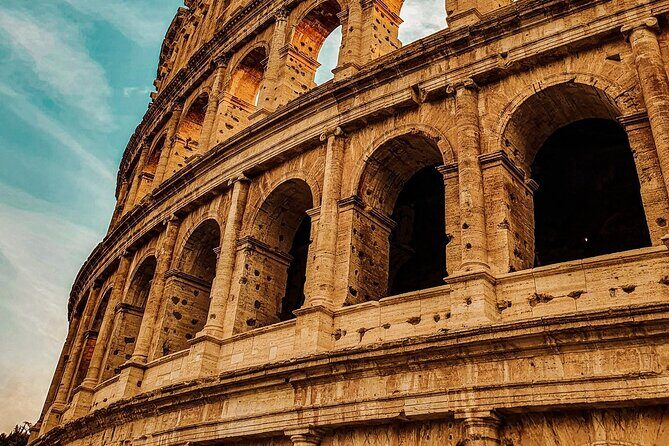
In accounts of this tour, guides such as Sam, Waleed, and Claudia have been described as English-speaking and funny, with stories that make ancient Rome feel readable. One highlight described is driving through or near major central areas and then getting context right away, including the kind of background you’d want if you’re also seeing places like the Colosseum and the Forum area.
Even if your exact path varies day to day, the takeaway for you is consistent: when you book, expect narration as part of the value, not just directions.
And because it’s private, you can steer the conversation. Want more on architecture? Ask. More on daily life in ancient Rome? Ask. Curious about why a square was a stadium and then a stage for fountains? Ask.
When This Tour Is a Perfect Fit
This tour is built for people who want an efficient Rome overview without losing comfort. It works especially well if:
- You have just a day or two and want a guided highlights plan.
- You’d rather sit than do marathon walking across uneven pavement.
- You’re traveling with someone who benefits from a seating-first pace (the tour has shown it can accommodate people who need minimal walking).
- Your group likes asking questions and getting real explanations, not just photo stops.
Who Might Want to Skip It
You might not love it if you want long, slow museum-style time at each monument. The tour is short by design. You’ll get guidance and key views, but you’re not signing up for deep time inside every site.
Also, if you dislike crowds at iconic places like the Pantheon and Trevi, you may want to plan for patience. A cart reduces walking, but it doesn’t eliminate the fact that these locations are famous for a reason.
Should You Book This Private Golf Cart Tour?
For most people on a tight schedule, I think it’s a smart booking. The big reason is value through efficiency: you cover major Roman landmarks in a seated format with an English-speaking driver-guide who’s ready to answer questions. At $325.11 per person, it’s not cheap, but it can be worth it when you consider how much time and effort it saves.
I’d book it if you want Rome’s top highlights in one guided sweep, and you like the idea of learning while moving. I’d pause if you already have your heart set on slow, in-depth visits at fewer sites. In that case, you might prefer a walking-based itinerary.
FAQ
How long is the private golf cart tour?
It runs about 2 to 3 hours.
Is this tour private?
Yes. It’s listed as a private tour/activity, meaning only your group participates.
What language is the tour offered in?
The tour is offered in English.
What does the price include, and what doesn’t?
Included: the driver tour guide. Not included: hotel pick-up and drop-off, and food and drinks.
Where do we meet, and where does the tour end?
You meet at Largo Gaetana Agnesi. The tour ends at Piazza di Spagna.
Is there any walking involved?
There is some walking at a few places, even though much of the tour is from the golf cart seats. The experience can be accommodated for someone who needs to walk minimally.
What is the cancellation policy?
The experience is non-refundable and cannot be changed for any reason. If you cancel or request an amendment, the amount paid will not be refunded.