REVIEW · CATACOMBS TOURS
Private Golf Cart Tour in Rome (Catacombs Optional)
Book on Viator →Operated by Roma STARBIKE · Bookable on Viator
Rome looks different from a golf cart.
This private 3-hour ride is built for seeing a lot without frying your feet: you move between big sights fast, then get your guide’s explanations in English (or Italian, German, Spanish). I especially like the mix of “classic Rome” stops—like St. Peter’s Square and the Pantheon—with Rome’s gates and viewpoints that most people skip. The one consideration: the Catacombs are optional, cost extra, and only run in the morning, so you’ll want to plan your day around that timing.
What makes it feel worth the money is the pacing and the way the route works with your questions. I like that you’re not stuck on a one-size-fits-all bus tour. One drawback to keep in mind: it’s still a sightseeing loop with short stops, so if you love slow museum time or long chapel reading, you’ll want a separate add-on day.
In This Review
- Key highlights worth clocking before you go
- Why a private golf cart tour makes Rome feel manageable
- Meeting at Roma STARBIKE and how the ride actually fits your day
- Porta San Sebastiano: the Aurelian Walls stop that sharpens the big-picture view
- Catacombe di San Callisto (optional): worth it, but only if your schedule matches
- St. Peter’s Square: the Vatican edge of the historic center
- Trinità dei Monti, the Acqua Paola fountain, and the Janiculum view payoff
- Piazza Navona and the Pantheon: two stops that show Rome’s scale fast
- Pincio and Piazza del Popolo: finishing with Rome’s big-sky angles
- How the guide turns a checklist into a personal Rome plan
- Price and value: what you’re paying for and where costs can change
- Who this Rome golf cart tour fits best
- Should you book this private golf cart tour?
- FAQ
- What is included in the Private Golf Cart Tour in Rome?
- How long does the tour last?
- Is the Catacombs visit included?
- When can I visit the Catacombs?
- Where does the tour start and end?
- What languages are available for the tour guide?
- Is cancellation free, and how late can I cancel for a full refund?
Key highlights worth clocking before you go
- A private guide with real back-and-forth, not just a headset script
- 3 hours with major landmarks packed in without doing Rome’s usual walking marathon
- Optional Catacombs that require a morning slot and separate tickets
- Big view stops (Janiculum and Pincio) that pay off for photos and perspective
- Comfortable golf cart format, which makes the itinerary more “doable” in heat
- Route flexibility so your guide can adjust based on what you already saw
Why a private golf cart tour makes Rome feel manageable

Rome can be dramatic and exhausting in the same hour. The sidewalks are busy, the streets are uneven, and the walking adds up fast—especially when you’re trying to hit the big names plus a few “wait, I didn’t know that” spots. A golf cart tour helps you keep your energy for the parts you really care about: standing in awe, taking photos, and listening to the story behind what you’re seeing.
The private format matters more than people expect. With only your group, your guide can react to what you already know (or what you want to focus on). Guides like Marco and Flavio, based on real experiences, tend to bring the sights to life with clear explanations and an easy conversational style. And yes, the ride feels safer than most people fear. The cart setup is designed for comfortable sightseeing rather than thrill-seeking.
The best value angle here is simple: you trade some walking time for guide time. Instead of spending hours moving between sites and getting only surface-level impressions, you get a guided plan that moves efficiently and still leaves room for questions.
You can also read our reviews of more private tours in Rome

Meeting at Roma STARBIKE and how the ride actually fits your day
The tour starts at Roma STARBIKE – Rome eBike Tours & Experiences, Via dei SS. Quattro, 58, 00184 Rome. You’ll also end back at the same meeting point. That “back to start” design is a practical win. It makes it easier to connect with dinner plans, taxis, or the metro without building a complicated transit puzzle.
Departure time is agreed with you, which is useful in Rome where the light changes fast and crowds can be ruthless. For most itineraries like this, you’ll get the best results if you choose a time that avoids the worst heat and still keeps you realistic about the optional Catacombs. If you’re adding the Catacombs, you’re effectively choosing a morning-based plan.
A quick practical thought: even if you’ll be on a cart, bring a small set of basics. Sunglasses, sunscreen, and a hat help at the open-air stops. And since coffee and tea aren’t included, plan a snack break either before or after so you don’t start the sightseeing loop running on low fuel.
Porta San Sebastiano: the Aurelian Walls stop that sharpens the big-picture view
Your first major history anchor is Porta San Sebastiano, one of the best-preserved gates in the Aurelian Walls system. You get about 15 minutes here, which is short, but enough if your guide sets you up with what you’re actually looking at.
Why this stop works on a golf cart tour: you’re seeing the edge of “old Rome” in a way that feels tangible. These aren’t just ruins in a field. You’re standing at a functioning-looking piece of the city’s defensive architecture, and your guide can connect it to later Roman development and the way Rome keeps rebuilding on top of itself.
If you like architecture and city planning, this is a smart warm-up. It gives you a reference point before you jump into the Vatican area and the central highlights.
Catacombe di San Callisto (optional): worth it, but only if your schedule matches
This is the fork in the road: Catacombe di San Callisto is optional, lasts about 1 hour, and costs €55 separately. There’s also a big rule: the catacombs can be visited only in the morning.
So is it worth adding? If you want something that’s not just monuments in daylight, I’d say yes. Catacombs change the tone of Rome instantly. The setting is quieter, darker, and more intimate than the squares and fountains. In experiences like this, people often love the Catacombs because the contrast makes Rome feel deeper than a checklist.
The drawback is timing. If your only free time is later in the day, you may have to skip it and keep the rest of the loop. Also, because tickets are separate, you’ll want to budget that extra cost upfront rather than treating it like an afterthought.
St. Peter’s Square: the Vatican edge of the historic center
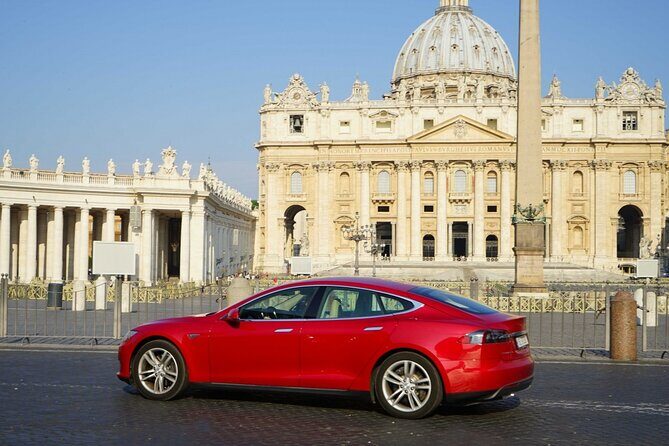
Next is St. Peter’s Square (Piazza San Pietro), with about 20 minutes. The Vatican City boundary is right there in front of you, and that’s part of the point. Even if you’re not stepping inside the basilica, the square gives you that immediate sense of scale and religious importance.
On a cart tour, your time here tends to feel efficient. You can pause, get oriented, and then move on without losing the rest of your day to traffic and long walking routes.
A practical note: the square can get crowded depending on the time of day. Your guide can help with the best angles for photos and the easiest way to position yourself without blocking others.






Trinità dei Monti, the Acqua Paola fountain, and the Janiculum view payoff
From the Vatican area you head through some of Rome’s showpiece neighborhoods and classic scenery.
Trinità dei Monti sits on top of the Spanish Steps area, and you get about 20 minutes. The church stop is less about detailed interior time and more about standing where the neighborhood’s views and elevations make sense. Rome’s beauty is often about height and perspective, and this is one of the places where you feel it.
Then comes Fontana dell’Acqua Paola (also called the Gianicolo fountain) at about 20 minutes. You’ll be at a monumental fountain location on the Janiculum hill. It’s a great “pause and look” stop, and the route keeps the momentum so you don’t waste time in between.
Finally, you reach the Terrazza del Gianicolo, also around 20 minutes. If you like panoramic moments, this is where the day starts to feel like a movie. The Janiculum viewpoint gives you a broad sense of Rome’s layout—domes, rooftops, and that patchwork feeling of a city built over centuries.
If you care about photos, I’d treat this as your primary photo window. Arrive ready to spend a few extra seconds on positioning, not just snapping and moving on.
Piazza Navona and the Pantheon: two stops that show Rome’s scale fast
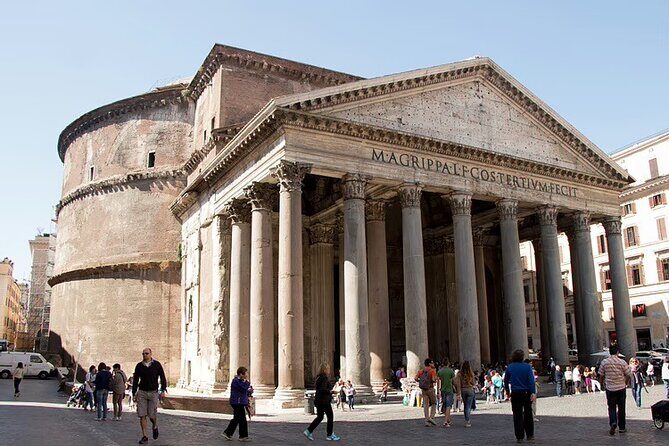
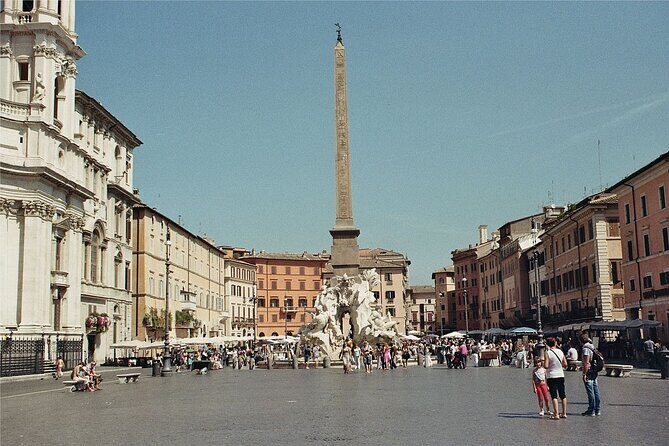
At about 20 minutes each, Piazza Navona and the Pantheon are two of the most time-efficient “wow” moments in the entire loop.
Piazza Navona is famous for its monumental shape—built in a style tied to the Pamphili family under Pope Innocent X, and shaped like an ancient stadium. That stadium connection matters. When you understand it, the square stops feeling like just a photo spot and becomes a living layer of Roman urban design.
Then there’s the Pantheon, with about 20 minutes. This is one of those buildings you can’t fully absorb in a single stop, but the short visit works because the cart tour gives you context before you get there. Your guide can explain the Pantheon as a temple dedicated to divinities across time. That framing helps you look past the obvious grandeur and notice the structure and intent.
Because you’re not spending half the day here, you’ll want to use your time well. If you enjoy art and architecture, look for the big shapes first, then let your questions guide what you notice second.
Pincio and Piazza del Popolo: finishing with Rome’s big-sky angles
After the Pantheon, you move toward classic hill viewpoints and grand squares. Passeggiata del Pincio sits on a hill around 61 m above sea level, north of the Quirinale, with villas and gardens above the Campo Marzio area. Your time here is about 20 minutes.
This is a good “slow it down” stop even if the tour is fast overall. The Pincio promenade is made for standing, looking, and letting the city spread out in front of you. Since you’re elevated, the view gives you a sense of spacing between monuments—something that’s hard to get when you’re weaving through street-level traffic.
Then you end at Piazza del Popolo, about 20 minutes. It’s a major Roman square at the foot of the Pincio, and it’s a satisfying place to close the loop because it feels like a transition point: one foot in central Rome, another heading toward other neighborhoods.
How the guide turns a checklist into a personal Rome plan
The best part of this experience is the people running it. Real experiences point to guides like Marco and Flavio bringing a mix of clear facts, humor, and genuine flexibility. One standout theme: guides ask what you already saw and adjust the route so you don’t repeat yourself.
That’s smart. If you’ve already done the big-ticket sites that day, you’ll want a guide to steer you toward the “how does Rome work” places—gates, viewpoints, and architectural stops that add meaning, not just location stamps. If it’s your first day, you’ll want the opposite: a map-like overview with enough major stops that you know what to come back to later.
My advice: show up with one or two priorities. For example:
- Do you want more viewpoints or more architecture?
- Are you interested in early Christianity themes (especially if you add the Catacombs)?
- Are you aiming to reduce walking as much as possible, or are you okay with a bit of it?
When your guide knows your vibe, the tour stops being a fixed route and turns into a plan that feels tailored.
Price and value: what you’re paying for and where costs can change
The price is $191.45 per person for about 3 hours. You’ll see that’s not cheap compared with public tours. But here’s the value logic: you’re paying for private guiding + a comfortable cart + efficient routing across multiple major sights.
You also get a mobile ticket and group discounts, which can help if you’re traveling with friends or family. The tour is often booked around 48 days in advance, which is a sign it’s popular—especially for people who want a first-day orientation without dealing with long walking routes.
The one cost variable is the optional Catacombs. If you add them, you’ll need to budget €55 extra, and you’ll need a morning slot. So your real total can be higher than the starting price depending on what you choose.
If you’re the kind of traveler who hates wasted time—waiting for buses, walking too far in heat, or repeating the same areas—this style of tour can feel like good money. If you already plan to be super mobile on foot and you don’t care about a guided narrative, you might decide to skip the cart and build your own route.
Who this Rome golf cart tour fits best
This tour is a strong match if you:
- Want to see a lot in three hours without turning your day into a walking challenge
- Like having a guide explain what you’re looking at while you’re moving between stops
- Prefer a private experience where the route can adjust
- Are interested in Rome’s major landmarks plus a few city-shaping stops like Porta San Sebastiano and the viewpoint circuit
It may feel less perfect if you:
- Want long stays inside major buildings
- Plan to visit Catacombs only in the afternoon
- Dislike itineraries with short stop durations and lots of moving between areas
Should you book this private golf cart tour?
I’d book it if you want a high-signal Rome day: big sights, smart pacing, and a guide who can steer the experience toward what you care about. The golf cart format is especially valuable in Rome because it makes a short itinerary actually feel comfortable. And if you can fit the morning schedule, the optional Catacombs add a strong tonal shift that many people remember longer than yet another square and fountain.
Skip the Catacombs if your schedule can’t support morning entry, and don’t stress if you’re not maximizing everything. This tour works because it’s coherent: gate, Vatican edge, historic center highlights, then viewpoint finishing energy.
If you’re trying to decide, ask yourself one question: do you want to spend your limited time in Rome walking and navigating, or do you want to spend it looking and learning? This tour is built for the second choice.
FAQ
What is included in the Private Golf Cart Tour in Rome?
You get a comfortable golf cart, a tour guide in English (plus Italian, German, or Spanish), and the tour includes the listed stops. Departure time can be agreed with the provider, and the tour ends back at the meeting point.
How long does the tour last?
The tour lasts about 3 hours.
Is the Catacombs visit included?
No. The Catacombe di San Callisto stop is optional and requires a separate ticket purchased for €55.
When can I visit the Catacombs?
The Catacombs can be visited only in the morning, and the stop lasts about 1 hour.
Where does the tour start and end?
The tour meets at Roma STARBIKE – Rome eBike Tours & Experiences, Via dei SS. Quattro, 58, 00184 Rome. It ends back at the meeting point.
What languages are available for the tour guide?
The guide is available in English, Italian, German, and Spanish.
Is cancellation free, and how late can I cancel for a full refund?
Yes, cancellation is free. You can cancel up to 24 hours in advance for a full refund; if you cancel less than 24 hours before the start time, you won’t receive a refund.