REVIEW · SISTINE CHAPEL
Vatican & Sistine Chapel Private Guided Tour
Book on GetYourGuide →Operated by Private Tours of Rome · Bookable on GetYourGuide
Your Vatican highlights, timed to perfection. This 3-hour small-group tour gets you into the Vatican Museums fast, with a German-speaking art historian who keeps the art understandable. I love the skip-the-long-lines setup, and I also appreciate the human touch in how the highlights are explained, like the care Ms. ALESSANDRA PETRILLI brought to her group—taking time for everything and pointing out the special details.
One thing to plan for: the dress code is strict. No shorts, no short skirts, and no sleeveless shirts, and you need knees and shoulders covered, or you risk being refused entry.
In This Review
- Quick key points
- Meeting at Viale Vaticano and Starting With Less Hassle
- Vatican Museums First: Ancient Sculpture With Real Context
- Rooms of Animals, Candelabra, and Roman Mosaics
- Tapestries and Sobieski Hall: The Vatican’s Big-Theme Rooms
- Raphael Rooms: School of Athens and Parnassus, Explained
- Sistine Chapel: Michelangelo’s Masterpiece and the Wall-to-Wall Stories
- What You Really Get in 3 Hours (and What You Don’t)
- Price and Value: Is $350.05 Fair for This Plan?
- Practical Rules That Can Make or Break Your Visit
- Should You Book This Vatican and Sistine Chapel Tour?
- FAQ
- How long is the Vatican & Sistine Chapel private guided tour?
- What will I see on this tour?
- Is the Basilica included?
- Does the tour include skipping the long lines?
- How many people are in the group?
- What languages is the tour guide available in?
- Where is the meeting point?
- What is the dress code?
- Can I bring luggage or large bags?
- What is the cancellation policy?
- Is this tour wheelchair accessible?
Quick key points
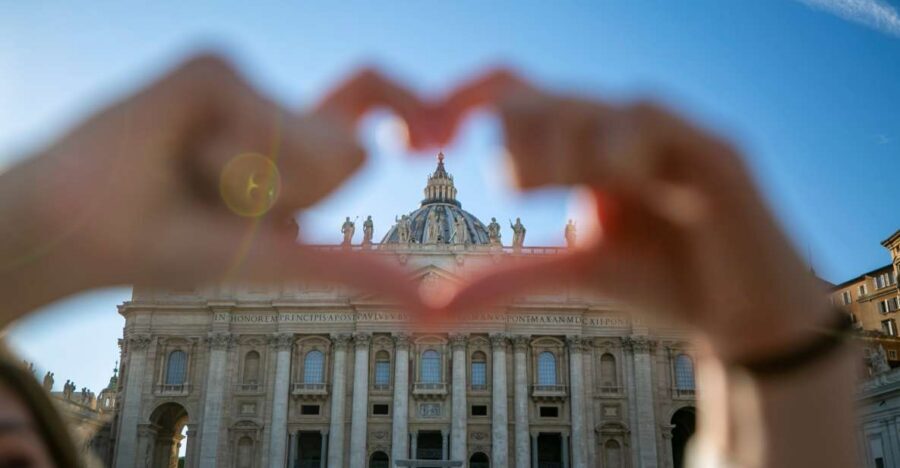
- Guaranteed to skip the long lines at the Vatican Museums entrance
- German-speaking art historian guide, with a live guide available in German, English, French, Italian, and Spanish
- Small group limited to 10 participants, so you’re not lost in a crowd
- Raphael Rooms focus, including School of Athens and Parnassus
- Sistine Chapel highlights, including Creation of Adam and Last Judgement
Meeting at Viale Vaticano and Starting With Less Hassle
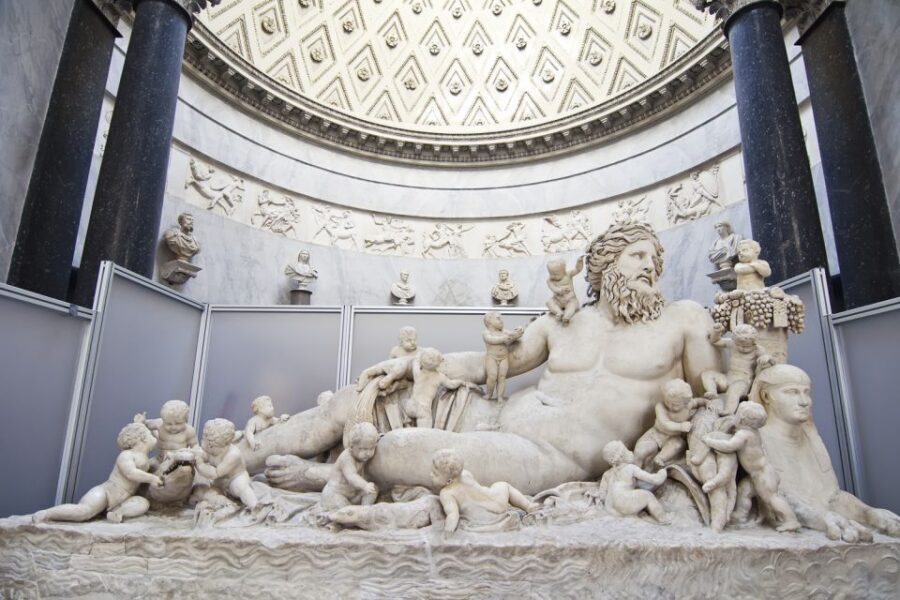
You’ll meet at the stairs outside the Vatican Museums, at the monumental white door topped with statues on Viale Vaticano. It’s a good landmark, and you don’t waste time figuring out where your group should be.
The big practical win here is the promised line-skipping. Vatican Museums can be slow, even when you’re excited, so saving time changes how you experience the art. Instead of starting your visit frazzled, you can settle into the flow.
Before the tour officially begins, you can drop off items like umbrellas and large bags in lockers. That matters because the Vatican has rules about what you can bring inside during your visit. You’ll still need to follow the stated limits, but this locker option helps keep your time smoother once you’re on-site.
You can also read our reviews of more guided tours in Sistine Chapel

Vatican Museums First: Ancient Sculpture With Real Context
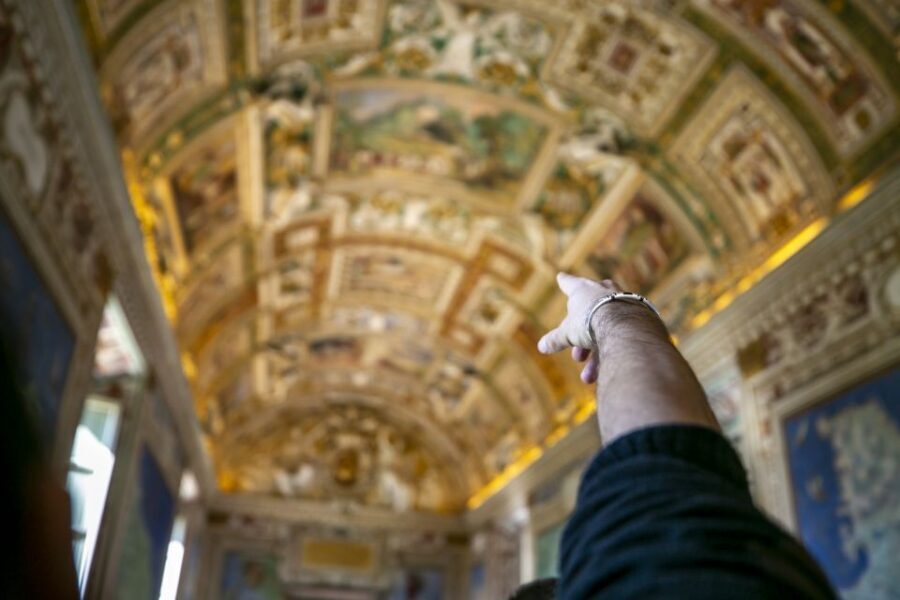
The tour starts by setting you up to see what’s in front of you. You begin with an introduction to Ancient Greek and Roman craftsmanship—because the Vatican Museums don’t just show famous works. They also show how early collectors and later popes shaped what you’re looking at today.
You’ll move through major highlights, with your guide pointing out key pieces such as the Belvedere Apollo and the Torso. You’ll also see busts of Claudius and Hadrian, plus sarcophagi like those of Helen and Constance—the mother and daughter of Emperor Constantine. When you hear what those sculptures and burial objects represent, they stop being random “marble bits” and start reading like a historical web.
This part is also where you learn what to look for. Statues in this collection aren’t just decorative; they were prized for their form, their references to antiquity, and how they fit into the Vatican’s story of power and taste. A guide who can connect the art to that story makes the rest of the visit easier—and more fun.
If you like being told what you’re seeing and why it mattered, this start is a strong fit. If you prefer wandering on your own without interpretation, you may feel the pace is structured.
Rooms of Animals, Candelabra, and Roman Mosaics
After the early sculpture introductions, you shift into more visually playful spaces—without losing the “look closer” theme. You’ll pass through the Room of Animals and the Gallery of Candelabra, then continue through Roman mosaics.
This isn’t filler. These rooms teach you a different side of ancient art: ornament, symbolism, and the way Roman design turns surfaces into stories. When your guide points out details—how figures repeat, how scenes are composed, how mosaics were meant to be lived with—you start to notice more than you would if you were simply scanning from a distance.
You’ll also see statues including Diana of Ephesus, plus the Muses and celebrated Greek scholars. Again, the payoff is the guidance. Rather than you guessing which figure is important, the guide helps you connect names, themes, and artistic choices to what’s happening in each room.
The pacing here matters because you’re still about to reach the big two targets: Raphael’s rooms and the Sistine Chapel. If you’ve been to major museums before, you know the danger: you only remember the last room you saw. This structure helps you build memory in the right order.
Tapestries and Sobieski Hall: The Vatican’s Big-Theme Rooms
Next up, you’ll enter rooms featuring tapestries, including the Sobieski Hall. These spaces add contrast. After marble sculpture and mosaic surfaces, tapestries bring color and scale in a different way, and they show how the Vatican used materials to project status.
Then you move toward what most people really came for: Raphael’s Rooms. The lead-in here helps because the Raphael project wasn’t just artistic. It was political and spiritual in how it was designed to serve the popes.
In other words, you’re not just looking at paintings. You’re looking at a curated message—built through themes, figures, and carefully chosen scenes. That’s the difference between seeing art and understanding why these specific works were painted for this exact setting.
Raphael Rooms: School of Athens and Parnassus, Explained
The tour walks through the famous Rooms of Raphael, painted by Raphael and his pupils for Pope Julius II. This is where the Vatican Museums stop being a history lesson and turn into something closer to storytelling you can follow.
Your guide highlights major frescoes including the School of Athens and Parnassus. The School of Athens is famous, but it can still feel like a crowd of faces if you don’t know what you’re looking at. With a guide, you get a map: who’s who, what ideas the painting is putting on display, and why those Renaissance choices mattered.
You’ll also learn how the scenes connect to the broader message of the rooms. The guide’s job isn’t to turn your brain into a textbook—it’s to help you see patterns. When you understand the theme, details click. Faces and symbols become purposeful instead of overwhelming.
This section is also a great reason to choose a small group limited to 10. You’ll have a better chance to ask questions and to actually hear what your guide is pointing to, instead of shouting over traffic-crowd noise.
You can also read our reviews of more private tours in Sistine Chapel

Sistine Chapel: Michelangelo’s Masterpiece and the Wall-to-Wall Stories
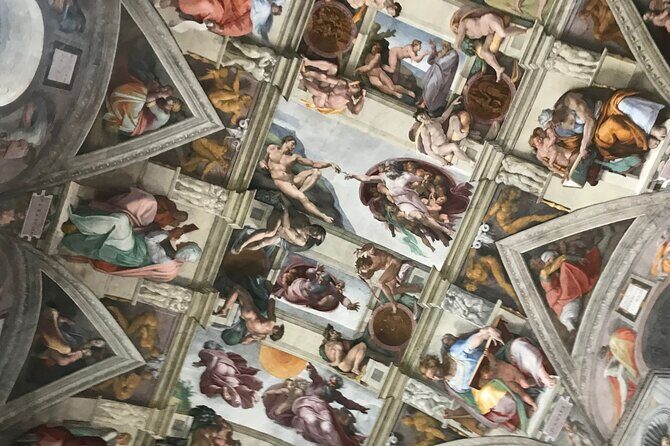
Then you arrive at the Sistine Chapel, the star of the show. This is Michelangelo’s territory, and your visit focuses on the big fresco moments: the Last Judgement, the Creation of Adam, and the Genesis.
But the experience isn’t only the headline scenes. You’ll also see subtler elements from the Stories of Moses and Jesus, painted by Botticelli, Perugino, and other Renaissance artists. That matters because the chapel is like a layered conversation—different painters, different styles, all woven into one space.
With a guide, the chapel becomes less about staring upward and more about learning what’s being told. You’ll get insider facts and explanations about the scenes adorning the walls, so you’re not just reacting to scale—you’re understanding why the images are arranged the way they are.
One practical note: this is a place where you’ll likely need to keep your expectations realistic about crowding. Even with line skipping, the chapel itself has its own density. Still, the payoff is how your guide helps you pick out what to notice so you don’t leave thinking you saw everything and remembered nothing.
And yes, this is also where Ms. ALESSANDRA PETRILLI’s praise makes sense: her approach was described as taking time for each part and calling out the special details. In the Sistine Chapel, that’s exactly what you want.
What You Really Get in 3 Hours (and What You Don’t)
This tour is built for speed with meaning. In about 3 hours, you cover a chain of must-sees: Vatican Museums, Raphael’s Rooms, and the Sistine Chapel. That’s not “slow art appreciation,” but it can be a very smart use of limited time, especially if you don’t want a half-day of museum wandering.
The tour does not include the Basilica. So if your dream day is focused on St. Peter’s Basilica, plan a separate option for that part. This experience is aimed at the Vatican Museums complex and the Sistine Chapel experience, not Basilica entry.
Also, the tour is not suitable for wheelchair users. If mobility is a factor for your group, this one may not work as planned, since the route and chapel setup aren’t described as wheelchair-friendly.
Price and Value: Is $350.05 Fair for This Plan?
At $350.05 per person for 3 hours, this is a premium-priced Vatican experience. But it’s also priced around three things that can genuinely improve your day:
- Guaranteed line skipping: You avoid the worst waiting games and keep your visit focused.
- Expert guidance: A German-speaking art historian guide (plus a live guide available in multiple languages) means you’re paying for interpretation, not just access.
- Small group (max 10): That affects quality. You get less crowd noise and more chance to hear what matters.
If you’re the type of visitor who likes art explanations—stories behind the works, the names, the themes—you’ll likely feel the value quickly. If you want to purely browse without structure, you may find the price hard to justify.
For couples or friends who want the big hits in a short time, this tour can be a smart spend. For solo travelers who enjoy independent museum time, you might consider a less guided option. The key question is simple: do you want the museum experience done for you, with the important bits explained, or do you want to freestyle?
Practical Rules That Can Make or Break Your Visit
Read this part carefully. The tour has restrictions that can affect entry and comfort.
- Shorts are not allowed.
- Short skirts are not allowed.
- Sleeveless shirts are not allowed.
- Luggage or large bags are not allowed, but lockers are available for items like umbrellas and large bags before the tour begins.
So, your clothing decision matters more than you might expect. Plan for covered knees and shoulders for both men and women. If you show up dressed casually for summer, you could lose time—or face refusal of entry.
You’ll also want to think about your expectations for a 3-hour run through the Vatican Museums route. You’ll see a lot, but you won’t have endless time at each stop. This tour is designed to help you move through highlights efficiently while still learning what you’re seeing.
Should You Book This Vatican and Sistine Chapel Tour?
Book it if you want a focused Vatican day with skip-the-line access, a small group, and an art historian who can connect what you’re seeing to the bigger themes. It’s especially worth considering if you’re excited about Raphael’s frescoes and want help noticing what makes the scenes tick—then you want that same guidance in the Sistine Chapel.
Skip it or consider alternatives if:
- You need wheelchair access (this one is not suitable for wheelchair users).
- You also want St. Peter’s Basilica as part of the same visit (the Basilica is not included).
- Your plan depends on flexible dress code choices you can’t meet.
If your goal is “see the masterpieces with meaning, not just photos,” this tour is built for that. With a guide like Ms. ALESSANDRA PETRILLI praised for her patient pacing and attention to details, you’re not just passing through rooms—you’re learning how to look.
FAQ
How long is the Vatican & Sistine Chapel private guided tour?
It lasts 3 hours. Starting times vary, so you’ll need to check availability.
What will I see on this tour?
You’ll visit the Vatican Museums, the Rooms of Raphael, and the Sistine Chapel, including Michelangelo’s frescoes.
Is the Basilica included?
No. This experience does not include the Basilica.
Does the tour include skipping the long lines?
Yes. Line skipping is guaranteed.
How many people are in the group?
It’s a small group limited to 10 participants.
What languages is the tour guide available in?
The live tour guide is available in German, English, French, Italian, and Spanish. A German-speaking art historian guide is included.
Where is the meeting point?
You meet at the stairs outside the Vatican Museums at the monumental white door topped with statues on Viale Vaticano.
What is the dress code?
You need knees and shoulders covered. Shorts, short skirts, and sleeveless shirts are not allowed.
Can I bring luggage or large bags?
No luggage or large bags are allowed. You may be able to drop off items like umbrellas and large bags in lockers before the tour begins.
What is the cancellation policy?
The activity is non-refundable.
Is this tour wheelchair accessible?
No. It is not suitable for wheelchair users.