REVIEW · PHOTOGRAPHY SESSIONS
Photo Tour in the Ostiense district: forfeiture and redevelopment
Book on Viator →Bookable on Viator
Rome looks different in Ostiense.
This photo tour takes you through a part of Rome shaped by change—where street art helps rewrite a neighborhood, and industry becomes visual atmosphere. You start with a quick crossing from Garbatella toward Ostiense on the futuristic Ponte Settimia Spizzichino, then you hunt murals that show how redevelopment can happen on walls first, not in boardrooms. After that, the walk shifts to the Tiber edge, ending at the Gazometro, with a surreal mix of art and decay that’s tailor-made for photos.
My favorite part is the way Daniele blends photography instruction with what you’re seeing in real time. You’ll get hands-on technical coaching—including how to think about focus, apertures, and light—without losing the fun of walking and discovering. The main drawback to plan around: it’s a flat route but a bit long, and it needs good weather since you’re spending the time outdoors.
In This Review
- Key things that make this tour worth your time
- Where Ostiense’s “forfeiture and redevelopment” shows up in photos
- Starting in Garbatella and making the Ponte Settimia Spizzichino your first “frame”
- The street-art hunt: murals as the neighborhood’s first makeover
- Down to the Tiber: a change of scenery that helps your photos tell a story
- Gazometro: post-industrial Rome between art and decay
- Former factories: what to photograph when the buildings are no longer working
- Daniele’s photo teaching: the practical stuff you can use the same day
- Price and value: is $197.77 worth it?
- Logistics you should plan around (without turning it into stress)
- Should you book this Ostiense photo tour?
- FAQ
- How long is the photo tour?
- What’s the price per person?
- What language is the tour offered in?
- Where do I meet the guide?
- Where does the tour end?
- What time does the tour start?
- Is the route difficult?
- Does the tour work if I only take photos with my smartphone?
- Do I need good weather?
- Is there free cancellation?
Key things that make this tour worth your time
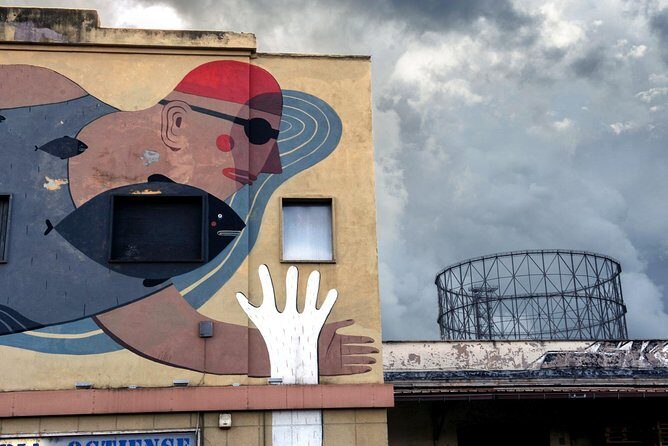
- Street-art redevelopment on purpose: murals you can photograph while learning what makes the scene work visually
- Ponte Settimia Spizzichino to start: a modern connection between Garbatella and Ostiense to set the tone fast
- Tiber-side walking for consistent photo rhythm: waterline angles and changing light as you move
- Gazometro’s post-industrial vibe: a landmark location that turns your camera into a storyteller
- Former factories outside views: abandoned industrial buildings that frame textures, shapes, and mood
- Daniele’s photo teaching: clear guidance that works even if you shoot with a smartphone
Where Ostiense’s “forfeiture and redevelopment” shows up in photos
If Rome is usually all about big, polished landmarks, Ostiense gives you the other side: edges, leftovers, and ongoing change. This walk is built around that idea. You’re not just taking pictures of pretty corners—you’re learning how to read a neighborhood the way a photographer does.
I like that the tour’s theme is obvious as you go. The murals aren’t treated like random street decoration. They’re presented as early proof that a community can reclaim space through art. Then you get the shift to the Tiber: the city’s industrial past doesn’t disappear, it becomes texture. That’s why your photos can look both documentary and creative at the same time.
You also get a practical rhythm. The route is roughly three hours, and it’s flat, so you’re not fighting steep stairs or hills the whole time. Still, it’s described as a bit long, so I’d treat it like a steady walk—not a quick stroll.
You can also read our reviews of more photography tours in Rome

Starting in Garbatella and making the Ponte Settimia Spizzichino your first “frame”
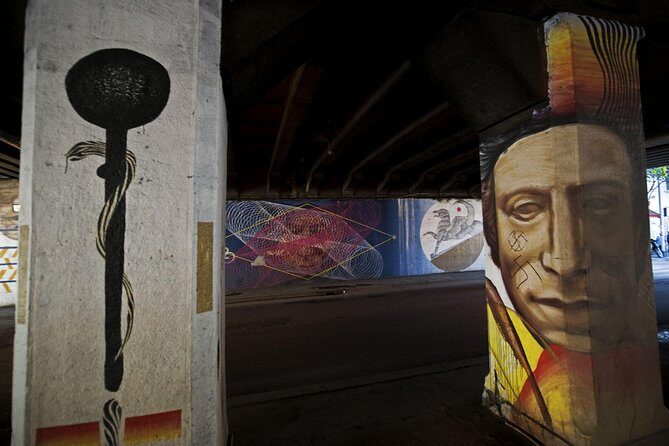
You meet at Metro Garbatella (Quartiere X Ostiense, 00154 Roma RM) and head out around 10:00 am. The start matters because it gets you into the area’s energy quickly, before you lose focus to transit fatigue.
The first big moment is the crossing of the Ponte Settimia Spizzichino. It connects Garbatella with Ostiense and gives you a modern, straight-line perspective right away. Even if you’re not an architecture shooter, bridges teach you framing: leading lines, repetition, and the way structures cut the sky.
This is a good time to get your gear ready and your eyes awake. You’ll be able to shoot both wide views and details, like:
- how the bridge shapes the skyline behind it
- how railings and surfaces create patterns
- how light changes as you move across the span
Practical tip: bring a strap you trust. You’ll likely want both hands free at times for phones/cameras, especially when you’re stopping for instruction or quick angles.
The street-art hunt: murals as the neighborhood’s first makeover
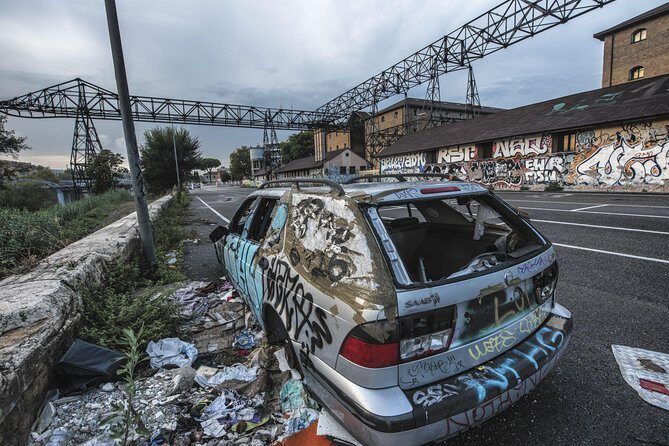
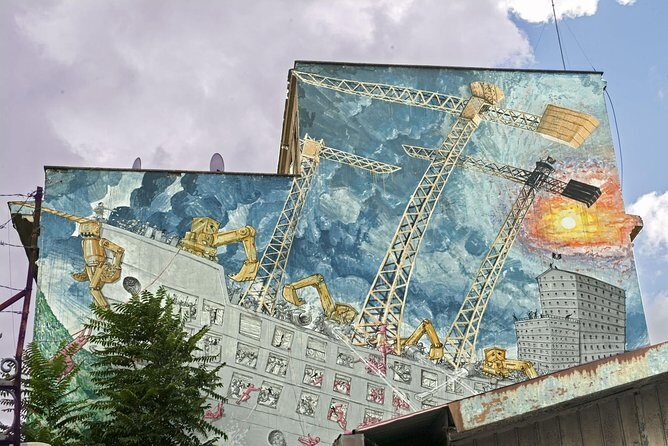
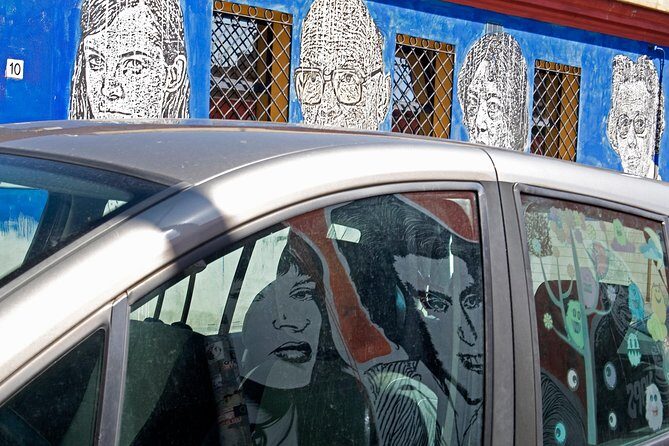
After you cross, the tour turns into a mural hunt. This is where Ostiense earns its reputation for street art as redevelopment. The idea isn’t just to point and click. You’ll be encouraged to look for what makes murals photograph well: contrast, composition, and how the surrounding buildings either support or clash with the artwork.
What I like here is the “why” behind the photos. The teaching connects technique to context. That’s how your shots start to look intentional instead of accidental.
You’ll spend time tracking down murals that represent one of the first—or the first—examples of a neighborhood being redrawn through street art. In a city famous for layers of history, this is a modern layer you can actually see being built in real time.
Possible drawback: street art doesn’t wait for perfect conditions. If you’re picky about “only the best light,” you might feel tempted to pause constantly. The fix is simple: work with the lighting you have. If the light is harsh, focus on strong shapes and texture. If it’s softer, you can emphasize color and the way walls sit in the street.
Down to the Tiber: a change of scenery that helps your photos tell a story
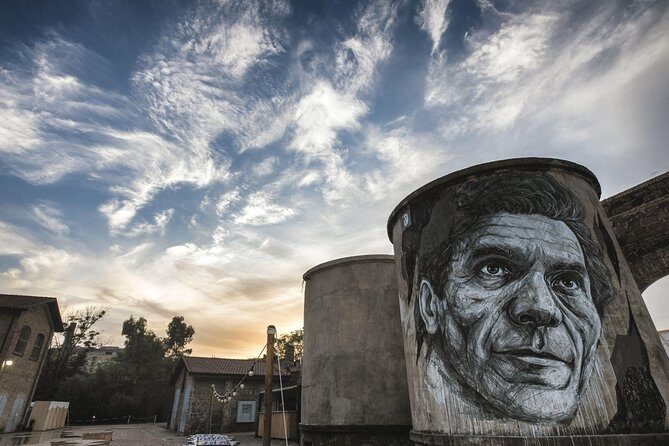
Then the route reaches the Tiber and you skirt it—walking along the river edge until you’re in range of the Gazometro. This section is valuable because it gives your photos a narrative arc. You’re not repeating the same visual type. Murals lead into industrial atmosphere, and the waterline helps unify everything.
The Tiber side also makes it easier to manage photos in motion. You can stop for compositions without feeling like you’re backtracking all the time. And because the view direction stays consistent for stretches, you can experiment with:
- vertical framing (buildings and walls)
- horizontal framing (river as a visual guide)
- contrast between smooth water tones and rough surfaces
If you want photos that feel more “you were there” than “you copied a postcard,” this walk segment helps. It adds layers of depth that are hard to fake.
Gazometro: post-industrial Rome between art and decay
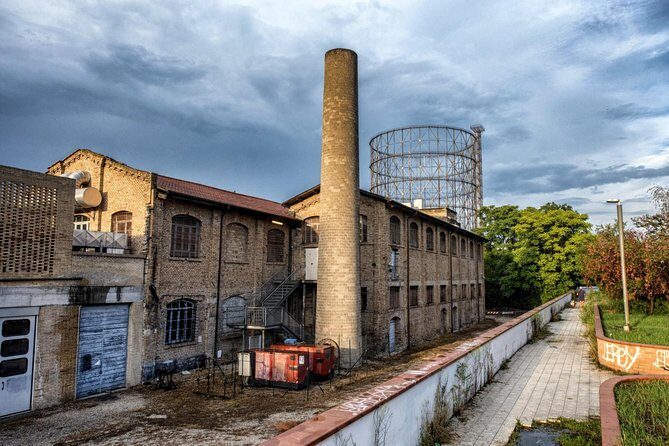
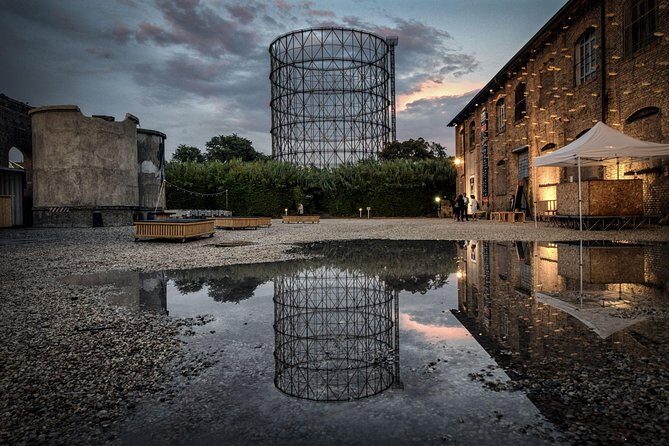
The Gazometro is the big symbol of post-industrial Rome in this itinerary, and it’s not hard to see why photographers care. The setting mixes surreal geometry with real-life deterioration—weathering, textures, and structure that looks dramatic even when the sky is plain.
This part of the tour also helps you shoot with purpose. You’re surrounded by shapes and surfaces that beg for technical choices. Do you want sharp focus on one element? Do you want the background to soften? Are you working with reflections or shadows?
In the reviews, Daniele’s teaching comes up again and again for exactly this type of scene: you learn how to set up your shot to match what you’re trying to say. He’s patient and clear, and the coaching is practical—things like attention to focus, apertures, and how light changes the result.
If you’re using a smartphone, don’t worry. The tour is described as suitable for people even if they only shoot with a phone. The key is learning how to see the scene and then make small adjustments that matter.






Former factories: what to photograph when the buildings are no longer working
Crossing past the river brings you to the exterior views of former factories—buildings that are now abandoned. This is the “industrial edges” section of the walk, and it’s where you can shift from color-forward street art to mood-forward documentation.
Abandoned industrial spaces can look messy at first glance. The value of this tour is that you’re not left alone to figure out what’s worth photographing. The route and teaching nudge you toward:
- strong shapes and repeating structures
- texture (rust, peeling surfaces, worn edges)
- contrast between old function and current atmosphere
You’ll likely find that your photos start telling a quieter story here. Less about brightness, more about mood and design.
A quick consideration: these are outdoor photo stops with no guarantee of clean “look at me” composition every second. Bring realistic expectations. You’re photographing real spaces, not stage sets. That’s part of the point—and it’s why the results can feel more honest.
Daniele’s photo teaching: the practical stuff you can use the same day
What makes this tour stand out is the blend of walking and instruction. Daniele isn’t just describing what you’re looking at—he’s helping you take better photos by dealing with the actual problems that pop up in the field.
From the feedback shared, the coaching covers several core areas you can use anywhere:
- how to think about context so your subject isn’t floating
- focus decisions for the look you want
- how apertures affect what’s sharp versus what softens
- how light can change the whole shot
And the teaching style is practical and calm. Multiple people specifically note his patience and clarity, plus his availability and friendly approach. That matters because photo learning goes better when you feel comfortable asking basic questions.
Here’s what I’d do before the tour if you want to get the most out of it:
- test your camera/phone settings once, so you’re not fiddling at the first stop
- decide if you want to prioritize sharp details or stronger mood
- keep your hands free enough to adjust framing quickly
Also, timing helps. You’ll get guidance on moments when the light is at its best, so you’re not just wandering hoping the sky cooperates.
Price and value: is $197.77 worth it?
At $197.77 per person for about three hours, this tour isn’t a budget splurge—but it also doesn’t feel overpriced for what you get. The value comes from the combination of:
- a focused, thematic route (redevelopment, street art, post-industrial Rome)
- professional instruction during the walk, not a separate lecture
- a private setup where only your group participates
- English delivery
- a mobile ticket for simpler day-of logistics
Private instruction-style experiences cost more because you’re buying attention and feedback. Even though the walk is flat, the “photo learning” part likely saves you time later—because you’ll leave with specific habits for focus, apertures, and light rather than just random scenic photos.
If you’re photographing with a smartphone, this can still be a strong value. You’re not paying for gear. You’re paying for seeing differently and shooting with intent.
Logistics you should plan around (without turning it into stress)
This is a neighborhood walk, so wear shoes you trust. The route is flat, which is great for comfort, but it’s described as a bit long. That usually means you’ll be on your feet more than you expect, even if there aren’t big climbs.
Your start and finish points also matter:
- Start: Metro Garbatella area (Viale Trastevere bus stop area isn’t where you start)
- End: Roma Trastevere Gianicolense, near the station and around Viale Trastevere
So you’re doing a real walk across parts of the city’s edges, then stepping into the Trastevere area afterward. That’s convenient if you plan to keep exploring after.
You’ll want good weather. This tour requires it, and if conditions aren’t right, the experience may be moved or refunded. If Rome is doing one of its surprise weather moods, I’d check forecast timing earlier that morning.
Should you book this Ostiense photo tour?
Book it if you want your camera skills to improve while you see a part of Rome that doesn’t feel like the usual Rome script. I think it’s especially worth it when:
- you like street art and want more than just photos of murals
- you’re curious about how redevelopment shows up in real spaces
- you want practical photography guidance, including lighting and focus
- you want the same tour to work whether you shoot with a phone or a camera
I’d skip it or think twice if long outdoor walking sounds like a hassle for you. It’s flat, but it is still a real walk. And if you’re traveling with a tight schedule, this is 10:00 am to roughly three hours, so it needs a clear block.
If you’re the kind of person who likes to understand what you’re looking at—not just capture it—this one delivers. You’ll finish with photos you can explain, and a few technique upgrades you can use again the next day.
FAQ
How long is the photo tour?
It lasts about 3 hours.
What’s the price per person?
The price is $197.77 per person.
What language is the tour offered in?
The tour is offered in English.
Where do I meet the guide?
You meet at Metro Garbatella, Quartiere X Ostiense (00154 Roma RM), in front of the station or near the bus stops on that area.
Where does the tour end?
It ends in the Roma Trastevere Gianicolense area, near the station or close to bus stops on Viale Trastevere.
What time does the tour start?
The start time is 10:00 am.
Is the route difficult?
It’s a flat route, but it is a bit long.
Does the tour work if I only take photos with my smartphone?
Yes. The experience is recommended even for people who photograph only with a smartphone.
Do I need good weather?
Yes. The experience requires good weather, and if it’s canceled due to poor weather, you’ll be offered another date or a full refund.
Is there free cancellation?
Yes. You can cancel for a full refund up to 24 hours before the experience’s start time.