REVIEW · COLOSSEUM TOURS
Colosseum, Roman Forum and Palatine Hill Skip Line Private Tour
Book on Viator →Operated by Crazy4Rome Private Tours · Bookable on Viator
Three hours in Rome can feel like a time machine. This private tour strings together the Colosseum, the Roman Forum, and Palatine Hill with a guide who helps you read the ruins instead of just looking at them. You’ll also get inside the Colosseum and even step into the Arena area through the kind of doors ancient gladiators used, which is a big deal for the wow factor.
What I like most is the reserved Colosseum and Arena entry included in the price. That means less fiddling and more walking straight into the main show. I also really like the private, custom pacing—your guide can slow down for details, speed up for photos, and keep the group from getting dragged along like a herd.
One drawback to plan for: you’re on your feet for a solid chunk of time on uneven ancient surfaces. If mobility is limited, or if you don’t enjoy long walking-and-standing tours, you might feel it.
In This Review
- Key Things To Know Before You Go
- Why This Colosseum-Forum-Palatine Hill Tour Works as a Package
- Meeting at Caffè Roma and Keeping Your 3 Hours Actually Useful
- Entering the Colosseum Inside: What You Should Look for
- The Arena Moment: Gladiator Doors and the Floor Meaning
- Palatine Hill: Where Early Rome Became Empire
- Roman Forum: Civic Life, Law Courts, and Real Political Drama
- The Arch of Constantine: Quick Stop, Useful Context
- Price Check: Is $300.37 Good Value for What You Get?
- The Guide Factor: Why People Mention Names Like Romina and Giuseppe
- Pacing, Physical Comfort, and What to Bring
- Who This Tour Fits Best (and Who Might Prefer Another Option)
- Should You Book This Colosseum, Roman Forum and Palatine Hill Skip-Line Private Tour?
- FAQ
- What sites are included on this tour?
- How long is the tour?
- Is the Colosseum and Arena entry ticket included?
- Is this tour private?
- What language is the tour offered in?
- Do names on my booking and ID need to match?
Key Things To Know Before You Go
- Reserved Colosseum + Arena admission is built into the tour value, not tacked on later.
- Arena entry via gladiator-style doors turns the floor into more than a photo spot.
- Palatine Hill starts with the story of early Rome, including where imperial power took shape.
- Roman Forum time is focused, covering the civic, legal, and commercial vibe of the Republic era.
- Your itinerary can be paced to your group, which matters in a place that can feel crowded.
- Optional Underground access may be possible if you request it after booking.
Why This Colosseum-Forum-Palatine Hill Tour Works as a Package
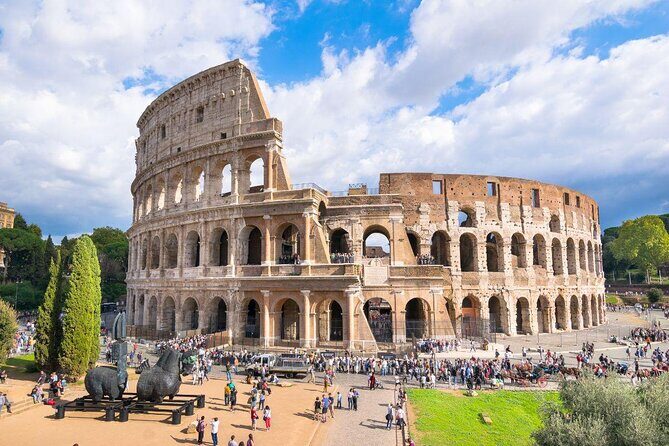
The Colosseum, Roman Forum, and Palatine Hill are the core of “Imperial Rome” for a reason. They sit close enough to connect in one outing, yet they cover different sides of Roman life: entertainment in the Colosseum, politics and law in the Forum, and elite power on Palatine Hill.
A good self-guided plan is possible, but the timing can get annoying fast. The big win here is that you’re not just shuffling from one ticket line to another. You’re walking the route with a guide who helps you make sense of what you’re seeing—so the stones start telling a story.
This format also helps you avoid the classic problem: people spend hours wandering the Forum without knowing what they’re looking at. With a guided flow, you get the “what it was” and “why it mattered” so your photos come with context.
You can also read our reviews of more private tours in Rome


Meeting at Caffè Roma and Keeping Your 3 Hours Actually Useful
Your start point is Caffè Roma, Via del Colosseo 31, 00184 Rome. The tour ends back at the same meeting spot, which is convenient because you don’t have to figure out a second meeting location after your walking is done.
Hours run daily from 8:30 AM to 4:00 PM, so you can usually pick a time that avoids the worst heat and peak daytime crush. The tour duration is about 3 hours, and that’s a good length for this area. Any longer and you risk turning “history day” into “ankle test.”
A practical note that can affect entry: you must provide the full names of all people when booking, and your ID (passport or ID document) needs to match. If names don’t match the ticket details, entry can be denied. It’s one of those boring rules that keeps your trip smooth.
Also, you’ll use a mobile ticket. That’s helpful because you’re not scrambling for paper while also trying to stay on schedule.
Entering the Colosseum Inside: What You Should Look for
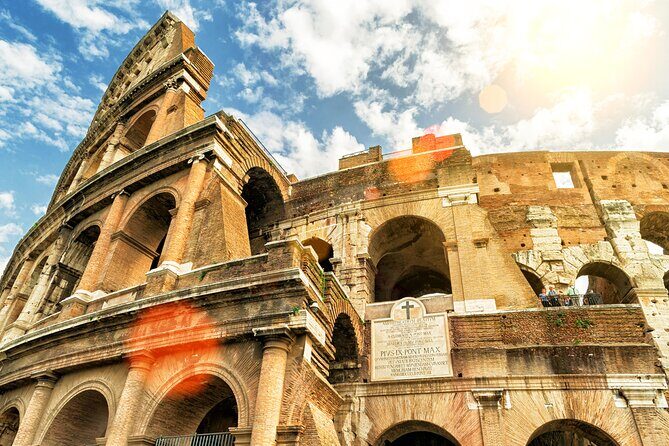
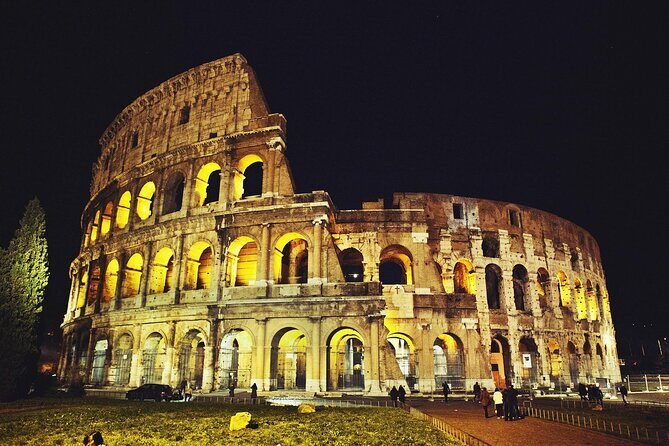
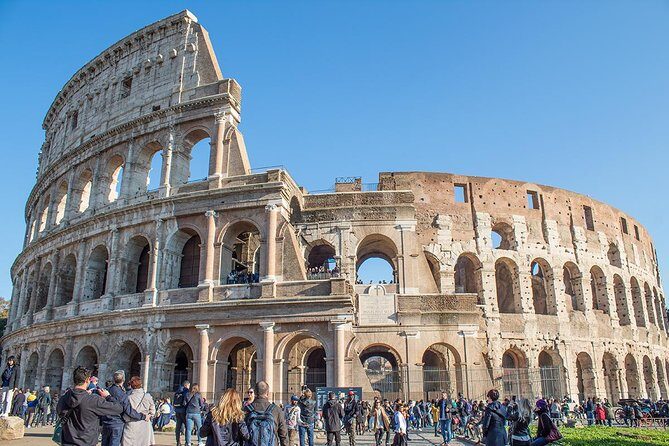
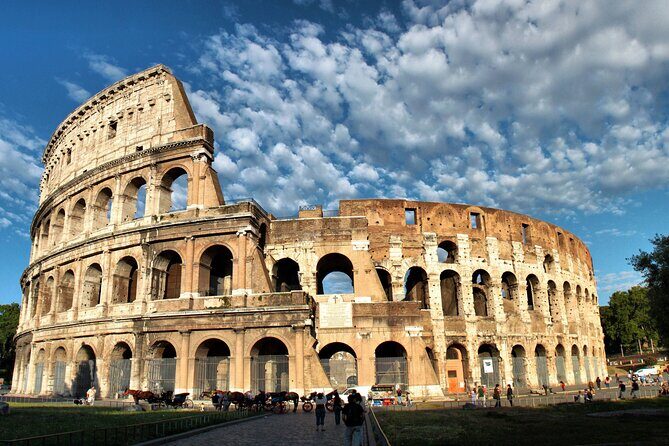
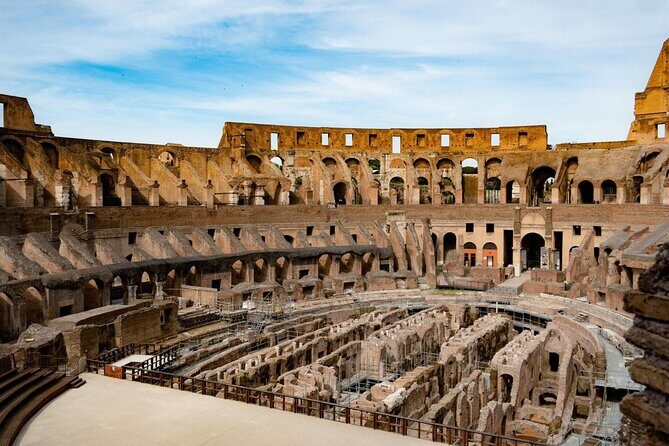
You start at the Colosseum, with inside admission included. The Colosseum is the Flavian Amphitheatre, built under the Flavian emperors, and it’s elliptical, four stories high at its highest point. Even if you’ve seen pictures, standing inside helps you grasp the scale. It’s not just an old ruin—it’s an engineered stage.
Here’s what I’d focus on while you’re inside:
- The overall shape and how the seating wraps around the arena.
- The vertical layers (those four levels) and the idea that different sections served different roles.
- Any visible remnants of how people would have moved and watched.
The guide’s job is to connect those observations to how Roman events worked. That’s the difference between “cool building” and “I get why this was possible.”
The tour pace is designed to keep you moving without turning the Colosseum into a blur. And since it’s a private tour, the rhythm can match your group instead of the group matching the tour.
The Arena Moment: Gladiator Doors and the Floor Meaning
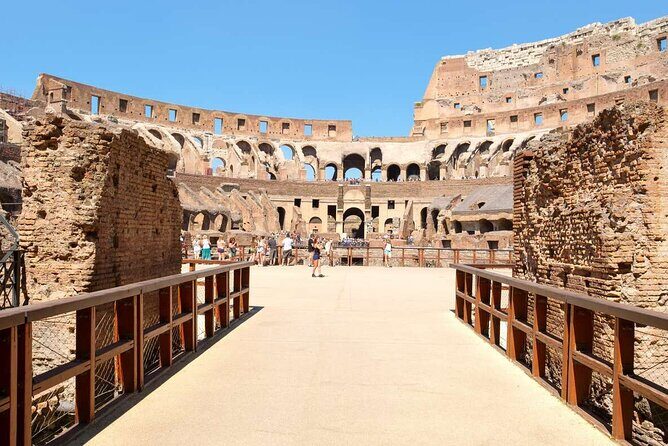
One of the most memorable parts is that you’ll be able to enter the Arena area and do it through the same doors used by gladiators. That detail matters because the arena floor is where the show actually happened—at least from the spectators’ point of view.
The word arena comes from Latin and relates to sand. Historically, there was a sand layer on the floor during events. When you stand where the action took place, you start imagining the full setup: movement, crowd noise, and the shock of suddenly seeing performers and events right in front of you.
This stop is short—about 15 minutes—but it’s the kind of short that feels generous because it’s timed for impact. You don’t want a long lecture on the sand; you want a quick, well-led moment that sticks.
Palatine Hill: Where Early Rome Became Empire
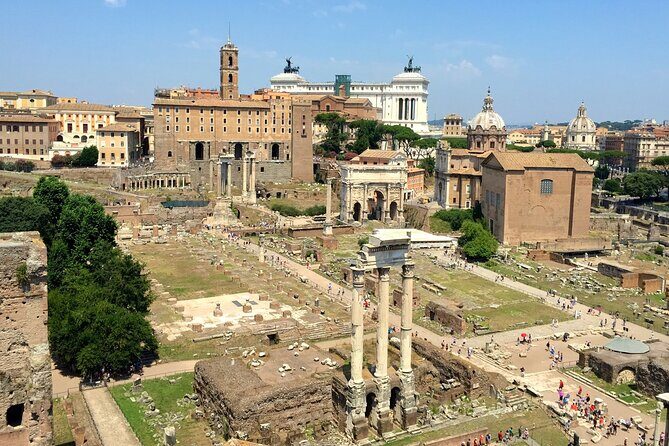
Next up is Palatine Hill, one of the most ancient parts of Rome. This hill is often described as the central one of the seven hills, and it’s associated with the first nucleus of the Roman Empire. Today it’s largely an open-air museum, and the Palatine Museum holds finds from excavations here and from other Italian sites.
What makes this stop click is the way it connects people and places:
- Before imperial times, it was heavily associated with wealthy residences.
- Imperial palaces were built here starting with Augustus.
- The hill’s story includes changes over time, not a single snapshot.
You’ll usually have around 45 minutes here. That’s enough to take in the viewpoints and the layout without feeling rushed. It’s also long enough for your guide to point out how the hill’s topography ties into power and status.
You’ll also hear about the hill’s two main areas (with an earlier depression separating two summits) and how the area was measured in ancient records. That kind of detail is exactly the sort of thing you miss without help.






Roman Forum: Civic Life, Law Courts, and Real Political Drama
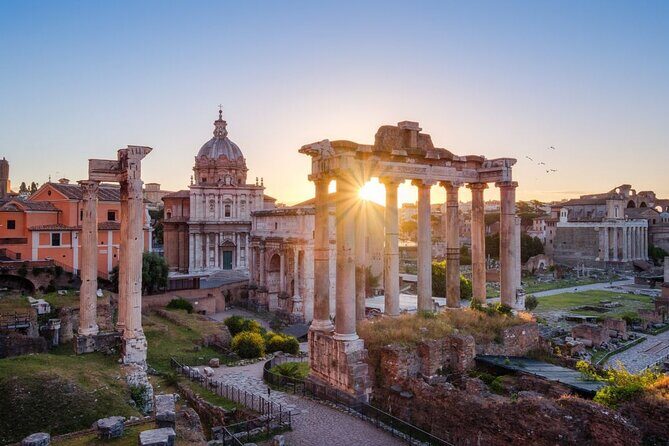
The Roman Forum sits between the Palatine and Capitoline hills, on lower ground. It was the setting for public meetings, law courts, and major events in republican times. It also had shops and open-air markets lining the area, so it wasn’t only about speeches and serious politics.
Your Forum time is about 45 minutes, which is a smart allocation. The Forum can swallow time quickly if you try to do it alone. With a guide leading the flow, you get a coherent sweep: what each zone likely was, what kinds of activity happened there, and how the whole place worked as a civic hub.
This is the stop where I find a good guide can really earn their fee. Without that guidance, it’s easy to see “ruins” but not feel the function. With it, you start seeing a map of Roman society: power, rules, trade, and public life in one tight area.
Expect a decent amount of walking. That’s normal here. Wear shoes you trust.
The Arch of Constantine: Quick Stop, Useful Context
You’ll also make a brief stop at the Arch of Constantine, located between the Colosseum and Palatine Hill. The arch is a triumphal monument dedicated to Constantine the Great, and it spans the Via triumphalis, the route taken by victorious military leaders during triumphal processions.
This isn’t a long stop—about 15 minutes—but it works as a “bridge” between sites. After the Colosseum and before the hills and civic spaces, it gives you a reminder that Rome’s public power was staged and symbolized. It’s not only what happened inside the arena; it’s also how leaders wanted to be seen.
If you like monuments that have a specific route purpose, this quick stop can become a surprisingly satisfying chapter.
Price Check: Is $300.37 Good Value for What You Get?
At $300.37 per person for about 3 hours, this isn’t a budget outing. But it’s also not just buying a ticket and getting a pamphlet.
Here’s what’s included that affects value:
- A private guided service (your group only)
- Colosseum and Arena entrance ticket (listed as valued at €24 per person)
- Colosseum reservation fee (valued at €2 per person)
- Admission coverage for the stops along the route (including Palatine Hill and Roman Forum entries)
The real value comes from the combination:
1) You get timing help through reservations and skip-the-line positioning from the start.
2) You get a guide who helps you interpret what you’re walking through.
3) You cover multiple major sites without losing half your day to logistics.
If you were trying to piece this together on your own, you’d spend time managing entry windows, figuring out route efficiency, and then compensating for the lack of interpretation with extra museum reading and guesswork. Even if you don’t pay more in ticket prices, you often pay in time and stress.
If you’re the sort of person who wants a plan that stays on rails, this is likely worth it.
The Guide Factor: Why People Mention Names Like Romina and Giuseppe
A tour like this lives or dies on the guide. You’re walking through a place that’s physically impressive but confusing when you’re on your own.
In the feedback you were provided, a few names show up in connection with what people love most: clear explanations, good pacing, and an interactive vibe. Names included include Zev, Romina, Giuseppe, Fabio, and Yevgeny. The common thread is that the guides don’t just talk at you. They answer questions and adjust the pace so the tour feels like it matches your group.
If you’re someone who likes to ask why something was built, how it worked, or what people believed at the time, that interaction is a big part of the value. It turns the experience into something you can’t replicate with a generic audio app.
And because it’s private, you’re less likely to feel trapped in a fixed pace that suits strangers more than you.
Pacing, Physical Comfort, and What to Bring
This is a walking and talking style tour, and the provider flags it as requiring moderate physical fitness. That usually means: you’re on uneven ground, you’ll be standing for viewpoints and explanations, and you’ll keep moving between stops.
To make it easier on your feet:
- Wear comfortable, grippy shoes (not sandals).
- Bring water, especially in warmer months. Food and drinks aren’t included.
- Have a plan for sun protection, because the Forum and Palatine Hill are open-air.
The tour length is only about three hours, but Rome’s surface can make time feel longer. Going in prepared helps your legs and your attention.
Who This Tour Fits Best (and Who Might Prefer Another Option)
This tour fits best if you want:
- A private guide and a plan that stays efficient
- The biggest Roman hits in one outing: Colosseum, Arena, Palatine Hill, Roman Forum
- Clear explanations that help you understand what you’re seeing
It’s also a strong fit if you’re visiting during a busy season or at times when getting timed entry can be tricky. The structure of this tour is built for managing that reality.
If you have mobility concerns, you might find the walking demands difficult. The provider notes moderate fitness, and the route includes areas where surfaces can be uneven.
If you’re traveling with very young kids who need constant breaks, the pacing may not match. In that case, you might consider a more flexible tour format.
Should You Book This Colosseum, Roman Forum and Palatine Hill Skip-Line Private Tour?
Book this if you want a smart, high-impact route with tickets handled and a guide doing the heavy lifting of interpretation. At $300+ per person, you’re paying for time saved, reserved entry, and an experience that’s designed to make the ruins understandable fast.
Skip it (or switch to a simpler plan) if you don’t want to walk for much of the afternoon or if you prefer to wander without structure. This is a guided path through major sites, not a slow stroll.
If you’re excited to see the Colosseum inside and then step into the Arena space through gladiator-style doors, this is exactly the kind of tour that turns a famous stop into a real memory.
FAQ
What sites are included on this tour?
You’ll visit the Colosseum (inside), the Colosseum Arena area, Palatine Hill, the Roman Forum, and a stop at the Arch of Constantine. The tour ends back at the meeting point.
How long is the tour?
The duration is approximately 3 hours.
Is the Colosseum and Arena entry ticket included?
Yes. The Colosseum and Arena entrance ticket is included, along with a Colosseum reservation fee. Admission ticket coverage is also listed for the other major stops on the itinerary.
Is this tour private?
Yes. It’s a private tour/activity, so only your group will participate.
What language is the tour offered in?
The tour is offered in English.
Do names on my booking and ID need to match?
Yes. You must provide the full names of all travelers when booking, and each person must bring a valid passport or ID document that matches the name provided for entry to the Colosseum and Roman Forum.