REVIEW · OSTIA ANTICA TOURS
Ostia Antica Semi-Private Tour
Book on Viator →Operated by Rome Group Tours · Bookable on Viator
You’ll feel the Roman port city’s pulse.
This 3-hour semi-private tour takes you into Ostia Antica, a major ancient site just outside Rome, without the usual crush you get in the big-ticket attractions. You’ll walk original streets, spot the remains of shops and homes, and hear how this city functioned as Rome’s gateway for goods moving across the Mediterranean. I like that it’s paced for a small group, so you can ask questions and actually follow the story.
I especially like two things: the guided walk through key ruins, and the fact that admission tickets are included. The route focuses on everyday Roman life, from bathing culture to civic spaces, so you’re not just looking at stones—you’re learning how people lived.
One consideration: at this price point ($195), you’re paying for guidance and the small-group format, so it may feel steep if you’re the type who prefers to self-guide with zero time spent listening.
In This Review
- Key Highlights You Should Care About
- Why Ostia Antica Feels Different From Rome’s Usual Big Names
- Price and Value: What $195 Buys You Here
- Meeting at Ostia Antica Train Station: Start Where You Should Be
- Porta Romana: Entering the City Like the Romans Did
- Decumanus Maximus: Shops, Work, and the Main Street Beat
- Baths of Neptune: Roman Hygiene, Social Life, and Mosaic Magic
- Theatre and Houses: What People Watched and Where They Lived
- The Forum and Thermopolium: Public Power and Fast-Food Reality
- Walking Tips for This 3-Hour Route (Without Guesswork)
- Who This Semi-Private Tour Fits Best
- Final Take: Should You Book This Ostia Antica Tour?
- FAQ
- Is admission to Ostia Antica included in the tour price?
- How long is the tour?
- How many people are in the group?
- Where does the tour start and end?
- Are train tickets included?
- What should I bring for the walk?
Key Highlights You Should Care About
- Small group (up to 6) for a calmer, more conversational visit
- Admission included so you can spend less time fussing with tickets
- Porta Romana orientation that helps you understand the city’s layout fast
- Mosaics in the Baths of Neptune that make Roman bathing feel real
- Forum plus thermopolium for a clear picture of public life and everyday food
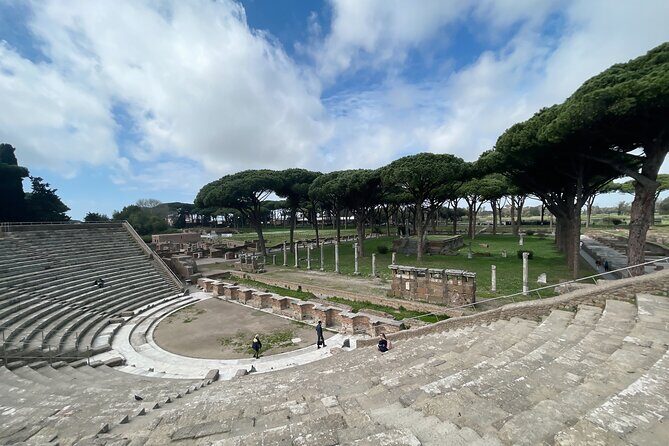
- Original paved streets that make the ruins easier to visualize
Why Ostia Antica Feels Different From Rome’s Usual Big Names
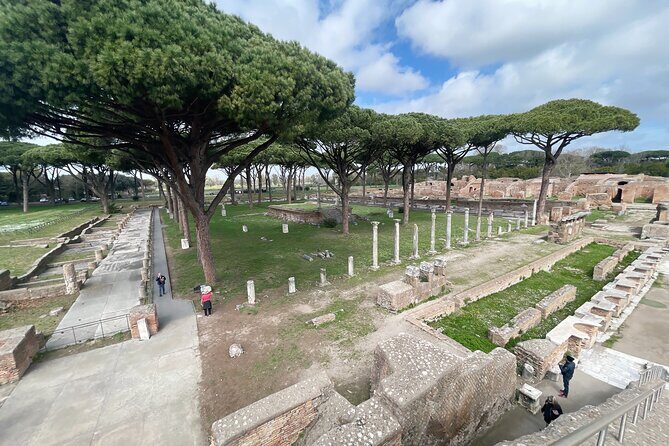
Ostia Antica is one of those places where the scale is impressive, but the vibe is more manageable than Rome’s headline sites. You’re walking through a real city plan: gates, main roads, public spaces, and the parts where people worked and ate. That matters because it turns the experience from photo-op ruins into a living map of ancient routines.
I also appreciate that the tour doesn’t act like you need to be a classic scholar. You get a simple, guided path that connects buildings to daily life—how a port city functioned, what people did for leisure, and how commerce showed up in street-level shop remains.
And because the group is limited, you’re less likely to feel like you’re being marched through rooms with one eye on the next stop. You can look longer at details like mosaics and street alignments without losing the thread.
You can also read our reviews of more private tours in Rome



Price and Value: What $195 Buys You Here
At $195 for about 3 hours, this is not a budget option. But it’s also not just you “paying for access” to a site that you could wander around alone.
Here’s what you’re getting for the money:
- A guided tour that explains the purpose of each area, instead of leaving you to guess
- A small group size (max 6), which changes the feel of the visit
- Admission to Ostia Antica included, so you’re not paying extra to enter
The train ride itself is not included, and you’ll need to factor in your route to the meeting point. Still, for many people, paying for included entry plus real interpretation is worth it—especially if you want the Roman city story to make sense as you walk it.
Meeting at Ostia Antica Train Station: Start Where You Should Be
The tour meets at Ostia Antica train station (Viale della / Via della Stazione di Ostia Antica, 00119 Ostia Antica RM). That’s a smart choice. Instead of starting deep inside the ruins with no orientation, you begin right near the action and get your bearings before you enter.
Check-in closes 15 minutes prior to departure, and departures run on time with no refunds or exchanges if you arrive late. So set yourself up to be early rather than hoping your local train will be perfect.
For logistics, this helps: the site is near public transportation, and the tour ends back at the meeting point. That reduces the stress of figuring out a last-minute exit plan.
Porta Romana: Entering the City Like the Romans Did
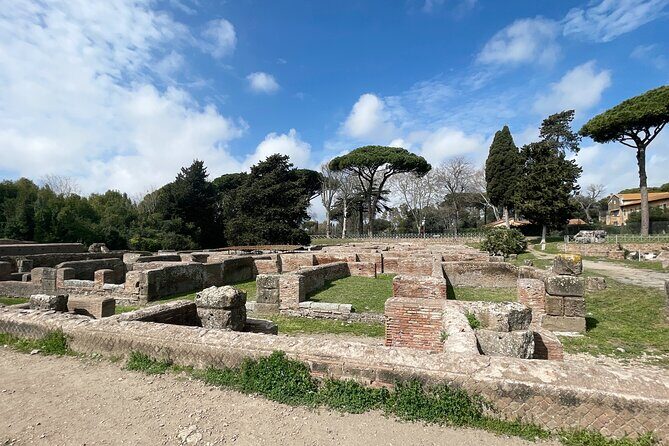
Your first major stop is at Porta Romana, the Roman gate that serves as the main entrance. The guide starts with an orientation—what Ostia Antica was, and why its location mattered. You’ll hear how the city functioned as Rome’s port, supplying the capital with goods coming from around the Mediterranean.
This opening matters because it sets up everything else you see. When you understand the gate and the city’s layout, the main road and the public spaces stop feeling random. They start to feel like they connect to a working system.
You’ll also move from the modern arrival experience into a clear ancient first impression: walking into a built environment that was designed for movement of people and products.
Decumanus Maximus: Shops, Work, and the Main Street Beat
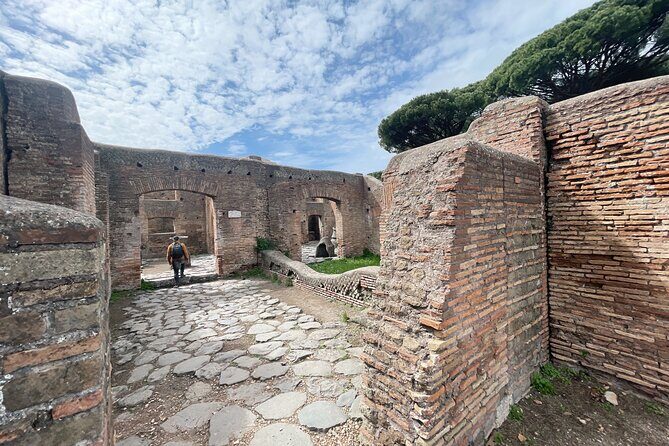
Next, you’ll walk along the Decumanus Maximus, the city’s main street. This is where Ostia Antica starts to feel like a place that was actively used, not just a ruin preserved in time.
Along the route, you’ll see the remains of shops and workshops. Even though you’re looking at fragments, the guide’s explanations help you understand the street-level commercial life—what kinds of businesses could have been here and how the layout supported trade. It’s one of the best ways to avoid the ruins looking too uniform.
If you like architecture plus human scale, this section is a win. A main street gives you a spine for the whole visit, and it helps you connect earlier structures to later public sites.






Baths of Neptune: Roman Hygiene, Social Life, and Mosaic Magic
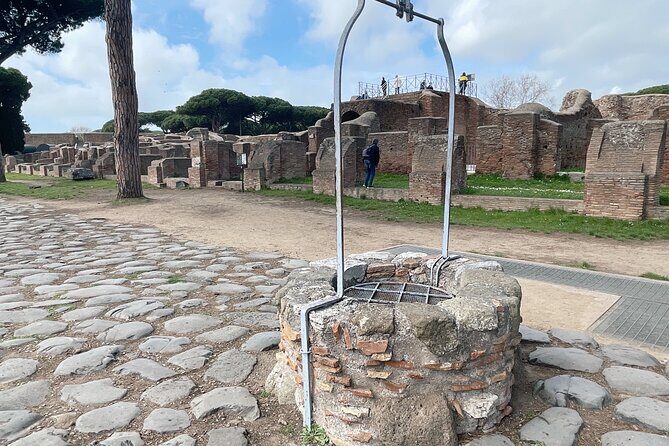
One of the most memorable stops is the Baths of Neptune. This area is known for well-preserved mosaics, including sea-themed imagery connected to Neptune and his entourage.
Even if you’re not a museum person, baths are a story you can feel. They weren’t only for cleaning. Roman bathing was social. It was leisure. It was part of daily life where people showed up, talked, and passed time. The guide’s explanation is what turns mosaic decoration into context you can understand.
The mosaics also give you something practical to do with your attention. Instead of staring broadly at walls, you can look for the details the guide points out—so your brain gets a job while you walk.
Theatre and Houses: What People Watched and Where They Lived
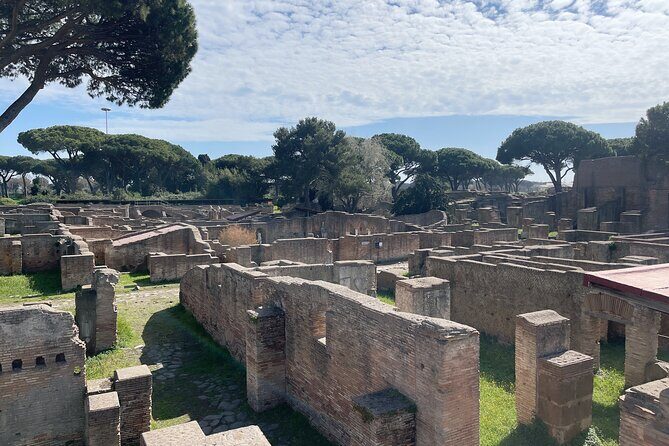
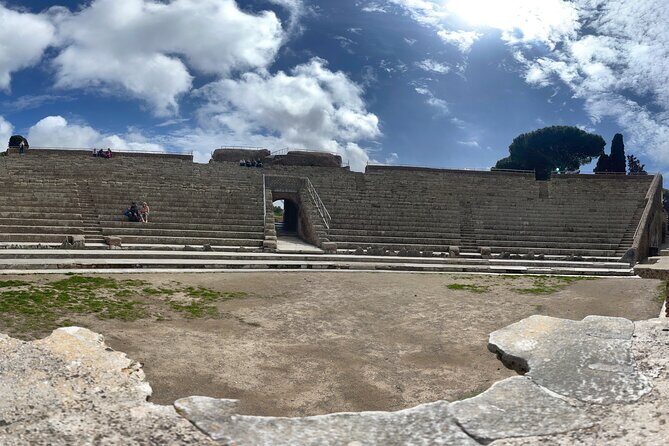
After the baths, the tour continues to the ancient theatre, a venue that once seated thousands. You’ll talk about the kinds of performances that took place and what the atmosphere might have been like, based on how the space worked.
This is a strong stop for two reasons:
1) A theatre forces you to imagine crowds and routines.
2) It highlights that Ostia Antica wasn’t just a warehouse for goods. It had cultural life.
Then you move toward residential areas, including caseggiati (apartment-style blocks). These houses help you understand the other side of a port city: daily living, not just public spectacle.
If you enjoy seeing how different parts of society fit together—work, leisure, home—this is where the tour really connects the dots.
The Forum and Thermopolium: Public Power and Fast-Food Reality
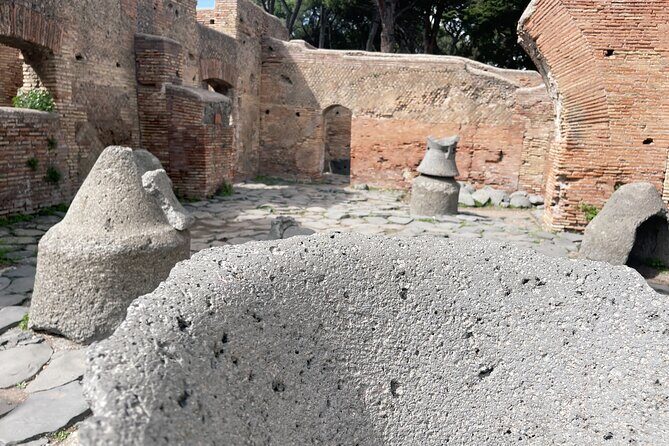
In the central part of the city, you’ll visit the Forum, the key public square where civic and religious buildings were located. You’ll see the remains of structures like temples and basilicas and learn what they meant for the city’s everyday rhythm.
Think of it as the city’s “what mattered” space. If a street shows commerce and movement, the Forum shows authority and community identity.
From there, you’ll see the thermopolium, an ancient Roman fast-food counter. What makes this stop useful is that it takes food out of abstract history and puts it into a specific setting. Even if you only catch fragments of what was sold, the idea is clear: people ate quickly, on the go, and likely bought prepared food the way busy people do today.
Depending on time and group interest, you might also visit additional sites such as the House of Diana, described as a well-preserved example of an insula. That can add a residential layer to the story, which helps if you want more detail on how apartments functioned.
Walking Tips for This 3-Hour Route (Without Guesswork)
This tour is rated as moderate physical fitness. That means you should expect a fair amount of walking over uneven ancient ground. If you have knee issues or you dislike long stretches on stone, plan carefully.
A few practical tips that make a difference:
- Wear comfortable shoes with good grip. The ruins are historic stone, not smooth pavement.
- Bring a water bottle. There are free water fountains and kiosks nearby to refill.
- Dress for the weather. There’s no strict dress code, but you’ll feel it if you overdress for heat or forget a layer for cooler hours.
One more thing: since the tour is small (max 6 travelers) and stays on time, you’ll get less “wandering time” than you would on a DIY visit. If you want slow, independent browsing, consider pairing the tour with a later self-guided return.
Who This Semi-Private Tour Fits Best
This experience is a great fit if you:
- Want guided interpretation of Roman life, not just a checklist of ruins
- Prefer smaller groups where you can ask questions
- Like clear structure: gate, main street, baths, theatre, homes, then Forum and everyday dining spaces
It’s also family-friendly in the sense that children can go, as long as they’re accompanied by an adult. And because the tour is about daily life and city planning, it tends to work well for teens and adults who learn best through context.
If you’re the type who loves taking your time and wandering without listening, you might find the pace a bit directed. In that case, consider whether you want a guide’s storyline—or just the site at your own speed.
Final Take: Should You Book This Ostia Antica Tour?
If you’re heading to Rome and want one ancient stop that feels practical and human, I’d book this. The small group, the built-in route, and the fact that admission is included make the tour feel like real value, not a pricey ticket for “standing near ruins.”
Skip it only if cost is your top priority, or if you dislike walking on uneven ground and prefer total freedom over guidance. Otherwise, this is a smart way to experience Ostia Antica as a functioning city—with your eyes guided to the details that make it click.
FAQ
Is admission to Ostia Antica included in the tour price?
Yes. Admission to the Ostia Antica Archaeological Site is included, so you don’t need to buy a separate ticket for entry.
How long is the tour?
The tour lasts about 3 hours.
How many people are in the group?
This is a small group experience with a maximum of 6 travelers.
Where does the tour start and end?
It starts at the Ostia Antica train station and ends back at the same meeting point.
Are train tickets included?
No. Train tickets are not included, but the meeting point is near public transportation.
What should I bring for the walk?
You should bring a water bottle. There are free water fountains and kiosks nearby to refill, and comfortable shoes are recommended for the walking.