REVIEW · OSTIA ANTICA TOURS
Ostia Antica – Commercial Port of Ancient Rome Tour
Book on Viator →Operated by RomAbout Tours · Bookable on Viator
Rome’s port ruins are right next door. This guided small-group trip to Ostia Antica takes you from central Rome to the ancient harbor city in a few hours, with guides like Rebecca and Sonia praised for clear, enthusiastic explanations. I especially like that admission and metro tickets are included, and that the site often feels calmer than Rome’s biggest attractions. The only catch: you need moderate walking stamina for a full, ruin-filled morning.
You meet at P.za Ostiense, 9 at 8:30 am, and your guide helps you navigate the train/metro out there. At the archaeological park, you focus on top highlights such as the grand outdoor theatre and the Square of Guilds, then continue through stops like the Baths of Neptune and the House of Diana. It’s designed so you get the main story without spending the entire day in transit.
The group is capped at 12 people, so you’re not lost in a crowd. Do note it does not include lunch, and the visit requires good weather since the park is outdoors. Also, plan ahead because this one is commonly booked about 60 days out.
In This Review
- Key highlights to know before you go
- Ostia Antica’s Commercial Port: Why this Rome day trip hits different
- What you actually do in 4.5 hours (and why the pace matters)
- Getting there from Rome: how the metro helps you save energy
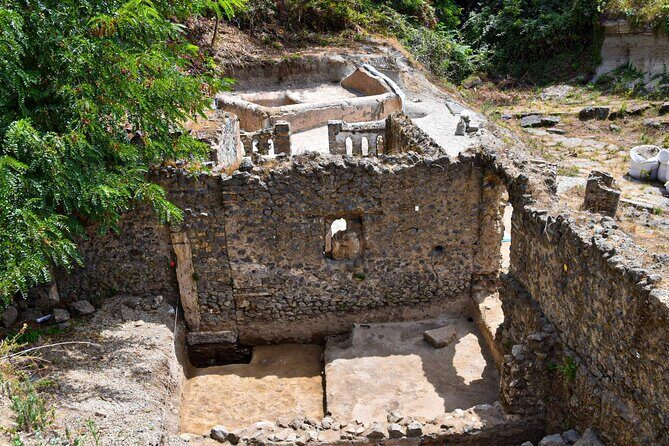
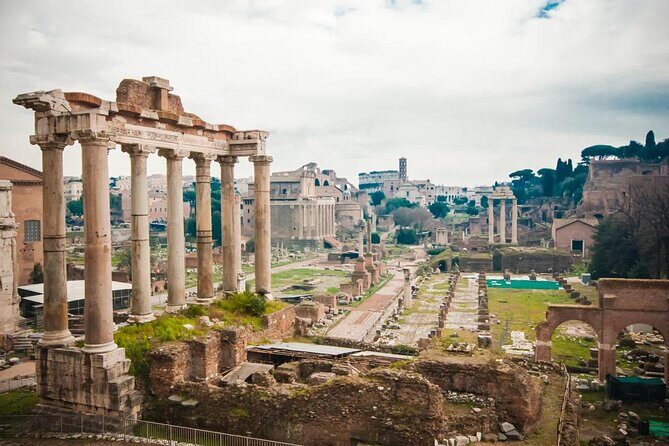
- Parco Archeologico di Ostia Antica: the main stops you’ll remember
- The grand outdoor theatre
- The Square of Guilds
- Baths of Neptune
- House of Diana
- Why the small-group guide matters more than you think
- Price and value: what $120.36 buys you (and what you still need)
- Who this tour suits best (and who may want a different plan)
- Practical tips so your day feels smooth
- Should you book this Ostia Antica tour?
- FAQ
- How long is the Ostia Antica Commercial Port of Ancient Rome Tour?
- Where do we meet for the tour?
- What’s included in the price?
- Is lunch included?
- How big is the group?
- Is the tour offered in English?
- Do I need a certain fitness level?
- Do I need to buy the park entrance ticket separately?
- How far in advance is this tour usually booked?
- What happens if the tour can’t run due to weather?
Key highlights to know before you go
- Small group (max 12): More time for questions and a steadier pace through the ruins
- Tickets included: Park entrance and metro tickets are part of the price
- Four big sights in one outing: Outdoor theatre, Square of Guilds, Baths of Neptune, House of Diana
- A calmer alternative to central Rome: You’ll often feel like you can actually look at what’s in front of you
- English-guided with story-led context: Multiple guides are singled out for bringing day-to-day Roman life to life
Ostia Antica’s Commercial Port: Why this Rome day trip hits different
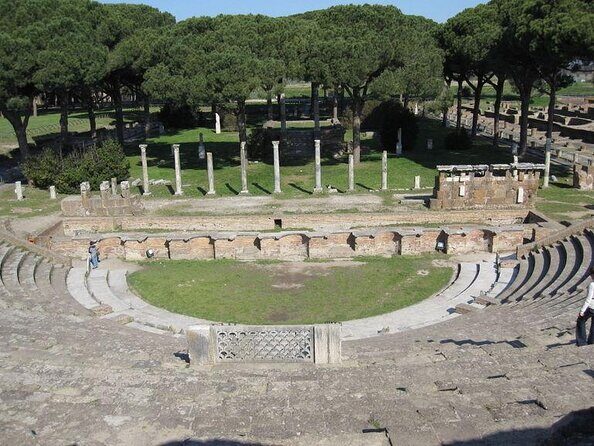
If you’ve already done Rome’s top monuments, this tour gives you something more specific: how a Roman city functioned when ships, warehouses, and everyday commerce ruled the day. Ostia Antica was the commercial port for ancient Rome, so it wasn’t just temples and emperors. It was streets, shops, baths, work spaces, and public gathering spots where real people lived and traveled.
That focus is a big reason I like this kind of guided visit. You’re not just looking at old walls. With a good guide, you start connecting the dots: why a theatre is positioned where it is, why certain buildings cluster around public squares, and what the baths and homes suggest about daily routine.
Also, the timing works. You’re out there for about four hours in the park (about 4 hours 30 minutes total including transit). That makes it realistic on a multi-day Rome trip without turning your schedule into a marathon.
You can also read our reviews of more tours and experiences in Rome.



What you actually do in 4.5 hours (and why the pace matters)
This tour is built as a “big highlights” outing. You’re not committing to a whole day of ticket lines, wandering, and trying to piece together a site that can feel huge once you’re inside.
In practice, you’ll spend your time like this:
- You start with help from your guide to get from central Rome to Ostia Antica by public transport.
- Once you reach the archaeological park, you follow a guided route through the main, most recognizable areas.
- The focus stays on the most important visuals and the story behind them—so you leave with a clear sense of what the port city looked like and how it operated.
A small-group format really changes how the ruins feel. With fewer people, you tend to get:
- more chances to ask questions without waiting your turn,
- pauses for photos,
- and enough breathing room to slow down if something catches your interest.
One potential downside is that the day is still active. This is an outdoor archaeological site, and the tour calls for moderate physical fitness. If you prefer long rests or minimal walking, you’ll want to plan snacks and water on your own (since lunch isn’t included).
Getting there from Rome: how the metro helps you save energy
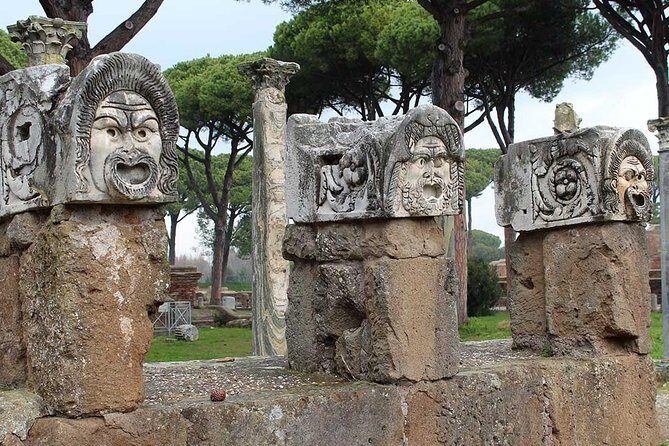
Meeting point is at P.za Ostiense, 9, 00154 Roma RM at 8:30 am. This matters because early starts pay off: you’re aiming to beat the day’s peak congestion and get to the park while you still have your legs.
The tour includes metro tickets, and the guide helps you navigate the train/metro route to Ostia Antica. That sounds simple, but it’s a real value in Rome. Public transport works well, yet the system can be confusing when you’re also managing directions, ticket validations, and platform changes.
The “returns to the meeting point” part is also practical. You’re not left figuring out where to meet friends or how to get back on your own late in the day. You just follow the plan, then you’re back where you started.
Parco Archeologico di Ostia Antica: the main stops you’ll remember
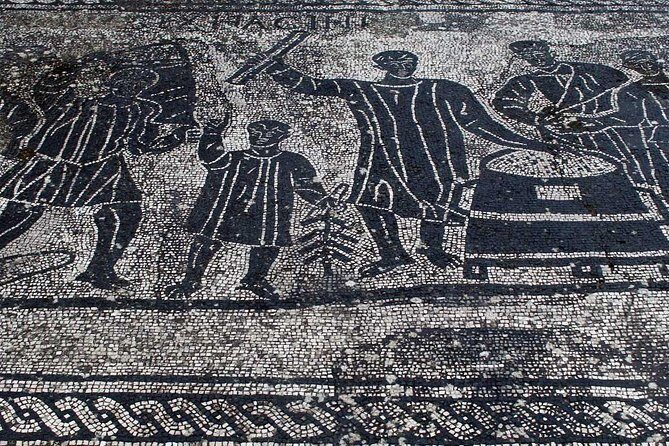
Once you’re inside the park, the tour concentrates on high-impact areas. Here’s what to expect from each highlight and what makes it worth your time.
The grand outdoor theatre
The outdoor theatre is one of Ostia Antica’s most striking sights. Even if you don’t know Roman theatre history, you’ll get the point fast: this was a public space designed for gatherings, shows, and civic life.
I like this stop because it teaches you how the city organized public entertainment around the everyday rhythm of a port town. You’re not imagining a far-away empire. You’re seeing how entertainment and community functioned where people worked, traded, and traveled.



The Square of Guilds
Next comes an area that connects you to the economic heartbeat of the port city: the Square of Guilds. This is where the story shifts from public spectacle to organized trade and work.
It’s a great contrast to the theatre. One moment you’re looking at a space meant for collective experience. Then you’re stepping into the kind of area where professional groups mattered—suggesting how commerce, identity, and routine lived side-by-side.
If you love details, this is a spot where a good guide’s explanations really earn their keep—because you’re looking at architectural cues that make more sense once you understand what guilds meant in Roman urban life.
Baths of Neptune
The Baths of Neptune are one of those places where you can almost feel the daily cadence. Roman baths weren’t just for washing; they were social hubs where people met, chatted, exercised, and relaxed.
This is one of the tour’s best “how did people actually live?” moments. Even without reading every inscription or studying every wall, you can visually grasp how public space supported community life.
It’s also a strong photo stop. The setting and scale tend to impress immediately, and the theatre and baths together give you a balanced view: leisure in two different forms—public performance and daily social routine.
House of Diana
Then you get a change of pace: the House of Diana offers a glimpse into domestic life. That contrast helps you understand Ostia Antica isn’t only about public buildings. It includes homes, with their own priorities and designs.
This stop is especially valuable if you’ve mostly seen Roman monuments in the city center and want something more everyday. The House of Diana is a reminder that port cities housed not just workers and traders, but also residents with lives that unfolded beyond the street.
Why the small-group guide matters more than you think
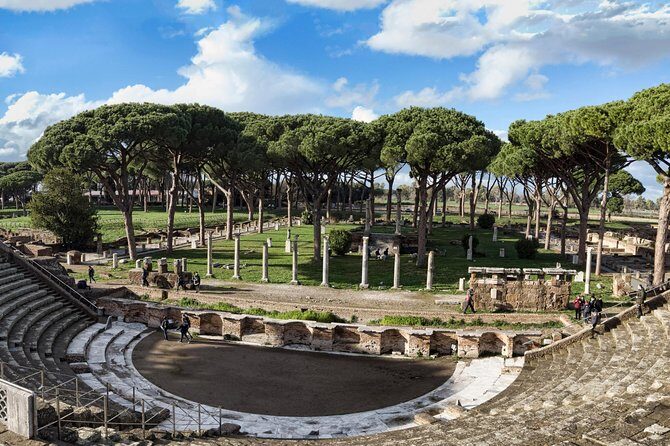
This tour caps at 12 travelers, which might sound like “just a number,” but it affects the entire visit.
In an open-air ruin site, you’re always balancing three things:
- seeing what’s in front of you,
- understanding what it means,
- and keeping the group moving at a human pace.
With a small group, that balance is easier. You’re more likely to feel like you’re walking together, not being marched through a checklist.
The quality of the guidance also comes through in past departures. Guides such as Rebecca, Sonia, Sarah, Celia, Claudia, and Julio have been praised for clear explanations, enthusiasm, and sharing stories that make daily life feel real. Even if every guide has a slightly different style, that repeated emphasis tells me the tour is designed to be interpretation-heavy, not just a route with dates.
If you like history best when it’s practical—how people lived, worked, socialized—this format fits your style.
Price and value: what $120.36 buys you (and what you still need)
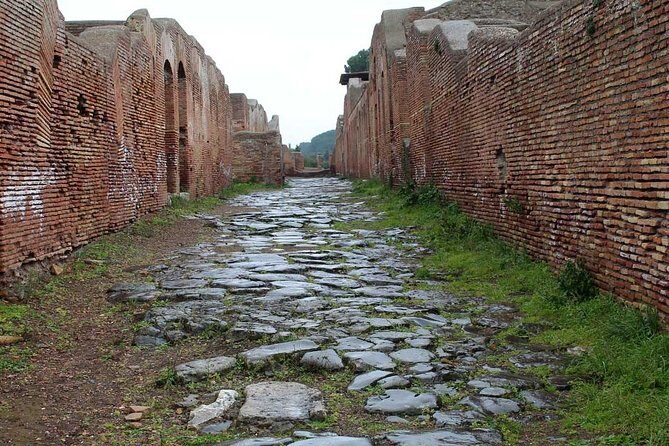
The price is $120.36 per person, and you’re getting:
- an entrance ticket to the archaeological park,
- metro tickets included,
- and a guided route that targets major highlights inside about four hours.
If you tried to do this solo, you’d still have to pay for the park entrance and figure out transit. You’d also lose the benefits of a guide to interpret the buildings quickly instead of spending your time trying to match ruins to names.
That said, this is not a food-included tour. There’s no lunch or drinks. If you’re going to be out from morning through the afternoon, I’d plan a small breakfast before you go and keep water handy. (Bring what you can, or buy nearby once you’re back in the city, since the tour itself doesn’t provide it.)
Who this tour suits best (and who may want a different plan)
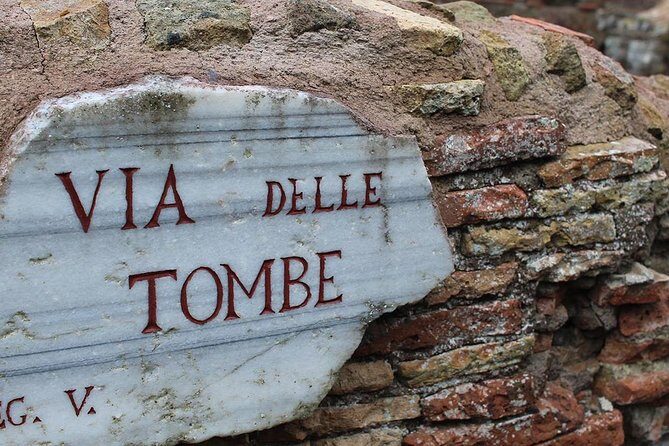
This experience is a strong fit if you want:
- a short, focused visit to a major archaeological site,
- a calmer outing away from the center’s crowds,
- and a guide-led explanation of what you’re seeing, from theatre and baths to homes.
It also fits history lovers who want daily-life context, not only big-name monuments. The highlights chosen for this route make it easier to build a mental picture fast.
This may be less ideal if:
- you need fully accessible routes and minimal walking (the tour requests moderate physical fitness),
- you want a long unstructured wander with no guidance (this tour is designed for a guided highlight path),
- or you’re traveling very last-minute and hope for availability—this one is commonly booked about 60 days ahead.
Practical tips so your day feels smooth
A few things will make your morning easier and more enjoyable:
- Go in ready to walk. This is a ruin site, so wear comfortable shoes with good traction.
- Pack a plan for food. Since lunch isn’t included, decide whether you’ll eat before the tour or after you return.
- Keep expectations realistic about time. The visit focuses on major areas, so you’ll see the big picture but not every corner of the park.
- Consider the mood of the day. Outdoors sites depend on weather, and the tour notes good weather is required.
One neat bonus you can consider (only if timing allows): Ostia is by the coast, and some people tack on a quick extension toward the beach on their own using the same transit corridor. If you like the idea of adding a salty, sea-air finish, keep your schedule flexible.
Should you book this Ostia Antica tour?
I’d book it if you want a guided, small-group way to understand Rome’s port city in a half-day. The combination of included admission, included metro tickets, and a focus on the theatre, Square of Guilds, Baths of Neptune, and House of Diana makes it a practical value—especially when you’re trying to see more than monuments without giving up your whole day.
Skip it or choose a different style if you’re looking for a long, self-paced exploration, or if moderate walking feels like a problem for you.
If weather is decent and you can handle a morning out in the open, this is one of the smarter “Rome by the sea” alternatives—calmer than the city center and built to help you come away with a real sense of how people lived.
FAQ
How long is the Ostia Antica Commercial Port of Ancient Rome Tour?
The tour runs about 4 hours 30 minutes total, with around 4 hours spent at the archaeological park.
Where do we meet for the tour?
The meeting point is P.za Ostiense, 9, 00154 Roma RM, Italy, and the tour starts at 8:30 am.
What’s included in the price?
The tour includes the entrance ticket to the archaeological park and metro tickets.
Is lunch included?
No. Lunch and drinks are not included.
How big is the group?
The maximum group size is 12 travelers.
Is the tour offered in English?
Yes, the tour is offered in English.
Do I need a certain fitness level?
The tour asks for a moderate physical fitness level.
Do I need to buy the park entrance ticket separately?
No. The park entrance ticket is included.
How far in advance is this tour usually booked?
On average, it’s booked about 60 days in advance.
What happens if the tour can’t run due to weather?
The experience requires good weather. If it’s canceled due to poor weather, you’ll be offered a different date or a full refund.