REVIEW · NAPLES
Naples: San Gaudioso Catacombs Guided Tour
Book on GetYourGuide →Operated by Catacombe di Napoli · Bookable on GetYourGuide
Naples hides a cemetery under your feet. This guided tour of the San Gaudioso catacombs brings early Christian burial customs to life, with a 45-minute walk that includes the church above. I love how the guide connects the site to real names and dates, like St. Gaudiosus in the 5th century, and I love the sights: frescoes and macabre tombs decorated with skull imagery.
One possible drawback: it’s short, so if you want hours of solo wandering, you’ll feel the timebox. Also, some underground sections are dim and tight, so if you’re claustrophobic or have mobility concerns, this might be more challenging than you expect.
In This Review
- Key Takeaways Before You Go
- San Gaudioso Catacombs: Naples’ Underground Early Christianity
- St. Gaudiosus and the Cemetery That Kept Growing
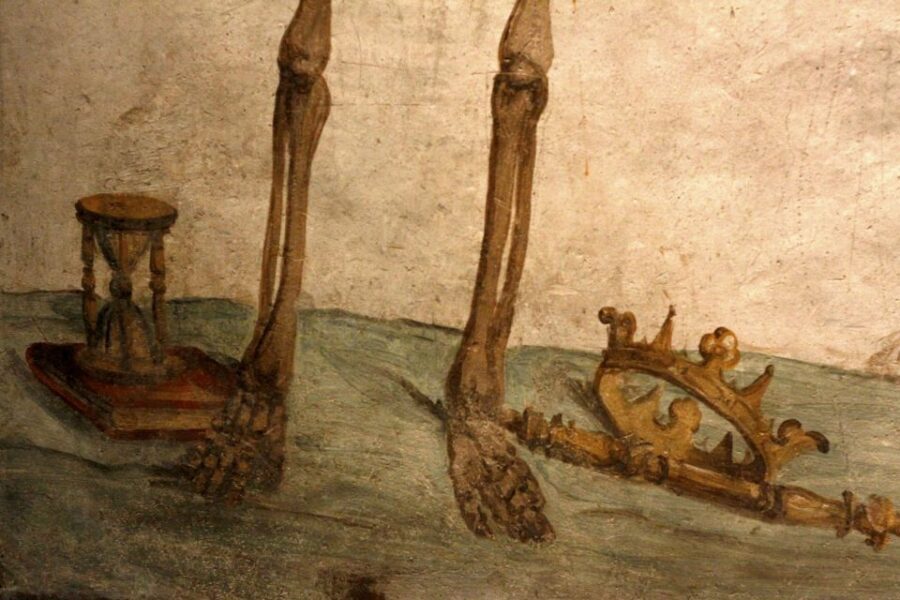
- Frescoes, Mosaics, and Skull Motifs That Aren’t Just for Spooky Photos
- Dominicans, Nobles, and a 17th-Century Return to Burial
- The Basilica di Santa Maria della Sanità: Where the Underground Story Climbs Back Up
- Guides, Local Pride, and Why the Story Feels Personal
- Timing and Getting There: Short Tour, Big Payoff
- Value Check: $15 and the San Gennaro Bonus Ticket
- Who This Tour Suits Best (and Who Should Think Twice)
- Should You Book the San Gaudioso Catacombs Guided Tour?
- FAQ
- How long is the San Gaudioso Catacombs guided tour?
- What’s included in the ticket?
- Where do I meet for the tour?
- What time does the ticket office open?
- What happens if I arrive late to my booked time?
- Is the ticket valid for any day and time?
- What languages are the tours offered in?
- Is free entry to the San Gennaro catacombs included?
- Can I cancel for a refund?
Key Takeaways Before You Go
- San Gaudioso, a major early Christian cemetery with burial stories tied to St. Gaudiosus (451–453 AD)
- Skull displays and 5th–6th century fresco motifs that feel both eerie and oddly human
- A 45-minute guided route that pairs the catacombs with the Basilica di Santa Maria della Sanità
- A bonus free visit to Catacombs of San Gennaro for the next time you’re in Naples (valid 12 months)
- Guides from the Sanità neighborhood, often bringing local context beyond the stones
- Bring good sense for meeting up: you’ll want to arrive early at the ticket office
San Gaudioso Catacombs: Naples’ Underground Early Christianity
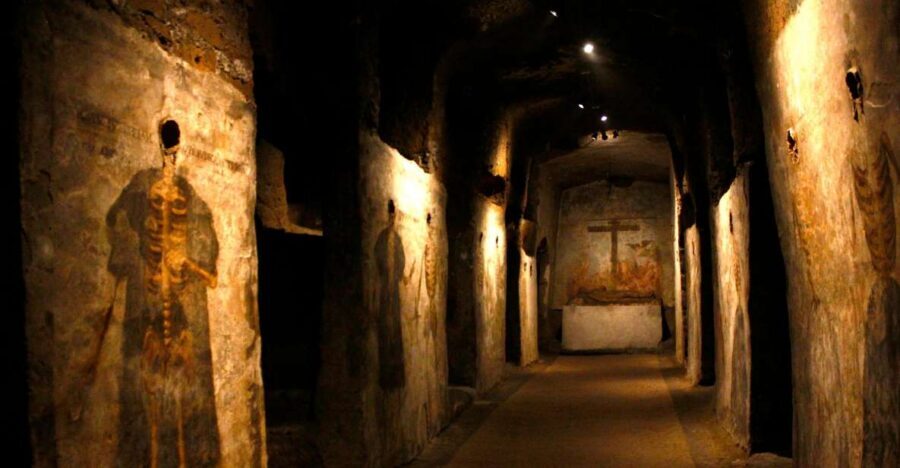
The best part of this experience is that it doesn’t feel like a history lecture. You walk through a working-feeling burial complex while a guide gives the story in the right order: who was buried, why the community used this space, and what changed as Naples grew.
San Gaudioso is one of the city’s standout early Christian cemeteries, and the tour makes that fact tangible. You see how graves, walls, and decoration were used to mark identity in a very different world. Even if the topic turns macabre, the guide keeps the focus on meaning, not shock.
You’ll also notice how the site’s artistry and ritual language overlap. Those early Christian motifs in frescoes and mosaics aren’t random decoration. They’re part of a visual system meant to communicate faith, belonging, and remembrance.
You can also read our reviews of more guided tours in Naples


St. Gaudiosus and the Cemetery That Kept Growing
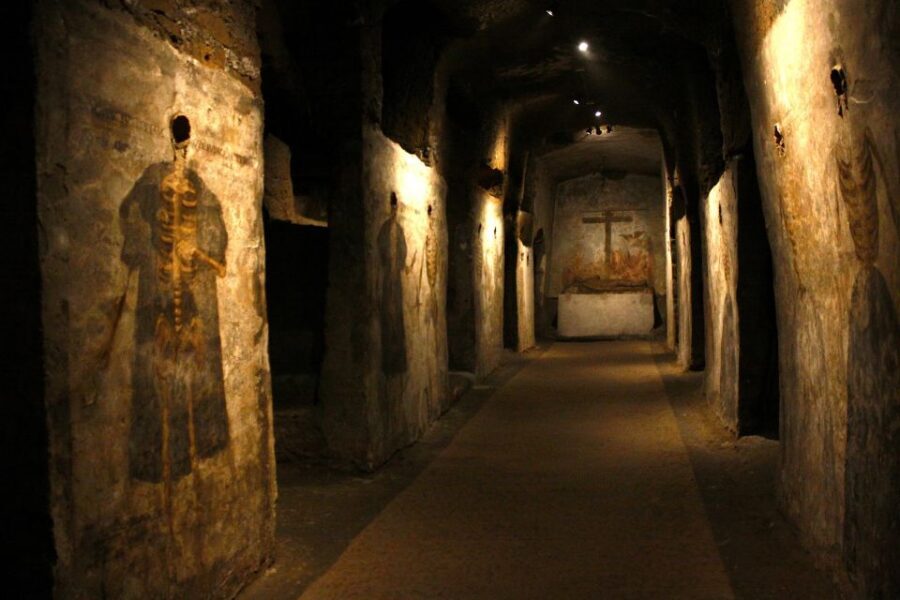
The tour’s story starts with a turning point: the arrival and burial of St. Gaudiosus, a North African bishop, between 451 and 453 AD. That event is the reason the cemetery expands, and the guide helps you understand why one burial could reshape a whole underground space.
This is where the tour feels unusually specific. Instead of saying early Christians did this or that, you hear about how the site developed after St. Gaudiosus was laid to rest. The catacombs become a place of continuing association with the saint—so you’re not just looking at old rooms. You’re looking at a place that stayed important.
You’ll also learn about the way the catacombs were used by different social groups over time. The graves reserved for nobles date to the 17th century, when the catacombs resumed their function as a burial site again. That time shift matters, because it explains why you see different styles and layers of decoration instead of one uniform “original” look.
Frescoes, Mosaics, and Skull Motifs That Aren’t Just for Spooky Photos
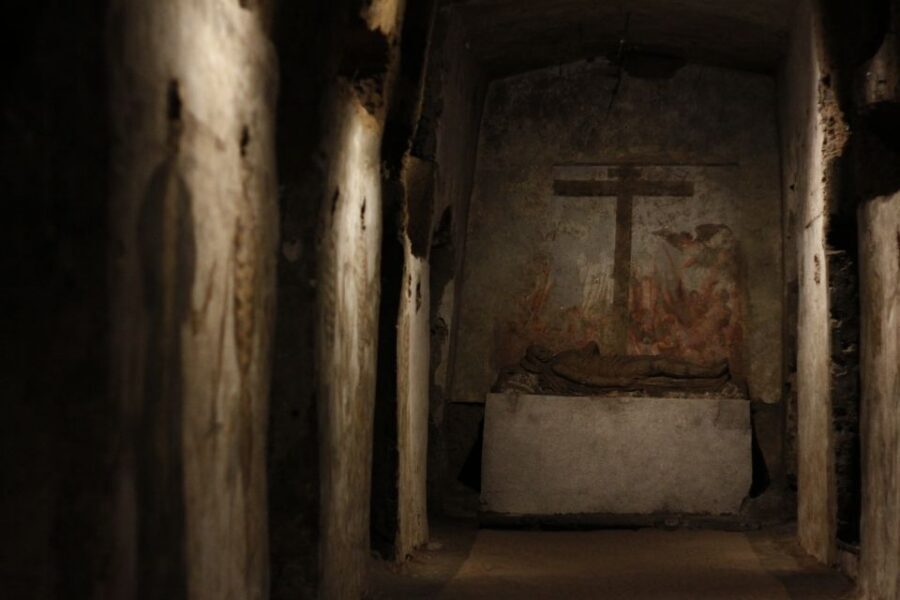
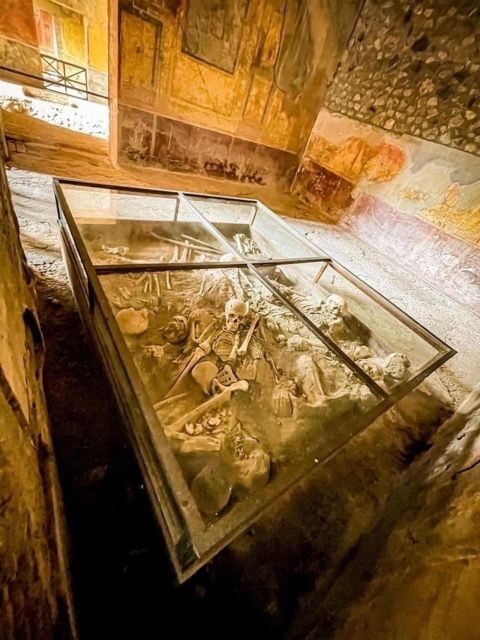
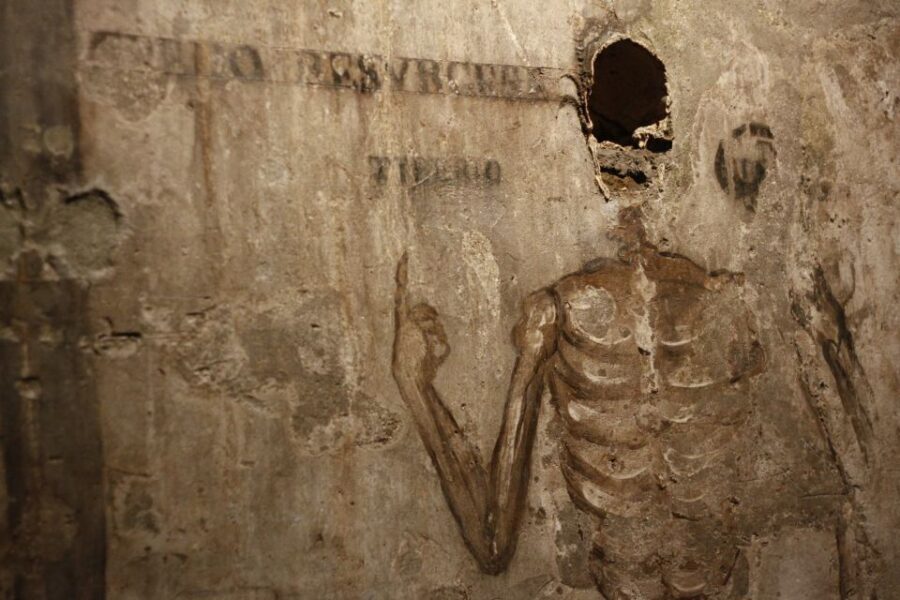
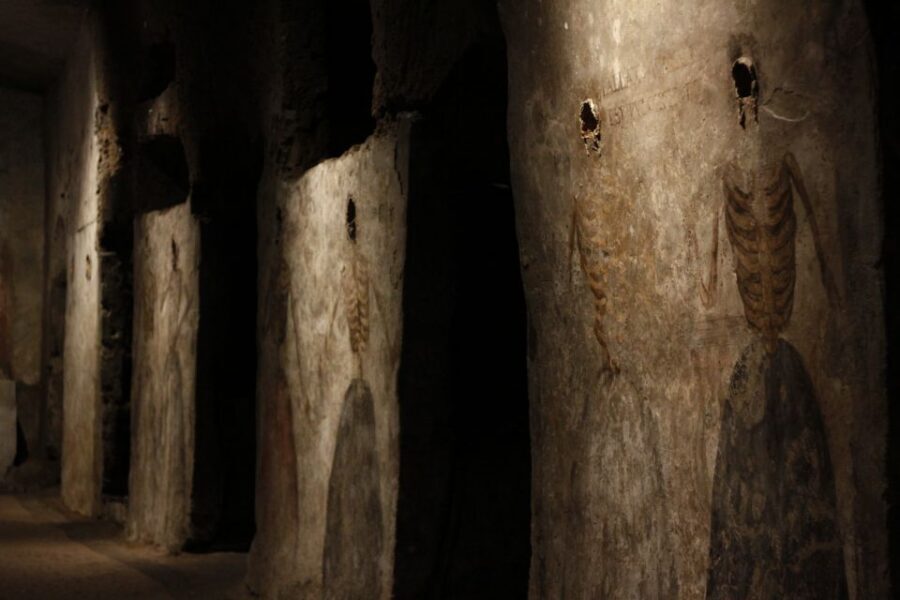
Yes, you’ll see skulls. But the tour does something better than making it a Halloween stop. It explains how skulls were placed on display in later centuries, including in the 17th century along the ambulatory walls.
That detail changes your perspective. The skull imagery isn’t only about death; it’s about how communities dealt with death publicly. The tour frames it as a ritual language—an art-and-faith way of presenting mortality, memory, and sanctity in one glance.
You’ll also encounter early Christian frescoes and mosaics from the 5th and 6th centuries, with typical early Christian motifs that tie this place back to the era of St. Gaudiosus. The guide’s job is to point out what you’re actually looking at. You’ll probably start noticing recurring shapes and symbols, and you’ll realize the artwork isn’t just pretty. It’s instructional.
And then there are the personal stories inside the art. One name that comes up is Giovanni Balducci. The tour notes that Balducci refused payment so he could be buried among Naples’ aristocrats. Hearing that makes you think about reputation, devotion, and how art could be used as a bridge into the social world.
Dominicans, Nobles, and a 17th-Century Return to Burial
A detail I appreciated: the tour doesn’t treat this as a one-time event. It explains how the catacombs’ role shifted again, with organized burial practices for elites.
You’ll hear that higher-class burials were organized by the Dominicans. That helps you understand why the later cemetery sections don’t just look older. They look arranged, intentional, and connected to a specific religious community.
The nobles’ graves date back to the 17th century, and this is when many of the most distinctive display choices show up. The tour connects those choices to the desire to make status visible even in an underground setting.
This part can feel like a contradiction—death and hierarchy in the same place—but that’s exactly why it’s fascinating. Naples didn’t treat burial space as equal. The stones show you how culture and faith mixed in real life.
The Basilica di Santa Maria della Sanità: Where the Underground Story Climbs Back Up
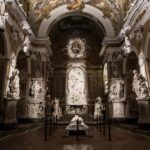
The catacombs are the main event, but the tour also includes a visit to the Basilica di Santa Maria della Sanità. This matters because it gives you emotional and architectural contrast.
Underground, the experience is dim, close, and tight. Then you step back into the church world, where the lighting and space shift the mood fast. The guide uses the church visit to connect what you learned underground with religious practice above ground.
A couple of details stood out in how the guides talk about the basilica. People mention seeing beautiful presepi (nativity scenes), and the church itself is often described as stunning. Even if you’re not a religious-art person, the church visit helps you process the catacombs as more than eerie rooms. It becomes part of a larger Naples tradition—ritual, art, and community living on top of older layers.




Guides, Local Pride, and Why the Story Feels Personal
This tour shines when the guide treats it like more than a script. The names you might hear include Nello, Antonella, Antonela, Claudia, Lisa, Flavia, Valentina, Emanuele, Ricardo, and Sara, and the common thread is clear: the guide tells the story with energy and room for questions.
What I liked most is how the tour connects the catacombs to the neighborhood. The Sanità area isn’t presented as an empty backdrop. It comes through as a community with cultural development projects and youth support.
You may hear about Don Antonio Loffredo and support for the youth of Sanità, plus broader cultural development for both tourist visits and local residents. Some guides also reference regeneration efforts like La Paranza. This isn’t just feel-good talk. It explains why a ticket here supports restoration and education in the district—not only ticket sales for a one-off sightseeing stop.
That’s a value piece you should care about. Sites like these survive through attention and funding. When the guide talks about projects tied to the neighborhood, the tour feels less like consumption and more like support.
Timing and Getting There: Short Tour, Big Payoff
The tour is set up to be efficient. You’re looking at a 45-minute guided experience through the catacombs, plus time at the basilica as part of the visit. That means you get a concentrated experience without spending your whole day underground.
But the schedule also means you need to be on time. The ticket office opens at 9:30 AM, and you should arrive about 15 minutes before your booked time. If you come late, you can miss the tour window, and that’s not the place to improvise.
Meeting point is straightforward in concept: meet at the ticket office of the Catacombs of San Gaudioso. One small practical note: access can involve going down from street level by elevator to reach the area. If you’re trying to find it for the first time, give yourself buffer time so you’re not rushing.
If you’re visiting Naples in a tight schedule, this is a good fit. If you’re someone who likes long, slow wandering at museums, you’ll want to plan something else alongside it so you don’t feel rushed.
Value Check: $15 and the San Gennaro Bonus Ticket
At $15 per person, this tour is priced like an “add-on,” but it’s not a throwaway. You’re paying for a guided route through a major early Christian cemetery, plus the basilica visit.
The real value comes from the bonus included: free entry to the Catacombs of San Gennaro. Your ticket includes that access and it’s valid for 12 months. So even though the guided portion is relatively short, you can stretch the experience by planning San Gennaro for another day in Naples.
That’s smart planning for first-time visitors. You get one guided story now, then you get a second cemetery later when you can compare what you see. And the free add-on also helps you justify the time you spend in the neighborhood.
One possible drawback on the value side: there isn’t much of a retail-style payoff at the end. If you’re the kind of person who likes to bring home a small souvenir, you might leave wanting a shop stop.
Who This Tour Suits Best (and Who Should Think Twice)
This tour is a strong match if you want:
- A guided overview that gives names, dates, and reasons, not just spooky visuals
- A quick underground detour that fits into a half-day or day plan
- A cultural stop in the Sanità neighborhood, with community context included
- A follow-up plan, thanks to the bonus San Gennaro access
You should think twice if:
- You’re claustrophobic or easily bothered by tight underground spaces. The tour can be physically constrained.
- You expect long quiet time underground. The guided pace is efficient, not leisurely.
- You want a more self-guided, read-everything museum vibe. The experience is guided, and you’ll get the most by listening.
If you’re traveling with someone who prefers lighter activities, this might feel intense. On the other hand, if you like places where history has texture—art, ritual, and architecture in the same underground corridor—you’ll likely love the tone.
Should You Book the San Gaudioso Catacombs Guided Tour?
I’d book it if you want a focused, high-story-value visit to one of Naples’ key early Christian sites. For $15, you’re getting a guided catacomb walk, a basilica visit, and a bonus pass to another catacomb site valid for a year. That combination is hard to beat when you’re trying to balance time and meaning.
Book it soon if you’re visiting during peak days, because you want the time slot that matches your schedule. And when you go, show up early at the ticket office so you don’t lose the start of the tour.
If you’re on the fence because the topic sounds too dark, don’t worry about it being only shock value. The guide’s job is to connect skull imagery and burial practices to ritual and community life, so you come away with context, not just chills.
FAQ
How long is the San Gaudioso Catacombs guided tour?
The guided portion is about 45 minutes, and it also includes time at the Basilica di Santa Maria della Sanità.
What’s included in the ticket?
The package includes a guided tour of the Catacombs of San Gaudioso and the Basilica di Santa Maria della Sanità. It also includes free entry to the Catacombs of San Gennaro (valid for 12 months).
Where do I meet for the tour?
Meet at the ticket office of the Catacombs of San Gaudioso.
What time does the ticket office open?
The ticket office opens at 9:30 AM.
What happens if I arrive late to my booked time?
You need to arrive 15 minutes before your booked time. Arrival after the tour departure time doesn’t allow you to participate in subsequent tours and you won’t receive a refund.
Is the ticket valid for any day and time?
No. The ticket is valid only for the day and time purchased.
What languages are the tours offered in?
The live tour guide offers English and Italian.
Is free entry to the San Gennaro catacombs included?
Yes. Free entry to the Catacombs of San Gennaro is included, and the voucher is valid for 12 months.
Can I cancel for a refund?
Yes. You can cancel up to 24 hours in advance for a full refund.
If you tell me your travel dates and whether you’re more into art, history, or neighborhood culture, I can suggest the best time slot and how to pair this with the rest of your Naples day.