REVIEW · NAPLES
Naples: Historic Center Guided Tour with Underground Ruins
Book on GetYourGuide →Operated by GRAND TOURS ITALY · Bookable on GetYourGuide
Naples gets even better underground. This guided walk strings together the city’s big landmarks from Via Toledo to Piazza del Plebiscito, then adds the surprise of what’s under your feet in Napoli Sotterranea. I really like how the tour pairs famous street scenes like San Gregorio Armeno with church history at San Lorenzo Maggiore. I also like the practical payoff: you don’t just see the surface, you walk down to a Greco-Roman archaeological site. The one drawback to think about is that it’s not suitable for people with claustrophobia, since you’ll go below ground.
Expect a steady 4-hour pace through a lot of Naples’ visual highlights—churches, squares, and atmospheric street sections—told with clear guidance in Italian, English, or Spanish. The best part is the way the guide connects daily life above ground to the layers of Neapolis and Roman Naples below. If you want a tour that feels like Naples, not just a checklist, this format works well.
In This Review
- Key Highlights You’ll Care About
- From Via Toledo to What’s Under Your Feet
- Starting at Piazza Municipio and Catching the City’s Main Rhythm
- Via Toledo, Spanish Quarters, and the Maradona Mural Stops
- Galleria Umberto I, Castel Nuovo, and Teatro di San Carlo on One Route
- Piazza del Plebiscito: Naples’ Meeting Place Energy
- Via dei Tribunali and Spaccanapoli: Where the Historic Center Breathes
- San Gregorio Armeno: Nativity Scenes as Living Craft
- San Lorenzo Maggiore and the 10-Meter Descent Beneath Neapolis
- Napoli Sotterranea: Why a Certified Guide Changes Everything
- Price and Timing: Is $99 for 4 Hours Good Value?
- Who This Tour Fits Best
- Should You Book This Naples Historic Center + Underground Tour?
- FAQ
- Where does the tour start?
- How long is the walking tour?
- What languages are available?
- Is the underground entrance included in the price?
- How far down do you go at San Lorenzo Maggiore?
- Is this tour suitable for claustrophobia?
Key Highlights You’ll Care About
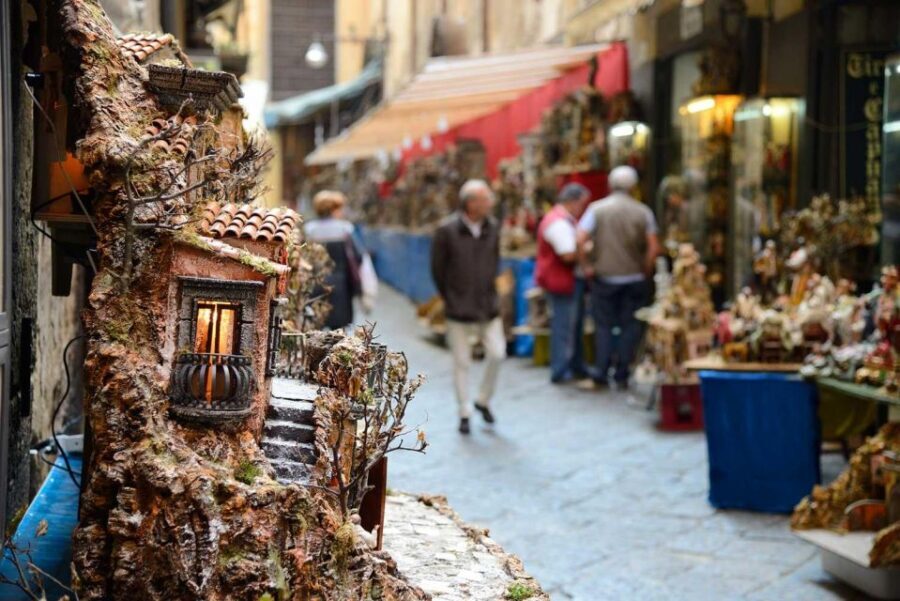
- San Gregorio Armeno nativity-craft street with handcrafted displays that reflect local tradition
- Via Toledo to Piazza del Plebiscito along Naples’ main “grand” axis and key monuments
- Via dei Tribunali and Spaccanapoli for the historic lanes that show how the city grew
- San Lorenzo Maggiore Church and the descent about 10 meters to the ancient city remains
- Napoli Sotterranea with a certified guide so the underground visit makes sense fast
From Via Toledo to What’s Under Your Feet
Naples is one of those cities where time doesn’t politely stay in the past. You’ll see modern life, baroque facades, and older street lines all rubbing shoulders. This tour’s value is that it doesn’t treat them as separate worlds. You start with major above-ground landmarks, then your route turns into a story about what Naples looked like long ago.
The main idea I like is the “stacked layers” approach. The tour walks the historic center you can actually navigate, then transitions to the underground site beneath San Lorenzo Maggiore. That makes the Greco-Roman and Roman angles feel less like trivia and more like a map of how the city evolved.
You can also read our reviews of more guided tours in Naples



Starting at Piazza Municipio and Catching the City’s Main Rhythm
You’ll begin near the Neptune fountain at Piazza Municipio. That’s a smart start point because it puts you close to Naples’ big-name sights without wasting early time on awkward transfers. From there, the guide steers you onto Via Toledo, which works like Naples’ main stage for walkers.
Via Toledo is where you’ll get your bearings fast. You pass through the shopping-and-monument corridor that locals know well, and the guide helps connect what you see to what it meant in different eras. Even if you only catch a few photos along the way, the walk sets the tone: this is a city built to be read on foot.
Via Toledo, Spanish Quarters, and the Maradona Mural Stops

The tour highlights Via Toledo as the famous Neapolitan shopping street near the Spanish quarters. You’ll also see the Maradona mural, which anchors the walk in contemporary Naples even as the route moves through historic territory. It’s a good reminder that Naples’ identity isn’t frozen in ancient stone.
If you’re into cultural context, this segment helps. The guide keeps the talk moving through the city’s costume and tradition angles, not just dates and names. The result is that landmarks like storefronts, arcades, and plazas feel connected to real Neapolitan life, not just postcard scenes.
Galleria Umberto I, Castel Nuovo, and Teatro di San Carlo on One Route

Next comes the elegant stretch around Galleria Umberto I, plus the exterior of Castel Nuovo—known as the Maschio Angioino. This is classic Naples sightseeing, but the tour approach makes it practical: you see these big visuals in a walking flow rather than hopping between far-off points.
The Teatro di San Carlo and the Royal Palace also show up in this above-ground sweep. These are the types of monuments that can blur together if you’re simply reading a guidebook. With a live guide, they land better because you understand why they mattered to Naples’ public life.
A note on expectations: this portion is about seeing major exteriors and key areas. You’ll still get plenty of photo-worthy moments, but it’s not a slow “stand and study every doorway” tour. The pacing is designed to get you to the historic lanes and then down below.
Piazza del Plebiscito: Naples’ Meeting Place Energy

The walk continues to Piazza del Plebiscito, the hub for major events and concerts. Standing in that wide public space helps you feel how Naples gathers. It’s also a natural pause point, because by the time you reach the square you’ve already seen enough to understand why the area works as a civic center.
I like this stop because it balances two things at once. You get scale and sightlines from the open piazza, and you also get a sense of how the city’s identity shows up in public space. Naples loves an audience—street life, ceremonies, big crowds—and this square is where that energy makes sense.
You can also read our reviews of more historical tours in Naples






Via dei Tribunali and Spaccanapoli: Where the Historic Center Breathes

After the grand axis, the tour shifts into the historic lanes: Via dei Tribunali, Spaccanapoli, and nearby areas. This is where you’ll start to notice Naples’ “texture”—tight streets, visible craft, and the kind of daily movement that doesn’t require you to force it for photos.
Via dei Tribunali is a highlight for its historic vibe and the presence of old-school pizzerias. The streets here tend to feel like living corridors rather than museum halls. Spaccanapoli is especially famous because it literally splits the city in two, and walking it helps you understand the layout without needing a lecture.
This section also includes older and more distinct church stops. You’ll pass 18th-century San Domenico Maggiore and visit the area around medieval Santa Chiara. The guide’s job is to connect these buildings to what the streets have carried over time—community life, religious culture, and neighborhood identity.
San Gregorio Armeno: Nativity Scenes as Living Craft
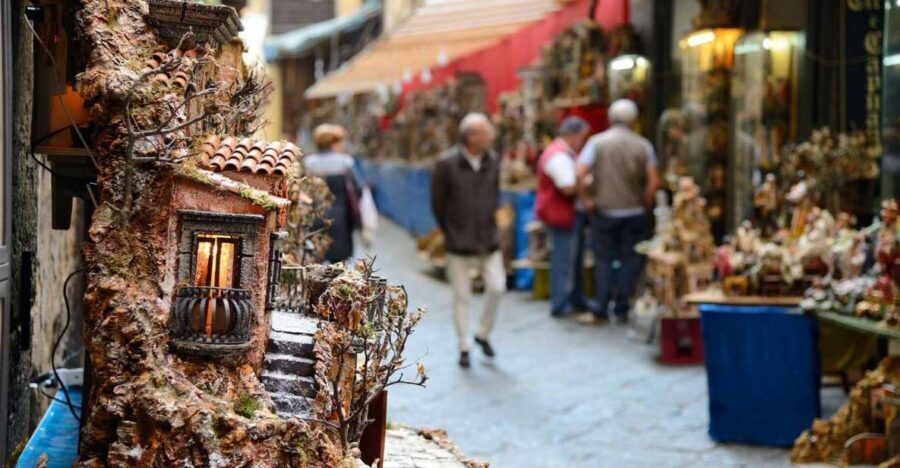
One of the most memorable stops is Via San Gregorio Armeno, famous for nativity scenes made by hand. If you’re used to seeing holiday displays in one place and calling it a day, this street will reset your expectations. The displays here are craft-first, and they read like local storytelling.
What I like about this stop is that it’s not just pretty to look at. It’s an example of how Naples keeps tradition practical. The nativity scenes represent Neapolitan handicrafts and the way people express identity through seasonal work. Even if you’re not shopping, you’ll likely spend time just looking closely at details.
This is also a good mental breather in the middle of a walking tour. You get a quieter, more focused street moment after the bigger squares and main monuments.
San Lorenzo Maggiore and the 10-Meter Descent Beneath Neapolis
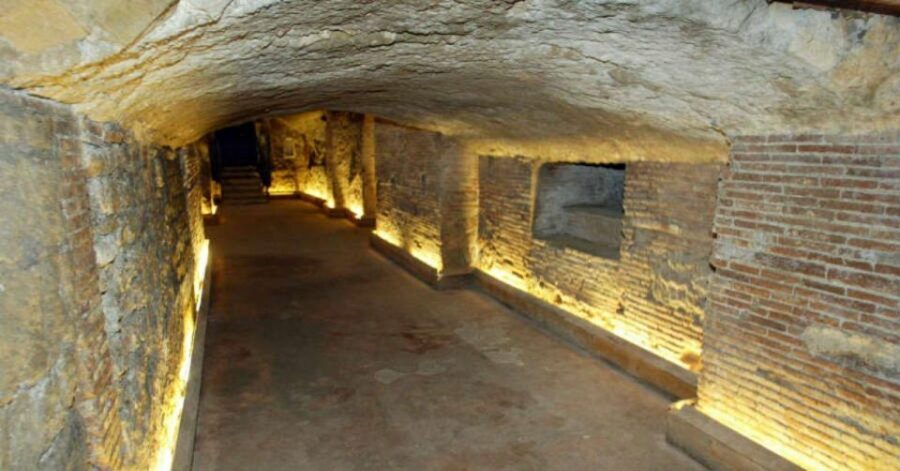
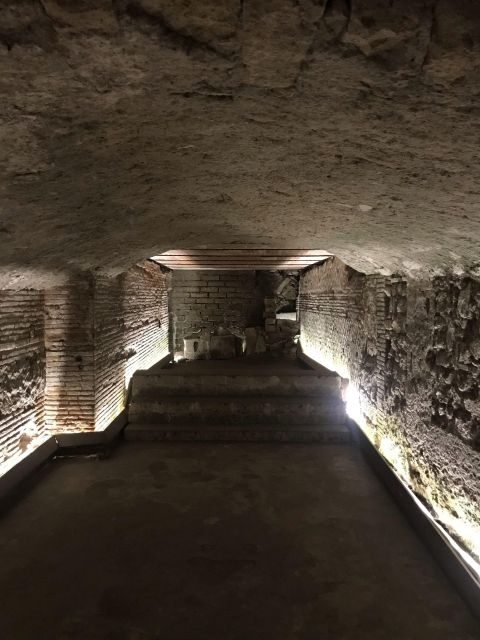
The tour ends with the underground portion at San Lorenzo Maggiore Church. You’ll go beneath the church floors and descend about 10 meters to see archaeological remains of the ancient city of Neapolis. This is the payoff for the whole walk, because the guide ties the surface story to what’s literally under you.
You’ll see a Greek agora and the civic and religious Roman Forum. That combination matters. It’s not just scattered ruins—you’re looking at the spaces where public life and organized community culture played out. When you can physically stand at a level that people once used, the layers stop being abstract.
Also, the underground experience is the part that needs your attention. It’s listed as not suitable for claustrophobia, so if tight spaces make you uncomfortable, take that warning seriously. If you handle enclosed environments fine, the guided approach helps because you’re not wandering around without context.
Napoli Sotterranea: Why a Certified Guide Changes Everything

Seeing an underground archaeological site on your own can turn into guesswork. Here, you’re visiting with a certified guide, and that makes a difference in how fast the site clicks. The guide doesn’t just point and move; they connect the site to the city above it.
I’ve noticed a pattern in strong guides for this kind of tour: they teach you how to look. That shows up in the guide praise you’ll find around this experience, including mentions of guides such as Giorgia and Gianluca. The common thread is clear communication and a friendly, easygoing way of explaining Naples, not just reading facts.
So when you go down, you’ll likely understand what each area represents before you’re done walking. That helps you feel like you got more than a ticketed visit.
Price and Timing: Is $99 for 4 Hours Good Value?
At $99 per person for a 4-hour guided walk, you’re paying for two things: live interpretation and admission support for the underground component. The underground entrance fee to Neapolis Sotterrata is included, and the tour also notes skip-the-ticket-line, which can save time in a place where schedules and access can be tight.
You’re also getting a lot of different settings in one block of time: major monuments, historic lanes, a craft street, and then the underground site. If you tried to assemble this yourself, you’d likely spend extra time coordinating tickets and figuring out the right order—especially once you include the underground portion.
One practical consideration: it’s a walking tour with multiple stops, so comfortable shoes matter. You’ll also want to bring cash, since it’s listed as what you should have on hand.
Who This Tour Fits Best
This tour makes the most sense if you want a guided Naples route that mixes big sights with street-level authenticity. You’ll enjoy it if you like:
- learning how Naples’ layers overlap, Greek to Roman to modern street life
- walking neighborhoods like Via dei Tribunali and Spaccanapoli instead of only seeing isolated monuments
- seeing nativity-craft tradition on Via San Gregorio Armeno
It’s less ideal if you hate enclosed underground spaces. And if you’re looking for a super slow pace with long indoor stays, this format may feel like too much movement.
Should You Book This Naples Historic Center + Underground Tour?
I’d book it if you want one solid afternoon that connects Naples above ground to the story below it. The underground visit to San Lorenzo Maggiore is the kind of experience that turns a regular historic-center walk into something you’ll remember, especially because the tour includes context from a live, certified guide.
If you’re short on time and want value, this is the kind of itinerary that helps you use those hours well: main axis sights, historic lanes, craft street energy, and then the 10-meter descent into Neapolis. Just be honest about comfort underground, and you’ll be set.
FAQ
Where does the tour start?
The meeting point is near the Neptune fountain.
How long is the walking tour?
The duration is 4 hours.
What languages are available?
The live tour guide is offered in Italian, English, and Spanish.
Is the underground entrance included in the price?
Yes. The entrance fee to Underground Naples of Neapolis Sotterrata (10 euros per person) is included.
How far down do you go at San Lorenzo Maggiore?
You descend about 10 meters below the church floors to reach the archaeological remains.
Is this tour suitable for claustrophobia?
No. It is not suitable for people with claustrophobia.