REVIEW · NAPLES
Naples: City and Lapis Museum Tour with an Archaeologist
Book on GetYourGuide →Operated by Grand Tour Experience · Bookable on GetYourGuide
Naples gets better the deeper you go. This tour is built around the real underground Naples story—Greek cisterns, Roman waterworks, and WWII air shelters—so you don’t just see ruins. You also get a clear, guided sense of how one city reused the same spaces again and again, from ancient worship to wartime survival.
What I like most is the mix of expert interpretation and hands-on sightlines, including walking far below street level and seeing remains through modern glass. I’m also a fan of the small-group format (max 10), because it keeps questions alive, and guides like Riccardo and Theresa have a way of explaining details without turning the tour into a lecture. One drawback to plan for: it’s not set up for wheelchair users, and the route goes down into enclosed underground spaces.
In This Review
- Key things that make this tour worth your time
- Naples Underground in One Walk: Greek, Roman, and WWII in the Same Lines
- Piazza San Gaetano Start: Getting Oriented Fast in Naples’ Historic Core
- Basilica Stops Above Ground: San Lorenzo Maggiore and the Purgatory Stop
- The Descent at Santa Maria Maggiore: From Street Crowds to 40 Meters Down
- Greek Cisterns and Roman Water Tanks: Practical Engineering With a Story
- The LAPIS Museum and WWII Shelters: When the Underground Saved Lives
- What Two Hours Really Means: Pace, Comfort, and Group Size
- Price and Value: Getting Access That Normally Takes More Than Money
- Who Should Book This Naples Underground Tour (and Who Might Skip It)
- Should You Book: My Take on the Lapis Museum + WWII Shelters Tour
- FAQ
- FAQ
- How long is the Naples City and Lapis Museum Tour with an Archaeologist?
- How much does the tour cost?
- Where do I meet the group?
- What’s included in the price?
- What language is the tour offered in?
- Is the tour suitable for wheelchair users?
- What should I bring, and is there anything I can’t bring?
- Where does the tour end?
Key things that make this tour worth your time
- Archaeologist-led storytelling that connects eras instead of treating each site like a separate stop
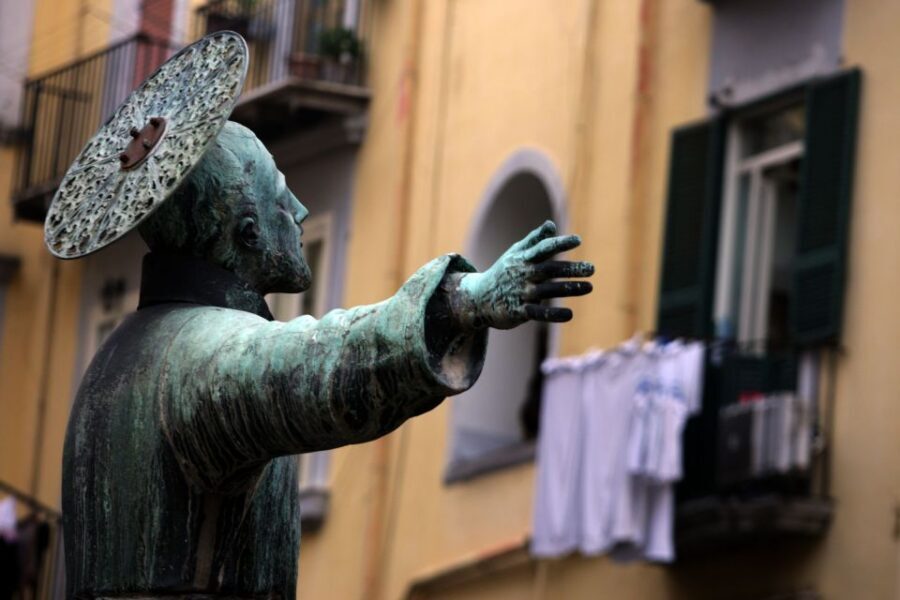
- A real descent to about 40 meters down, far under everyday Naples life
- Greek cisterns carved into stone, followed by Roman water-collection tanks
- WWII shelters preserved with original-feeling rooms, plus period details you can still point at
- Historic layers above ground too, starting in Piazza San Gaetano and moving through major church sites
- Limited group size (10 max) helps you keep up with explanations and ask questions
Naples Underground in One Walk: Greek, Roman, and WWII in the Same Lines
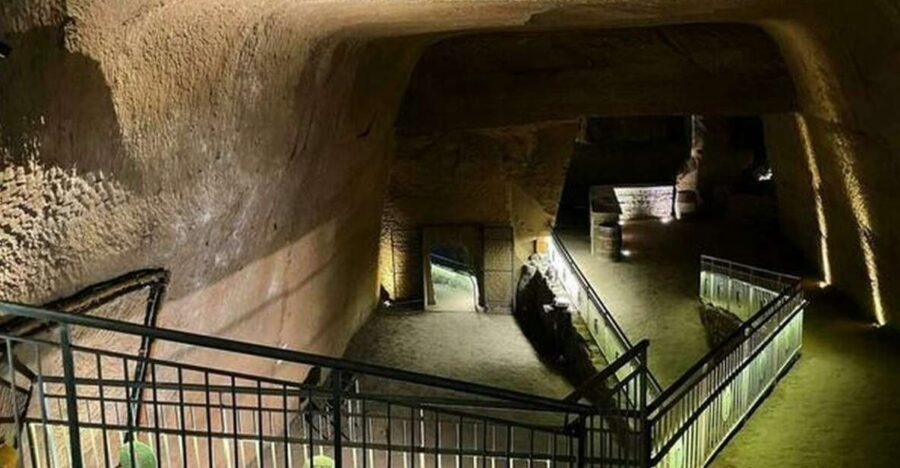
Naples is famous for layers, but this tour gives you the physical layer cake. You start in the historic core and then follow a route that takes you from the city’s street-level past into the tunnels and chambers people used for water, worship-adjacent life, secrecy, and survival. One of the big ideas here is that the underground isn’t just “old stuff” under your feet—it was practical infrastructure and then a lifesaver later.
The underground path matters because Naples’ buried spaces are partly empty because the city changed and rebuilt over centuries. That’s why you can still access significant remnants now, instead of everything being sealed off forever. You’ll spend your time in places that were shaped by real needs: collecting water in Roman times, moving unseen through hidden passages in medieval periods, and sheltering during WWII.
This is also a tour for people who like context. If you’re the type who wonders why a city has so many churches on top of older sites, you’re going to feel rewarded. If you only want dramatic views and photos, you might find the underground portions more absorbing than scenic—but in a good, history-forward way.
You can also read our reviews of more city tours in Naples



Piazza San Gaetano Start: Getting Oriented Fast in Naples’ Historic Core
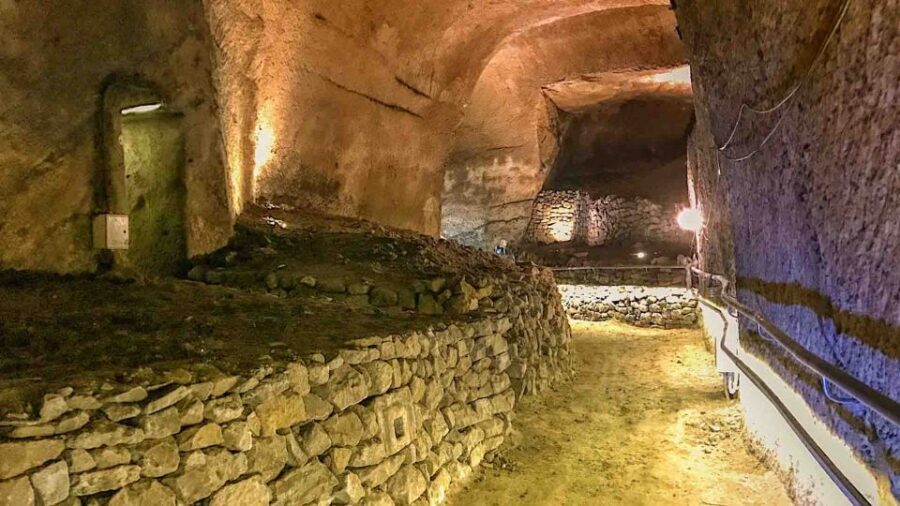
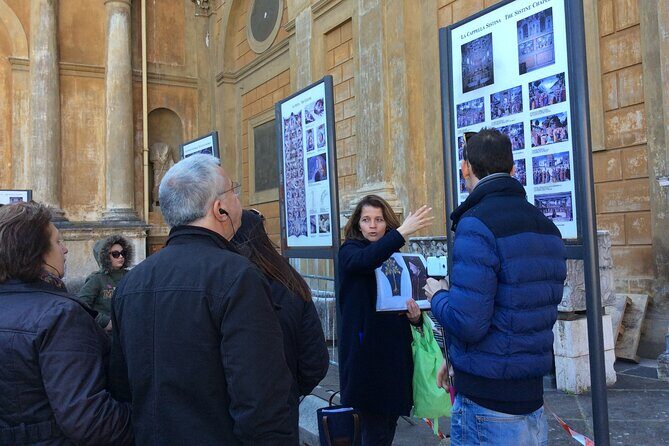
Your tour begins at Piazza San Gaetano, at the foot of the statue, where you’ll find your guide holding a Grand Tour Experience sign. That matters because Naples can feel like a maze, and starting in a clear landmark keeps you from doing the usual lost-in-alleys shuffle.
From there, you’ll walk along Via dei Tribunali, a street that helps set the tone: local life above ground, historic fabric all around, and enough movement that you stay awake and oriented. This is where you learn the basic story of the area before the tour drops under the city—so later, the tunnels and chambers feel less random.
You’ll also stop at major church and plaza points early on. Even if you’re not a “church person,” these sites act like chronological signposts: they show how old and new built on each other. I like tours that do this, because you can’t fully understand what’s under Naples without placing it in the Naples streets.
Basilica Stops Above Ground: San Lorenzo Maggiore and the Purgatory Stop
One of the first “anchor” stops is the Basilica di San Lorenzo Maggiore. Here, the guidance helps you connect the street-level religious architecture to the deeper city layers below. It’s a useful warm-up because you’re training your eyes: you start noticing structural clues and transitions that later echo underground.
Next comes a stop at the Church of Purgatory, where you can peer through a glass floor at the remains of an older mosaic. This is the kind of detail that makes Naples feel personal: you’re standing in the present while seeing evidence of an earlier world directly under your feet. It also helps explain what you’ll see later underground, where the “floor” of today is just another layer on top.
A practical consideration: these above-ground stops involve walking and looking up and down, and Naples streets aren’t always smooth. If you’re prone to getting cold or tired quickly, plan for short breaks and keep your shoes comfortable from the start.
The Descent at Santa Maria Maggiore: From Street Crowds to 40 Meters Down
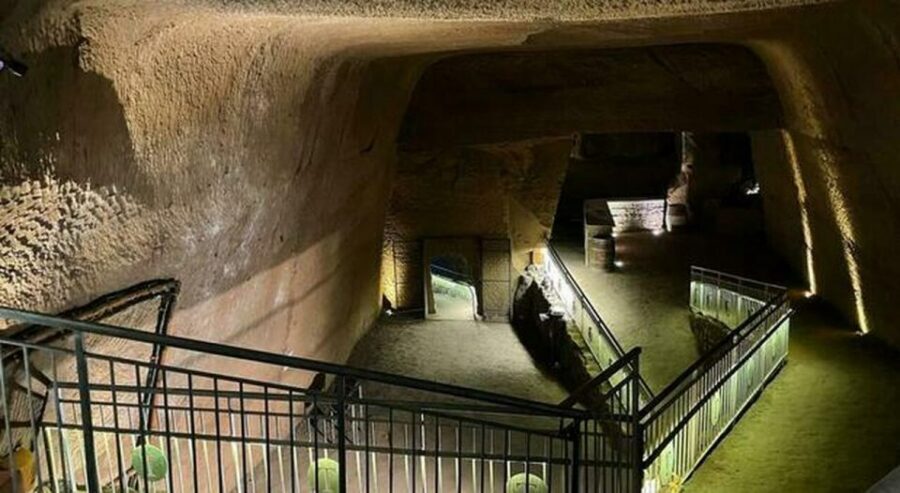
After the early above-ground stops, the tour makes its most striking move. You go down roughly 40 meters below the bustle of the city, using a door in one of the oldest churches: Santa Maria Maggiore. This is not a “walk down a hallway” moment. It’s a real shift into a different temperature, lighting level, and soundscape.
Inside Santa Maria Maggiore, the guide sets up why this place is so important. The church is built on a Pagan Roman temple dedicated to Diana, and the structure still shows Roman elements. That’s a key theme for this tour: the city didn’t wipe its past clean. It repurposed. It layered. It kept using the most useful locations.
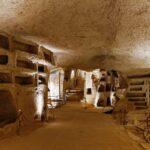
Going lower from here to see Greek cisterns carved into stone is where the tour changes pace from “standing and admiring” to “following an archaeological route.” You’ll likely feel the difference immediately: you’re not just passing a historical site, you’re moving through it as it was designed for function.
If you’re someone who gets anxious in enclosed spaces, it helps to know the tour is indoors and underground for a good chunk. It’s manageable, but it is enclosed, and you should dress for the realities of cooler, steadier air.
Greek Cisterns and Roman Water Tanks: Practical Engineering With a Story
Once you’re down in the underground route, you’ll see Greek cisterns carved into the hard stone. Cisterns can sound boring on paper—water storage is water storage—but with the right explanation, they become a window into how people survived and built cities. Water meant stability, and cistern construction meant a long-term plan.
The route then takes you to the lowest area where you walk through tunnels to reach tanks used for collecting water in Roman times. This is where the Roman engineering becomes tangible. You’re not just hearing dates—you’re seeing how the spaces were designed to hold, direct, and store something essential.
What I appreciate here is that the guide doesn’t treat Greek and Roman as separate museum rooms. You’re shown how one layer prepared the ground for another. The city kept adapting to needs, and the underground kept being useful.
There’s also a storytelling payoff: this same underground trail was used in medieval times as a secret passage associated with the Templar Knights. Then in 1943, it was used as an airplane retreat. That single thread—same tunnels, different reasons—turns the underground into a living timeline instead of scattered attractions.
You can also read our reviews of more museum experiences in Naples






The LAPIS Museum and WWII Shelters: When the Underground Saved Lives
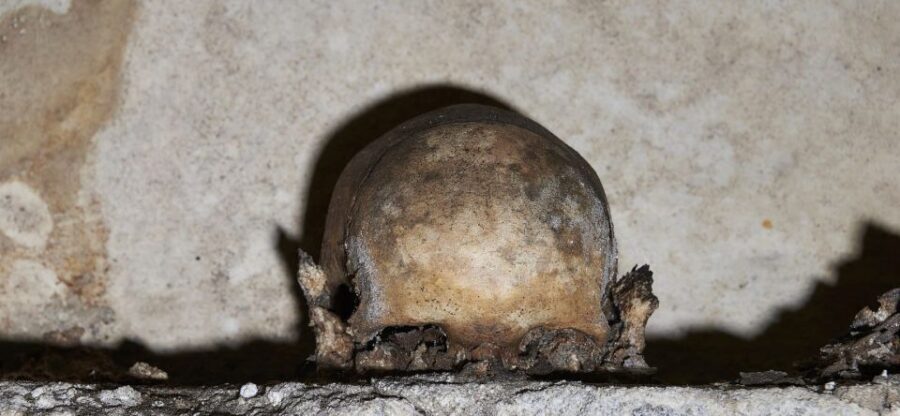
The tour includes admission to the LAPIS Museum path, plus entry to a WWII Shelters Museum. In plain terms: this is the part where underground history becomes human history. You’re moving through preserved areas where everyday needs and wartime needs overlapped.
The information you’ll get here focuses on continuity and survival. Many details are still preserved, including things like bathrooms, kitchens, and memorabilia. That’s important because it changes the feeling from “archaeological site” to “people lived here with constraints.” Even if you’ve visited other wartime exhibits, the underground setting makes the story feel more immediate.
The guide’s goal is to help you read the environment. With the right context, you can understand what the space was meant to do and how the layout supported the people inside. If you like museum tours, this portion feels close to that—only you’re standing inside the physical setting, not just looking at panels.
Photos can be tricky underground because light is dim and surfaces can be uneven. Bring a camera, but don’t expect perfect shots everywhere. Your best tool is your attention: ask questions when your guide points out features, because details are easier to spot once you know what to look for.
What Two Hours Really Means: Pace, Comfort, and Group Size
The full experience runs about 2 hours, and the small group limit of 10 people helps keep the pace from getting rushed. You’ll have enough movement to see multiple sites, but you’re also spending meaningful time underground. That means your energy comes from your ability to stay present, not from constant outdoor sightseeing.
For comfort, comfortable shoes are the headline item. The underground route plus historic church interiors can involve stairs and uneven footing. A packed lunch is listed for what you bring, but the tour doesn’t include food—so if you’re doing this in the middle of a day, plan your timing.
Weather isn’t irrelevant. You’ll walk outside between stops, and Naples can shift quickly. Dress for the day above ground, but remember the underground will feel cooler and more stable once you get down.
One more practical note: the tour is English and Italian. If you’re not fluent, the archaeologist-led explanations will still give you what you need—but you’ll get more if you ask one or two questions as you go.
Price and Value: Getting Access That Normally Takes More Than Money
At $53 per person for a guided tour with a professional archaeologist, this is priced like a true content-heavy experience. You’re not just paying for entry tickets—you’re paying for interpretation. Two hours isn’t long, but it’s long enough to connect Greek, Roman, and WWII layers in one coherent route.
What makes the value better is that key admissions are included: Roman Cistern Museum – LAPIS Museum and WWII Shelters Museum. You also get skip-the-ticket-line access, which matters in a city where lines and schedules can quietly steal your time.
For me, the best value sign is this: the tour spends its limited time on parts that are harder to understand without guidance. Underground archaeology needs context. Without it, cisterns and tunnels can blur together. With a guide, you learn why each space mattered and how each era changed the purpose while keeping the same foundations.
So if you’re in Naples for a short stay and want more than one “photo stop,” this is a strong use of time. If you’re only interested in the surface sights, you might prefer a city walking tour without the deep underground portion.
Who Should Book This Naples Underground Tour (and Who Might Skip It)
I’d tell most people to book it if they enjoy history that feels physical. You should be especially happy if you like ancient engineering, questions about how cities repurpose old structures, and stories that move through time—Greek cisterns to Roman water systems to WWII shelters in the same route.
You’ll also like the way the tour combines above-ground landmarks and underground spaces. Starting in Piazza San Gaetano and moving through major church sites gives you a mental map. That makes the later descent feel meaningful instead of random.
You might skip this if you want a purely scenic stroll or if you strongly dislike enclosed, underground environments. It’s also not designed for wheelchair users, so if accessibility is a concern, you’ll need an alternative format.
And if you’re choosing based on guide style: past participants have praised guides such as Riccardo and Theresa for expertise and enthusiasm, with tours that move quickly because the explanations keep you interested.
Should You Book: My Take on the Lapis Museum + WWII Shelters Tour
Yes, I think you should book this tour if you want one of the clearest ways to understand Naples as a layered city. You’ll get real access to spaces most people never see, plus an archaeologist-led narrative that connects the dots between eras.
This is the kind of experience that doesn’t just add a stop to your day. It changes how you look at the city above ground after you’ve been under it. Plan your footwear, accept that it’s practical and indoor-heavy, and you’ll come away with a story you can actually picture.
FAQ
FAQ
How long is the Naples City and Lapis Museum Tour with an Archaeologist?
The tour lasts 2 hours.
How much does the tour cost?
It costs $53 per person.
Where do I meet the group?
Meet at Piazza San Gaetano at the foot of the statue. Look for the guide with a Grand Tour Experience sign.
What’s included in the price?
Included are a local guide, a professional archaeologist, admission tickets to the Roman Cistern Museum (LAPIS Museum), and admission tickets to the WWII Shelters Museum.
What language is the tour offered in?
The tour is available in English and Italian.
Is the tour suitable for wheelchair users?
No. It is not suitable for wheelchair users.
What should I bring, and is there anything I can’t bring?
Bring comfortable shoes, a camera, a credit card, a packed lunch, cash, and weather-appropriate clothing. Pets are not allowed (assistance dogs are allowed).
Where does the tour end?
The tour finishes at Piazza Bellini.