REVIEW · NAPLES
Herculaneum Private Tour with an Archaeologist
Book on Viator →Operated by Askos Tours · Bookable on Viator
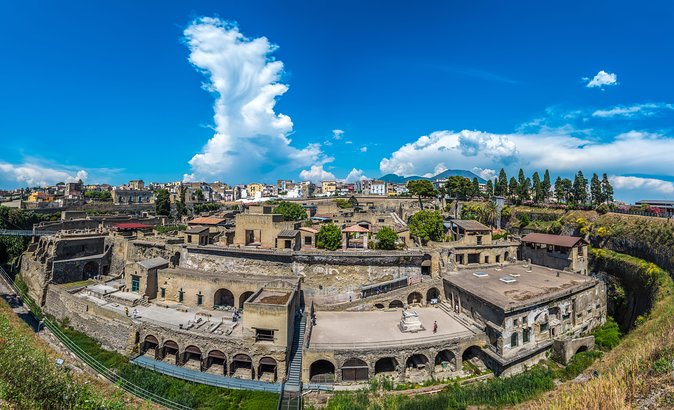
Herculaneum makes the past feel close. With a private archaeologist-led visit, you get help seeing what is really preserved—houses, baths, and daily life in the seaside Roman town destroyed in the eruption of Mount Vesuvius. I love the 2-hour, stop-by-stop structure (it keeps things moving without rushing) and I love the chance to get a standout guide like Mena or Luciano Leone, who are praised for making the ruins feel human. The one drawback to weigh: the ruins entrance ticket is not included, so you’ll need to budget for it on top of the tour price.
You start right where you should—outside the archaeological site ticket office in the red building—so you’re not hunting around. The tour is family friendly, runs multiple times during the day, and ends back at the same meeting point, which makes it easy to plug into your Naples or Ercolano plans. Bring an open mind, too: while the experience is advertised with an archaeologist guide, one review cautions that a guide may feel more like a historian than a practicing archaeologist.
Timing matters. On hot summer days, I’d aim for an earlier slot, since one guide report specifically flagged how hot it can get by noon. And if you have mobility needs, look for guides who are known for being considerate (one review praised that directly), but still confirm expectations with the provider before you go.
In This Review
- Key Points Before You Go
- Why a Private Archaeologist Tour in Herculaneum Works
- Meeting Point and Timing: The Simple Plan That Keeps You Stress-Free
- The 11 Stops: What You’ll Actually See (and How to Make Each Minute Count)
- College of the Augustales
- House of the Skeleton
- Casa del Rilievo di Telefo (Relief of Telephus)
- Partem Domus lignea (House of the Wooden Partition)
- La Terrazza di M. Nonio Balbo (M. Nonio Balbo Terrace)
- House of the Black Salon (Salon of Nero)
- Casa Sannitica (Samnitic House)
- Central Thermae
- Casa del Bel Cortile (House of the Fine Courtyard)
- House of the Grand Portal
- House of the Deer
- The Price Question: What You Pay for Guidance vs. What You Pay for Entry
- Choosing the Right Guide: Names That Keep Coming Up
- Family-Friendly and Not Just for Buffs
- Should You Book This Herculaneum Archaeologist Tour?
- FAQ
- Is the Herculaneum entrance ticket included in the tour price?
- Where do we meet the guide?
- How long is the tour?
- Are there multiple departure times and is it in English?
- What’s included, and what isn’t?
- Is free cancellation available?
Key Points Before You Go
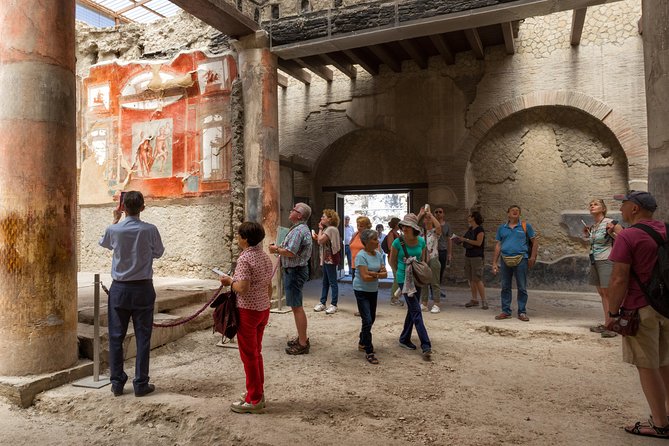
- Private guide, private group: Only your group participates, so questions actually get answered.
- Meet outside the ticket office (red building): Easy handoff if you arrive a few minutes early.
- 11 guided stops in ~2 hours: You’ll get an efficient circuit across the site highlights.
- Herculaneum-focused, not just Pompeii comparisons: Some guides add context by comparing, but the visit stays centered on Herculaneum.
- Tickets and transport are extra: The tour price covers guiding, not entry or getting there.
- Free luggage storage on site: Helpful if you’re traveling light—or not.
Why a Private Archaeologist Tour in Herculaneum Works
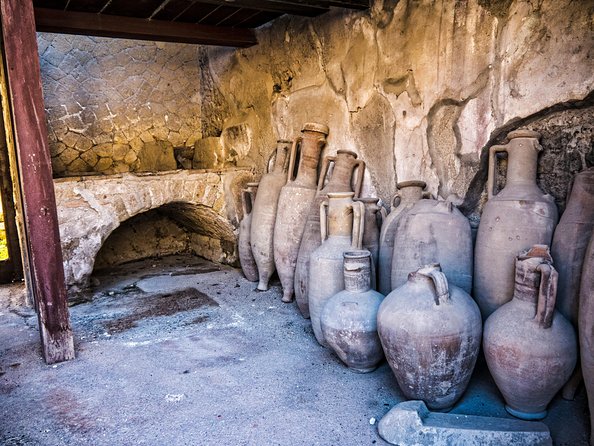
Herculaneum is the kind of place where most visitors get stuck doing the same thing: staring at walls and wondering what you’re supposed to notice. This tour is built to fix that. You walk the site with a guide who helps you read the layout and details, so you’re not left turning ruins into guesswork.
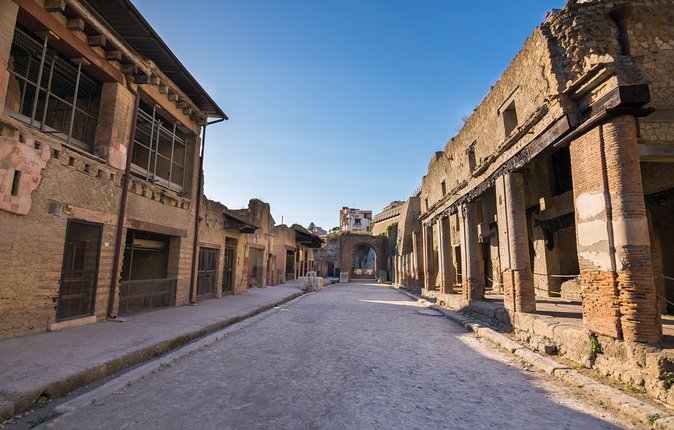
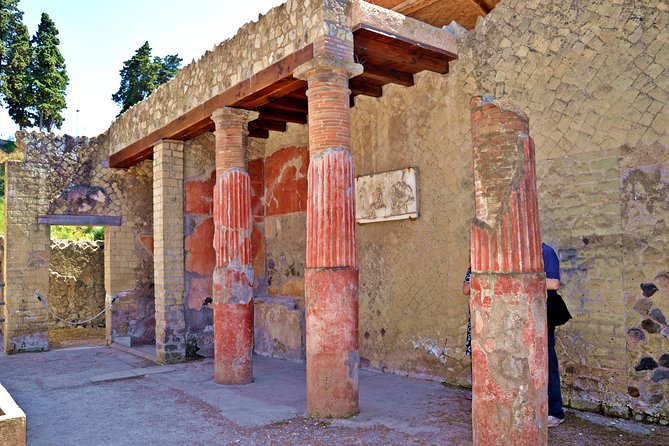
What makes it especially appealing is the mix of themes. You’re not only looking at temples or big monuments. You’re moving through everyday spaces—residences and a bath complex—so it feels like a city you could have passed through. One review sums it up well: the best guides put a human face on preserved houses, stores, and public baths, which is exactly what you want at a smaller site like this.
And because it’s private, you control the tempo. If you’re curious about how a space functioned, you can ask. If you’d rather focus on architecture and layout, you can do that too. In a world of rushed tours, that’s a real form of value.
You can also read our reviews of more tours and experiences in Naples.

Meeting Point and Timing: The Simple Plan That Keeps You Stress-Free
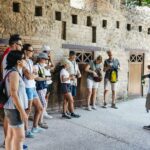
Meet the guide outside the ticket office of the archaeological site, in the red building. The provided start point is Via dei Papiri Ercolanesi, 80056 Ercolano NA, Italy, and the tour finishes back at the meeting point—so you’re not dealing with a weird end-to-start gap.
This matters more than it sounds. Herculaneum is easy to visit on your own, but easy is also how you end up lost—or wandering without direction. Starting at the ticket office also helps you line up with your entry ticket (which, importantly, is not included in the tour).
A few practical tips from how this experience is set up:
- The tour runs for about 2 hours, with short stops (around 10 minutes each). If you show up late, you’ll lose the best segments.
- It’s offered in English, with multiple departure times through the day. If you’re trying to beat heat or crowds, pick the slot that fits your day best.
- There’s free luggage storage at the meeting point. That’s a relief if you’re carrying bags from Naples or Ercolano.
The 11 Stops: What You’ll Actually See (and How to Make Each Minute Count)
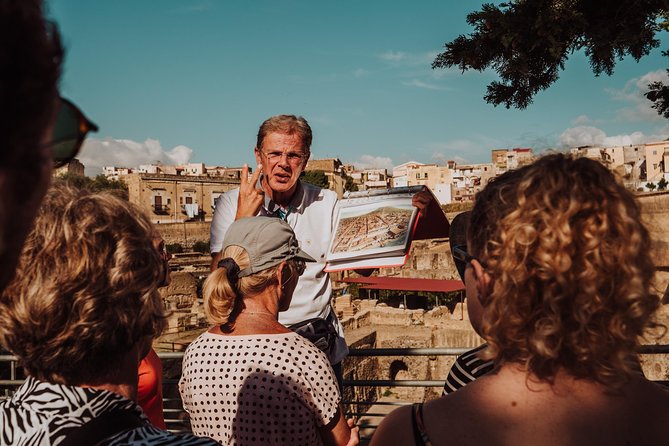
This tour uses an efficient loop across top highlights. Expect a short guided moment at each stop, designed to help you notice things you’d otherwise miss.
Here’s what’s on the route, and what to focus on at each place:
College of the Augustales
This is your “orientation” stop: a quick chance to understand the role this building played in the community. Keep an eye out for what the guide points to—guides often explain how these spaces connect to public life.
House of the Skeleton
A dramatic name, and that usually means a strong visual cue. Spend your short time here looking at how the rooms are arranged and how the guide frames what you’re seeing.


Casa del Rilievo di Telefo (Relief of Telephus)
This is a great stop if you like when guides connect art to people and stories. Ask one simple question here: what detail should you notice first? It often changes how the rest of the ruins click for you.
Partem Domus lignea (House of the Wooden Partition)
With a name like this, you can expect the guide to help you understand how partitions and structures shaped daily movement. If you’re traveling with kids, this stop often works well because it’s easy to follow visually.
La Terrazza di M. Nonio Balbo (M. Nonio Balbo Terrace)
Terraces are where layout becomes real. Use this stop to ask about how the space relates to the rest of the property—guides typically do a quick “connect-the-dots” explanation at spots like this.
House of the Black Salon (Salon of Nero)
Names like this are often tied to a specific feature. Even if you can’t tell from a glance what’s special, a good archaeologist guide will point out the practical “why”: what this room would have been like, and how it differs from other spaces on the route.
Casa Sannitica (Samnitic House)
This stop is where a guide can provide helpful context—how different influences show up in the architecture and layout. If you’re someone who likes comparisons, this is a good place to ask how Herculaneum’s vibe differs from nearby sites like Pompeii (some guides do this).
Central Thermae
This is the “public life” pivot. The bath complex is a strong contrast to the residences, and it’s often where people start feeling the scale of the town. When your guide explains the function, the ruins stop looking like random rooms and start feeling like a routine.
Casa del Bel Cortile (House of the Fine Courtyard)
Courtyards are where you see how light, movement, and privacy probably worked. Focus on the center of the home and how the guide describes the relationship between rooms around it.
House of the Grand Portal
This is about entrances and first impressions. Even with limited time, you can learn a lot by paying attention to what the guide emphasizes—thresholds, approaches, and how a visitor would have experienced the space.
House of the Deer
This is a final payoff stop. If you’re getting a guide known for storytelling (Mena, Luciano Leone, Antonella, Daniela, and others show up repeatedly in praise), this is usually where the “so what” becomes clear.
Tip for getting more from a short stop: pick one question and save it for the middle of the tour. Early on, you’re often still learning the site rhythm. Midway, your questions get sharper—and your answers land better.
The Price Question: What You Pay for Guidance vs. What You Pay for Entry
The tour price is $178.38 per person and the ruins entry ticket is not included. Current ticket information listed for Herculaneum is 16 euros for adults, and 2 euros for EU citizens aged 18–25.
So your real cost has two layers:
- You pay for the private guiding time and a specialist-style explanation (that’s the tour price).
- You pay separately for site entry (that’s the ruins ticket).
If you’re budgeting tightly, this matters. If you’re traveling with kids or you want a true “learn as you go” experience, the private format can feel worth it because you’re paying for understanding—not just walking between buildings.
Also note: the listing mentions group discounts. If you’re traveling with more than one household, check whether adding people changes the per-person rate.
And one honest caution you should consider: a review flagged a mismatch where a guide was not perceived as a practicing archaeologist, even though the experience was advertised that way. That doesn’t mean it’s common, but it does mean you should ask the provider a direct question if this credential matters a lot to you.
Choosing the Right Guide: Names That Keep Coming Up
This is where the “private” part pays off. The difference between a good guide and a great guide can be huge at a ruins site because the value is in interpretation.
Several guides were specifically praised for turning Herculaneum into real life:
- Mena: praised for putting secrets into context and for making details feel connected.
- Luciano Leone (also described as Dr. Luciano Leone): praised for educational, exciting, and fun storytelling.
- Antonella: praised for answering questions and explaining with strong subject focus.
- Daniela: praised as a historian and guide who elevated the visit.
- Michele Lamberti: praised for making the excavated city feel alive.
- Others mentioned positively include Lucio, Giuseppe, Sara, Nicoletta, and Jasmine.
Here’s my practical advice: if you’re booking because you want an archaeologist specifically, send a quick message before your tour asking how the guide is staffed. If you care less about the credential label and more about clear explanations, you’ll likely be happy with many of the praised guides.
Family-Friendly and Not Just for Buffs
This tour is listed as family friendly, and that’s a real plus at Herculaneum. The stops are short, the site is walkable, and a good guide can make it feel like a story rather than a textbook.
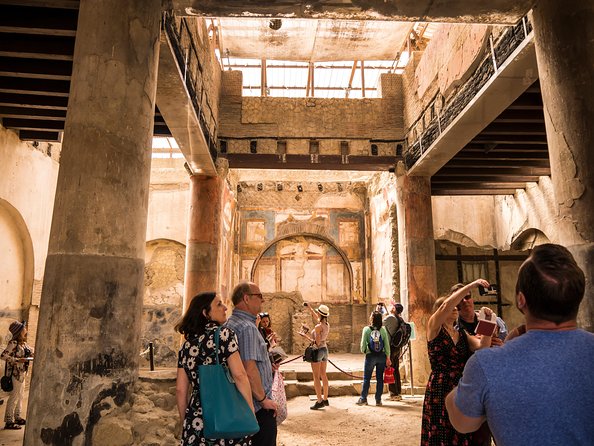
If you’re traveling with mixed ages, the 2-hour structure helps. You’re not committing to a long marathon through ruins, and kids usually do better when the guide keeps switching focus instead of standing in one spot for too long.
There’s also one accessibility-related note from a review: a guide was praised for being considerate of someone with limited mobility. That’s encouraging, but don’t assume it automatically fits your needs. If you require specific accommodations, confirm details with the provider ahead of time.
Should You Book This Herculaneum Archaeologist Tour?
Book it if:
- You want a guided experience that helps you understand what you’re seeing, not just where you’re standing.
- You like private tours because you want questions answered and a plan that actually follows the site.
- You’re coming for Herculaneum specifically, and you want help appreciating how preserved it is and how daily life shows through.
Skip it or shop carefully if:
- You’re the type who enjoys wandering with an audio guide and calling it done (this is built for guided interpretation).
- You’re very budget-sensitive once you add the separate 16-euro adult entry ticket.
- The archaeologist credential is a must-have for you. In that case, ask the provider directly what credentials apply to your guide.
Overall, I like this format because it turns a short visit into real understanding. You get a tight route across major highlights, in English, with a private guide who can steer you toward the details that make Herculaneum feel like a place where people once lived.
FAQ
Is the Herculaneum entrance ticket included in the tour price?
No. The tour includes guidance by an archaeologist guide, but you must buy Herculaneum entry tickets separately. The listed entry prices are 16 euros for adults, and 2 euros for EU citizens aged 18–25.
Where do we meet the guide?
You meet the guide outside the archaeological site ticket office, at the red building. The meeting point location is Via dei Papiri Ercolanesi, 80056 Ercolano NA, Italy.
How long is the tour?
It’s about 2 hours.
Are there multiple departure times and is it in English?
Yes. It’s offered multiple times throughout the day and is available in English.
What’s included, and what isn’t?
Included is a private tour with guidance and assistance by an archaeologist guide. Not included are the Herculaneum entrance ticket, transportation, and food and drinks.
Is free cancellation available?
Yes. You can cancel up to 24 hours in advance for a full refund. If you cancel less than 24 hours before the start time, the amount paid is not refunded.