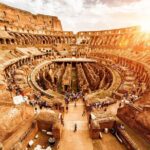
REVIEW · CITY TOURS
Golf Cart Small-Group Guided Tour: Rome City Highlights
Book on Viator →Operated by Biga Tours · Bookable on Viator
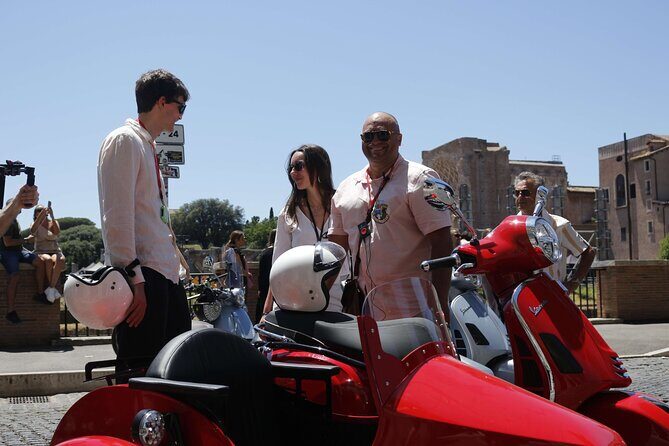
Your legs will thank you in Rome. This electric golf cart tour is built for seeing a lot without the full-day walking grind, and the headsets keep the guide easy to hear as you snake through central streets. It also works well if you want a first-pass tour that helps you decide what to explore later.
What I like most are the small-group setup and the included gelato + bottled water. With up to 14 people split across as many as 2 carts, you get the sense the guide can actually keep an eye on you, not just herd you. And yes, the gelato stop is part of the package, so you can sample without hunting for a place to sit.
One thing to consider: the pace is “highlights,” not “slow travel.” Many stops are quick (often 5 to 10 minutes), and a few are drive-bys, so this is ideal for getting oriented, but not for anyone who needs lots of time inside monuments.
In This Review
- Key highlights at a glance
- Meet at V. Monterone, Then Cruise: What Starts the Tour Right
- Small Groups on Two Carts: Why This Feels More Personal
- Headsets, Seats, and Earpiece Reality: How Listening Works
- The Route That Covers Rome’s Biggest Hits (Without Going Inside Everything)
- Pantheon quick look (about 5 minutes)
- Piazza Colonna drive-by (Column of Marcus Aurelius)
- Trevi Fountain photo stop (about 10 minutes)
- Spanish Steps and Piazza di Spagna (about 10 minutes)
- Piazza del Popolo (about 5 minutes)
- Mausoleum of Augustus drive-by
- Piazza Navona (about 5 minutes)
- Via Giulia drive: architectural context on the move
- Largo Argentina archaeology stop (about 5 minutes)
- Piazza del Campidoglio brief stop (about 5 minutes)
- Piazza Venezia (about 5 minutes)
- Monti neighborhood drive-through
- End outside the Colosseum
- Gelato and Water: The Included Break That Keeps the Pace Human
- Why This Is a Great First-Day Tour for Getting Oriented Fast
- Price Check: Does $104 Feel Like Value?
- Weather, Comfort, and How to Avoid Common Frustrations
- Who Should Book This Golf Cart Highlights Tour
- Should You Book It?
- FAQ
- How long is the Rome City Highlights golf cart tour?
- How much does it cost per person?
- Where do I meet the tour?
- Where does the tour end?
- Is the tour offered in English?
- What’s included in the tour price?
- Is Pantheon admission included?
- How long are the stops at major sights like Trevi Fountain and Spanish Steps?
- How big is the group?
- Do I need to tip the guide?
Key highlights at a glance
- Up to 14 people total with carts that travel together, and narration shared via earpieces
- Clear English with headsets, so you are not straining to catch every word
- Gelato included (1 per person) plus bottled water to keep you comfortable
- Efficient photo windows at major sights like Trevi, Spanish Steps, and Piazza Navona
- Drive-by context for places like Piazza Colonna and the Mausoleum of Augustus
- Ends outside the Colosseum area, so you can continue on foot if you want
Meet at V. Monterone, Then Cruise: What Starts the Tour Right
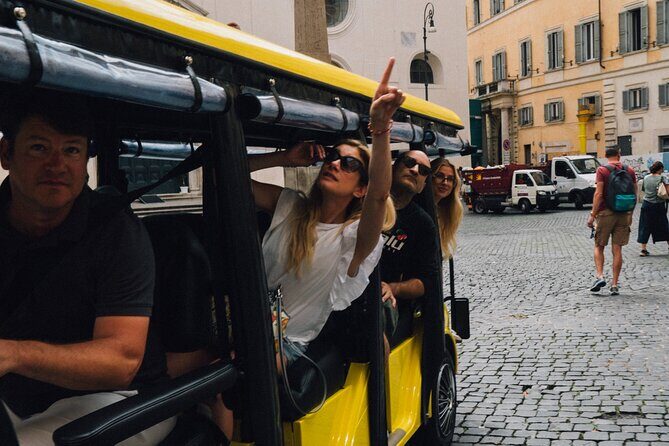
The tour begins at V. Monterone, 19 (a central meeting office in Rome). You meet your guide there, then hop into an electric golf cart and start rolling through streets that are hard work on foot. It’s a practical setup: you get close to the action quickly, and your day doesn’t start with a long trek across cobblestones.
Timing matters here. Rome can be confusing fast—especially if you are arriving from train, bus, or a busy hotel area. You will want to show up early enough to find the office without turning it into an unplanned scavenger hunt.
You can also read our reviews of more guided tours in Rome



Small Groups on Two Carts: Why This Feels More Personal
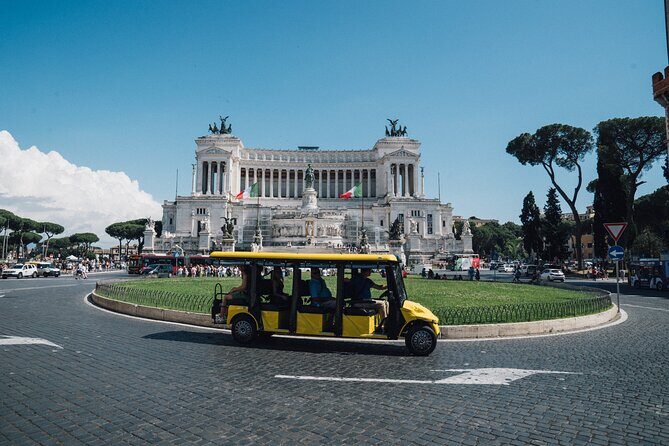
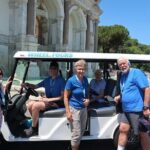
This is a maximum of 14 travelers, run with up to 2 carts. The carts move together like connected train carriages, and everyone listens through the same earpieces to follow the narration. That means you still get the same story even if you are not sitting in the same cart as your travel partner.
The “small group” part isn’t just a marketing line. With fewer people, the guide can react when someone asks a question or needs a moment for a photo. A few guides mentioned in reviews—Francesco, Andrea, Franco, Marco, Claire, Val, Leo, and Amber—seem to share that same friendly, lively style, and that shows up in how the tour is delivered.
If you do not like surprises, note one detail: when two carts are used, your group may be split between them even if you booked together. It usually does not change the tour content, but it can affect how close you are to your party.
Headsets, Seats, and Earpiece Reality: How Listening Works
You get headsets so you can hear the guide clearly. That is a big deal on moving vehicles in Rome, where street noise and traffic can drown out normal speaking. In most situations, it works well—some reviews praised guides for being funny, engaging, and easy to understand.
Still, technology can act up. One review mentioned a temporary issue with headsets for a participant sitting in the second row. My advice is simple: if something sounds off, say something right away. Do not wait until you are halfway through the narration.
Also, wear common sense for comfort. The tour rides short distances between stops, but you are still around cobblestones and crowds. I suggest comfortable shoes and layers. One reviewer even noted blankets offered when it was chilly, and another said rain did not cancel the tour.
The Route That Covers Rome’s Biggest Hits (Without Going Inside Everything)
This tour is designed as a highlight loop through central Rome: classic monuments, famous piazzas, and a few archaeology stops—mostly from outside—with quick breaks to look around and take photos.
Here is how the day flows, and what to expect at each stop:
Pantheon quick look (about 5 minutes)
You get a brief stop at the Pantheon, one of the best-preserved ancient Roman buildings and still standing after roughly 1900 years. Even in a short visit, you get the scale and the sheer “how did they build this” feeling. The important catch: Pantheon admission is not included, so you are typically there for exterior viewing and orientation rather than a full entry.
If you want to go inside for a longer, quieter visit, you can treat this stop as your timing signal: see the façade now, then plan a separate entry later.
You can also read our reviews of more city tours in Rome


Piazza Colonna drive-by (Column of Marcus Aurelius)
You drive past Piazza Colonna and see the Column of Marcus Aurelius, one of the few preserved triumphal columns in the city. This is the kind of stop that works well by cart because it is fast and still gives you the visual anchor. If you like Roman symbolism and details, the guide can connect what you see to the story of how Rome advertised power.
Trevi Fountain photo stop (about 10 minutes)
Next is Trevi Fountain, the famous swirl-and-statues stop where you toss a coin. The fountain you see today is tied to architect Nicolo Salvi, and the guide may connect it to the earlier Aqua Virgo water system built in 19 BC. With about 10 minutes, you can usually get your iconic photo, find a decent angle, and still hear the story behind it.
A practical note: this is one of the busiest places in Rome. Your time will be tight, so move with purpose. When your cart stops, step out quickly, grab the photo, and then slow down to look at the carvings if you can.
Spanish Steps and Piazza di Spagna (about 10 minutes)
You then reach the Spanish Steps at Piazza di Spagna. The steps connect the Spanish embassy area to the church of Trinità dei Monti. The stop is about 10 minutes, which is enough for a couple of viewpoints and a quick soak-in of the atmosphere—without getting stuck for hours in the crowd.
If you want a calmer view, plan a second visit later in the day on your own. This tour gives you the first snapshot and the “bookmark this spot” value.
Piazza del Popolo (about 5 minutes)
At Piazza del Popolo, you hit one of the northern gateway squares of ancient Rome. The guide connects it to the Via Flaminia route toward Rimini (Ariminum). The short time is intentional: it is a look-and-move stop, but the guide’s context helps you understand why this spot mattered.
Mausoleum of Augustus drive-by
You also drive past the Mausoleum of Augustus, a large tomb built by Emperor Augustus around 28 BC at the Campus Martius. This is another stop that works well from the cart. If you only know the name and not the location’s importance, the drive-by can turn it from a trivia item into something you can recognize later.
Piazza Navona (about 5 minutes)
You get a quick stop at Piazza Navona, built on the former Stadium of Domitian. The shape of the piazza echoes the old stadium, and the guide can connect it to the Roman games held there long ago. It is a short visit—about 5 minutes—but Navona is visual enough that even a brief stop can feel satisfying.
Expect to notice the layout first, then let the guide’s explanation do the rest.
Via Giulia drive: architectural context on the move
You cruise along via Giulia, a street known for historical and architectural importance and about a kilometer long, linking Regola and Ponte Rioni. This section is not a “get out and wander” moment; it is more like a moving lesson in how Rome’s street grid and building styles evolved.
Largo Argentina archaeology stop (about 5 minutes)
At Area Sacra di Largo Argentina, you see the ancient Roman temples uncovered in the 1926–1929 demolition of an older neighborhood area. The big takeaway here is the discovery: a paved square with remains of four Republican-era temples. It’s the kind of stop that makes Rome feel layered and real, because you are looking at the physical evidence that modern construction accidentally exposed.
Piazza del Campidoglio brief stop (about 5 minutes)
You get a brief look at Piazza del Campidoglio, on Capitoline Hill. The square follows Michelangelo’s criteria for a uniform design, and the guide ties it to where ancient temples once stood and where Roman gods were worshiped.
With the short stop, I treat it as a visual orientation. Later, if you want more, you’ll know exactly what area to aim for.
Piazza Venezia (about 5 minutes)
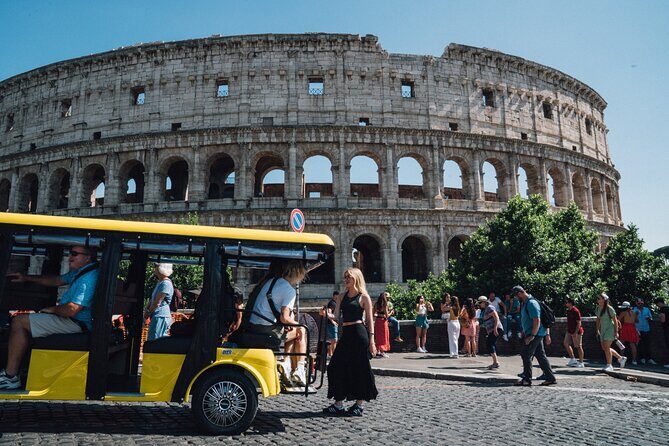
You reach Piazza Venezia and see the monument to Victor Emmanuel II (often called the Altar of the Fatherland). The square takes its name from Palazzo Venezia, built by Cardinal Pietro Barbo and donated in 1560 by Pius IV to the Republic of Venice as an embassy seat.
This stop helps you connect a modern monument to the long political story of Rome.
Monti neighborhood drive-through
Finally, you drive through Monti, Rome’s first ward (rione). It is described as a mix of vintage charm, artisans, cobblestones, food, and bars. Even if you do not stop here, the cart makes it easier to understand why Monti is one of those areas people return to for wandering later.
End outside the Colosseum
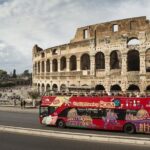
The tour ends outside the Colosseum (the exact phrasing is that the tour ends outside the Colosseum). That is a smart way to finish because it drops you right where many first-time visitors want to go next.
If you came for the Colosseum itself, this tour is a great “pre-game,” not a replacement for an inside visit.
Gelato and Water: The Included Break That Keeps the Pace Human
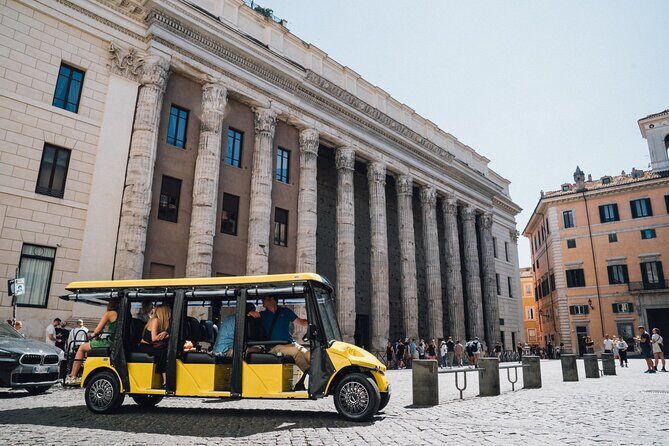
The tour includes one gelato per person and bottled water. That sounds small, but on a Rome day, it matters. It means you can enjoy a classic pause without checking prices, finding a shop, or trying to fit food in between timed monuments.
One review even called out specific flavors as a stand-out: almond, orange jam, and butter crumble. The point for you is not to memorize flavors—it is that the gelato stop is treated as part of the experience, not an optional detour.
If it’s cold, gelato can feel brave. Still, it gives you a break from being “on camera duty” and lets you reset before the final stretch.
Why This Is a Great First-Day Tour for Getting Oriented Fast
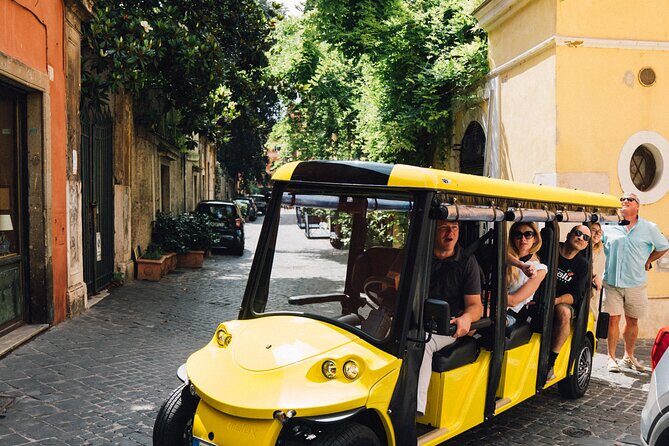
I love tours that help you get your bearings fast, and this one does that well. You sweep through major piazzas—Pantheon area, Trevi, Spanish Steps, Navona, Largo Argentina, Campidoglio, Venezia—then you finish near the Colosseum. That is a lot of geography covered in about 2.5 hours.
For your first day, that can be gold. You do not have to decide on the spot what to prioritize for the rest of the trip. After this, you can point to real places and say, I want to go back there, and I want to skip that corner next time.
This is also a good choice if you do not want to commit to entrances right now. Most stops are outside, and even where tickets are not included (like the Pantheon), the short guided look gives you context.
Price Check: Does $104 Feel Like Value?
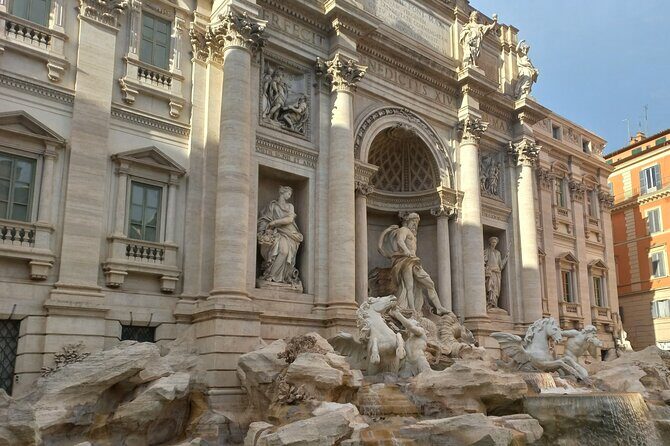
At $104 per person for about 2 hours 30 minutes, you’re paying for efficiency and comfort. You get:
- an electric golf cart ride
- a local English-speaking guide and driver
- headsets
- gelato and bottled water
Pantheon admission is not included, so you are not paying for entry fees on top of the tour cost.
From a value perspective, it helps if any of these are true for you:
- you want to see major sights without long walks
- you would rather pay for a smooth guided loop than figure out routes on your own
- you like the idea of a guided overview plus time to explore later independently
If you are the type who wants lengthy inside visits and deep museum time, you might feel the pace is too quick. But if you want a smart Roman overview, the price is easier to justify.
One more practical value note: this tour is often booked far ahead (an average of about 50 days). If your dates are fixed, book earlier rather than assuming you can decide last minute.
Weather, Comfort, and How to Avoid Common Frustrations
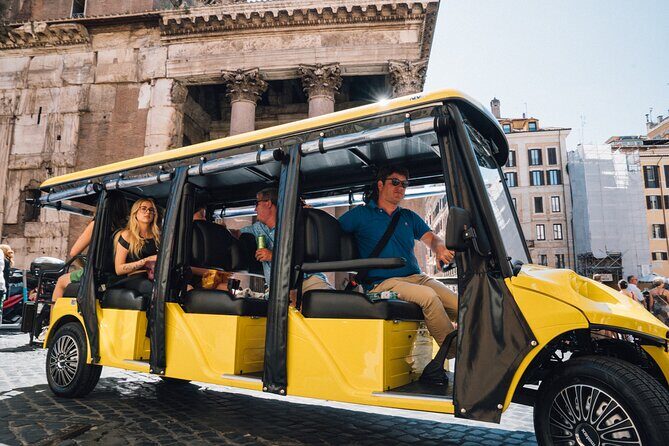
Rome weather can flip on you. One review specifically noted rain did not stop the experience, and another mentioned a chilly day with blankets. So plan for layers, and bring a light rain layer or umbrella if the forecast looks unsure.
Comfort tips that actually matter:
- Expect short walks and quick positioning after you disembark. You are not driving up to every monument like a private driveway.
- If you care about audio, test your headset early. In a moving vehicle, small audio problems can become annoying quickly.
- If you want photos, remember that your time is limited at each stop. Move fast enough to grab what you came for, but leave a moment to look at details rather than only screens.
And if you are prone to getting lost, build in extra time before the start so you can calmly find V. Monterone, 19.
Who Should Book This Golf Cart Highlights Tour
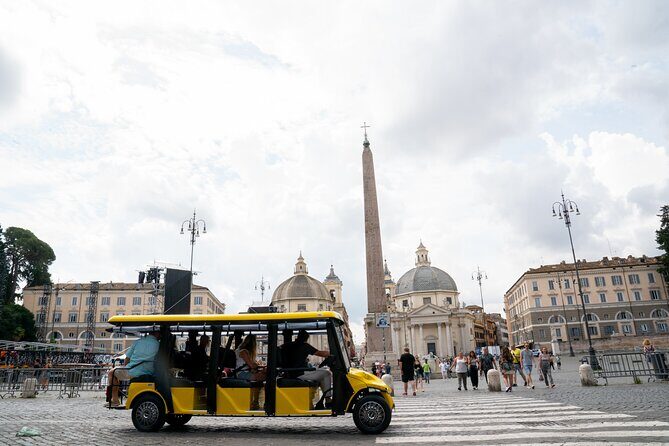
This tour fits best for people who want:
- a first-day introduction to Rome
- fewer steps and more sightseeing packed into a short window
- a guided story delivered in English through headsets
- a mix of monuments and piazzas, mostly from the outside
It can also work for solo travelers. One review described doing the tour solo with a lot of attention because the group size was small. If you are traveling with older family members (one review mentioned travelers in their 70s), the electric cart helps make major landmarks feel manageable.
It is less ideal if you want long time inside the big sites, or if you dislike moving around quickly. Think of it as a guided “greatest hits” overview.
Should You Book It?
Yes, I would book this if you want to get oriented fast and ride Rome like you actually have a plan. The small-group feel, headsets, and included gelato + water make it more than a simple sightseeing lap. And because it covers so much ground in about 2.5 hours, it helps you build a short list for your next day on your own.
I would hesitate only if you need lots of time inside monuments like the Pantheon, or if you hate quick stop-and-go pacing. In that case, you’ll probably want a longer, entry-focused tour instead.
If you do book it, arrive early, keep an eye on your headset audio, and use the stops as your map. Then go back later to the places that pull you in most. That combo is the best use of your Rome time.
FAQ
How long is the Rome City Highlights golf cart tour?
It runs about 2 hours 30 minutes (approx.).
How much does it cost per person?
The price is $104.00 per person.
Where do I meet the tour?
The meeting point is V. Monterone, 19, 00186 Roma RM, Italy.
Where does the tour end?
The tour ends outside the Colosseum at Colosseum Piazza del Colosseo, 1, 00184 Roma RM, Italy.
Is the tour offered in English?
Yes, the tour information is provided in English.
What’s included in the tour price?
Included are the electric golf cart (7 seats per cart), a local English-speaking guide and driver, headsets, snacks (1 gelato per person), and bottled water.
Is Pantheon admission included?
No, Pantheon admission is not included.
How long are the stops at major sights like Trevi Fountain and Spanish Steps?
Trevi Fountain is about 10 minutes, and the Spanish Steps stop is about 10 minutes.
How big is the group?
This tour has a maximum of 14 travelers and uses up to 2 vehicles (carts) with 7 seats per cart.
Do I need to tip the guide?
Gratuities are not included, so you may want to tip your driver/guide.