REVIEW · LUNCH EXPERIENCES
From Rome: Pompeii Guided Tour with Lunch
Book on GetYourGuide →Operated by MORANDITOUR · Bookable on GetYourGuide
Pompeii is history you can walk on. This tour is a guided route through the UNESCO ruins, designed to help you connect the dots between streets, public buildings, and the human story behind the 79 AD eruption. You’ll start with skip-the-ticket-line convenience and a live English or Spanish guide to keep everything clear and moving.
I love the focus on the big Pompeii landmarks in one go: the Forum, baths, Greek Theatre, and the Lupanar. And I especially like the stop at Villa dei Misteri, where you get some of the best-preserved ancient Roman wall art you’ll see in Pompeii. The one watch-out: the guided portion is only about 2 hours, so if you want to linger on every mosaic and inscription, you’ll need to use the free-exploration time well.
After the guided walk, you get time to explore at your own pace and, if you choose it, a straightforward traditional Italian lunch in the area. There’s also an option to join without lunch so you can spend that hour wandering and taking photos instead.
In This Review
- Key highlights to know before you go
- From Rome to Pompeii: the flow of the day
- Skip-the-ticket-line entry and the first 2 hours
- Forum, baths, Greek Theatre, and the Lupanar
- Villa dei Misteri: preserved Roman art that’s worth the time
- After the guide: free exploration for photos and your pace
- Lunch in Pompeii: included Italian comfort with a practical mindset
- Vesuvius and the uphill climb: plan for effort, not just views
- Price and value at around $94 per person
- Who this tour suits (and who should think twice)
- Should you book this Pompeii guided tour with lunch?
- FAQ
- What’s the meeting point for this Pompeii tour?
- How long is the guided part, and is there time to explore on my own?
- What’s included in the price?
- Can I join without the lunch?
- What languages are the live tour guides?
- What should I bring, and who should avoid this tour?
Key highlights to know before you go

- Skip-the-ticket-line entry saves time so your day starts with Pompeii, not paperwork
- Villa dei Misteri gives you a standout hit of preserved Roman art
- A guided walk through core sites includes Forum, baths, Greek Theatre, and the Lupanar
- Photo time after the tour lets you slow down where your interests run
- Lunch is included, with a “local restaurant” approach rather than museum-level dining
- Plan for a Vesuvius uphill climb if the route includes the summit stop
From Rome to Pompeii: the flow of the day
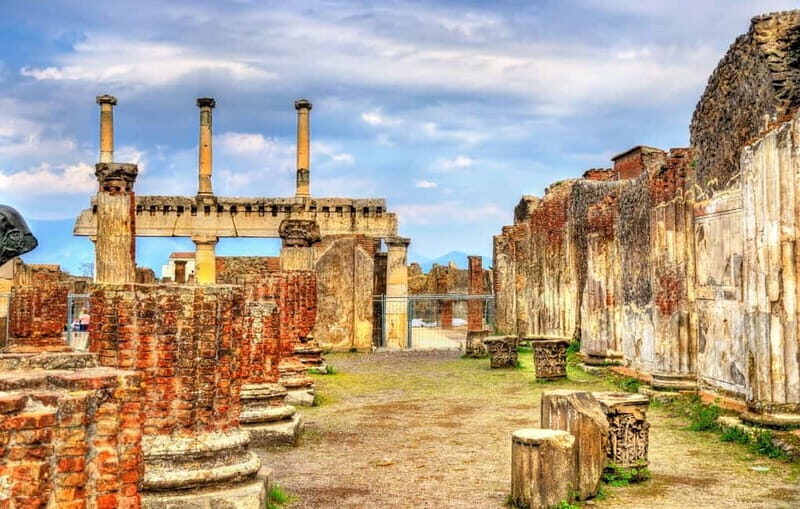
You’ll start from a meeting point near Hotel Vittoria, at the main entrance area. There’s no hotel pickup or drop-off, so you’ll want to get yourself there ahead of time, comfortable shoes on, water ready. This matters because Pompeii is one of those places where timing can feel tight: the best moments are often in the middle of the day, and delays steal your best light for photos.
The tour is built around a guided walking segment first, then a little freedom afterward. That structure is great for most visitors because Pompeii has a lot going on. Without a guide, you can end up seeing impressive ruins but missing how they connect—what buildings were for, how daily life worked, and why certain areas are especially telling.
Also note the vibe of the day: it’s not a “sit back and watch” program. Even though the duration listed for the tour portion is about 2 hours, you’re still on your feet for a moderate amount of walking, and the ground in ruins areas can be uneven.
You can also read our reviews of more guided tours in Rome



Skip-the-ticket-line entry and the first 2 hours

One of the easiest value wins here is skip the ticket line. When you’re dealing with a major site like Pompeii, that small time saver can make the day feel smooth instead of rushed. It also sets the tone: you’re not standing around while the group gets organized—you’re already inside.
A live guide leads the route in English or Spanish, and the benefit is clarity. Pompeii is often taught like a disaster story, which is true, but it’s also a city with daily routines. A good guide helps you notice the clues that turn a site from “cool ruins” into a place where people lived, worked, ate, and socialized.
You’ll be walking through key public and neighborhood spaces, with the guide explaining what you’re looking at and why it mattered before the eruption froze the city under ash.
Forum, baths, Greek Theatre, and the Lupanar
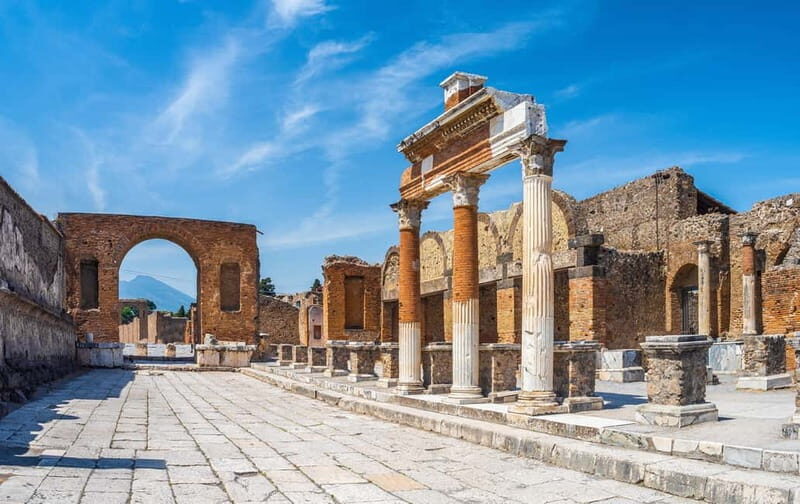
This is the core Pompeii sweep, and it’s chosen for a reason. The Forum is where civic life happened—people gathered, discussed, and carried on the normal business of a Roman town. When you see it in context with the guide’s explanation, it stops feeling like random stone plazas and starts looking like an actual meeting place.
Then you move to the baths, which are more than just “old buildings.” Roman baths were social centers. Even if you don’t study Roman culture, seeing the layout and how people moved through the space gives you an instant sense of how daily life worked. It’s the kind of detail you can easily miss if you’re self-guiding too fast.
The Greek Theatre adds another layer. Pompeii wasn’t a sealed box of one culture. It absorbed influences, and this theatre shows the cultural blending in how entertainment and public life were shaped. The theatre also helps you understand how crowds would have moved and how views were designed for audiences.
Finally, the Lupanar is the part people tend to remember the longest. It’s connected to sex work in Roman society, and the site’s survival makes it unusually direct. If you’re the type who likes the real-world angles of history—the messy, human stuff—this stop lands well. If that topic makes you uncomfortable, it’s still worth knowing that it’s part of the standard Pompeii story, because Pompeii is complete like that.
Villa dei Misteri: preserved Roman art that’s worth the time

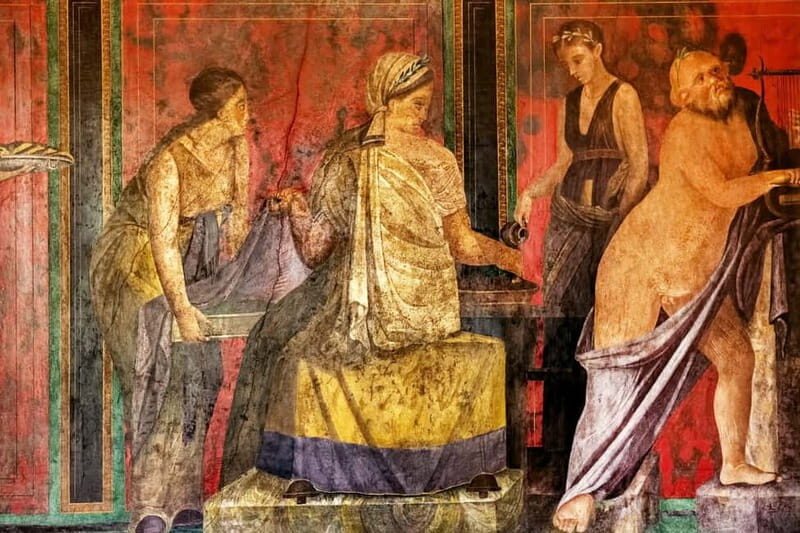
If you only catch one “wow” stop on this route, make it Villa dei Misteri. This is where the tour’s promise turns into a visible payoff. The villa is known for best-preserved examples of ancient Roman art, and that preservation is the key. Pompeii doesn’t only impress with architecture; it can preserve the look and style of wall paintings in a way that’s hard to match elsewhere.
The value of this stop is how it shifts your attention. You stop thinking only about streets and buildings and start seeing how people decorated and expressed themselves. Roman wall paintings aren’t just decoration—they’re part of how status, taste, and storytelling showed up in everyday rooms.
Practical tip: go slow here. Even in a guided format, you can spend extra seconds looking at details without losing the route. If your guide tends to keep a quick pace, use the moment to study what’s in front of you. You’ll feel it later when you compare your memory to photos taken by people rushing on the move.
After the guide: free exploration for photos and your pace
Once the guided portion ends, you get free time to explore or take photos at your own pace. This is where the tour becomes flexible. If you’re the kind of visitor who always wants one more angle on a mosaic, one more look at a doorway, or one more photo without a crowd in it, this is your chance.
You also have a choice in how you handle the next part of the day. The tour includes lunch, but you can also join without the lunch option. In that case, you keep the hour for wandering—useful if you’d rather roam the ruins longer than sit down for food. During this free time, any extra activities (like shopping or a café stop) aren’t included in the tour price, so think of it as time to personalize your day.
One reality check: Pompeii can feel like it’s moving faster than you are, because there’s always another room, another corridor, another view. This is why the free exploration segment is smart. It gives you control after the guide sets the big picture.
Simple strategy: if you want photos, aim to return to the most important areas you liked during the first guided loop. You already know what you’re looking at now, so you can photograph with purpose.
You can also read our reviews of more tours and experiences in Rome


Lunch in Pompeii: included Italian comfort with a practical mindset
The lunch is included and served at a local restaurant in the Pompeii area, with a variety of classic Italian dishes. The idea is simple: you walk, you learn, and then you sit down and recharge.
Here’s the practical truth: lunch included in a tour setting is typically a convenience and a cultural touchpoint, not fine-dining performance. It’s usually dependable for what it is, but it’s not guaranteed to be everyone’s perfect meal. If you’re picky about food quality or timing, I’d treat lunch as a bonus, not as the main event.
Why this still can be good value: you don’t have to hunt for a restaurant or coordinate your own schedule. After a morning of ruins, a sit-down meal is a real payoff. Also, having the meal arranged into the flow reduces friction. You can focus on seeing Pompeii instead of thinking about logistics.
If lunch isn’t your priority, choose the option without lunch and put that time back into the site. Pompeii is one of those places where extra time often buys deeper understanding.
Vesuvius and the uphill climb: plan for effort, not just views

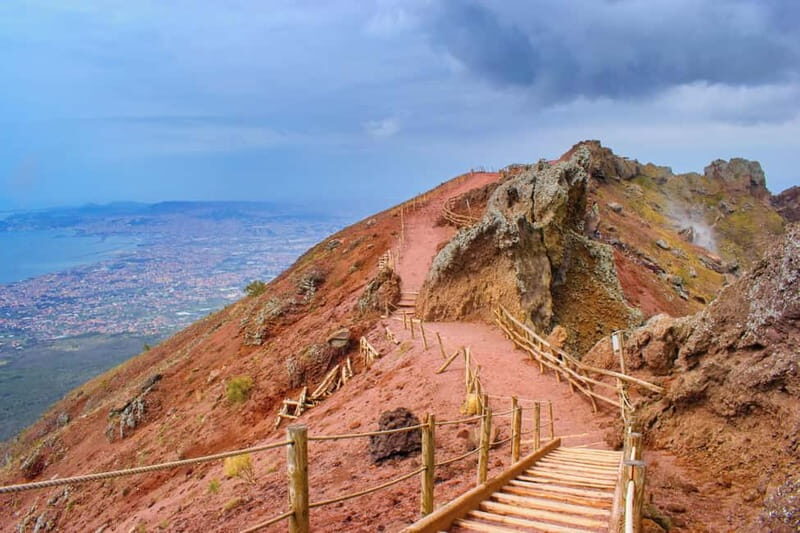
Even though the Pompeii ruins take center stage, you should expect effort connected to Mount Vesuvius. The tour notes that there can be a climb to the summit, and it may be strenuous for some people. So if you’re not used to uneven ground and uphill walking, take the fitness part seriously.
Also, this affects your whole day. When you spend time on your feet at Pompeii and then climb again later (or on a route that includes it), energy management becomes real. Bring the basics: comfortable shoes and water. If you’re prone to getting overheated, add sunscreen and a hat early, not at the last second.
If you’re unsure, you can also use the timing of your own pace during Pompeii to save energy. For example, you don’t need to push through every corridor at the same speed—slow down when you want to look, and speed up only when you’re truly moving between highlights.
Price and value at around $94 per person
At $94 per person, this tour isn’t the cheapest way to do Pompeii. But it’s also not overpriced for what you get, if your priority is a guided highlights route plus lunch.
What you’re paying for:
- A live guide in English or Spanish
- Skip-the-ticket-line entry, which can be a time and stress saver
- A structured Pompeii route hitting major spaces people care about
- Lunch included (if you choose that option)
What’s not included:
- Hotel pickup and drop-off, so you’ll need to handle getting to the meeting point near Hotel Vittoria
So the value equation comes down to one question: do you want a guide to set context and keep you moving through the most important Pompeii areas? If yes, this price starts to make sense. If you’d rather self-guide slowly with a guidebook and spend more time on fewer areas, you might feel this tour is moving faster than you’d like.
My advice: decide based on your time. If you have limited time and want the “greatest hits” plus art, it’s strong value. If you’re planning a longer Pompeii day, you may prefer a self-paced plan.
Who this tour suits (and who should think twice)
This tour fits best if you:
- Want Pompeii highlights with clear guided context
- Like seeing famous sites in a logical order (Forum → baths → theatre → Lupanar → art stop)
- Prefer a built-in schedule with lunch rather than restaurant hunting
- Can handle moderate walking and heat (hat and sunscreen help a lot)
It’s not suitable for:
- Pregnant women
- People with mobility impairments
- People with heart problems
- Wheelchair users
That’s important to take seriously. Pompeii ruins aren’t flat, and the Vesuvius effort (including an uphill climb to the summit) makes physical demands higher. If you’re in a situation where uphill effort or uneven ground is a problem, I’d choose a different Pompeii plan that matches your mobility needs.
Also: no smoking is allowed, so plan accordingly if you need breaks.
Should you book this Pompeii guided tour with lunch?
Book it if you want a guided Pompeii experience that covers the major stops and includes lunch so your day stays easy to manage. The combination of skip-the-ticket-line, live narration in English or Spanish, and the Villa dei Misteri art stop is exactly the kind of setup that helps first-time Pompeii visitors make sense of what they’re seeing.
Skip (or change approach) if you know you’ll want to spend more than 2 hours with the guide’s route, or if lunch quality is a make-or-break detail for you. In that case, use the option to join without lunch so you can keep exploring instead of rushing to eat.
If you’re considering Vesuvius too, be honest about your stamina. This tour’s design can include uphill effort, and it’s better to plan for the climb than hope you’ll feel fine on the day.
FAQ
What’s the meeting point for this Pompeii tour?
You meet close to hotel Vittoria, at the main entrance area.
How long is the guided part, and is there time to explore on my own?
The guided tour is 2 hours. After the tour, you have a bit of free time to explore or take photos at your own pace.
What’s included in the price?
The price includes a guided tour of Pompeii and a traditional Italian lunch (if you choose the lunch option). It also includes skip-the-ticket-line entry.
Can I join without the lunch?
Yes. You can choose to join without lunch, which gives you extra free time instead. Activities during free time are not included in the tour price.
What languages are the live tour guides?
The tour guide offers live interpretation in English and Spanish.
What should I bring, and who should avoid this tour?
Bring comfortable shoes, a hat, a camera, sunscreen, and water. Smoking isn’t allowed. It’s not suitable for pregnant women, people with mobility impairments, people with heart problems, or wheelchair users. The route may also include a climb to Mount Vesuvius’ summit, which can be strenuous for some.