REVIEW · POMPEII DAY TRIPS
From Rome: Pompeii and Herculaneum by High-Speed Train
Book on GetYourGuide →Operated by Askos Tours · Bookable on GetYourGuide
Two Roman cities, one volcanic day.
This outing strings together fast train comfort and real face-to-face archaeology: Pompeii’s streets and plaster casts of victims, then Herculaneum’s quieter, better-preserved neighborhood life after the Vesuvius catastrophe. You’ll learn the story from an English-speaking archaeologist guide, with headsets included so you can hear the details without craning your neck.
I like the way the day pairs both sites back-to-back, so you don’t just collect ruins—you understand how people lived, how the eruption shocked the region, and how two towns ended up preserved in very different ways. I also love seeing the contrast through specific stops like Pompeii’s brothel and Herculaneum’s House of Neptune and Amphitrite, where the archaeology is the show. (Guides I’ve seen praised include names like Raphael, Jasmine, and Michele, each known for clear storytelling.)
One thing to keep in mind: it’s a long day with walking on uneven stone, including about one mile in Pompeii and half a mile in Herculaneum, and it runs rain or shine. If you’re limited on mobility, this is usually not a smooth fit.
In This Review
- Key things that make this tour worth it
- A Fast Train Out of Rome: Roma Termini to Naples in 70 Minutes
- Why train-first matters
- Naples Minibus Transfers: Short Rides, Less Hassle, More Ruins
- Pompeii With an Archaeologist: Newly Opened Houses, the Brothel, and Casts of Victims
- You’ll hear the city story, not just the tragedy
- Pompeii Free Time and the Pace Reality: Don’t Plan a Long Lunch
- Herculaneum’s House of Neptune and Amphitrite and the Preserved Beach
- The experience you’re building by doing both
- The Day-to-Day Logistics That Affect How Much You Enjoy It
- Walking and footwear rules
- Not for everyone
- Weather: rain or shine
- What You’re Really Paying For: $222.77 and the Value Math
- Why the archaeologist part matters
- The trade-off
- Who This Tour Fits Best (and Who Should Choose Another Plan)
- Should You Book This Pompeii and Herculaneum Day Trip from Rome?
- FAQ
- Where do I meet the guide when I arrive in Naples?
- How long is the tour?
- Is the tour in English?
- How much walking is involved?
- What’s included in the price?
- What do I need to bring, and what footwear is not allowed?
- Is the tour suitable for wheelchair users?
- Is cancellation free?
- Are meals included?
Key things that make this tour worth it
- Two towns, two preservation styles: Pompeii feels loud and sprawling; Herculaneum feels intimate and preserved street-by-street.
- Archaeologist-led facts, not just sightseeing: guides like Michele and Raphael are highlighted for explaining finds and theories in plain English.
- Plaster casts that turn tragedy into evidence: you see the casts of people and animals lost to the eruption.
- Comfort built into the logistics: Roma Termini to Naples by high-speed train, then short minibus rides to each site.
- Time limits inside the ruins: Pompeii includes guided time plus a short free window—plan to keep moving if you want photos.
A Fast Train Out of Rome: Roma Termini to Naples in 70 Minutes
The trip starts where it should: Roma Termini. You travel independently on pre-booked high-speed tickets from Rome to Naples, and the train ride is about 70 minutes. That matters because it buys you daylight hours for the ruins instead of burning time on slow connections.
When you arrive in Naples, the meet-up is straightforward. Look for your guide outside the STARHOTEL TERMINUS entrance, directly opposite the station, holding an ASKOS TOURS sign. Having a specific, visible meeting point helps a lot in a big station where it’s easy to lose time.
Once you’re in the Naples-to-ruins rhythm, the day feels like a single moving plan: train, minibus, Pompeii, then Herculaneum, then back to the station for your return train. Your group also gets headsets, which is a big deal at Pompeii where crowds, wind, and echo can make normal talking tough.
You can also read our reviews of more tours and experiences in Rome.



Why train-first matters
If you’ve tried day trips from Rome by bus, you know the drill: you arrive tired and leave rushed. This format flips that. The train is quick, so your energy stays for walking the sites rather than fighting traffic.
Naples Minibus Transfers: Short Rides, Less Hassle, More Ruins
After meeting at Naples central station, you take a comfortable van/minibus transfer to Pompeii. Expect about 30 minutes to reach the archaeological site area. The same idea repeats later: another short transfer to Herculaneum, then a return run back to Naples for the train home.
This matters because Pompeii and Herculaneum are in the same region but not right next door. A well-timed transfer keeps the day coherent, and it helps you avoid the usual “we’ll figure it out” stress when you only have one day.
Two practical notes before you go:
- You can’t bring luggage or large bags on this tour, so travel light.
- You’ll do uneven outdoor walking, so pack shoes you can handle for hours, not just for one photo stop.
Pompeii With an Archaeologist: Newly Opened Houses, the Brothel, and Casts of Victims
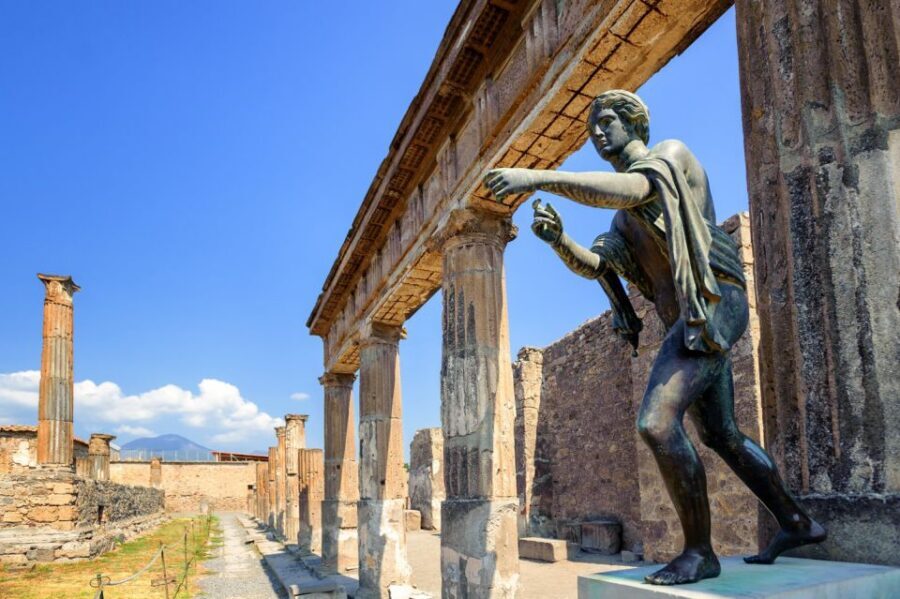
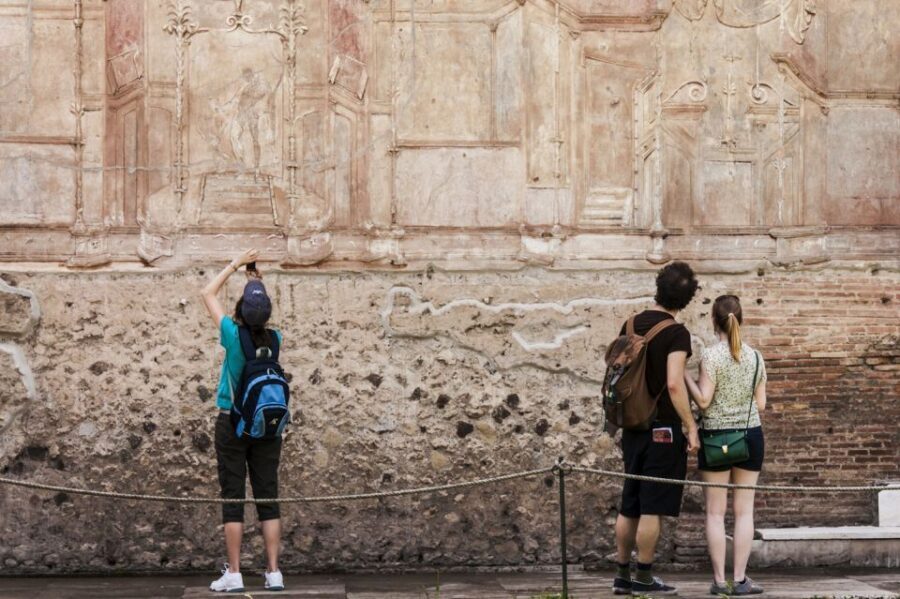
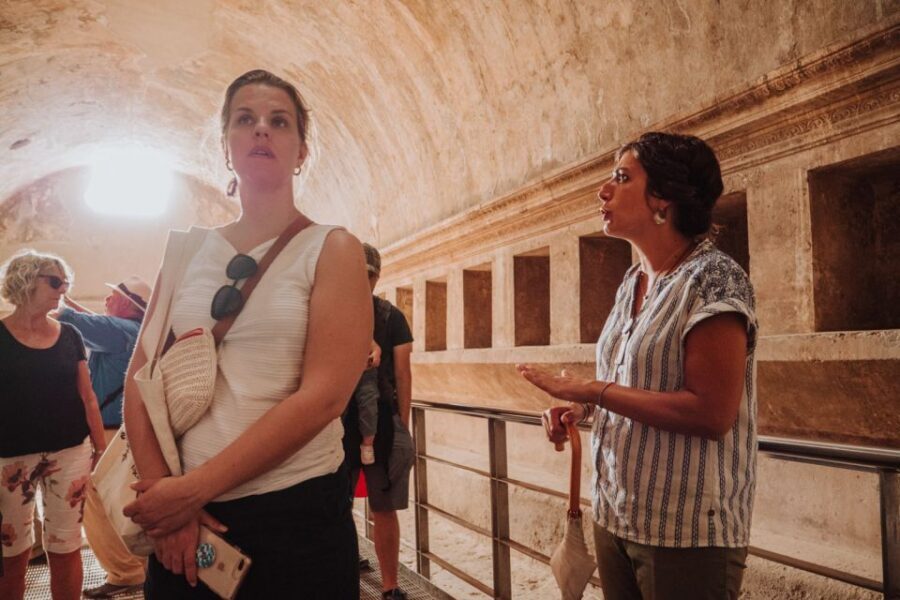
Pompeii is the headline act, but the tour doesn’t treat it like a photo scavenger hunt. You start with a guided walkthrough for about two hours with an archaeologist, designed to highlight key buildings and the human story behind them.
Here’s what you should expect to focus on:
- Major streets and buildings that show how the city was organized
- Newly opened houses, so you’re not only seeing the most-famous, well-trodden rooms
- The brothel, which helps you understand everyday life and social reality in Roman Pompeii, not just temples and statues
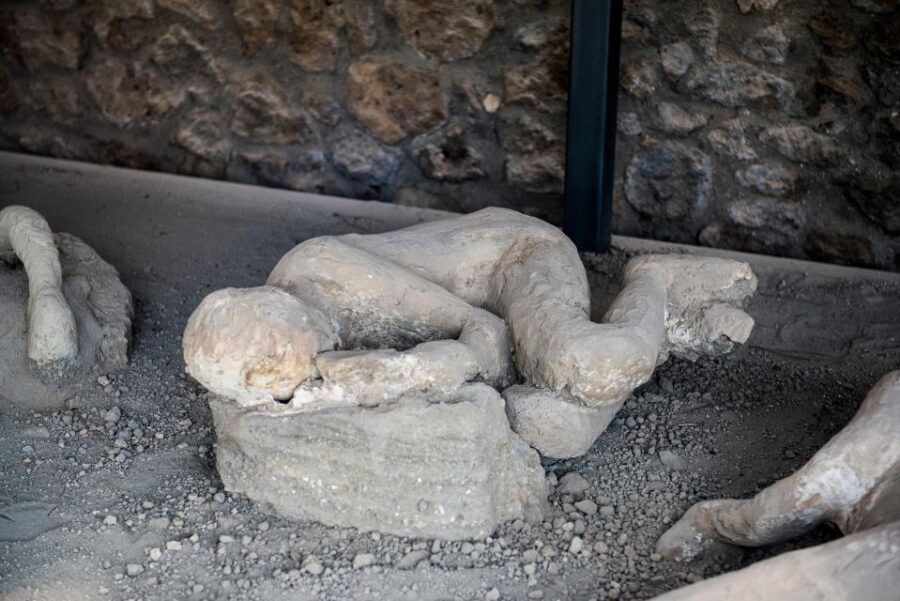
- The plaster casts of victims and animals, which turn the disaster from an abstract story into something you can visually grasp
That plaster-cast moment is often the emotional center of the day. It’s not just grim. It’s also informative. The casts are evidence—how bodies were found and how the shape of loss can be reconstructed—so you leave with a better sense of what the eruption’s impact looked like in real terms.
You’ll hear the city story, not just the tragedy
The best archaeologist-guides do something smart: they connect the disaster to daily life. You’ll get explanations about what people were doing, how the city functioned, and what the eruption meant for the region.
Guides named in the standout feedback include Michele and Raphael, with praise for being funny while still staying factual. You also pick up the idea that Pompeii is a Roman city first, with a volcanic ending—not a museum made only for mourning.



Pompeii Free Time and the Pace Reality: Don’t Plan a Long Lunch
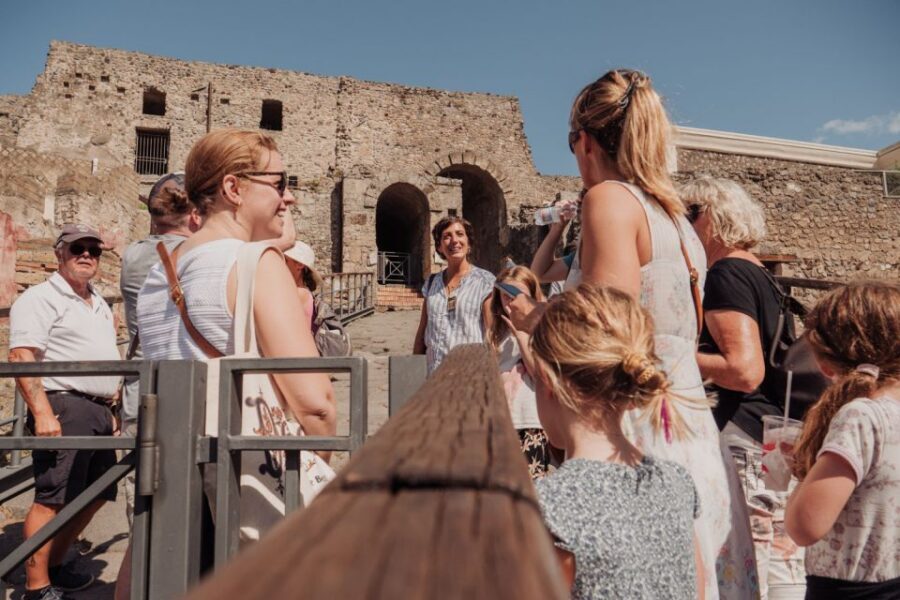
Pompeii includes a short free time block of about 30 minutes. That’s enough for a quick snack, a restroom break, or a fast browse for small souvenirs. It’s usually not enough for a leisurely sit-down meal.
If you’re hoping for a full restaurant lunch, I’d treat the 30 minutes as a warning label. You’ll likely want to eat nearby or keep your expectations modest—grab-and-go style works better than trying to “make it all fit.”
Also, Pompeii is crowded and spread out. The guided portion aims to cover the highlights, so you may not have time for slow detours or museum-like pacing. If you like taking your time, bring a photo strategy: pick a few “must” shots and let the rest happen as you move.
Herculaneum’s House of Neptune and Amphitrite and the Preserved Beach
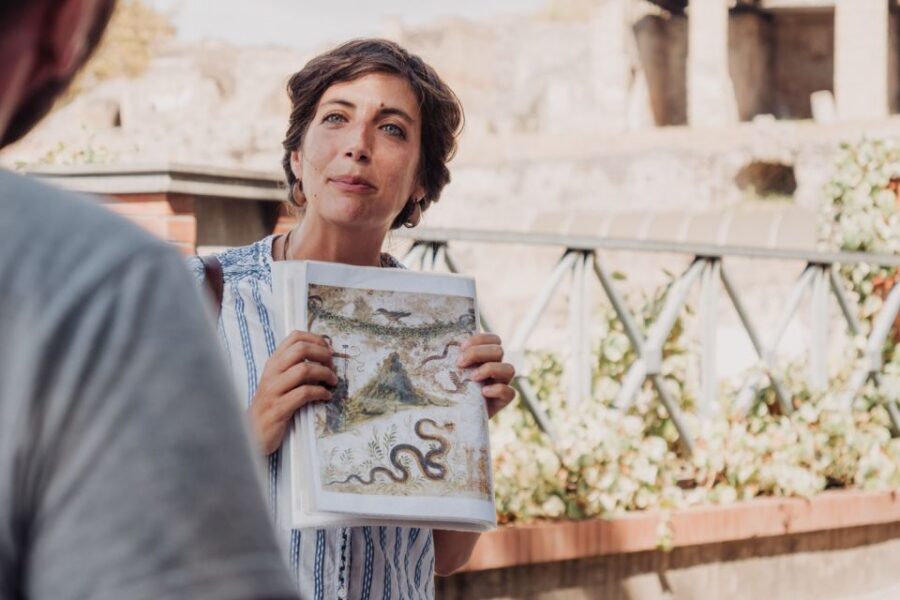
After Pompeii, you transfer to Herculaneum by minibus (about 30 minutes). Then you get a second guided visit for about two hours. If Pompeii feels like a big city frozen mid-motion, Herculaneum often feels like the opposite: more compact and more intimate, with preservation that shows daily life in a way you really can picture.
Key stops you can expect include:
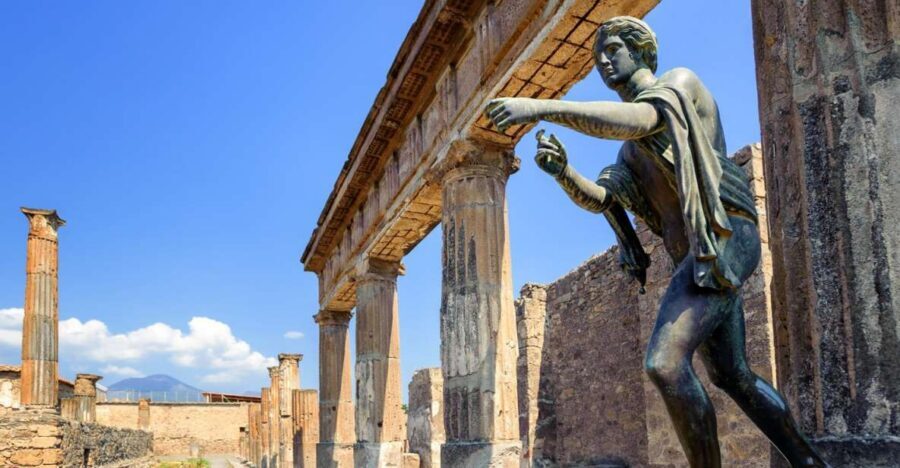
- The House of Neptune and Amphitrite, one of the notable homes featured on this route
- A look at the beach area where human skeletons are preserved, which is as sobering as it is historically important
Herculaneum’s preserved details tend to stick in your brain. The streets and home layouts help you imagine households, work spaces, and routine. And because it’s guided by an archaeologist, you’re not just admiring old stones—you’re learning why those stones look the way they do.
The experience you’re building by doing both
Seeing both sites on the same day is not just “more ruins.” It’s a learning tool. Pompeii gives you scale and urban planning. Herculaneum gives you preservation and how that neighborhood life survived in a different form. Together, you walk away with a more complete picture of the catastrophe’s regional effects.
The Day-to-Day Logistics That Affect How Much You Enjoy It
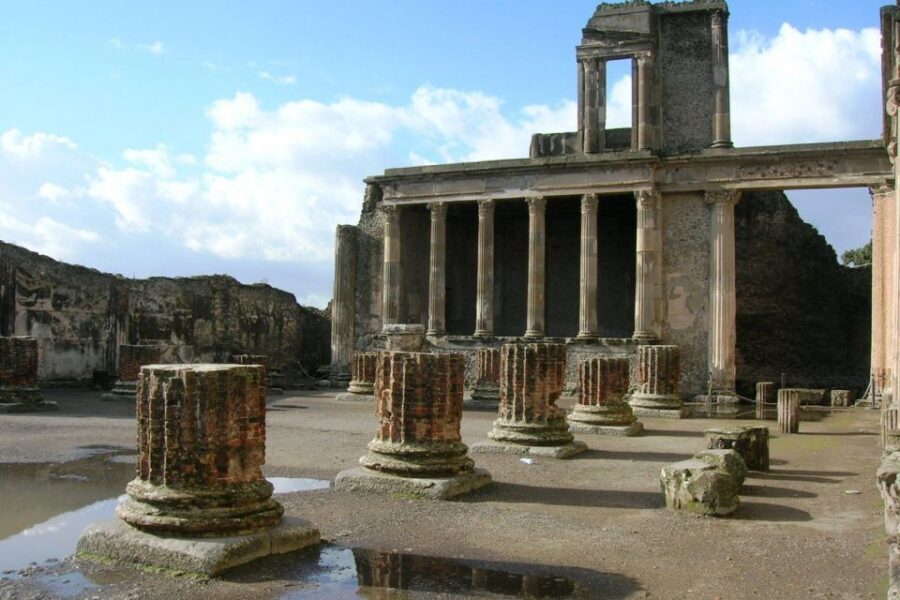
This is where the tour either feels smooth or feels cramped—so plan around it.
Walking and footwear rules
You should expect:
- About one mile walking in Pompeii
- About half a mile walking in Herculaneum
And it’s not carpet walking. It’s stone streets and uneven ground.
The tour also restricts footwear:
- No sandals or flip flops
- No high-heeled shoes
Bring comfortable shoes with grip. If rain shows up, those stone paths get slick fast, so a raincoat is a smart bring.
Not for everyone
This tour is not recommended for people with limited mobility, and it’s not suitable for wheelchair users. If that’s your situation, you’ll probably be happier with a less walking-heavy alternative.
Weather: rain or shine
The tour runs rain or shine. That’s normal for archaeology. Your best defense is simple: pack a raincoat you can actually move in, not a flimsy poncho.
What You’re Really Paying For: $222.77 and the Value Math
At $222.77 per person, this is not a budget day trip. The value comes from what’s bundled, and from the guide quality that shows up in repeated praise.
Included items you’re paying for:
- Two guided tours with an archaeologist (Pompeii and Herculaneum)
- Skip-the-ticket-line entry for Pompeii
- Herculaneum entry tickets (16 euros each)
- Round-trip fast-train tickets between Rome and Naples
- Transport between Naples, Pompeii, and Herculaneum by van/minibus
- Headsets so you can hear your guide
What’s not included:
- Meals
- Hotel pickup and drop-off (you start and end at station meeting points)
Why the archaeologist part matters
You’ll get a lot more out of Pompeii and Herculaneum when someone is translating the buildings into context. The most glowing feedback highlights guides who explain the history and the disaster’s theories clearly, not just the “what.” If you care about understanding how people lived and what the evidence shows, this is where your money goes.
The trade-off
You’re paying for organization and interpretation. The trade-off is time pressure: you’re doing two major sites in one day, with short free time. This works best if you prefer structure over wandering.
Who This Tour Fits Best (and Who Should Choose Another Plan)
This day trip is a strong match if:
- You want to see both Pompeii and Herculaneum without spending days figuring out logistics
- You enjoy guided history with an archaeologist level of detail
- You’re okay with a long day of walking and getting a lot done efficiently
It may feel less ideal if:
- You’re hoping for lots of unstructured time for shopping and long meals
- You need step-free routes or minimal walking
- You want to treat Pompeii like a slow museum visit rather than a highlights tour
If you’re traveling with teens or adults who love history but get bored with lecture-style audio guides, the live guide format tends to work well—headsets plus a person who can answer the group’s questions is a good combo.
Should You Book This Pompeii and Herculaneum Day Trip from Rome?
If you’re choosing between doing one site or both, I’d lean toward booking this two-site format. The biggest advantage is the comparison: Pompeii for city life and urban scale, Herculaneum for preserved neighborhood intimacy. One day can feel full, but it’s also memorable in the way that sticks: you leave with a fuller story than you’d get from a single stop.
Book it if you like clear structure, you can handle the walking, and you want an archaeologist to connect the stones to the people. Skip it if you’re mobility-limited or if your idea of fun involves long lunch breaks and slow wandering.
FAQ
Where do I meet the guide when I arrive in Naples?
Meet your guide in front of the STARHOTEL TERMINUS entrance, which is opposite Naples Central Station. Look for the guide holding an ASKOS TOURS sign.
How long is the tour?
The total duration is about 8.5 hours, depending on starting times.
Is the tour in English?
Yes. The live tour guide speaks English.
How much walking is involved?
You should plan for about one mile of walking in Pompeii and about half a mile in Herculaneum.
What’s included in the price?
You get guided tours with an archaeologist at both sites, Pompeii express entry tickets, Herculaneum entry tickets, round-trip fast-train tickets Rome–Naples, van/minibus transfers between Naples and the sites, and headsets for all participants.
What do I need to bring, and what footwear is not allowed?
Bring a passport or ID card. The tour doesn’t allow sandals or flip flops, high-heeled shoes, or luggage/large bags.
Is the tour suitable for wheelchair users?
No. It is not suitable for wheelchair users and is not recommended for people with limited mobility.
Is cancellation free?
You can cancel up to 24 hours in advance for a full refund.
Are meals included?
No. Meals are not included. The tour includes a short free time period for shopping or lunch at Pompeii.