REVIEW · FOOD
Food and Wine tour: Ghetto & Trastevere Culinary Adventure
Book on Viator →Operated by Attractions in Rome · Bookable on Viator
Food in Rome hits different when someone gives you the why. This tour pairs art historian storytelling with stops for wine tastings, all while you walk through iconic neighborhoods off the loudest tourist routes. I love the tight focus on food plus context, and I like that it’s a true private setup with your group rather than a shuffle-and-sprint. One thing to consider: it’s a walking tour, so you’ll want moderate fitness and comfy shoes.
You start in a central spot near Campo de’ Fiori and end back there, which makes it easier to roll into the rest of your day. The route moves through areas like the Antico Quartiere Ebraico and Trastevere, with your guide tying the scenery and monuments to what you’re tasting. Also, since it’s a food tour with wine and alcohol included, the tasting pace is part of the fun—just plan around it.
This is priced at $549.24 per person for about 4 hours, which can feel steep until you factor in the guide time and the fact that you’re not just “snacking”—you’re also getting wine, coffee/tea, bottled water, and alcoholic beverages. And yes, a vegetarian can be accommodated—based on past guests and guide support, it’s taken seriously.
In This Review
- Key highlights worth centering your plans
- A 4-hour Rome Bite Plan: what this private culinary walk is really for
- Campo de’ Fiori start: the easy meeting point and the smart way to begin
- Antico Quartiere Ebraico and Il Portico Di Ottavia: walking with context, not noise
- Isola Tiberina and Piazza Trilussa: the route keeps changing your Roman mood
- Basilica di Santa Maria in Trastevere: where the flavors and the walk meet
- What you’ll eat and drink: tastings, wine, coffee/tea, and alcohol included
- Guide style matters: why the art historian angle changes how you taste
- Price and value: what $549.24 per person covers, and when it’s a win
- Who should book this Rome food and wine adventure
- Should you book Ghetto & Trastevere Culinary Adventure?
- FAQ
- How long is the tour?
- Where does the tour start and end?
- What languages is the tour offered in?
- What’s included in the price?
- Is hotel pickup included?
- Do I need to mention dietary needs or allergies?
- What are the age rules for drinking alcohol?
Key highlights worth centering your plans
- Art historian guide commentary that connects what you see to what you eat and drink
- Private tour feel with only your group, capped at 12 people
- Lots of tastings plus wine tasting, not just a couple bites
- Route through iconic Rome areas like the Antico Quartiere Ebraico and Trastevere
- All-in type inclusions: food, wine, water, coffee/tea, and alcoholic beverages
- Good guidance for dietary needs and allergies (share requirements at booking)
A 4-hour Rome Bite Plan: what this private culinary walk is really for
This is the kind of tour that works when you want more than a food checklist. You’re walking through several famous Roman areas while your guide gives commentary that helps you understand why these places feel the way they do. Instead of dumping facts, the guide’s job is to keep the story tied to the tastings.
I also like that the tour stays human-sized. With a maximum of 12 people per booking and a private group setup, you’re less likely to feel lost at the back—or rushed through the good parts.
The biggest tradeoff is time and feet. It’s “about 4 hours,” so you should treat it as a planned block, not an add-on. If you’re sensitive to standing and walking for an extended stretch, go in prepared with comfortable shoes and water-balance your day.
You can also read our reviews of more food & drink experiences in Rome


Campo de’ Fiori start: the easy meeting point and the smart way to begin
Your tour begins at Campo de’ Fiori (and ends back there). That matters more than it sounds. It keeps logistics simple, and it lets you build your Rome day around the tasting walk without needing hotel pickup and drop-off.
Starting in this central area also sets a good rhythm. You’re in the mix of Rome, but your guide quickly channels you into calmer streets and the more “inside the neighborhoods” feel. Since this is a foot tour through multiple districts, getting started smoothly helps the whole experience flow.
This is also where your guide’s art historian approach kicks in. Expect commentary that frames the neighborhoods you’ll visit next, so by the time you’re tasting, the places feel less like names on a map and more like parts of a real city.
Antico Quartiere Ebraico and Il Portico Di Ottavia: walking with context, not noise

One of the strengths of this tour is how it handles the “why” of Rome. You don’t just get handed food; you get a guide who explains what you’re seeing as you move. That matters in areas like the Antico Quartiere Ebraico and Il Portico Di Ottavia, where the atmosphere can feel layered even if you don’t know the exact details on day one.
Your guide’s commentary is designed to help you connect monuments and street scenes with the food culture around them. So when you’re sampling at the stops, it’s not random. It’s tied to the local flavor identity of the neighborhoods you’re walking through.
A practical tip: since this part of the tour involves walking between stops, keep your phone charged and your group together. This is a private group experience, but you’ll get more out of it when everyone hears the same context at each pause.
Isola Tiberina and Piazza Trilussa: the route keeps changing your Roman mood
Rome can feel repetitive if you only bounce between big-ticket sights. This itinerary intentionally keeps your “Roman mood” shifting, and two of the route stops that help with that are Isola Tiberina and Piazza Trilussa.
What you’ll feel here is variety. The tour keeps moving through different named areas, and your guide fills those changes with commentary that helps you understand what’s around you and why it matters. That’s a big part of the value: your senses are working overtime, but your brain isn’t stuck on autopilot.
Also, because this is a tasting-focused tour, these stops aren’t just scenic photo breaks. They’re built into the plan so your palate has a chance to recalibrate. If you tend to get “tour-hangry” in the middle of the day, this helps keep you steady.
Basilica di Santa Maria in Trastevere: where the flavors and the walk meet
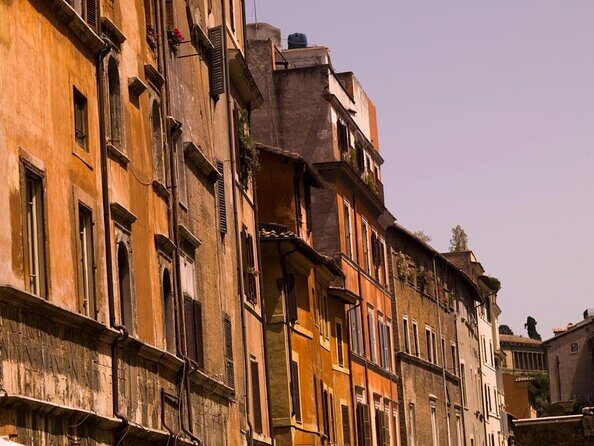
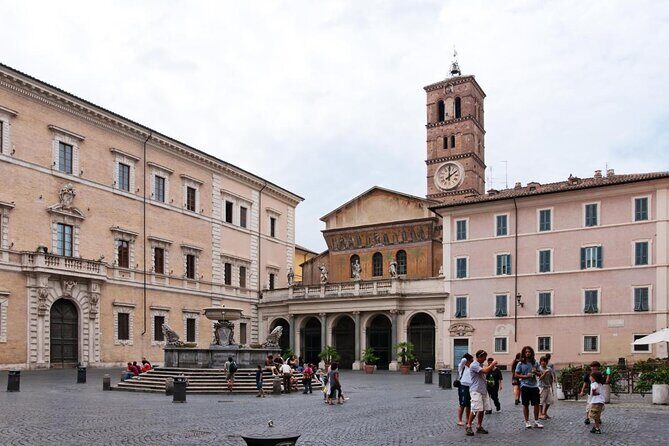
Your final stop is Basilica di Santa Maria in Trastevere. Even without getting too technical, it’s a strong landing point because Trastevere is one of the areas people go to when they want Rome to feel more like neighborhoods and less like attractions.
By the time you arrive, you’ve already had multiple tasting moments and guided commentary across earlier districts. That makes the end feel earned rather than abrupt. You’re not just finishing a tour—you’re stepping out of it with a clearer sense of where the local culinary identity shows up in real streets.
If you want to keep the momentum after the tour ends back at Campo de’ Fiori, plan for a simple next step—maybe a gelato, a casual stroll, or a late lunch depending on how hungry you are at that point. The tour includes coffee and/or tea, so you may not need a big caffeine stop immediately after.
You can also read our reviews of more tours and experiences in Rome



What you’ll eat and drink: tastings, wine, coffee/tea, and alcohol included
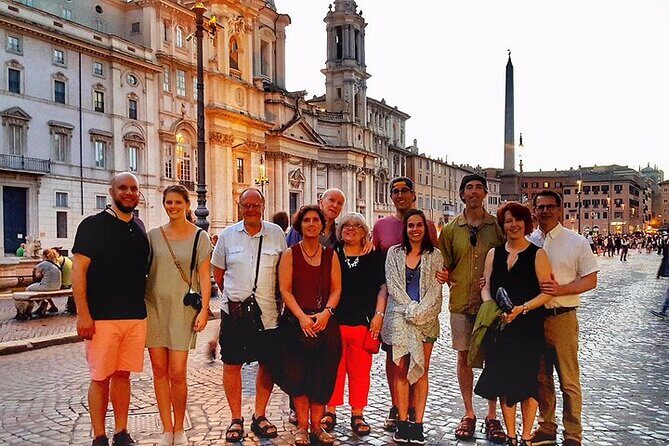
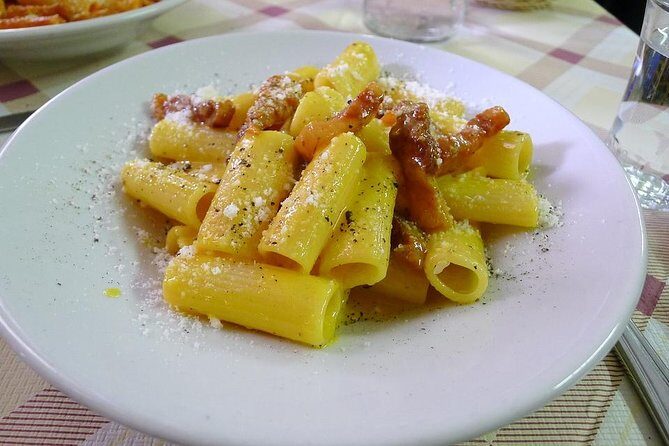
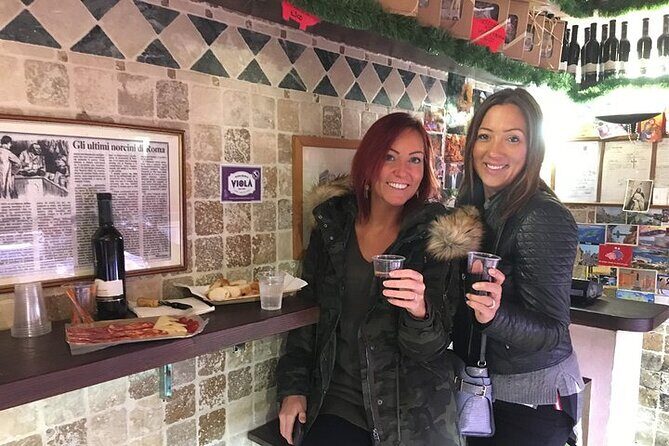
Let’s talk about the part most people care about: the food and drink. This tour includes food tasting and wine tasting, plus bottled water, coffee and/or tea, and alcoholic beverages. That’s a lot of “consumed value,” which is why the price can make sense for a short, concentrated experience.
What to expect is more like a sequence than one big meal. You’ll try multiple beloved culinary favorites throughout the walk, with the guide shaping the pacing so you’re not stuffed too early or starving too late. Since it’s about 4 hours, the tasting amount is designed for a full experience, not just a quick sampler.
One detail I appreciate: dietary requirements are something you can and should mention at booking, and this tour takes the topic seriously because allergies and intolerances must be communicated. In other words, don’t wing it. If you have restrictions, tell the provider early so they can plan tasting options.
And alcohol isn’t an afterthought. The minimum drinking age is 18, so if you’re under that age you’ll want to check what the tour experience will look like for you. If you’re of age, plan to move a little slower than you might otherwise—this is a drink-and-walk setup.
Guide style matters: why the art historian angle changes how you taste
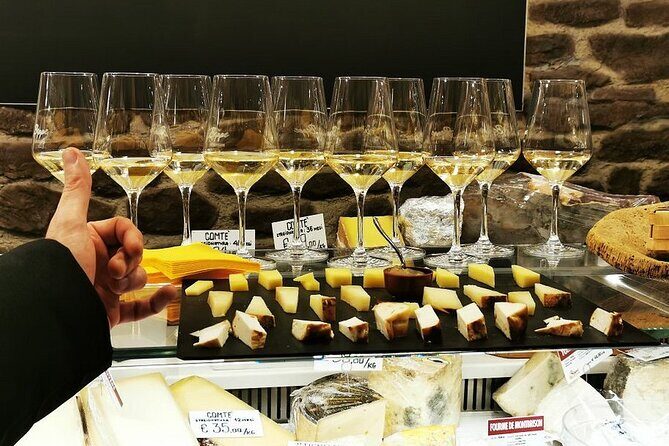
A lot of food tours give you facts. This one ties those facts to your senses. You’ll get detailed commentary from an art historian guide, so the stops aren’t only about what’s on your plate—they’re about the setting around it.
That’s why I think this works well for people who usually skip “walking tours.” When the storytelling is linked to tastings, you’re not trapped in a lecture. You’re learning in small bursts, while still doing the fun part—eating and drinking.
The guide experience also seems to hit the mark for real dietary needs. One standout example from past guests: Cecelia impressed people with the way the tour handled a vegetarian request. That’s exactly what you hope for when you book a tasting tour: flexibility without drama.
Price and value: what $549.24 per person covers, and when it’s a win
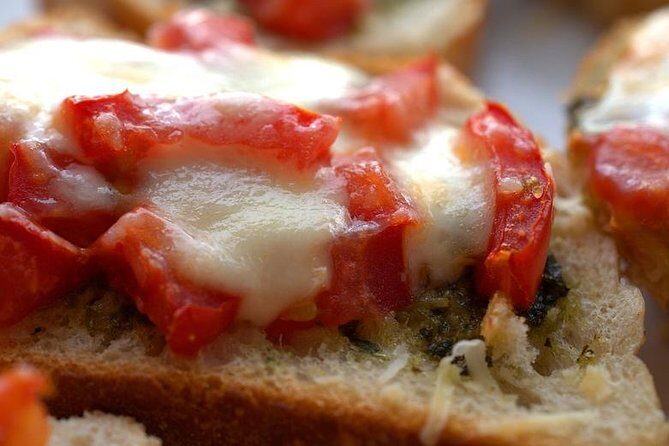
At $549.24 per person, this isn’t a budget snack crawl. But value isn’t only about cost per bite. It’s about what’s included, how long you get, and whether the guide time replaces you doing guesswork.
Here’s what you’re paying for:
- A professional art historian guide
- Multiple food and wine tastings over ~4 hours
- Bottled water, coffee and/or tea
- Alcoholic beverages included
- A private tour feel for your group (max 12)
Hotel pickup and drop-off are not included, so factor that in if you rely on transit or rideshare to move around Rome. The meeting point is straightforward at Campo de’ Fiori, and the tour is near public transportation, which helps.
This price tends to be a smart move when you:
- Want a structured tasting plan in a short time
- Appreciate context and walking routes more than stand-alone museums
- Are booking as a small group where the private setup actually benefits you
It may be less ideal if you mostly want casual, low-commitment eating without alcohol. In that case, you might prefer a simpler, lighter tour format.
Who should book this Rome food and wine adventure
This tour fits best if you like the combo of walking + stories + tastings. It’s also a good match for moderate physical fitness—meaning you’re fine with steady walking and standing for parts of the experience.
I’d also steer you here if you:
- Want English guidance
- Have dietary needs you’re able to share ahead of time
- Enjoy neighborhood-to-neighborhood exploring rather than one big attraction
On the flip side, think twice if you dislike wine or alcohol-heavy touring. Since wine and alcohol are included, your enjoyment will depend on your comfort with that pace.
Should you book Ghetto & Trastevere Culinary Adventure?
If you want a structured, high-connection food and wine experience in Rome, this is a strong bet. The mix of food tasting, wine tasting, and art historian commentary makes it more than a grab-and-go meal trail. Plus, the private setup capped at 12 people helps keep things personal.
Book it if you’re excited to walk through the Antico Quartiere Ebraico, Ottavia area, and into Trastevere with guidance that gives meaning to what you see and taste. Skip it if you’re looking for a low-walking, low-alcohol experience or you prefer to build your own food plan without a guide.
FAQ
How long is the tour?
It runs for about 4 hours.
Where does the tour start and end?
It starts at Campo de’ Fiori, 00186 Roma RM, Italy, and ends back at the meeting point.
What languages is the tour offered in?
It’s offered in English.
What’s included in the price?
You get food tasting, wine tasting, bottled water, coffee and/or tea, alcoholic beverages, and a professional art historian guide.
Is hotel pickup included?
No, hotel pickup and drop-off are not included.
Do I need to mention dietary needs or allergies?
Yes. Since it’s a food tour, you must communicate all allergies or intolerances and any dietary requirements at the time of booking.
What are the age rules for drinking alcohol?
The minimum drinking age is 18.