REVIEW · GUIDED
Fascist Rome Guided Tour: The Rise and Fall of Mussolini
Book on Viator →Operated by Raphael Tours & Events · Bookable on Viator
Fascist Rome hits different. This is a focused history and architecture walk that shows how Mussolini tried to rewrite the city’s image—using buildings, urban planning, and big symbolic showpieces from the 1920s through World War II.
I really like the way the tour turns stone and street corners into stories. You start at Piazza Venezia, then connect the dots from Mussolini’s plans for a Third Rome to what you can still recognize today in modern districts. Another plus: the route is designed so you spend your time on meaning, not generic photo stops.
One thing to consider: the subject matter is dark and politically charged, so if you prefer light, upbeat sightseeing, this may feel heavy. Also, you’ll need a taxi between sites, so plan a little extra time and budget for that.
In This Review
- Key Takeaways Before You Go
- Piazza Venezia: Mussolini’s Power Base in Plain Sight
- Connecting the Dots: From Fascist Urban Planning to the City You See Today
- The EUR District and the Regime’s “Future City” Thinking
- Obelisco del Foro Italico: Mussolini’s Name in a Sports Setting
- What a 3-Hour Private Tour Actually Feels Like
- Price and Value: Is $318.21 Worth It?
- Who This Tour Suits Best (and Who Might Prefer Something Else)
- Before You Book: My Decision Checklist
- FAQ
- FAQ
- What is the duration of the Fascist Rome guided tour?
- Where is the meeting point and when does the tour start?
- Is the tour in English?
- Does the tour include admission tickets for the stops?
- What’s included in the price?
- Do I need transportation between locations?
- What is the cancellation policy?
Key Takeaways Before You Go
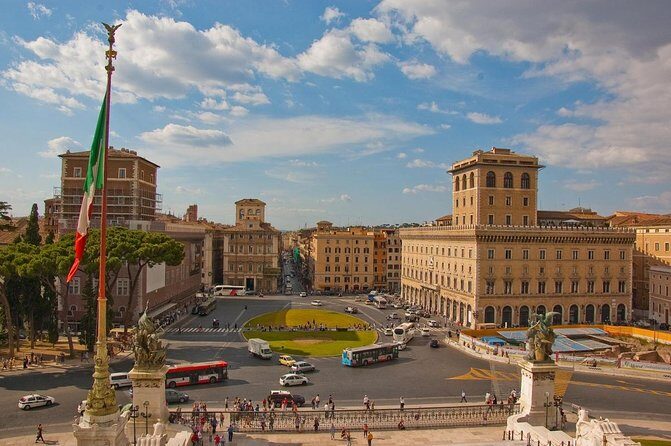
- Piazza Venezia as the political launchpad: start where Mussolini’s headquarters set the tone for the regime.
- Modern Rome, not ancient Rome: you’ll see how Fascism shaped infrastructure and monuments in the 20th century.
- The Obelisco del Foro Italico: Mussolini’s name tied to a sports setting and state symbolism.
- Professional guidance with clear explanations: reports highlight guides like Francesco and Bruno for making the ideas land.
- A calmer, more off-main-route feel: the pacing aims to avoid the big tourist crush.
- 3 hours that move with purpose: enough time for context, not so long that it drags.
Piazza Venezia: Mussolini’s Power Base in Plain Sight
Rome already has a talent for stacking eras on top of each other. What makes this tour special is that it uses that same layering to explain Fascism—not as a vague political chapter, but as something built into the cityscape.
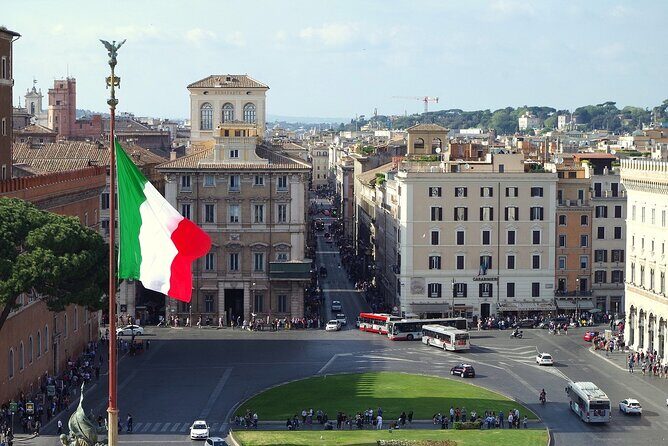
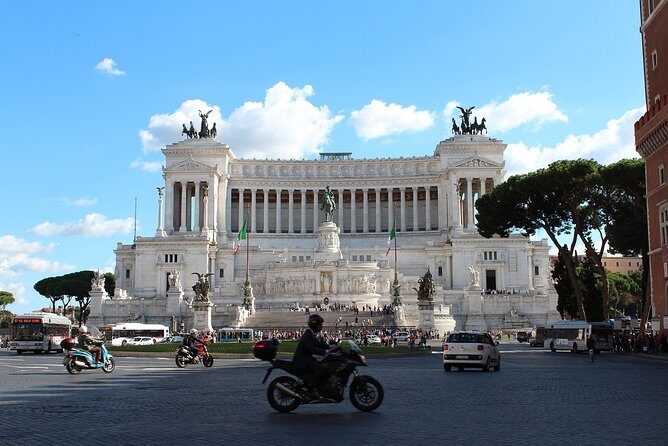
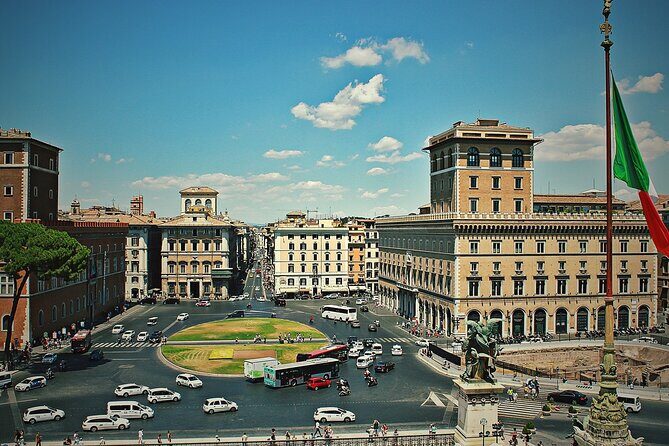
You begin at Piazza Venezia, a spot that still acts like a focal point for the story. Here, Mussolini set up his headquarters, and the regime’s ambition was clear: renovate Rome’s capital with new infrastructure and monuments meant to project power. The goal wasn’t subtle. They wanted a new Third Rome that could compete with the Rome of Caesar and the Rome of the Popes.
What I like about starting here is how quickly you get oriented. You look around and suddenly the geometry of the place feels purposeful. This is the kind of history that clicks when you can see the planning in front of you, not just read it later.
A practical note: this is a walking-and-looking experience, so wear shoes that handle uneven surfaces and quick stops for explanations.
You can also read our reviews of more guided tours in Rome



Connecting the Dots: From Fascist Urban Planning to the City You See Today
A lot of history tours stop at the dramatic moments. This one keeps moving, because Fascism wasn’t only about speeches and uniforms. It was also about shaping daily life through what the state funded, designed, and celebrated.
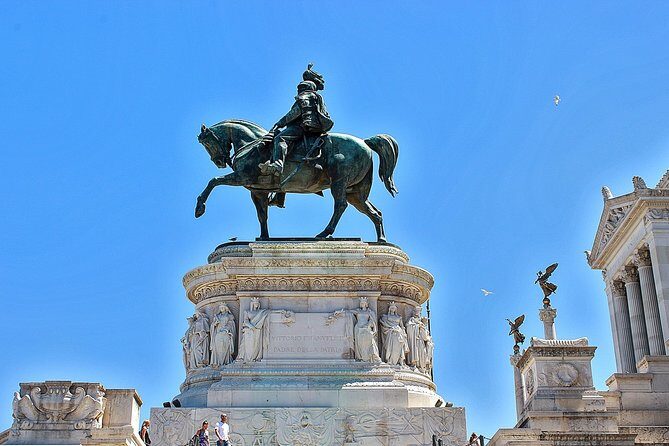
From the Piazza Venezia area, you’ll work through the themes that fed the regime: the idea that the 1920s were Mussolini’s moment, the push to build monuments that acted like propaganda, and the belief that architecture could legitimize authority. You’ll also see references to the EUR district, which is tied to Italy’s modern planning ambitions from that era.
This is where the tour feels most valuable for first-time visitors to modern Rome. Ancient Rome is everywhere in the obvious ways. The Fascist-era imprint is more spread out. With a guide, you learn what to notice: lines, layouts, and how certain buildings are positioned to create a message at a distance.
There’s also a useful nuance here. This isn’t presented as just a parade of ugly dictatorships. You learn how followers thought, what the regime promised, and why those promises took hold in the first place. If you’re the type who likes cause-and-effect, you’ll appreciate that the tour connects ideology to the built environment.
The EUR District and the Regime’s “Future City” Thinking
The EUR district can be visually striking, even if you haven’t come here for history. That’s exactly why it works on this tour. Mussolini and the Fascists treated cities like stages. They believed they could manufacture legitimacy by building a future with their name on it.
On this stop stretch, you’ll focus on what the Fascists tried to do with infrastructure and monument-making. It’s less about one single landmark and more about how multiple features reinforce the same message: the regime is modern, determined, and here to last.
If you’re an architecture person, this is where you’ll likely get your best payoff. One of the standout reviews mentioned rationalist architecture. That makes sense here. Even when you disagree with the ideology, you can’t deny the designers knew how to shape space and scale for maximum impact.
Drawback check: because this is about ideology and context, you’ll get the most out of it if you’re willing to listen for patterns. If you only want monuments without the why, some of the explanations may feel long.
Obelisco del Foro Italico: Mussolini’s Name in a Sports Setting
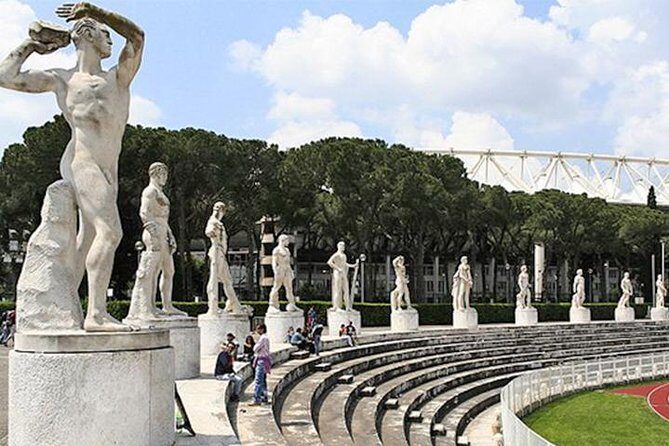
The tour’s second major anchor is the Obelisco del Foro Italico. It’s a sharp reminder that Fascist symbolism wasn’t confined to government buildings. It was woven into public life, including athletics and places meant for gatherings and national pride.
This obelisk is tied directly to Mussolini, and the whole point of the stop is to answer the questions the statue can’t answer by itself: who he was, who followed him, what he did for Italy, and why his legacy still triggers arguments today.
I like that the guide structure keeps the discussion anchored to physical things. You’re not just learning dates and laws. You’re seeing how a regime branded itself into everyday space. Even if you’ve studied Fascism before, the connection between politics and a sports zone feels oddly effective—because it’s unexpected.
And yes, this stop can also make you think about the afterlife of propaganda. The city keeps standing. Meaning shifts over time. Watching that shift happen in real space is one reason I’d rather do this with a guide than on my own.
What a 3-Hour Private Tour Actually Feels Like
This experience runs about 3 hours, and it’s set up as a private tour/activity, meaning your group only. That matters more than you’d think in Rome. When you have a small group, you can ask questions without feeling like you’re slowing down a train of strangers.
The pacing is also built for clarity. You start with the political headquarters area, then move into modern Fascist-era urban planning connections, and finish with a symbolic monument tied to Mussolini. It’s a simple arc: power builds, power decorates public life, power falls, and the city keeps its reminders.
Logistics-wise, you meet at Viale del Foro Italico, 00135 Roma RM, with a 9:00 am start, and the tour ends back at the meeting point. There’s a mobile ticket, which is convenient in a city where finding the right entrance can feel like an extra task.
One more key point: the tour notes that a taxi is required to move between sites and the cost is not included. I’d treat that as part of the real budget. The schedule is tight enough that you don’t want to gamble on walking long distances between these modern Rome points.



Price and Value: Is $318.21 Worth It?
At $318.21 per person, you’re paying for a guided, private, historically specific experience—about three hours with a professional guide. It’s not a cheap add-on, and it shouldn’t be.
Here’s the value math that actually matters:
- You’re paying for context, not just sightseeing. Fascist architecture only becomes meaningful when someone can translate the signals.
- You’re paying for the group format. Private means less time herding people and more time asking questions.
- Ticket costs are low for the stops. The admission for the listed segments is free, so you’re mainly funding the guide and the structured route.
Could you do it cheaper on your own? Sure. You could also read a book without a coach. The real question is whether you want to piece together modern political symbolism by yourself. If you do, great. If you don’t, this price starts to make sense quickly.
The best evidence of value in the reviews centers on clear explanations and strong guide performance. People highlighted how the tour uses architecture to explain the rise and fall arc. That’s exactly what you want for a subject like this, because it’s easy to get lost in theory without concrete anchors.
Who This Tour Suits Best (and Who Might Prefer Something Else)
This is a strong match for:
- History buffs who want Fascism explained through places, not just textbooks.
- Architecture-minded travelers who enjoy rationalist-era planning and want to see how politics shapes design.
- Anyone who wants Rome beyond the ancient headline stuff, focusing on the 20th century.
It may be less ideal if:
- You want purely scenic sightseeing with minimal emotional weight.
- You dislike tours with heavy talking and thematic interpretation.
- You don’t want to factor in taxi time between stops.
One small plus: multiple reports mentioned the tour avoids the biggest crowds and can feel like you have modern Rome to yourself. Even if you normally enjoy busy cities, a calmer route is a real quality-of-life upgrade.
Before You Book: My Decision Checklist
If you care about how regimes build legitimacy, this tour makes a lot of sense. You’ll leave with a clearer picture of Mussolini’s goals—especially the idea of a Third Rome—and you’ll understand why certain structures still stir debate.
I’d book it if you’re the type who likes your travel with a point. This isn’t a scattered “see everything” plan. It’s a guided story built on specific places. That focus is the main reason it works.
FAQ
FAQ
What is the duration of the Fascist Rome guided tour?
It lasts about 3 hours.
Where is the meeting point and when does the tour start?
The meeting point is Viale del Foro Italico, 00135 Roma RM, Italy, and the start time is 9:00 am.
Is the tour in English?
Yes, it is offered in English.
Does the tour include admission tickets for the stops?
Admission for the stops listed is free.
What’s included in the price?
The price includes a professional guide and a private tour.
Do I need transportation between locations?
Yes. A taxi is required between sites, and the cost of the taxi is not included.
What is the cancellation policy?
Free cancellation is available, and you can cancel up to 24 hours in advance for a full refund.
Should You Book This Mussolini-Era Tour?
Book it if you want modern Rome history connected to architecture and symbolism, not just general storytelling. You’ll get a tight, 3-hour route anchored at Piazza Venezia and the Obelisco del Foro Italico, plus the context that helps these places make sense. Just go in ready for a serious topic—and plan for the taxi hops so the day stays smooth.