REVIEW · PRIVATE
Explore the Best Highlights of Rome by Golf Car – Private Tour
Book on Viator →Operated by Rome First Choice Tours · Bookable on Viator
If Rome feels like too much to fit in, this tour helps you breathe. You glide through central sights on an electric golf cart, with a guide telling stories as you roll past major landmarks, so you get the big-picture “where am I?” feeling fast. I especially like the hotel pickup plus private setup, so you’re not squeezed into other people’s timing. One thing to plan around: tickets for the Colosseum and the Pantheon are not included, and Pantheon entry needs an online ticket.
I also like how this route balances famous stops with fast, low-effort sightseeing. Guides such as Aseem, Ahmed, and Antonio come up again and again in the feedback for keeping the tour friendly for kids and easy on jet-lag, even when weather turns messy. If you’re traveling as a group, note that seating can vary on the cart, and there’s at least one report of a backwards-facing seat for someone in the back row.
In This Review
- Key highlights at a glance
- Why an electric golf car is a smart way to do Rome
- Pickup, drop-off, and what the route really feels like
- Stop 1: Colosseum viewing with the right ticket plan
- Stop 2: Palatine Hill and the origin story behind Augustus
- Stop 3: Piazza Venezia, the Victor Emmanuel monument, and Mussolini’s balcony
- Stop 4: Trevi Fountain—coin time, quick and efficient
- Stop 5: Circus Maximus—where Ben-Hur energy comes from
- Stop 6: The Pantheon exterior (and why entry is the separate task)
- Stop 7: Spanish Steps, plus the shopping and embassy context
- What you get from the guide (and why names matter)
- Price and value: is $120.15 per person worth it?
- Who should book this Rome golf car highlights tour?
- A few practical considerations before you go
- Should you book this tour?
- FAQ
- How long is the Best Highlights of Rome by Golf Car private tour?
- Does this tour include hotel pickup?
- Is it a private tour or do I share it with others?
- Which attractions have admission tickets included?
- Do I need an online ticket for the Pantheon?
- What is the cancellation policy?
Key highlights at a glance
- Private golf car touring so you’re not sharing the ride or the schedule
- Hotel pickup in central Rome (and a set pickup point at Piazzale delle Canestre)
- A tight 2.5-hour route that hits the Colosseum area, Trevi Fountain, the Pantheon zone, and more
- Ticket planning made clear: Colosseum and Pantheon cost extra; many other stops are free
- Family-friendly pace with guides who adjust to kids and questions on the fly
- Less stress than walking when heat, crowds, or rain slow you down
Why an electric golf car is a smart way to do Rome
Rome can wear you out. Between heat, hills, and crowds that move like slow traffic, even a short visit can turn into “stand in line, then stand some more.” A golf car doesn’t just save steps. It helps you see the city with less fatigue, so you actually take in what you’re seeing.
I like that the tour is designed for time-tight days. You’re not trying to “win” Rome by doing everything. Instead, you get a guided sweep of the big hits in about 2 hours 30 minutes, with just enough stop time at each place to orient yourself for later self-guided wandering.
The private format also changes the feel. You’re not waiting for other groups, and you’re not stuck with a one-size-fits-all pace. If someone needs a bathroom break or wants a photo moment, your guide can usually adjust.
You can also read our reviews of more private tours in Rome



Pickup, drop-off, and what the route really feels like

The tour’s rhythm is built around short ride segments and timed stops. Pickup is offered either at your hotel if it’s in central Rome, or at Piazzale delle Canestre. The tour ends with drop-off at Piazza Barberini, though the experience details also note drop-off near the Spanish Steps area—either way, you finish in the walkable core where it’s easy to grab lunch or continue sightseeing.
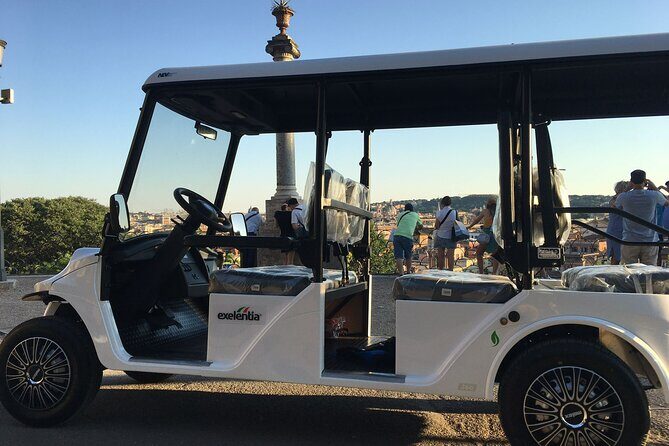
Also, the cart is electric. That matters in Rome because you’re often dealing with traffic zones and limited access. One review explicitly noted that the carts can go in areas cars can’t, which is part of how you avoid the most frustrating friction points.
About duration: plan to treat this as a “first day orientation” or a “highlights sampler.” It’s not a full museum day, and it’s not meant to replace deeper visits. It’s meant to get you oriented quickly, then let you choose what deserves your next hour on foot.
Stop 1: Colosseum viewing with the right ticket plan
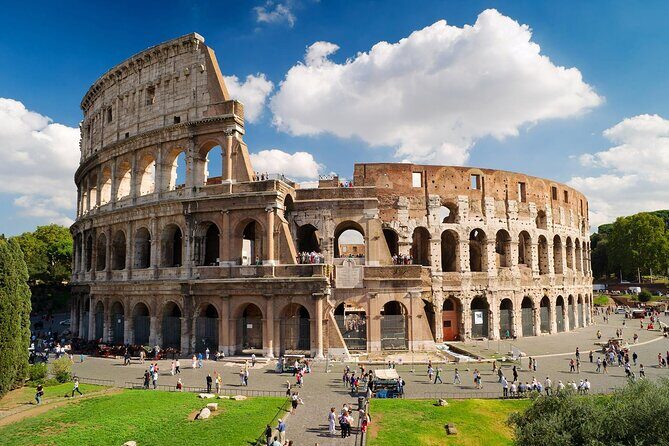
The tour starts at the Colosseum, the kind of landmark you recognize instantly even if you’ve never been to Rome. From here, your guide connects the dots between the Roman Empire’s power and the layers of later history that grew around it.
You get about 15 minutes at this stop. That’s enough time to look closely at the exterior, understand the site’s importance, and get your bearings for any later ticketed visit. The key downside: admission is not included, so you’ll want to have your Colosseum ticket strategy ready.
If you know you want to go inside, consider booking that separately. This tour is ideal for the “see it first, decide later” approach. It’s also handy if you’re traveling with kids, because you still get the wow factor without turning the whole day into a line-and-wait project.
Stop 2: Palatine Hill and the origin story behind Augustus
Next up is Palatine Hill, tied to Rome’s early legends about Romulus and Remus. It’s also tied to the later political reality: when Augustus chose a spot for an imperial palace, he picked this hill.
You’ll spend around 10 minutes here. That short time works because Palatine Hill is less about timed entry and more about context. Your guide’s job is to connect what you’re seeing—elevated views, the sense of place, the history in the ground—with what it meant to the people who lived here.
Palatine Hill entry is listed as free for this stop. Still, use the stop time wisely: this is the place where questions are often worth asking, because it helps your brain map Rome’s geography onto its myths and emperors.
Stop 3: Piazza Venezia, the Victor Emmanuel monument, and Mussolini’s balcony
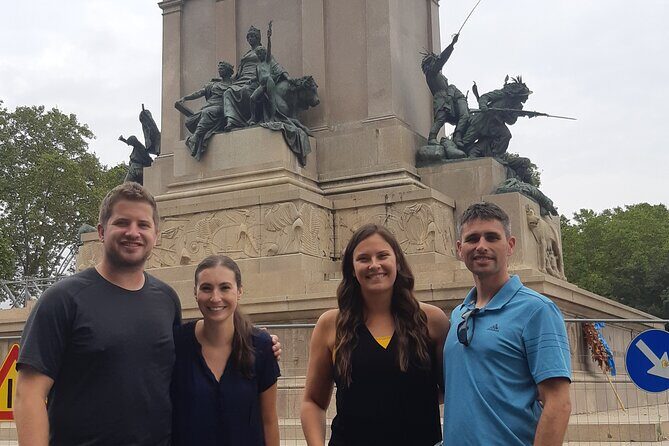
The tour then passes through the area around Piazza Venezia / the Ancient City. You’ll ride along the Vittoriano, the big monument dedicated to Victor Emmanuel. The itinerary also notes two features to reminisce about: the wedding cake reference and Mussolini’s balcony.
This is one of those stops where the value is in the explanation. Even if you’ve seen photos, your understanding jumps when you learn what the monument represents and how it fits into Italy’s 19th and 20th-century story.
Time here is listed as 15 minutes, with admission free. Expect driving segments that help you connect sights without having to walk between every angle. If you like architecture and political history, this is one of the more “brain-on” moments of the ride.






Stop 4: Trevi Fountain—coin time, quick and efficient
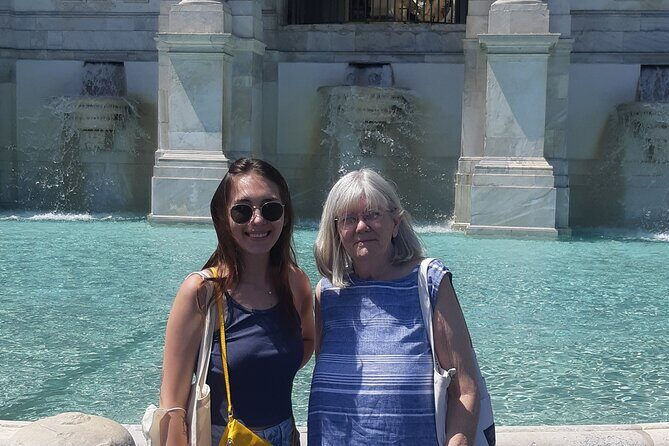
Trevi Fountain is next, and yes, you’ll be in the right place for the classic coin moment. The tour time is about 20 minutes, and the stop is free (no admission listed for this one).
This is also where I’d plan a practical side quest. One review offered a tip to get gelato across from Trevi Fountain. I’m not saying you must do that, but if dessert is your Rome morale system, this is a good window. Because after Trevi, you’ll have less “dead time” and more sight-to-sight momentum.
Trevi is a magnet for crowds. The golf car doesn’t remove the fact that the area is busy, but it helps you arrive with a plan and spend your minutes with intent instead of getting pulled around by the flow.
Stop 5: Circus Maximus—where Ben-Hur energy comes from
Then comes Circus Maximus, the huge Roman circus that could seat more than 200,000 spectators. It’s famous for chariot and horse races, and the tour highlights that it’s connected to the movie Ben-Hur.
You get around 20 minutes, and admission is listed as free. This stop is great if you like the entertainment side of ancient Rome. Your guide’s storytelling can make the flat, open expanse feel like it once held roaring crowds and fast spectacle.
One advantage of the cart format here: you can take in the space without committing to a long uphill walk. If you’re with children, this kind of “make it visual” stop often lands better than a purely architectural one.
Stop 6: The Pantheon exterior (and why entry is the separate task)
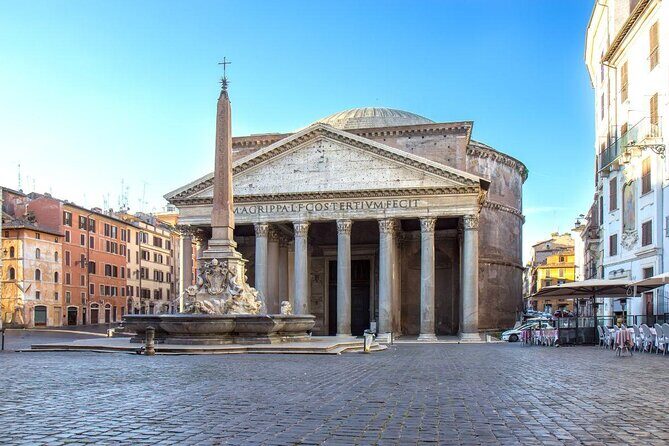
The tour heads to the Pantheon, often described as one of Rome’s most valuable assets. It’s one of the oldest Roman temples still standing, with a long timeline of use and meaning.
Your stop time is 20 minutes, and admission is listed as not included. The itinerary is very clear about the tradeoff: if you want to go inside, you must book your ticket online.
This is a key moment for your planning. If you skip the inside visit, you still get the main sight and a guided framing for what you’re looking at. If you do want to enter, do it with your schedule in mind, and don’t assume you can just decide on the spot.
In other words: use this stop as either your Pantheon intro—or as a launch point for a separate timed entry.
Stop 7: Spanish Steps, plus the shopping and embassy context
The last major stop is the Spanish Steps. The itinerary notes that the area’s name comes from the Spanish embassy to the Vatican, and it’s also described as a top shopping zone with stores for Italian fashion designers.
You’ll have about 20 minutes here, and admission is listed as free. This is a smart finish because it drops you into a lively, practical area where it’s easy to keep exploring on your own—especially if you want to eat, shop, or walk to nearby viewpoints.
Also, it’s a good place to reset your legs. After the cart ride, the steps themselves give you a simple “check the box” stop without requiring a full-day hike.
What you get from the guide (and why names matter)
This kind of tour lives or dies on the guide. The strongest praise across the feedback points to guides who are friendly, responsive, and good at matching the facts to the moment.
You’ll see names like Ahmed, Aseem, Alex, Massimo, Antonio, Eddy, and Marco pop up repeatedly in the comments. People especially liked that guides could keep kids interested, and that they explained Rome in a way that felt like a conversation rather than a lecture.
Even in tough weather, the experience is still described as smooth. One review credited a guide for keeping things moving in cold, rainy conditions. Another praised the tour as a great way to deal with extreme heat, with one person mentioning a 90+ degree day. So if you’re worried about weather derailing your plan, this format often helps.
Price and value: is $120.15 per person worth it?
At $120.15 per person, this isn’t the cheapest way to see Rome. But it can be good value when you look at what you’re buying.
You’re paying for:
- a private tour (no sharing with other groups),
- local guide time,
- an electric golf cart that reduces walking fatigue,
- and hotel pickup if you’re in central Rome.
For many people, that combination matters more than squeezing in one extra site. The real savings shows up in how quickly you get oriented, how easily you handle jet lag, and how much you avoid the “we’re too tired to keep going” problem after a long flight.
It can also be a strong first-day choice. If you’re planning deeper museum visits later, you’ll get a mental map from these stops. Then, when you return on your own, the city feels less like random streets and more like a story with chapters.
Who should book this Rome golf car highlights tour?
This tour fits best if you:
- have limited time and want the main sights in one go,
- want something easier than walking for a family group,
- are traveling with kids and want explanations that keep them engaged,
- arrive with jet lag and need a low-stress orientation day,
- or you’re simply tired of Rome’s traffic and crowded foot routes.
It’s also a good match if you like the “I understand what I’m looking at” feeling. The guided stories turn landmarks into context, so later stops on foot feel more meaningful.
A few practical considerations before you go
Planning beats surprises here.
- Tickets: Colosseum and Pantheon are not included. Pantheon needs an online booking if you want inside access.
- Weather: the experience requires good weather. If it’s canceled due to poor conditions, you’ll be offered a different date or a full refund.
- Seating: it’s a golf cart, so seating can vary. One review mentioned a backwards-facing seat for a rider in the back row. If seating matters to you, ask in advance.
- Language: the tour is offered in English.
If you bring the right expectations—this is a highlights sampler, not a full deep-dive day—you’ll get the payoff quickly.
Should you book this tour?
Yes, if you’re trying to make Rome fit into real life. This is one of the best ways to get the “lay of the land” fast, without turning your day into a footrace. I’d book it especially for first-time visitors, families, and people who want a guided overview before committing to longer ticketed visits.
If you love spending hours inside major monuments and don’t mind walking a lot, you might not need this. In that case, you could save money by focusing on the specific ticketed sites you care about most.
But for most people—especially those with tight schedules—this golf car tour is a smart, efficient starting point that leaves you energized for the rest of your trip.
FAQ
How long is the Best Highlights of Rome by Golf Car private tour?
It’s about 2 hours 30 minutes.
Does this tour include hotel pickup?
Yes. If your hotel is in central Rome, hotel pickup is included. Otherwise, pickup is available at Piazzale delle Canestre.
Is it a private tour or do I share it with others?
It’s private. Only your group participates, with no sharing with other travelers.
Which attractions have admission tickets included?
Colosseum and Pantheon admission tickets are not included. Palatine Hill, Piazza Venezia / Ancient City, Trevi Fountain, Circus Maximus, and Spanish Steps are listed as free for this tour.
Do I need an online ticket for the Pantheon?
Yes. If you want to get inside the Pantheon, you’ll need to book your ticket online.
What is the cancellation policy?
You can cancel for a full refund up to 24 hours in advance of the experience start time. If you cancel less than 24 hours before, the amount paid is not refunded.