Rome moves fast on this route.
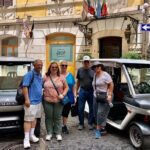
This private golf cart tour is built for people who want the big-name landmarks without spending your day stuck in long walks and figuring out where to go next. You’ll ride between sites, then hop off at designated stops to take a quick look on foot. Plus, you can pick from multiple start times so it fits your itinerary.
I especially like the pro guide component—so the stops come with context, not just a view. In the feedback I saw, guides like Dino were described as friendly, flexible, and good at answering questions, including ways to work around time constraints at the end of the tour. One trade-off to consider: this tour is outside-only, so entrance into monuments isn’t included and you won’t go in.
In This Review
- Key Highlights at a Glance
- How This Private Golf Cart Tour Works (And Why It’s Worth It)
- Value and Price: What You’re Actually Paying For
- Meeting Point to Ending at Trevi Fountain: Your Endgame Plan
- The Colosseum Exterior: Reading Rome’s Most Famous Structure
- Arch of Constantine: A Victory Monument Built for Layers
- Circus Maximus: Where Chariots Owned the Day
- Bocca della Verità and Temple of Hercules Victor: Odd, Local, and Close
- Teatro di Marcello and Piazza Venezia: Roman Theater to Cardinal-Era Rome
- Largo di Torre Argentina: Ruins, Archaeology, and Cats
- Piazza Navona: Fountains and Baroque Energy (Without Waiting All Day)
- Pantheon Exterior: The Dome That People Still Copy
- Spanish Steps: A Central Meeting Spot for Rome Time-Checks
- Trevi Fountain Finale: The Coin-Toss Ritual in Plain View
- What to Ask Your Guide Before You Start
- Who This Tour Suits Best (And Who Should Skip It)
- Should You Book It?
- FAQ
- How long is the Exclusive Private Golf Cart Tour of Rome?
- How much does the tour cost?
- Is the tour offered in English?
- Is this a private tour?
- What landmarks will I see?
- Do I go inside the monuments during the tour?
- Are food and drinks included?
- Are tips included?
- Where do I meet the guide, and where does it end?
- What happens if a site is closed last-minute?
Key Highlights at a Glance
- Outside-only stops keep the day moving, with short walks where you want photos and orientation
- Private guide + expert driver means less stress and a smoother route through traffic
- Multiple start times help you match Rome to your energy level and daylight
- Landmark coverage in 2–3 hours is ideal for a quick first visit or a port-of-call style schedule
- Time-friendly guidance: you can ask where you want extra focus before rolling out
- Stops with real character: from Bocca della Verità and the Forum Boarium area to Piazza Navona and the Pantheon exterior
How This Private Golf Cart Tour Works (And Why It’s Worth It)
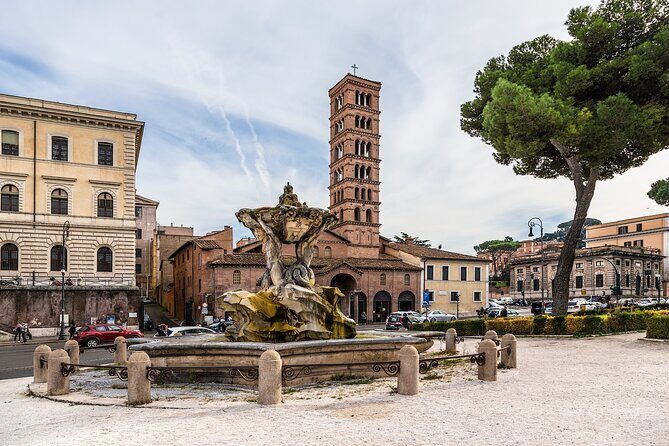
The whole point here is efficiency with comfort. You’re in a private group (up to 7 people), so the tour isn’t paced for strangers or packed like a bus. The driver handles the vehicle and the road flow, while your guide shapes the experience so you understand what you’re seeing as you pass it.
Expect the tour to run about 2 to 3 hours. You’ll spend time at a handful of stops long enough to get your bearings, then you’ll move on. Some stops are listed at around 10 minutes each (think Bocca della Verità, Piazza Navona, the Pantheon area, the Spanish Steps, and Trevi Fountain), which is enough for photos and a short wander—without turning your day into a workout.
Because it’s outside-only, it also tends to be a lower-friction option. If your goal is to see the icons and learn the basics quickly, this fits. If your goal is to go inside major monuments, you’ll likely want to plan separate entries for those.
You can also read our reviews of more private tours in Rome

Value and Price: What You’re Actually Paying For
The price is $826.87 per group (up to 7), offered in English. That sounds steep until you do the math.
- If you fill the full group size (7 people), you’re looking at about $118 per person.
- If it’s a smaller group of 2–3, it becomes more like $275–$413 per person, so the value depends on how much you’ll otherwise pay for tickets, taxis, and time.
What makes it feel worthwhile is not just the cart. It’s the combination of private guiding + fast landmark coverage + reduced walking. In Rome, time is money. So if you only have a few hours and you want the biggest highlights aligned in a sensible route, this can be cost-effective compared to piecemeal transport plus indecisive wandering.
Meeting Point to Ending at Trevi Fountain: Your Endgame Plan
You start at Via del Cardello, 31, 00184 Rome and finish at Trevi Fountain (Piazza di Trevi, 00187 Rome). That matters because it shapes what you do next.
Ending near Trevi is smart for a visitor who wants an easy “final stop” that’s close to lots of central sights. It also means you can plan dinner nearby without having to cross the whole city afterward.
From the tour info, it’s also near public transportation, which helps if your timing changes or you want a backup plan for leaving at the end.
The Colosseum Exterior: Reading Rome’s Most Famous Structure
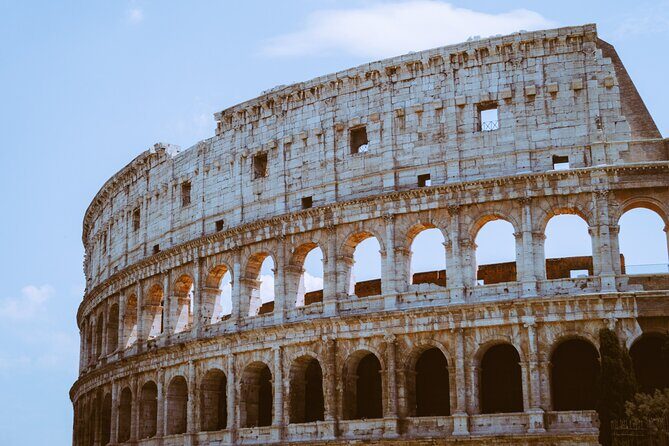
One of your early anchors is the Colosseum (Flavian Amphitheatre). Even from the outside, you can appreciate what makes it iconic: it’s elliptical, built by the Flavian emperors, and made from stone, concrete, and tuff. It reaches four stories high, and historically it hosted large public spectacles like gladiatorial contests and performances.
Why this stop works in a short tour:
- From the street you can still see the scale, which is hard to grasp if you only see photos.
- Your guide can help you connect the structure to what Rome was doing socially—mass events and public spectacle were central to the empire’s “showing power.”
Practical consideration: because it’s outside-only, you won’t get the full interior experience. So if you want arena-level views or museum-type time, treat this as your orientation stop and plan another visit later.
Arch of Constantine: A Victory Monument Built for Layers
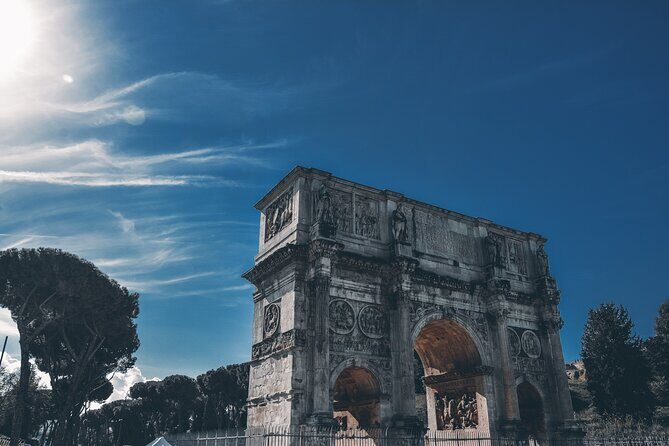
Next comes the Arch of Constantine, built in 315 AD. The basics are the point: it honors Constantine’s victory over Maxentius in the Battle of the Milvian Bridge, and it’s constructed from travertine limestone and marble. It also borrows from earlier Roman arch styles, including references to the Arch of Titus and the Arch of Septimius Severus.
This is a great stop for people who like “Rome reading.” In a few minutes you can grasp that Roman monuments weren’t made in a vacuum. They reused ideas, shapes, and materials to build legitimacy.
Because you’re not entering, you won’t get close-up museum-style interpretation, but you can still spot the overall design and understand why this particular arch sits in the story of imperial rivalry.






Circus Maximus: Where Chariots Owned the Day
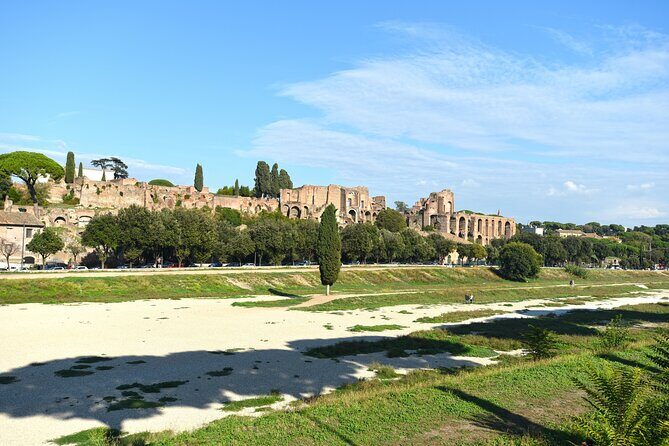
You’ll also pass by the Circus Maximus, a huge ancient stadium first constructed in the 6th century BC. It was mainly for chariot races, and at its peak it could hold up to 250,000 spectators. It stayed in use for over a thousand years for races, games, and even some theatrical performances.
What I like about including Circus Maximus on a short schedule is that it broadens your idea of Roman entertainment. If all you see is the Colosseum, you might assume Rome’s big shows were all about gladiators. Circus Maximus shows the other major engine of public excitement: speed, competition, and crowds.
Real-world tip: this stop tends to feel more “open-air” and less “one perfect photo spot” than the Colosseum. So don’t judge it in your head by social media standards—focus on the scale and what chariot racing meant.
Bocca della Verità and Temple of Hercules Victor: Odd, Local, and Close
One of the more playful parts of the route is Piazza della Bocca della Verità, home to Bocca della Verità. The stone disc with a face is famous for its mystery—its exact original purpose isn’t fully clear. Theories range from a ceremonial well cover or fountain decoration to a manhole cover, and it’s often dated to the 1st century CE under Domitian.
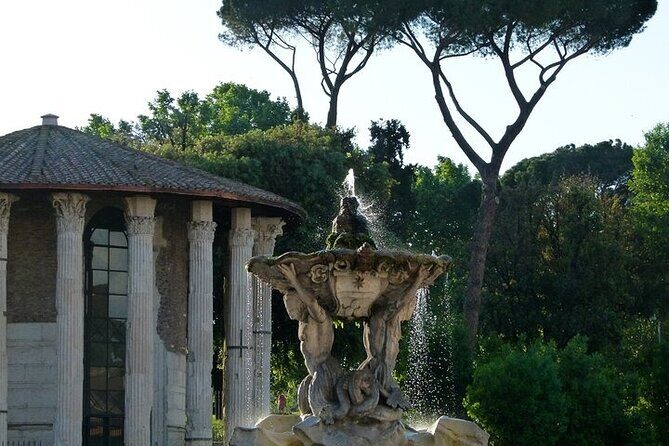
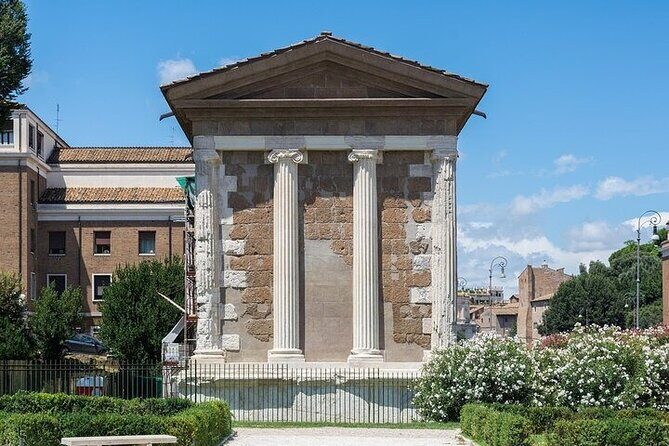
Then you’re near the Temple of Hercules Victor (also known as Hercules Olivarius), in the Forum Boarium area by the Tiber. This temple dates to the 2nd century BCE, and it has a circular tholosa design with surrounding columns.
Why this pairing works:
- Bocca della Verità gives you a story that feels like local folklore tied to Roman stone.
- Temple of Hercules Victor adds a more classic architectural contrast—columns, symmetry, and myth tied to daily Roman culture.
Timing note: the tour lists these as short stops (around 10 minutes each), and admission tickets are not included. So treat this as a look-and-learn moment, not a full deep-dive into interiors.
Teatro di Marcello and Piazza Venezia: Roman Theater to Cardinal-Era Rome
You’ll also see the Teatro di Marcello, built under Augustus in the 1st century BC. It’s a partially preserved ancient theater and was associated with performances dedicated to Apollo. In its original form it could hold thousands, and it was a key venue for theatrical productions.
Even outside, the theater is helpful because it shows a different kind of Roman “stage.” It’s not just combat or races—it’s drama, religion-linked performances, and public culture.
Later you’ll reach Piazza Venezia at the foot of the Capitoline Hill. Its name comes from the Palazzo Venezia, a 15th-century residence of Cardinal Pietro Barbo, who later became Pope Paul II. This stop connects ancient Rome to the power shifts that came later, without requiring a museum entry.
Largo di Torre Argentina: Ruins, Archaeology, and Cats
At Largo di Torre Argentina, you’re looking at an archaeological site with ruins of four Roman Republic temples and remnants of Pompey’s Theatre, where it’s believed Julius Caesar was assassinated.
The standout practical detail here is that the square is also known as a cat sanctuary. So if you like seeing Rome’s living oddities alongside the ruins, this is one of those stops that feels “human-scale” even while it’s historically heavy.
Because this is an outside look, you won’t be doing a full archaeological visit here. Still, it’s a powerful way to connect Roman Republican history to a place you can actually stand in.
Piazza Navona: Fountains and Baroque Energy (Without Waiting All Day)
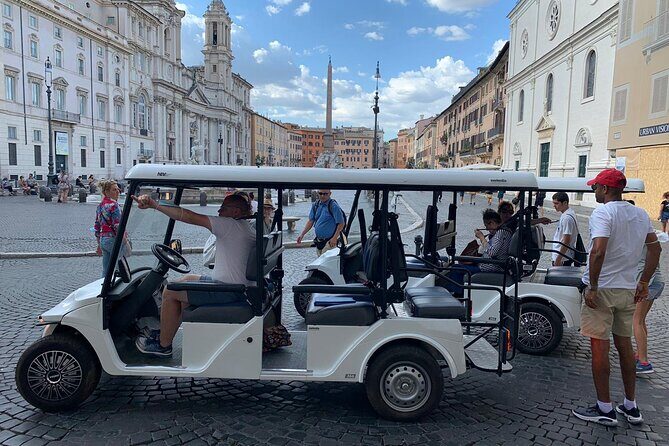
Piazza Navona is one of Rome’s most recognizable squares. It’s famous for three fountains, especially the Fontana dei Quattro Fiumi, crowned by an obelisk. The area also includes baroque architecture, including the Church of Sant’Agnese in Agone.
This stop is often where short tours feel most satisfying, because squares do the work for you. You can look, take a few photos from different angles, and still feel like you “touched” Rome’s art and city life quickly.
If you’re sensitive to crowds, keep expectations realistic. Central squares draw people. The tour’s value is that you get orientation plus key landmarks without turning it into a long day.
Pantheon Exterior: The Dome That People Still Copy
Next is the Pantheon, one of Rome’s most famous buildings and one of the best-preserved ancient structures. Originally built in 27 BC by Marcus Agrippa, it was rebuilt by Emperor Hadrian around 120 AD after a fire.
What you’ll notice outside (and what your guide can point out) is the architectural innovation: the massive dome, famous for being the world’s largest unreinforced concrete dome. The interior’s oculus is also a key part of the story, letting light pour into the space and creating a symbolic link to the heavens.
The important limitation: entrance and interior time aren’t included. Your stop is about seeing the building from the outside and learning what matters most about it.
If going inside is your priority, use this visit as your “why it matters” primer, then plan a separate ticket-based visit when you have more time.
Spanish Steps: A Central Meeting Spot for Rome Time-Checks
Then you’re at the Piazza di Spagna area, known for the Spanish Steps connecting the square to the church of Trinità dei Monti. The area is a gathering point for both locals and visitors, with fountains, boutiques, and cafes.
On a short itinerary, the Spanish Steps are a good choice because they act like a visual landmark. You get the iconic stairs, and you also get the sense of how Rome’s street life flows around major monuments.
Admission isn’t part of this stop, and the tour lists it as about 10 minutes, so this is for quick orientation and a scenic pause, not a slow sit-down experience.
Trevi Fountain Finale: The Coin-Toss Ritual in Plain View
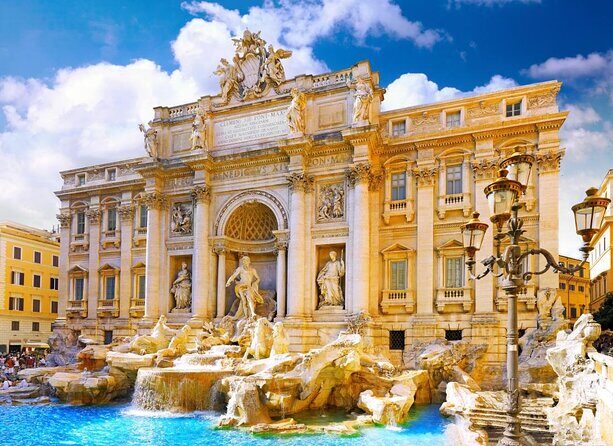
Your tour ends at Trevi Fountain. It’s grand, baroque, and loaded with sculptures. It was designed by Nicola Salvi and completed by Pietro Bracci. The centerpiece figure is Oceanus, representing the ocean and waterways, surrounded by allegorical figures representing Abundance and Health.
You’ll also see why Trevi is culturally sticky: it’s a place where people toss coins, and the ritual is tied to the idea that you’ll return to Rome.
Because this is an outside-only tour, you won’t do anything ticket-based here. But it’s a strong place to end, since it’s one of the city’s most obvious “I’m really in Rome” moments.
What to Ask Your Guide Before You Start
This tour isn’t just a drive-by. You can get more out of it by setting expectations at the beginning.
A good approach:
- Tell your guide if you have a top priority (for example, Colosseum vs. Pantheon vs. Trevi).
- Ask for a pace adjustment if you want more walking at a specific stop or fewer photo stops.
- If you’re short on time later, ask where it’s easiest to hop out and get to your next plan.
In the feedback I saw, guides like Dino were described as accommodating and aware of how time constraints can affect a trip—like dropping people near a metro station or even around a hotel area when it helped.
Who This Tour Suits Best (And Who Should Skip It)
This is for you if:
- You have limited time and want the top landmarks in a tight window
- You prefer comfort and less walking under Rome’s hot sun
- You like learning quick context from a private English guide
- You’re traveling with up to 7 people and can spread the group cost
You might want to skip it if:
- You specifically want interior access to monuments, because this tour is outside-only
- You’re planning a very relaxed, unstructured day where you don’t need route efficiency
One more note: the tour description says it’s not suitable for babies/children. At the same time, the feedback includes at least one mention of a guide being friendly with children. If you’re traveling as a family, treat that as a sign to ask directly about comfort and fit for your kids’ ages and attention span.
Should You Book It?
Book it if you want a fast, guided way to see the core Rome sights without turning your day into logistics. The private setup and short, high-impact stops are exactly what make it feel like good value, especially if you have enough people to bring the per-person cost down.
Skip it if you’re the type who plans your trip around museum time and monument interiors. This tour is built for orientation and landmark spotting, not ticketed entry.
If you’re deciding between “one big organized loop” and “a bunch of separate tickets,” this is the option that keeps your itinerary sane.
FAQ
How long is the Exclusive Private Golf Cart Tour of Rome?
The tour lasts about 2 to 3 hours.
How much does the tour cost?
It costs $826.87 per group, up to 7 people.
Is the tour offered in English?
Yes, the tour is offered in English.
Is this a private tour?
Yes. Only your group participates.
What landmarks will I see?
You’ll visit the Colosseum, Arch of Constantine, Circus Maximus, Bocca della Verità area (including Tempio di Ercole Vincitore), Teatro di Marcello, Piazza Venezia, Largo di Torre Argentina, Piazza Navona, Pantheon, Spanish Steps, and you’ll end at Trevi Fountain.
Do I go inside the monuments during the tour?
No. Entrance inside the monuments is not included, and the tour is based on outside viewing.
Are food and drinks included?
No, food and drinks aren’t included.
Are tips included?
No, tips are not included.
Where do I meet the guide, and where does it end?
You meet at Via del Cardello, 31, 00184 Rome, and the tour ends at Trevi Fountain, Piazza di Trevi, 00187 Rome.
What happens if a site is closed last-minute?
If closures happen unexpectedly, the provider can extend the tour so you still get a length of experience consistent with the advertised total length.